What cut of beef is best for pot roast?
Chuck roast is the gold standard. It has enough fat and connective tissue to turn buttery during a long braise. Brisket and bottom round can work, but chuck is the most forgiving for juicy results.
Why is my pot roast tough?
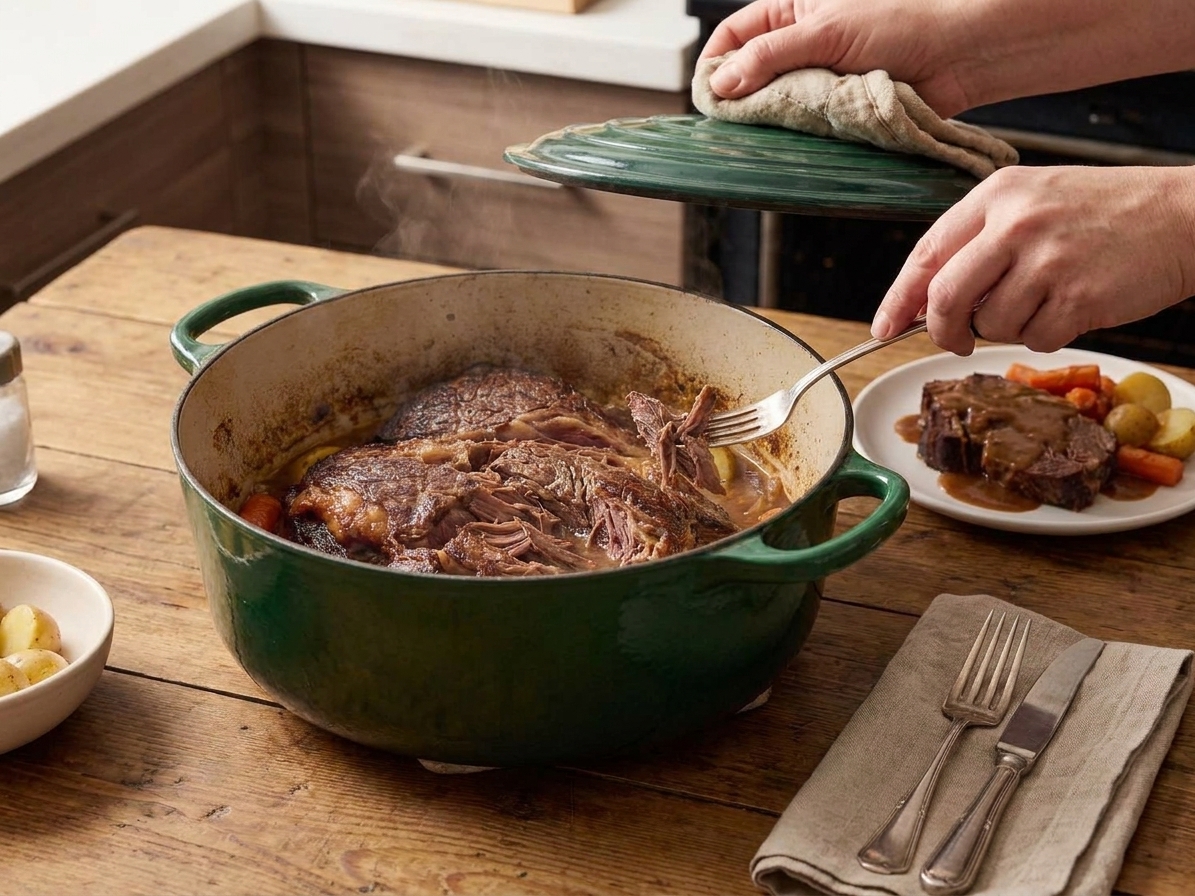
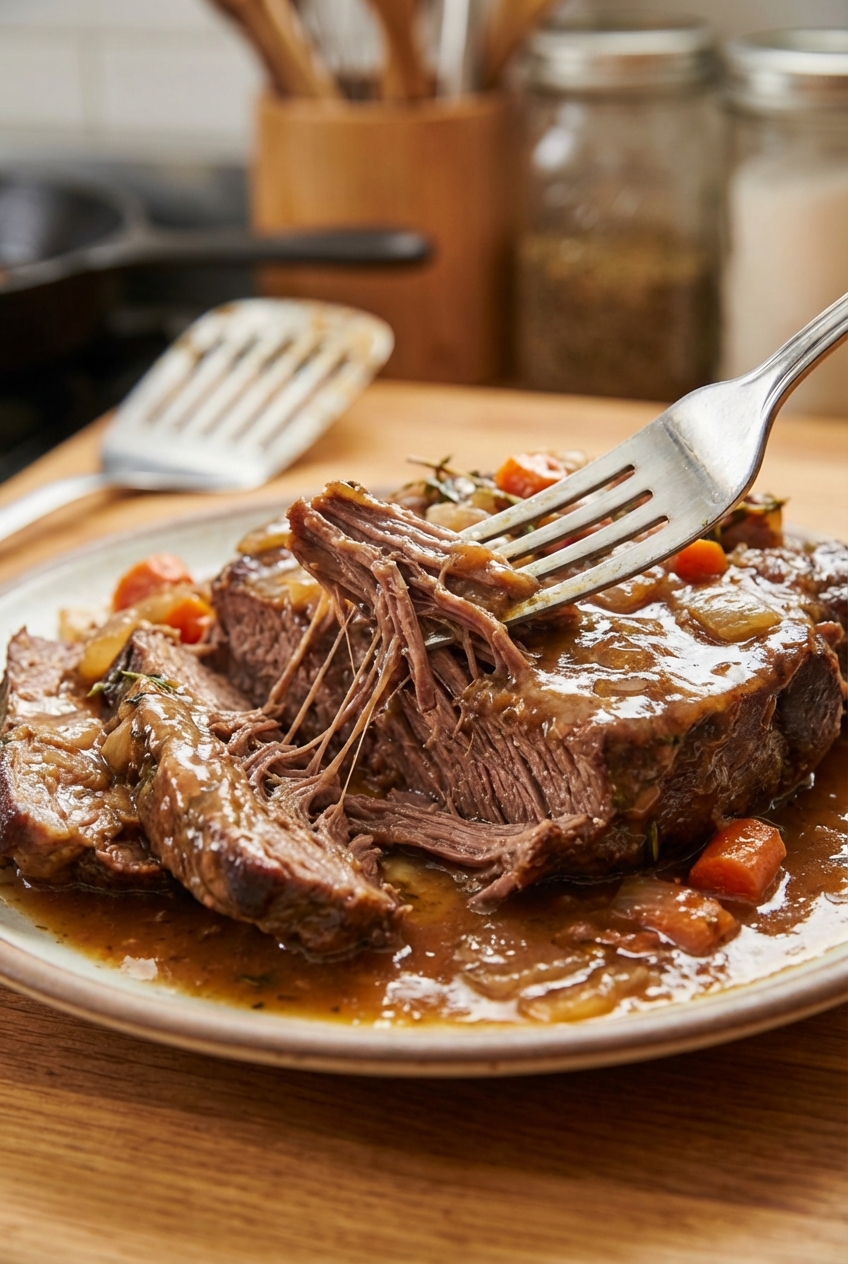
Tough usually means it needs more time, not less. Collagen takes time to break down. Keep braising until a fork twists easily in the meat. If you like using a thermometer, shreddable pot roast often lands around 190 to 205°F, but tenderness is the real test. Also make sure you are cooking at a gentle simmer, not a hard boil.
Do I have to sear the roast?
You do not have to, but you really should. Searing builds deep flavor through browning. Think of it as the difference between “fine” and “wow.”
When do I add potatoes and carrots?
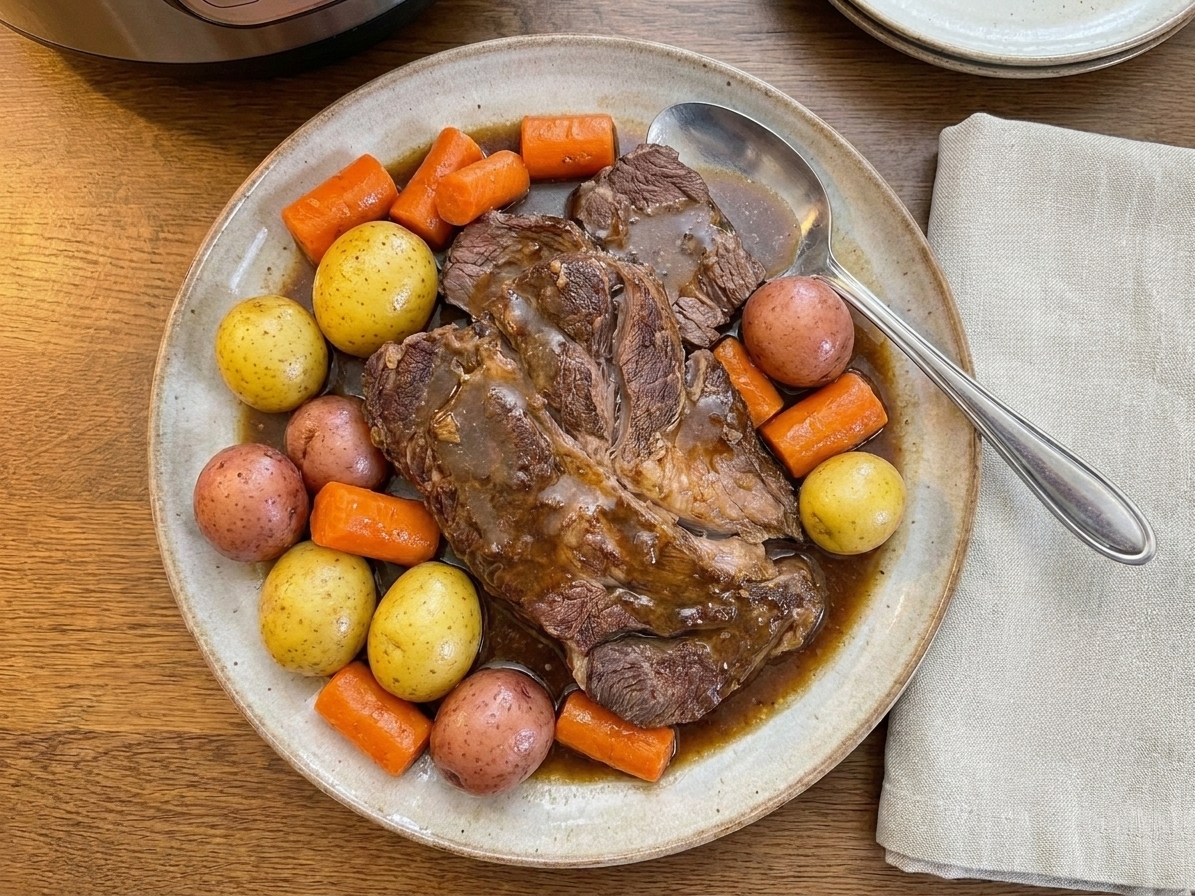
Add them for the last 60 to 90 minutes so they turn tender but do not collapse. Cut them into similar-size pieces so they cook evenly. They do not need to be fully submerged, just nestled into the braise.
How do I thicken the gravy?
You can reduce it on the stove until glossy, or whisk in a cornstarch slurry. Both work. Reducing gives the deepest flavor. For slurry, start small and add more as needed.
Can I make this in a slow cooker?
Yes. Sear the meat and sauté the onions, garlic, and tomato paste on the stove first, then transfer to the slow cooker. Cook on LOW for 8 to 9 hours or HIGH for 4 to 5 hours, until the roast is fork-tender. Add potatoes and carrots during the last 2 to 3 hours on LOW so they do not turn mushy.