Mom's Best Recipes
Recipe

Crispy Fried Chicken Strips

Juicy, crunchy chicken tenders with a quick buttermilk soak, bold seasoning, and crisp edges that stay snappy even after a dip.

Author By Matt Campbell
4.8
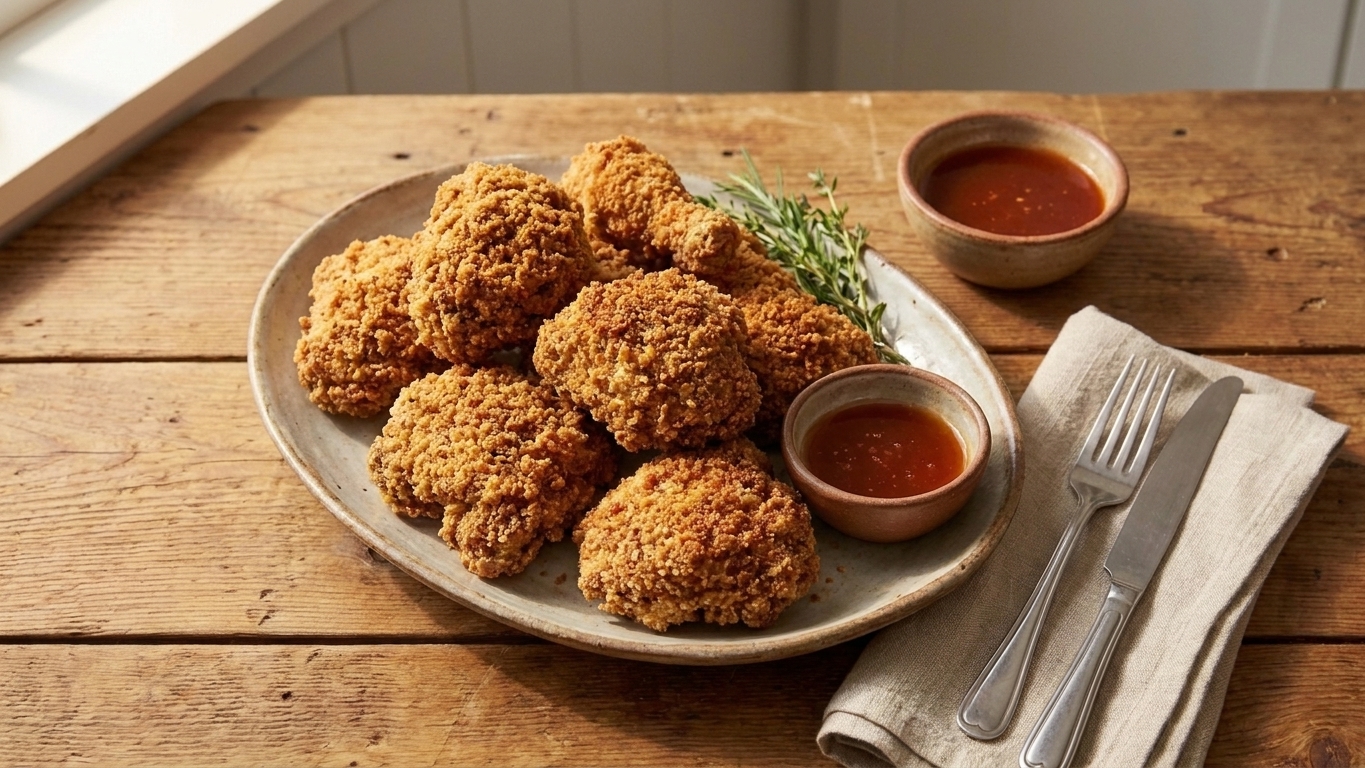
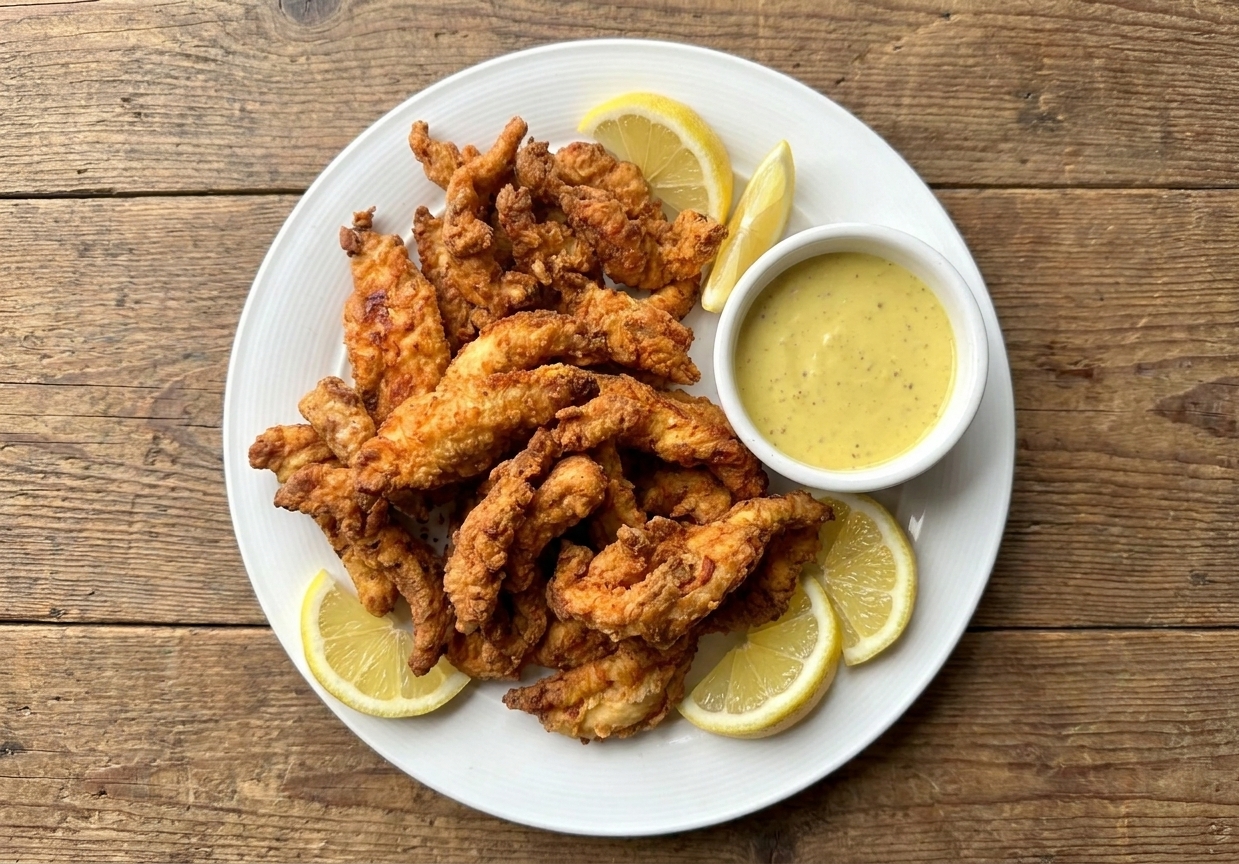
A platter of golden brown fried chicken strips with craggy crisp coating, served with a small bowl of dipping sauce on a wooden table in warm kitchen lighting

Fried chicken strips are one of those dinner miracles. They feel like a treat, they cook fast, and they make everyone in the house suddenly appear in the kitchen like it is a scheduled meeting.

This version is my go-to when I want real crunch and juicy chicken without a mile long ingredient list. The secret is a quick buttermilk soak for tenderness plus a seasoned flour dredge with a little cornstarch for that shattery, snackable crust. We are going for crisp edges, cozy vibes, and the kind of seasoning that makes you do a second dip even when you swore you were done.
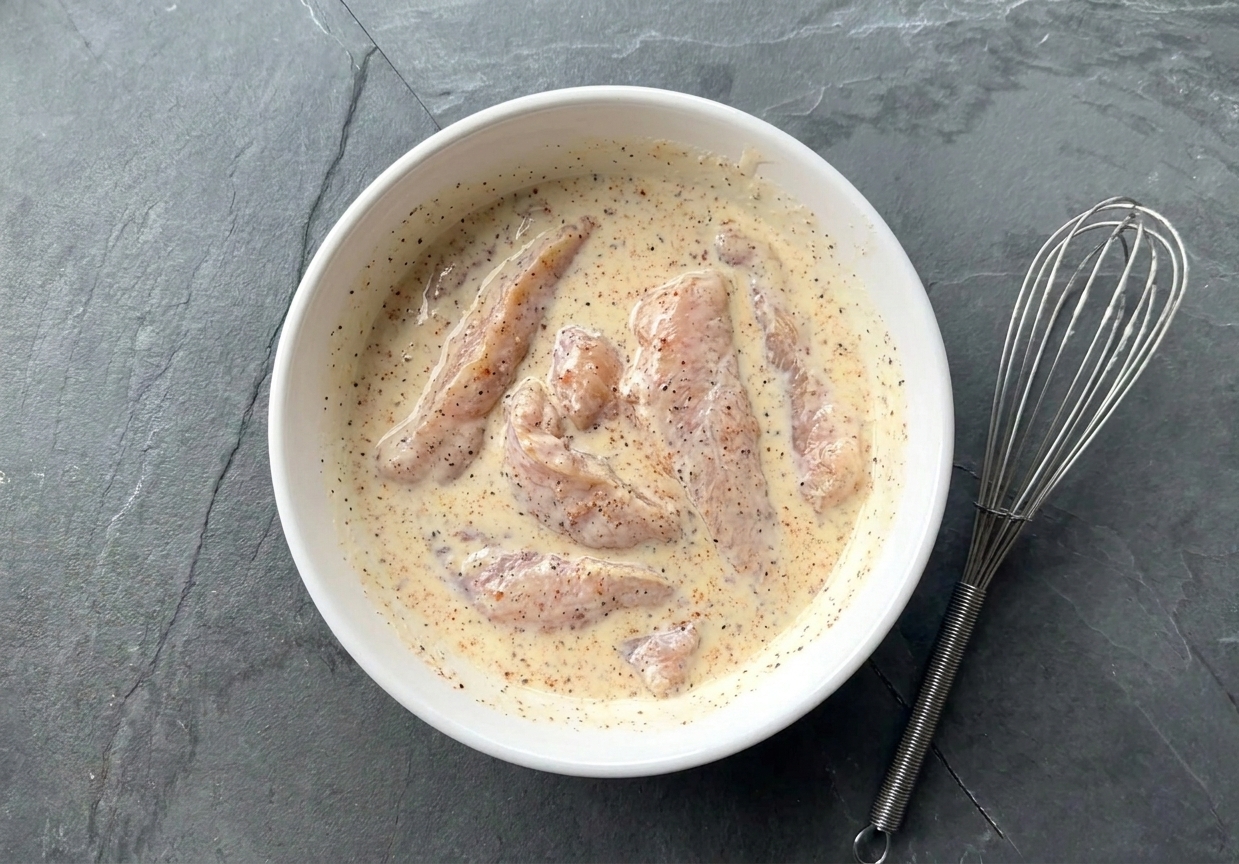
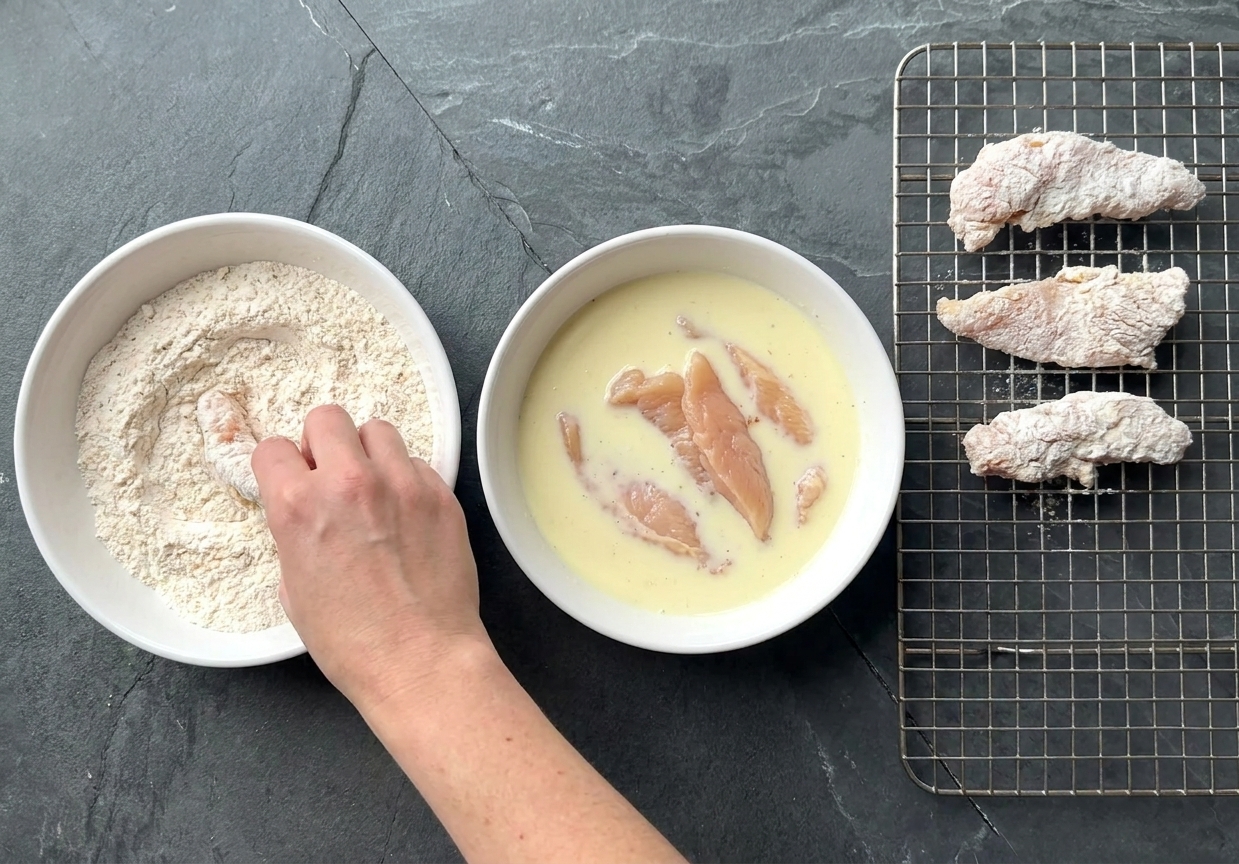
Raw chicken tenderloins soaking in a bowl of buttermilk with visible spices, on a light kitchen counter with a whisk nearby

Why It Works

  • Crunch that lasts: Cornstarch and a double-dip style dredge make a craggy coating that stays crisp longer.
  • Juicy, not dry: A quick buttermilk soak tenderizes the chicken and helps the breading cling.
  • Weeknight friendly: Small pieces fry quickly, and the steps are simple and repeatable.
  • Big flavor, basic pantry: Paprika, garlic, onion, and a little cayenne deliver that fried chicken shop vibe at home.

Pairs Well With

Storage Tips

Fridge: Cool strips on a rack until no longer steaming, then store in an airtight container for up to 3 days. For the best texture, keep them in a single layer (or use a container with a rack insert). If you must stack, expect the bottom layer to soften a bit.

Freezer: Freeze fully cooled strips on a sheet pan until solid, then transfer to a freezer bag. Best within 2 months.

Reheat for crunch: Oven or air fryer is the move.

  • Oven: 400°F for 8 to 12 minutes, flipping once, on a wire rack over a sheet pan.
  • Air fryer: 375°F for 5 to 8 minutes, shaking halfway.
  • Avoid the microwave unless you are fine with "tender but sleepy" breading.
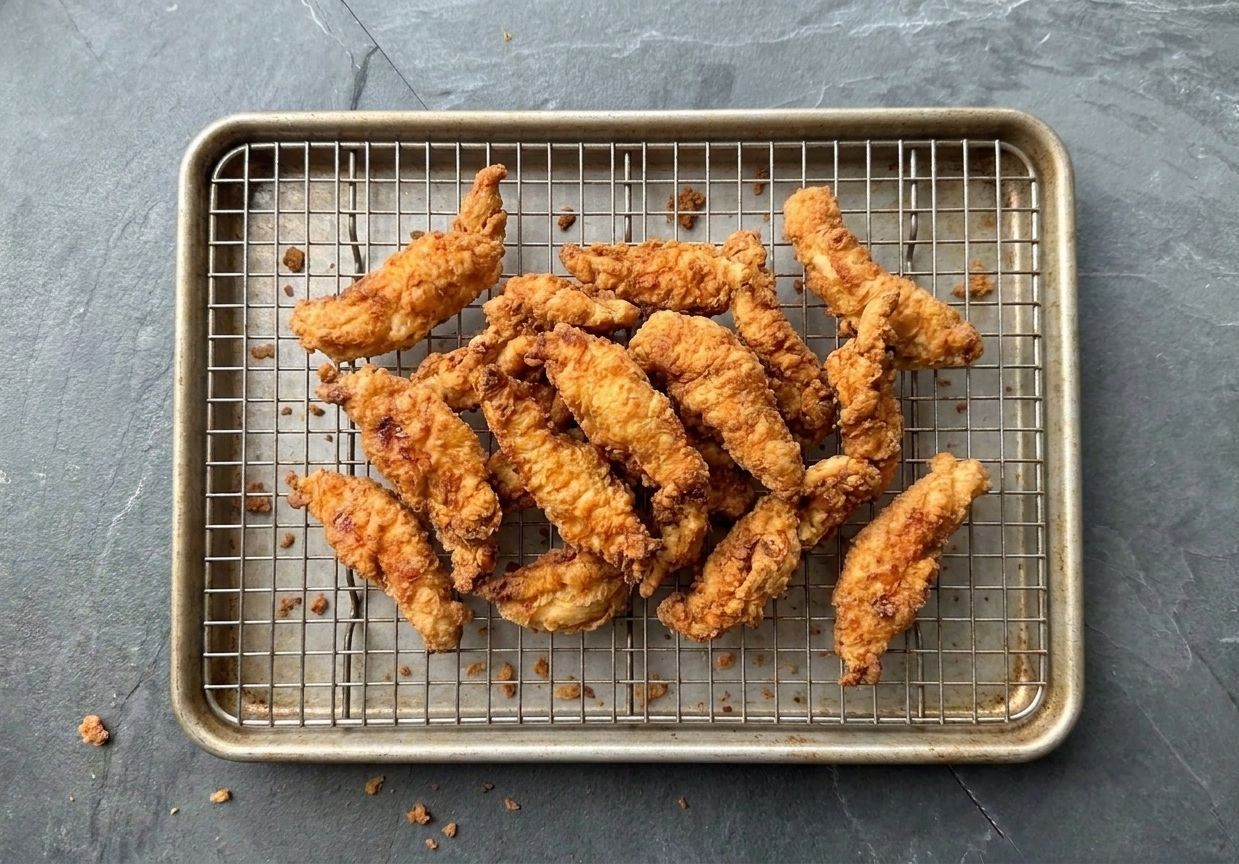
Fried chicken strips cooling on a wire rack set over a sheet pan on a kitchen counter, with a few crumbs scattered

Common Questions

Do I have to use buttermilk?

Nope. You can make a quick swap: mix 1 cup milk with 1 tablespoon lemon juice or white vinegar, let it sit 5 minutes, then use it like buttermilk. Just know it will be a little thinner and less tangy than cultured buttermilk. Yogurt thinned with a splash of water also works.

How do I keep the breading from falling off?

  • Let excess buttermilk drip off before dredging so the coating does not get gummy.
  • After dredging, let strips rest 10 minutes on a rack so the coating hydrates and grips.
  • Use the classic one hand wet, one hand dry trick to avoid clumpy fingers and patchy breading.
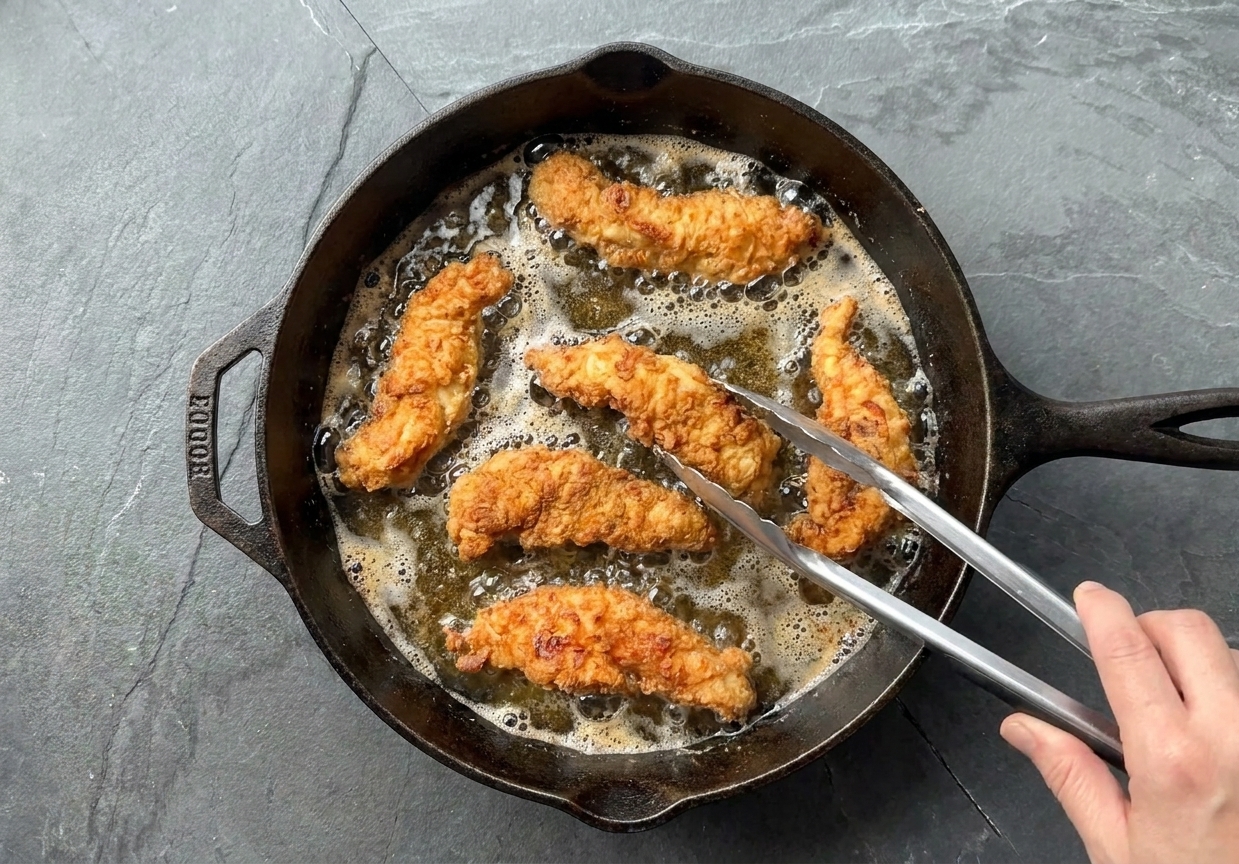
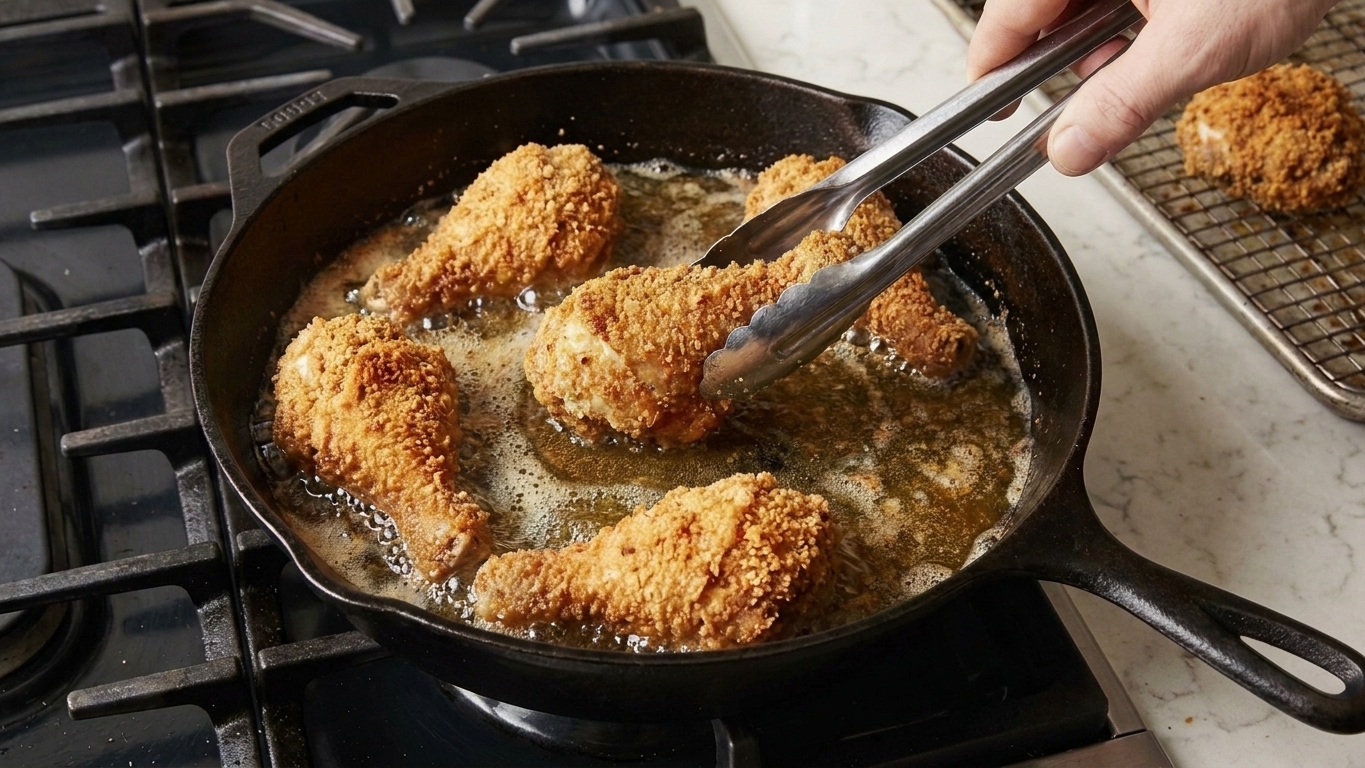
  • Do not overcrowd the pan. Crowding drops oil temp and creates steam, which loosens breading.

What oil temperature is best?

Aim for 350°F (a thermometer is the most reliable). No thermometer? Dip the handle of a wooden spoon into the oil. If you see steady, lively bubbles around it, you are in the zone. You can also drop in a small clump of wet dredge; it should sizzle right away and float, not sink and sit there.

Can I make these in an air fryer instead?

You can, but the texture will be different. For air fryer strips, use panko and spray well with oil. This recipe is designed for true fried, craggy crunch.

Why are my strips greasy?

Usually the oil was too cool. Keep it around 350°F and fry in batches. Also let them drain on a rack, not on a pile of paper towels where steam gets trapped.

I love cooking big, ambitious projects, but fried chicken strips are my comfort-food reset button. They are what I make when I want everyone fed, happy, and suspiciously quiet for ten minutes. The first time I nailed the coating, it was not because I bought fancy ingredients. It was because I slowed down, let the dredged chicken rest, and actually tasted my flour mix. That is the whole vibe here: keep it accessible, keep it bold, and let the crunch do the talking.