Mom's Best Recipes
Recipe

Crispy Fried Chicken Wings

Golden, crunchy wings with juicy meat and a bold, savory crust that actually stays put.

Author By Matt Campbell
4.8
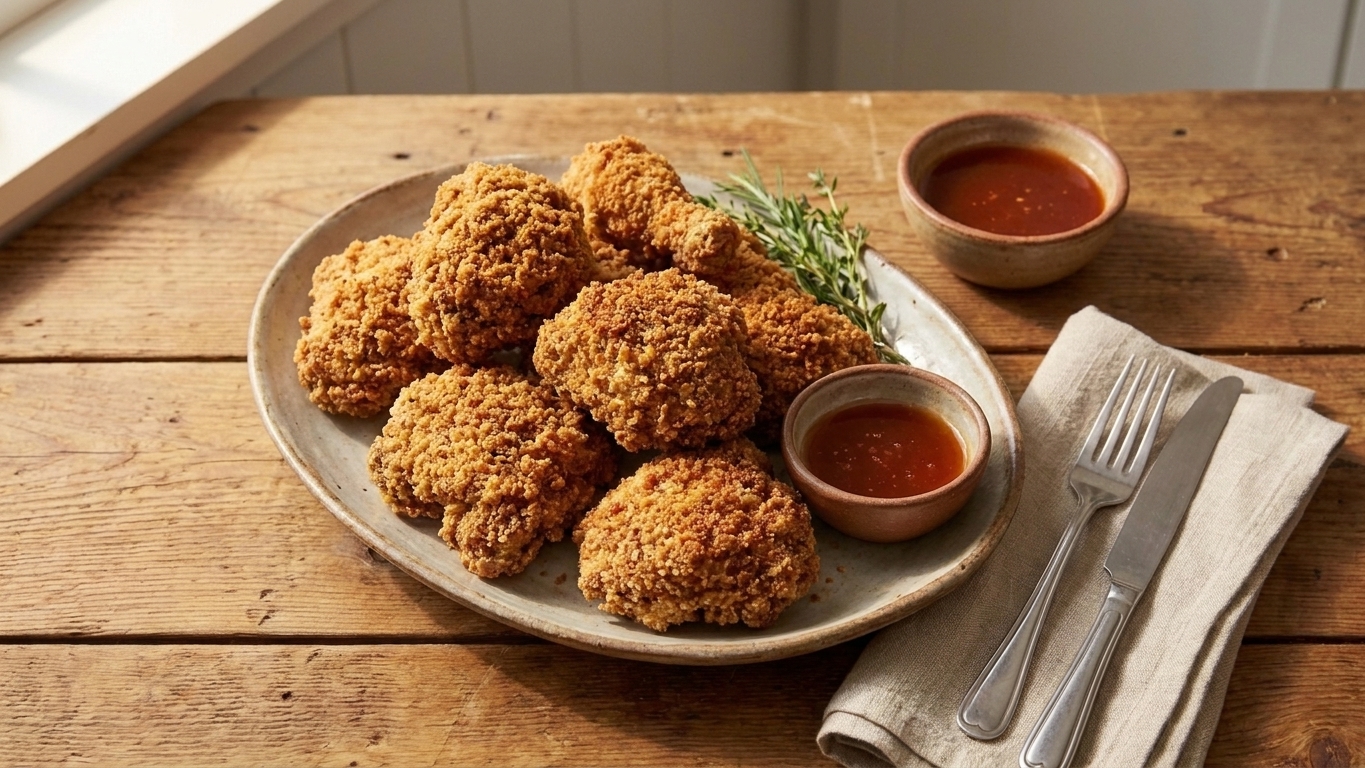
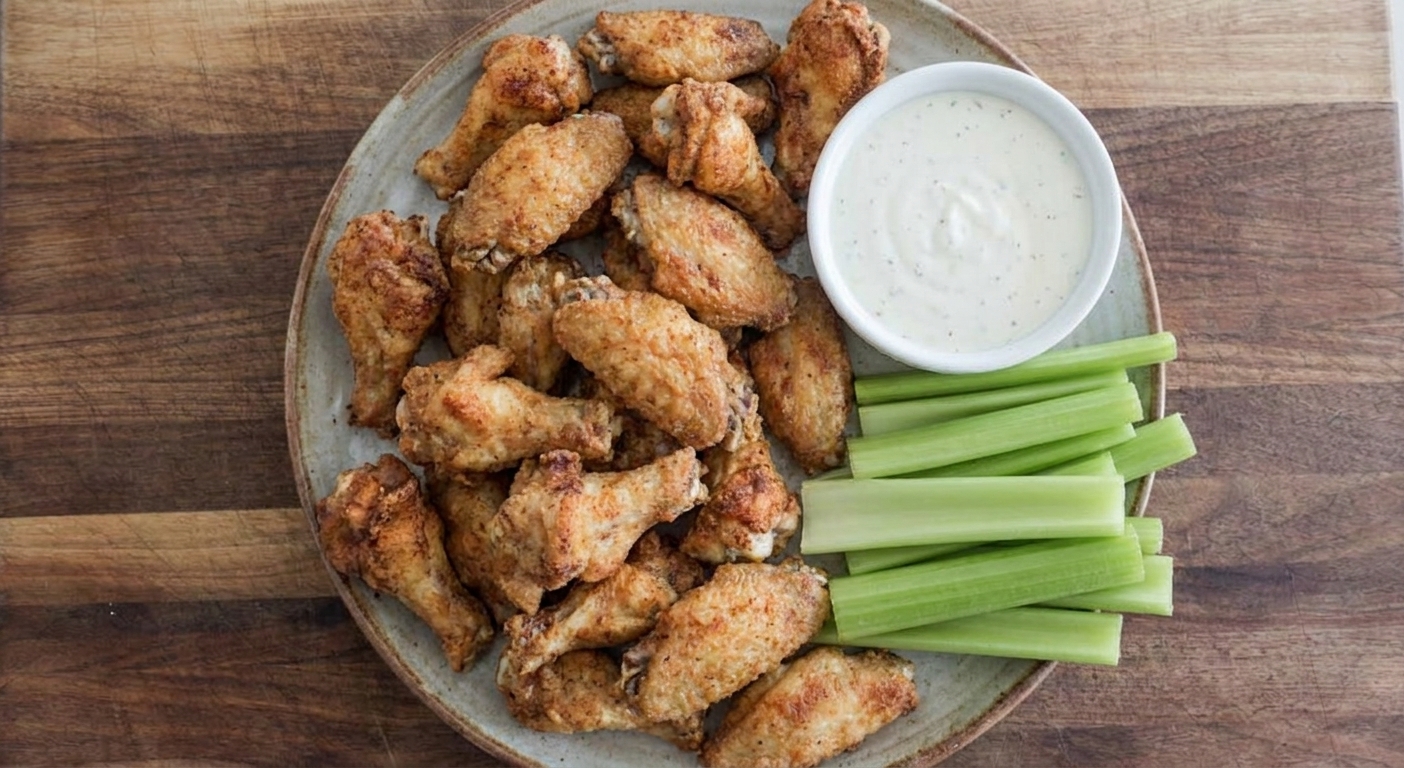
A platter of crispy fried chicken wings with a golden brown crust, served with a small bowl of dipping sauce and celery sticks on a wooden table

Fried chicken wings are one of those foods that make people hover around your stove like it is a campfire. Everyone is "just checking" on you, which is suspicious, because somehow a wing goes missing between the rack and the plate every single time.

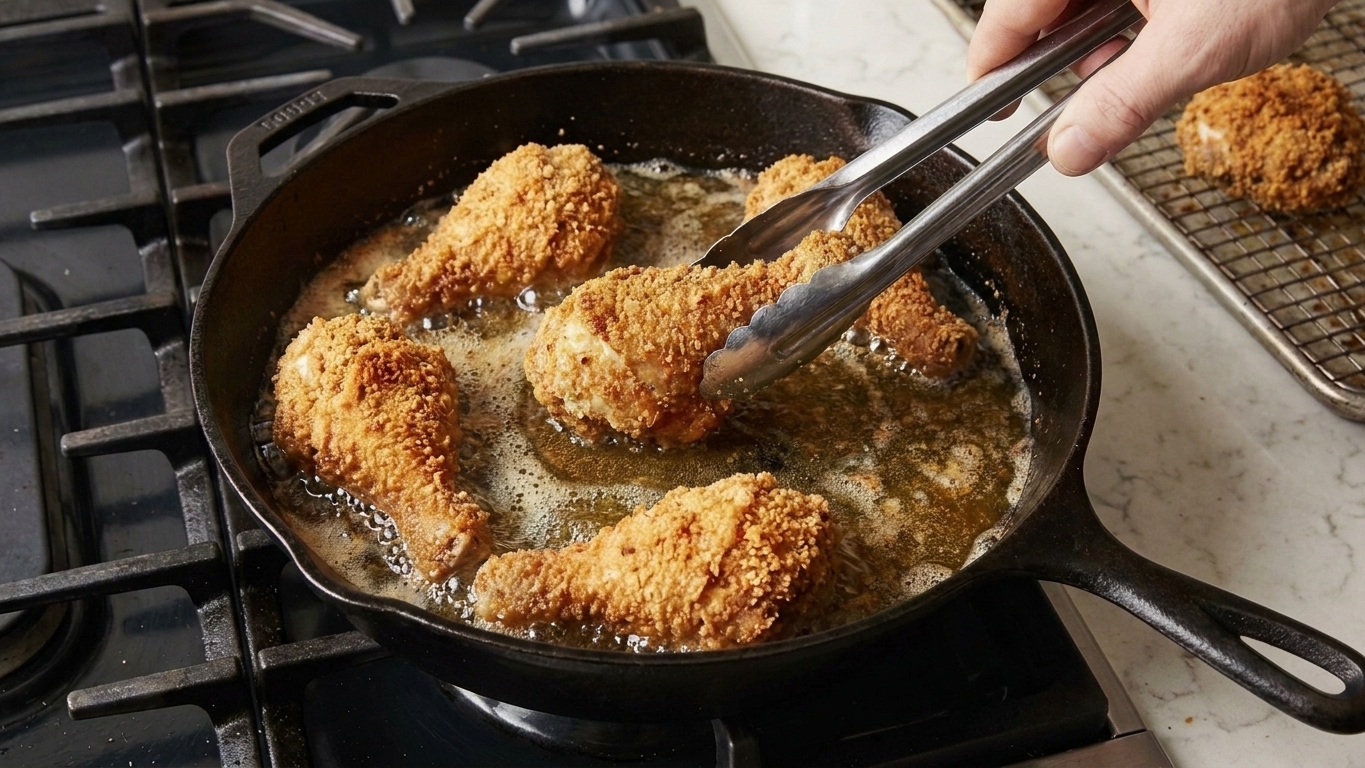
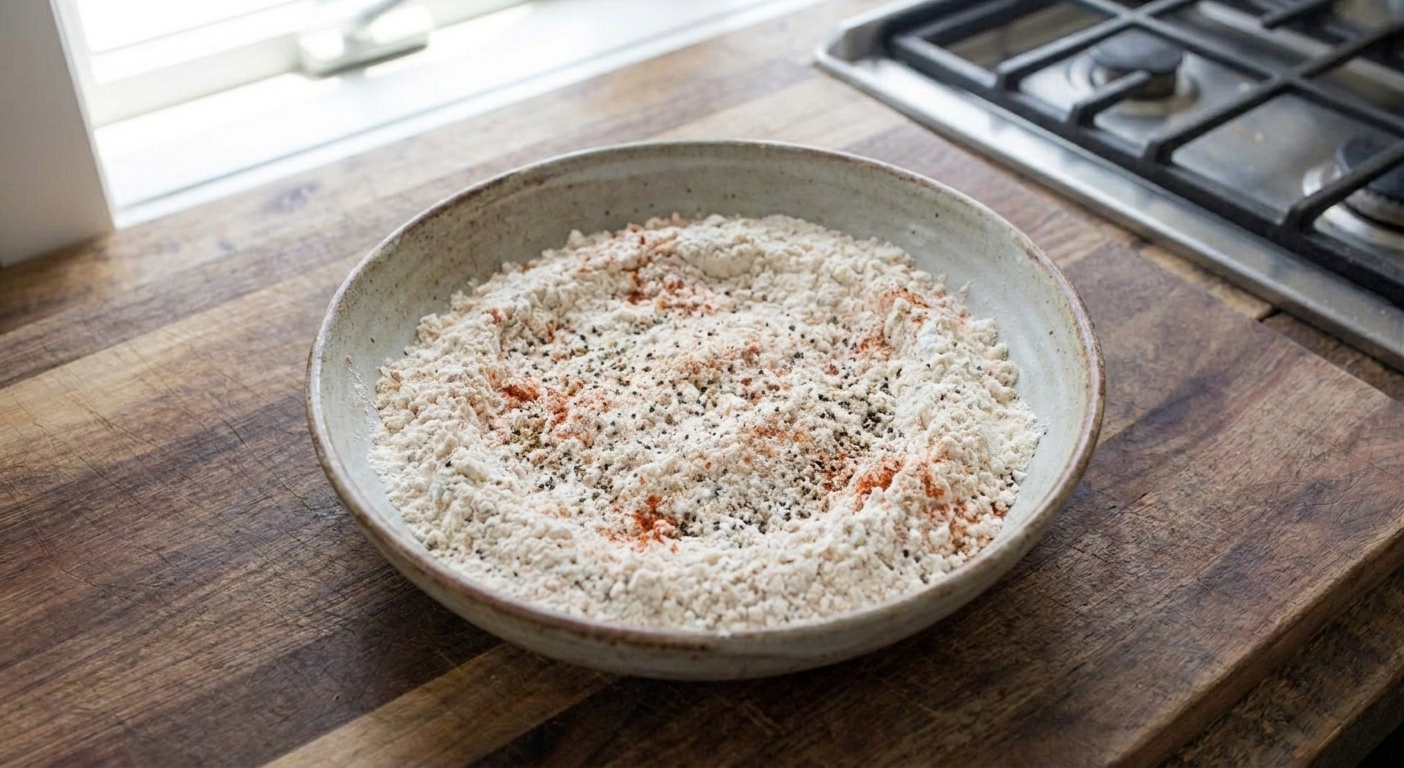
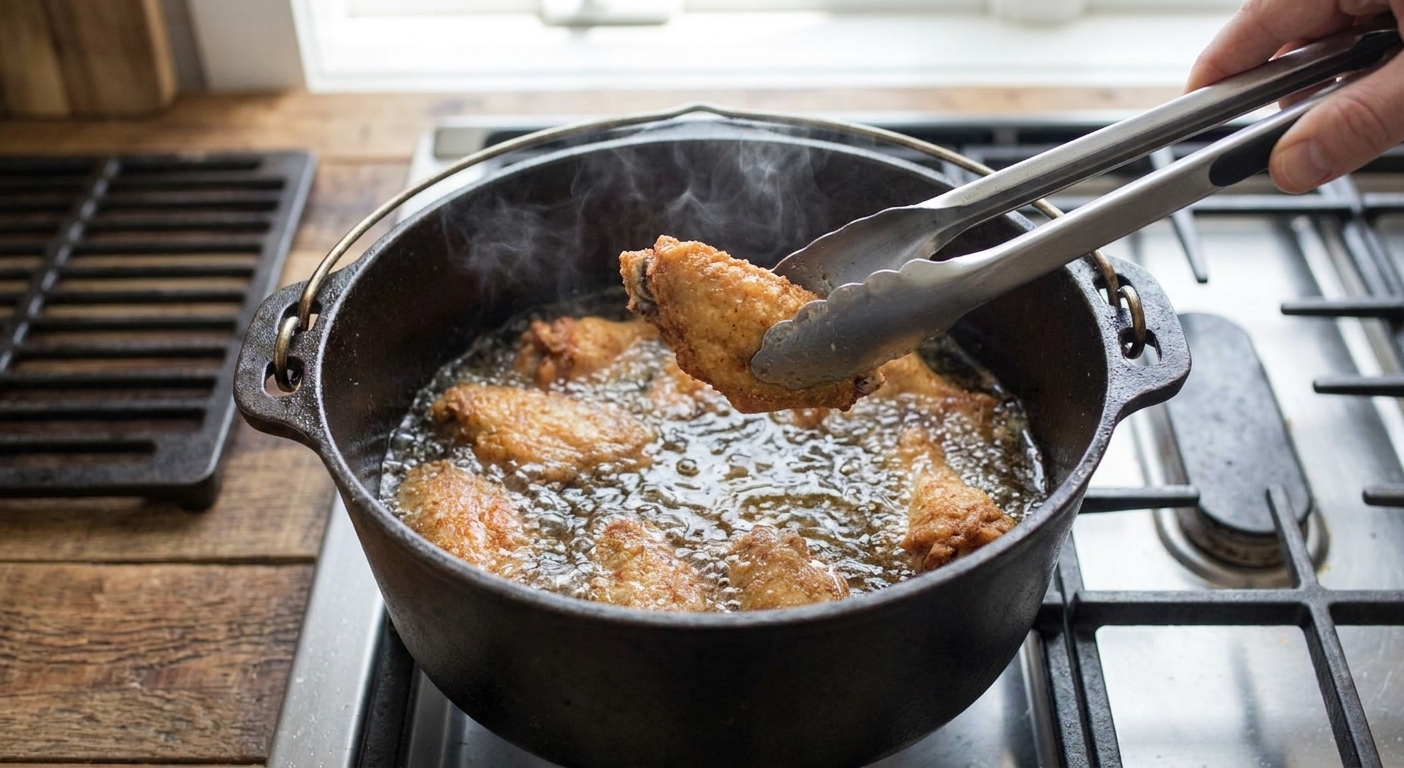
This is my go-to method when I want crisp edges, juicy meat, and a crust that tastes seasoned all the way through, not just salty on the surface. We do a quick buttermilk brine, a simple flour and cornstarch dredge, and a two-stage fry that turns wings into the kind of crunchy that makes you pause mid-bite.

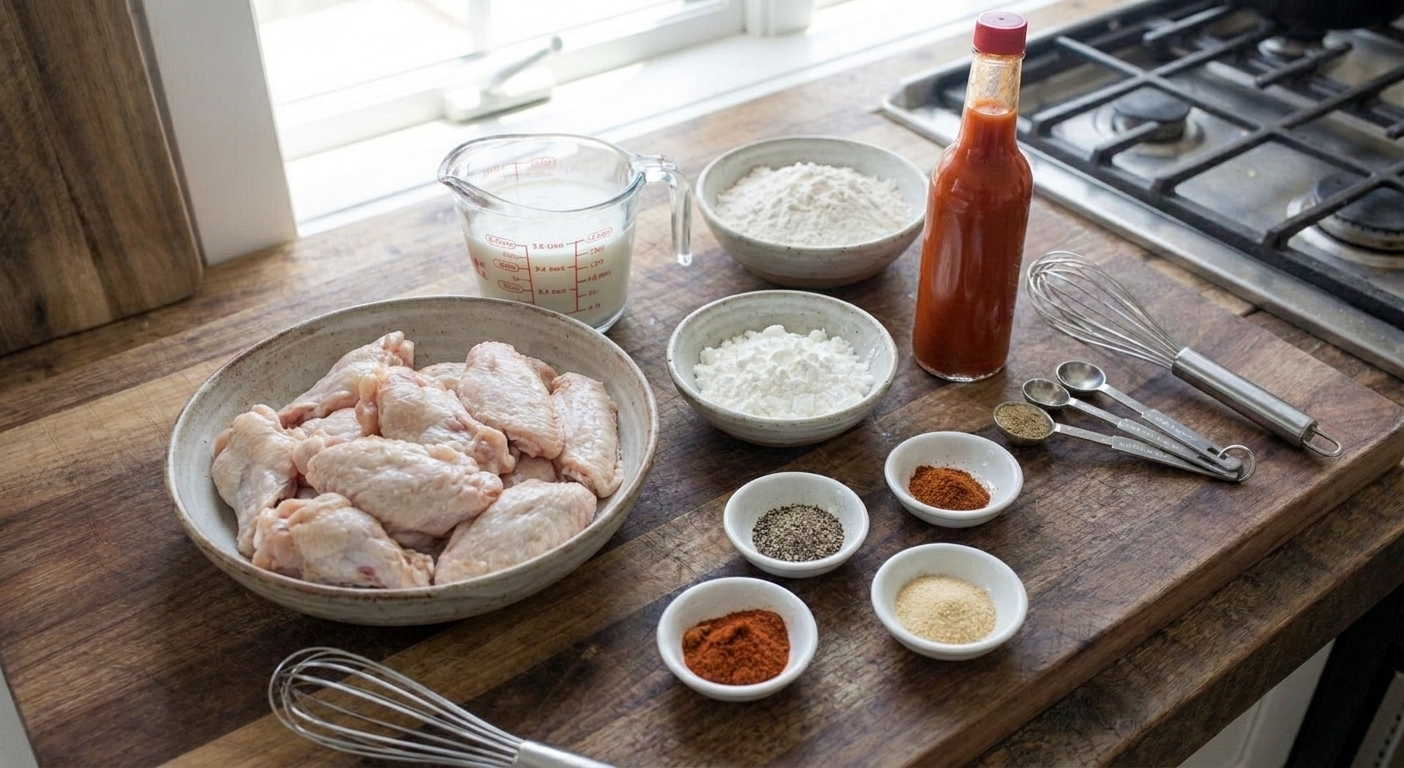
Raw chicken wings, buttermilk, flour, cornstarch, spices, and a bottle of hot sauce arranged on a bright kitchen counter

Why It Works

  • Crunchy crust that stays on: Cornstarch in the dredge plus a rest before frying helps the coating bond.
  • Juicy inside, not greasy: A steady oil temperature and a quick second fry keeps the outside crisp while the inside stays tender.
  • Big flavor without weird ingredients: Pantry spices, a little garlic and onion powder, and an optional hot sauce kick in the brine.
  • Flexible finish: Serve them naked and proud, toss in buffalo, or hit them with lemon pepper right out of the fryer.

Pairs Well With

Storage Tips

If you have leftover wings, congratulations on your self control.

Refrigerator

Cool wings completely, then store in an airtight container for up to 4 days. If you can, line the container with a paper towel to catch condensation.

Freezer

Freeze in a single layer on a sheet pan until solid, then transfer to a freezer bag for up to 2 months. Reheat straight from frozen, just add a few extra minutes.

Reheat for crispiness

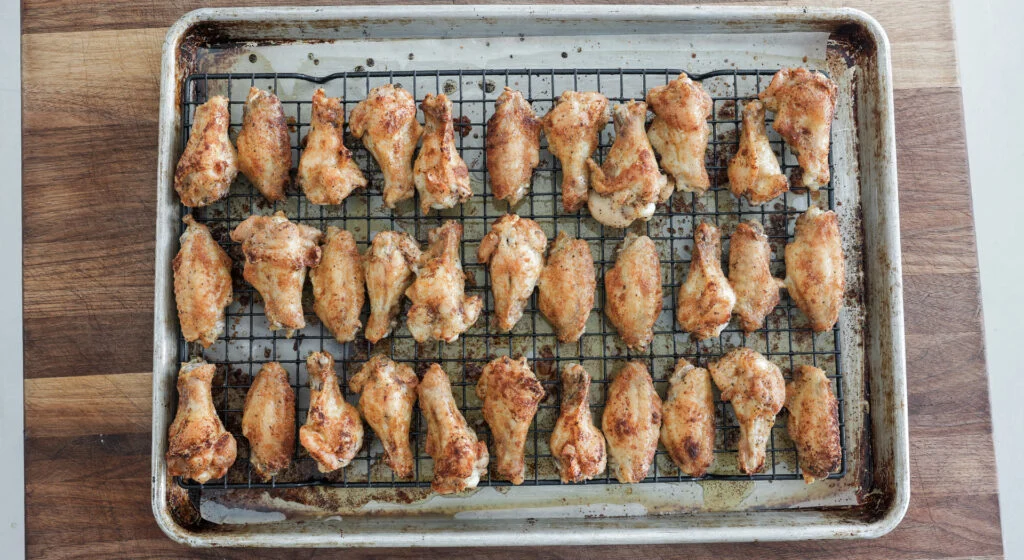
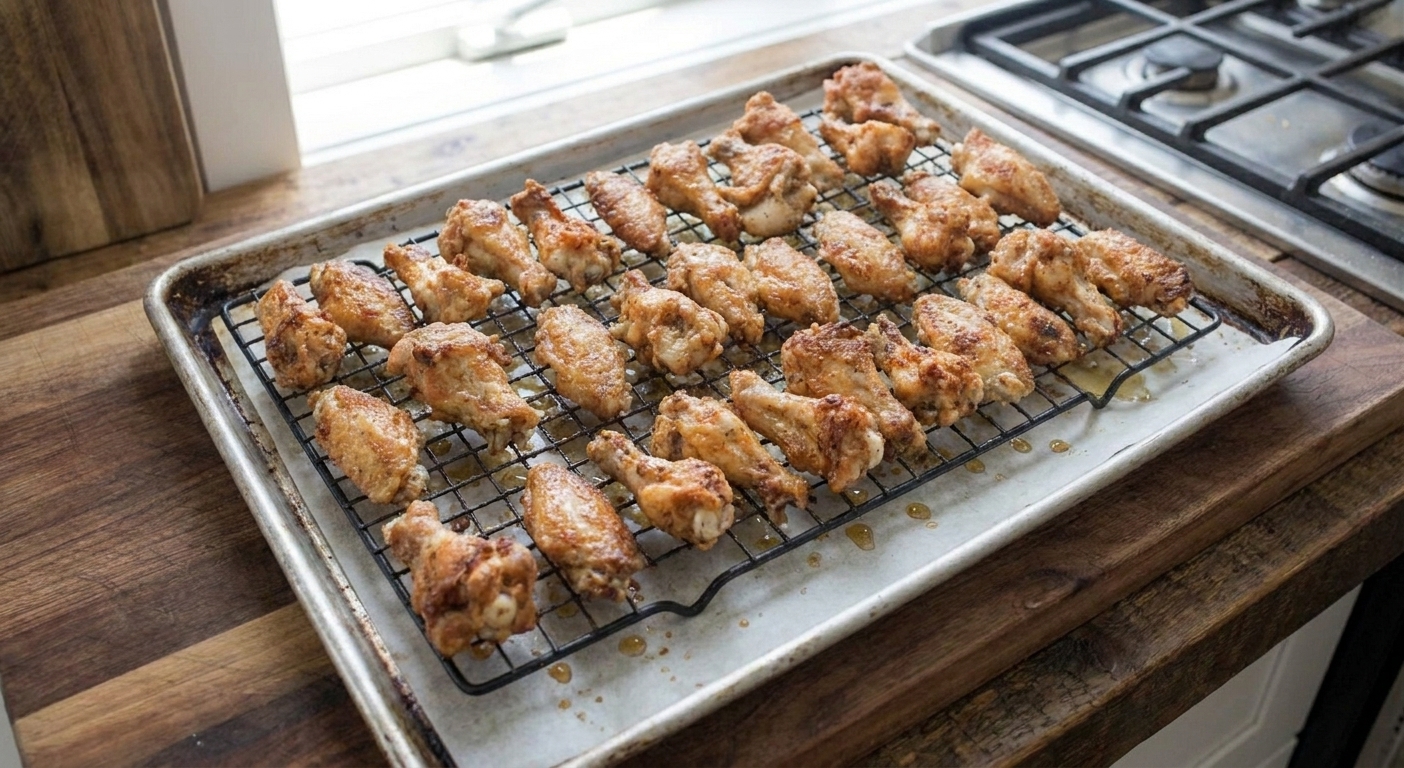
  • Oven: 400°F on a wire rack over a sheet pan, 12 to 18 minutes, flipping once.
  • Air fryer: 375°F for 6 to 10 minutes, shaking halfway.
  • Microwave: It works, but it will soften the crust. If you must, microwave briefly, then crisp in a hot oven for a few minutes.
Fried chicken wings arranged on a wire rack over a sheet pan inside an oven, mid reheat

Common Questions

Do I have to use buttermilk?

No, but it helps. Buttermilk tenderizes and gives the dredge something to grab. No buttermilk? Mix 1 cup milk + 1 tablespoon lemon juice or vinegar and let it sit 5 minutes. Plain yogurt thinned with a splash of water also works.

Why is my breading falling off?

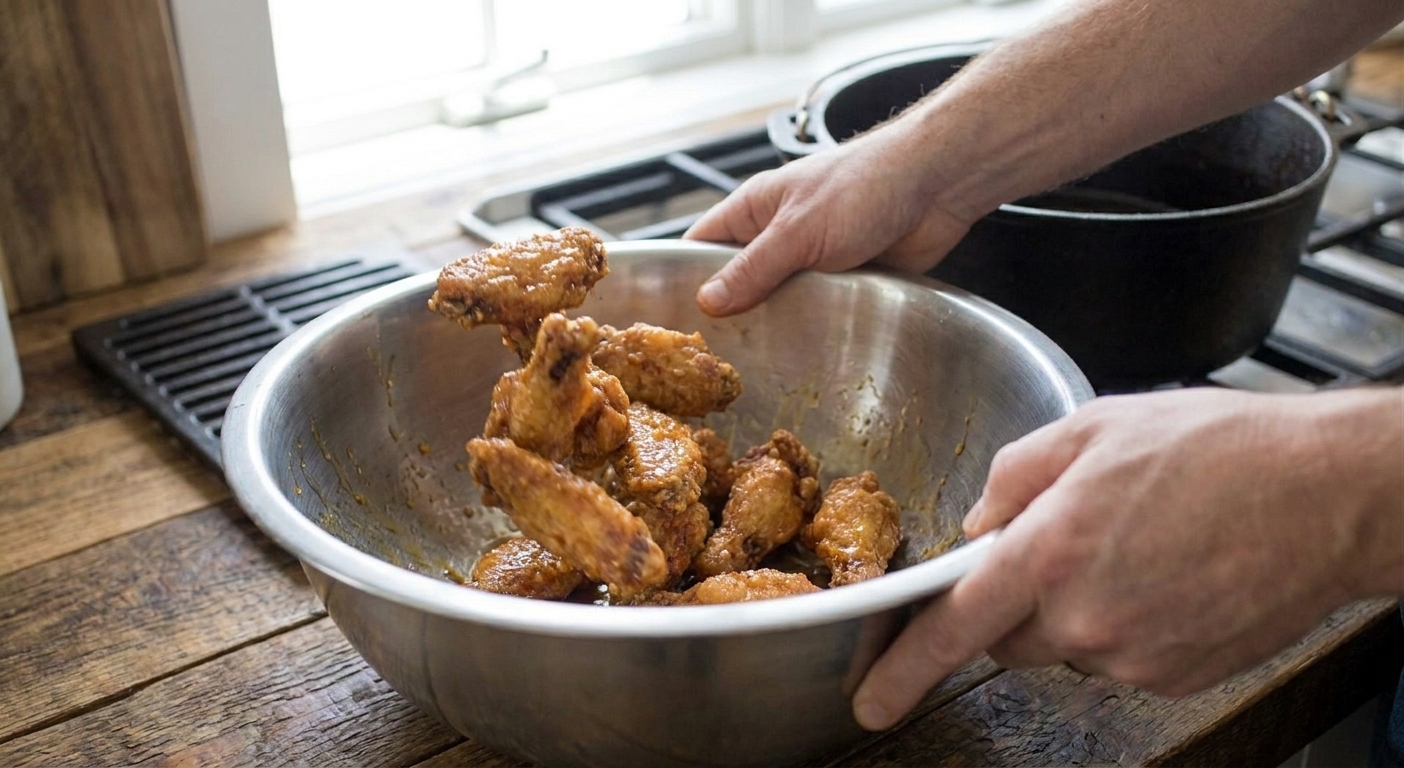
Usually one of these: the wings were too wet, you skipped the rest after dredging, you crowded the pot, or the oil was not hot enough at the start. Let excess brine drip off (do not put dripping-wet wings in the dredge), press the coating on, rest 10 minutes until tacky, then fry in batches and let the oil return to temp between rounds.

What oil is best for frying wings?

Use a neutral oil with a high smoke point, like peanut, canola, vegetable, or avocado oil. Olive oil is not ideal here.

What temperature should the oil be?

Target 350°F for the first fry. If the temperature drops when you add wings, let it recover. For the second crisping fry, aim for 375°F.

Can I make these gluten free?

Yes. Swap the flour for a 1:1 gluten free all-purpose blend and keep the cornstarch. The texture stays impressively crisp.

How do I know the wings are done?

You are looking for 165°F in the thickest part of the wing before serving. Time can vary based on wing size and how well your oil temp rebounds between batches. If you do not have a thermometer, cut into the thickest drumette and check that the meat is no longer pink, but use a thermometer when possible.

Wings were one of the first things I learned to make for a crowd without losing my mind. They are forgiving, they like bold seasoning, and they reward you for paying attention for just a few minutes at the stove. I used to overcomplicate the breading until I realized the real magic is boring in the best way: season like you mean it, keep your oil steady, and let the coating rest before it hits the pot. The first time I nailed that shatter-crisp crust, I ate one standing at the counter and immediately understood why people get emotional about fried chicken.