Common Questions
What does barramundi taste like?
It is mild, clean, and slightly buttery. If you like sea bass, snapper, or a less “fishy” salmon, barramundi is a good fit.
Can I cook barramundi without skin?
Yes. You will skip the crispy-skin moment, but the recipe still works. Reduce the sear time slightly and be extra gentle when flipping.
How do I know when barramundi is done?
It should turn opaque and flake easily with a fork. If you use a thermometer, many cooks pull fish around 125 to 130°F for a juicy texture, then let it rest a minute or two to finish.
Food safety note: The USDA conservative guideline for finfish is 145°F. If you prefer to follow that guidance, cook to 145°F at the thickest part. As always, use your judgment based on sourcing and personal risk tolerance.
Can I bake it instead of pan-searing?
Yes. You will lose some crisp, but it is a solid variation. Bake at 425°F until opaque, usually 10 to 14 minutes for about 1-inch thick fillets (thinner will be faster, thicker will take longer). Make the sauce in a small pan while the fish bakes, or right after it comes out.
Are capers optional?
They are the salty spark in the sauce, but you can swap in chopped green olives or just add extra lemon plus a pinch of salt.
Should I rinse capers?
Totally optional. Drained capers give you the biggest briny punch. If you are caper-shy or salt-sensitive, give them a quick rinse and pat dry.
What if my fish sticks to the pan?
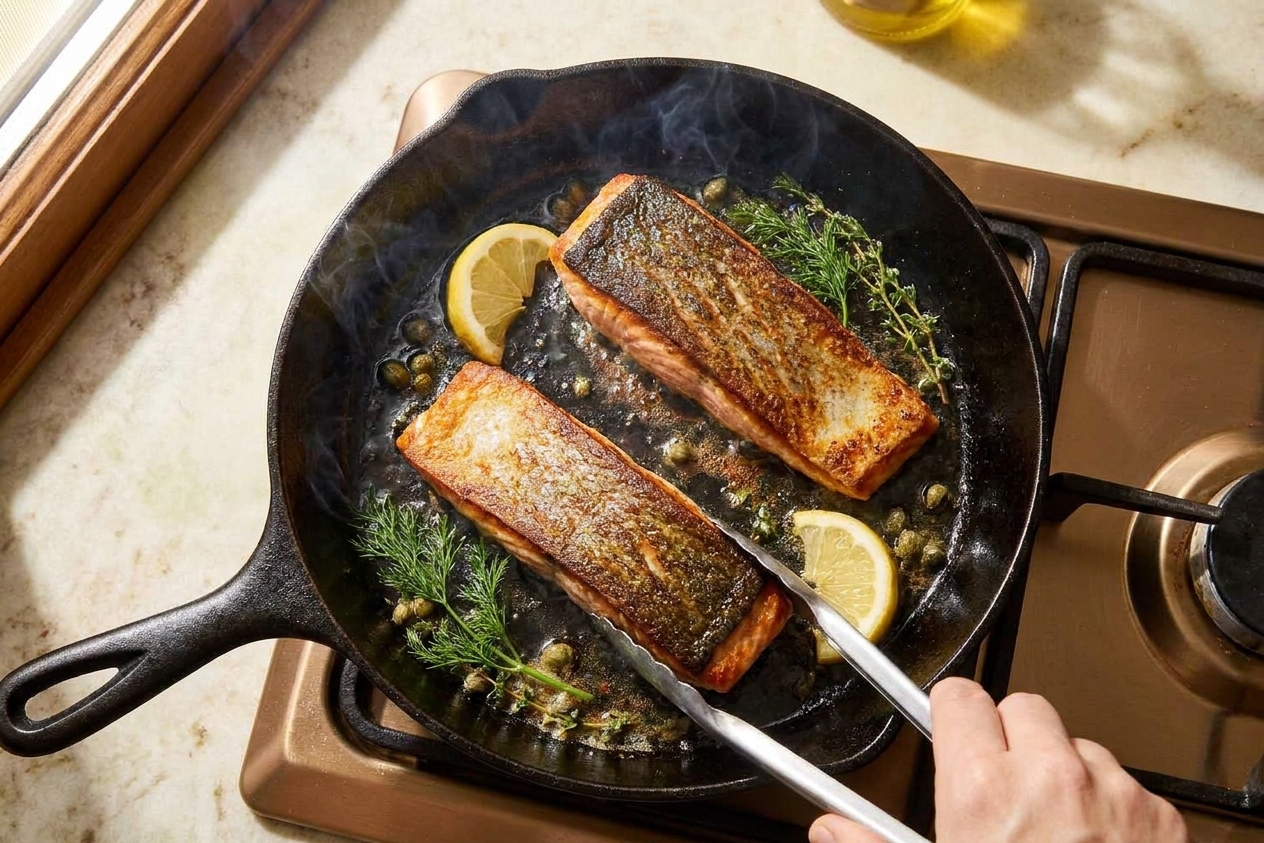
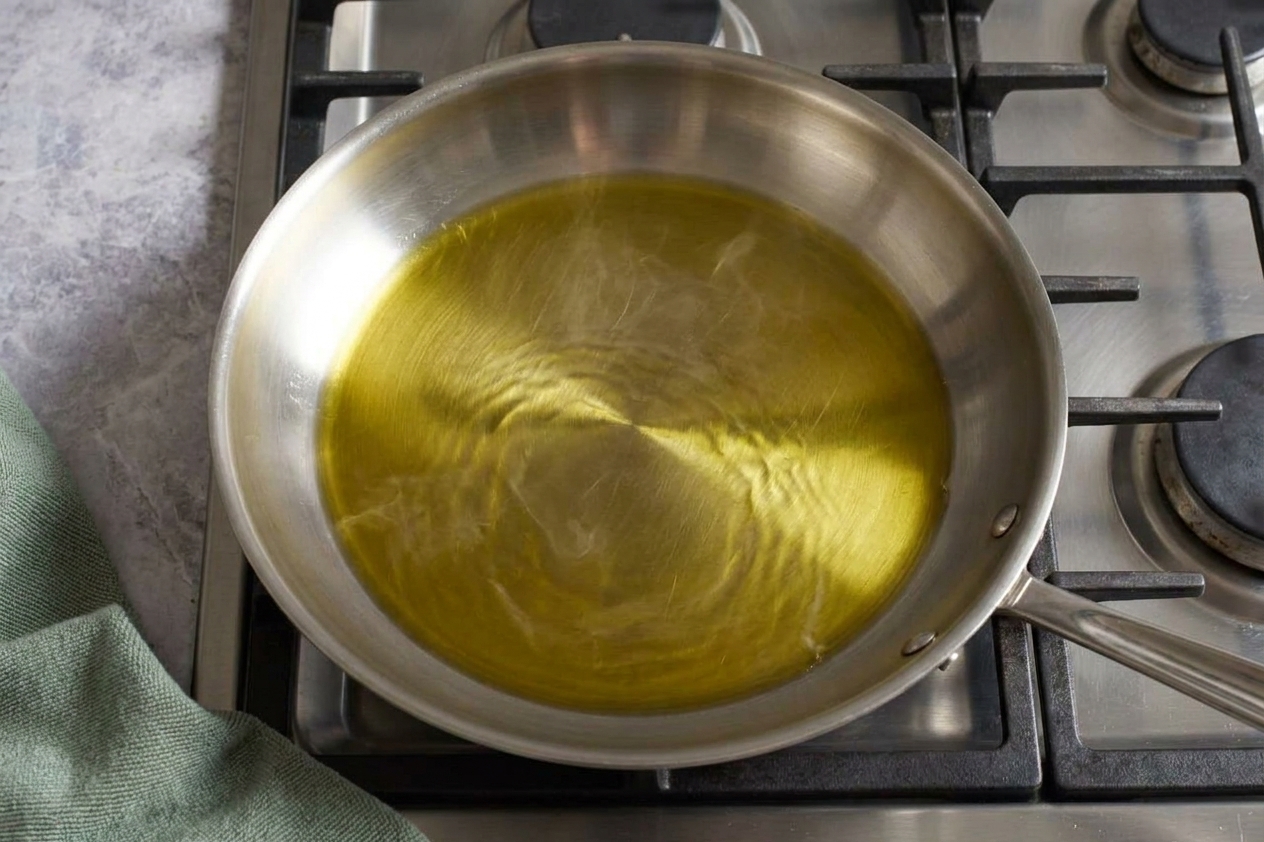
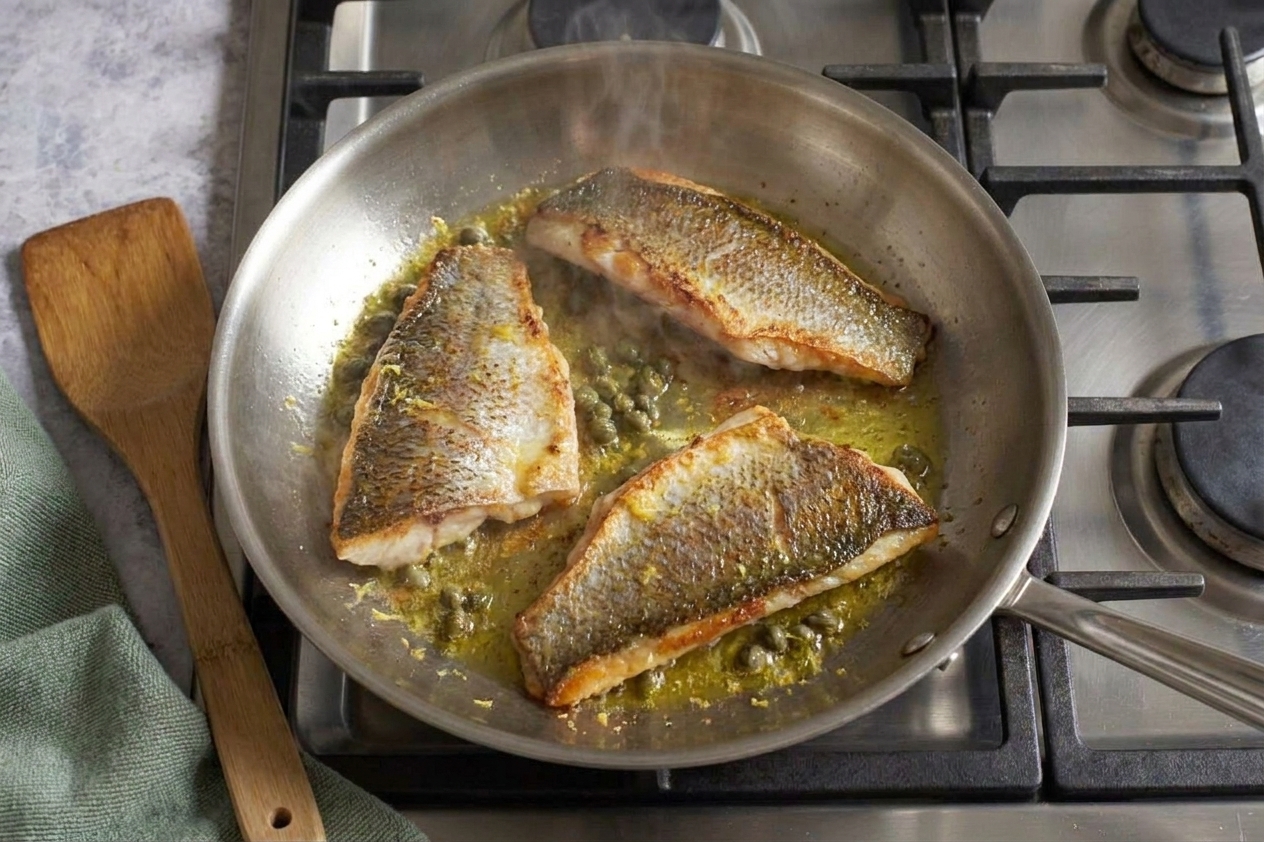
Usually it means the pan was not hot enough, the fish was too wet, or you tried to move it too early. Let it sear until it releases naturally, then it will flip more easily.
How do I thaw frozen barramundi?
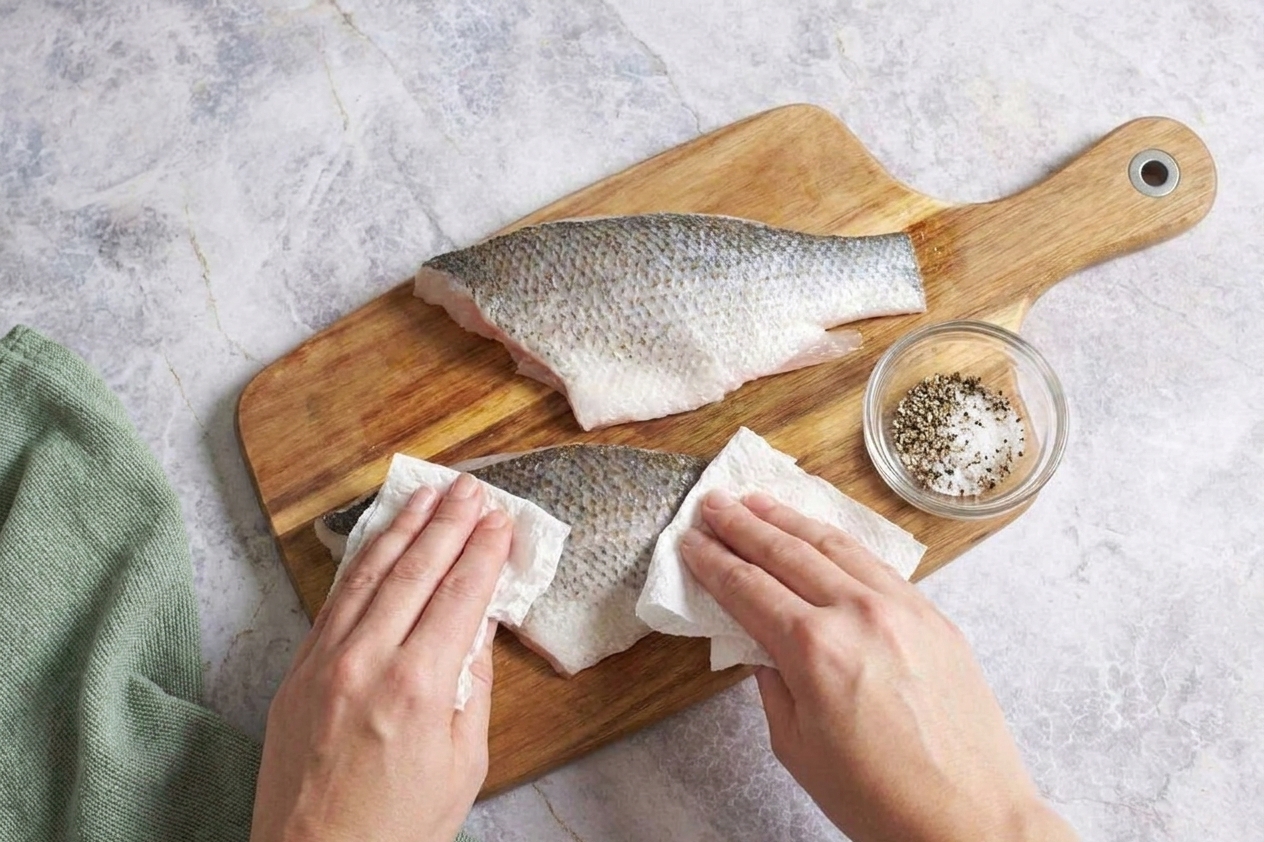
Thaw overnight in the fridge, or seal it in a bag and submerge in cold water for 20 to 30 minutes, changing the water once if needed. Then pat it very dry, especially the skin, before cooking.