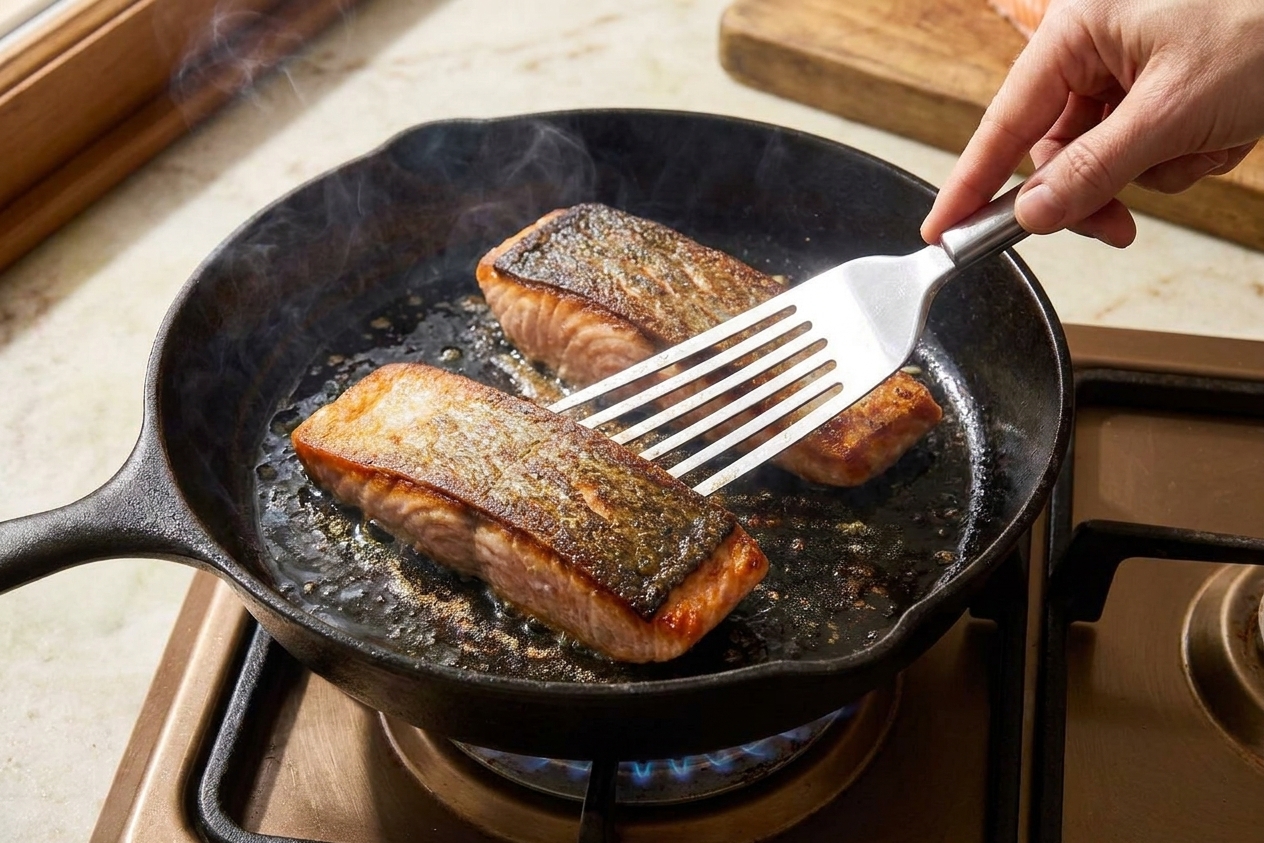
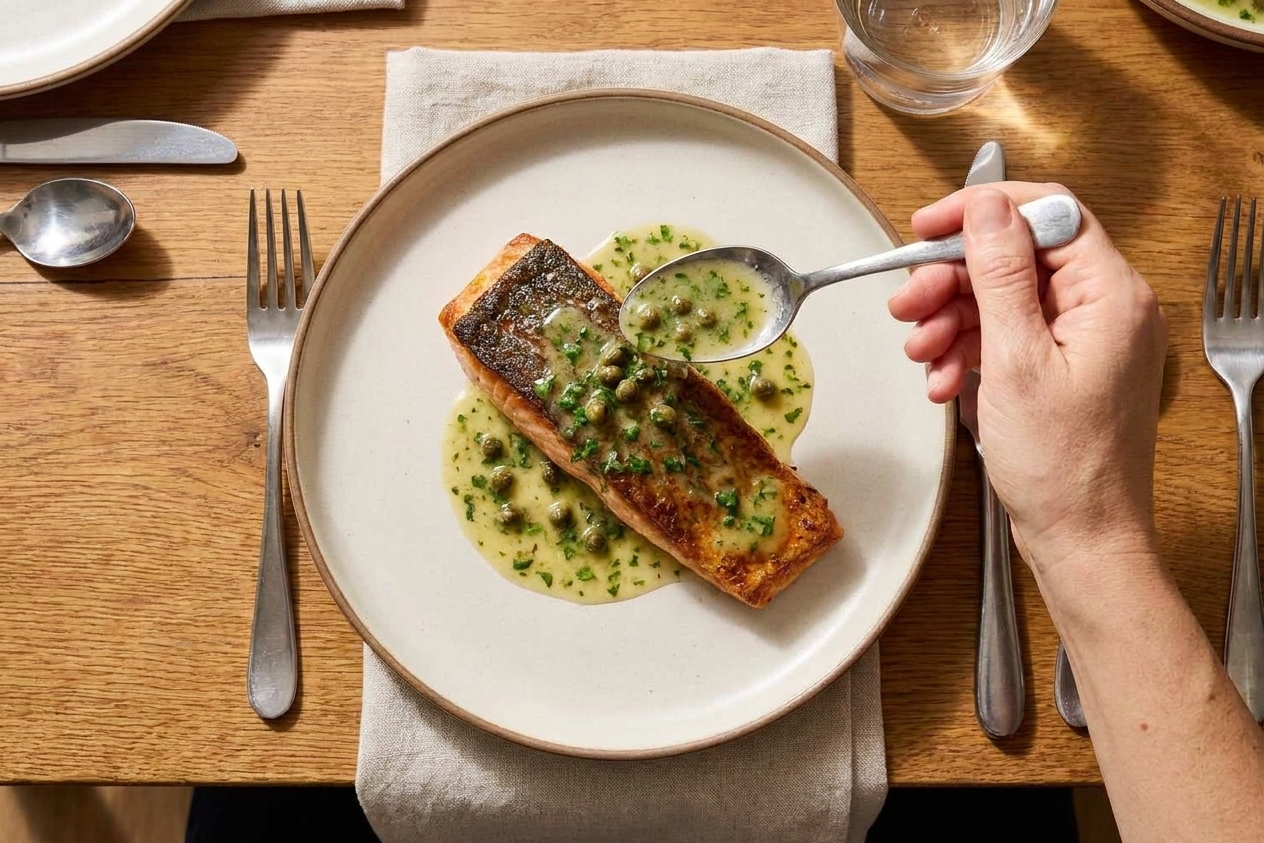
How do I know when pan fried salmon is done?
The easiest check is a fork test: gently press the thickest part and see if it flakes into moist layers. Visually, the sides will turn opaque up the fillet. If you use an instant-read thermometer, many cooks love 120°F to 125°F for a restaurant-style medium and 130°F to 135°F for firmer, more well done. Food safety note: the FDA recommended safe internal temperature for seafood is 145°F. Remember it can rise a couple degrees as it rests.
Should I cook salmon skin-side down first?
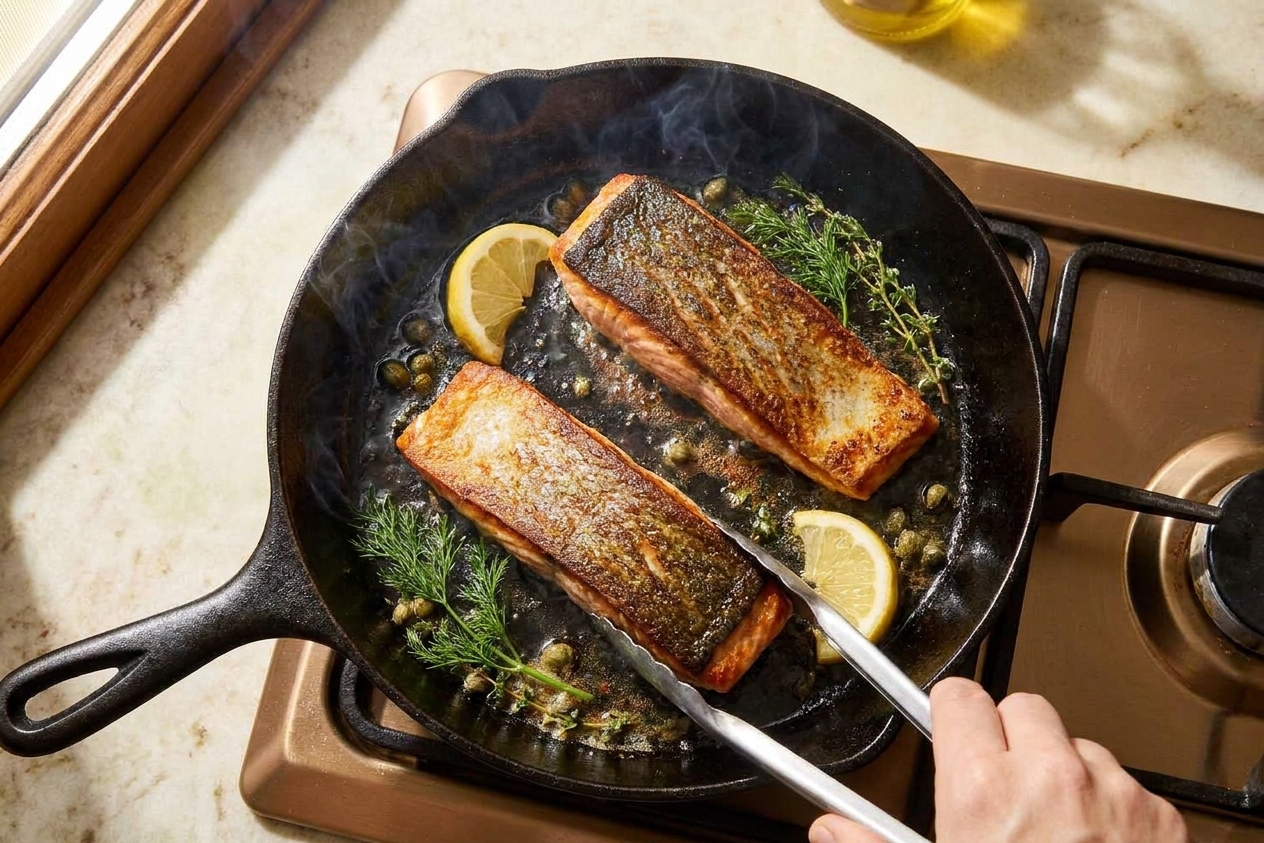
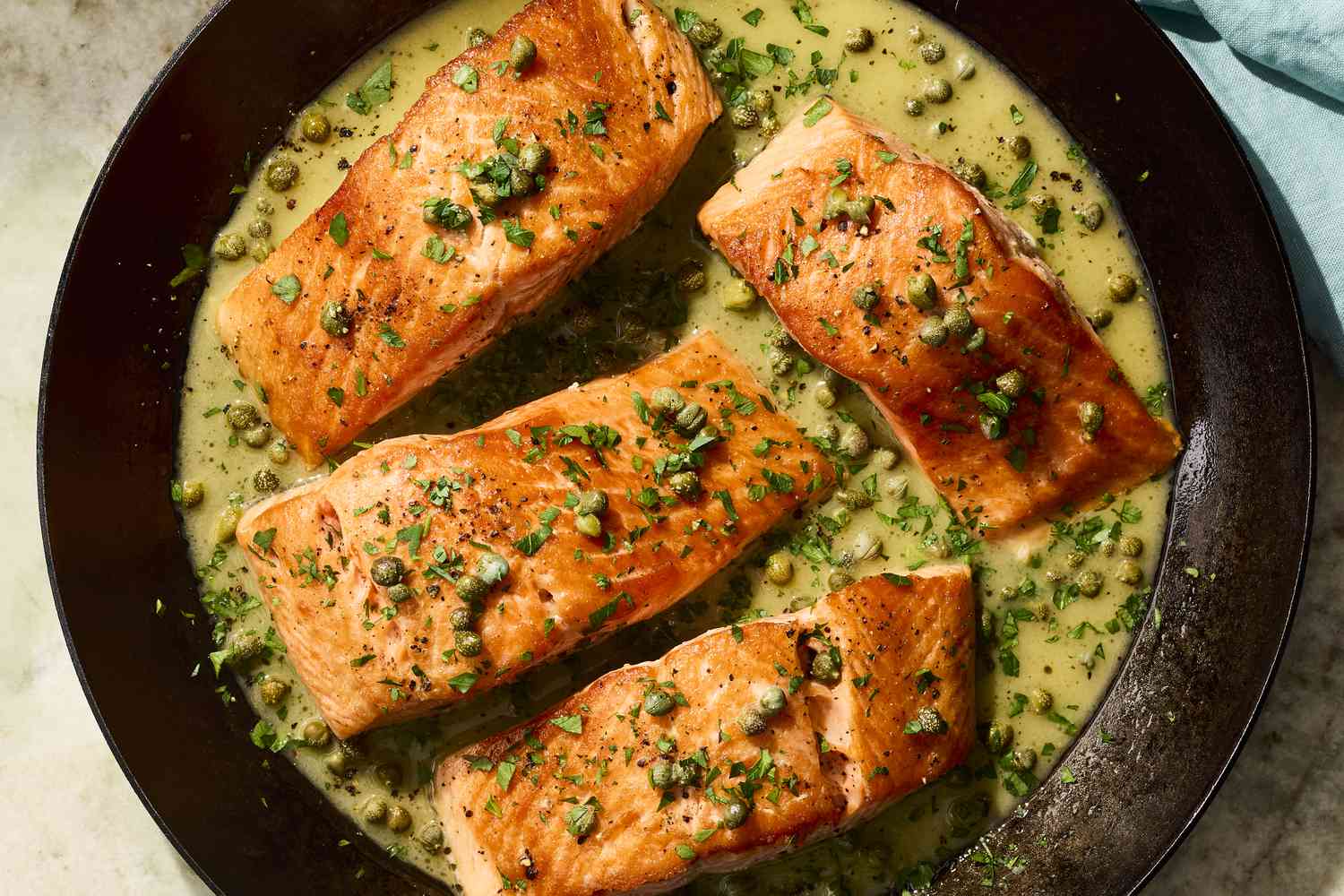
Yes, almost always. Starting skin-side down renders fat and crisps the skin, plus it protects the flesh from overcooking. Most of the cooking time happens skin-side down, then you finish briefly on the flesh side.
Why is my salmon sticking to the pan?
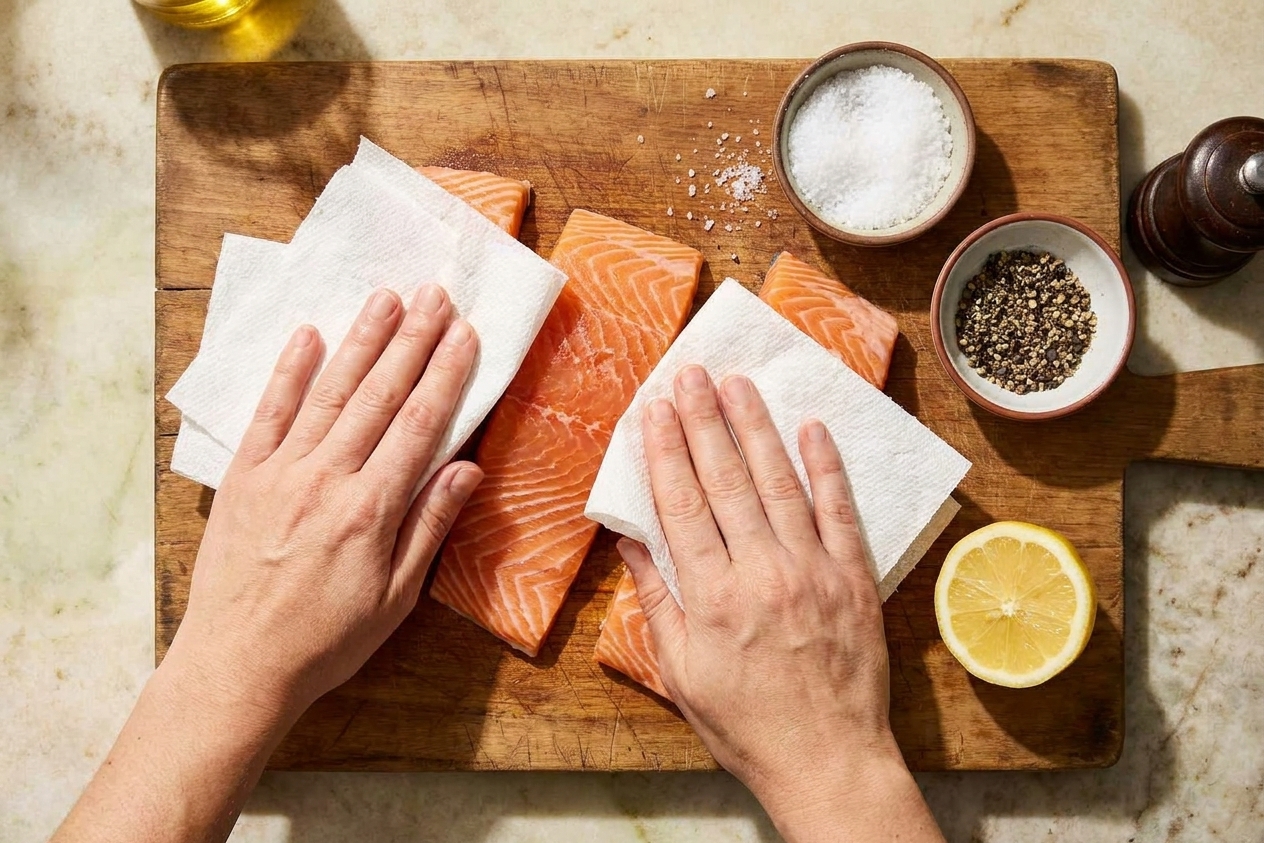
Three usual suspects: the pan was not hot enough, the fish was still damp, or you tried to flip too early. When the skin has crisped properly, it usually releases, but a little sticking can still happen depending on the pan, oil amount, and how delicate the skin is. Give it time and use a thin fish spatula.
Can I use frozen salmon?
Yes, but thaw it first for best results. Thaw overnight in the fridge, then pat very dry. If you are in a hurry, place the sealed salmon in cold water for 30 to 45 minutes, then dry well.
What oil is best for pan fried salmon?
Use a high smoke point oil like avocado, grapeseed, canola, or light olive oil. Save extra virgin olive oil and butter for finishing or for the sauce.
Do I need to remove the salmon skin?
No. If you like crispy skin, keep it on. If you do not, you can still cook it skin-on for protection and peel it off after cooking. It should lift right off once cooked.
What internal temp should I aim for?
Here is a quick guide (plus carryover cooking can bump the temp up a couple degrees while it rests):
- Medium, silky: 120°F to 125°F
- Medium-well, flaky: 130°F to 135°F
- FDA recommended: 145°F