Mom's Best Recipes
Recipe

Crispy-Skinned Jacket Potatoes

Salty, crackly skins with fluffy middles, plus an oven-only method and a faster microwave-to-oven shortcut.

Author By Matt Campbell
4.8
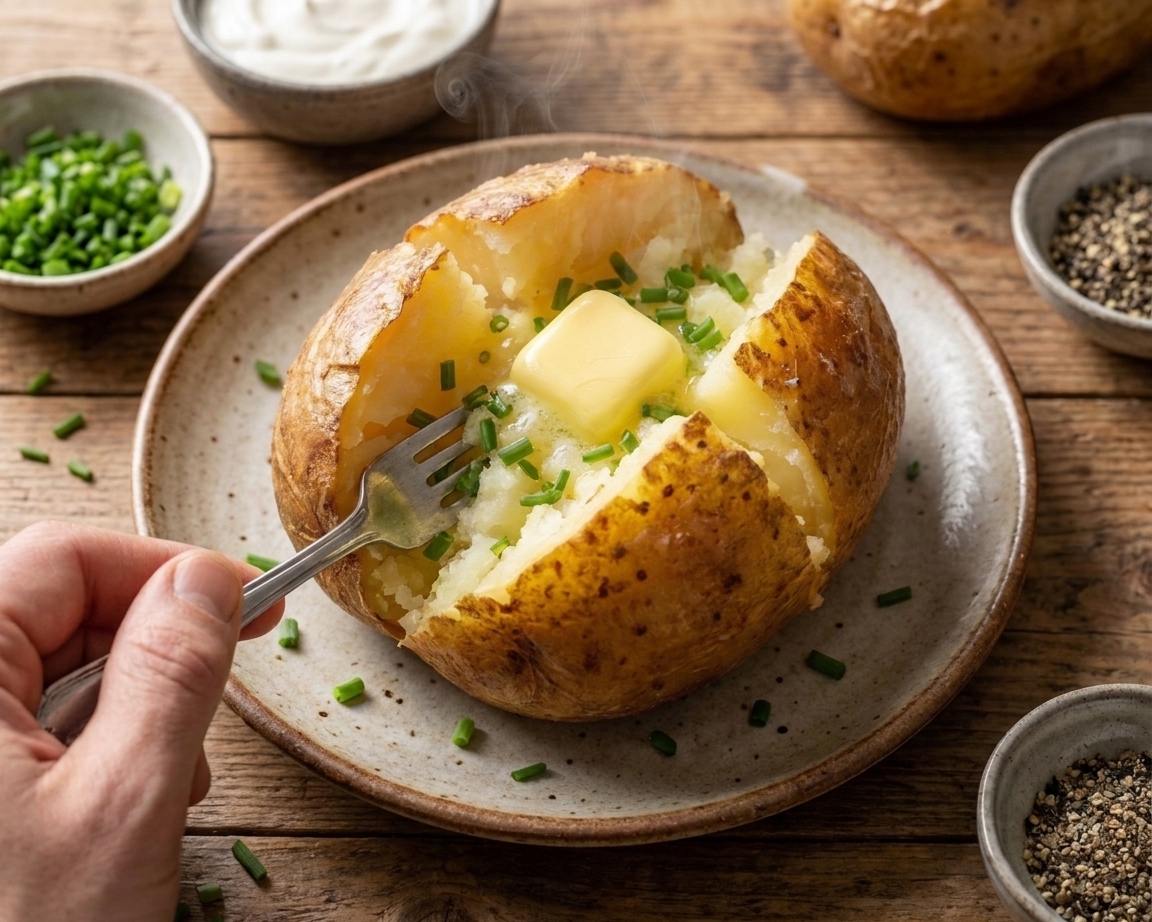
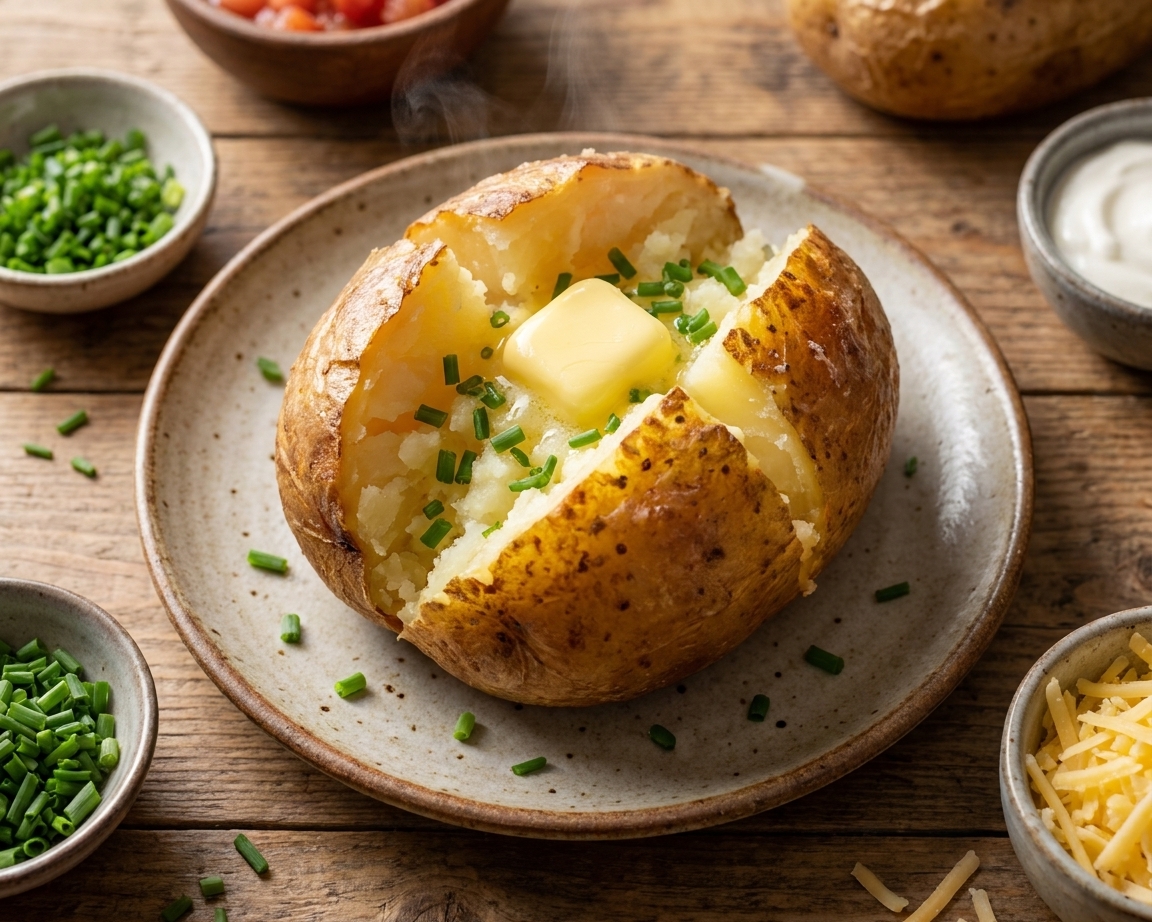
A split open jacket potato on a ceramic plate with crispy skin, fluffy interior, butter melting into the center, and a sprinkle of chives on a wooden table

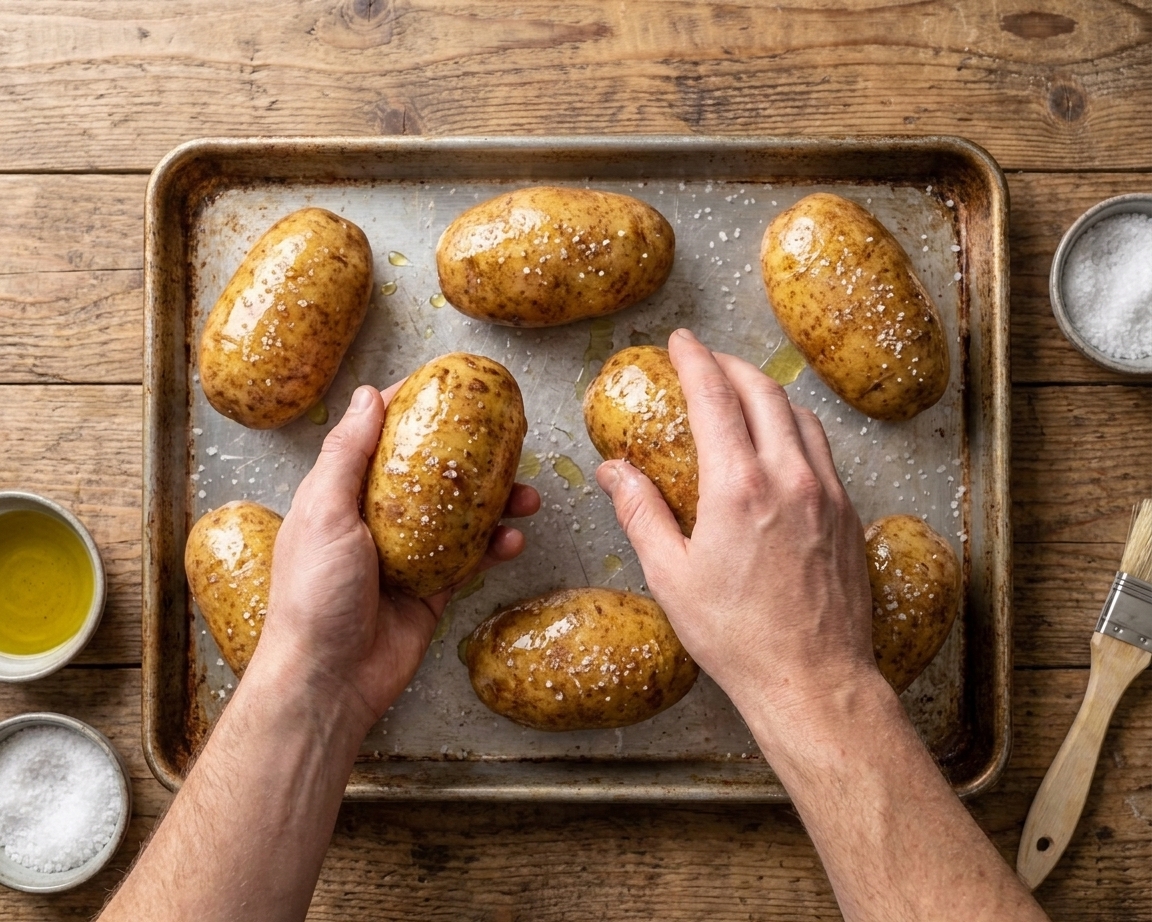
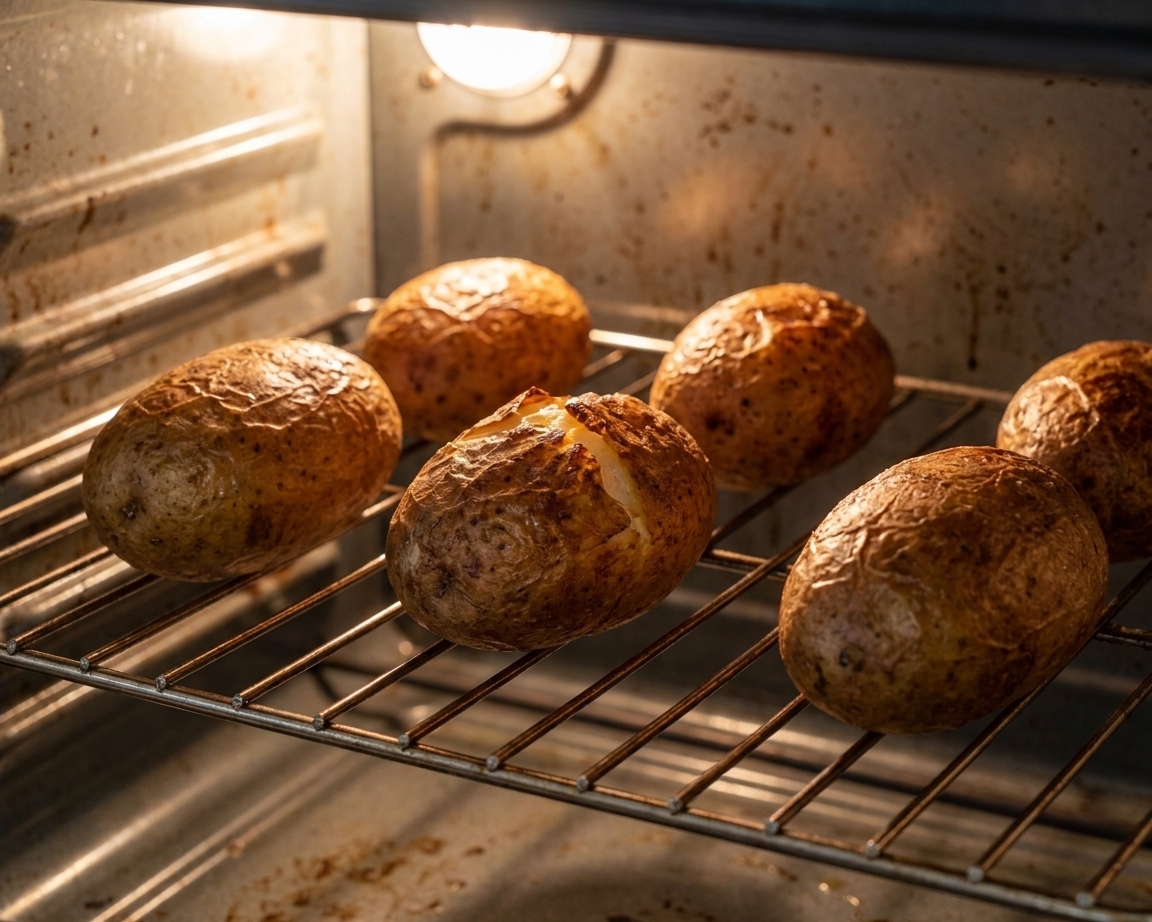
Jacket potatoes are proof that you do not need a complicated plan to make something feel like a real meal. You take a good baking potato, give it a little oil and a lot of salt, and let the oven do the heavy lifting until the skin turns crisp and the inside goes full fluffy-cloud.

My only non-negotiable is texture. I want crisp edges on the skin and a center that basically begs for butter. Below is the method I use at home, plus a microwave shortcut for the nights when time is rude.
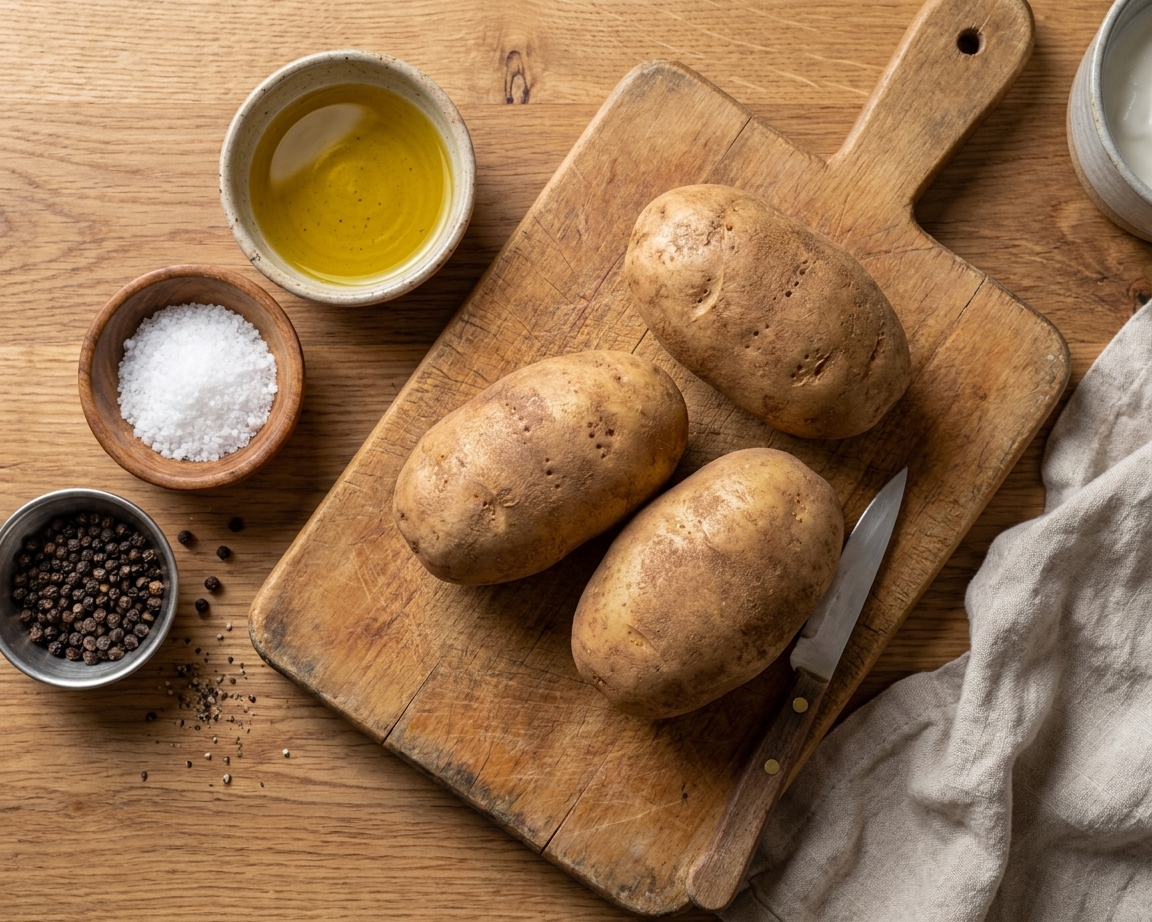
Whole russet potatoes on a cutting board with a small bowl of olive oil, kosher salt, and pepper beside them on a kitchen counter

Why It Works

  • Crispy, seasoned skin thanks to oil, generous salt, and direct oven heat.
  • Fluffy interior because we bake until truly tender, then fluff the inside instead of slicing and stopping.
  • Two timing options: classic oven bake for best texture, or microwave-to-oven when you need it faster.
  • Built-in flexibility: serve as a side, a lunch, or a top-it-and-call-it-dinner moment.

Pairs Well With

Storage Tips

Refrigerate: Let potatoes cool completely, then store in an airtight container for up to 4 days.

Reheat (best for crisp skin): Bake on a rack set over a sheet pan at 400°F for 15 to 20 minutes until hot through. If you have toppings, it helps to scrape them off first, reheat the potato, then add toppings back at the end.

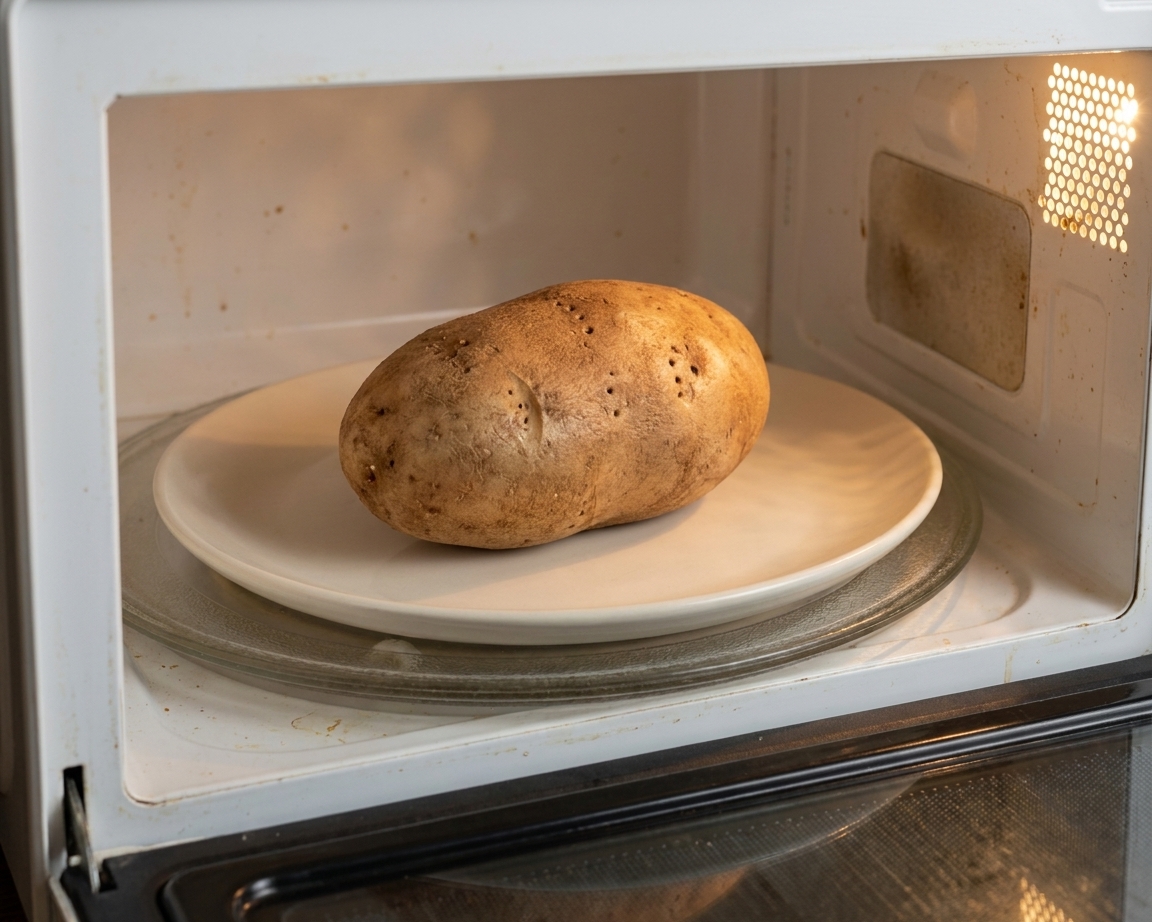
Reheat (fastest): Microwave in 1-minute bursts until hot, then crisp the skin in a 425°F oven or air fryer for 3 to 6 minutes.

Freeze: You can freeze baked potatoes, but the texture will be softer after thawing. Cool completely, wrap each potato tightly, then place in a freezer bag and freeze up to 2 months. Thaw overnight in the fridge before reheating, or reheat from frozen in a 350°F oven until hot through (timing varies by size).

Common Questions

What kind of potatoes are best for jacket potatoes?

Go for russet (also called Idaho) potatoes. They have a starchy interior that bakes up fluffy and they crisp nicely on the outside.

Do I need to wrap them in foil?

No. Foil traps steam, which makes the skin soft. If you want that classic crisp jacket, bake them unwrapped.

How do I know when they are done?

First, go by feel: a knife should slide in with almost no resistance, and the potato should feel light for its size. If you like a thermometer check, you are aiming for roughly 205°F+ in the center for a fully fluffy interior.

Why are my skins not crispy?

Usually it is one of three things: the oven is not hot enough, the potatoes were wrapped in foil, or they did not bake long enough. Also, do not skip the oil and salt. That combo helps the skin crisp and taste like something.

Can I microwave a jacket potato and still get crispy skin?

Yes. Microwave to cook the inside, then finish in a hot oven (or air fryer) with oil and salt to crisp the outside. It is not quite as perfect as all-oven, but it is a great weeknight move.

Jacket potatoes were one of the first things I learned to make on my own that felt like real cooking without being complicated. You can be tired, your kitchen can be a mess, and you can still pull off a potato with a crisp, salty shell and a buttery center that tastes like you tried harder than you did. That is my favorite kind of recipe: forgiving, dependable, and weirdly impressive for something that is basically just a potato with good vibes.