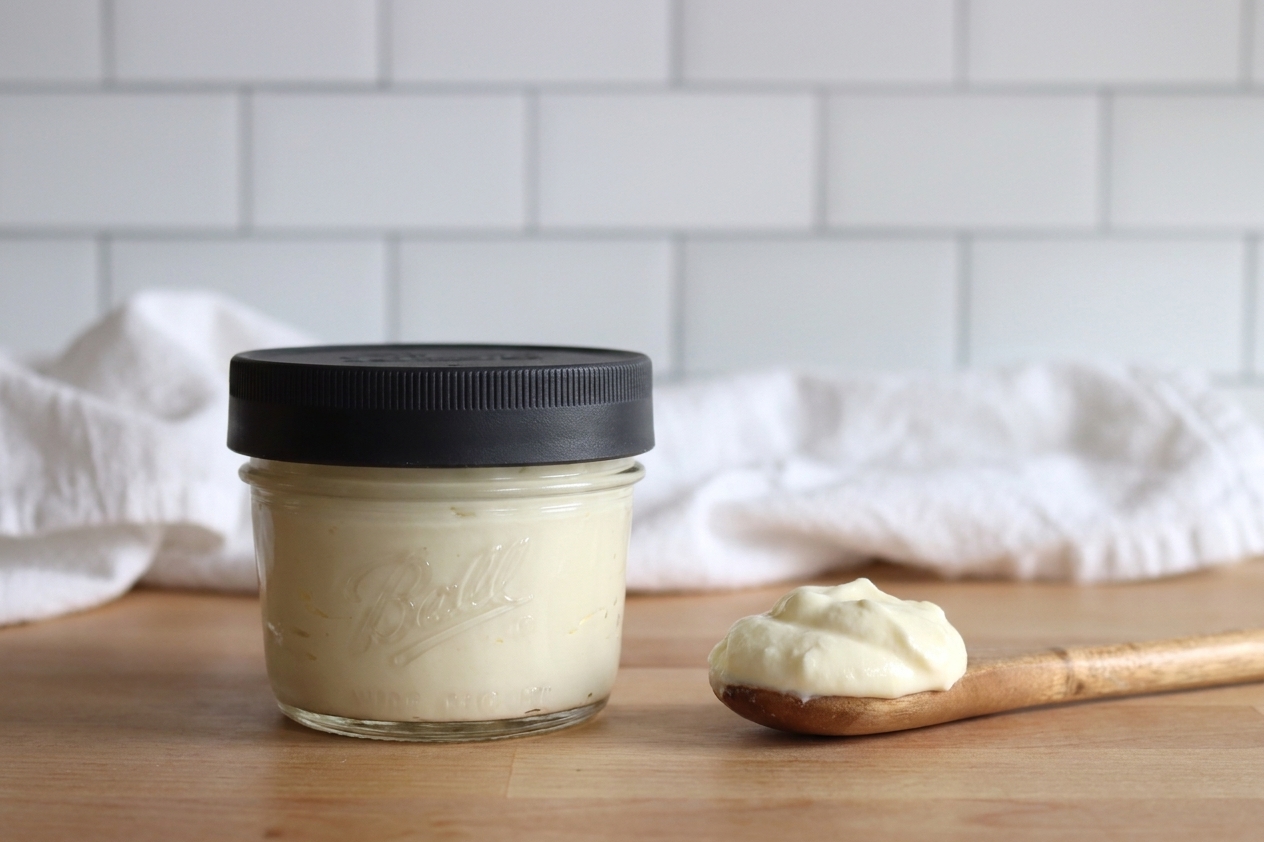
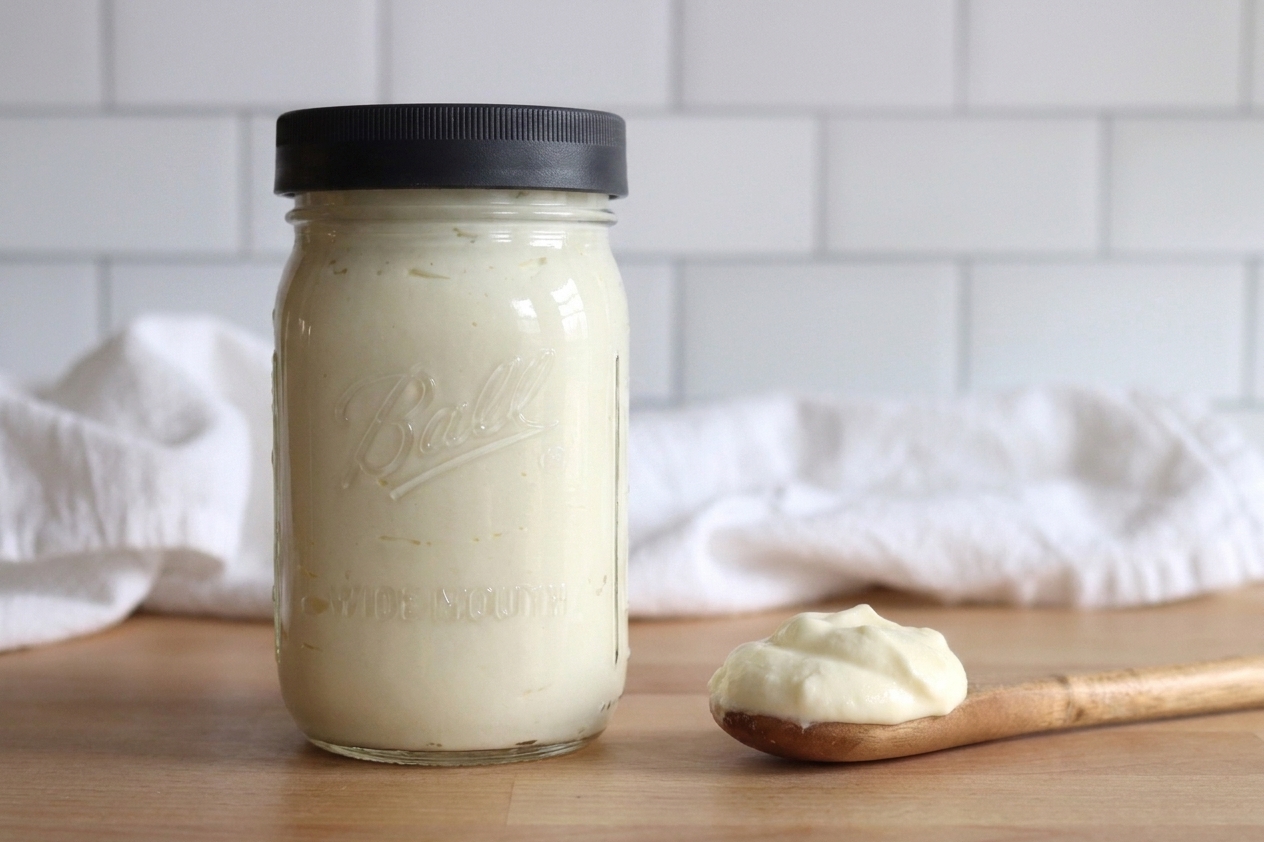
What is crème fraîche?
Crème fraîche is a cultured cream. Think of it as the richer, slightly tangier cousin of sour cream. It is thick, spoonable, and great in both savory and sweet dishes.
Is crème fraîche the same as sour cream?
Not exactly. Sour cream is usually lower fat and can curdle more easily when heated. Crème fraîche is higher fat, so it is less likely to curdle in warm sauces and soups and tastes a bit less sharp.
Can I use regular milk instead of heavy cream?
No. You need the fat from heavy cream for the proper thickness and stability. Half-and-half can work in a pinch, but it will usually be thinner and may take longer to set.
My crème fraîche is still runny. What happened?
Most common reasons: your kitchen was cool, your buttermilk was not cultured, or the cream was ultra-pasteurized and slow to set. Give it more time, move it to a slightly warmer spot, and make sure you are using cultured buttermilk.
Can I use yogurt or sour cream as the starter?
Yes, sometimes. Use 1 tablespoon plain yogurt or 1 tablespoon sour cream per cup of cream. Results vary by brand, and buttermilk is the most consistent starter for me.
How do I know it is done culturing?
It should look like loose yogurt and feel thicker when you stir. A spoonful should mound slightly, and when you drag a spoon through it, it should leave a brief trail.
What if it smells off or looks weird?
Trust your senses. If you see mold, or any pink or orange discoloration, or it smells unpleasant (not just tangy), discard it and start over with a very clean jar and fresh buttermilk.
How do I use crème fraîche?
- Dollop on chili, tacos, baked potatoes, roasted veggies
- Swirl into tomato soup, mushroom soup, or lentil soup
- Whisk into pan sauces with lemon, wine, mustard, or herbs
- Spoon over berries with a little honey
- Fold into scrambled eggs right at the end