Is crème fraîche the same as sour cream?
No. They are close cousins, but crème fraîche is usually higher fat and less sharply tangy. The big practical difference is that crème fraîche is more resistant to curdling in warm sauces than sour cream or yogurt (though very high heat, boiling, or lots of acid can still push any dairy too far).
What if I cannot find cultured buttermilk?
Use 1 tablespoon plain, unsweetened yogurt or kefir with live cultures as the starter instead. (Skip anything flavored, sweetened, or packed with stabilizers if you can, since those can change the texture.) The flavor and thickness may vary a bit, but you will still get a tangy crème fraîche-style result.
Why is my crème fraîche still runny?
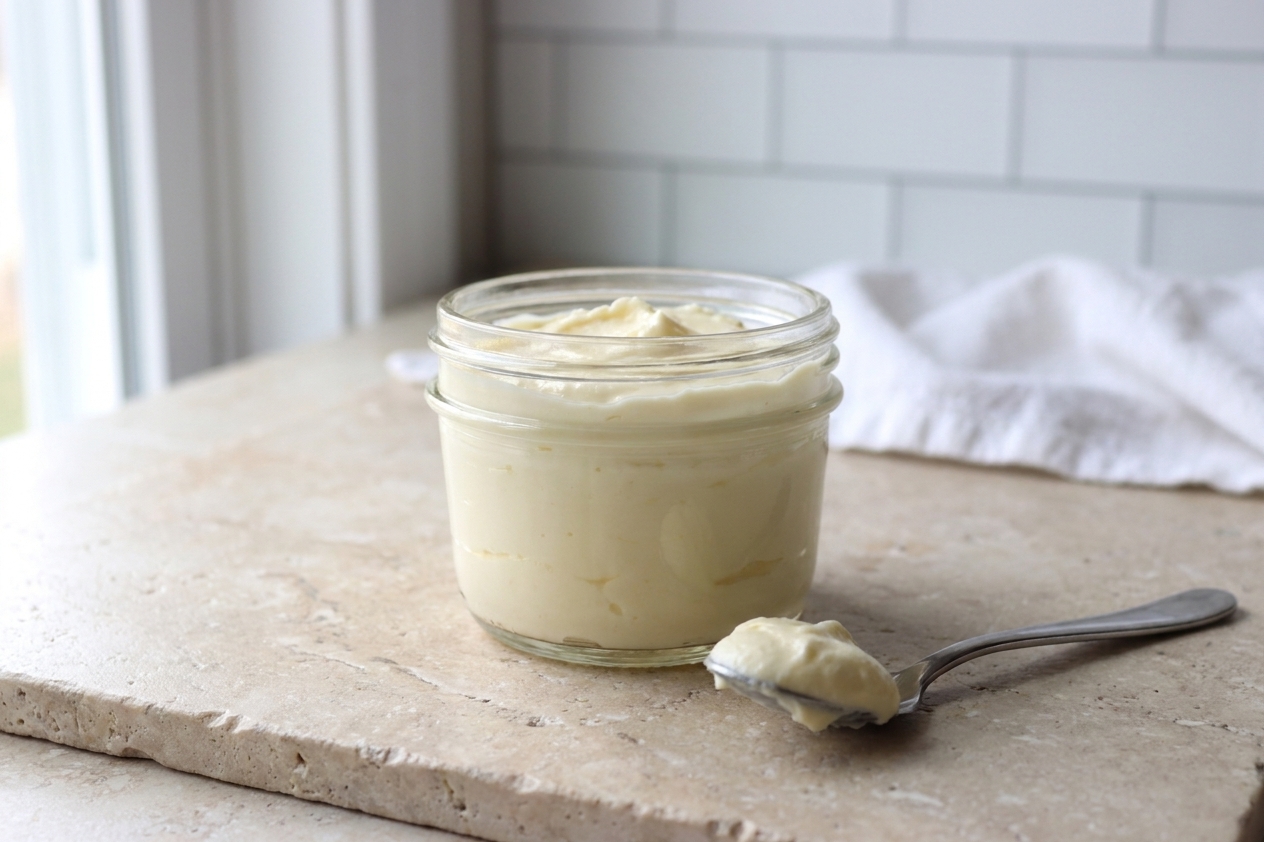
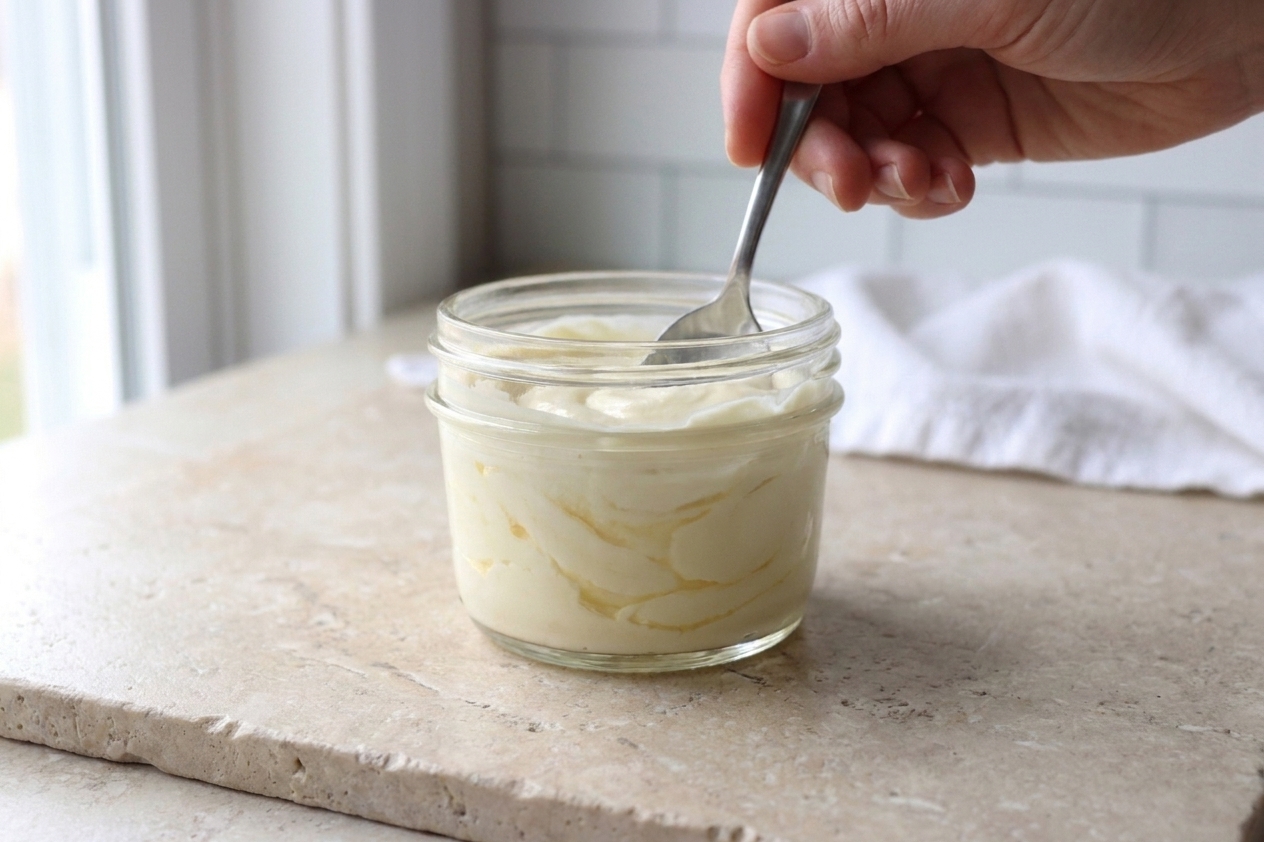
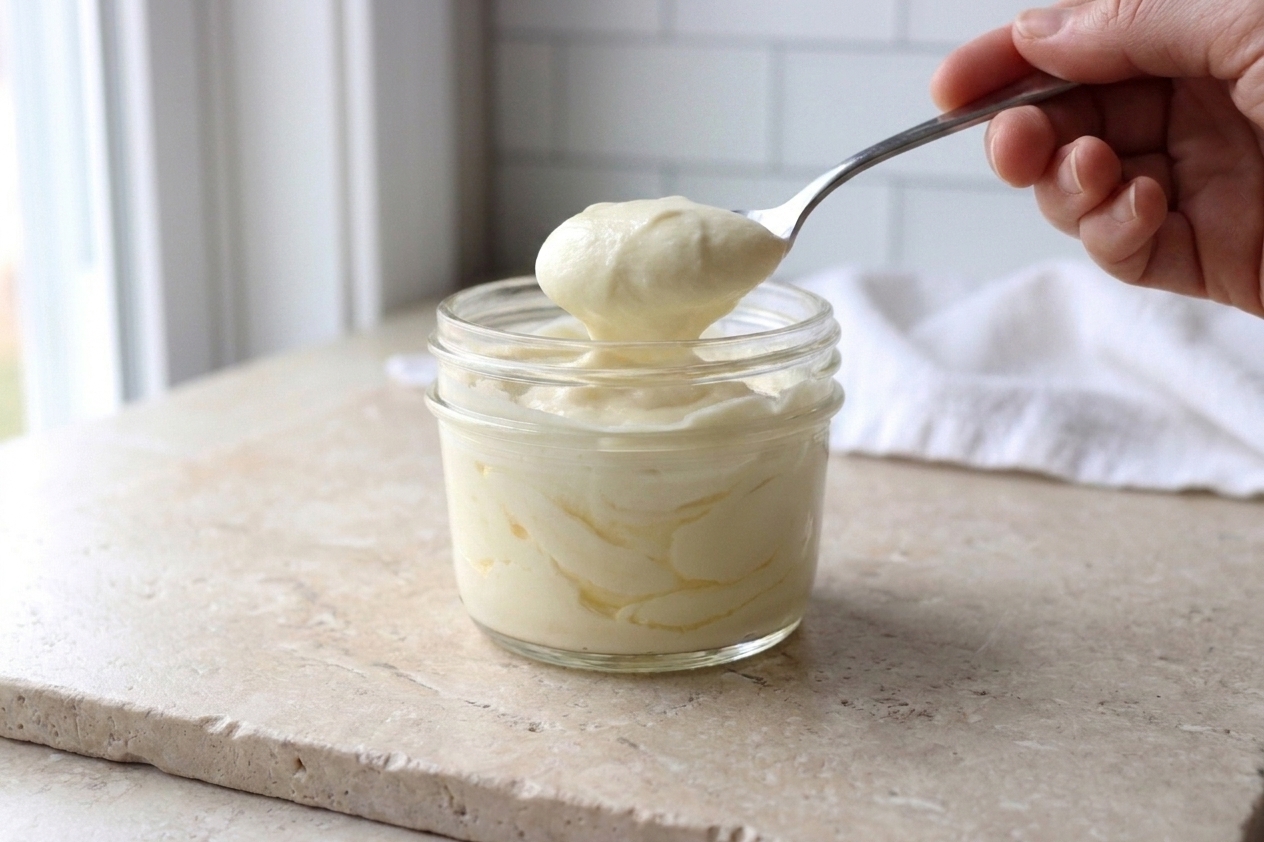
Most commonly it just needs more time or a warmer spot. Let it sit another 6 to 12 hours. Also make sure you used heavy cream, not half-and-half. Low-fat dairy will not thicken the same way. A good doneness cue: it should look thick like loose sour cream and mound slightly on a spoon (it will firm up more after chilling).
Does it need to be kept at a specific temperature while it cultures?
Room temperature is fine. A cozy range is about 70°F to 78°F. If your kitchen runs cold, put the jar in the oven with the light on (oven OFF), or set it on top of the fridge where it is gently warm.
Can I use ultra-pasteurized cream?
Yes, it can still work, but it may take longer to thicken. If you have the choice, heavy cream that is not ultra-pasteurized can culture a little more predictably.
How do I know if it went bad?
Crème fraîche should smell pleasantly tangy and dairy-sweet. Discard it if you see any mold (especially pink, orange, or fuzzy spots), if it smells rotten or sharply unpleasant, if it turns slimy, or if you notice fizzing or carbonation.
How do I use crème fraîche?
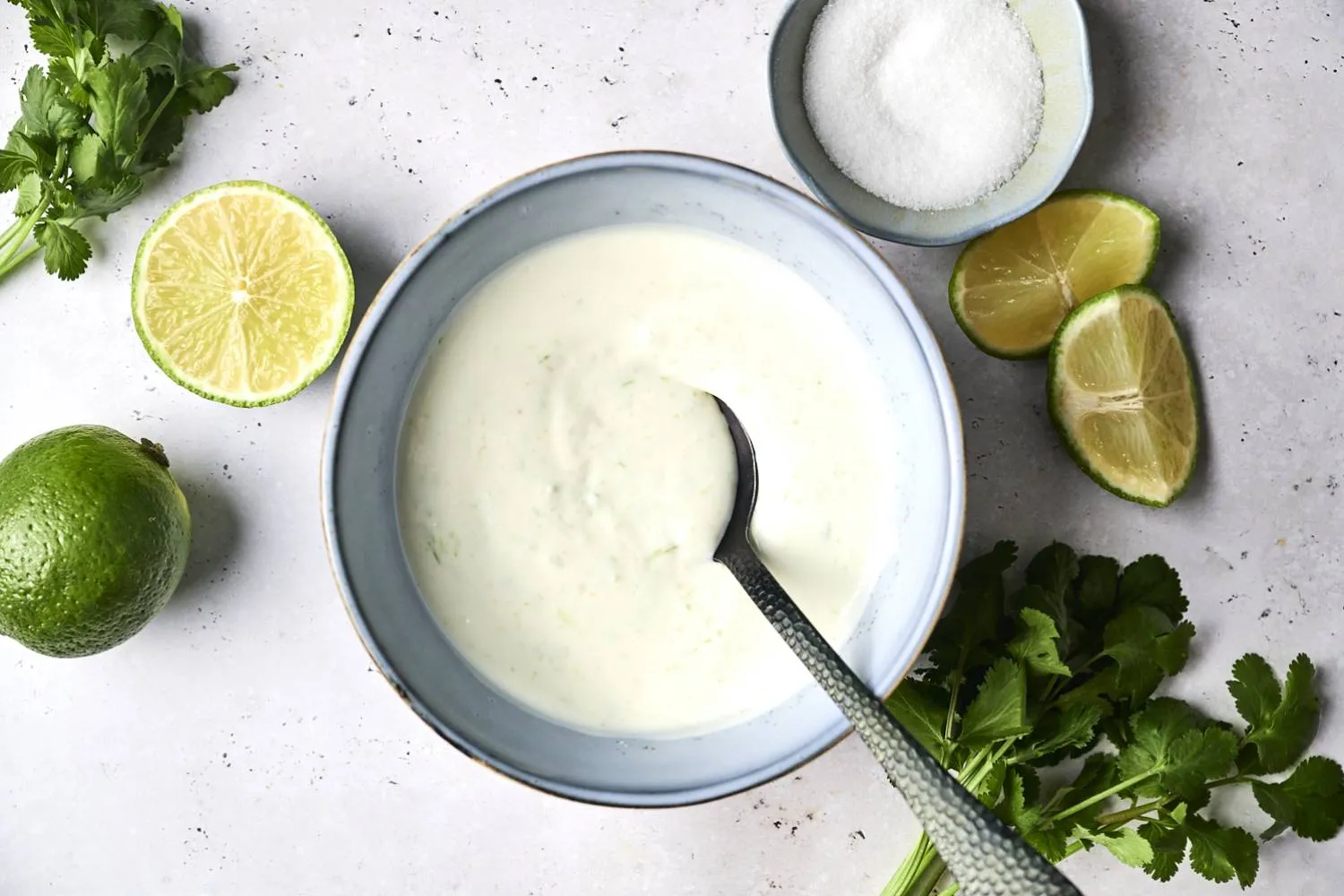
Dollop it on tacos, chili, baked potatoes, and roasted vegetables. Stir it into tomato soup, pan sauces, and pasta. Whisk it with lemon and herbs for a fast dressing. Or sweeten it with honey and vanilla and put it on berries.