Can I make this almond cake gluten free?
Yes. Swap the all-purpose flour for a 1:1 gluten-free baking blend (ideally one that includes xanthan gum). Brands vary, so the cake may bake up a bit more tender and delicate. If it seems underdone, give it another 3 to 5 minutes and use the doneness cues (and temp) below.
What is the best almond flour to use?
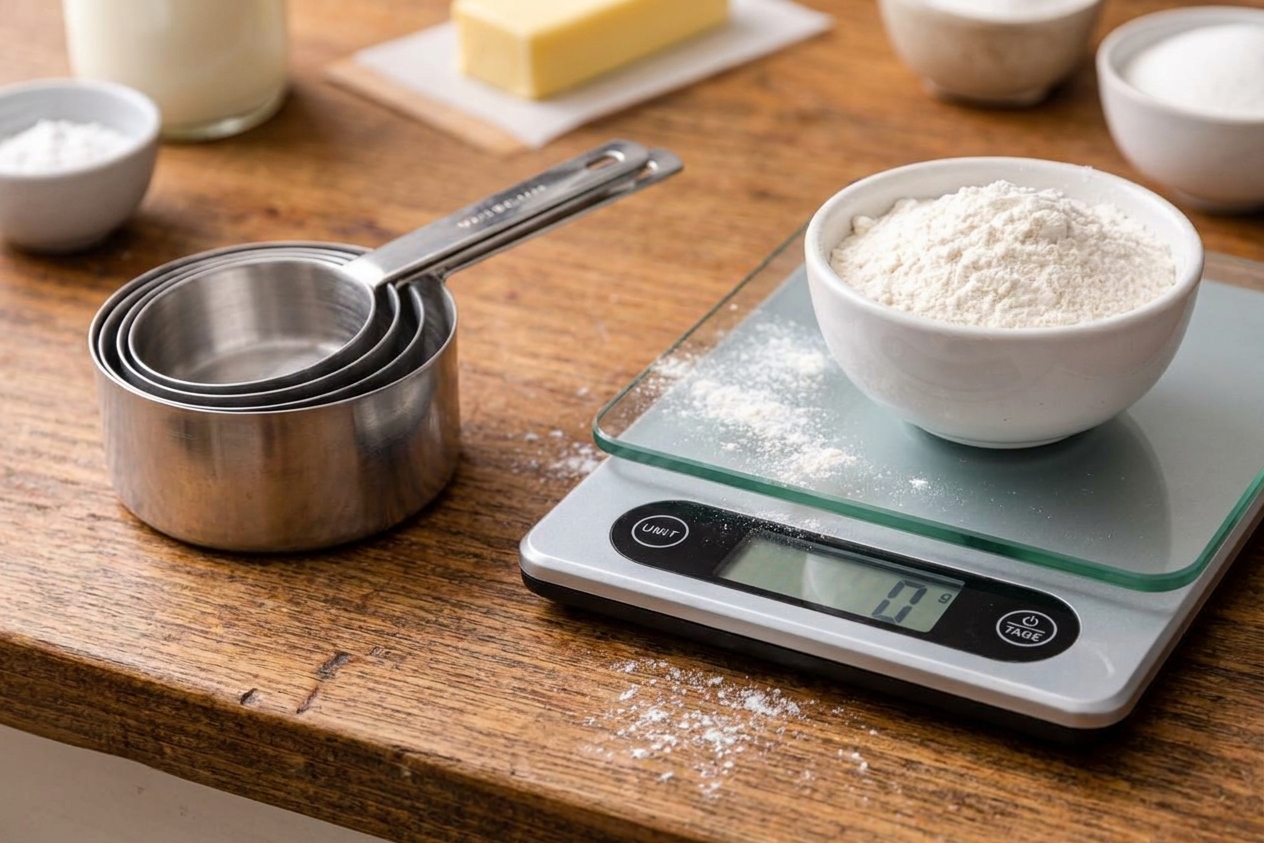
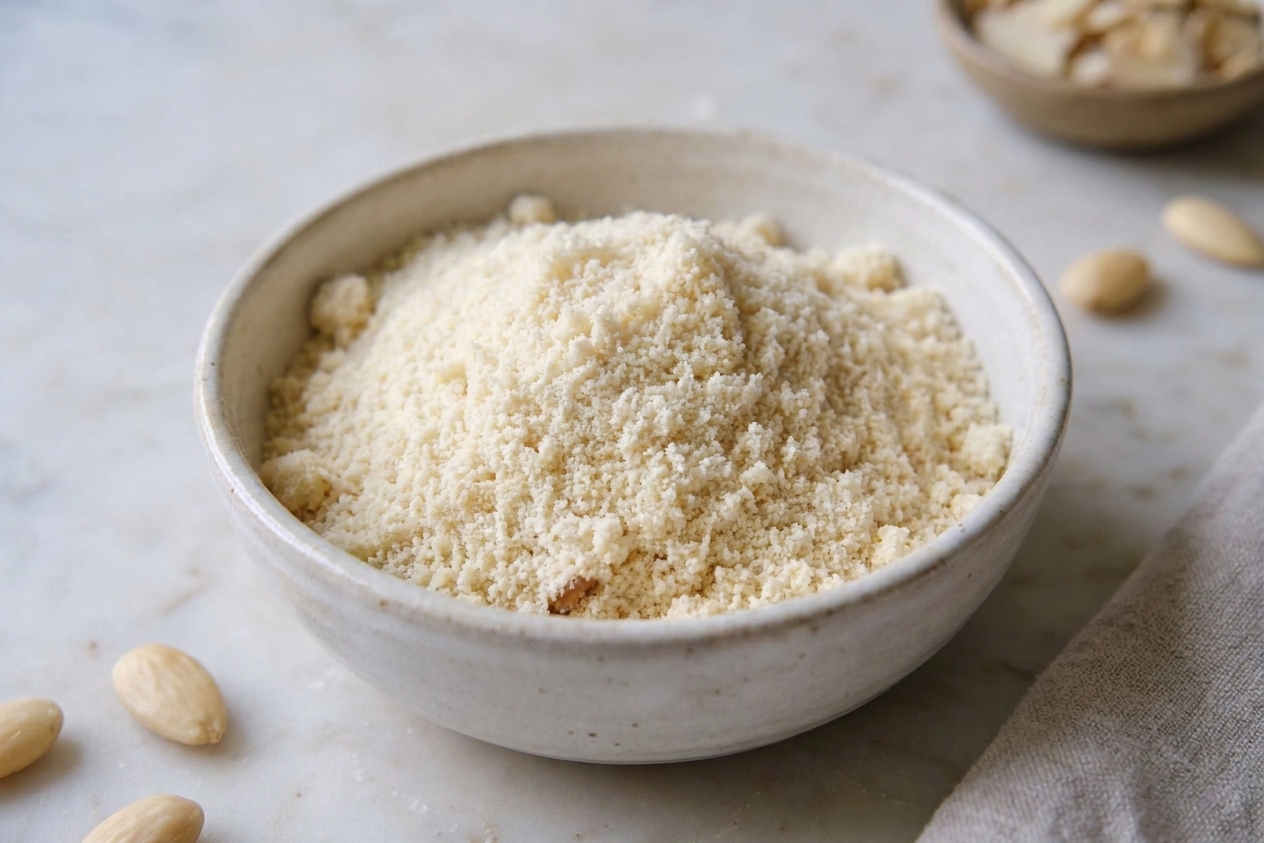
Use fine blanched almond flour for the most tender crumb. Almond meal (coarser, with skins) will work, but the cake will be a bit more rustic and slightly denser. Also note: the 96 g per cup measurement is for fine blanched almond flour, and brands can vary a little.
Can I skip the almond extract?
You can, but the flavor will be more subtle. If you skip it, add 1 extra teaspoon vanilla extract and consider adding a little lemon zest to keep things bright.
Why did my cake sink in the middle?
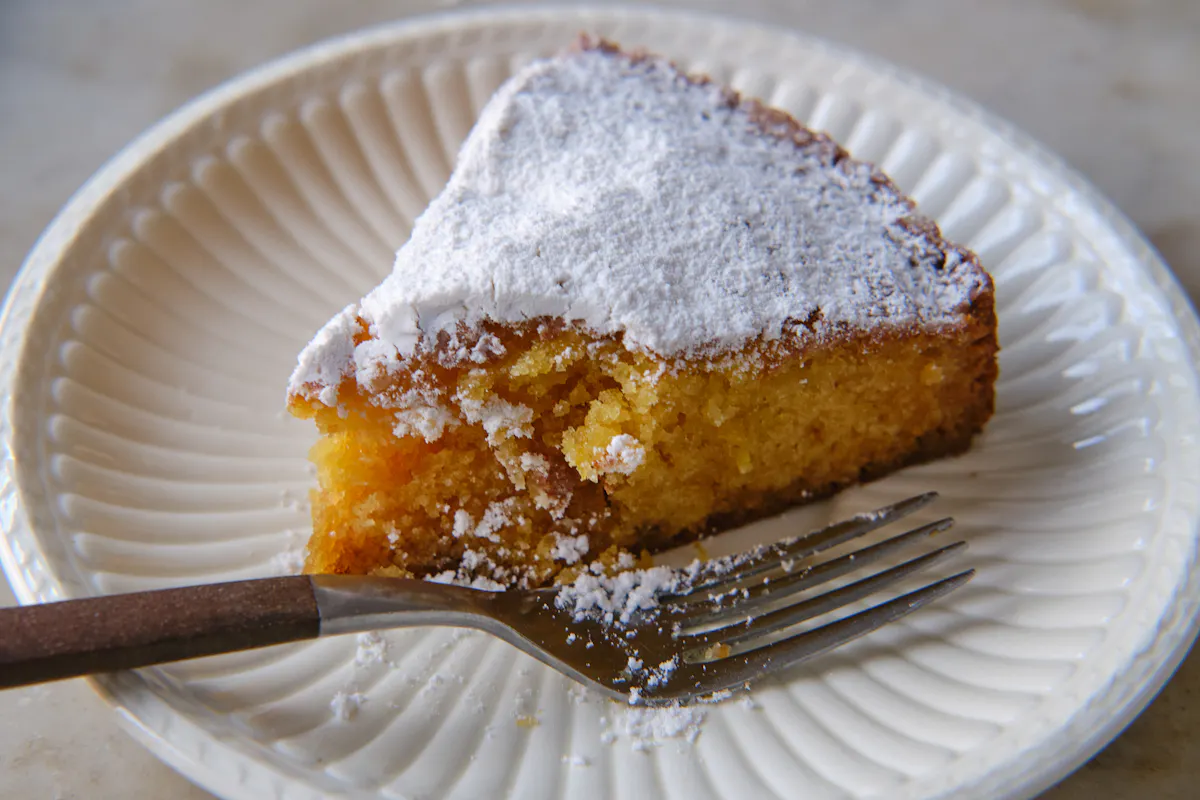
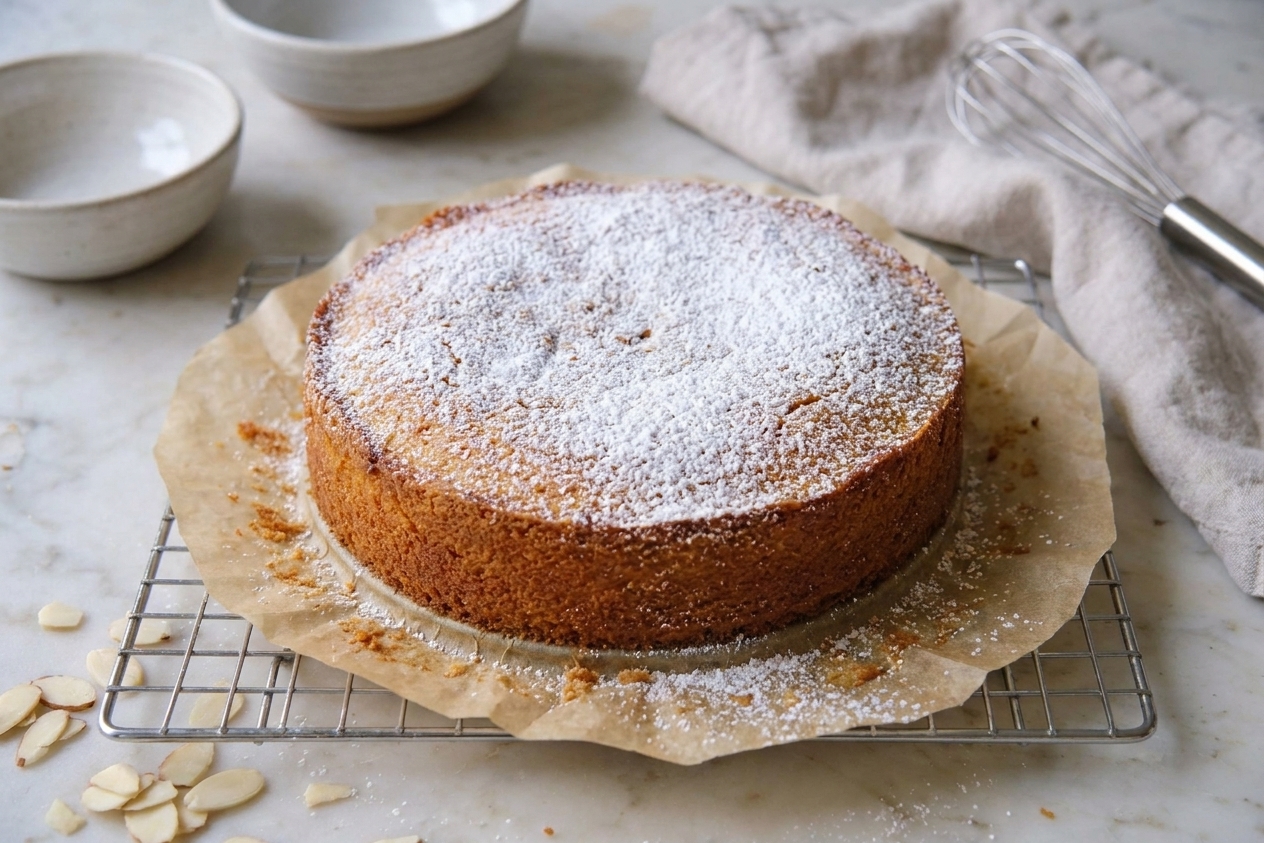
Most common causes are underbaking, opening the oven early, or overmixing once flour is added. Bake until the center springs back, the edges pull slightly from the pan, and a toothpick comes out with a few moist crumbs, not wet batter. For extra confidence, aim for about 200 to 205°F (93 to 96°C) in the center.
Can I bake this in a different pan?
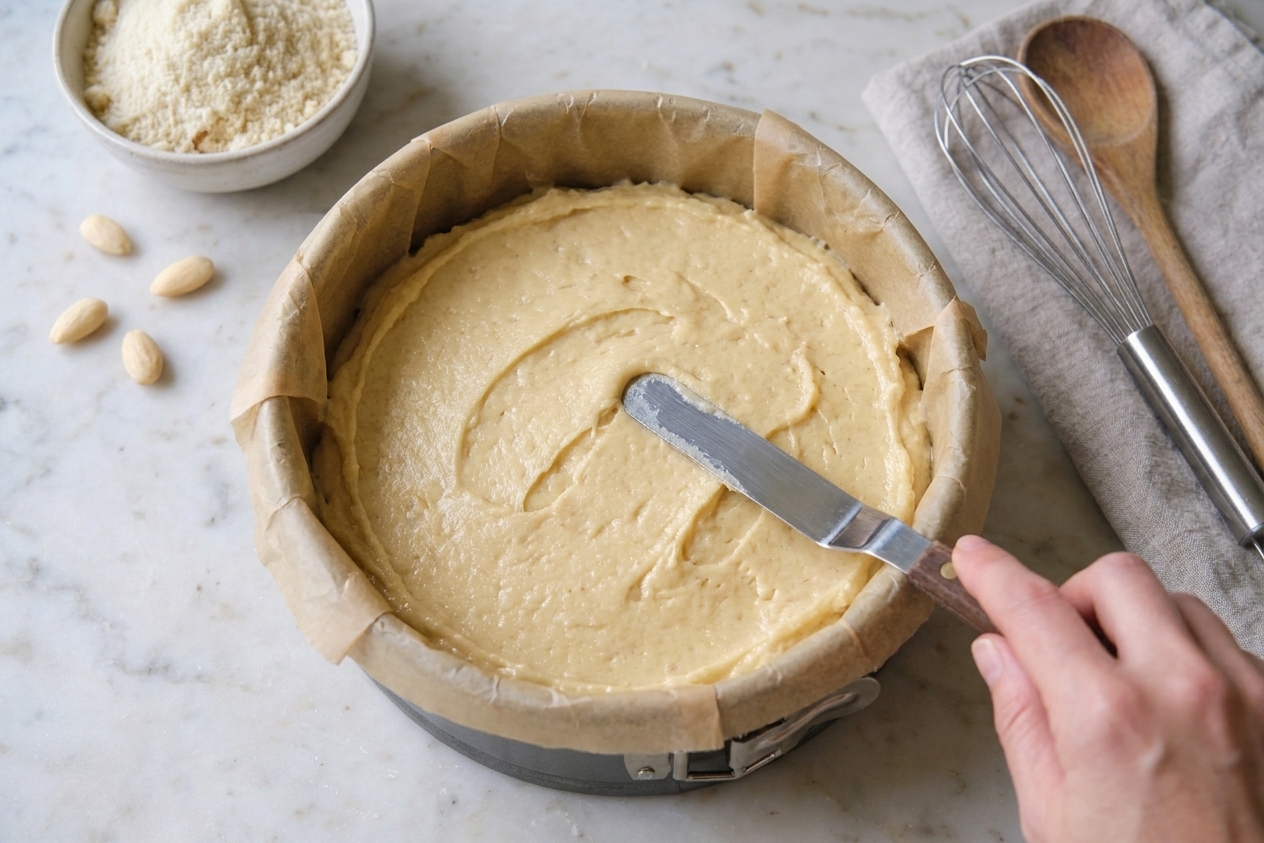
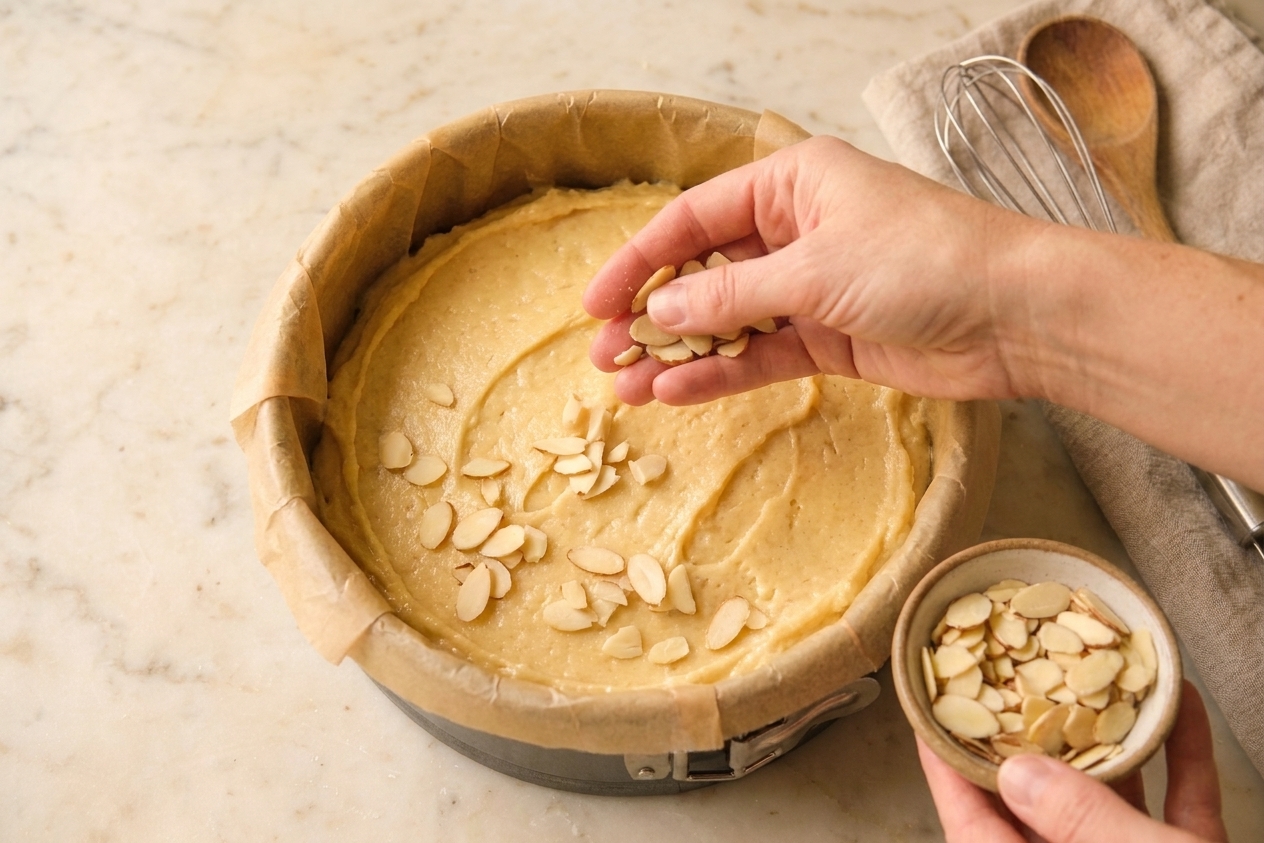
Yes. A 9-inch round cake pan works (line with parchment for easy release). An 8-inch pan will be thicker and may need 5 to 10 extra minutes. A loaf pan also works, but check doneness with a skewer and expect a longer bake. If you use a springform pan, set it on a sheet pan to catch any butter seepage.
Allergy note?
This cake contains tree nuts (almonds), dairy, eggs, and wheat (unless you do the gluten-free swap).