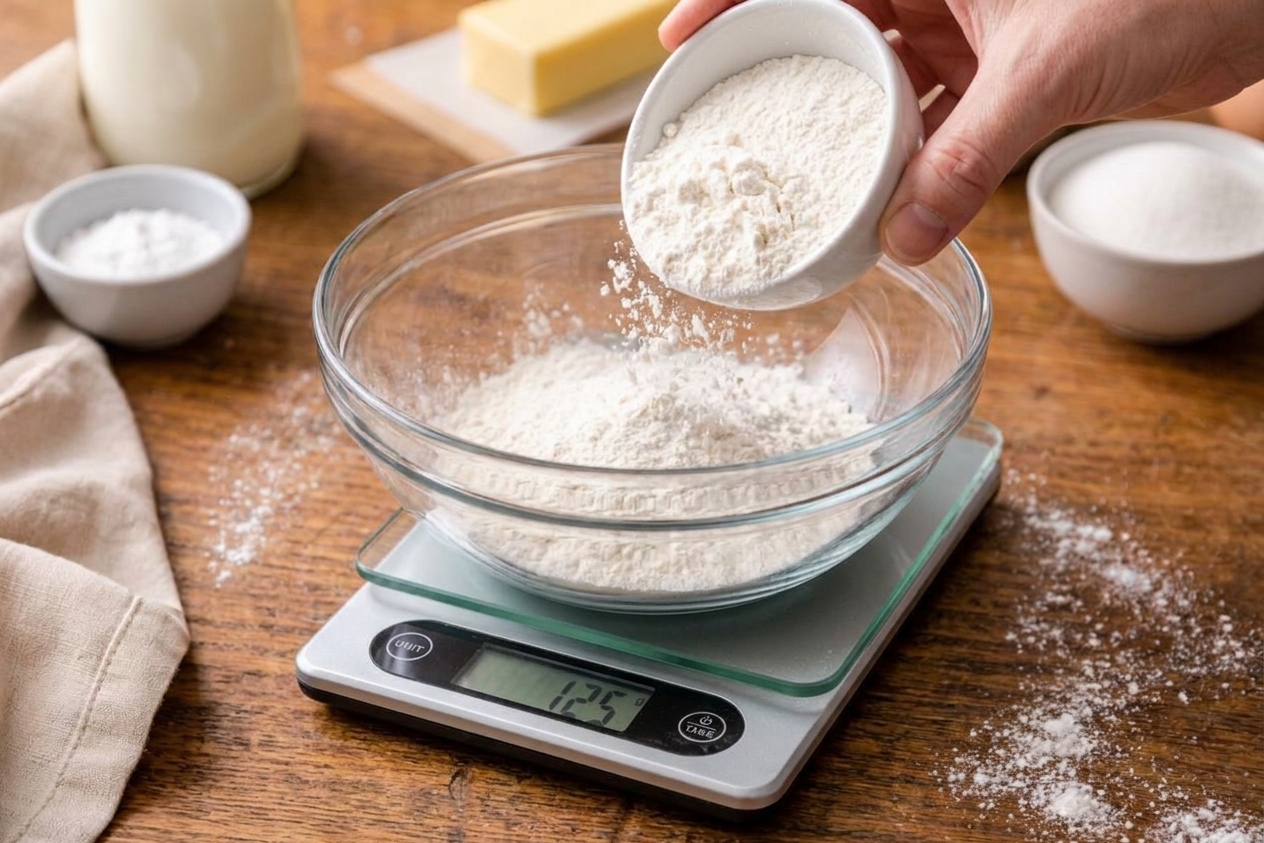
Common cups to grams conversions
Because ingredient density varies, the most reliable approach is to convert by ingredient type, not just “1 cup equals X grams.” These are the conversions I reach for the most.
Quick accuracy note: All cup-to-gram numbers are estimates based on a standard US cup and typical measuring methods. Brands, humidity, and how you pack or scoop can shift weights. When a recipe really matters, a scale wins.
Flour (all-purpose)
- 1 cup = 120 g
- 3/4 cup = 90 g
- 2/3 cup = 80 g
- 1/2 cup = 60 g
- 1/3 cup = 40 g
- 1/4 cup = 30 g
Note: Different sources range from 120 to 125 g per cup depending on measuring method. I use 120 g because it lines up with the spoon-and-level method and can help prevent dryness in baked goods.
Other flours (quick baselines)
- Bread flour: 1 cup = 120 to 125 g (spooned and leveled)
- Cake flour: 1 cup = 110 to 115 g (sifted, then spooned and leveled)
- Whole wheat flour: 1 cup = 120 to 130 g (spooned and leveled)
Tip: If a recipe is flour-heavy (bread, pizza dough, sandwich loaves), weigh it. Flour is the ingredient most likely to swing your results.
Granulated sugar
- 1 cup = 200 g
- 1/2 cup = 100 g
- 1/3 cup = 67 g
- 1/4 cup = 50 g
Brown sugar (packed)
- 1 cup = 215 g
- 1/2 cup = 108 g
- 1/3 cup = 72 g
- 1/4 cup = 54 g
Tip: If the recipe says “packed,” press it into the cup. If you are using a scale, you can skip the packing drama and just weigh it.
Powdered sugar
- 1 cup sifted = 110 to 120 g
- 1 cup unsifted = 120 to 130 g
- 1/2 cup = 55 to 65 g
- 1/4 cup = 28 to 33 g
Note: Powdered sugar is extra sensitive to sifting and settling. If your recipe says “sifted,” measure after sifting (or just weigh).
Butter
- 1 cup = 227 g
- 1/2 cup = 113 g (1 stick)
- 1/4 cup = 57 g
- 1 tablespoon = 14 g
Vegetable or canola oil
- 1 cup = 220 g
- 1/2 cup = 110 g
- 1/4 cup = 55 g
Note: Depending on brand and temperature, you may see 218 to 224 g per cup. 220 g is a solid everyday target.
Honey
- 1 cup = 340 g
- 1/2 cup = 170 g
- 1/4 cup = 85 g
Milk and water
- 1 cup water = 236 to 240 g
- 1 cup milk = 240 to 245 g
Note: “1 cup = 240 g” is reliably true for water (give or take rounding). Other liquids vary with density. Milk varies slightly by fat percentage, but for most baking, 240 to 245 g per cup is close enough.
Salt (because it gets tricky fast)
- Table salt: 1 teaspoon = about 6 g
- Kosher salt: 1 teaspoon = about 3 to 5 g (brand matters a lot)
Tip: If a recipe lists salt by volume and you swap brands, taste and texture can change. When you can, weigh salt.
Baking powder and baking soda
- Baking powder: 1 teaspoon = about 4 g
- Baking soda: 1 teaspoon = about 5 g
Why cups to grams is different for every ingredient
A cup is a volume measurement. Grams are a weight measurement. A cup of feathers and a cup of rocks are both a cup, but they obviously do not weigh the same. Ingredients work the same way: flour is fluffy, sugar is dense, cocoa is clingy, and oats are basically tiny boats full of air.
Do I really need a scale?
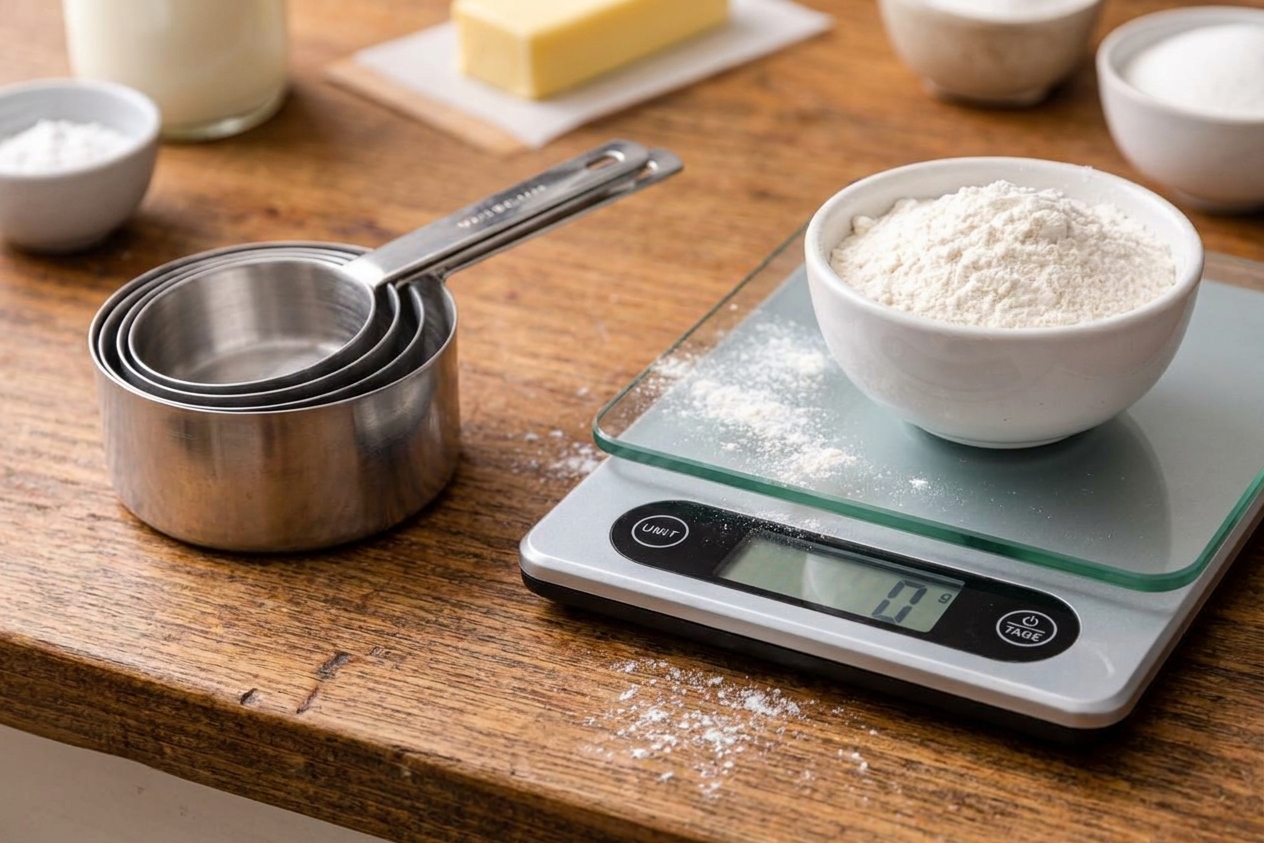
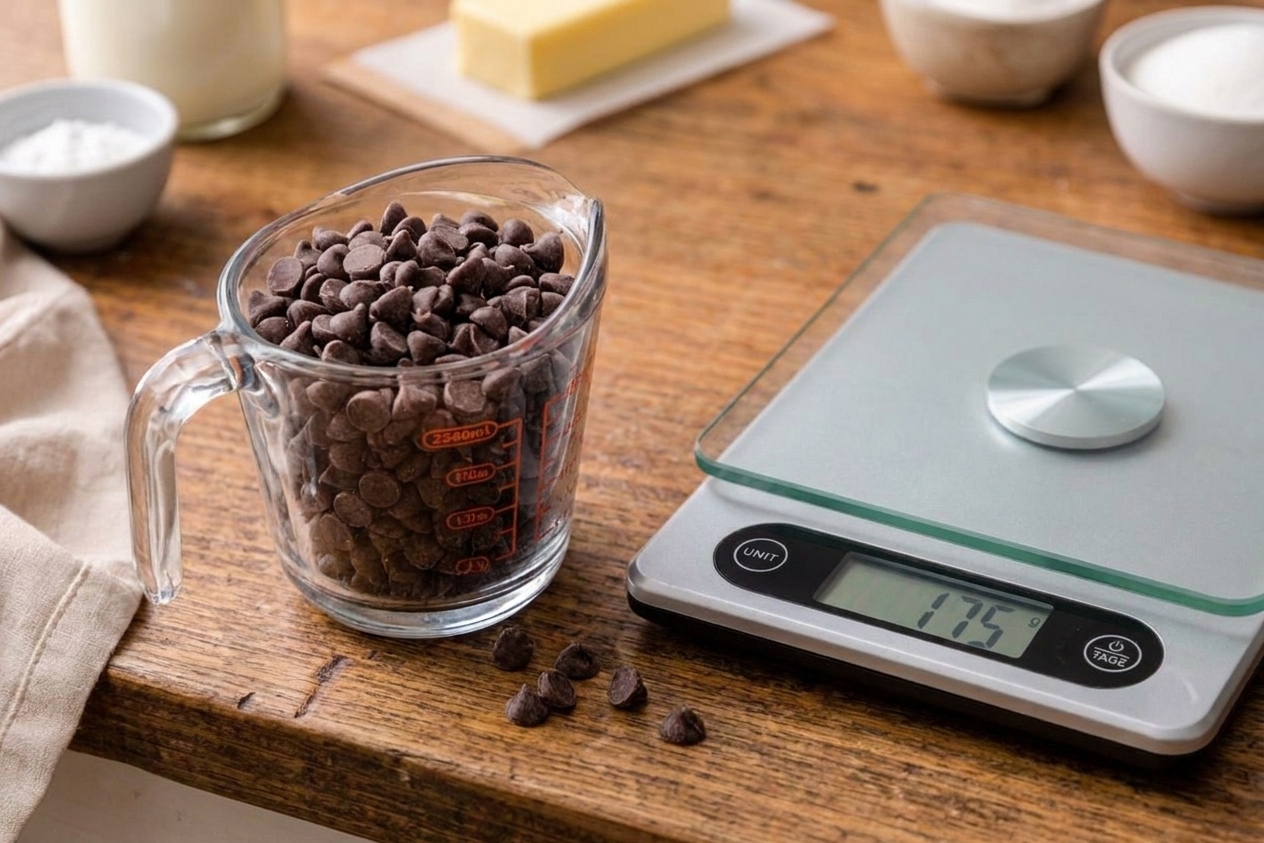
You do not need one, but if you bake even a couple times a month, a basic digital scale is the biggest quality-of-life upgrade you can make. It is cheaper than a fancy pan and saves more recipes than a pep talk ever will.
What is the most accurate flour conversion?
For all-purpose flour, use 120 g per cup for most American-style recipes. If your recipe is from a bread-focused author or uses a European style, you might see 125 g per cup. If your dough looks dry, do not panic. Hold back 10 to 15% of the flour next time and add as needed.
Is a cup the same everywhere?
This guide assumes a US cup: 236.6 ml (often rounded to 237 ml). Some countries use a 250 ml metric cup. If you are using a metric-cup recipe, weights are your best friend because they remove the guesswork completely.
Source note: These conversions align with common baking references (including major flour brands and baking textbooks), but your best “source” is still your scale in your kitchen.