Mom's Best Recipes
Recipe

Easy Skillet Flatbread

Soft, chewy stovetop flatbread with crisp spots and a buttery finish. No yeast needed and it plays nice with any dinner.

Author By Matt Campbell
4.8
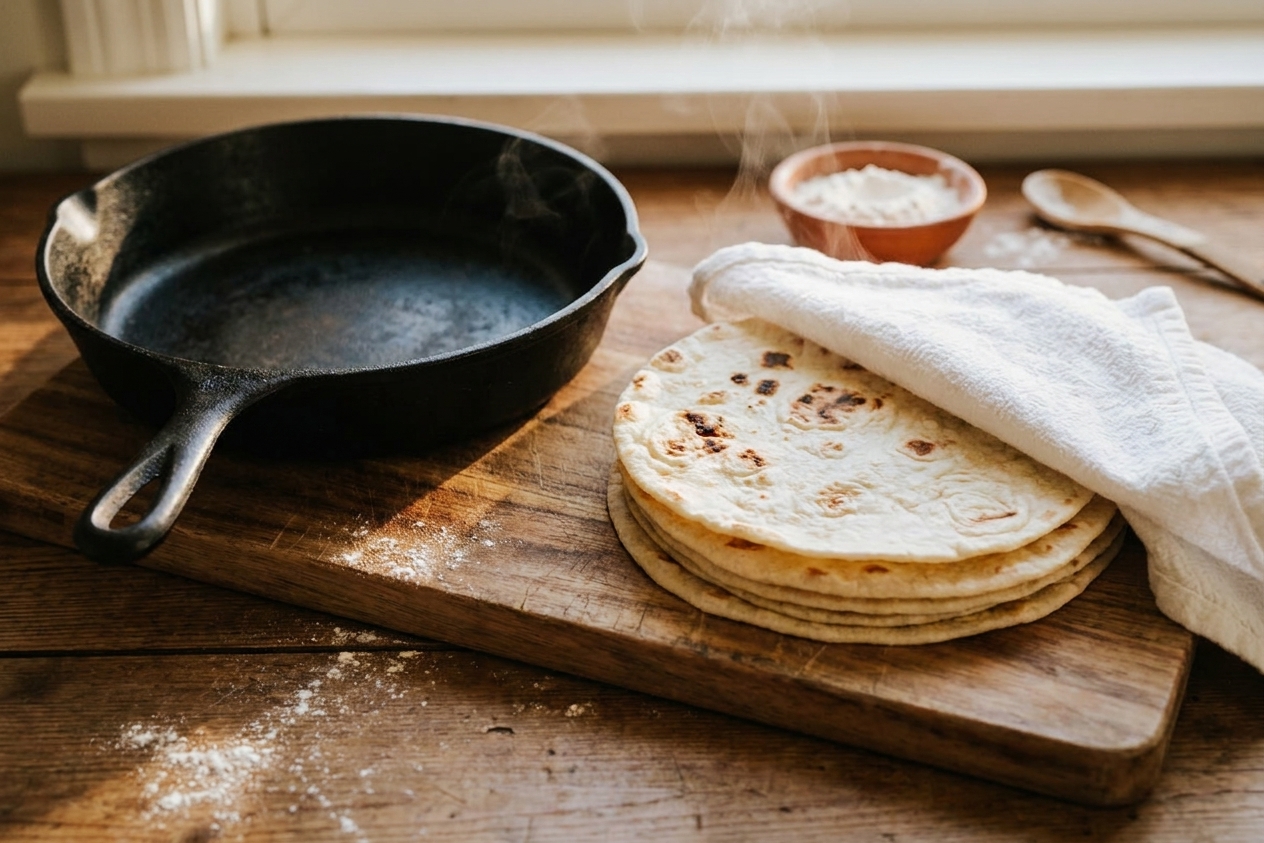
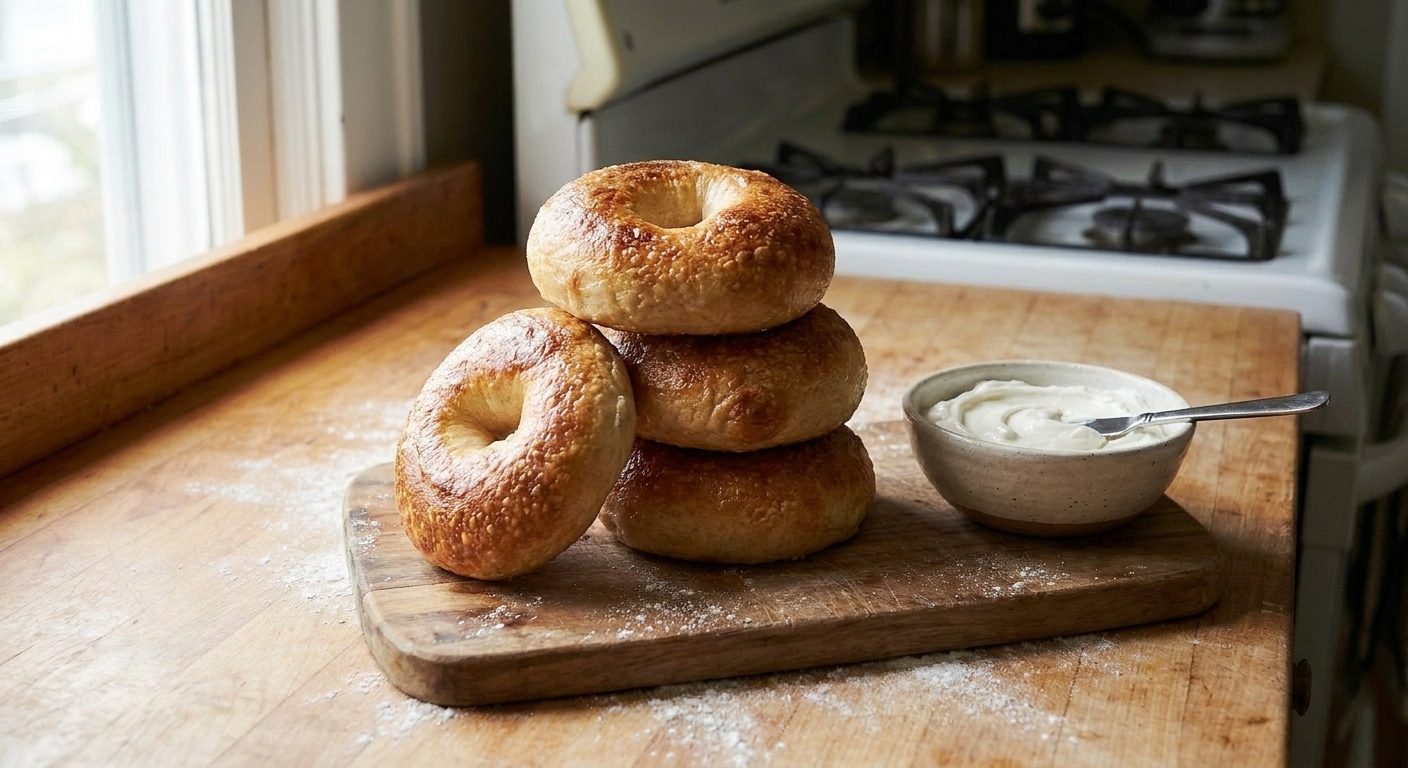
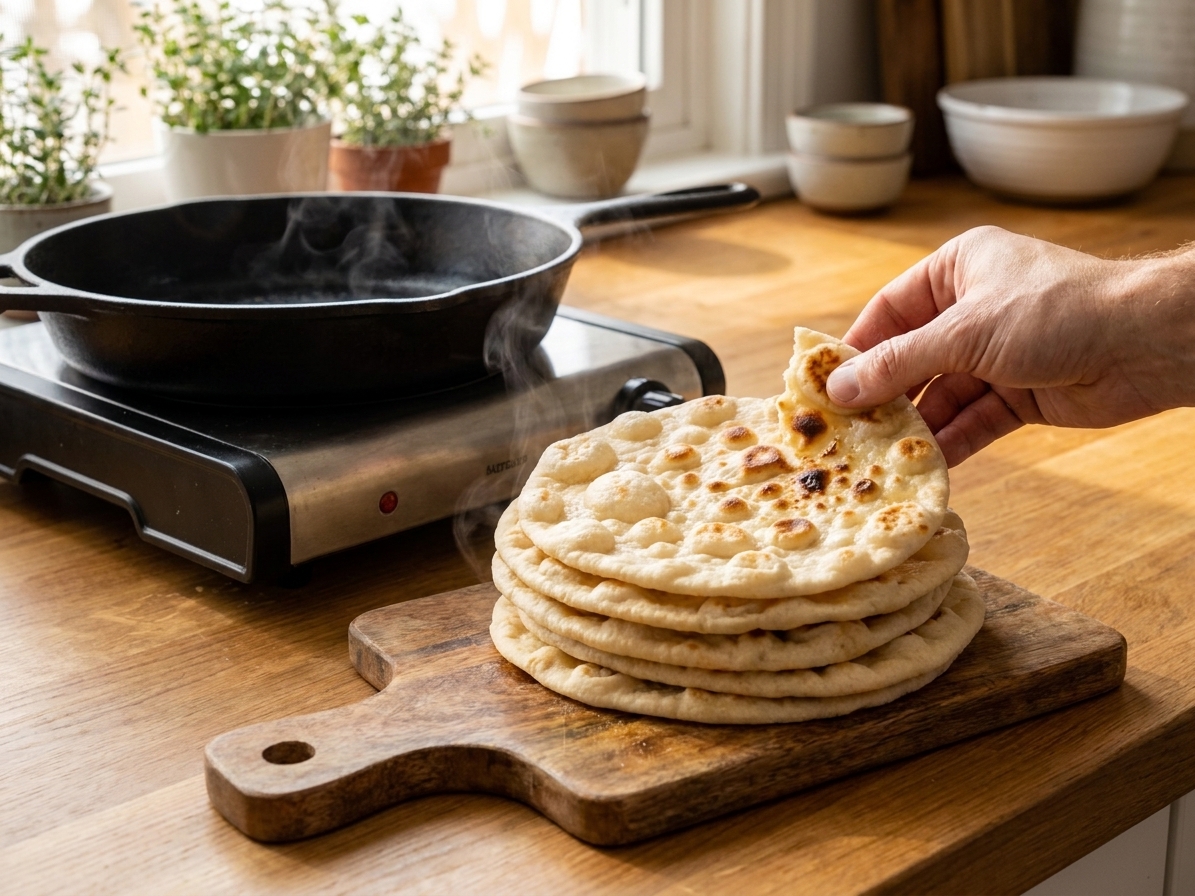
A stack of warm skillet flatbreads with golden blistered spots on a wooden cutting board on a cozy kitchen counter

Flatbread is one of those magic tricks that makes a regular Tuesday feel like you have your life together. It is warm, a little chewy, dotted with those toasty brown blisters, and it turns whatever you have in the fridge into a meal. Scrambled eggs? Wrap it. Hummus? Scoop it. Leftover chicken? Suddenly it is a situation.

This version is my go-to easy skillet flatbread. No yeast, no oven, no special flour. Just a simple dough, a short rest, and a hot pan. The result lands right in that sweet spot: soft enough to fold, sturdy enough to dunk, and flavorful enough to eat standing at the stove while you "test" one.

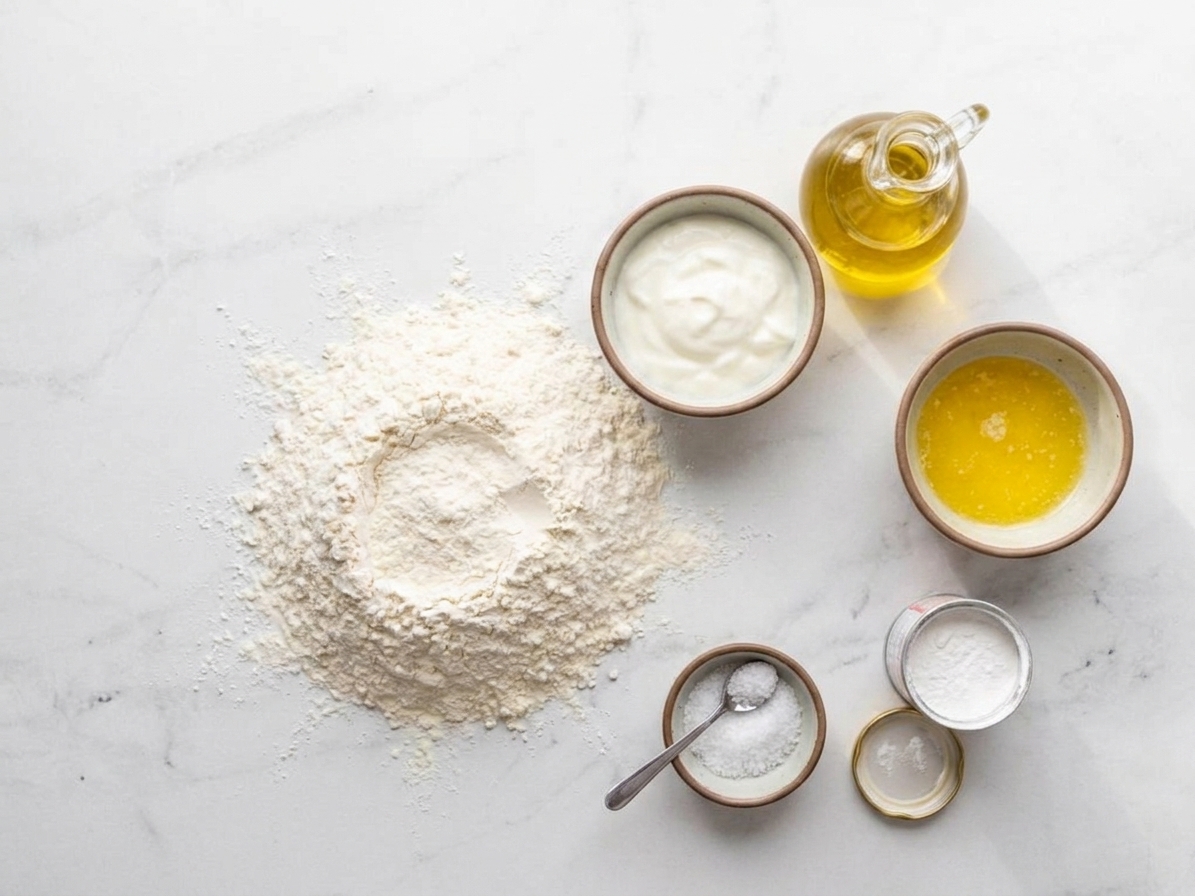
Flour, baking powder, salt, yogurt, olive oil, and a small bowl of melted butter arranged on a light stone kitchen counter

Why It Works

  • No yeast, no waiting around. Baking powder plus a quick rest gives you lift without a long proof.
  • Yogurt brings tenderness. It keeps the flatbread soft and flexible, not dry and crackly.
  • High heat = blisters. A properly hot skillet creates those golden spots and crisp edges while the center stays pillowy.
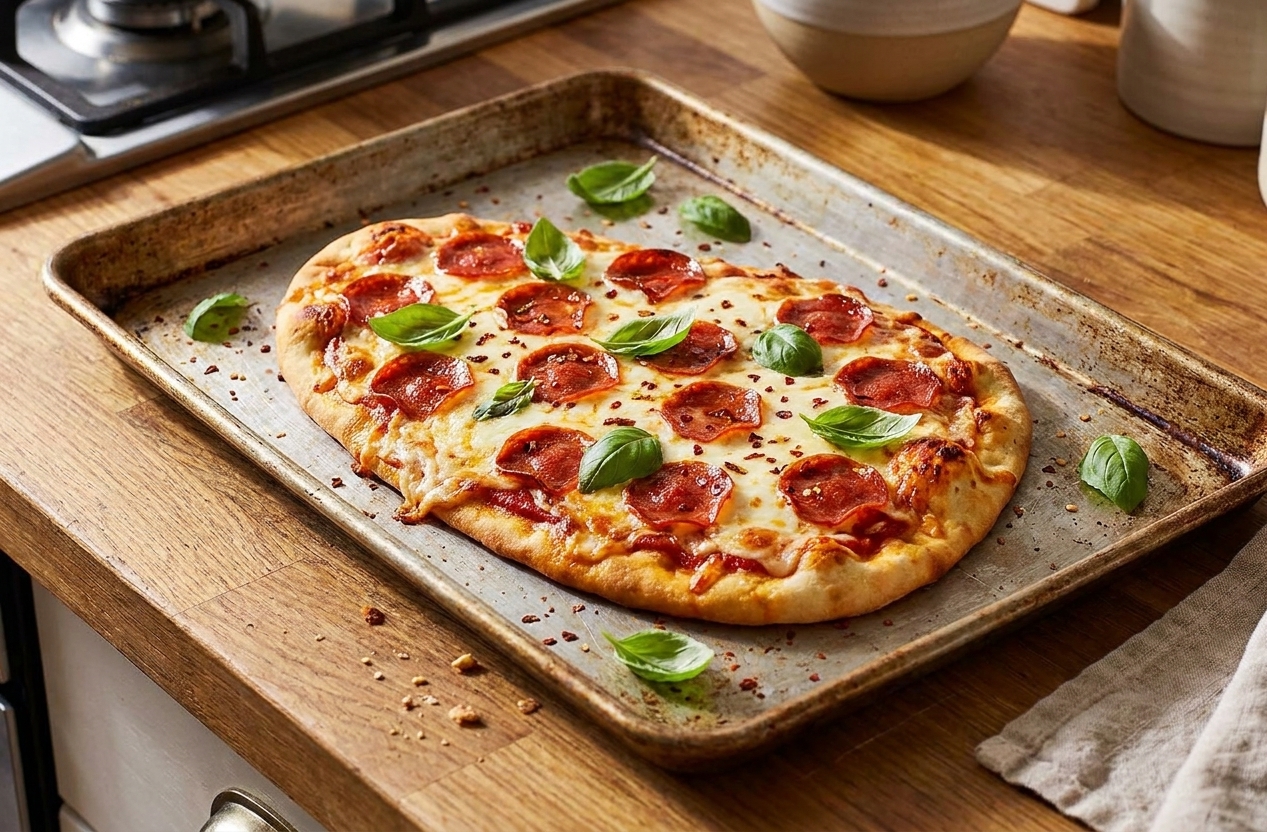
  • It is endlessly flexible. Make it plain, garlicky, herby, or use it as a base for quick pizzas and wraps.

Pairs Well With

Storage Tips

Storing

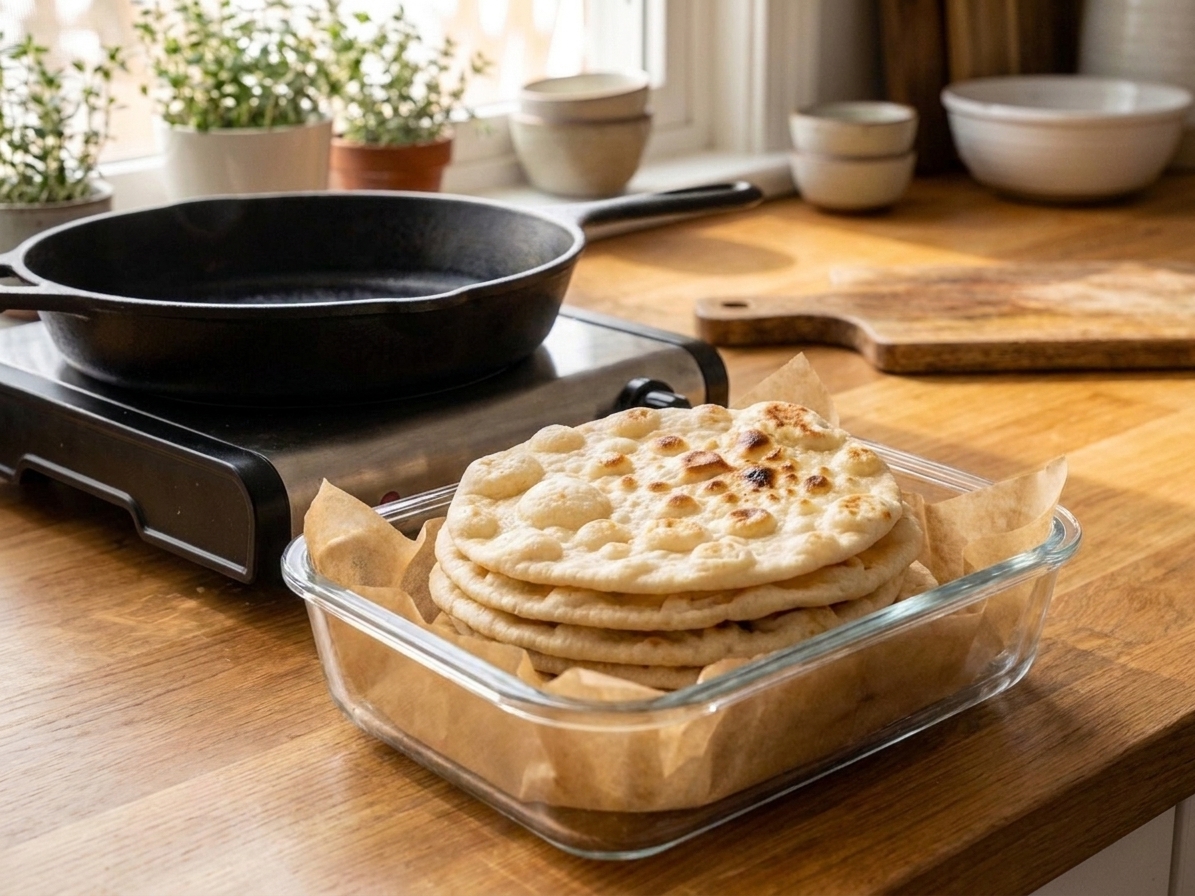
Let flatbreads cool completely, then stack them with parchment between pieces if you have it. Store in an airtight container or zip-top bag.

  • Room temperature: 1 day.
  • Refrigerator: Up to 4 days.
  • Freezer: Up to 2 months. Freeze flatbreads in a stack with parchment between them.

Reheating

  • Skillet: Medium heat, 30 to 60 seconds per side. Best texture.
  • Microwave: Wrap in a damp paper towel, 10 to 20 seconds. Softens fast, less crisp.
  • Oven: 350°F for 5 to 7 minutes, wrapped in foil for softer bread.
  • Quick revive: If a flatbread feels a little dry, add a few drops of water to the warm skillet, toss in the flatbread, and cover with a lid for 15 to 20 seconds to steam it back to soft.
A stack of cooked flatbreads in a glass container lined with parchment on a kitchen counter

Common Questions

What is flatbread, exactly?

Flatbread is the big family of breads rolled or pressed into thin rounds before cooking. Think pita, naan, tortillas, roti, lavash, and many skillet flatbreads. They cook quickly, stay flexible, and are designed to scoop, wrap, or tear and share.

Is this more like naan or pita?

Texture-wise it leans naan-adjacent because of the yogurt, but it is thinner and faster. It will not form a full pocket like classic pita since we are not baking it at very high oven heat, but you will still get some puff and steam bubbles.

Can I make it without yogurt?

Yes. Swap the yogurt with 3/4 cup buttermilk or 3/4 cup milk plus 1 tablespoon lemon juice or vinegar, then add warm water as needed until the dough is soft and only slightly tacky. Depending on your flour and how thick your yogurt usually is, you may need a little more water or an extra tablespoon or two of flour to get the same feel.

Why is my flatbread tough?

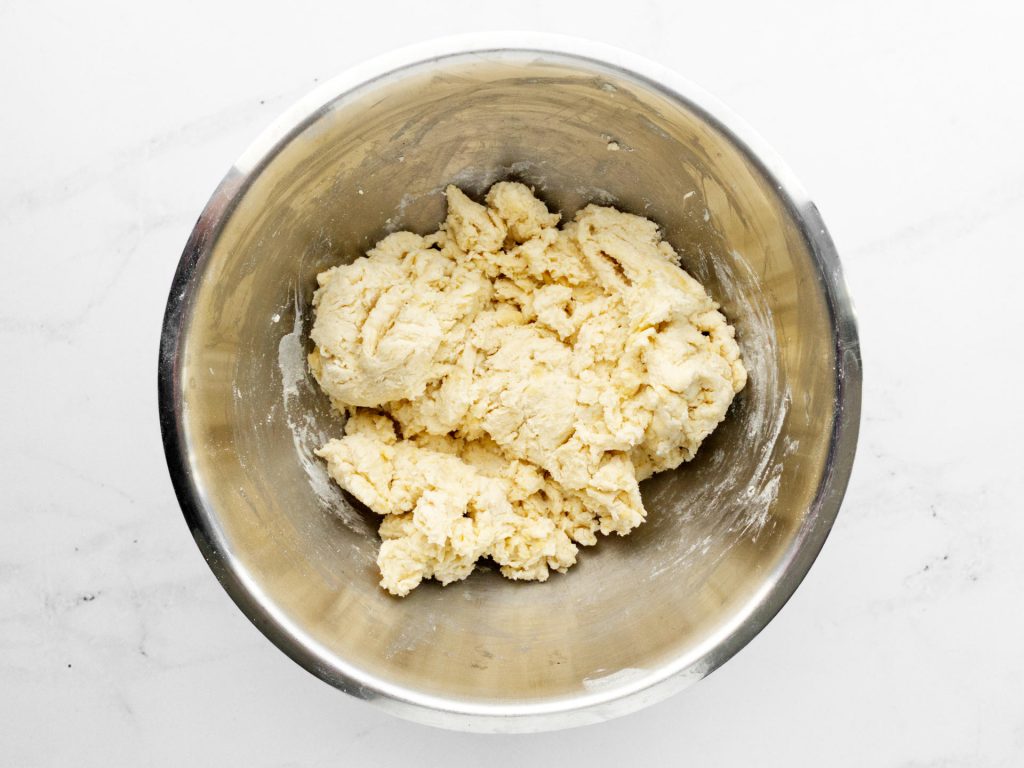
Usually one of three things: too much flour, too much kneading, or cooking too low and too long. Aim for a dough that is soft and only slightly tacky, knead just until smooth, and cook on a properly hot skillet so it blisters fast.

Can I make the dough ahead?

Yes. Mix and knead, then refrigerate tightly covered for up to 24 hours. Let it sit at room temperature for 20 to 30 minutes before rolling so it relaxes.

Can I add whole wheat flour?

Absolutely. Replace up to 1 cup of the all-purpose flour with whole wheat. Add a splash of water if the dough feels dry.

How do I stop the dough from shrinking back when I roll it?

If the rounds keep springing back, the dough needs a little more rest. Cover the dough balls and let them relax for 5 to 10 minutes, then roll again. Also, avoid over-flouring the counter, which can make the dough feel tight.

I learned pretty early that the most useful recipe in a home cook’s back pocket is not a fancy sauce or a perfect roast chicken. It is a bread you can make anytime. When I was chasing practical kitchen skills over classroom credits, I kept coming back to simple doughs because they teach you everything: texture, timing, heat, and when to stop messing with it.

This flatbread is my weeknight peace treaty. If dinner feels like a pile of random ingredients, I make a batch, set them on the table warm under a towel, and suddenly everyone has something to build on. Also, tearing bread with your hands is therapeutic. Highly recommended.

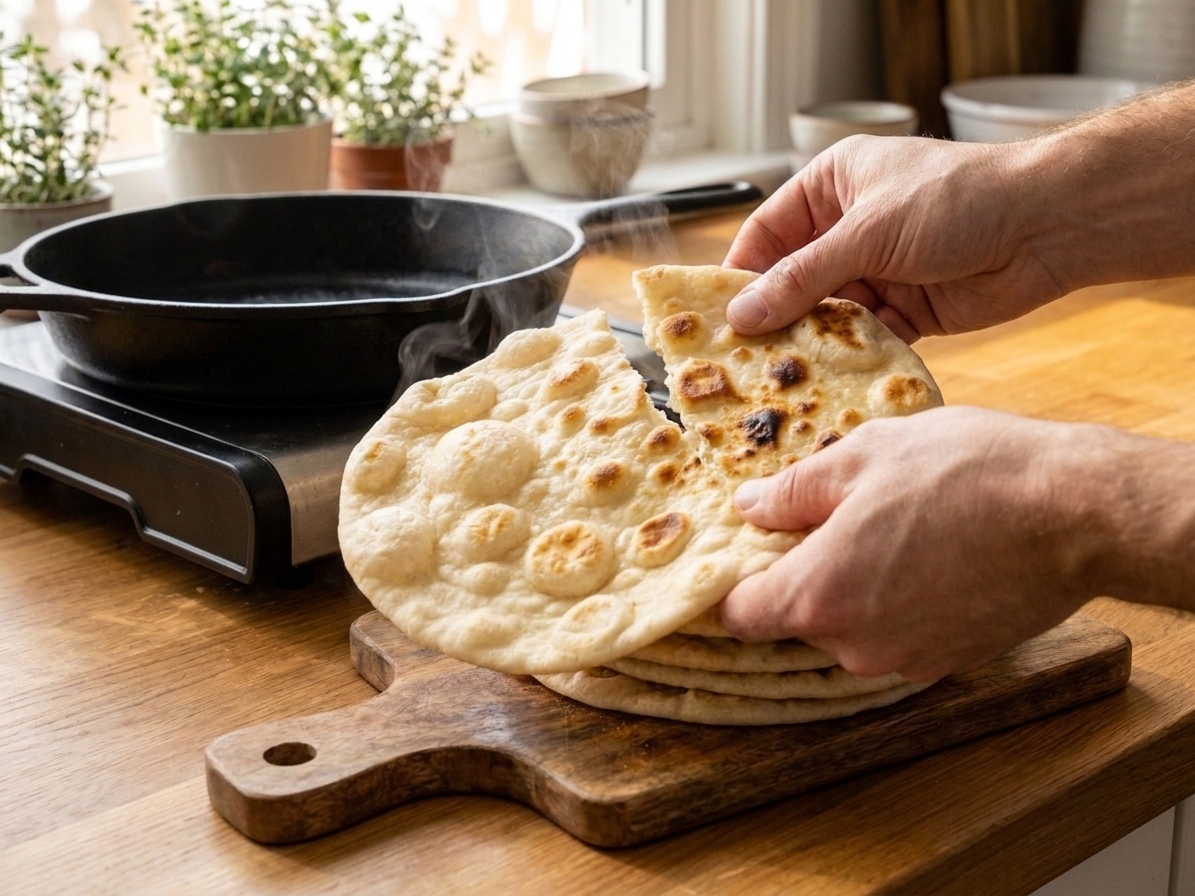
A person’s hands tearing a warm flatbread in half over a wooden cutting board with steam rising softly