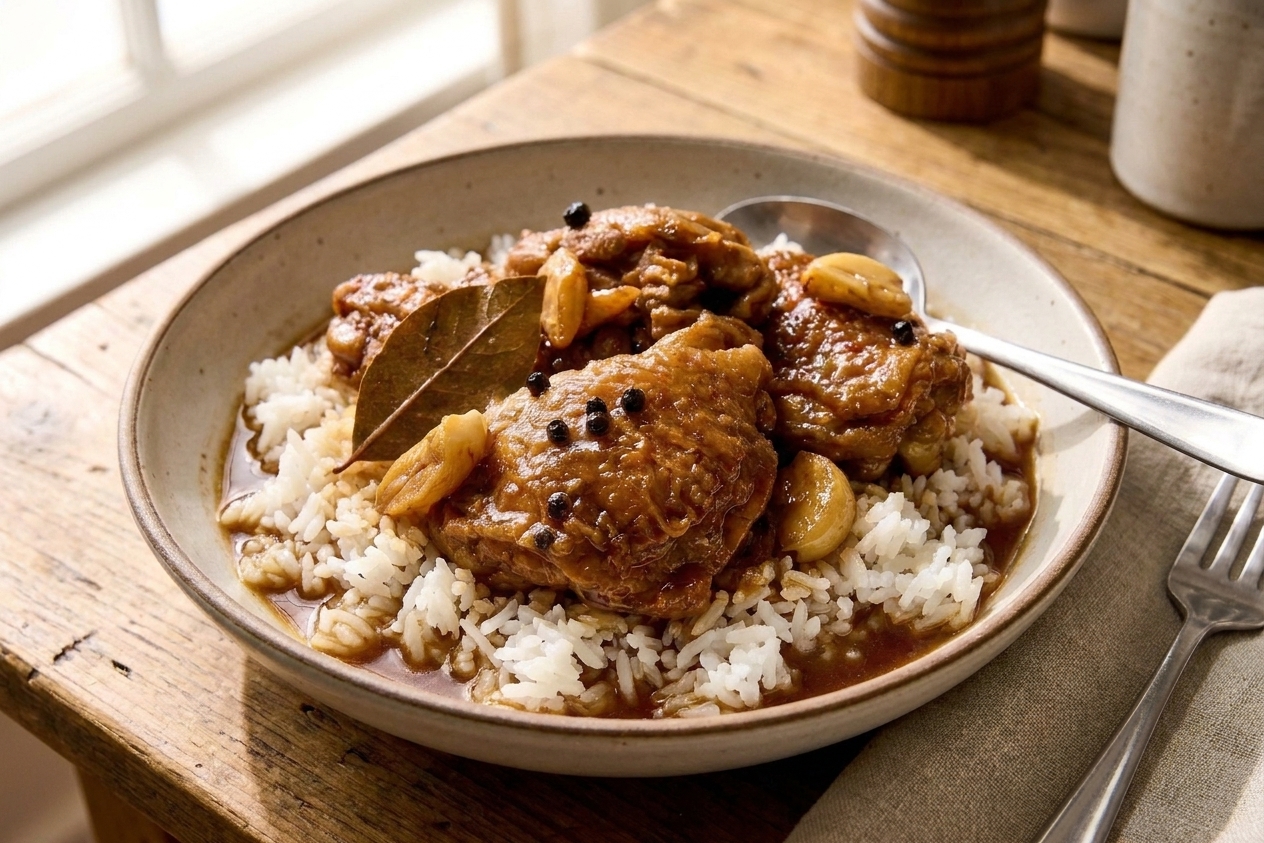
What makes Filipino adobo “adobo”?
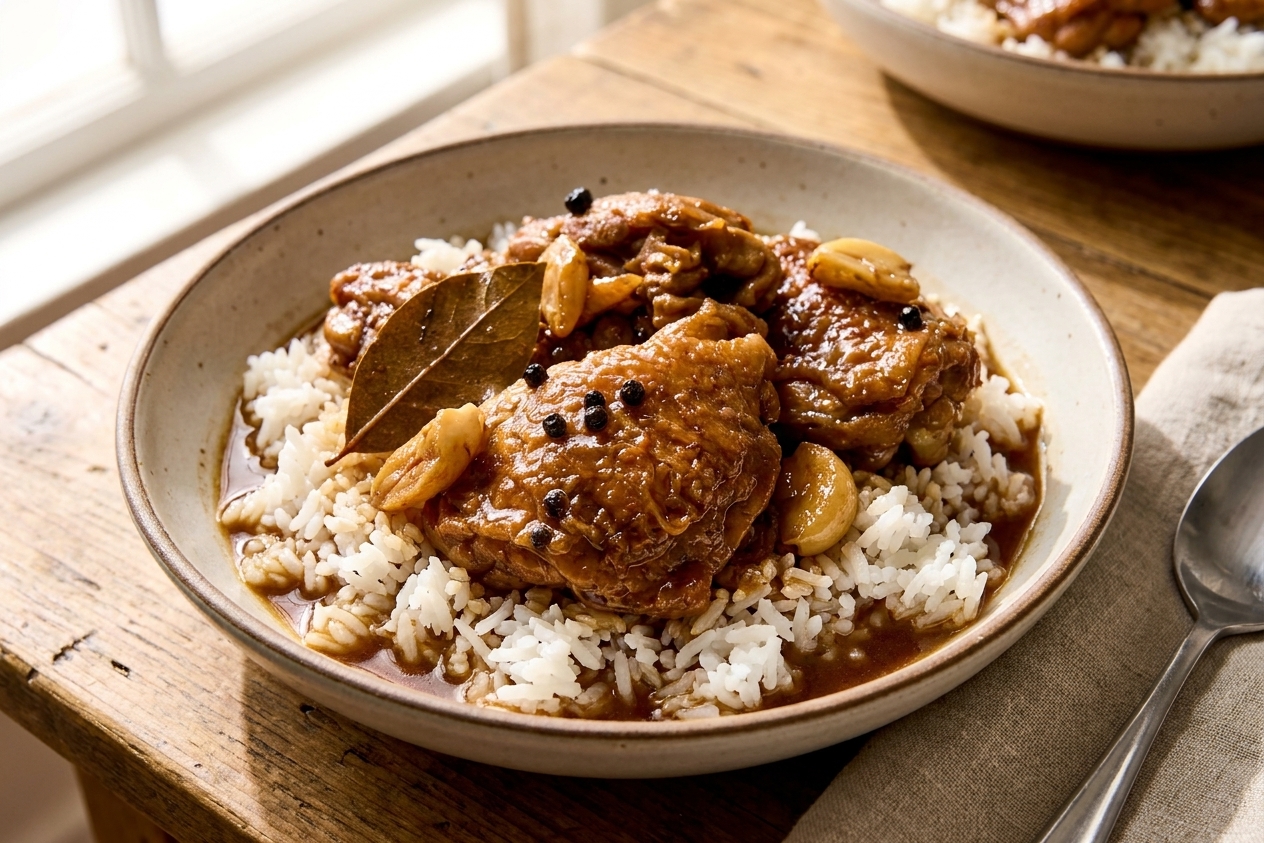
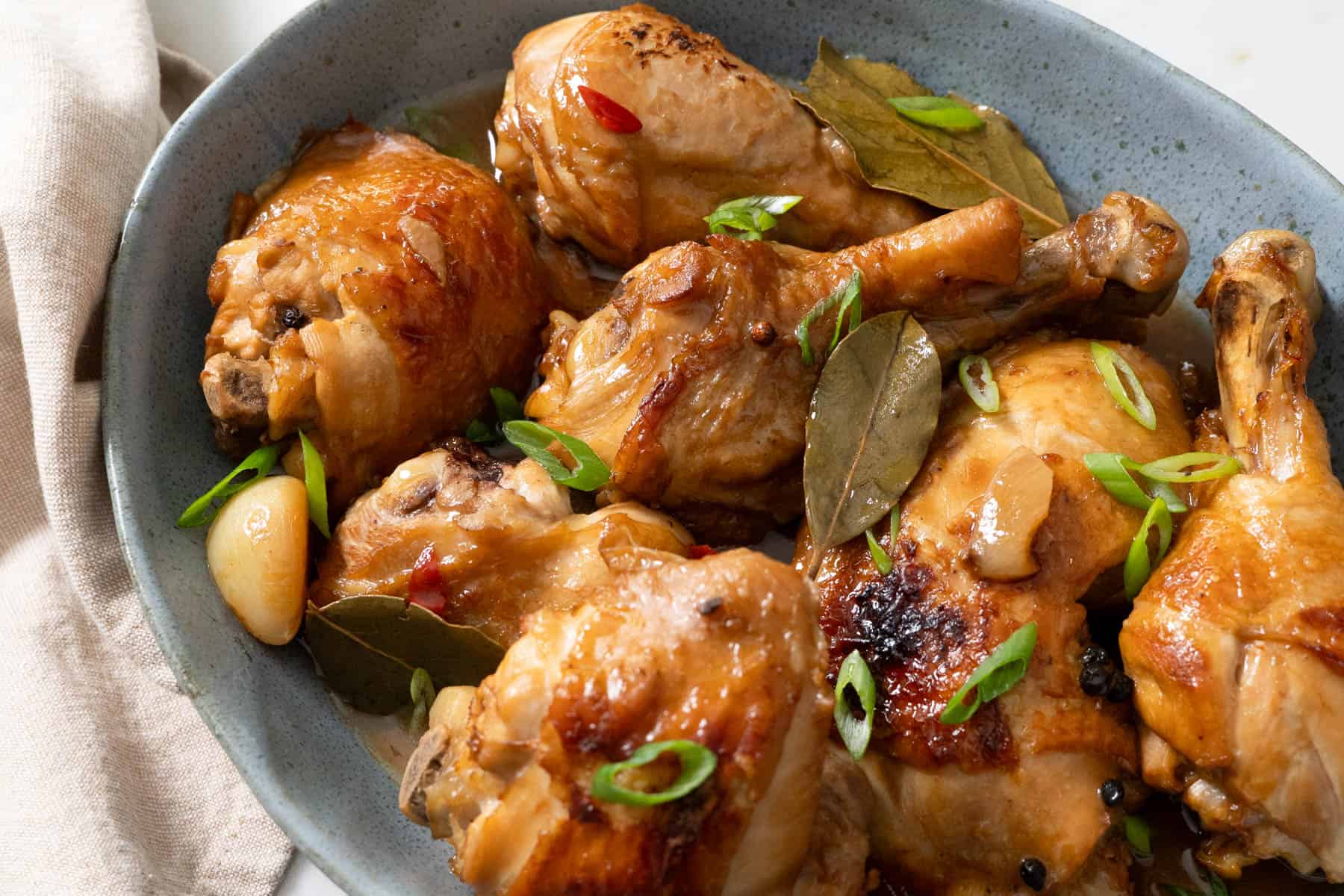
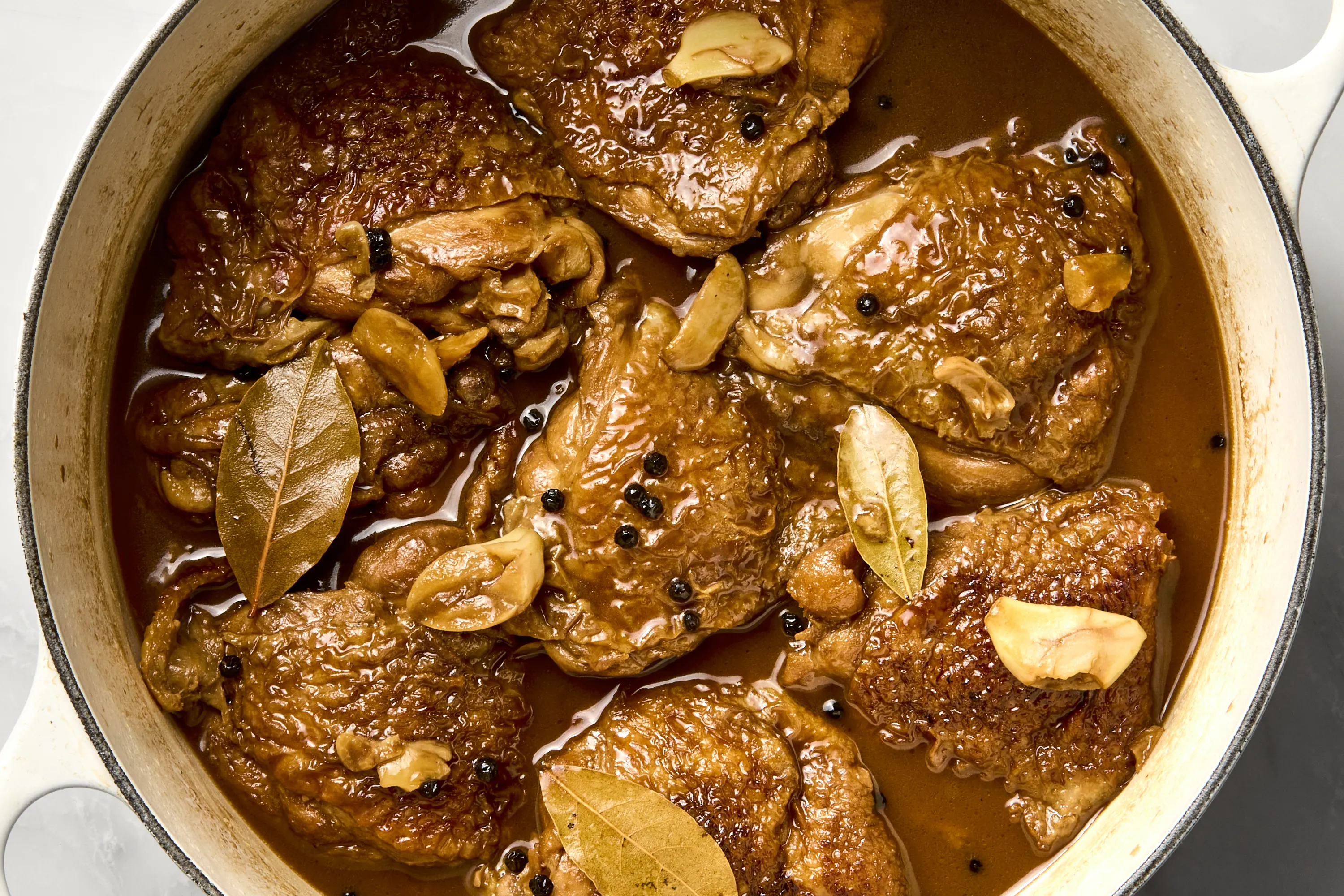
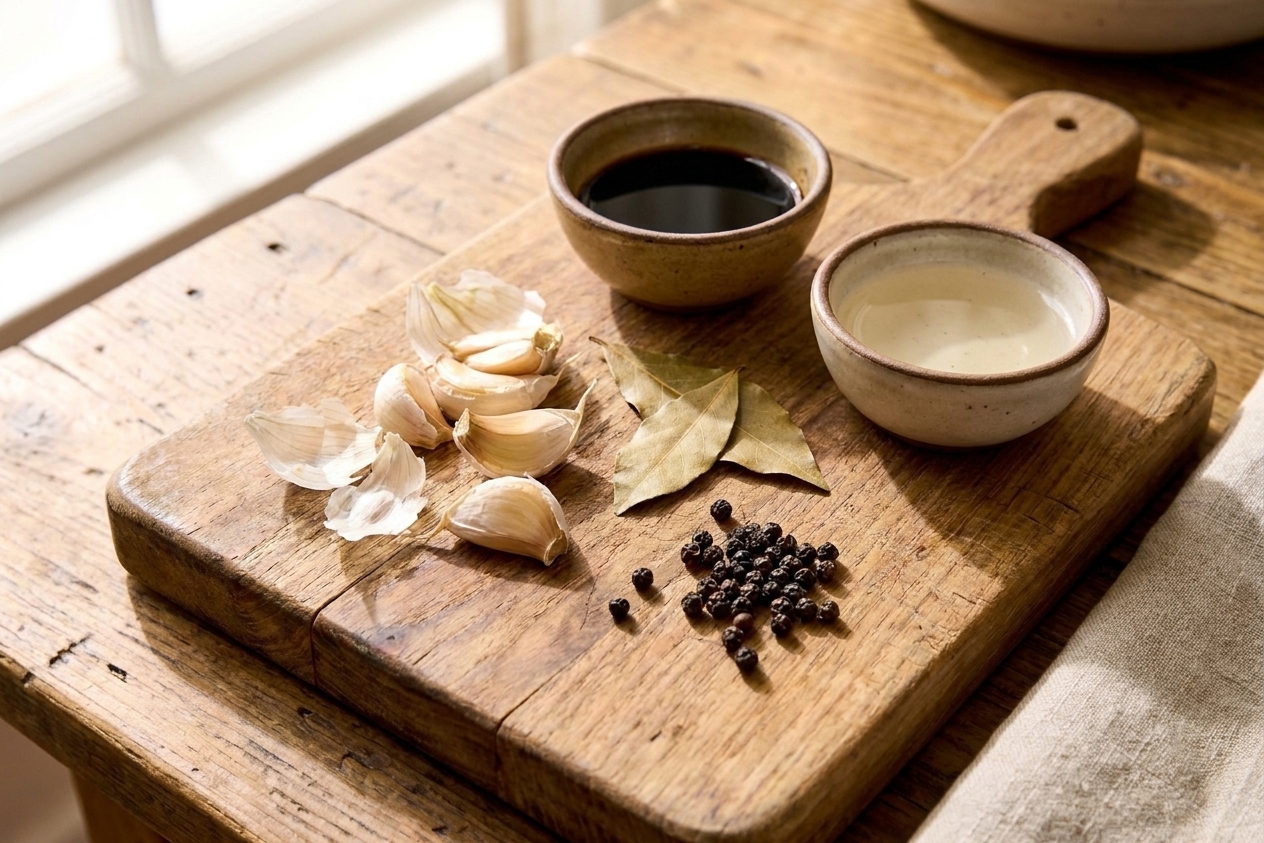
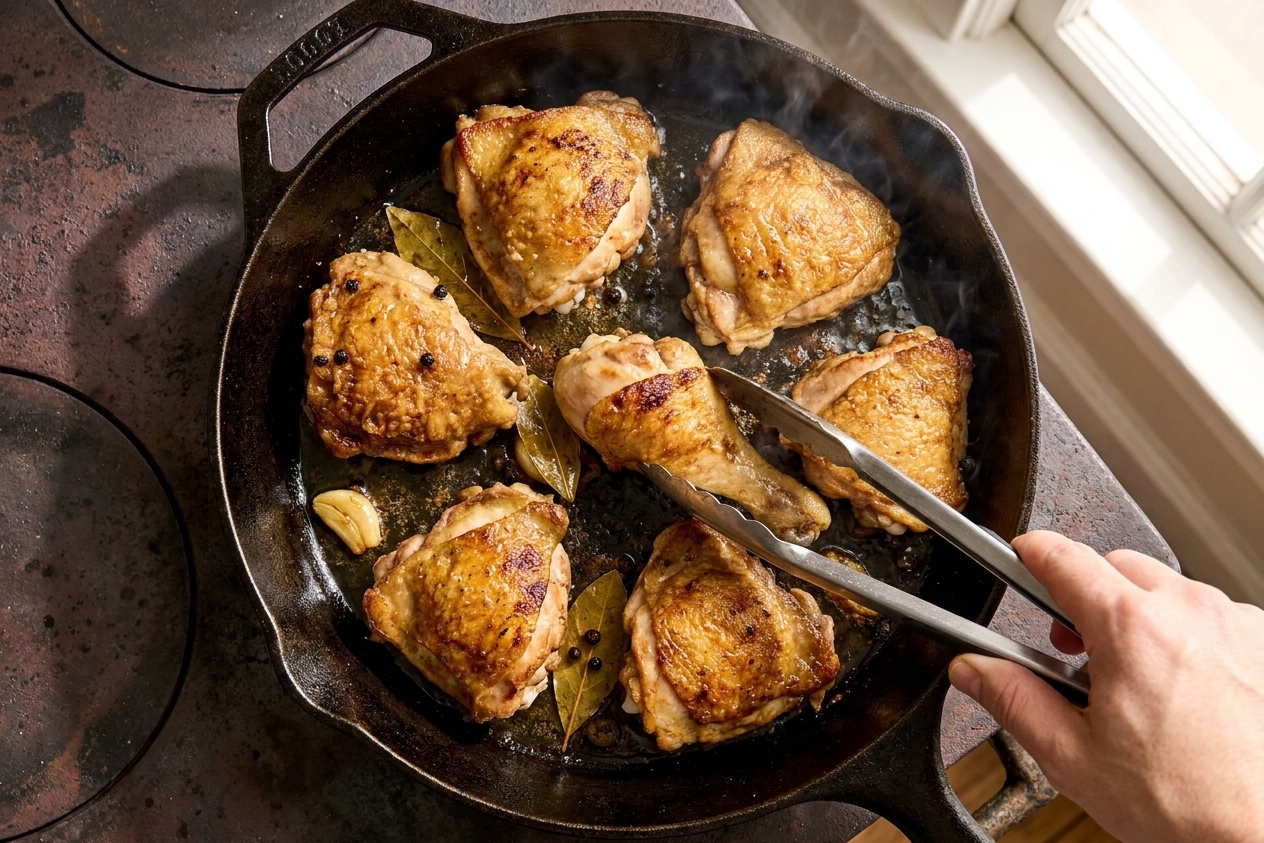
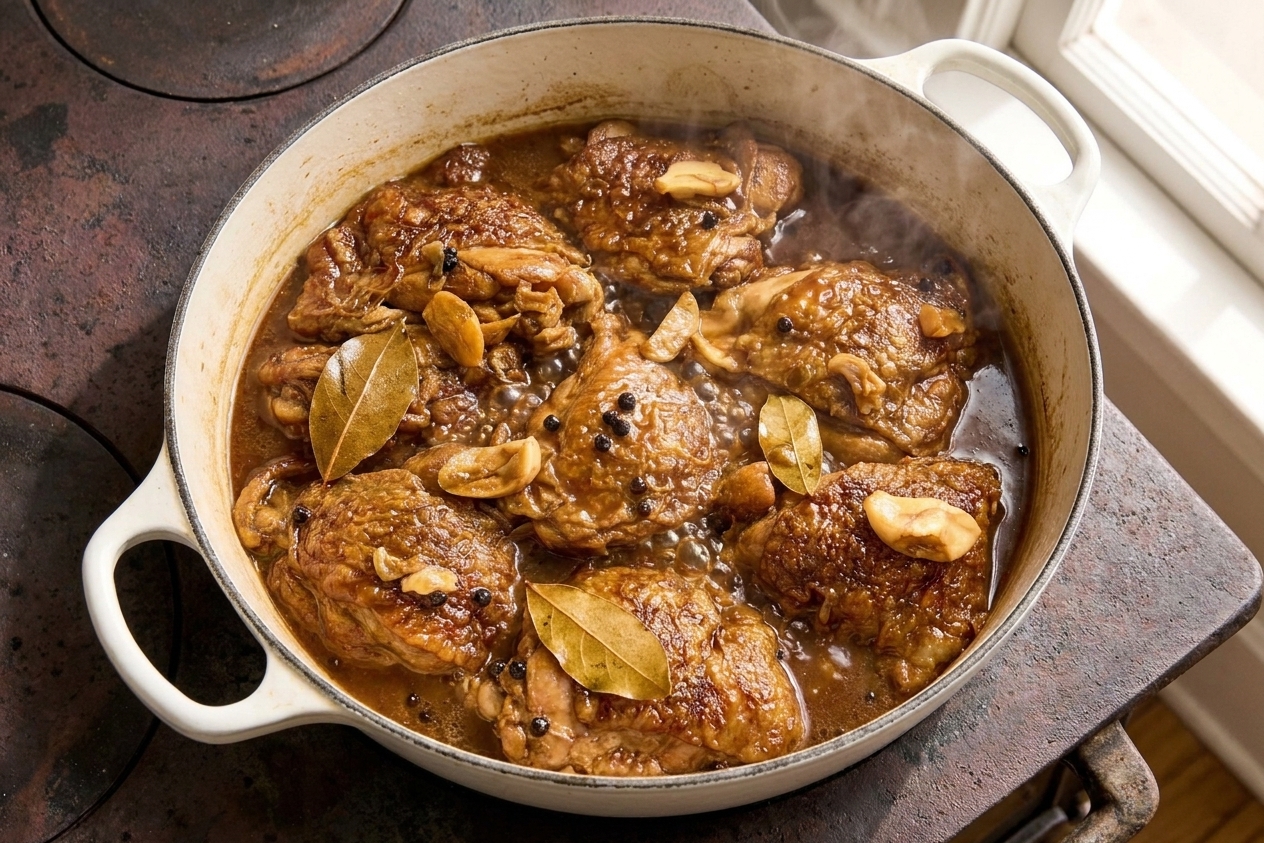
At its core, it is a braise of meat (often chicken, pork, or both) in vinegar, soy sauce, garlic, plus aromatics like bay leaves and peppercorns. The balance of salty and tangy is the signature, and every household has its own ratio.
Is this “traditional” adobo?
It is classic in flavor and method, but not a one-and-only blueprint. Some versions use little to no water, some skip sugar, and ratios vary by region and family. This is a weeknight-friendly, common home style that stays saucy and balances the tang.
Can I use chicken breast?
You can, but thighs and drumsticks stay juicier during a simmer. If you use breast, cut it into larger pieces and simmer just until cooked through, then stop. Dry breast adobo is a bummer.
Why add sugar?
It is optional, but a little brown sugar rounds the vinegar edge and helps the sauce look glossy. If you prefer a sharper, more vinegary adobo, skip it.
Is it supposed to be sour?
It should be tangy, not harsh. If it tastes too sharp, simmer uncovered a bit longer to mellow it, and consider adding a pinch of sugar. If it tastes flat, add a small splash of vinegar at the end.
Do I need cane vinegar?
No. Cane vinegar is classic, but distilled white vinegar works, and apple cider vinegar gives a slightly fruitier tang.
Why are there whole peppercorns?
They are traditional and give little pops of peppery warmth. If your crew hates biting into them, lightly crush them or swap in a few grinds of black pepper near the end.
Will this be too salty?
It can be, depending on your soy sauce brand. For a gentler salt level, use low-sodium soy sauce and season to taste at the end, or start with 1/3 cup soy sauce and add an extra splash of water.