Mom's Best Recipes
Recipe

Dinuguan

A bold, tangy Filipino pork stew with a silky, savory gravy that begs for hot rice.

Author By Matt Campbell
4.7
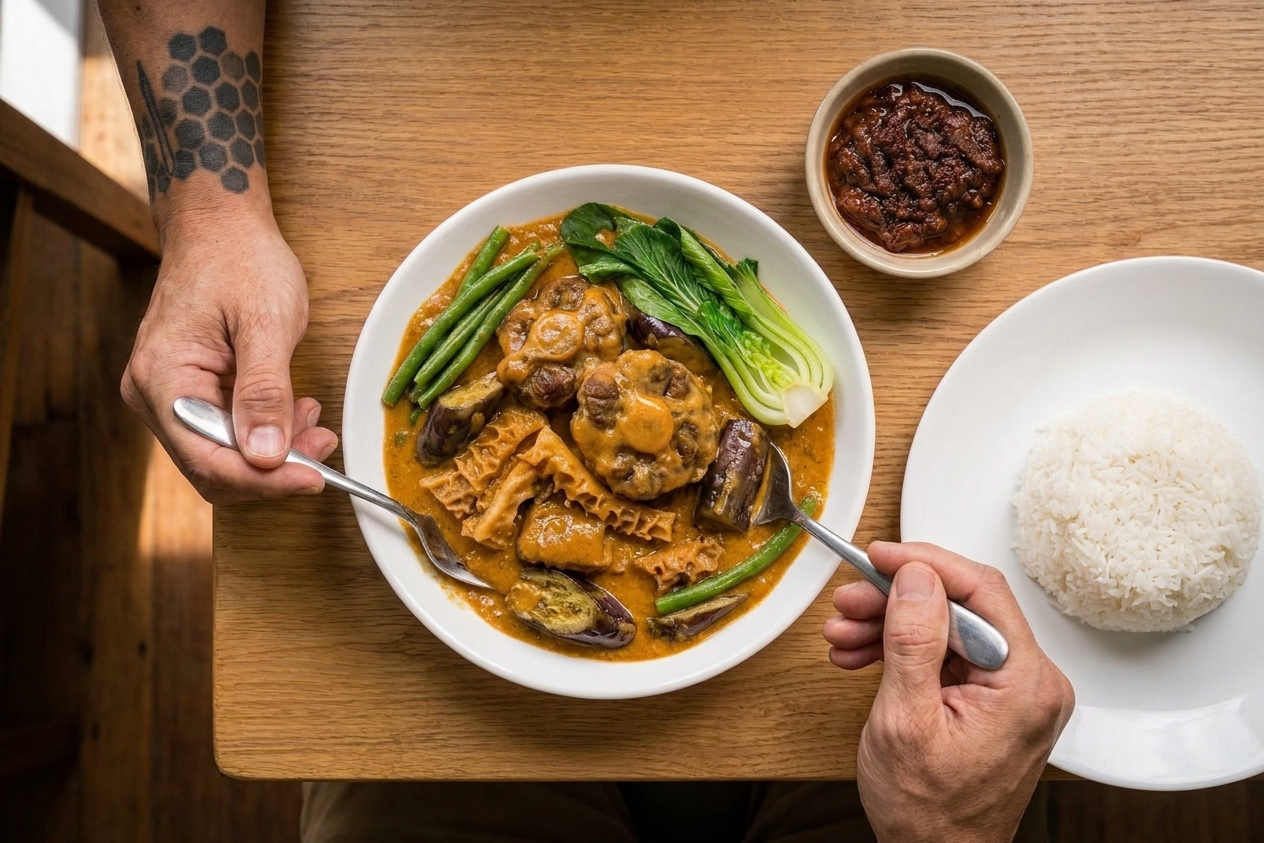
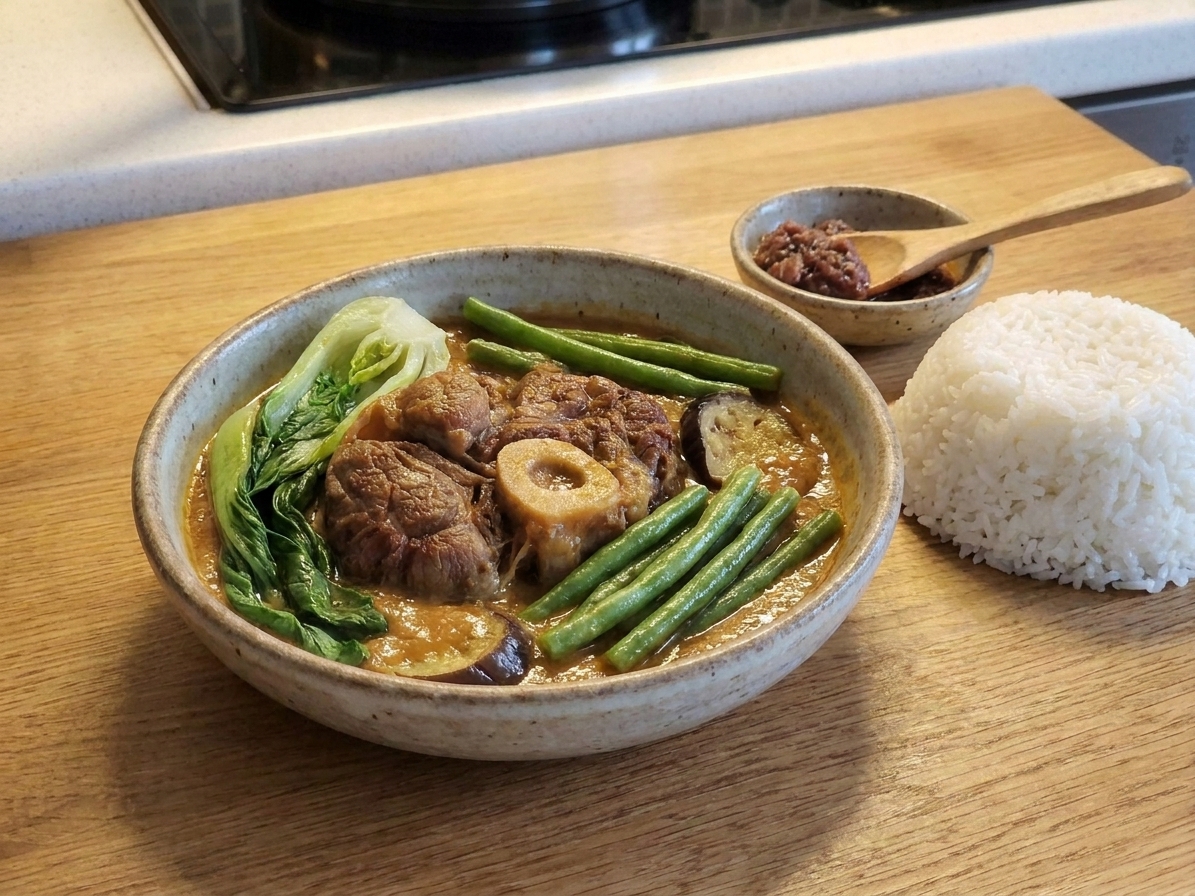
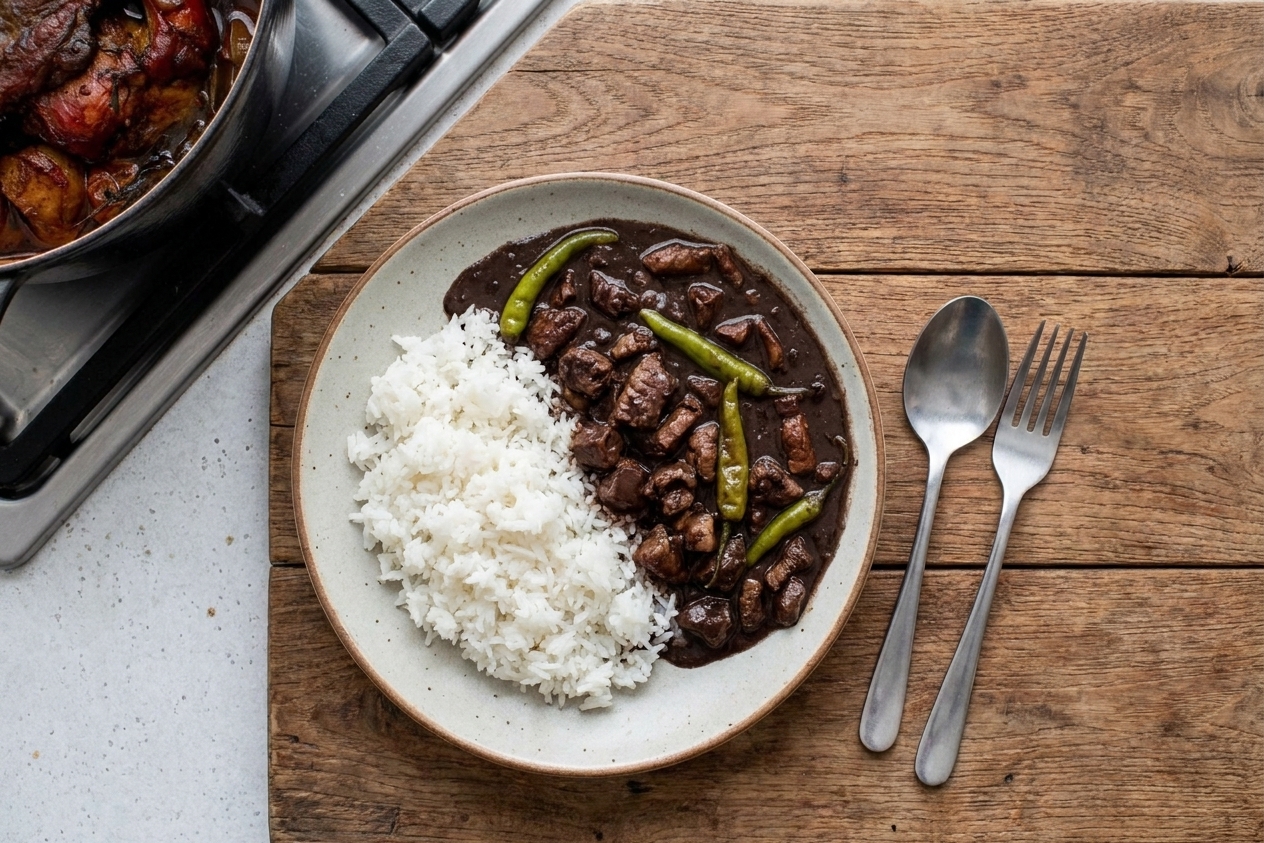
A bowl of Filipino dinuguan with tender pork pieces in a dark, glossy gravy, served with steamed rice on a simple wooden table

Dinuguan is one of those dishes that makes you pause mid-bite and take stock of what is happening. Savory pork, a punch of vinegar, lots of garlic and onion, and that signature deep, inky gravy that somehow tastes both rich and bright at the same time.

If the ingredient list is making you a little nervous, I get it. My job here is to keep it approachable. We are going to build a strong base, keep the simmer gentle, and use a couple small tricks that help the sauce stay smooth and balanced. The result is cozy, bold, and extremely good with rice or puto.

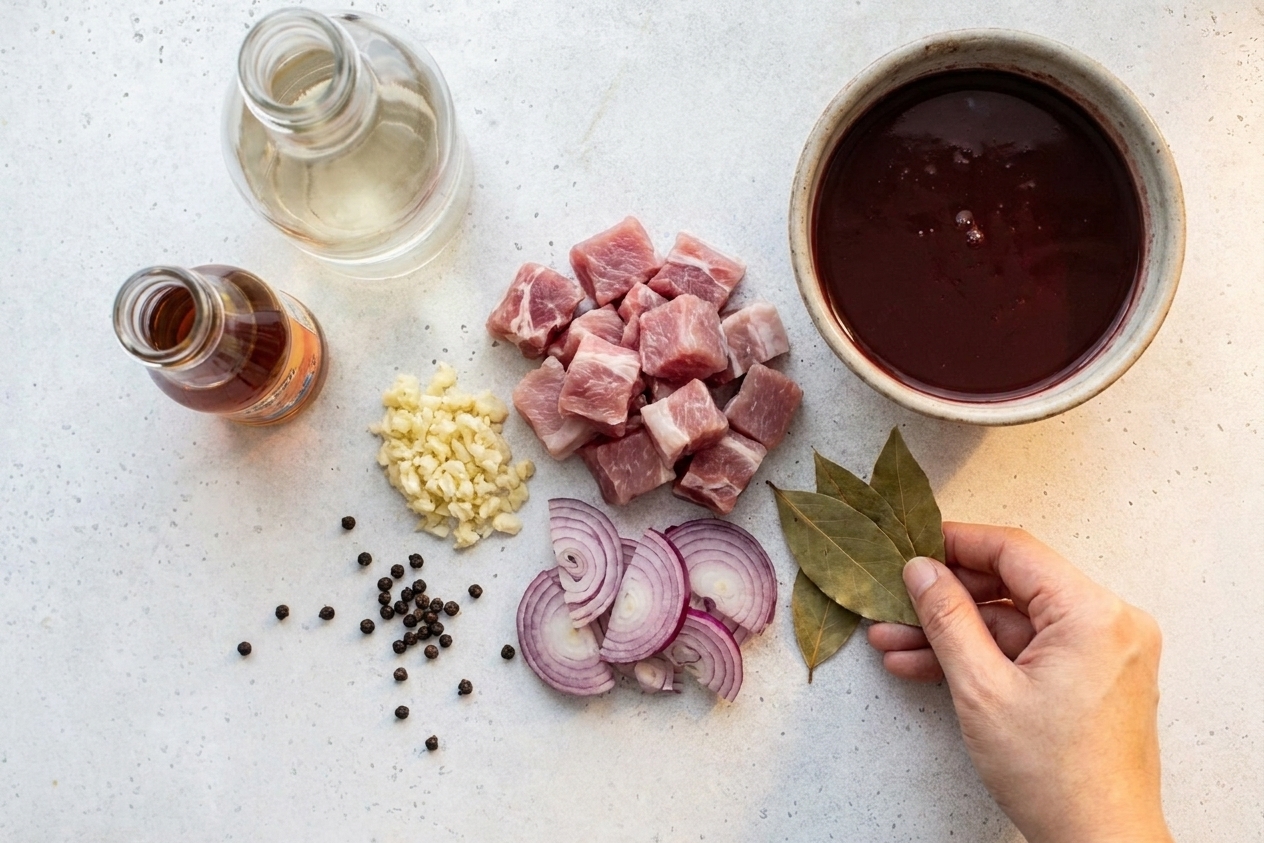
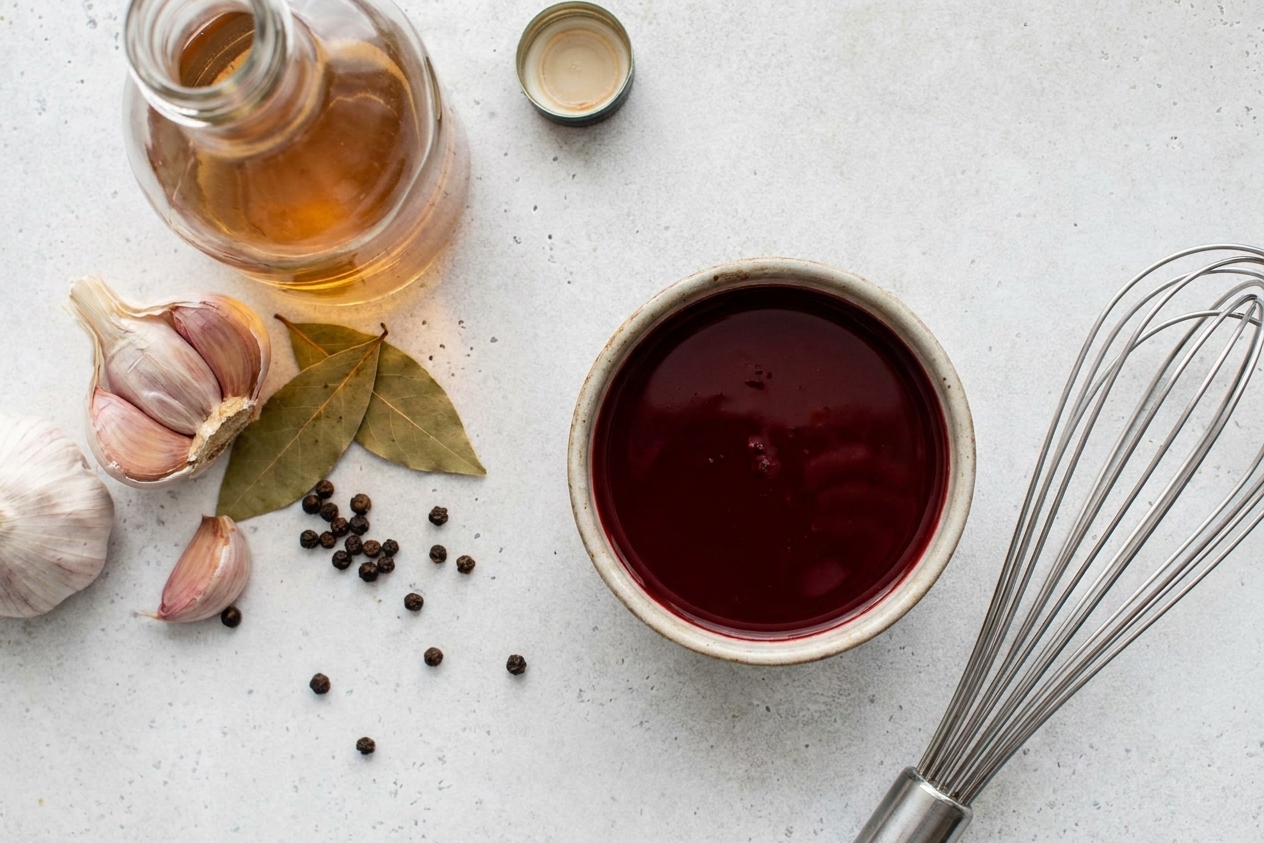
Pork shoulder cubes, minced garlic, sliced onion, bay leaves, vinegar, fish sauce, and a bowl of pork blood arranged on a kitchen counter with warm natural light

Why It Works

  • Big flavor, not fussy: Searing the pork first builds a deeper base, then the stew does the rest on a low simmer.
  • Tang that stays clean: We add vinegar the right way so it tastes bright, not harsh.
  • Silky, not grainy sauce: A gentle simmer, thin-stream pouring, and a quick strain option keep the pork blood gravy smooth.
  • Beginner-friendly insurance: A little cornstarch can help prevent graininess and keep the sauce stable if you are nervous about curdling.
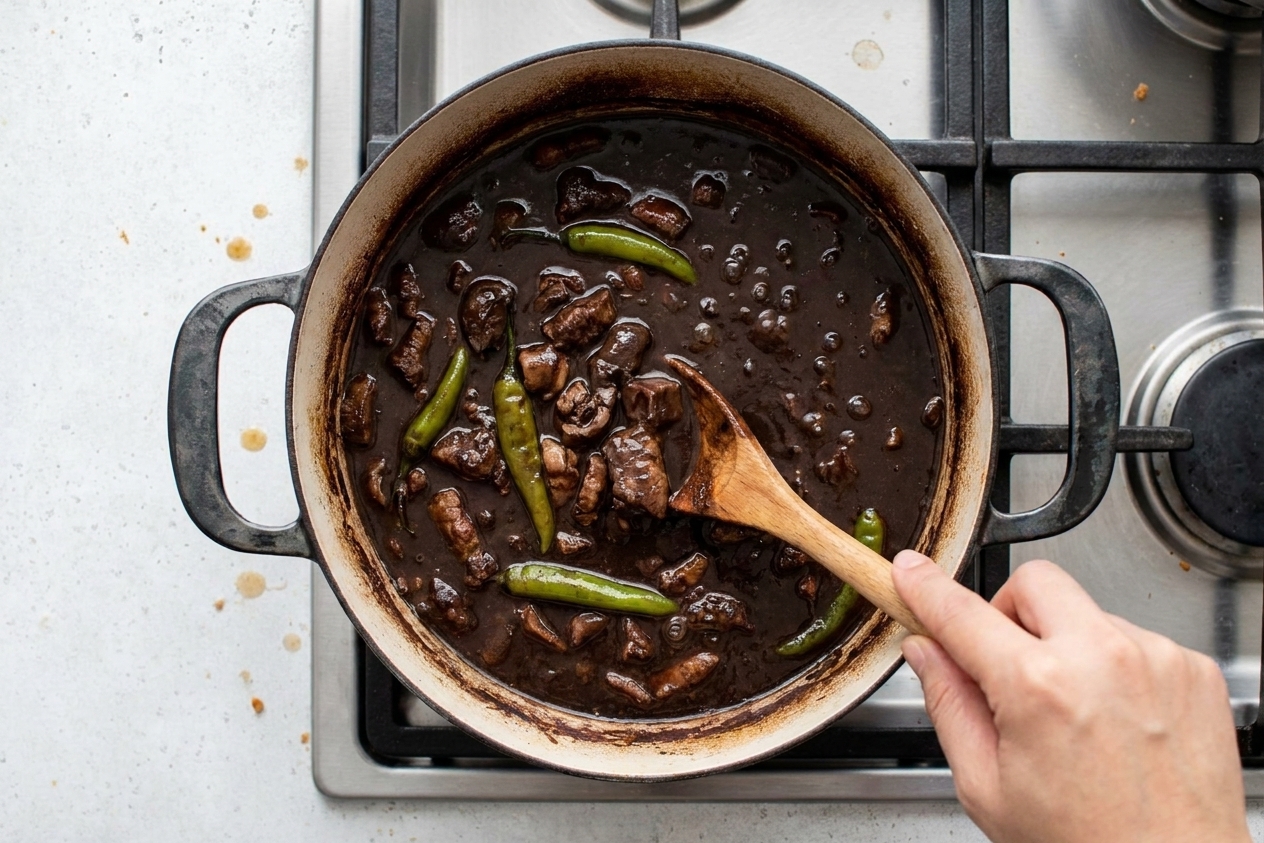
Pork pieces browning in a heavy pot on a stovetop with a wooden spoon nearby and steam rising

Pairs Well With

Storage Tips

Refrigerate: Cool dinuguan quickly, then store in an airtight container for 3 to 4 days. For faster cooling, transfer to a shallow container and let it sit uncovered until it stops steaming, then cover and refrigerate. The sauce thickens as it chills, which is honestly a perk.

Reheat: Warm gently in a saucepan over low heat, stirring often, until steaming hot throughout. Add a splash of water or broth if it tightens up too much. Keep the heat low to protect the sauce texture.

Freeze: Freeze for 2 to 3 months for best quality in a freezer-safe container. Thaw overnight in the fridge, then reheat slowly. If the sauce looks slightly separated after freezing, whisk while warming and it usually comes back together.

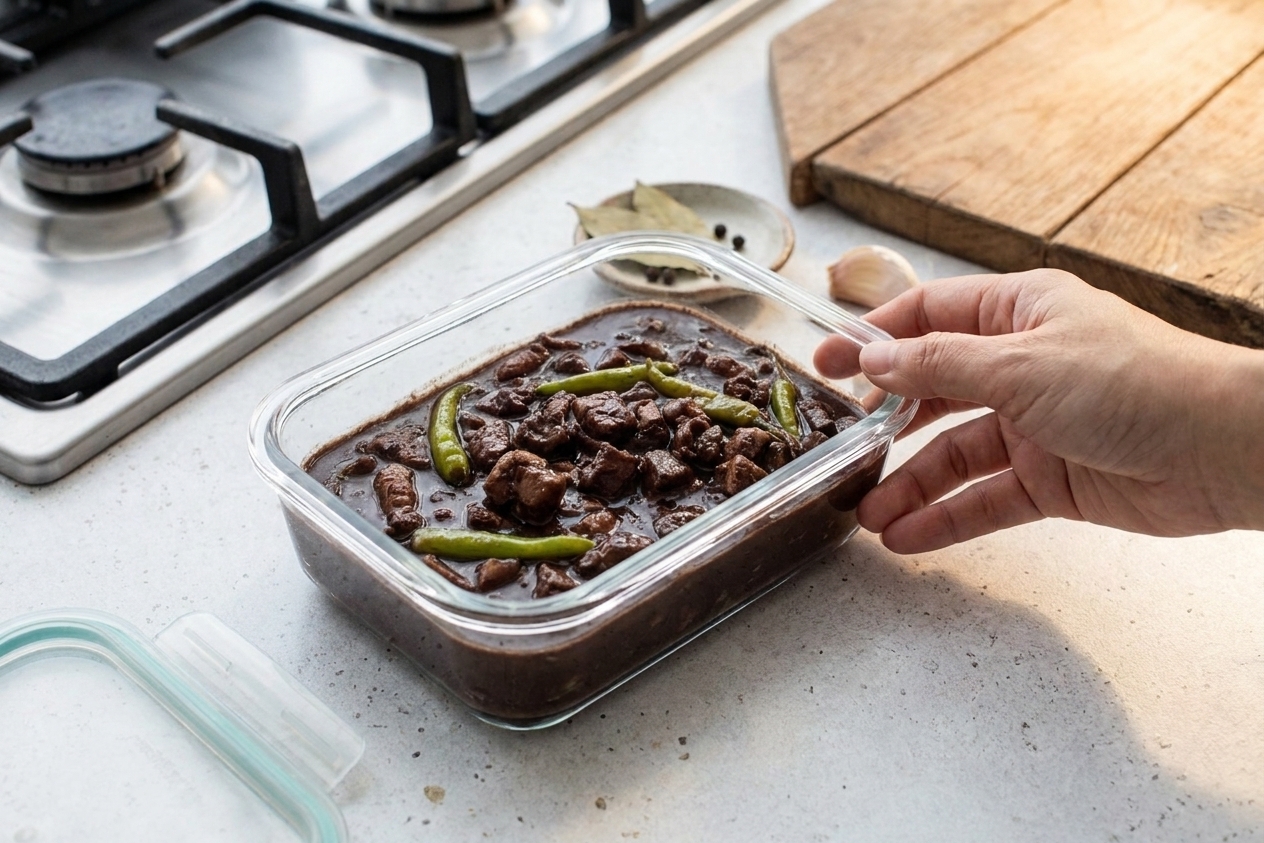
A glass meal prep container filled with leftover dinuguan, lid off, sitting on a kitchen counter

Common Questions

What does dinuguan taste like?

It is savory and porky, with a tangy vinegar bite and a lightly spiced, garlicky backbone. Think stew meets adobo energy, but with a deeper, richer gravy.

Is dinuguan safe to eat?

Yes, when prepared properly. Use fresh, food-grade pork blood from a trusted source, keep it refrigerated until you are ready to use it, and do not leave it sitting out at room temperature. Cook the pork until it is tender and cooked through, then keep the finished stew at a gentle simmer after adding the blood. When reheating leftovers, warm it until steaming hot throughout.

Why did my dinuguan turn grainy or curdled?

Most of the time it comes down to heat. If the pot is boiling or even aggressively simmering when the blood goes in, the proteins can seize and turn grainy. Keep the heat low and never let it boil hard after adding the blood. Vinegar timing matters too. Let the vinegar simmer for 2 to 3 minutes before stirring, then proceed, so the flavor mellows and the pot stays calm.

Can I make dinuguan without innards?

Absolutely. This recipe uses pork shoulder (and optional pork belly) only. Traditional versions sometimes include offal, but you do not need it for a great pot of dinuguan.

What should I serve with dinuguan?

Steamed rice is the classic. Puto is also iconic for a reason. If you want a simple side, try sliced cucumbers or a quick tomato and onion salad to keep things fresh.

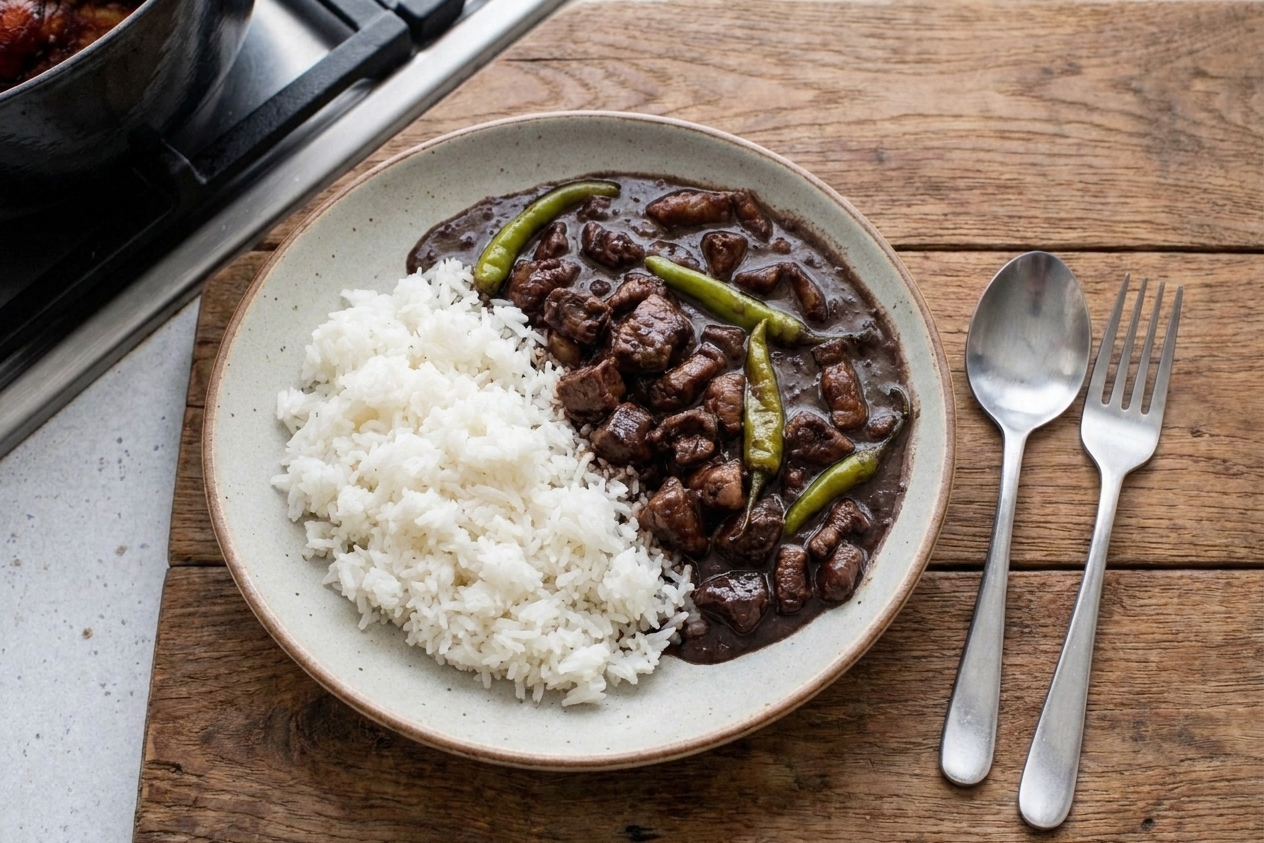
The first time I tried dinuguan, I expected it to taste heavy. Instead, it was this weirdly perfect balance of rich and bright, like the stew had a built-in squeeze of acid that never quits. It reminded me why I love cooking in the first place. The best dishes teach you something. Dinuguan taught me to respect gentle heat, to let vinegar do its thing, and to taste as I go because the line between bold and too sharp is about one minute of simmer time.