Mom's Best Recipes
Recipe

Foolproof Prime Rib

A practical, flavor-forward prime rib recipe with a deep, crackly crust and a rosy, juicy center. No mystery math, no drama. Just a smart roast, a simple herb rub, and a doneness plan that actually works.

Author By Matt Campbell
4.9
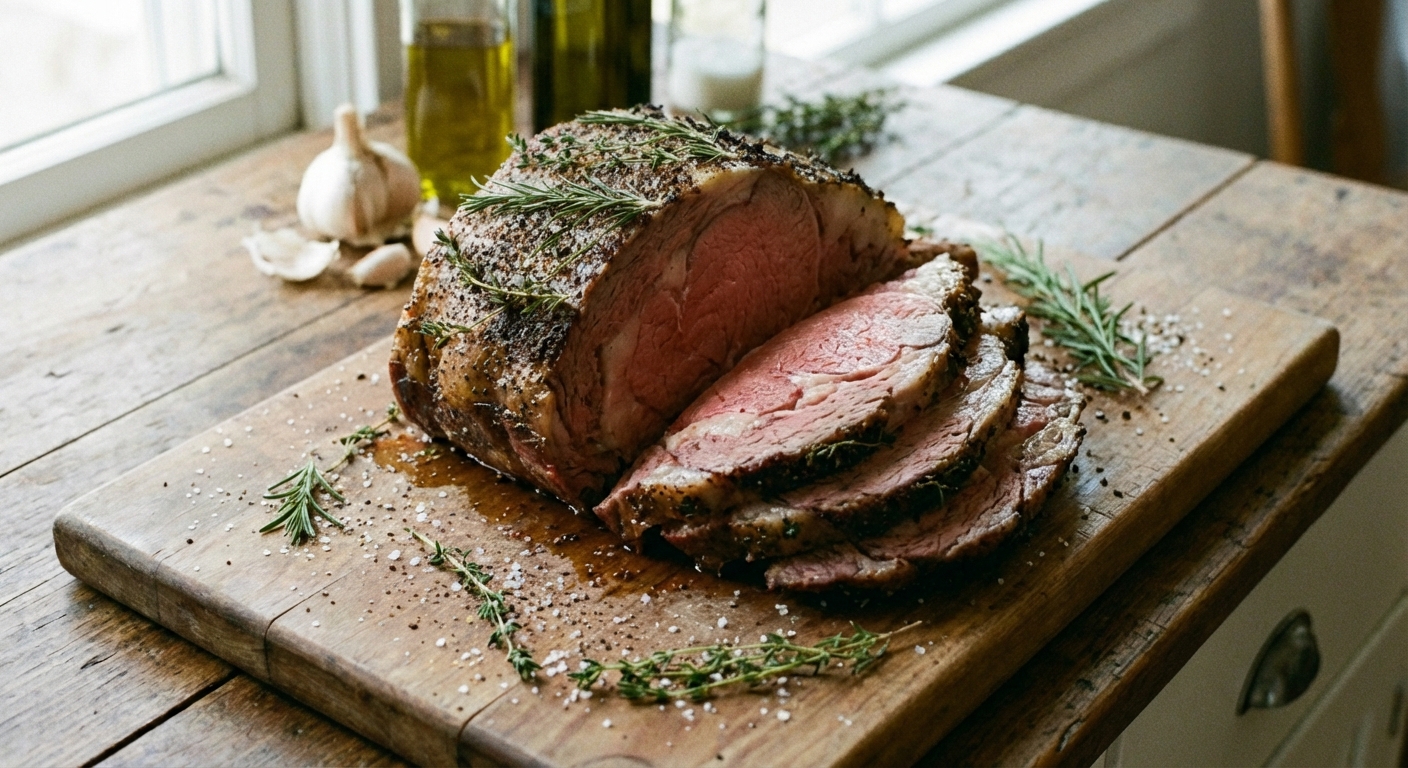
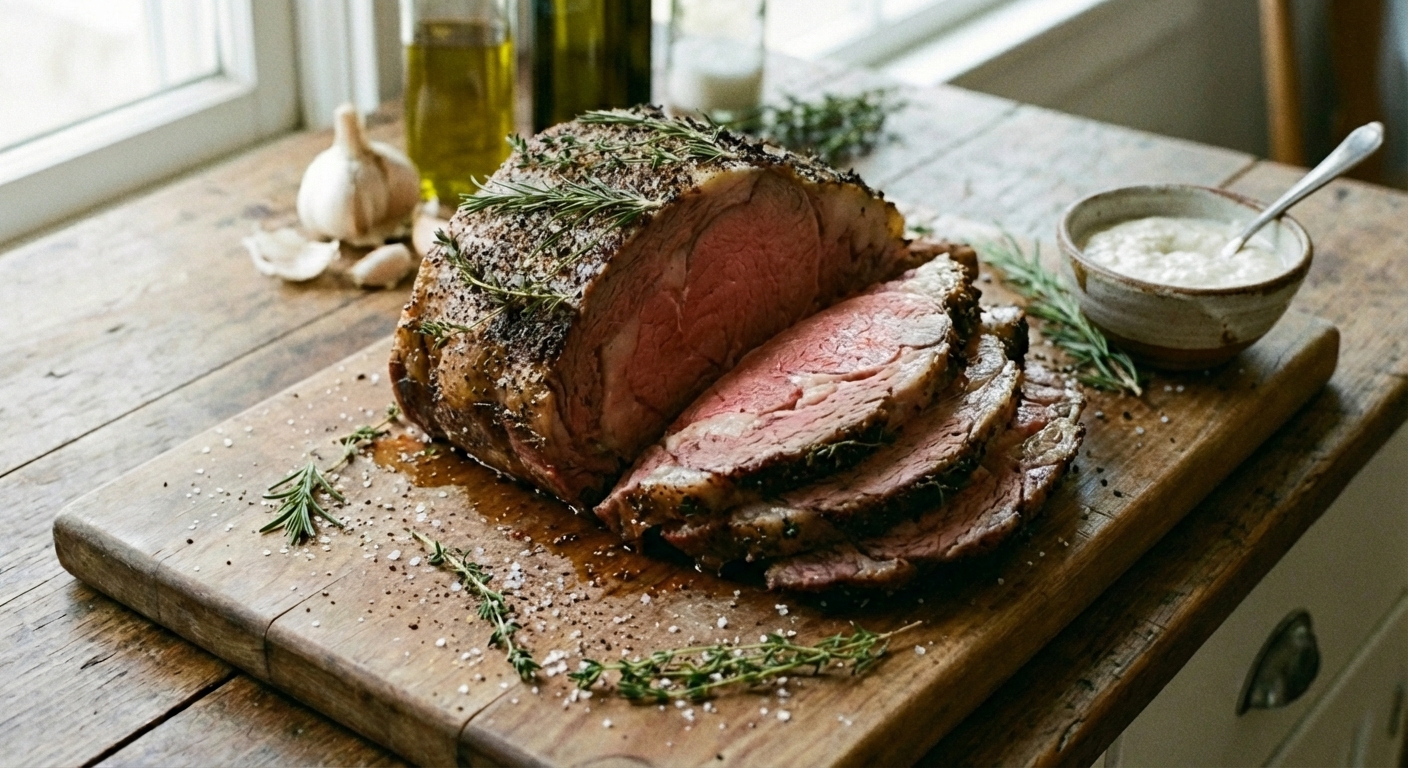
A sliced prime rib roast on a cutting board with a browned crust, pink center, and a small bowl of horseradish cream nearby

Prime rib has a reputation for being fussy, expensive, and emotionally loaded. Like if you overcook it by five degrees, the cow’s spirit files a complaint. Here is the good news: it is just a big, beautiful roast that wants two things from you: salt ahead of time and a thermometer.

This method leans on a dry brine for flavor and juiciness, then a steady roast that finishes with a high-heat blast to build that steakhouse crust. It is the kind of dinner that feels like a holiday even if it is just Tuesday and you felt like doing something slightly unhinged in the best way.

Choose your vibe: serve it classic with horseradish cream and jus, or go full midnight genius and tuck leftovers into toasted rolls with melty provolone.

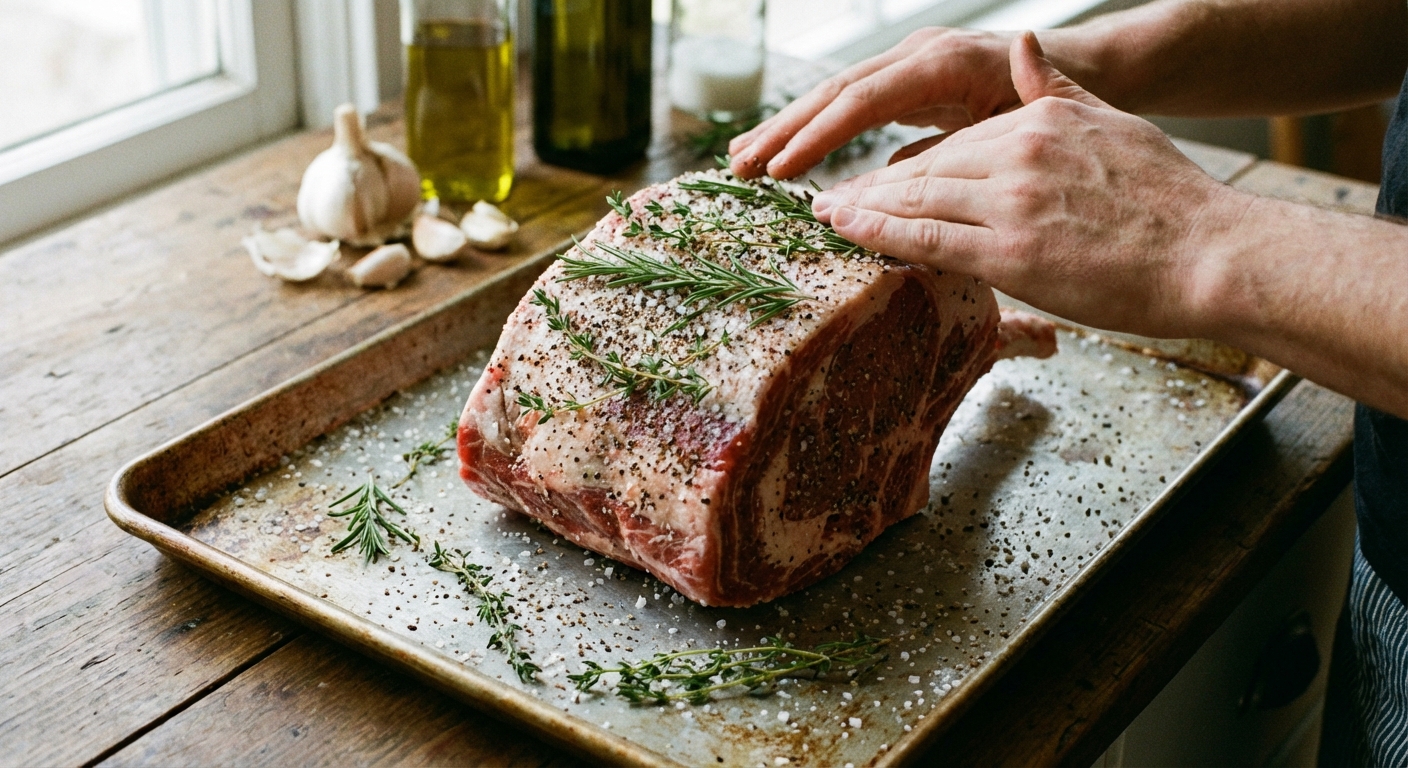
A raw bone-in rib roast on a sheet pan with salt, pepper, and herbs ready to be rubbed on

Why It Works

  • Dry brine = better beef. Salting the roast 24 to 48 hours ahead seasons it throughout and helps the surface dry out so it browns like it means it.
  • Low and steady cooking keeps it even. A moderate oven prevents the outer layers from turning gray while the center catches up.
  • High-heat finish builds the crust. You get that crisp, savory edge without gambling the interior.
  • Resting is nonnegotiable. It lets juices redistribute so your cutting board does not become soup.
  • Thermometer-driven doneness. Prime rib is about temperature, not time. Time is just a suggestion.

Storage Tips

How to store prime rib

  • Refrigerate: Wrap slices tightly or store in an airtight container. Keep up to 4 days.
  • Freeze: Freeze slices in a single layer, then bag them. Best within 2 to 3 months. Thaw overnight in the fridge.

How to reheat without overcooking

  • Best method (gentle oven): Put slices in a baking dish with a splash of beef broth. Cover with foil and warm at 250°F until just heated through, usually 10 to 20 minutes depending on thickness.
  • Fast method (pan): Warm slices in a skillet over low heat with a spoonful of jus or broth. Flip once. Keep it gentle.
  • Avoid: Microwaving on high. If you must, use low power and short bursts with a little broth.

Leftover glow-up: Slice thin, pile onto a toasted roll, smear with horseradish cream, and add a handful of arugula. Suddenly you are the kind of person who “just throws things together.”

Common Questions

What cut should I buy for prime rib?

Look for a standing rib roast (prime rib). Bone-in is classic and helps insulate the meat, but boneless is easier to carve. If you want maximum tenderness, ask for the small end (ribs 10 to 12). For a bigger, beefier roast, the large end (ribs 6 to 9) is great.

How much prime rib per person?

Plan on 1 pound per person for bone-in (includes bone weight) or 3/4 pound per person for boneless. If your people are enthusiastic and you want leftover sandwiches, round up.

Do I really need to salt it a day ahead?

It is the easiest upgrade you can make. 24 hours is ideal. Even 8 to 12 hours helps. If you are truly last-minute, salt it and let it sit uncovered in the fridge while the oven preheats. Not perfect, still delicious.

Should I sear first or sear at the end?

For prime rib, I prefer searing at the end. The roast is dry and hot on the surface after cooking, so it browns fast and beautifully without filling your kitchen with smoke for the entire roast time.

What internal temperature should I target?

Pull the roast from the oven at these temperatures, then rest it. The temperature will rise about 5 to 10°F as it rests.

  • Rare: pull at 115°F, slice around 120 to 125°F
  • Medium-rare: pull at 120°F, slice around 125 to 130°F
  • Medium: pull at 130°F, slice around 135 to 140°F

If you are feeding a crowd with mixed preferences, medium-rare is the sweet spot. The end pieces will naturally be more done.

Do I need a roasting rack?

It helps air circulate, but you can improvise. Use a bed of thick-sliced onions or halved garlic heads under the roast, or set it on a few sturdy carrot and celery sticks.

Can I make jus without drippings?

Yes. Simmer beef broth with a splash of Worcestershire and a little red wine if you have it. Finish with a bit of the roast’s resting juices for instant credibility.

The first time I made prime rib, I treated it like a high-stakes exam. I reread five internet charts, paced my kitchen, and still managed to convince myself the roast was either raw or ruined every seven minutes. Then I did the one thing I should have done from the start: I stuck a thermometer in it and calmed down.

Now prime rib is my favorite kind of flex because it is secretly simple. Salt it early, cook it steady, blast it at the end, then rest. The hardest part is waiting to slice it, which is exactly the moment your kitchen starts smelling like you own a fancy restaurant and a clean apron.