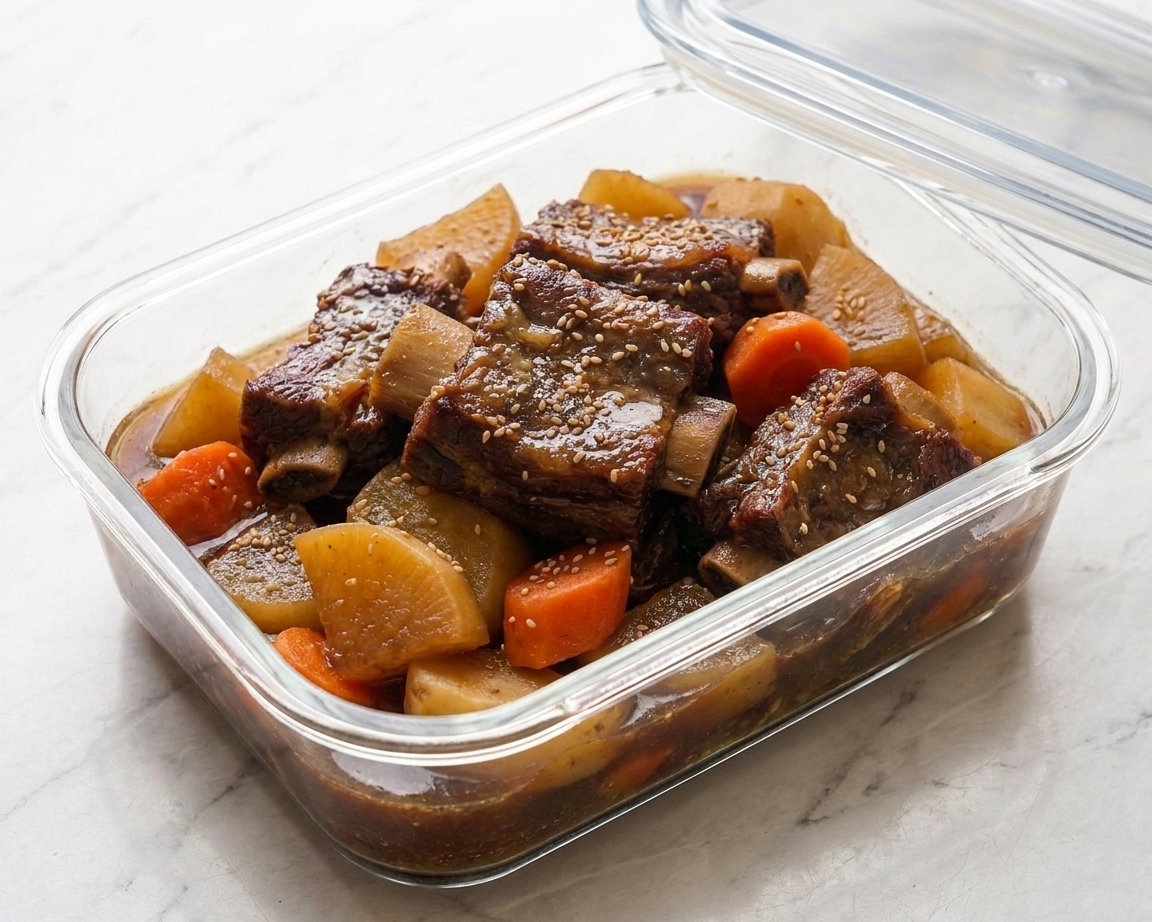
What cut of short ribs should I buy for galbi jjim?
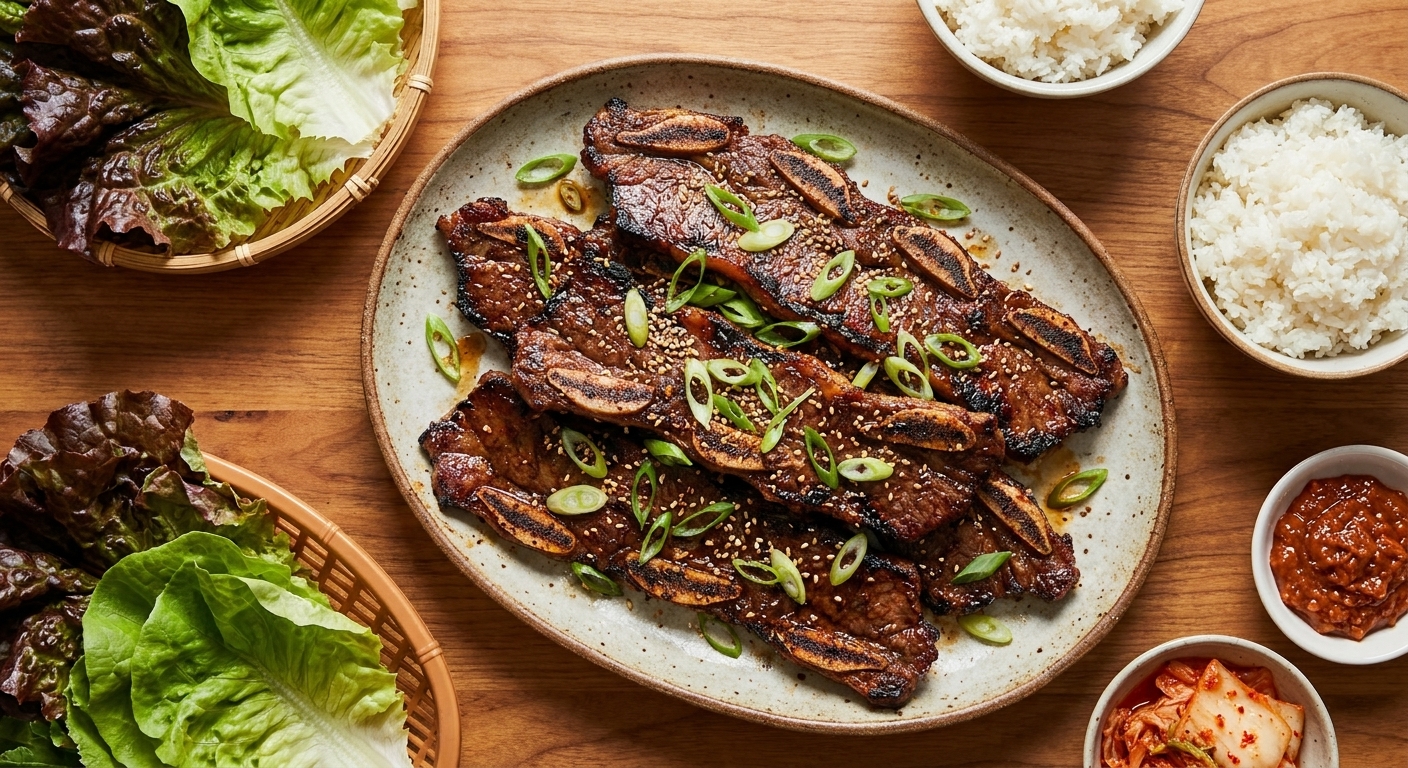
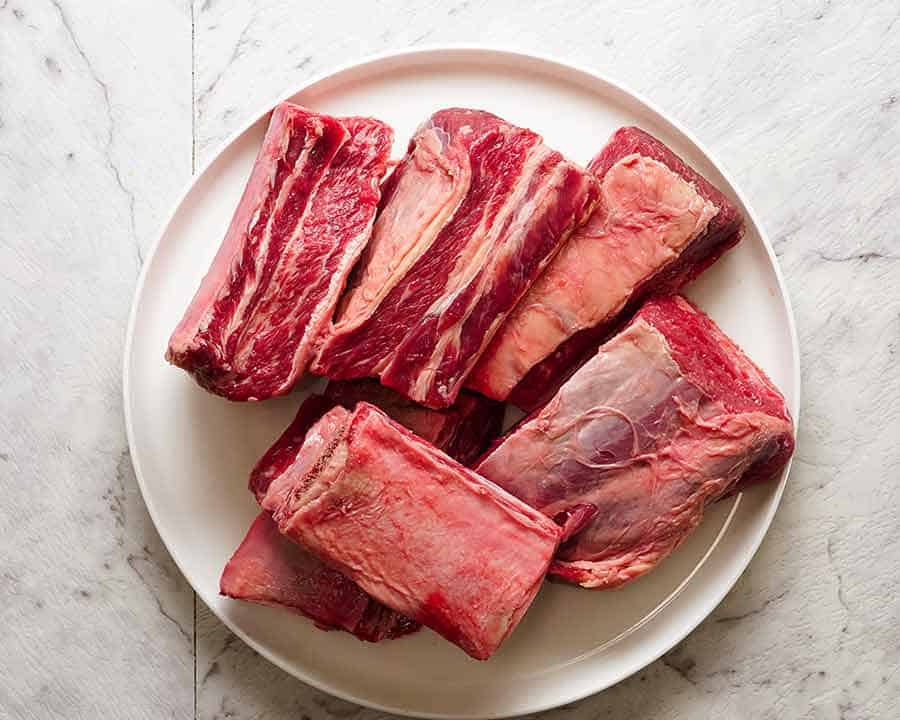
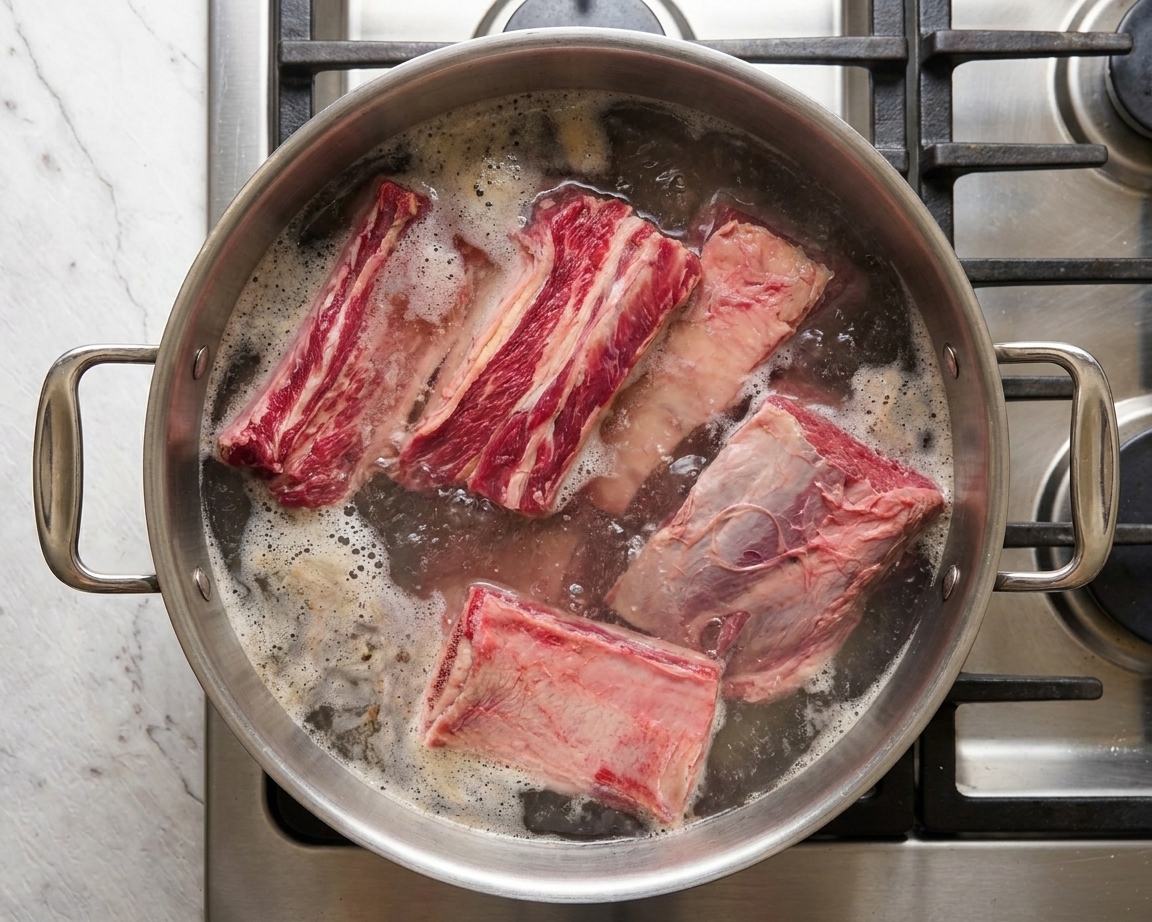
Look for English-cut beef short ribs, cut into thick blocks (about 2 to 2 1/2 inches). Flanken-cut ribs are sliced thin across the bone and cook much faster. They are great for grilling, but not ideal for this long braise.
Do I have to soak and blanch the ribs?
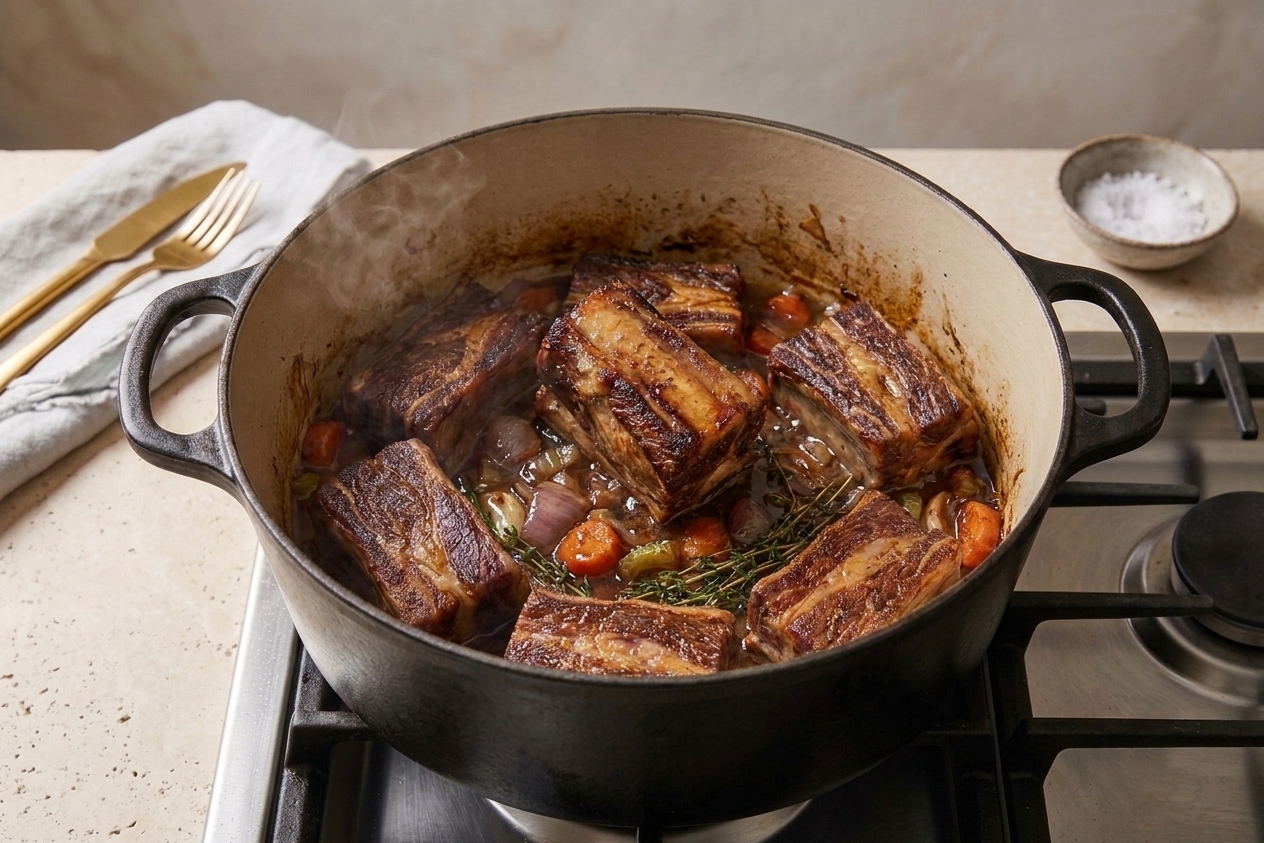
You do not have to, but I strongly recommend it. Soaking helps pull out some blood, and the quick blanch helps wash off surface impurities. The result is usually a cleaner-tasting sauce and a prettier final dish.
Can I make galbi jjim without Asian pear?
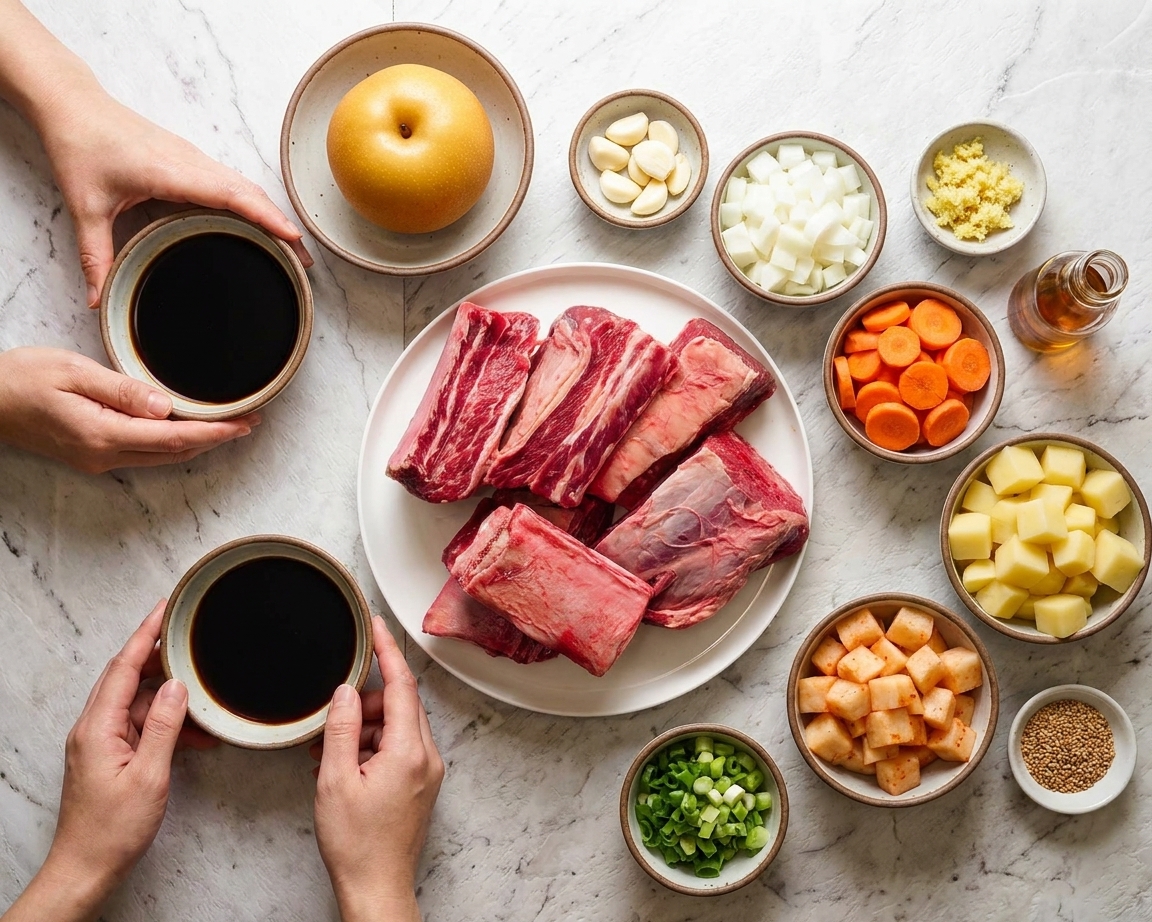
Yes. Use 1 sweet apple (like Fuji or Honeycrisp) instead. You can also use 2 to 3 tablespoons brown sugar plus an extra splash of water for the blending step, but pear or apple gives you sweetness plus a subtle tenderizing effect.
Is Korean radish the same as daikon?
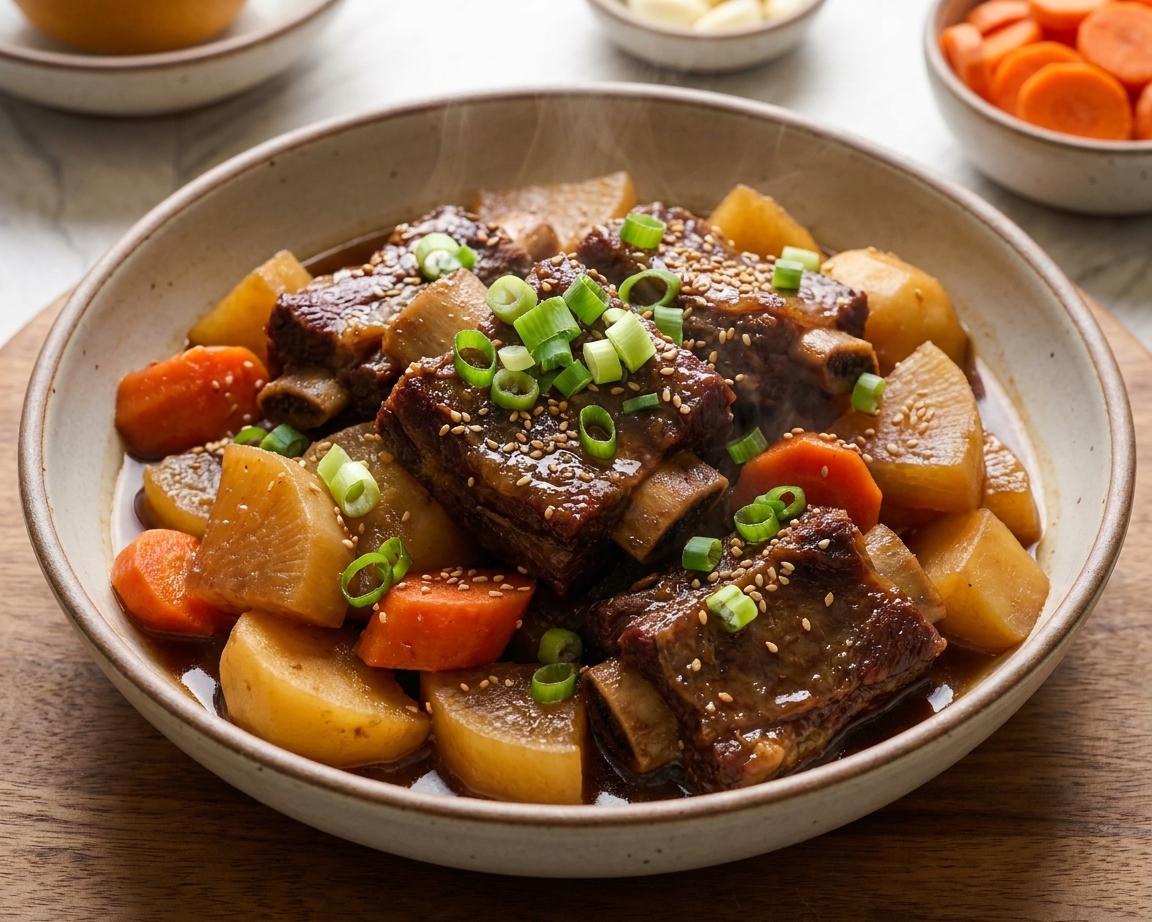
They are close. Korean radish (mu) is usually a bit denser and sweeter. Daikon works perfectly here. If you cannot find either, you can skip it and add more carrots and potatoes.
How do I make it less sweet?
Start with the smaller amount of honey or brown sugar, and keep the sauce on the savory side. You can also add a little extra soy sauce at the end, or a splash of rice vinegar to sharpen things up.
Can I cook galbi jjim in a slow cooker or Instant Pot?
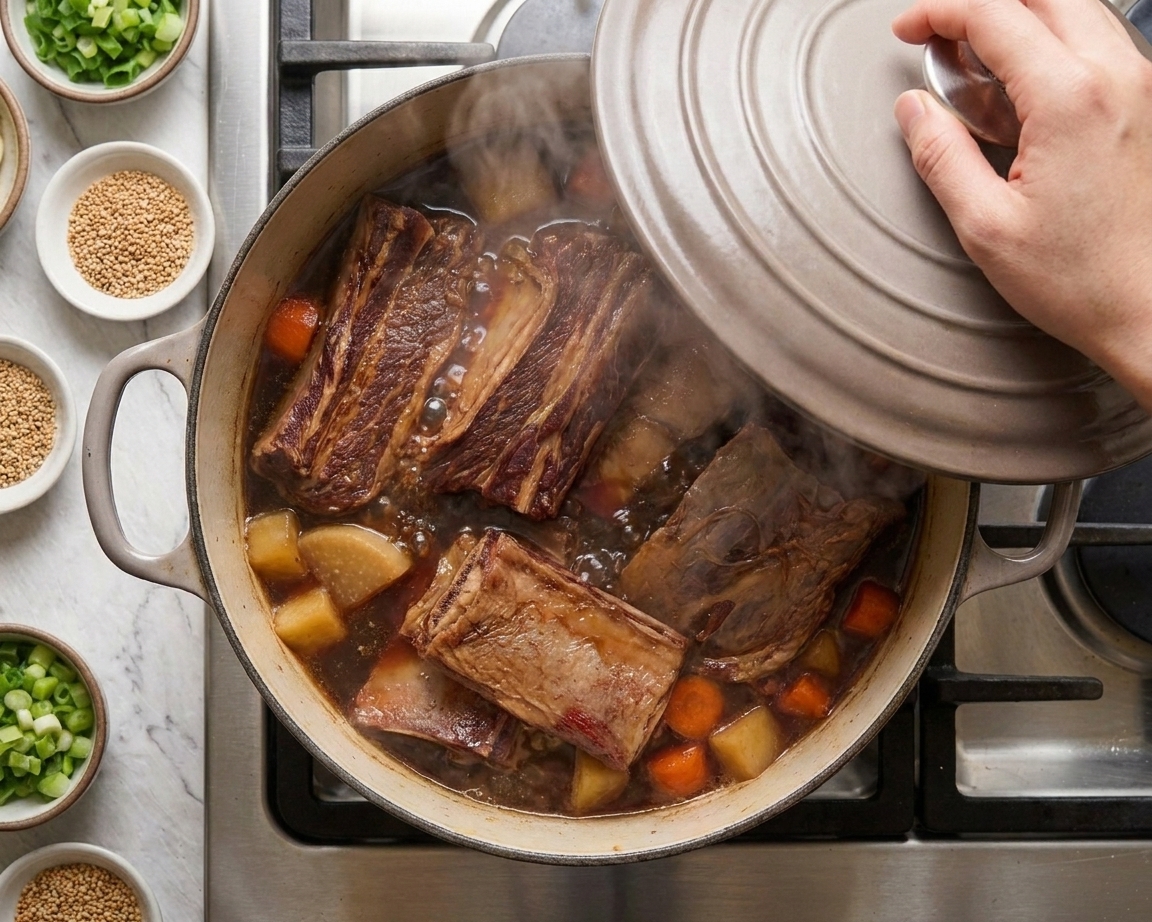
Slow cooker: After blanching, add ribs and sauce to the slow cooker and cook on LOW 7 to 8 hours. Add radish for the last 3 hours. Add carrots and potatoes (cut in large chunks) for the last 1 1/2 to 2 hours so they stay intact.
Instant Pot: After blanching, pressure cook ribs with sauce for 35 minutes, then natural release 15 minutes. Add radish, carrots, and potatoes, then pressure cook 6 minutes with a quick release. Switch to Sauté and simmer a few minutes to reduce and gloss up the sauce.