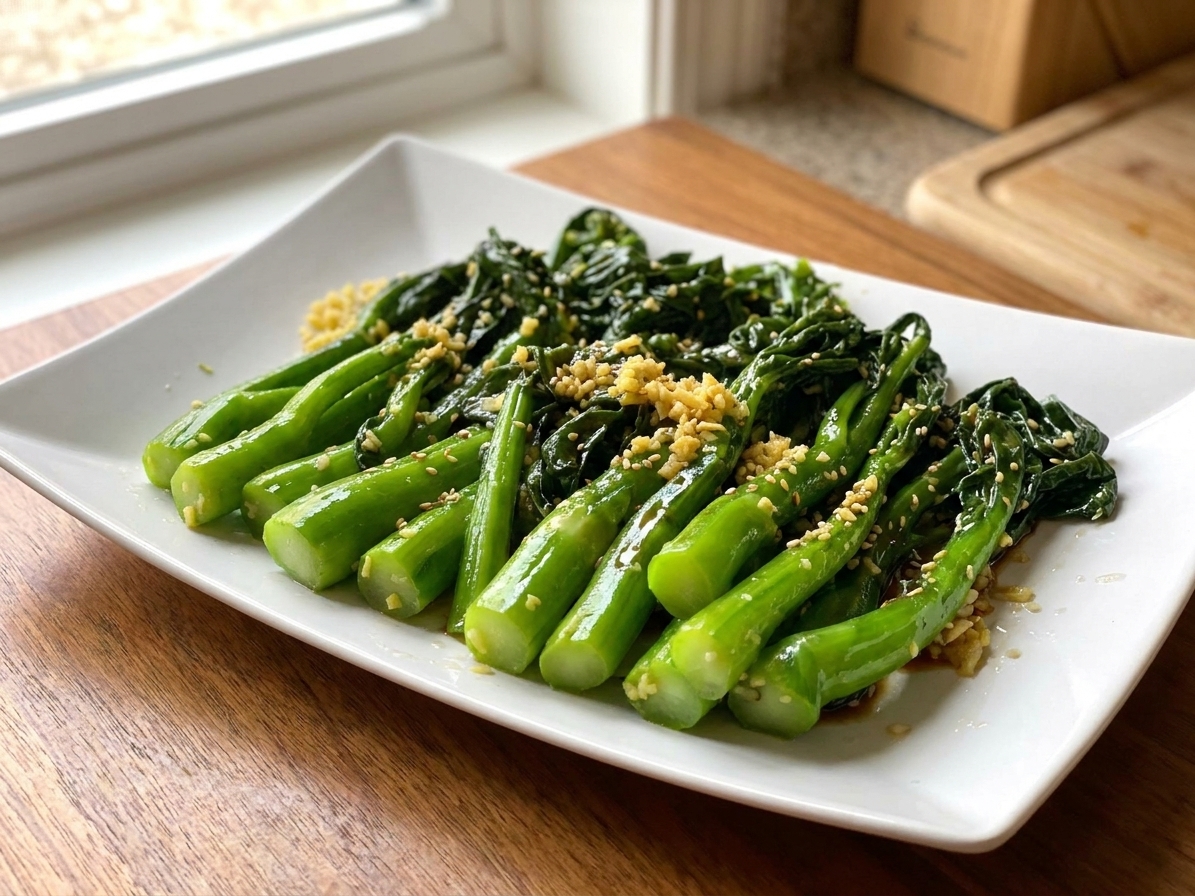
What is gai lan?
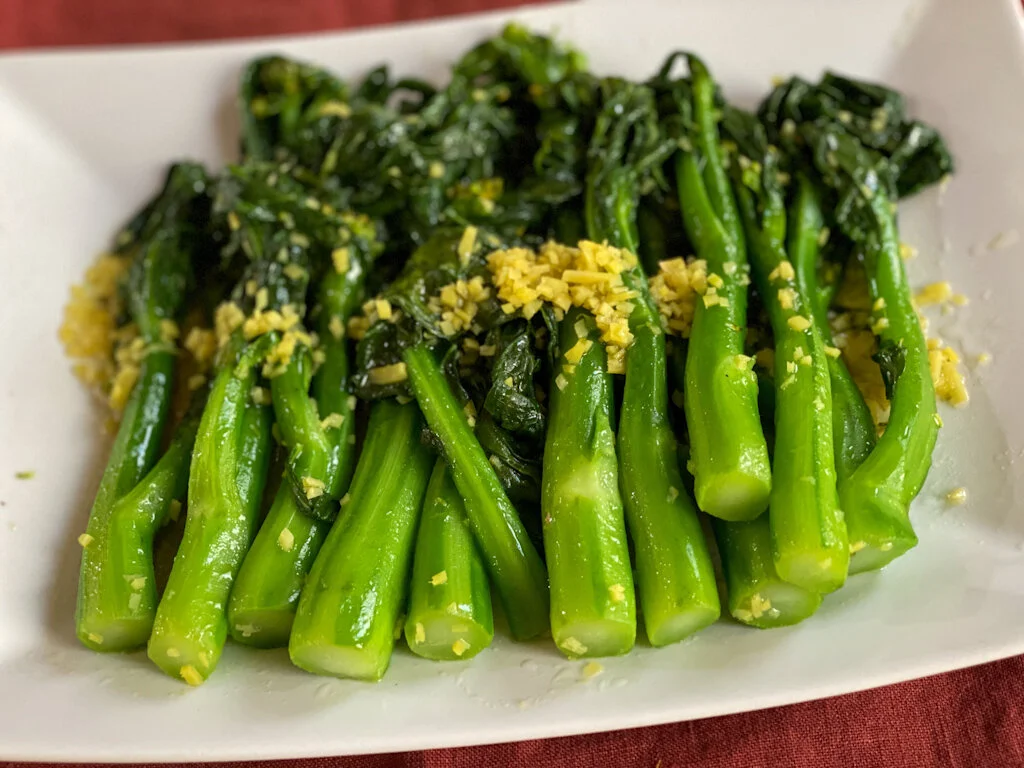
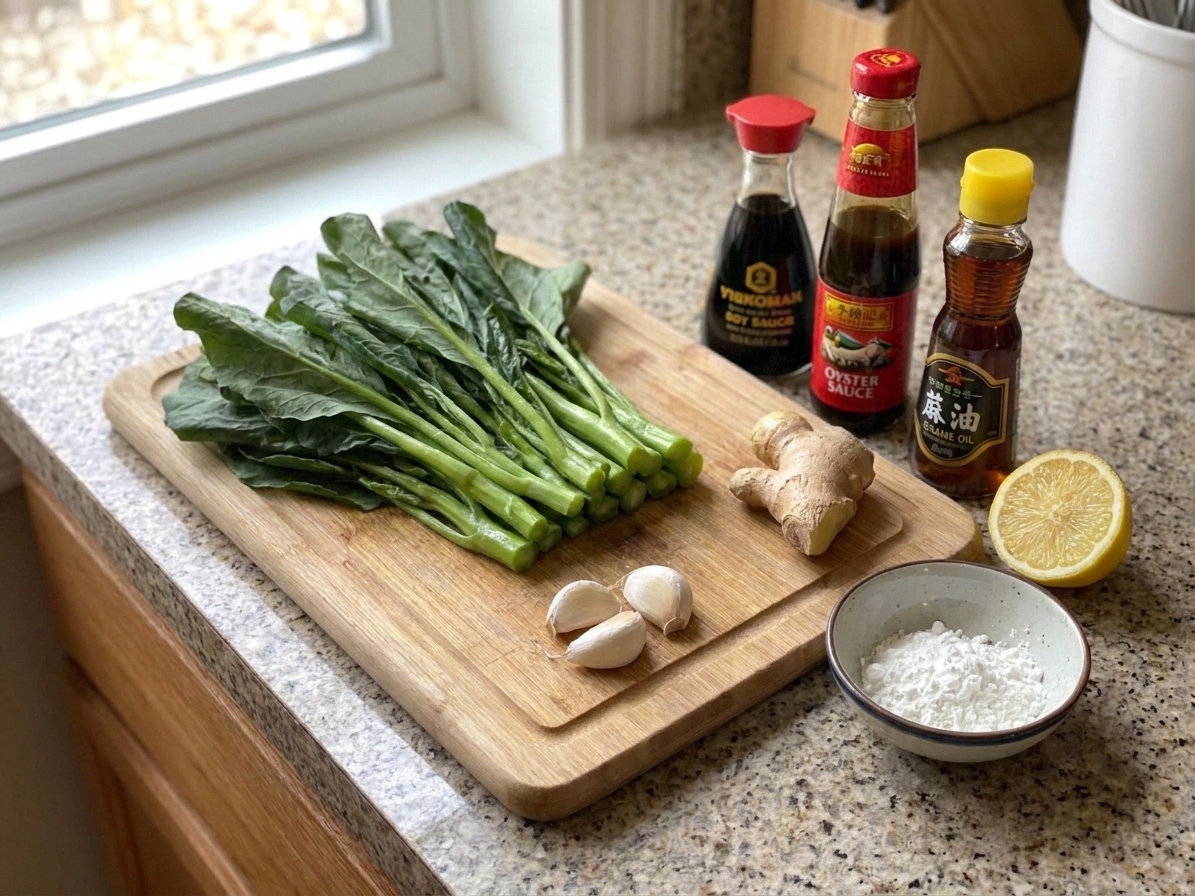
Gai lan is Chinese broccoli. It has thick, crisp stems and dark leafy tops, with a slightly bitter edge that can turn pleasantly sweet and nutty when cooked quickly.
Do I have to blanch it first?
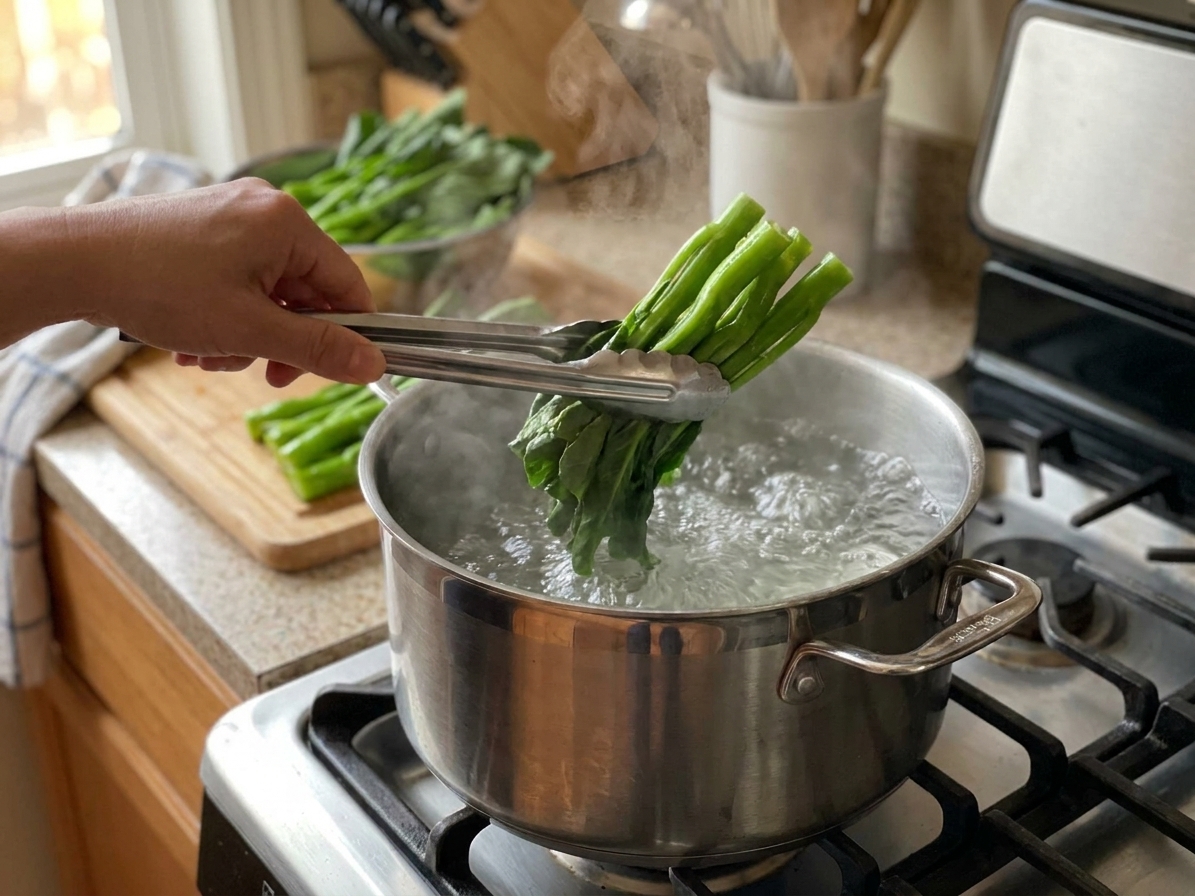
You can skip it, but blanching makes it easier to get bright green, tender greens without overcooking the leaves while the stems catch up. Blanching can also help tame bitterness, especially with more mature bunches. If you skip blanching, add a splash of water to the pan and cover for 1 to 2 minutes to steam.
How do I cut gai lan so it cooks evenly?
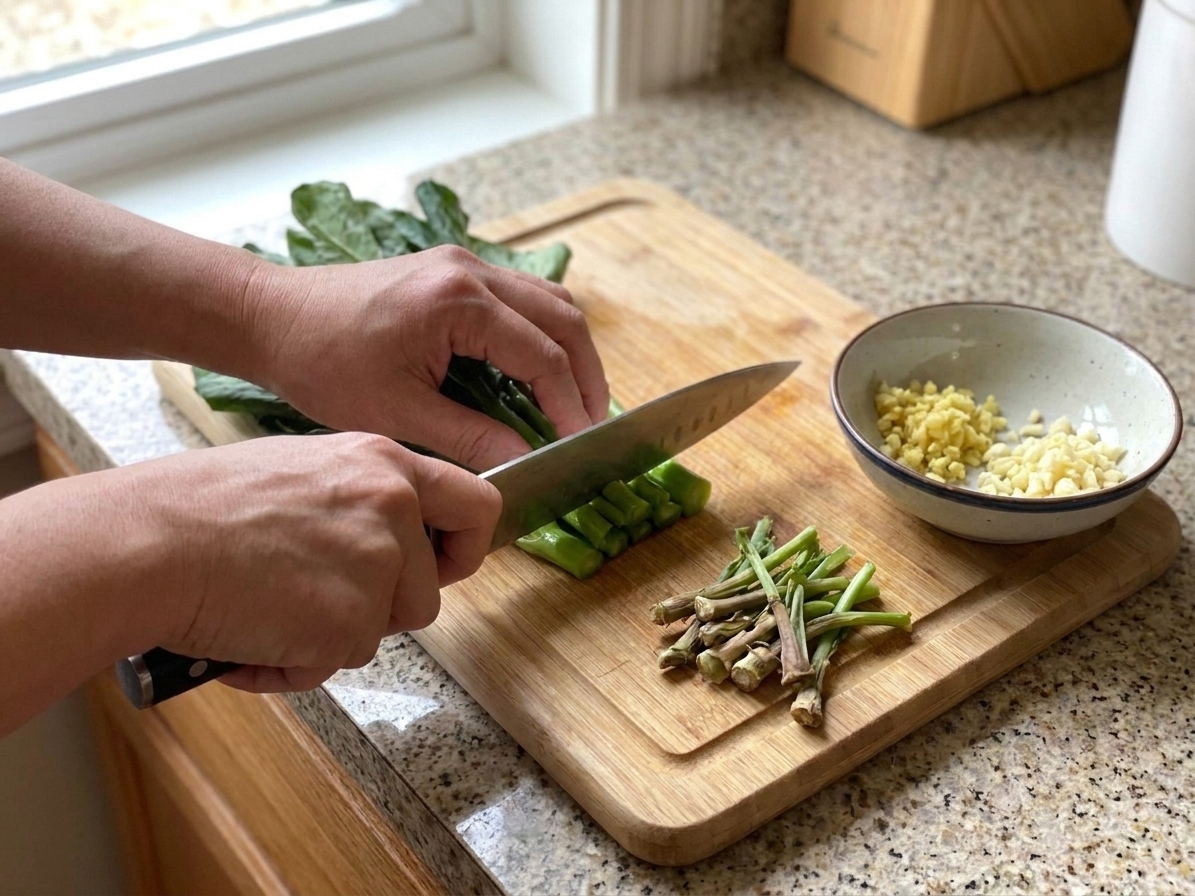
Trim the very bottom if it looks dry. Then slice thick stems into 2 inch pieces. If the stems are much thicker than the leaves, separate them and cook stems first, then add leaves.
Any tips for washing gai lan?
Gai lan can be a little gritty. Rinse well, paying attention to the stem joints and leafy tops. If it looks especially sandy, swish it in a big bowl of cold water, lift it out (do not pour the grit back over it), then drain.
Does blanch time change for baby gai lan?
Yes. For baby gai lan, blanch about 45 to 60 seconds. For thicker, more mature stems, go 60 to 90 seconds. You are aiming for vivid green leaves and stems that are just starting to lose their raw edge.
What can I use instead of oyster sauce?
Hoisin is sweeter but works in a pinch. For a vegetarian option, use mushroom oyster sauce (often labeled vegetarian oyster sauce). You can also use a little extra soy sauce plus a pinch of sugar.
Why does my gai lan turn dull or mushy?
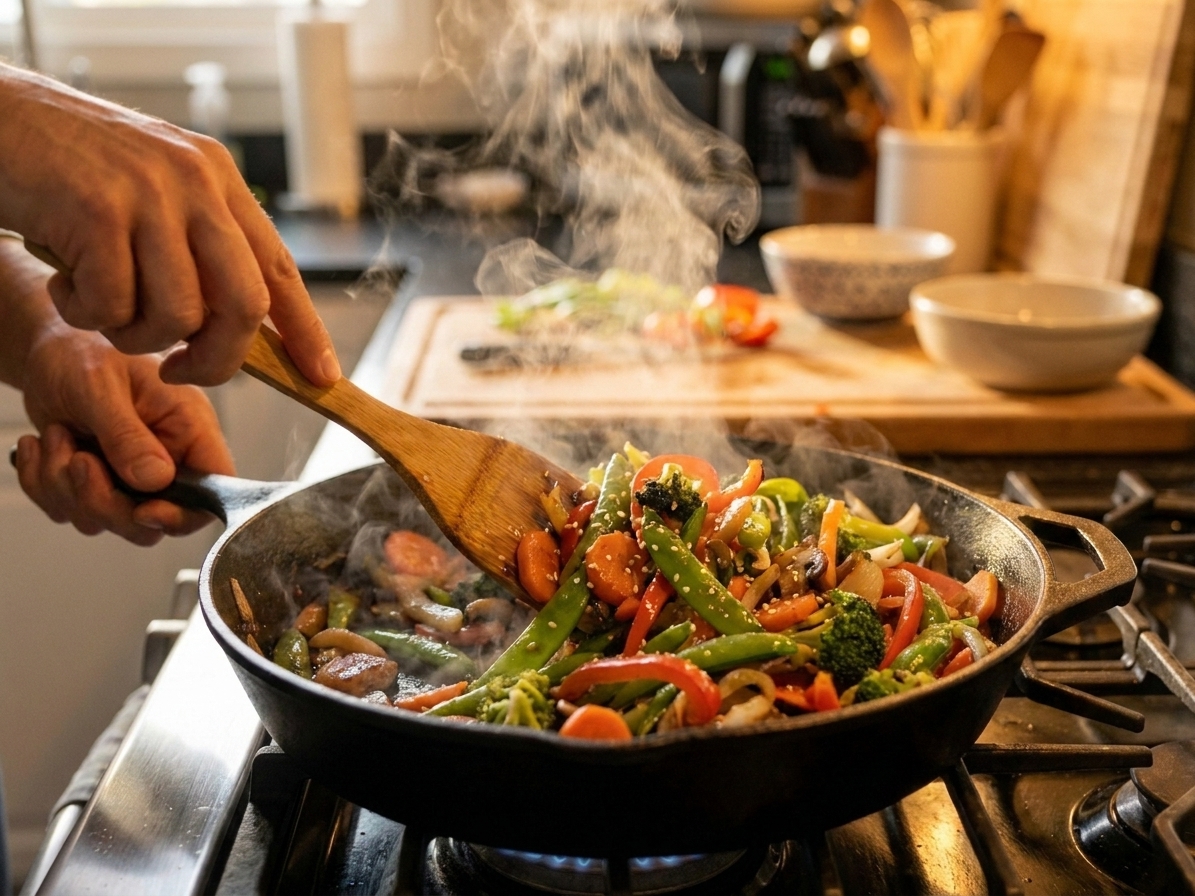
Usually it is overcooked or crowded. Use high heat, cook in batches if needed, and stop as soon as the stems are crisp-tender.
Can I make it spicy?
Absolutely. Add 1 to 2 teaspoons chili crisp at the end, or stir fry a sliced chili with the garlic and ginger.