Common Questions
Is this the official Good Housekeeping magazine recipe?
No. This is my good-housekeeping-style take, meaning practical steps, pantry-friendly ingredients, and a method that keeps dinner feeling doable on a real weekday. If you are looking for the exact magazine version, this is not a reprint.
Can I use store-bought crust?
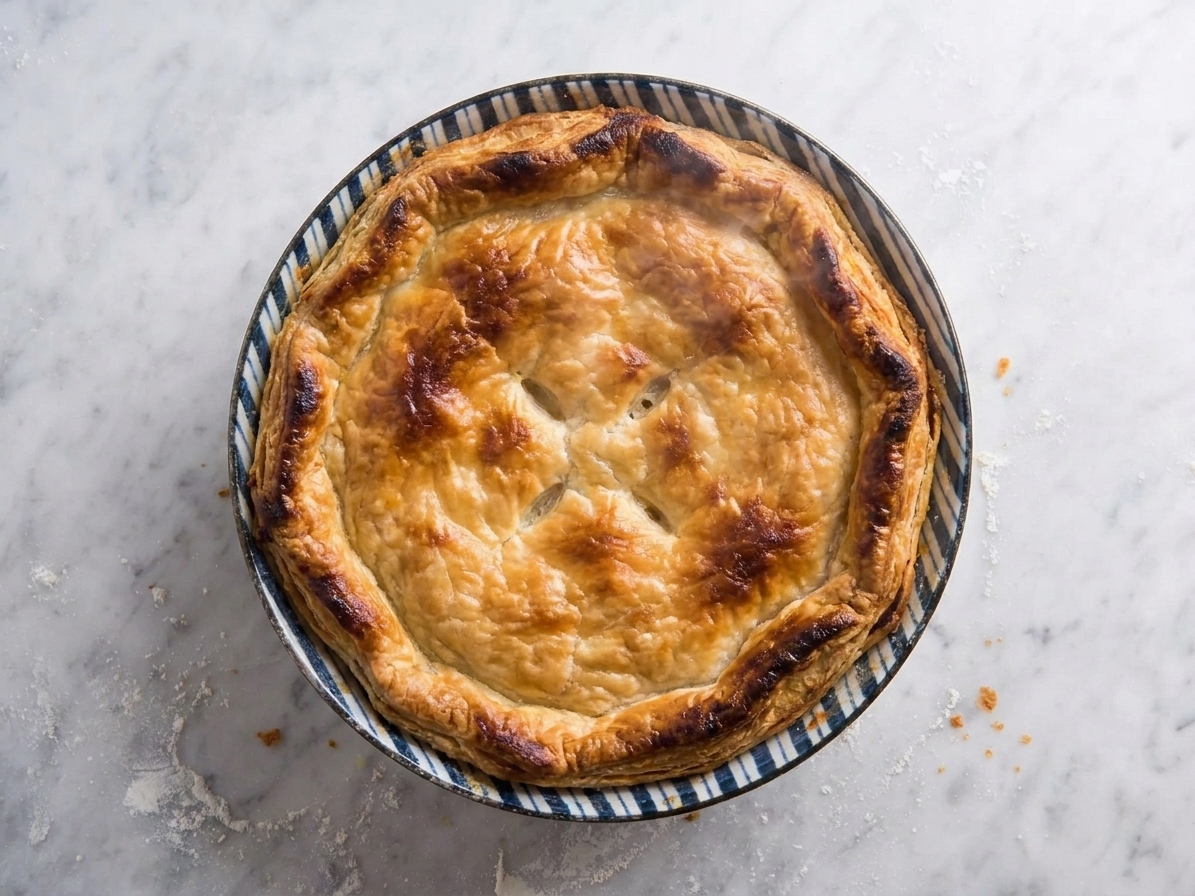
Absolutely. Refrigerated pie crust is a real-life hero. If you want an even easier route, puff pastry makes a very fun, extra-flaky top. Tip: puff pastry bakes best when it goes into the oven cold, so keep it chilled until you are ready to top the pie.
How do I keep the bottom from getting soggy?
This version uses a top crust only, which is the simplest way to avoid a soggy bottom. If you do a bottom crust, bake on a preheated sheet pan and make sure your filling is thick and not watery.
My filling seems thin. What should I do?
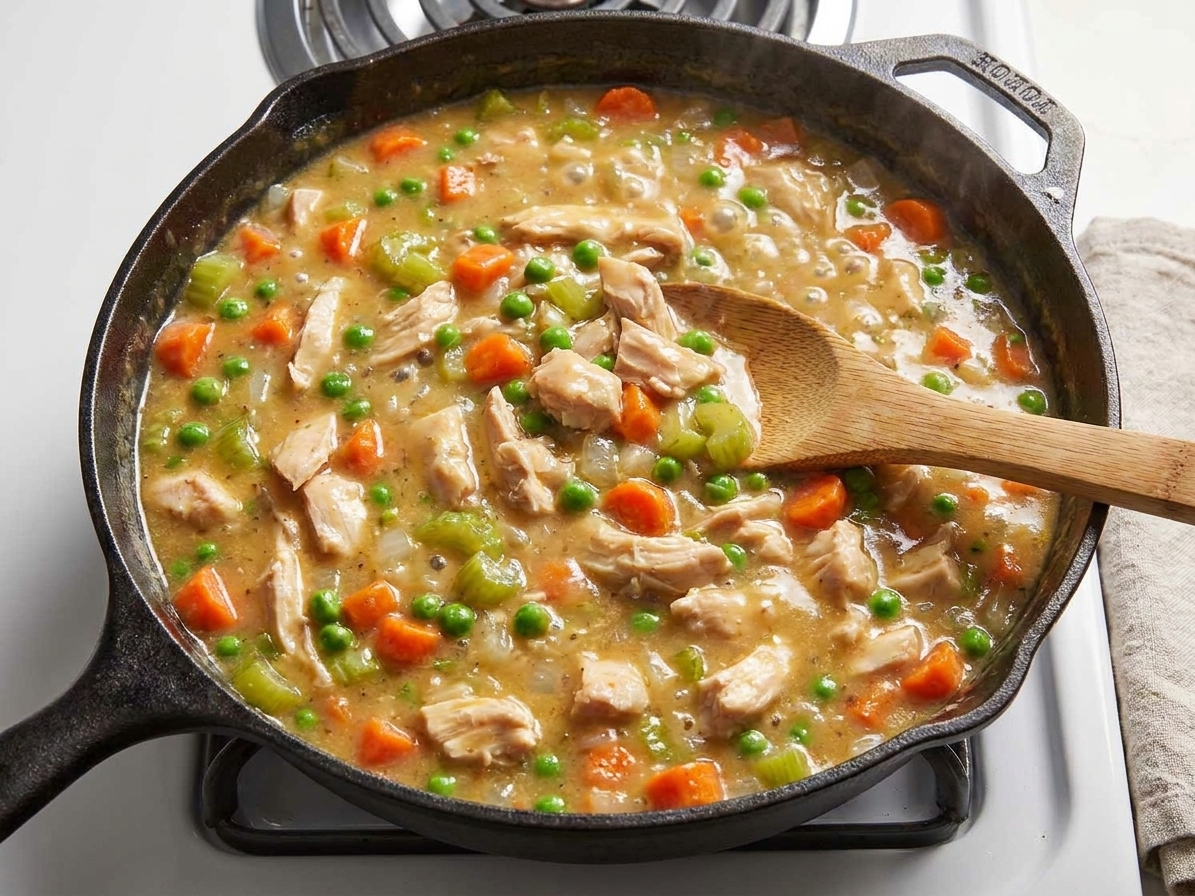
Simmer it for a few more minutes. The sauce thickens as it bubbles and reduces. If it is still thin, mix 1 tablespoon cornstarch with 1 tablespoon cold water, stir it in, and simmer 1 to 2 minutes.
Can I swap the vegetables?
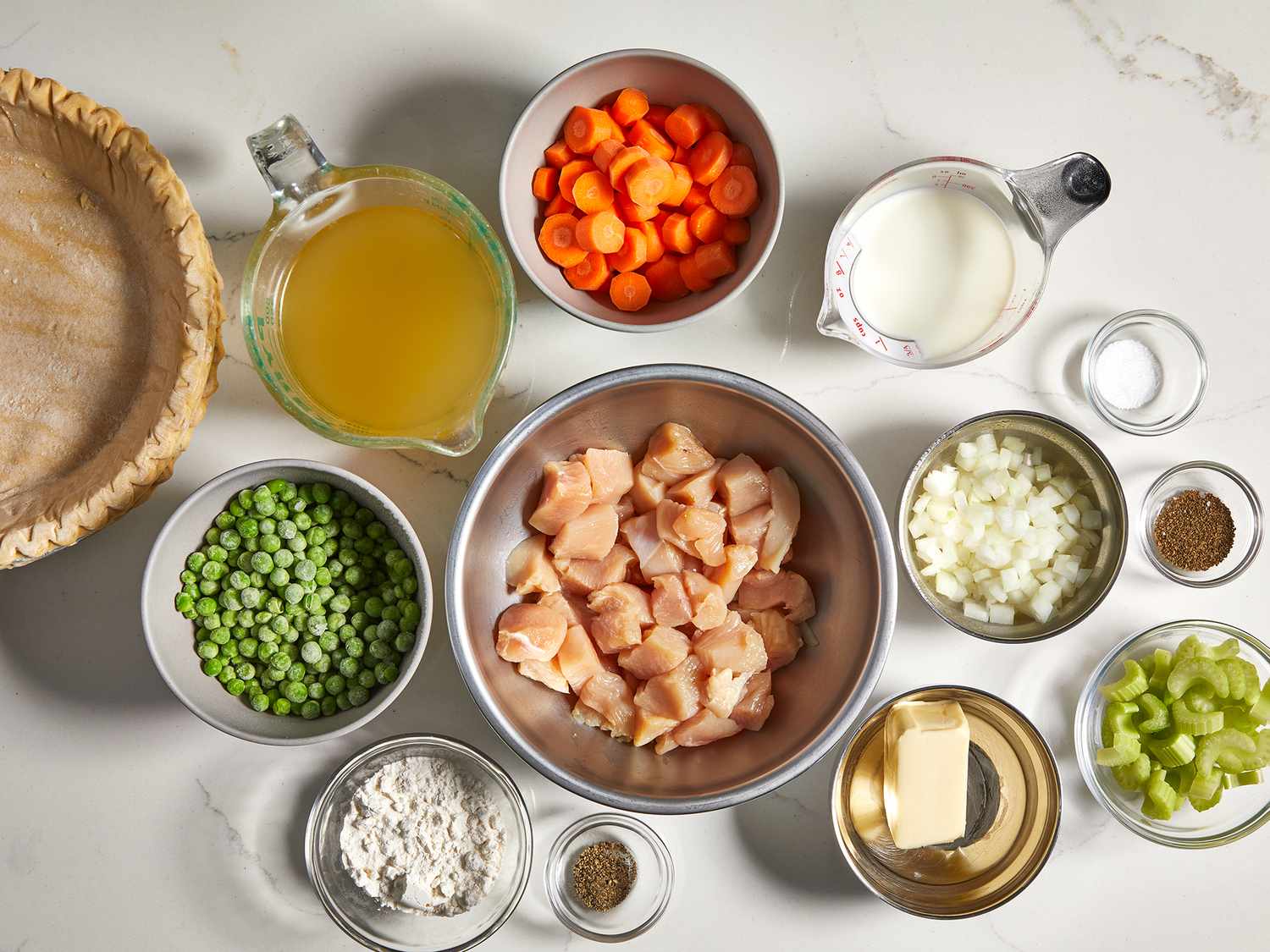
Yes. Use what you have. Green beans, corn, mushrooms, or diced potatoes all work. Just keep the overall volume similar so the filling stays creamy, not dry.
How do I know it is done?
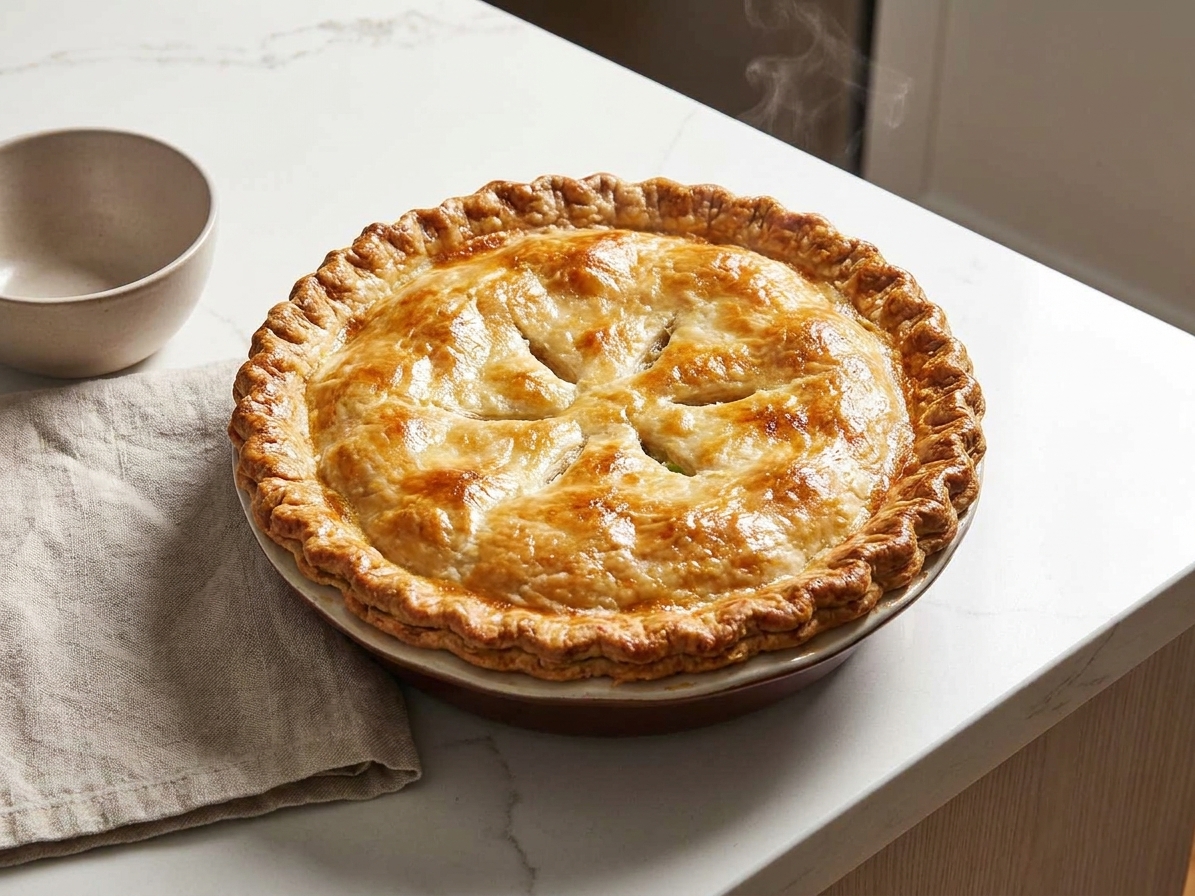
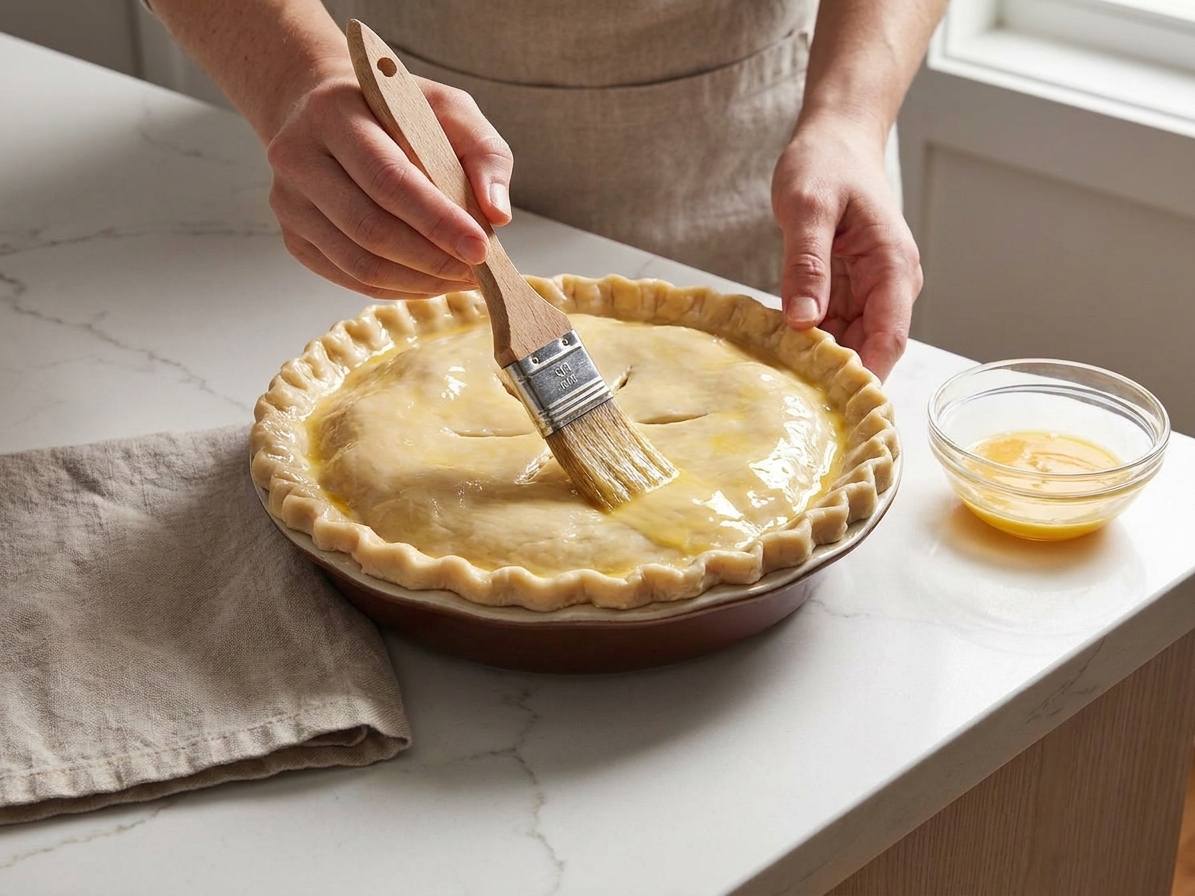
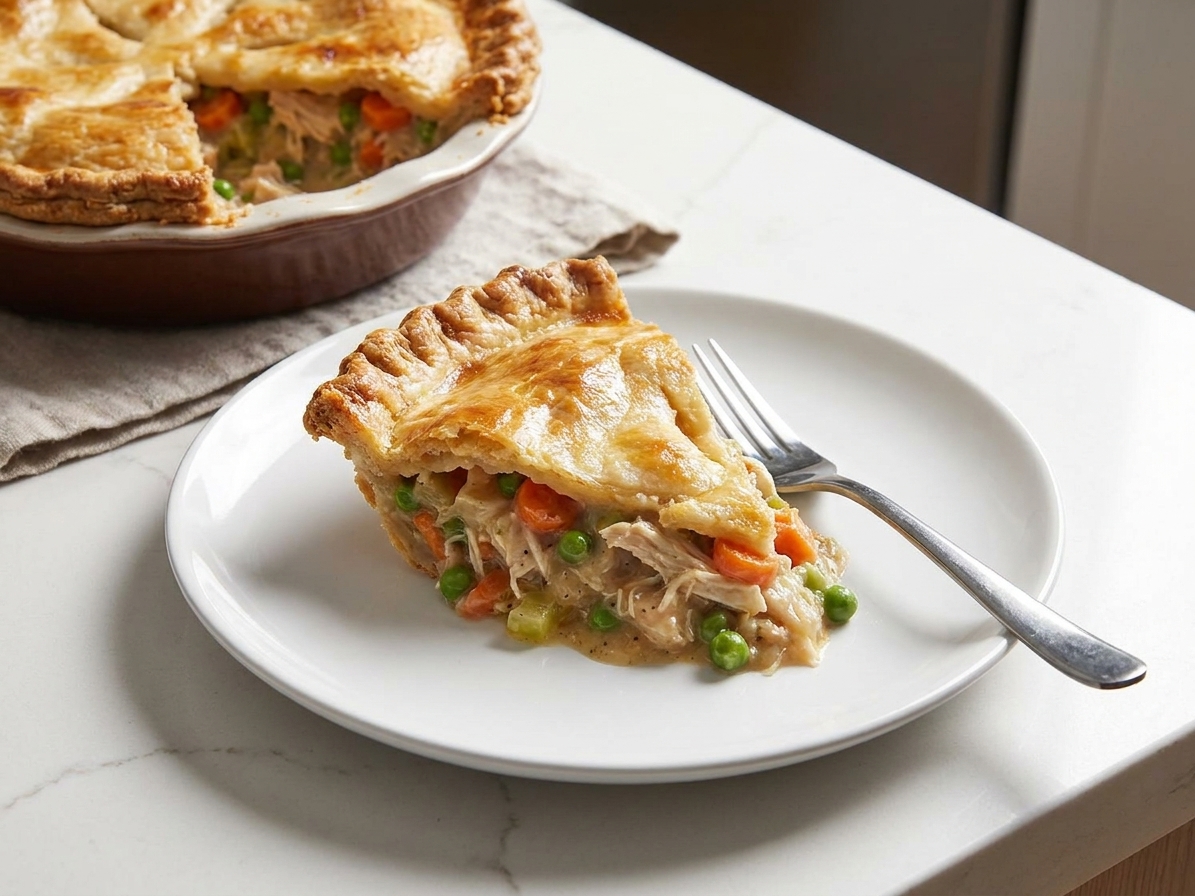
The top should be deeply golden and you should see the filling bubbling through the vents. Bubbling means the filling is fully heated. For the best thickness, let the pie rest after baking so the sauce can set up.
Can I make it ahead?
Yes, and it is a very good housekeeping move. Make the filling up to 2 days ahead, cool completely, cover, and refrigerate. When ready to bake, pour into the dish, top with crust, and bake. If the filling is cold, plan on adding a few extra minutes in the oven.