1) Start the soak (optional)
If you are using wooden skewers, get them soaking in water for 30 minutes. If you are using metal skewers, skip this.
Time saver: Start the soak, then make the marinade and prep everything while the skewers do their thing.
2) Marinate the chicken
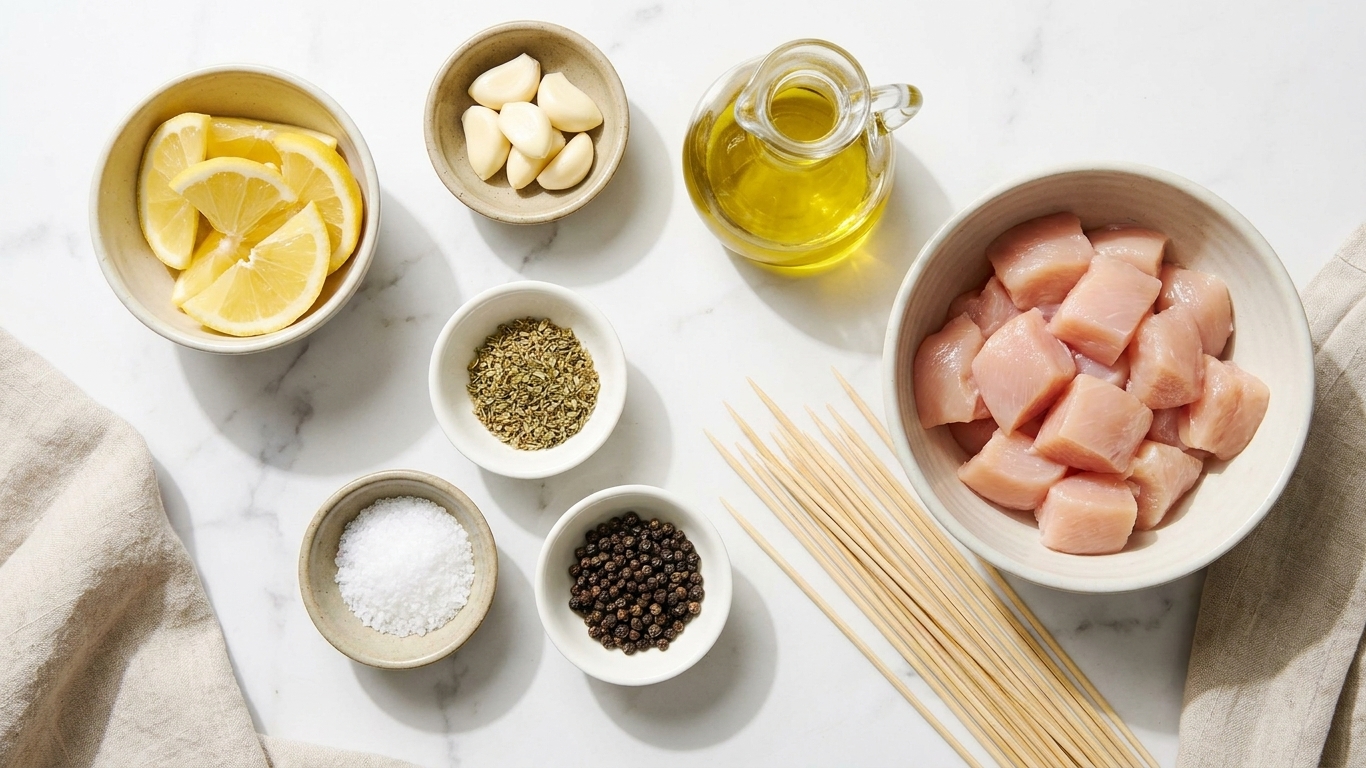
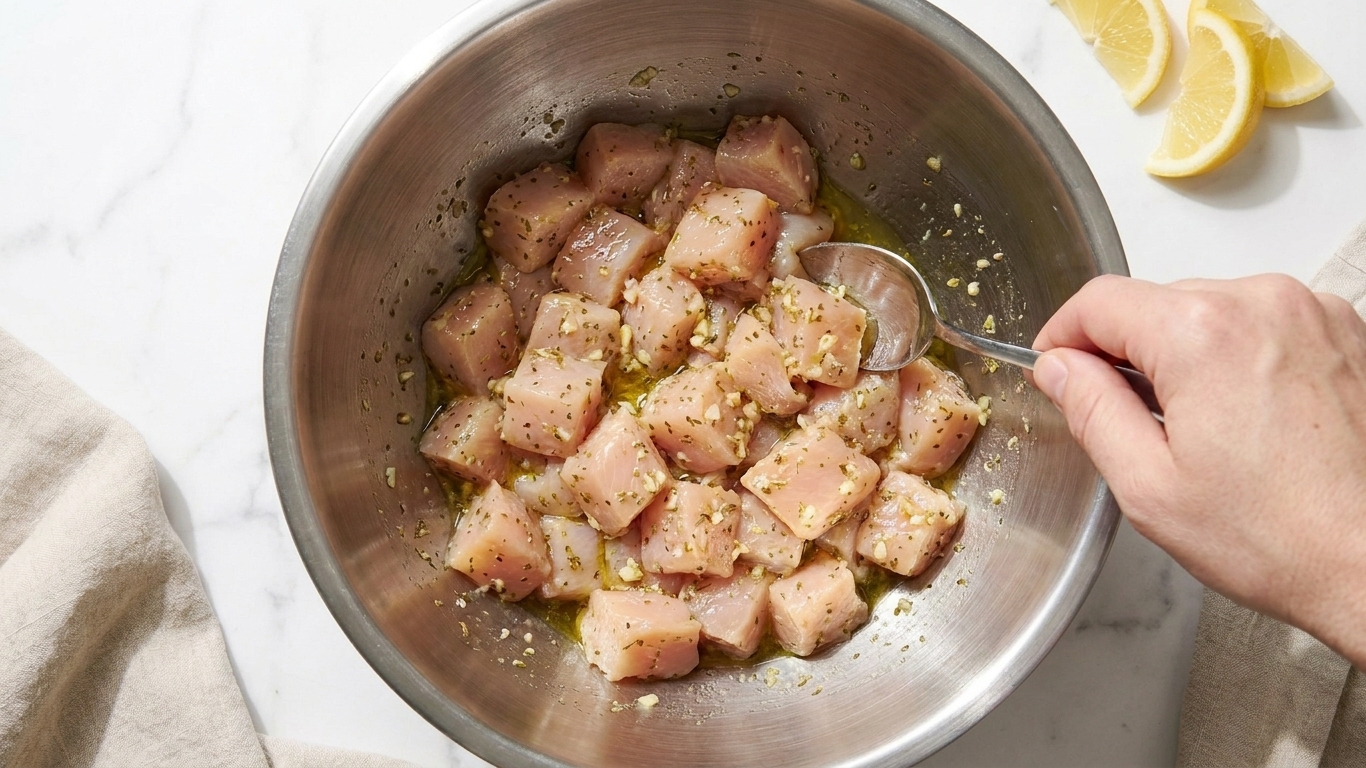
In a large bowl or zip-top bag, combine olive oil, lemon zest, lemon juice, garlic, oregano, salt, pepper, and honey or paprika if using. Add chicken and toss well.
Food safety note: Marinate in the refrigerator for 30 minutes up to 6 hours (ideal). You can go longer (up to about 6 to 12 hours), but the lemon can start to soften the texture, especially with smaller pieces.
Before cooking, let the chicken sit at room temperature for about 10 to 15 minutes so it cooks more evenly. Keep it brief, this is not a counter hangout situation.
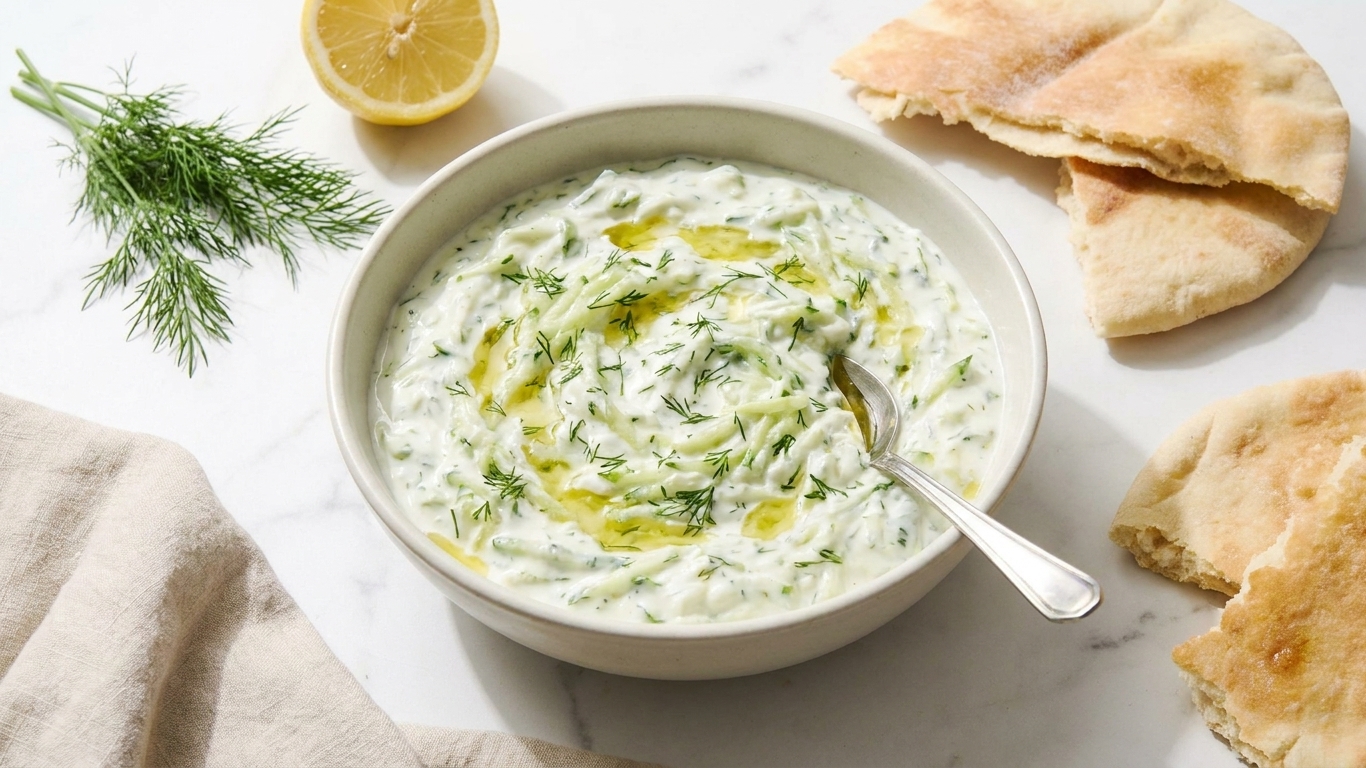
3) Make the tzatziki
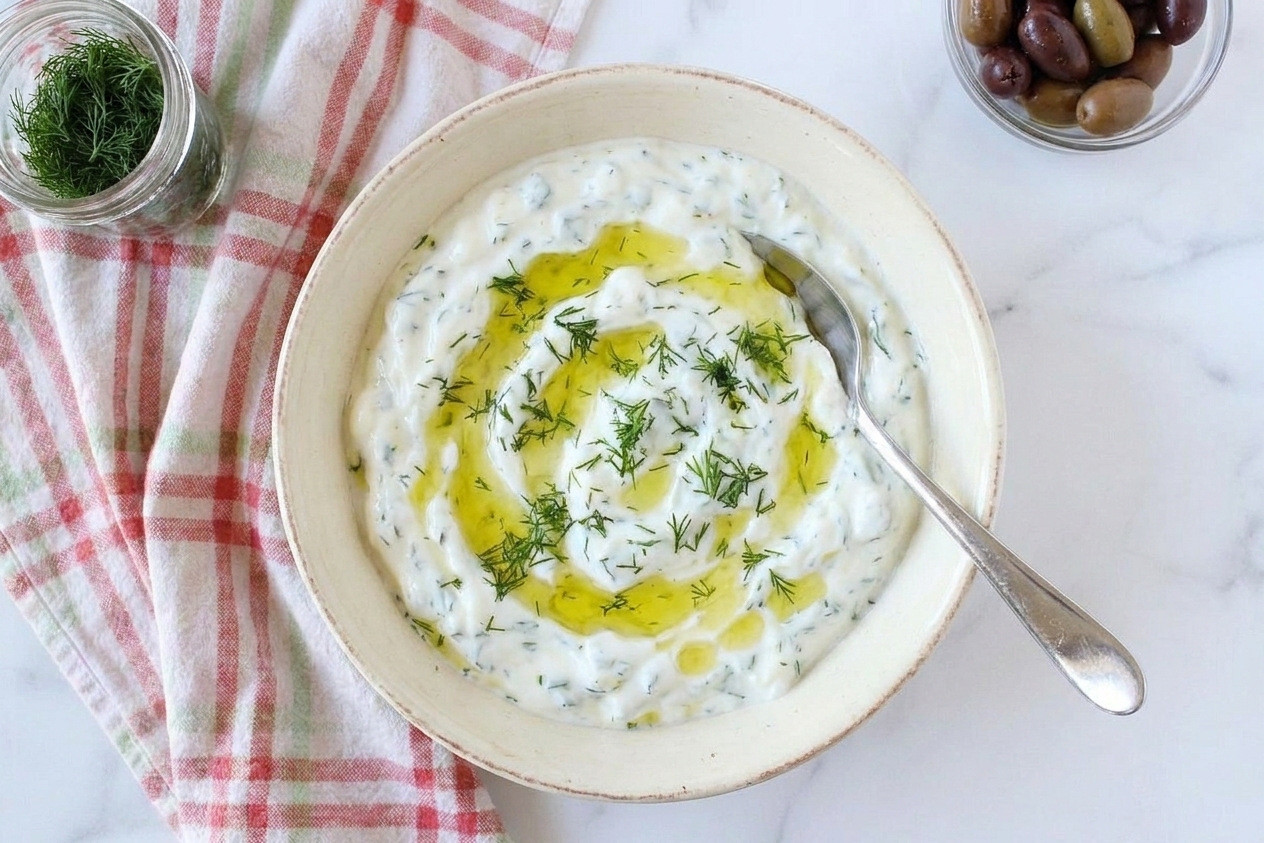
Grate the cucumber, then squeeze out as much liquid as you can using a clean towel or paper towels. This is the difference between thick tzatziki and watery tzatziki.
Stir drained cucumber with Greek yogurt, garlic, olive oil, lemon juice, dill or mint, salt, and pepper. Taste and adjust. Refrigerate until serving. (If you have the time, it is even better after 30 to 60 minutes in the fridge.)
Make ahead: Tzatziki can be made a few hours ahead and kept chilled.
4) Thread the skewers
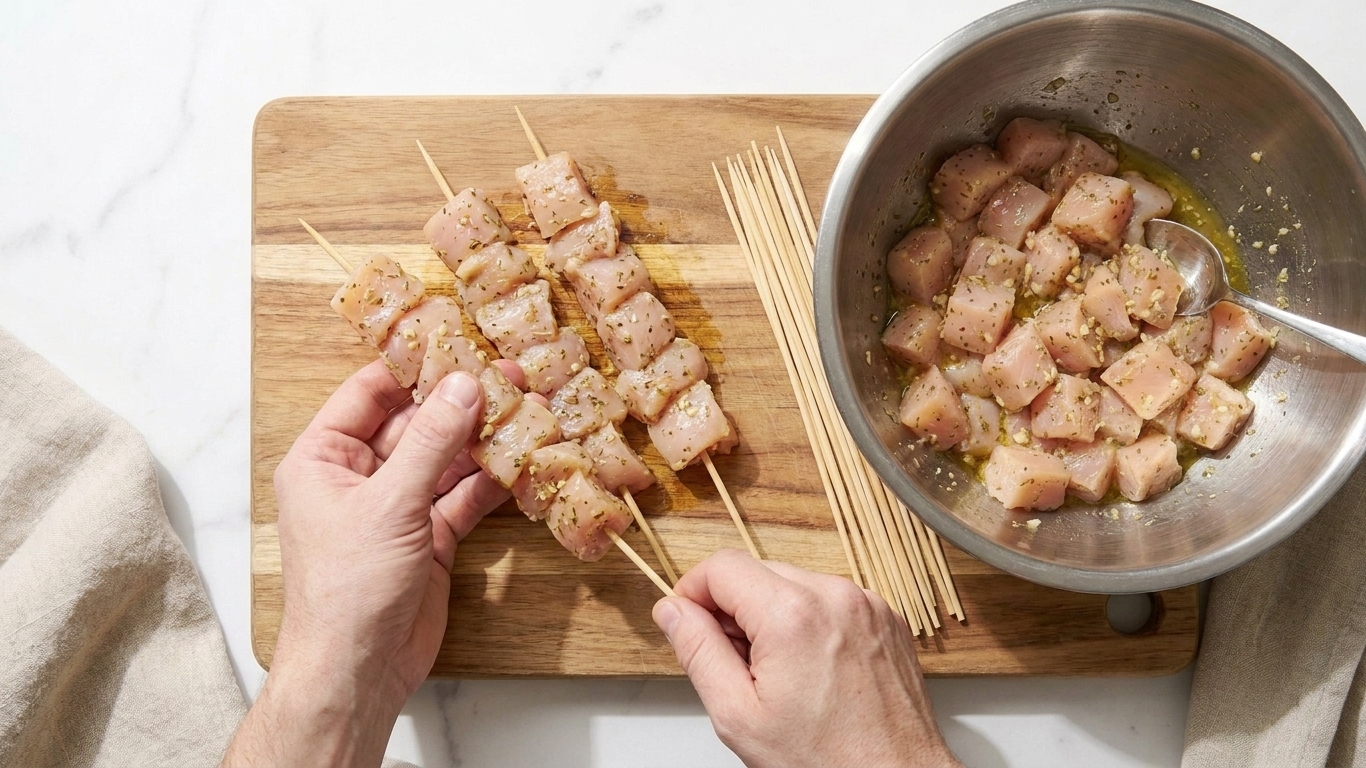
Thread chicken onto skewers, leaving a little space between pieces so heat can get around them. Think: evenly spaced, not packed like a suitcase.
How many skewers? You will get about 6 to 8 skewers, depending on skewer length and how big you cut the chicken.
5) Cook the souvlaki (grill or stovetop)
Cook time varies a bit with piece size and how hot your grill or pan runs, so use the thermometer and the color as your guide.
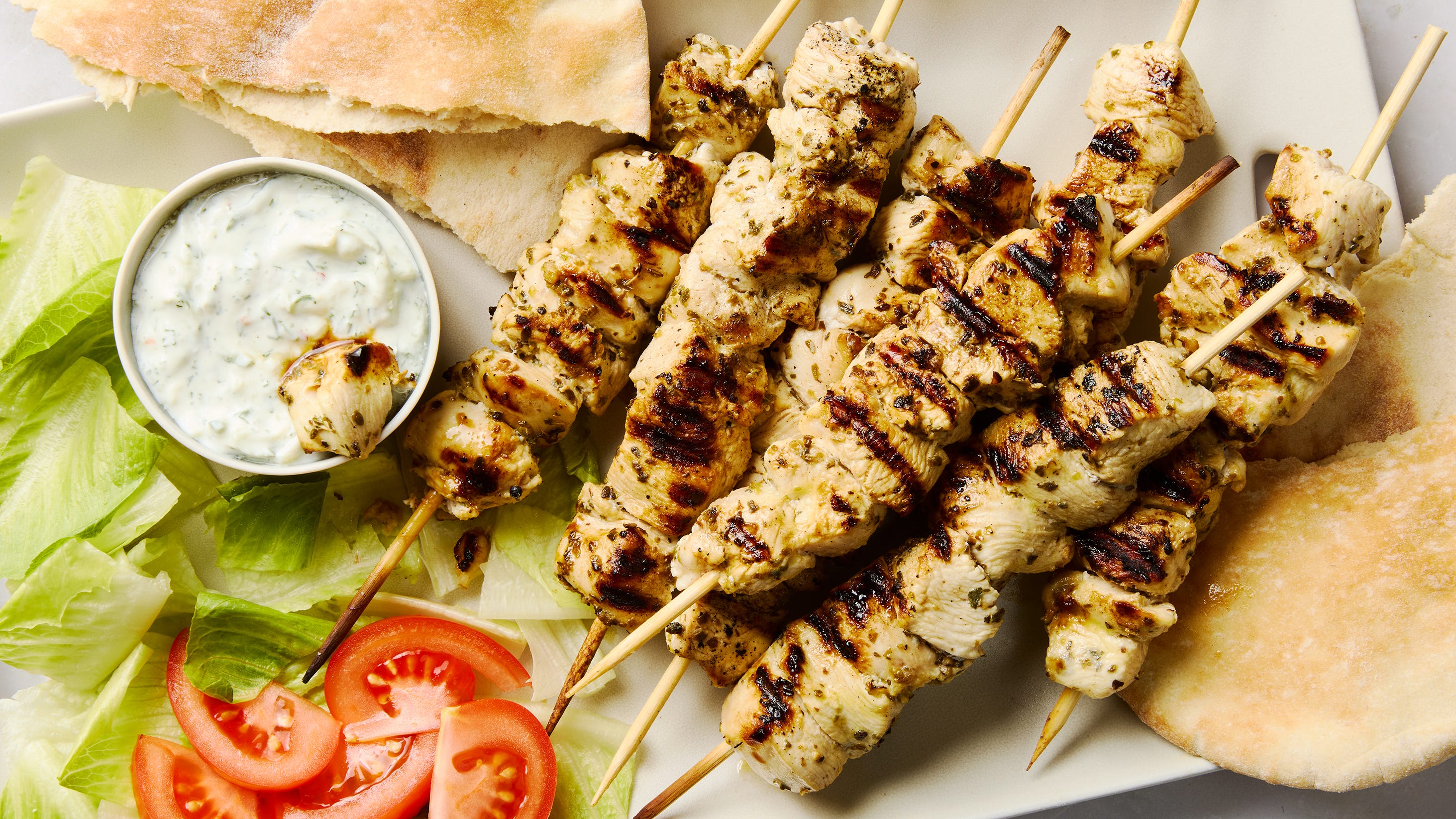
Outdoor grill: Heat to medium-high and oil the grates. Grill skewers for 10 to 12 minutes, turning every 2 to 3 minutes, until nicely charred and the thickest piece hits 165°F.
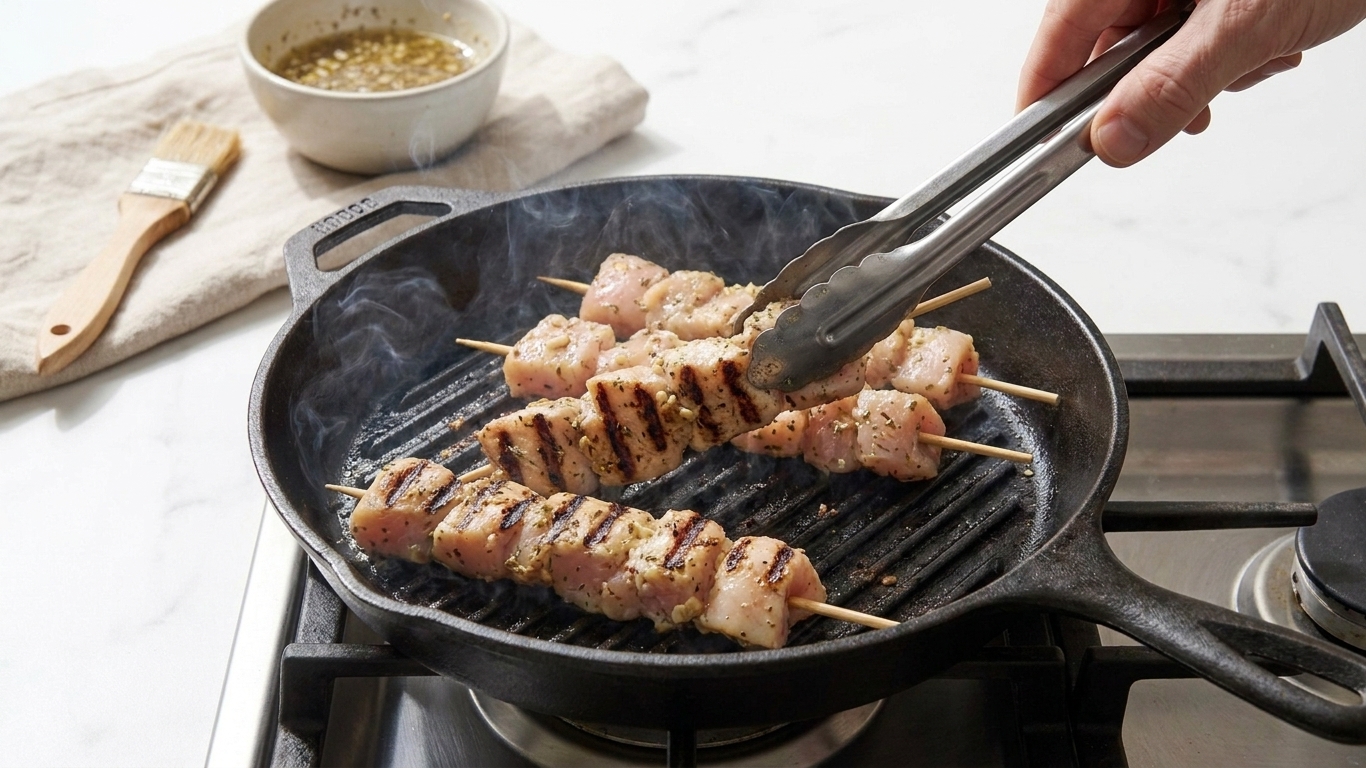
Grill pan or skillet: Heat a grill pan or large skillet over medium-high. Add a thin slick of oil. Cook skewers for 10 to 12 minutes, turning every 2 to 3 minutes, until browned and cooked through. Work in batches if needed so you do not crowd the pan, since crowding leads to steaming, not browning.
Quick grill sanity tips: If you get flare-ups (oil plus drips can do that), move skewers to a cooler spot for a moment. If the chicken wants to stick, give it another minute before flipping, and make sure your grates or pan are lightly oiled.
6) Rest, then serve
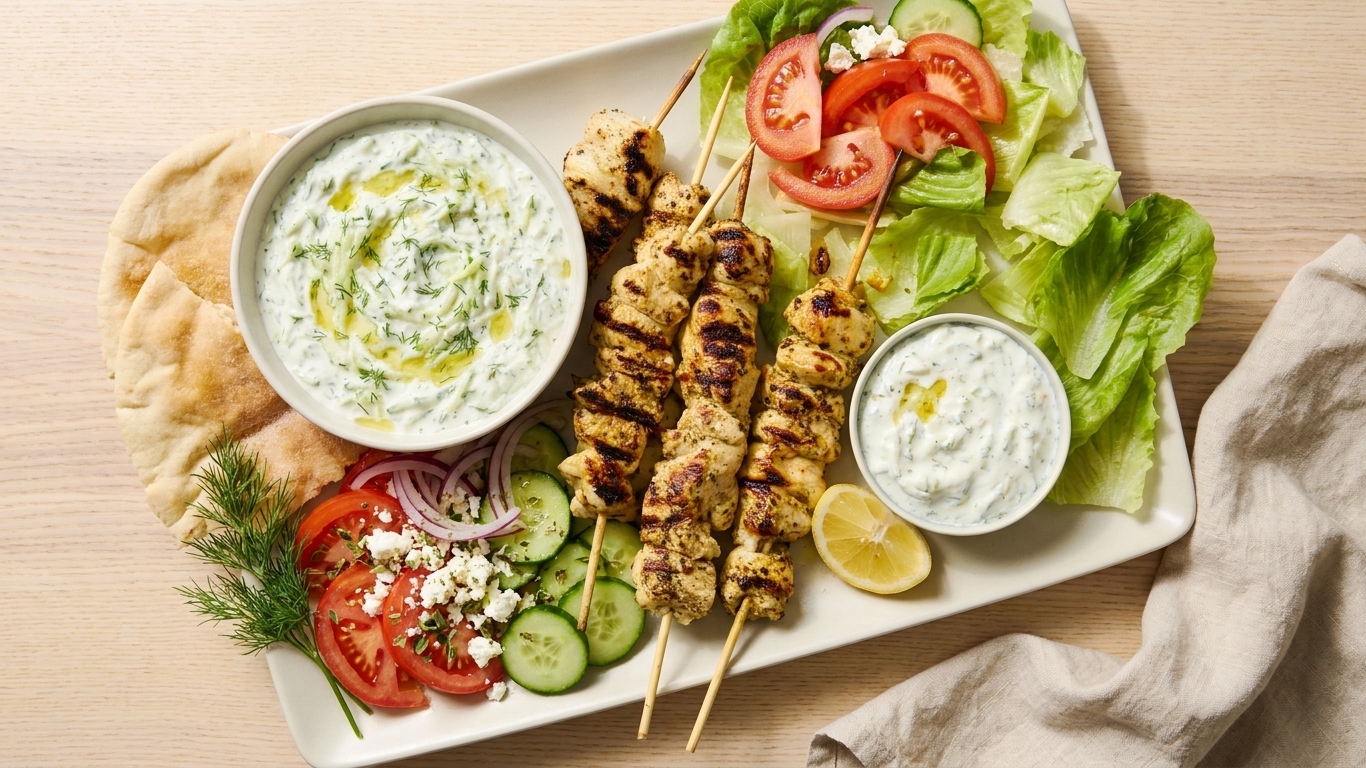
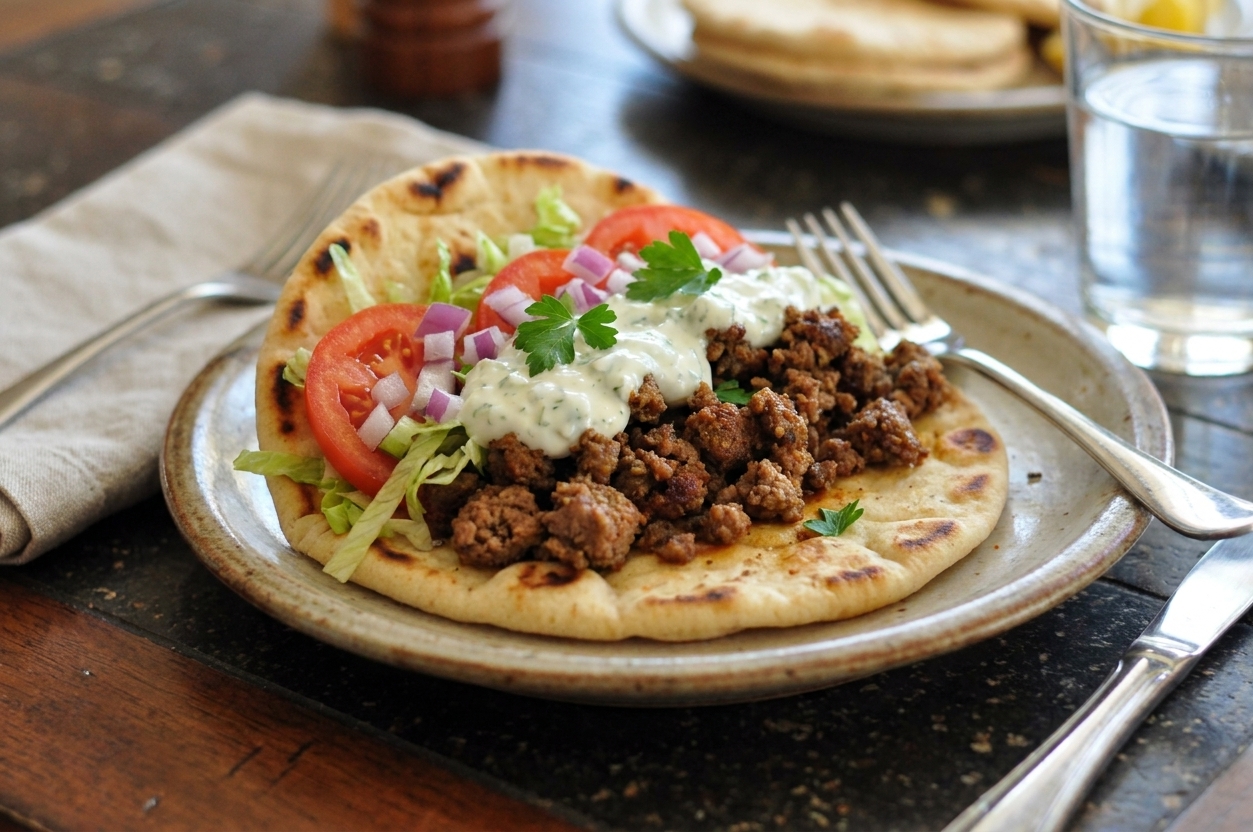
Rest skewers for 3 to 5 minutes. Serve with warm pita, tzatziki, tomato, cucumber, red onion, feta, and a squeeze of lemon.