Mom's Best Recipes
Recipe

Herb Butter Stuffing for Turkey

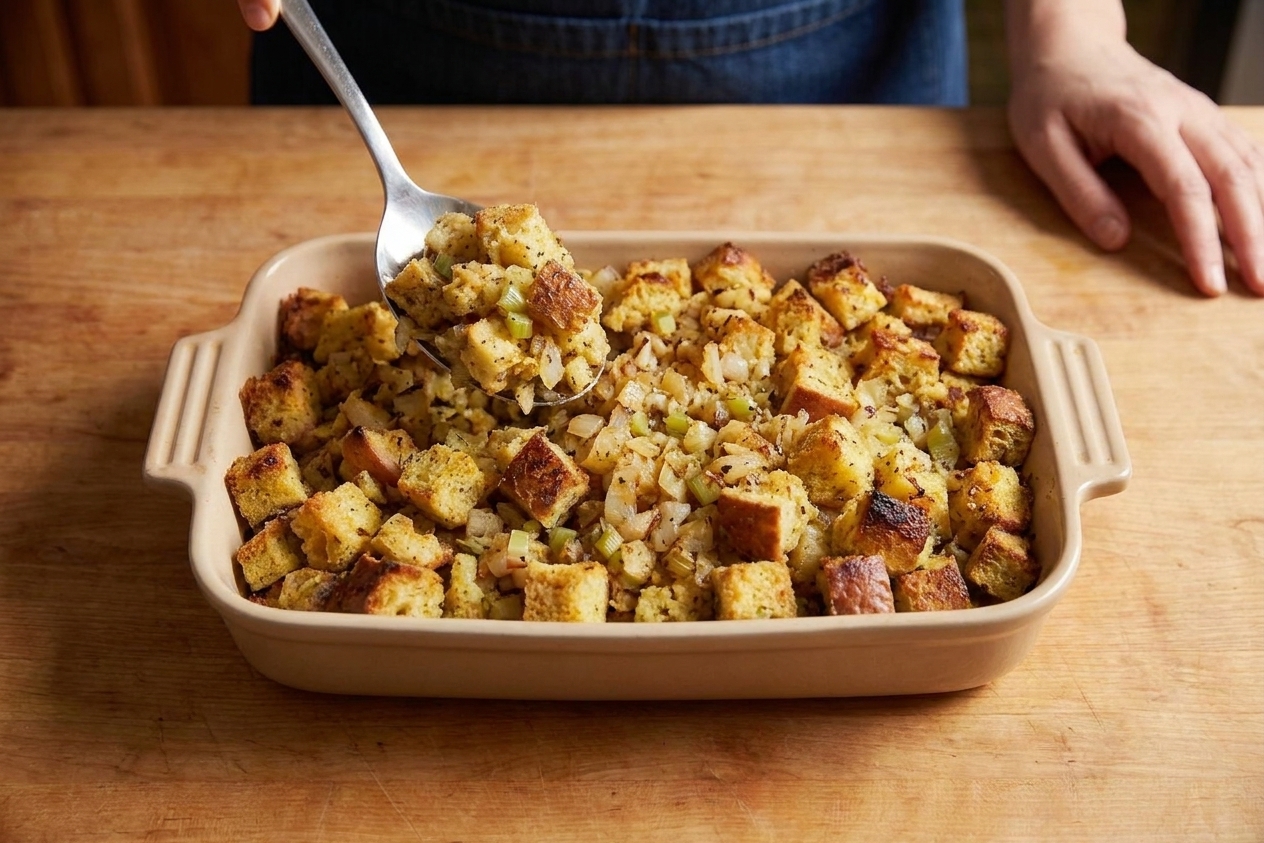
A moist, savory bread stuffing built for the bird: herby, buttery, and properly seasoned with clear safety temps.

Author By Matt Campbell
4.8
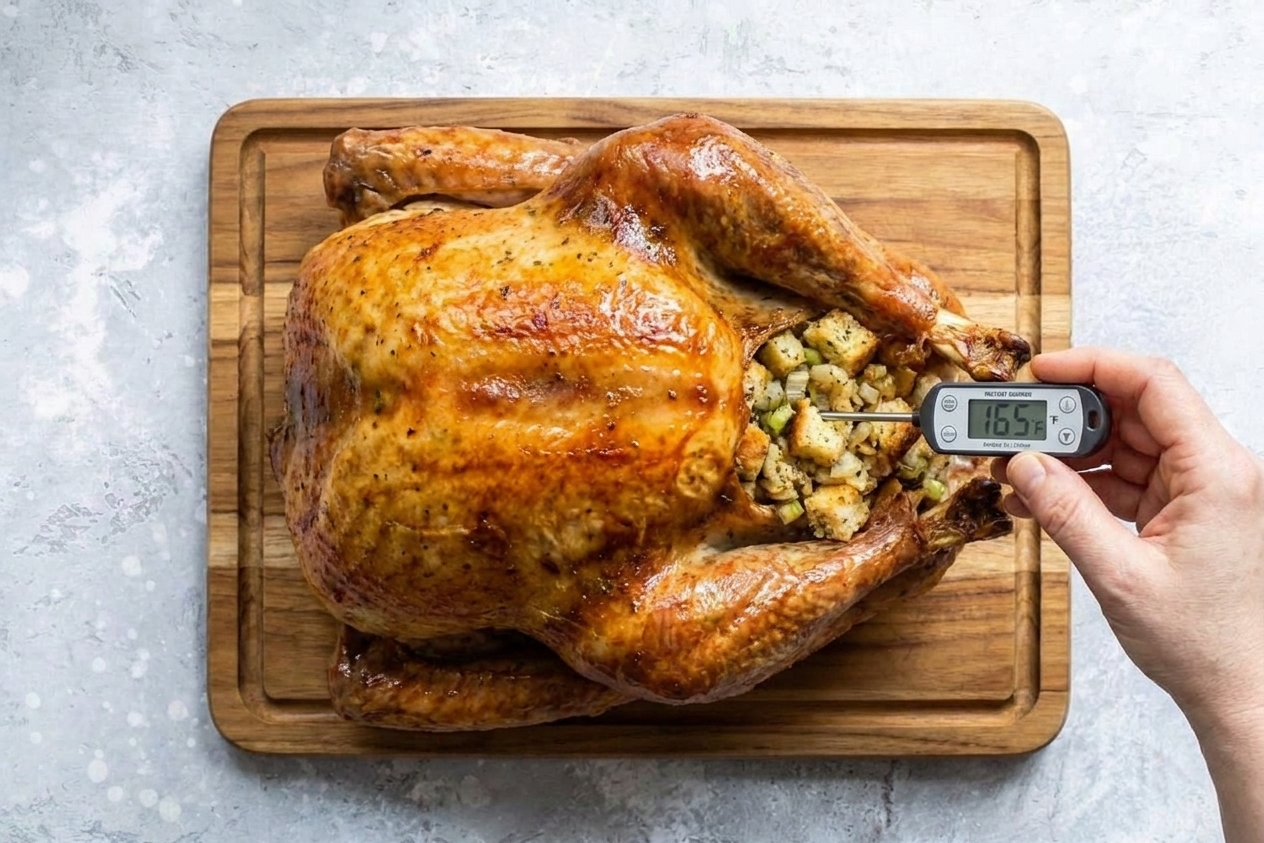
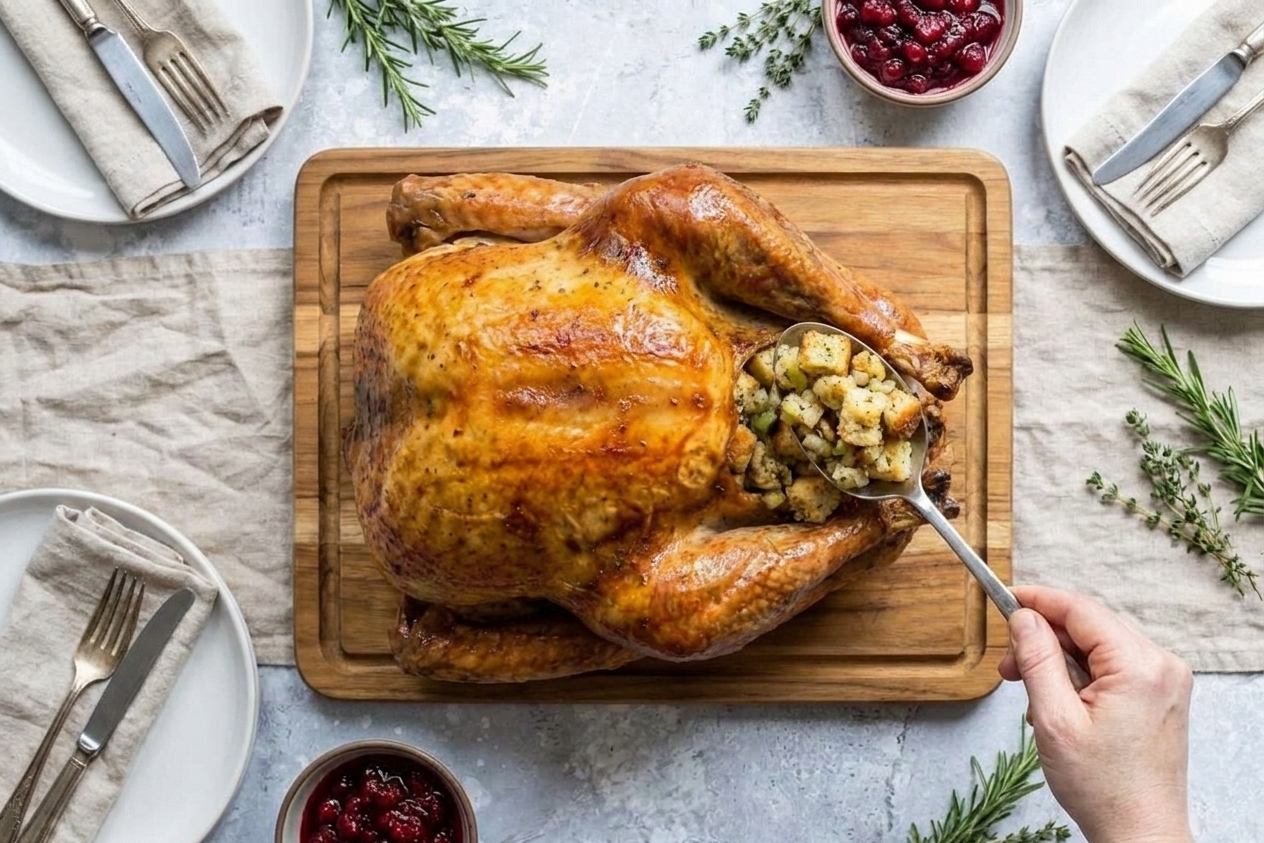
A roasted turkey on a wooden carving board with a spoonful of herb butter bread stuffing visible in the cavity, surrounded by a simple holiday table setting

Stuffing inside the turkey is one of those holiday moves that feels both cozy and slightly rebellious. You get that unmistakable turkey-dripping flavor and a soft, steamy center, but you also inherit one big job: cook it safely without drying out your bird.

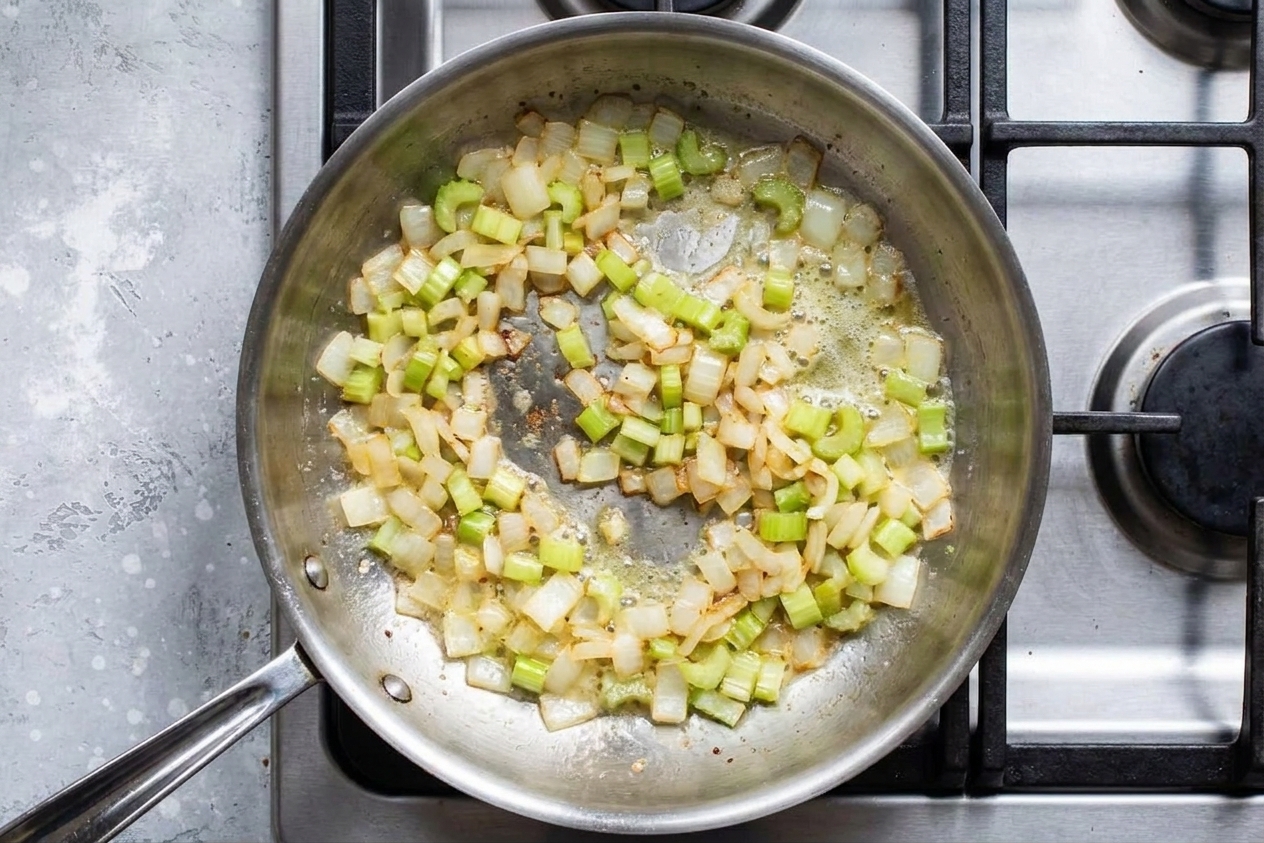
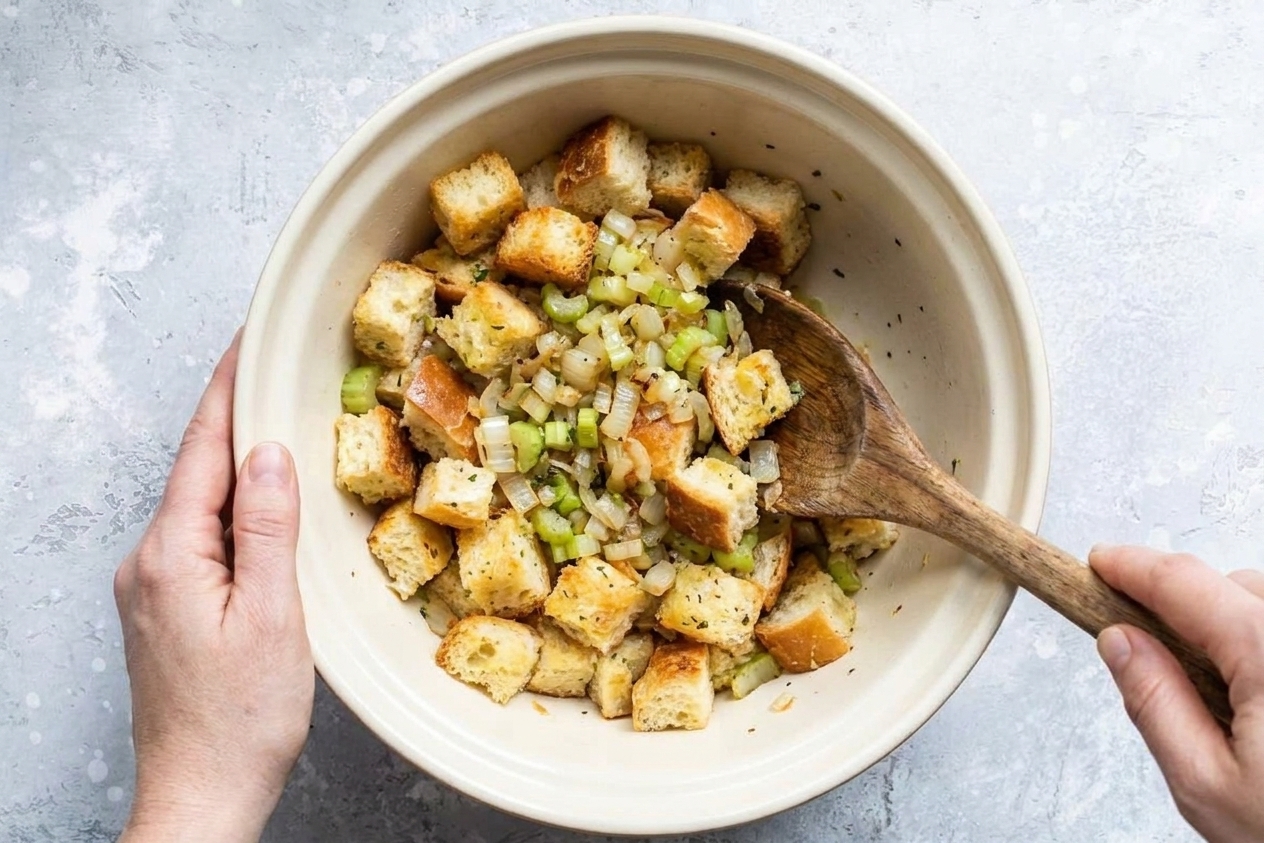
This recipe is my go-to when I want stuffing that actually tastes like Thanksgiving and not like damp bread with identity issues. We build flavor the fast way with butter, aromatics, herbs, and a splash of stock. Then we keep the texture right by using stale bread and adding liquid gradually, not dumping it in like we are putting out a fire.

Make it once and you will start planning extra bread cubes on purpose. It is that kind of recipe.
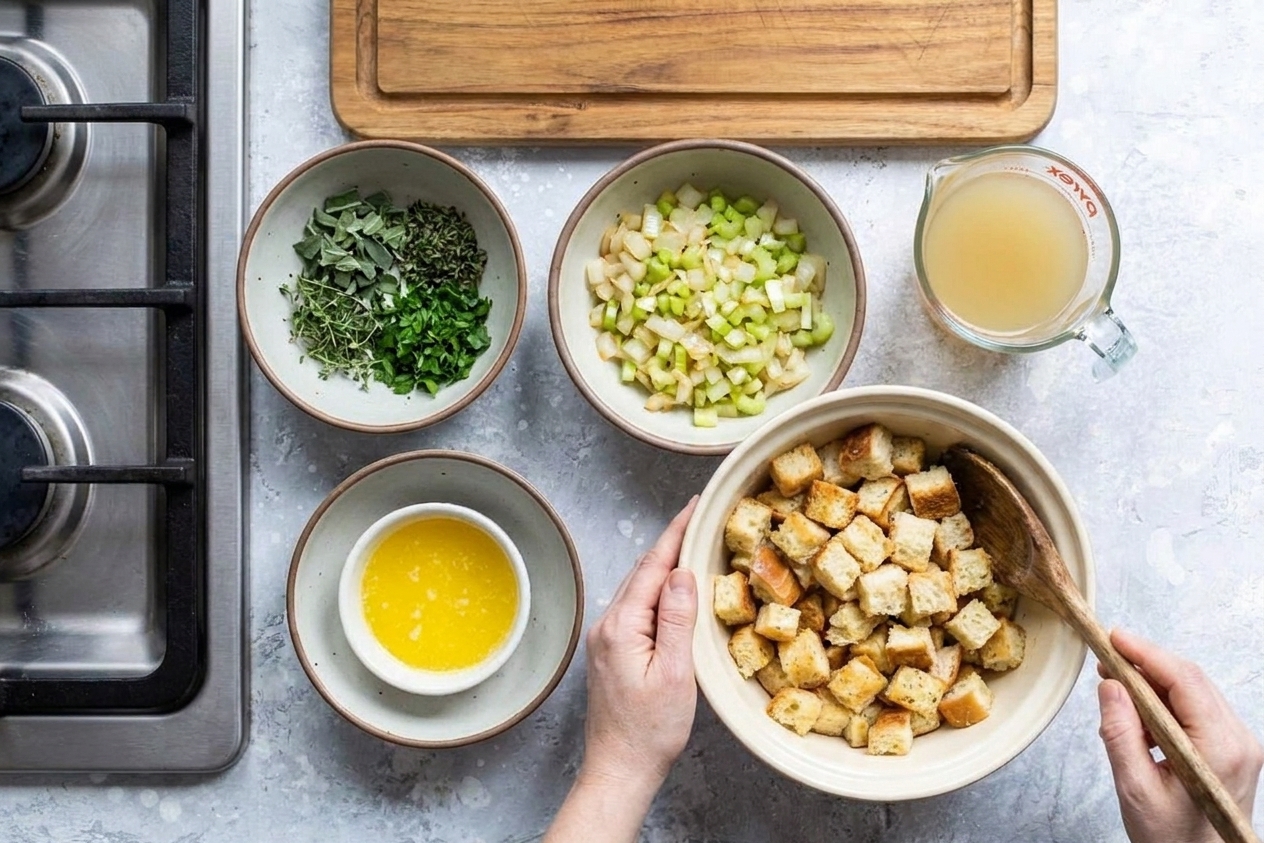
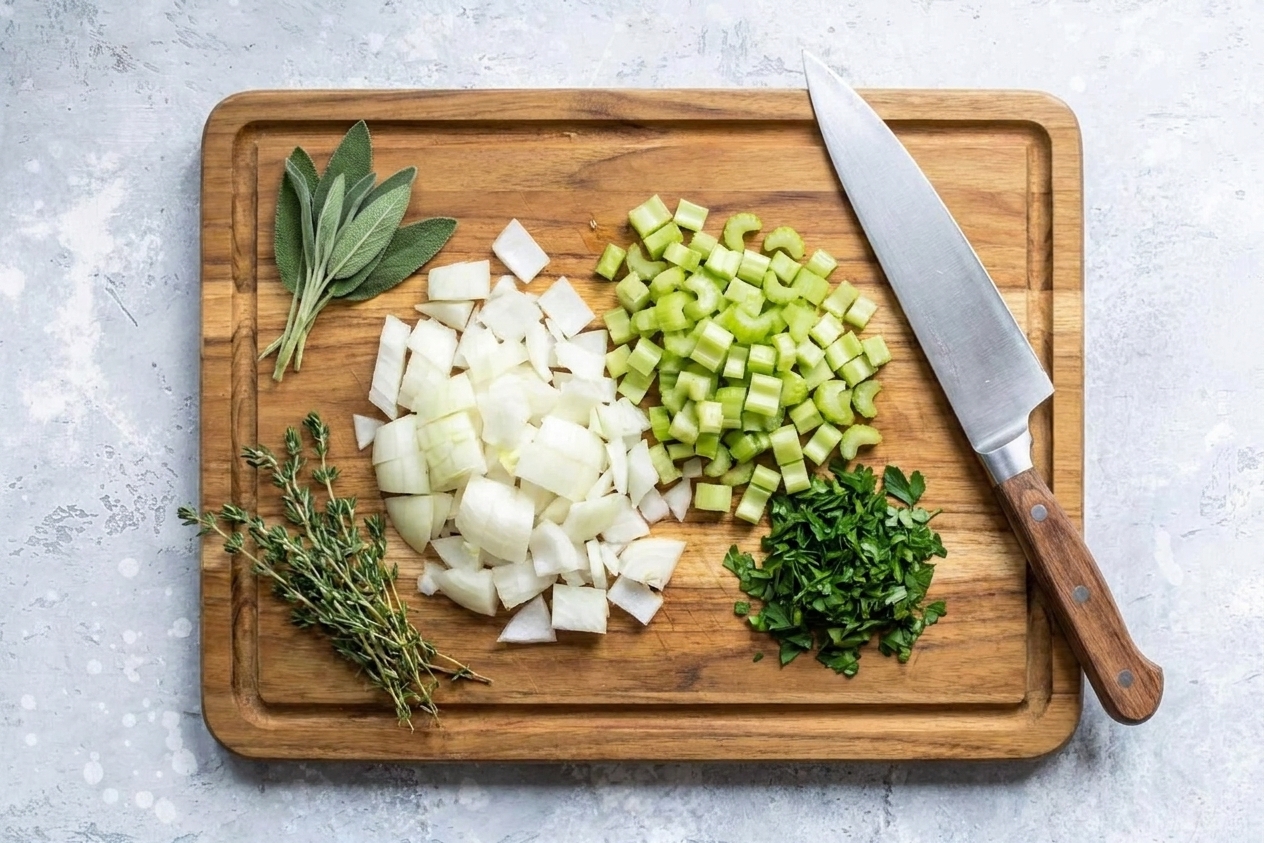
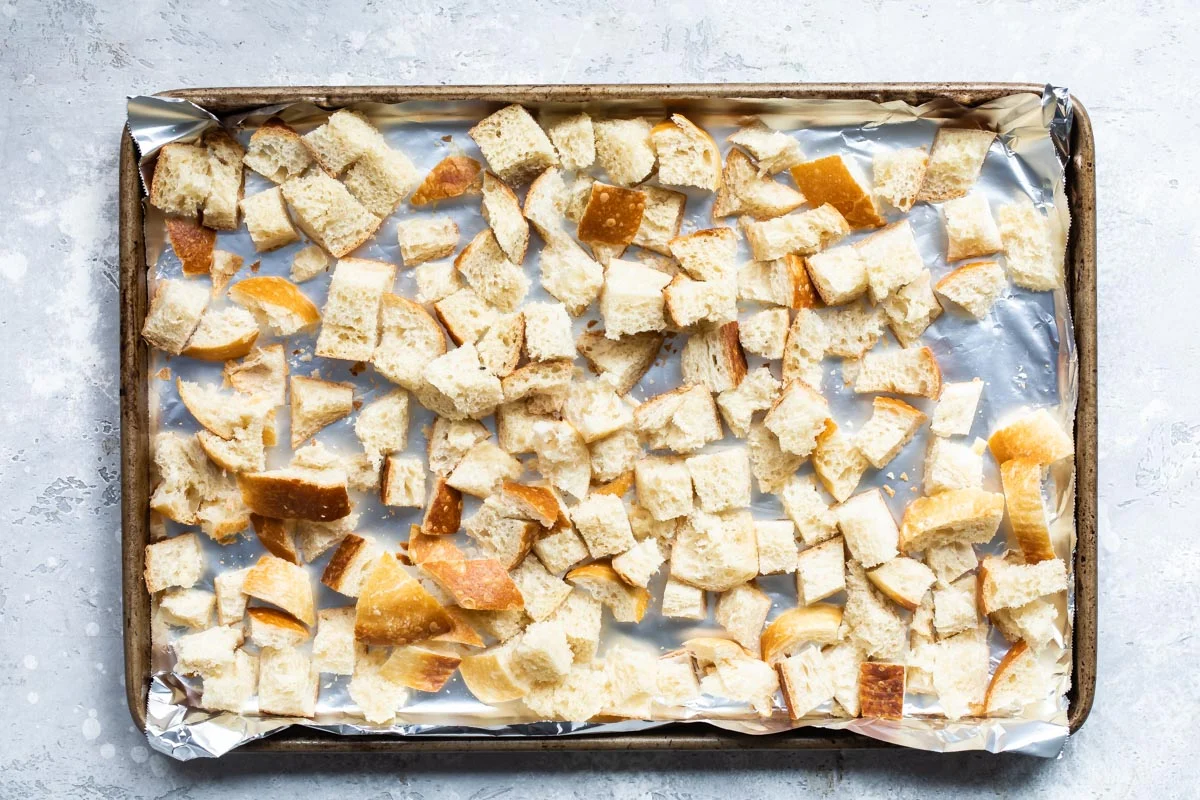
Bowls of cubed dried bread, chopped onion, celery, fresh herbs, melted butter, and chicken stock arranged on a bright kitchen counter

Why It Works

  • Big flavor without fancy ingredients: butter, onion, celery, herbs, and a hit of poultry seasoning do the heavy lifting.
  • Moist, not soggy: stale bread plus gradual stock keeps the stuffing spoonable with a little structure.
  • Designed for inside-the-turkey cooking: the mixture is cooled before stuffing and comes with clear temperature targets.
  • Flexible: swap in sausage, apples, or dried cranberries without breaking the base.

Pairs Well With

Storage Tips

Cool fast: Scoop leftover stuffing out of the turkey as soon as you are done carving, then spread it in a shallow dish so it cools quickly.

And here is the rule that keeps you out of trouble: refrigerate leftovers within 2 hours (or within 1 hour if the room is very warm).

  • Fridge: Store in an airtight container up to 3 to 4 days.
  • Freezer: Freeze up to 2 months. Thaw overnight in the fridge.
  • Reheat: Add a splash of stock, cover with foil, and warm at 325°F until hot throughout (aim for 165°F). For crisp edges, uncover for the last 10 minutes.
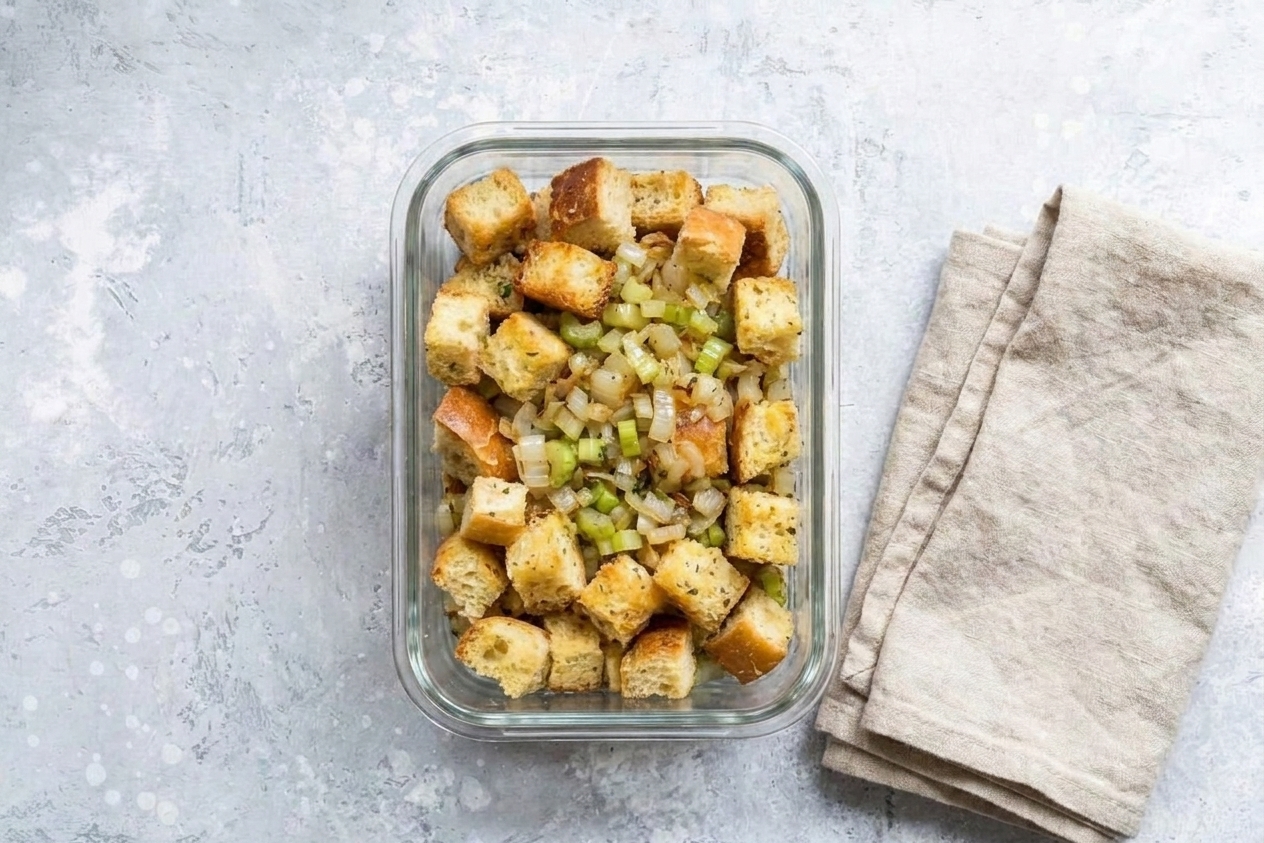
A glass food storage container filled with leftover herb bread stuffing on a kitchen counter next to a folded linen towel

Common Questions

Is it safe to cook stuffing inside the turkey?

Yes, as long as you follow two rules: stuff the turkey right before it goes in the oven, and cook the stuffing to 165°F in the center. Use a thermometer and check the stuffing temp, not vibes.

Extra safety detail that matters: once everything is done, get leftovers into the fridge within 2 hours (or 1 hour if it is very warm in the kitchen or dining room).

Why did my stuffing turn out mushy?

Usually it is one of three things: the bread was too fresh, you added too much liquid too fast, or the turkey juices flooded the cavity because the bird sat too long before roasting. Use dried bread cubes, add stock gradually, and do not overpack the cavity.

Do I need eggs in stuffing for the turkey?

Not required, but 1 to 2 eggs help bind the stuffing so it slices a little cleaner. If you prefer a softer, more spoonable stuffing, you can skip them.

How much stuffing fits in a turkey?

A good ballpark is about 1/2 cup per pound of turkey, and sometimes up to 3/4 cup per pound depending on the cavity. The real rule: do not pack it tight. Leave room for expansion and heat flow.

Can I prep the stuffing the day before?

You can prep the bread cubes and cook the veggie-herb butter mixture a day ahead. Combine with stock and eggs only when you are ready to roast, or combine earlier but chill it quickly and stuff the bird only right before it hits the oven.

I used to think stuffing the turkey was the culinary version of living dangerously, like wearing white while cooking red sauce. Then I learned the difference between risky and reckless. Risky is winging it without a thermometer. Reckless is packing a hot bowl of stuffing into a cold turkey and hoping for the best.

Now I treat it like teamwork. I cool the stuffing, I season it like I mean it, and I let the thermometer be the adult in the room. The payoff is real: that turkey-scented, buttery stuffing that makes people hover near the carving board “just to help.”