Mom's Best Recipes
Recipe

Hibachi Steak

Teppanyaki-style steak with a quick soy-garlic butter glaze and crisp-tender vegetables, all done in about 30 minutes.

Author By Matt Campbell
4.8
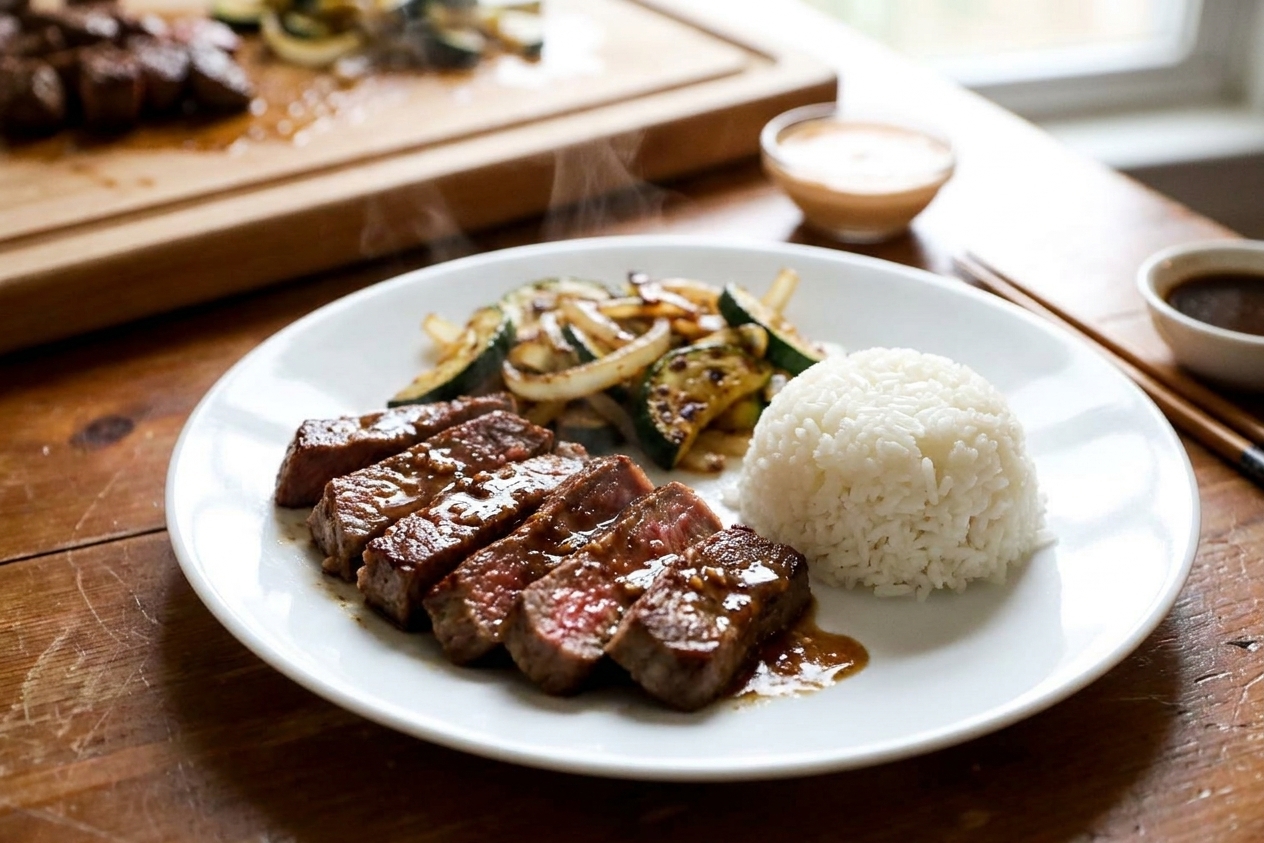
A plated hibachi steak dinner with sliced seared steak, glossy soy-garlic butter sauce, sauteed zucchini and onions, and a scoop of rice on a white plate at a wooden table

If you have ever watched hibachi being made and thought, I need that sizzle energy in my kitchen, this recipe is for you. Quick note for the food-court lawyers: the U.S. restaurant version people call hibachi is usually teppanyaki-style cooking on a hot flat-top, and that is the vibe we are recreating here.

We are going for the greatest hits: steak with crisp edges, buttery soy-garlic shine, and veggies that stay bright and a little snappy. No flat-top required. Just a very hot skillet, a little timing, and the courage to not touch the steak for a minute while it sears. You will be rewarded with that teppanyaki-style flavor that usually costs you a restaurant bill and a long wait.
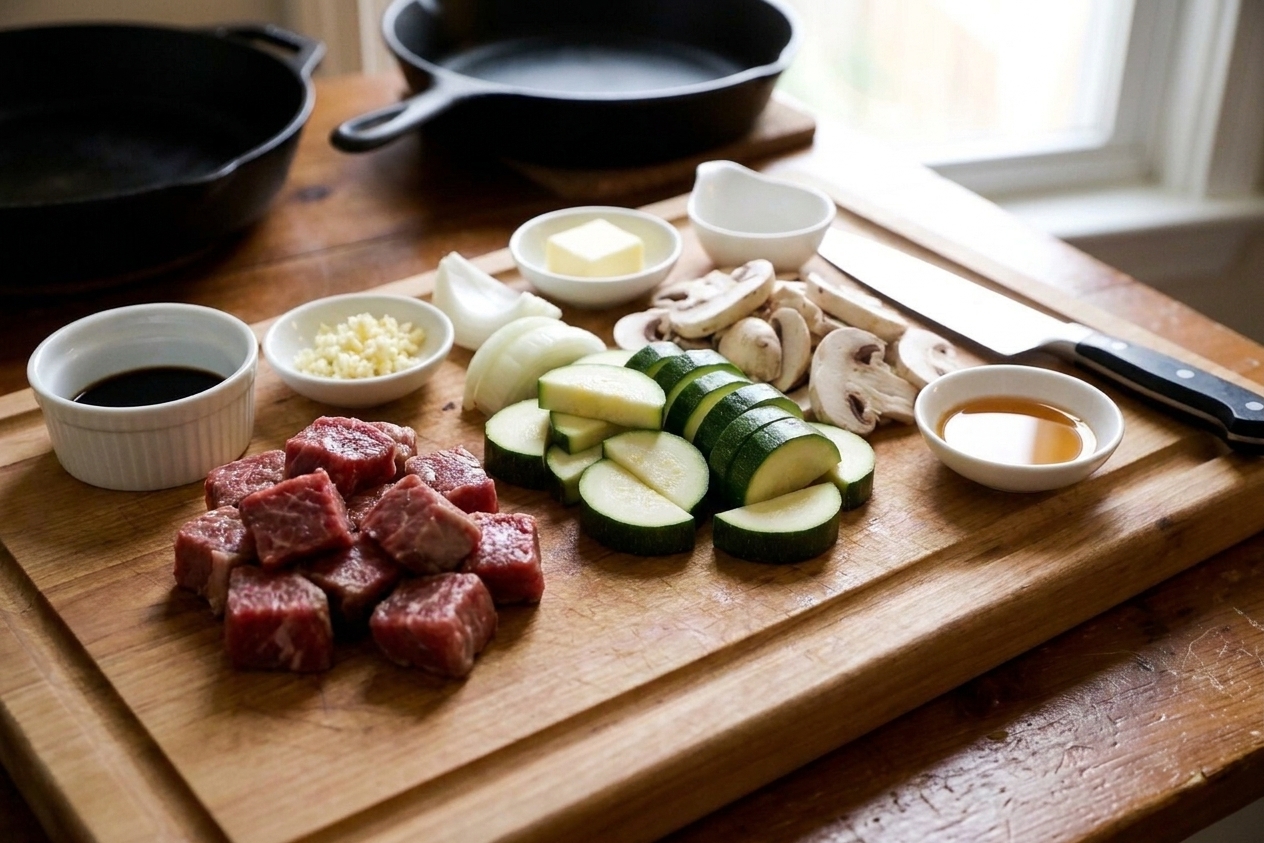
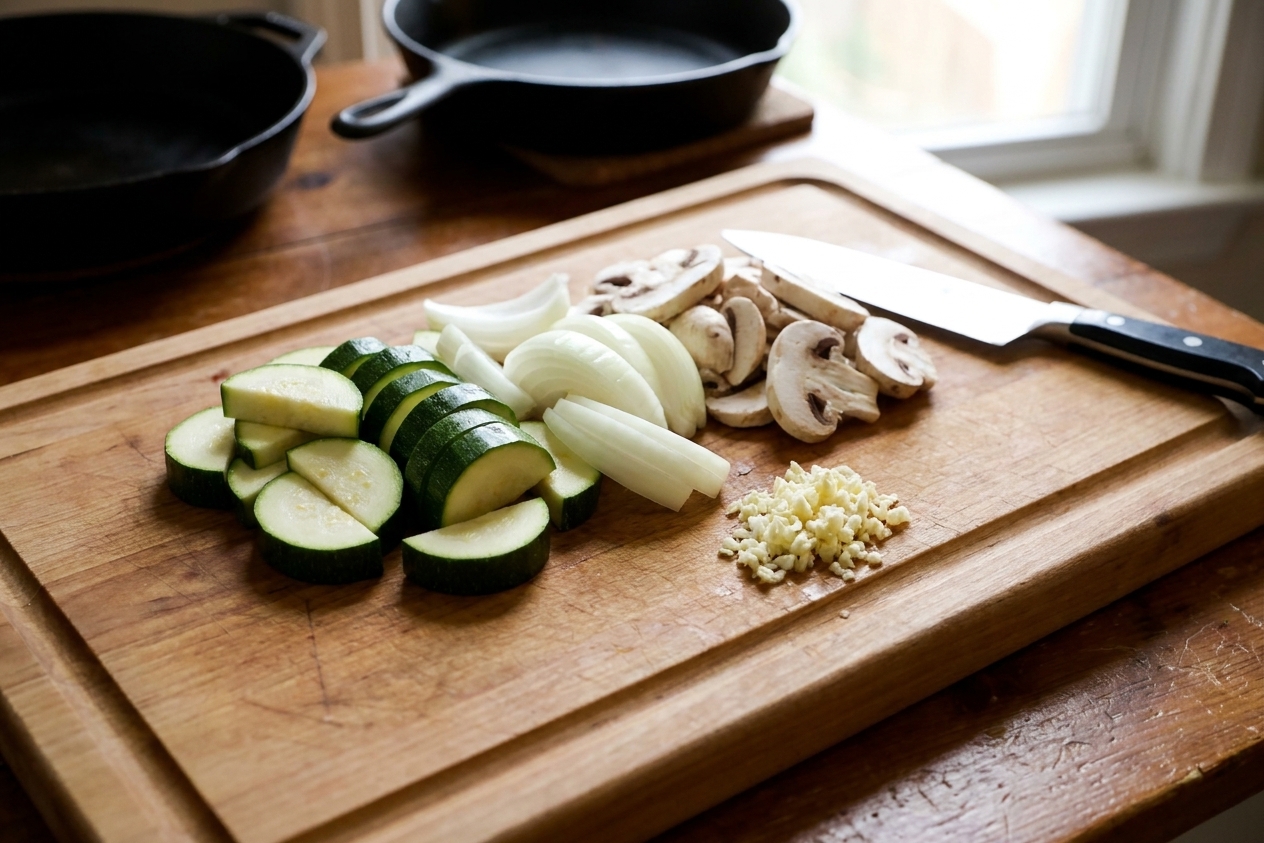
Raw steak cubes, soy sauce, garlic, butter, sesame oil, zucchini, onion, and mushrooms arranged on a clean kitchen counter with small bowls for seasonings

Why It Works

  • High heat, quick cook: This hibachi-style steak is all about searing fast so the outside browns while the inside stays juicy.
  • A simple sauce that tastes expensive: Butter plus soy plus garlic makes a glossy, savory coat that clings to every bite.
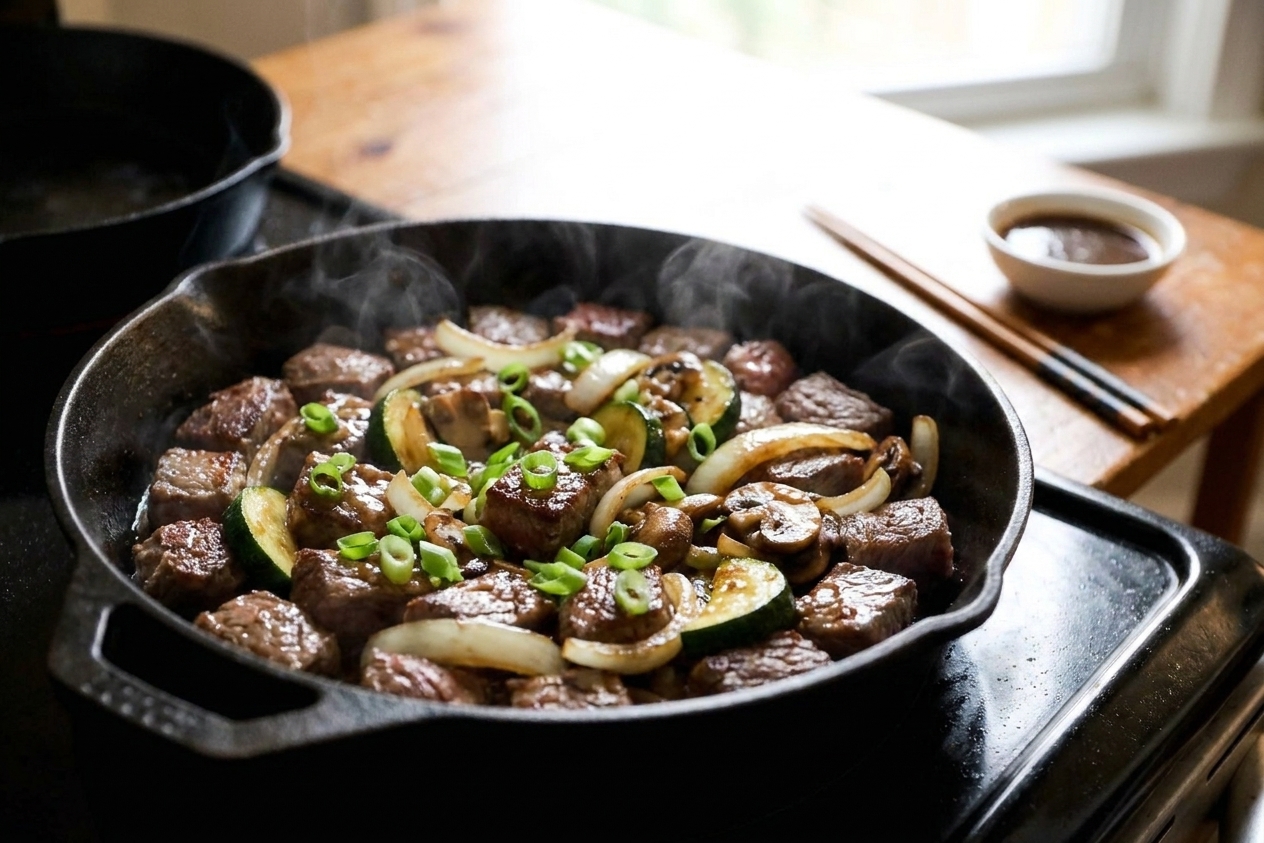
  • Veggies cooked in the same pan: You get built-in flavor from the browned bits, and you only wash one skillet.
  • Flexible and weeknight-proof: Use the steak you can find, swap veggies, and scale it up for a crowd.

Pairs Well With

Storage Tips

Refrigerate

Store leftover hibachi steak and veggies in an airtight container for up to 3 days. If you are also storing rice, keep it in a separate container so it reheats evenly.

Rice safety note: Cool rice quickly (spread it out if you can), refrigerate within 1 hour, and reheat until steaming hot.

Reheat

Best move: warm steak gently in a skillet over medium-low heat with a splash of water and a tiny knob of butter. Cover for 1 to 2 minutes, then uncover and toss just until hot. Microwave works too, but use short bursts so the steak does not turn tough.

Can you freeze it?

You can, but steak texture will soften. If you freeze, cool completely, then freeze up to 2 months. Thaw overnight in the fridge and reheat gently.

Common Questions

Is hibachi steak the same as teppanyaki?

In the U.S., what restaurants often call hibachi is usually teppanyaki-style cooking on a hot flat-top. This recipe is that American steakhouse-style version: high heat, quick sear, and a buttery soy finish.

What cut of steak is best for hibachi steak?

Sirloin is the sweet spot for price and tenderness. Ribeye is richer and extra juicy. Filet is very tender but less beefy. Whatever you choose, cut into even bite-size pieces so it cooks fast and evenly.

How do I get that hibachi sear without a flat-top?

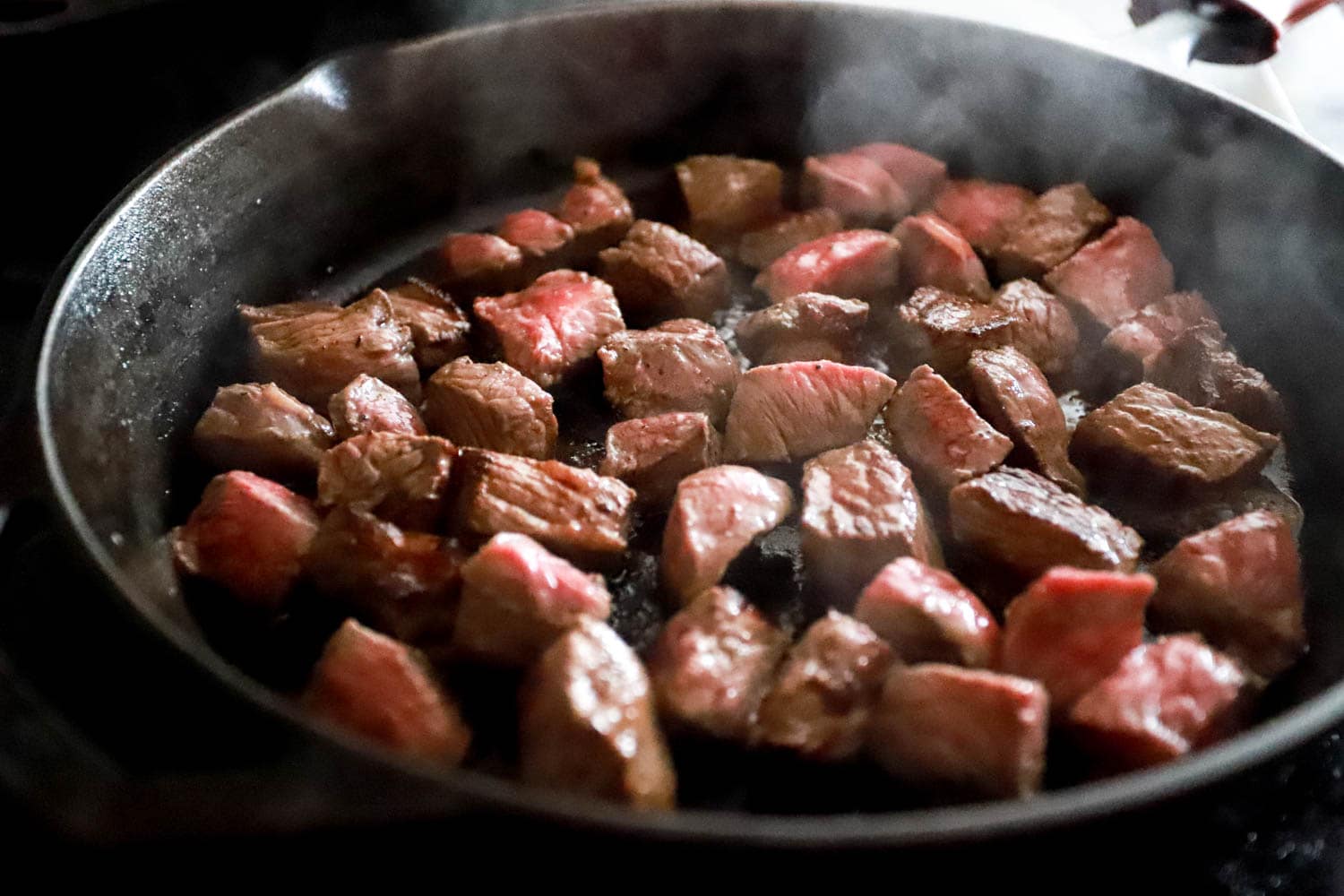
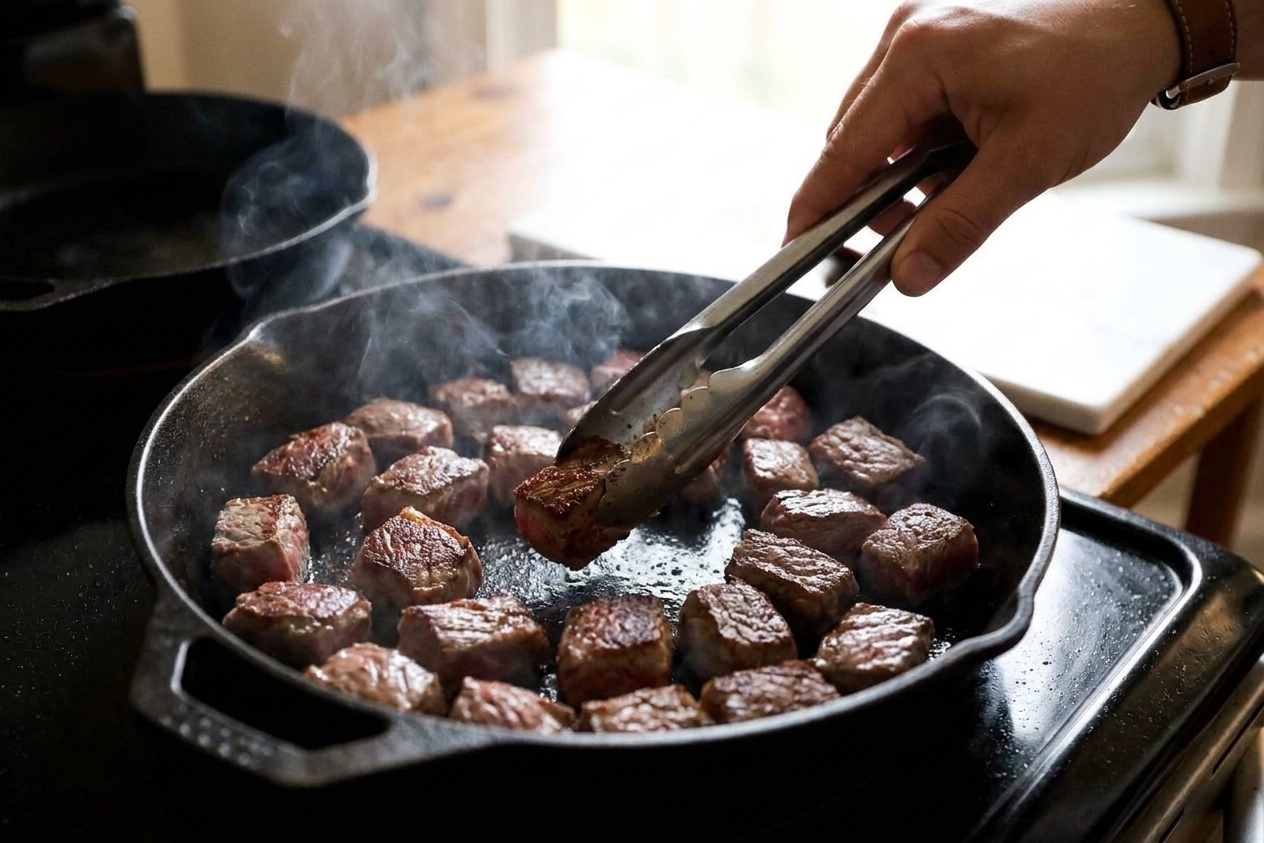
Use a large heavy skillet (cast iron is perfect), heat it until it is truly hot, and cook in batches. Overcrowding steams the steak, and steamed steak is not the vibe.

Do I need to marinate the steak?

Not necessary. This style is mostly high heat plus the butter-soy finish. If you want, you can toss the steak with a teaspoon of soy sauce and let it sit for 10 minutes while you prep, but do not go heavy or it can brown too fast.

What vegetables work best?

Zucchini, onion, and mushrooms are classic. Broccoli, snap peas, bell peppers, and carrots also work. Keep pieces similar in size so they cook at the same speed. Bonus tip: pat mushrooms and zucchini dry so they brown instead of steam.

How do I know when the steak is done?

If you have a thermometer, pull the steak when the thickest pieces hit about 125 to 130°F for medium-rare or 135°F for medium. Cubes cook fast and keep cooking for a minute after they come out of the pan, so it is smart to pull them a touch early.

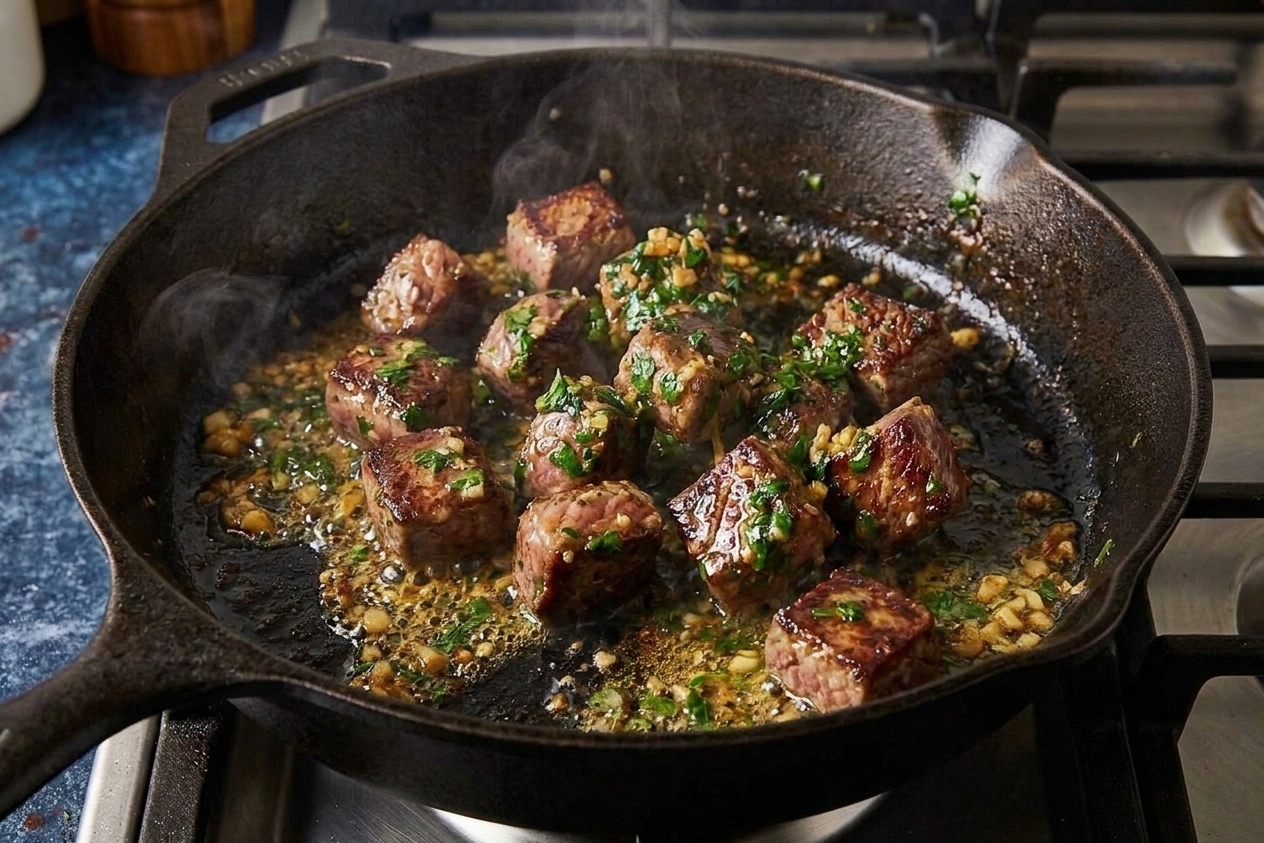
Bite-size steak pieces browning in a hot cast iron skillet with visible steam and browned edges, a wooden spoon resting nearby on the stovetop

The first time I tried making hibachi steak at home, I did the classic mistake: I crowded the pan because I was impatient and hungry. The steak steamed, the veggies got soggy, and I stood there like, wow, I really paid money to learn this lesson.

Now I do it the way my future restaurant self would want: rip-hot pan, quick batches, sauce at the end. The whole thing goes from random Tuesday to why does this taste like a celebration in about 30 minutes.

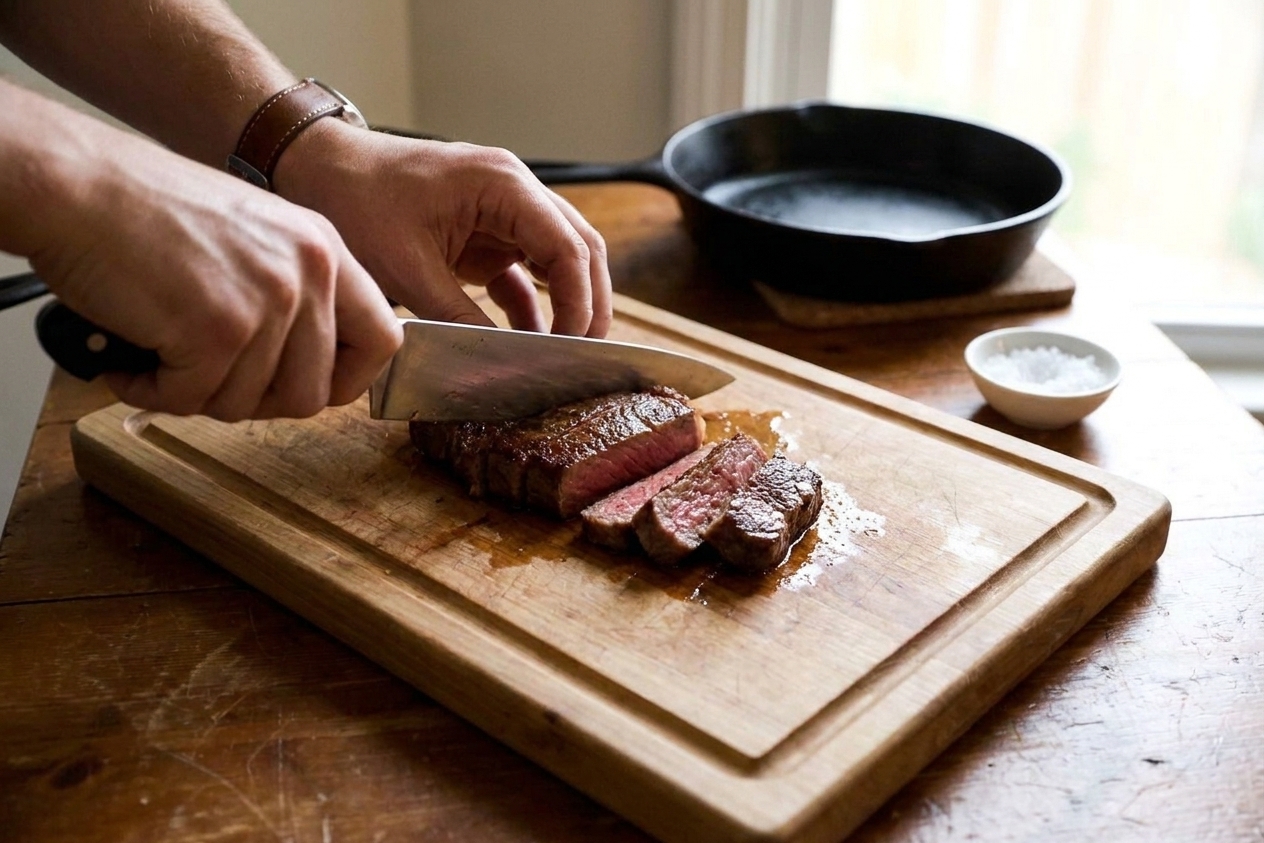
A cook slicing a rested seared steak on a wooden cutting board with a chef's knife in a simple home kitchen