Why did my oat milk turn slimy?
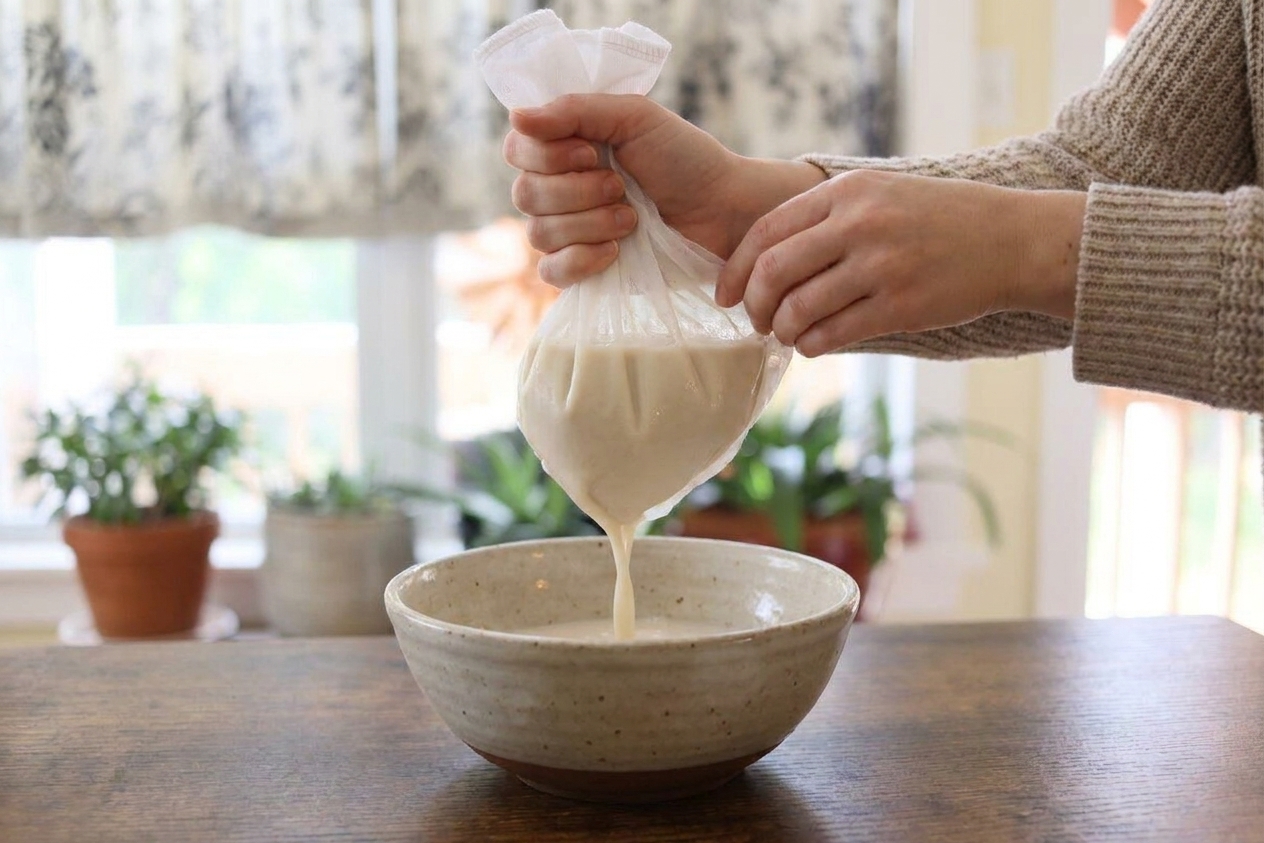
Usually one of three things: you blended too long, you used warm or hot water, or you squeezed the bag too hard. Oats release starch quickly, and that starch thickens when overworked. Use ice-cold water, blend for 20 to 30 seconds, and strain gently.
Do I have to soak the oats first?
No. In fact, skipping the soak often helps reduce gumminess. If you do soak, keep it short (10 to 15 minutes), use cold water, and drain well.
Should I rinse the oats?
Optional. A quick rinse can wash off some surface starch for some people, but over-handling can also make things gummy. If you rinse, do it fast: a quick swish under cold water, then drain really well before blending.
Can I make it without oil?
Yes. The oat milk will be a bit thinner and can feel less creamy in coffee. Oil is optional, but I like the small upgrade in texture.
Does homemade oat milk work in coffee?
It often does, but it can separate in very hot or acidic coffee. Let your coffee cool for a minute, and try adding the oat milk gradually while stirring. A tiny pinch of salt can be a nice flavor tweak, but it will not reliably prevent separation. If you want barista-style foam and extra stability, store-bought versions often include stabilizers that homemade does not.
Is oat milk gluten-free?
Oats are naturally gluten-free, but cross-contact happens. If you need gluten-free oat milk, use certified gluten-free oats. Also, a small number of people still react to oats even when they are certified gluten-free, so follow what works for your body and your medical guidance.
Can I sweeten it?
Absolutely. Maple syrup, honey, or a couple of pitted dates work great. Start small and taste as you go.
Is homemade oat milk as nutritious as store-bought?
Homemade oat milk is cozy and budget-friendly, but it is typically not fortified with calcium, vitamin D, or B12 the way many store-bought cartons are. If you rely on oat milk for those nutrients, check labels on store-bought, or talk with a professional about what fits your needs.