Can I use instant yeast instead of active dry yeast?
Yes. Use the same amount. You can mix it right into the dry ingredients. Still warm the milk mixture, just keep it warm, not hot.
My yeast did not get super foamy. Is it dead?
Not necessarily. With honey and butter in the mix, you might not get a dramatic foam cap. Look for some bubbling and a slightly puffy look after 5 to 8 minutes. If you see nothing at all and it smells flat, start over with fresher yeast and double-check that the liquid is around 105°F to 110°F.
My dough is sticky. Did I mess up?
Nope. Slightly tacky is normal. Oats and honey can make the dough feel sticky at first. Aim for dough that feels soft and slightly tacky, and that mostly pulls away from the bowl but still clings a bit. Add flour 1 tablespoon at a time during kneading until it is soft and workable, not dry.
How do I know the dough has risen enough?
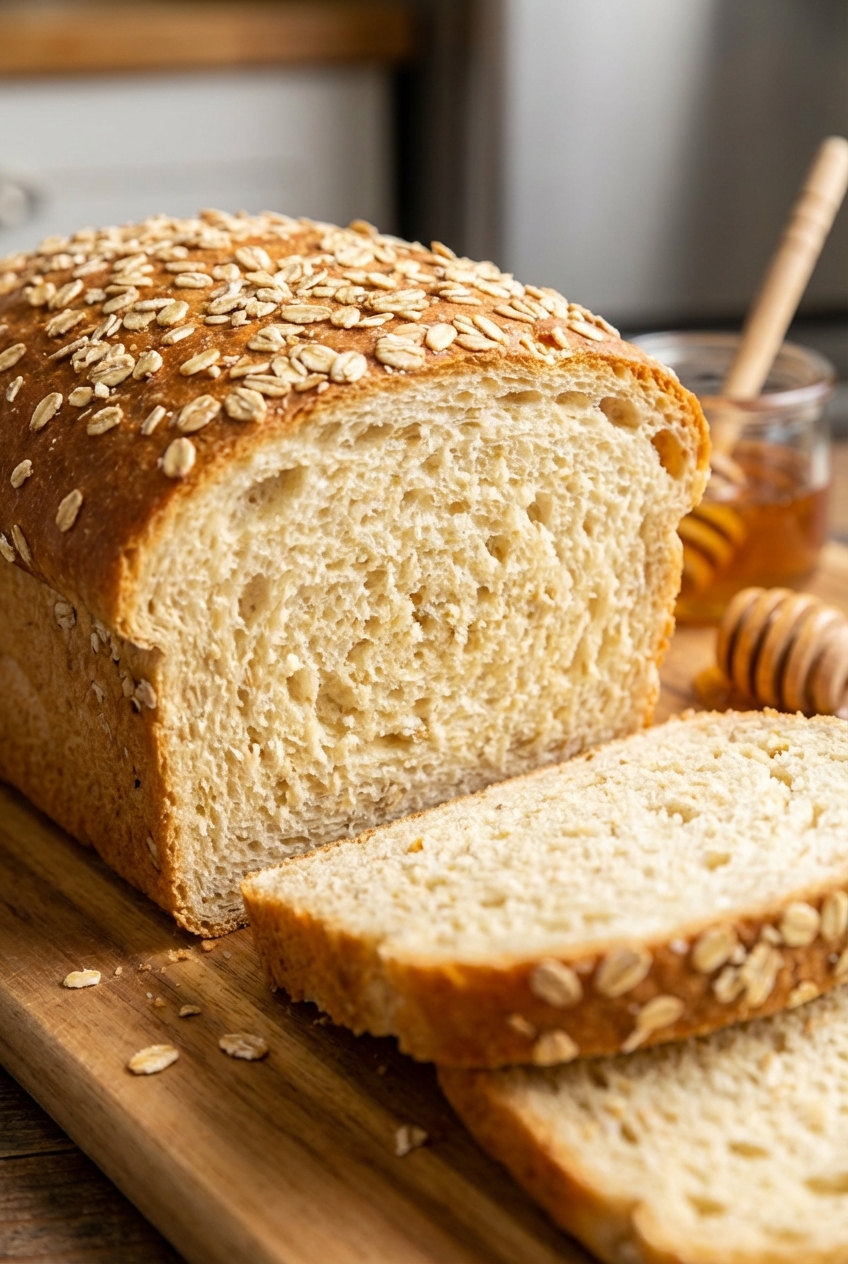
Use the finger test. Gently press a floured fingertip into the dough about 1/2 inch. If it springs back slowly and leaves a slight dent, it is ready.
How do I know the loaf is done baking?
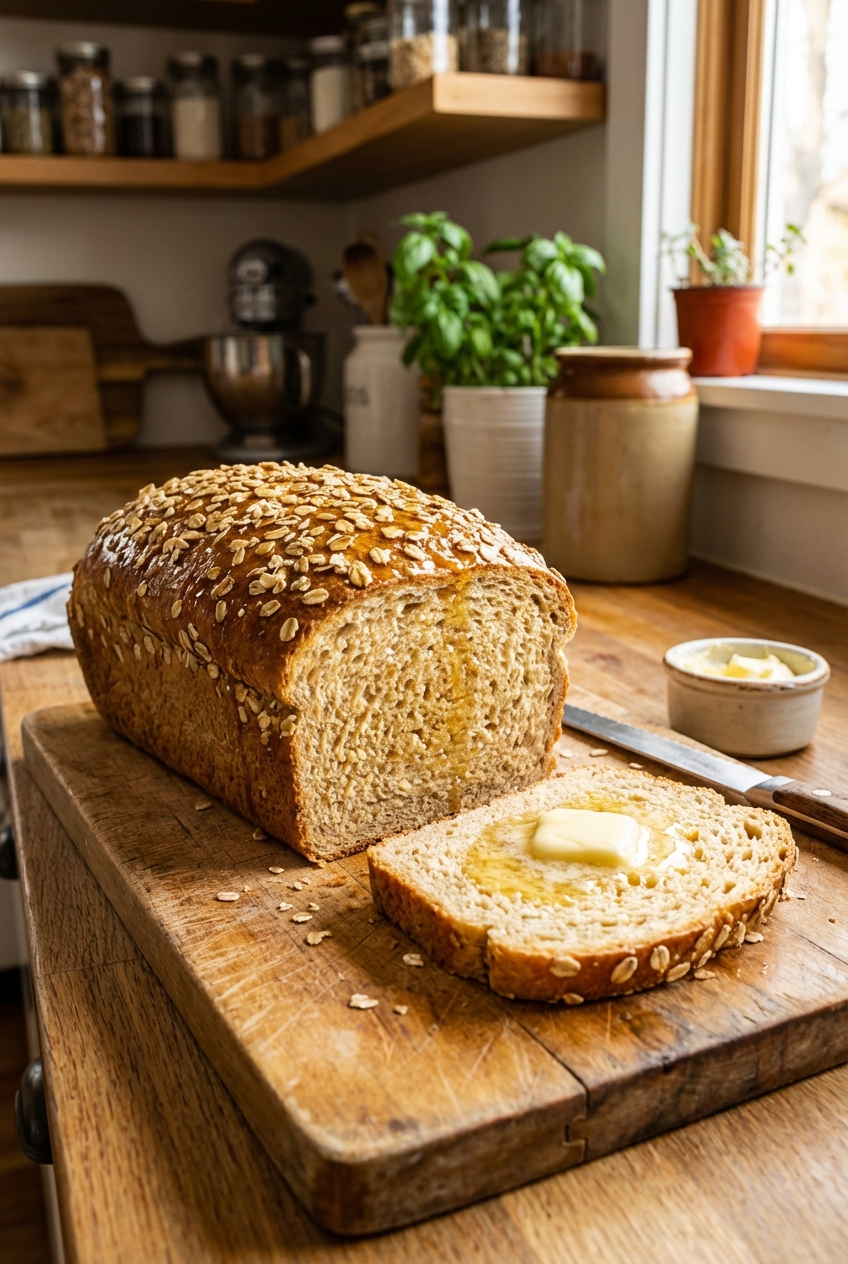
Look for a deep golden top and a loaf that feels light. The tap test can help, but the most reliable way is an instant-read thermometer. Aim for 190°F to 195°F in the center of the loaf.
Can I make this dairy free?
Yes. Use unsweetened oat milk or almond milk and swap the butter for a neutral oil or dairy-free butter. Note that the bread still contains egg unless you replace it too (see below).
Can I make it egg free?
You can try replacing the egg with 3 tablespoons (45g) plain unsweetened yogurt (dairy or dairy-free) or a flax egg (1 tablespoon ground flax + 3 tablespoons water, rested 10 minutes). The loaf will be a touch less lofty, but still very good.
Why did my loaf split on the side?
Usually it is under-proofed, meaning it needed a bit more rise before baking, or your oven ran hot. Next time, let the second rise go until the dough crowns about 1 inch over the pan rim.