
Mom's Best Recipes
Recipe

How to Fix a Slow Cooker

Simple checks and practical fixes for the most common slow cooker problems, from heat issues to cracked crocks and stubborn smells.

Author By Matt Campbell
4.7
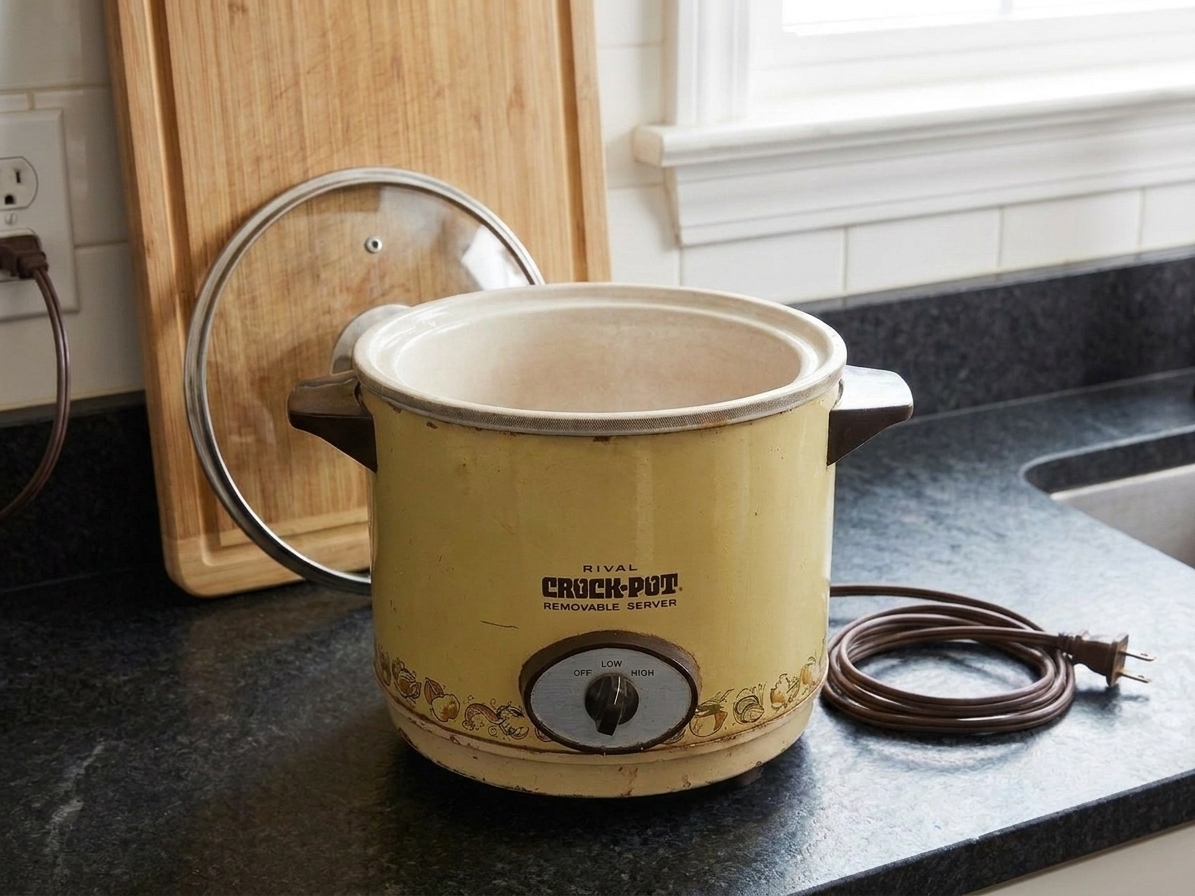
A slow cooker on a clean kitchen counter with the lid off, showing the ceramic crock and a power cord nearby

Slow cookers are supposed to be the low-drama friend of your kitchen. You toss in ingredients, you walk away, you come back to something cozy. So when yours suddenly runs cold, runs hot, leaks, or makes everything taste like last week’s chili, it feels personally offensive.

The good news is that a lot of slow cooker problems are fixable at home with a few quick checks and some targeted cleaning. The not so good news is that electrical issues should be treated like the serious thing they are. I will help you troubleshoot safely, figure out what is actually going on, and decide whether you are fixing, replacing a part, or retiring the unit.
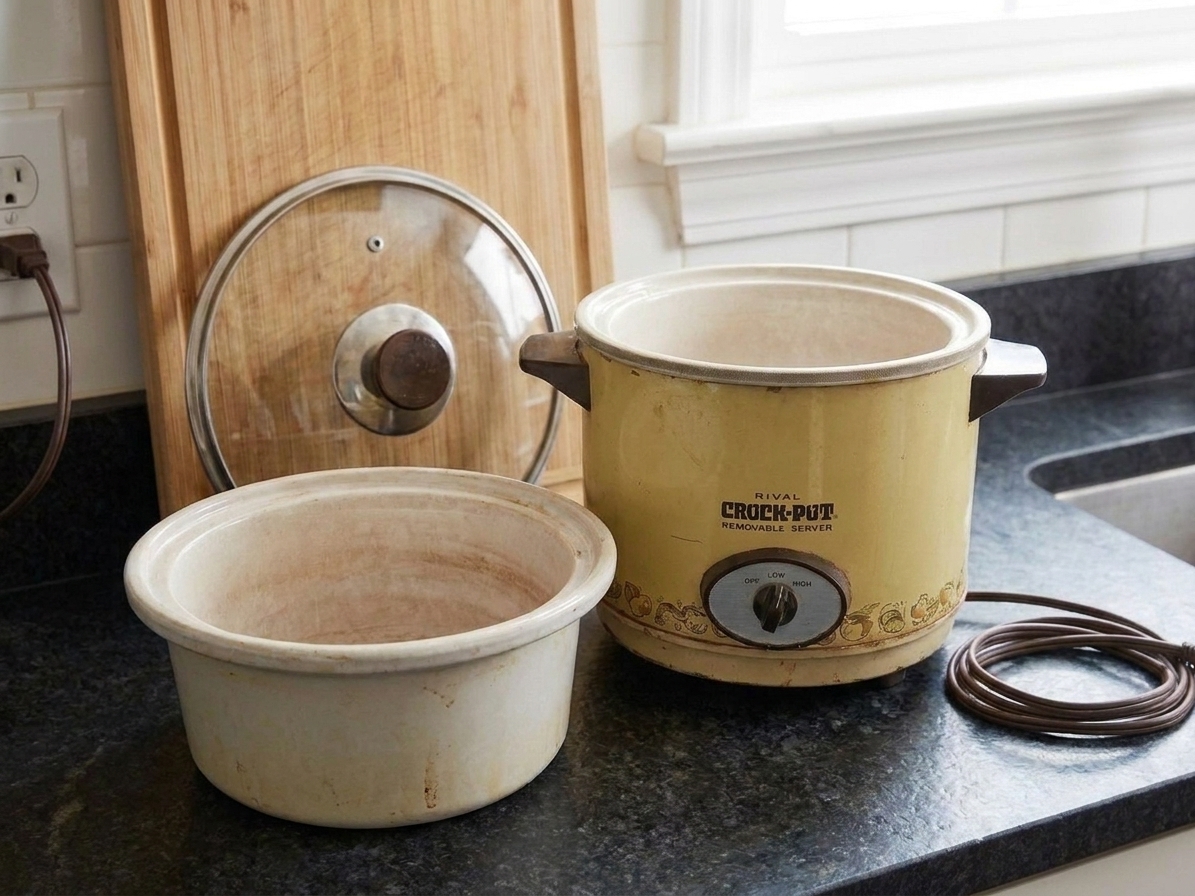

A slow cooker base with the ceramic crock and glass lid set beside it on a countertop, showing the parts clearly

Why It Works

  • You will diagnose the real issue fast using a simple heat test and a few visual checks.
  • You will fix the most common problems like lid leaks, funky odors, residue, and temperature quirks without special tools.
  • You will know what is unsafe so you do not mess with wiring or keep using a cracked insert.
  • You will get better results once your cooker is back to sealing, heating, and cooking the way it should.

Pairs Well With

Storage Tips

Not exactly leftovers, but here is how to store your slow cooker so it stays in good shape after you fix it.

  • Store with the lid slightly ajar or with a paper towel between lid and crock so moisture does not get trapped and smell weird.
  • Keep the crock separate if you stack appliances. Ceramic chips easily when it knocks into metal gadgets.
  • Wrap the cord loosely. Tight wrapping can stress the cord where it meets the base.
  • Dry everything completely before storing, especially around the rim where the lid sits.

Common Questions

Is it worth repairing a slow cooker?

If it is a seal, lid, knob, or crock insert issue, yes. If it is electrical (sparks, burning smell, intermittent power, frayed cord), it is usually safer and cheaper to replace the unit.

How hot should a slow cooker get?

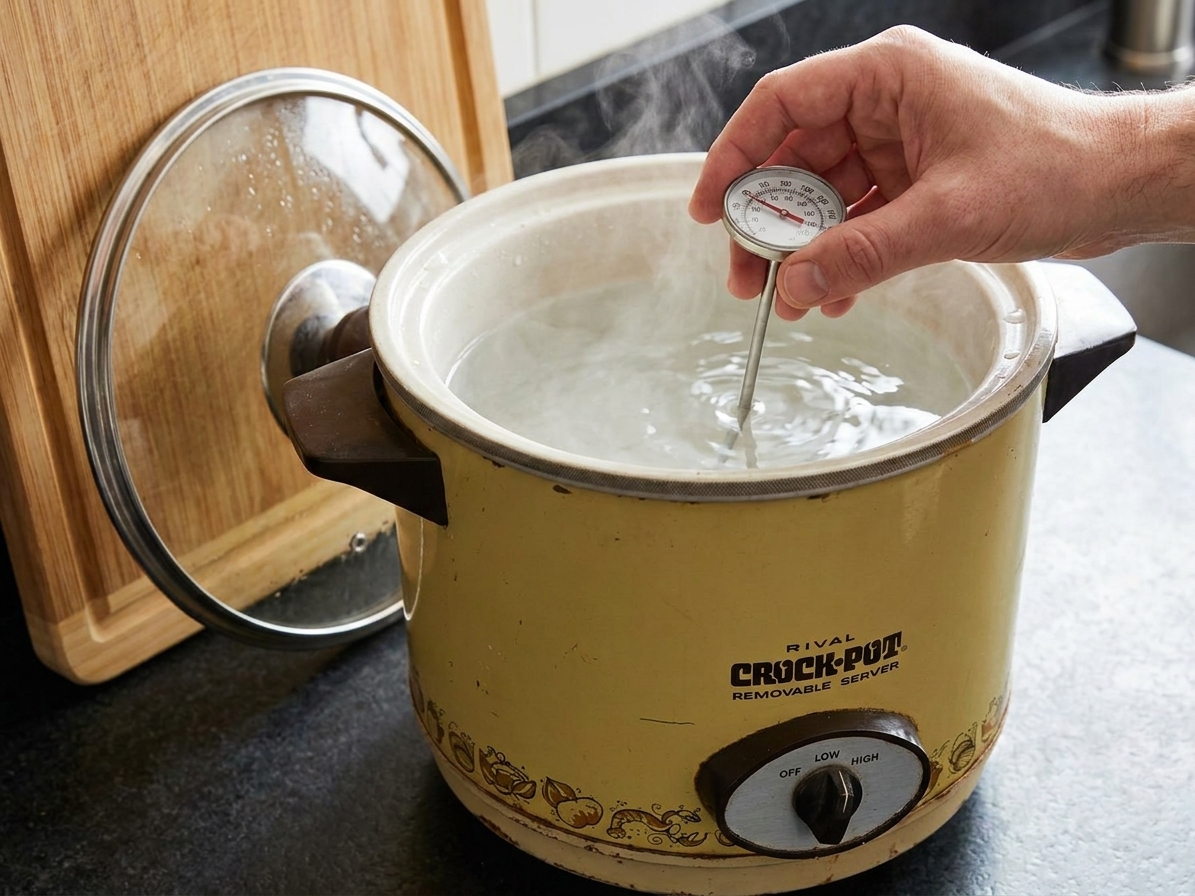
Most slow cookers are designed so the contents reach a safe simmer over time. A common at-home check is that water should reach about 185°F to 200°F on Low after about 6 to 8 hours and about 200°F to 210°F on High after about 2 to 4 hours. Exact timing varies by model, size, and how full it is.

Why is my slow cooker burning food on Low?

Common causes are running hotter than normal, cooking too long, not enough liquid for the recipe, or food sitting against the sidewall (where heat is strongest). Use a thermometer test, keep the pot 1/2 to 2/3 full when possible, and consider a liner or a gentle stir halfway through for thick sauces.

Can I cook with a cracked crock?

No. A cracked ceramic insert can fail when heated, and it can also harbor bacteria in the crack. Replace the insert if the manufacturer sells one. If you cannot replace it, replace the slow cooker.

Why does my slow cooker smell like burning but the food is fine?

Often it is residue on the outside of the crock or spills baked onto the heating base. A deep clean (once the unit is unplugged and cold) usually fixes it.

Can I put the crock on the stovetop to speed things up?

Only if your insert is explicitly labeled as stovetop-safe. Many are not, and direct heat can crack the ceramic.

I am not emotionally attached to many appliances, but I am weirdly loyal to a good slow cooker. Mine has seen everything from pulled pork experiments to “I forgot to thaw dinner” chicken tacos. The one time it started running hot, I blamed my recipe, then my timing, then the universe. Turns out there was greasy buildup on the outside of the crock and a lid that was not sealing right. That kind of residue can create hot spots and make the cooker feel less even and more aggressive than it really is. Cleaned it, replaced the gasket, and suddenly it was back to being the calm, dependable kitchen buddy I signed up for.