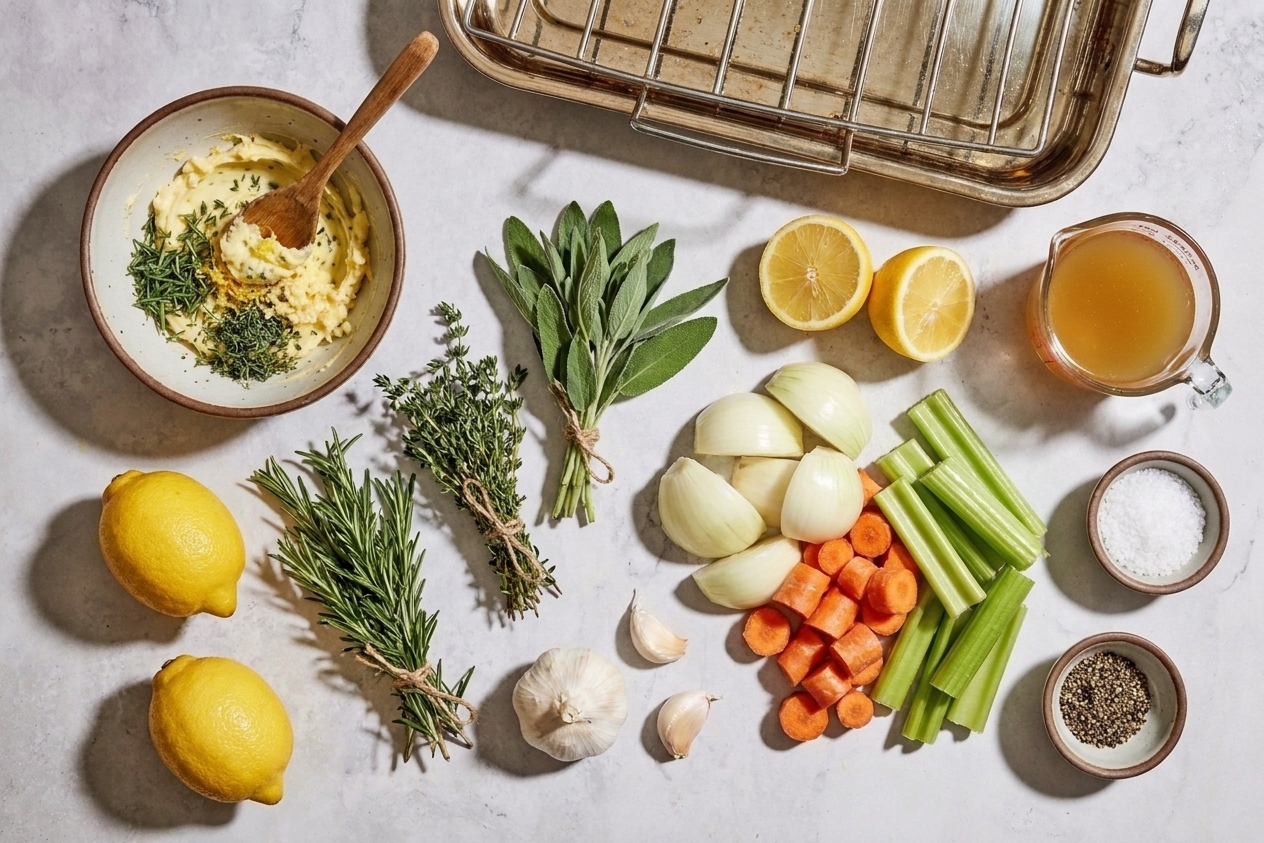
1) Dry brine
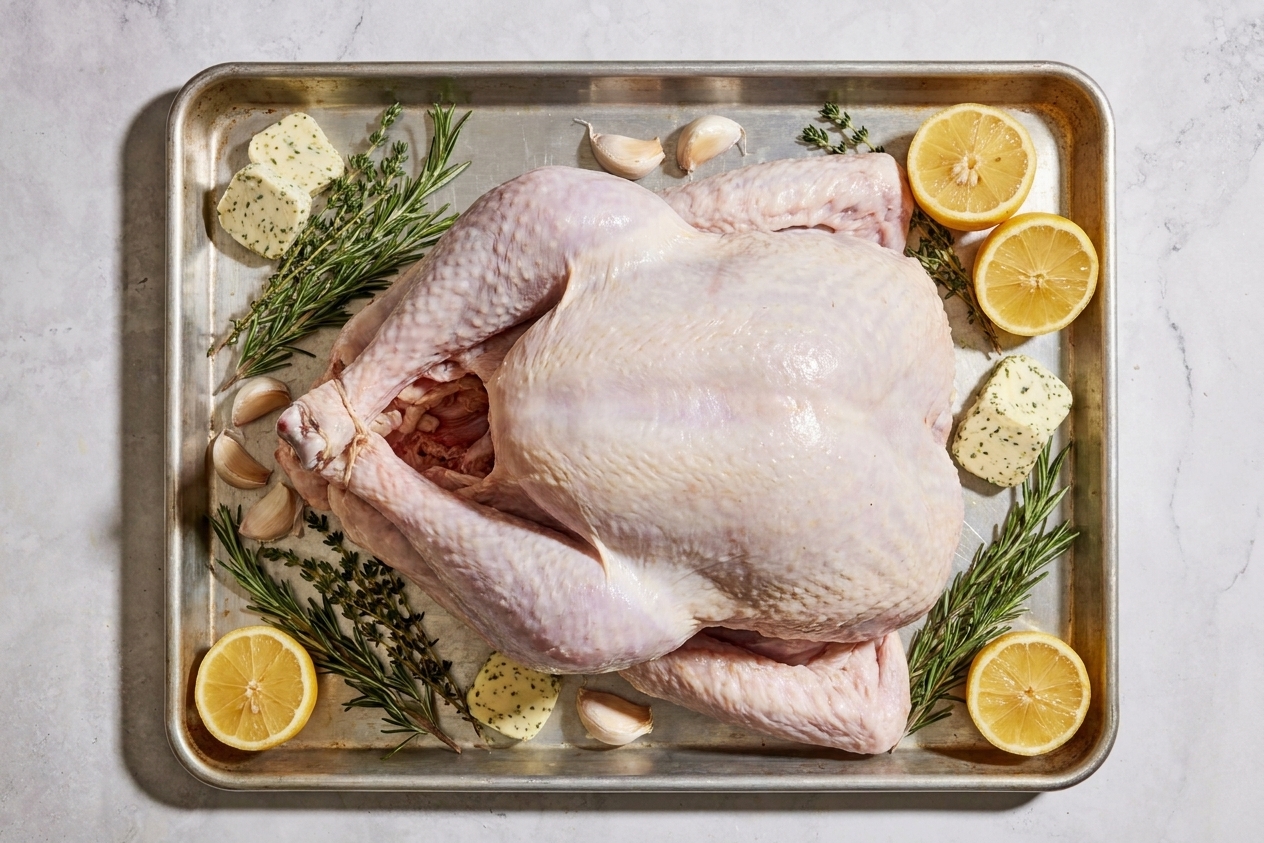
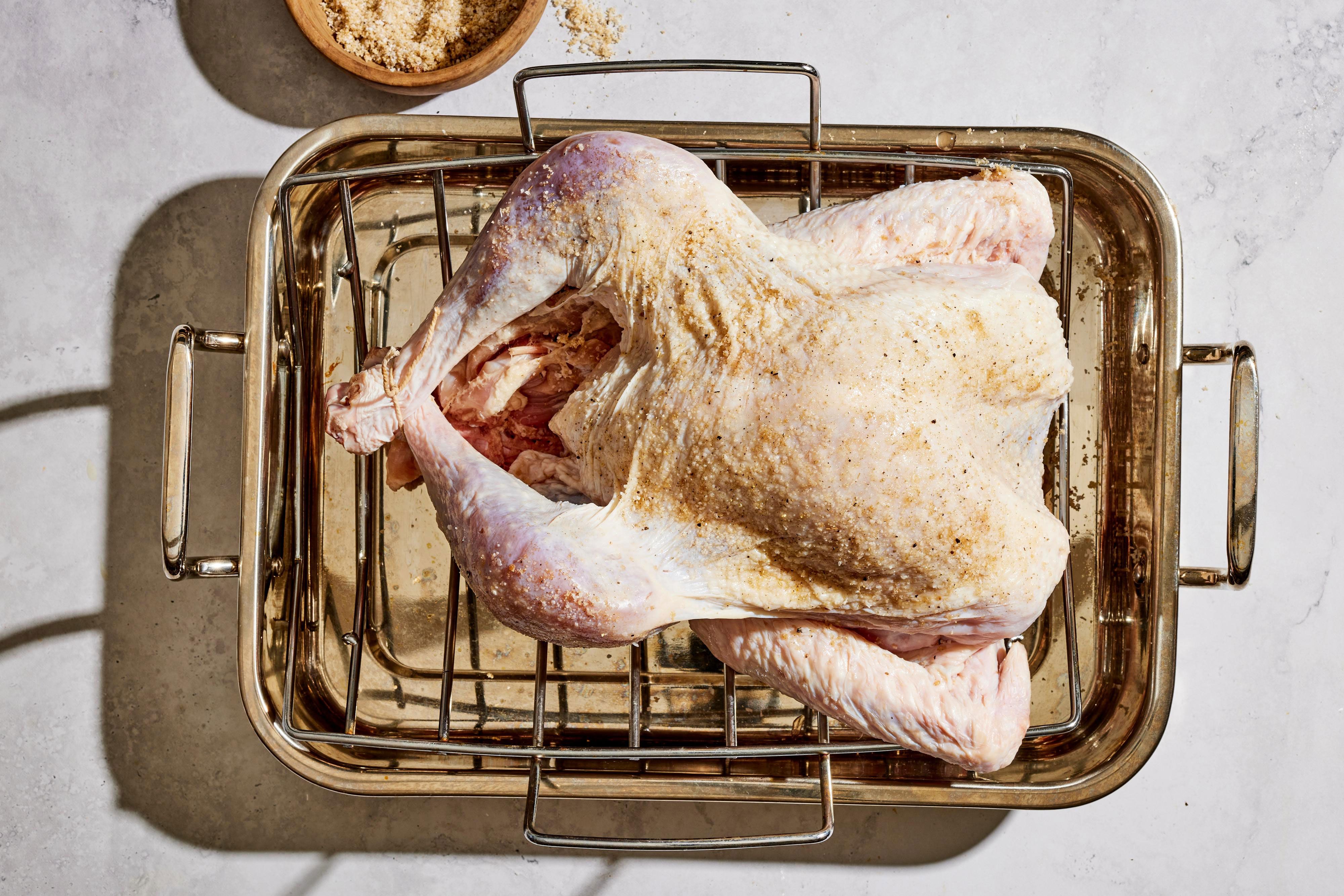
Pat the turkey very dry with paper towels, inside and out. Remove the giblets and neck (save them for stock or gravy if you want). Season the turkey all over with kosher salt and pepper, including a light sprinkle inside the cavity.
Set it on a rack over a roasting pan or sheet pan and refrigerate uncovered for 8 to 24 hours. This dries the skin for better crisping and seasons the meat all the way through.
2) Take the chill off, heat the oven
When you are ready to roast, pull the turkey from the fridge and let it sit at room temperature for 30 to 60 minutes to take the chill off while the oven heats. (Food safety note: do not leave it out for hours. You just want it less fridge-cold, not cozy.)
Set an oven rack in the lower third of the oven. Heat the oven to 450°F. If you are using convection, reduce to 425°F for the first blast and 300°F for the remainder.
3) Make the herb butter
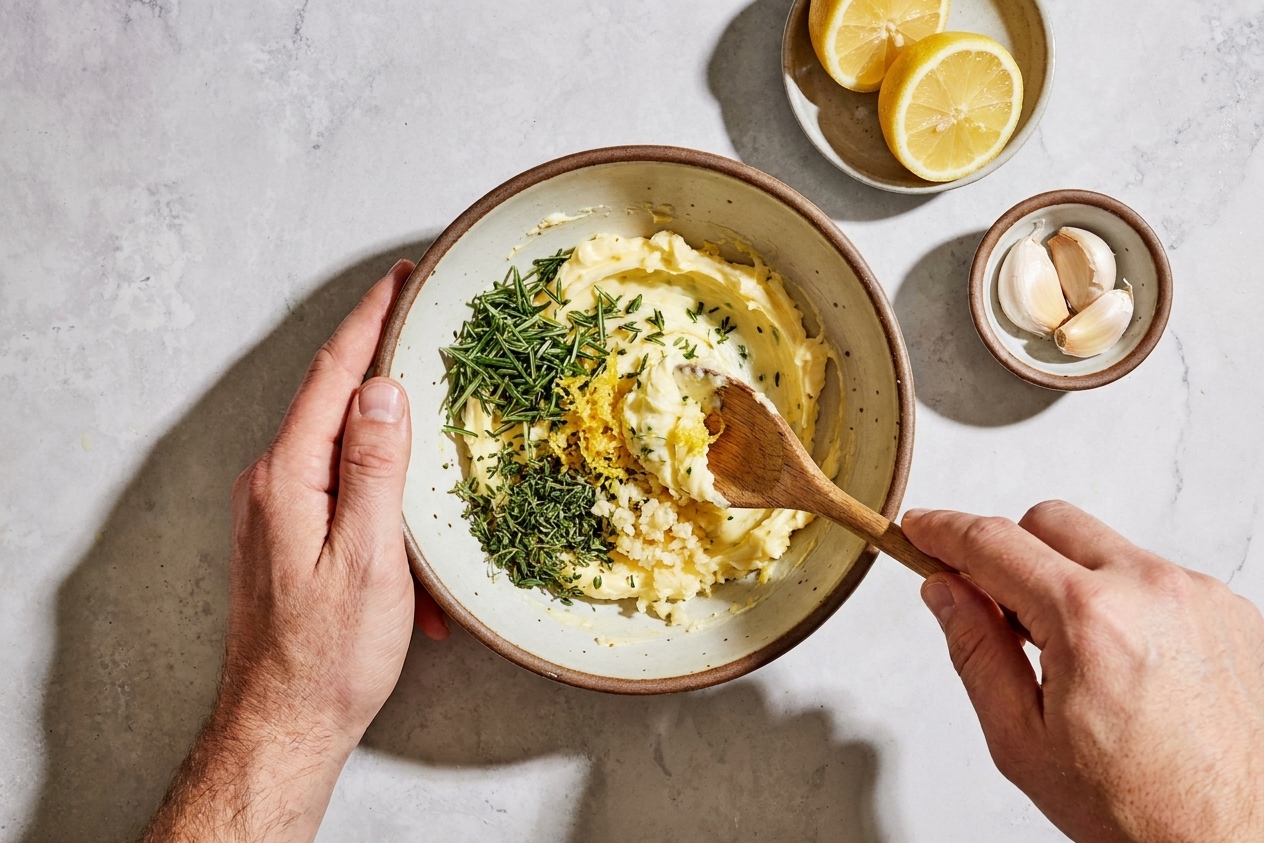
In a bowl, mix softened butter with rosemary, thyme, sage, lemon zest, and garlic. It should smell like you know what you are doing.
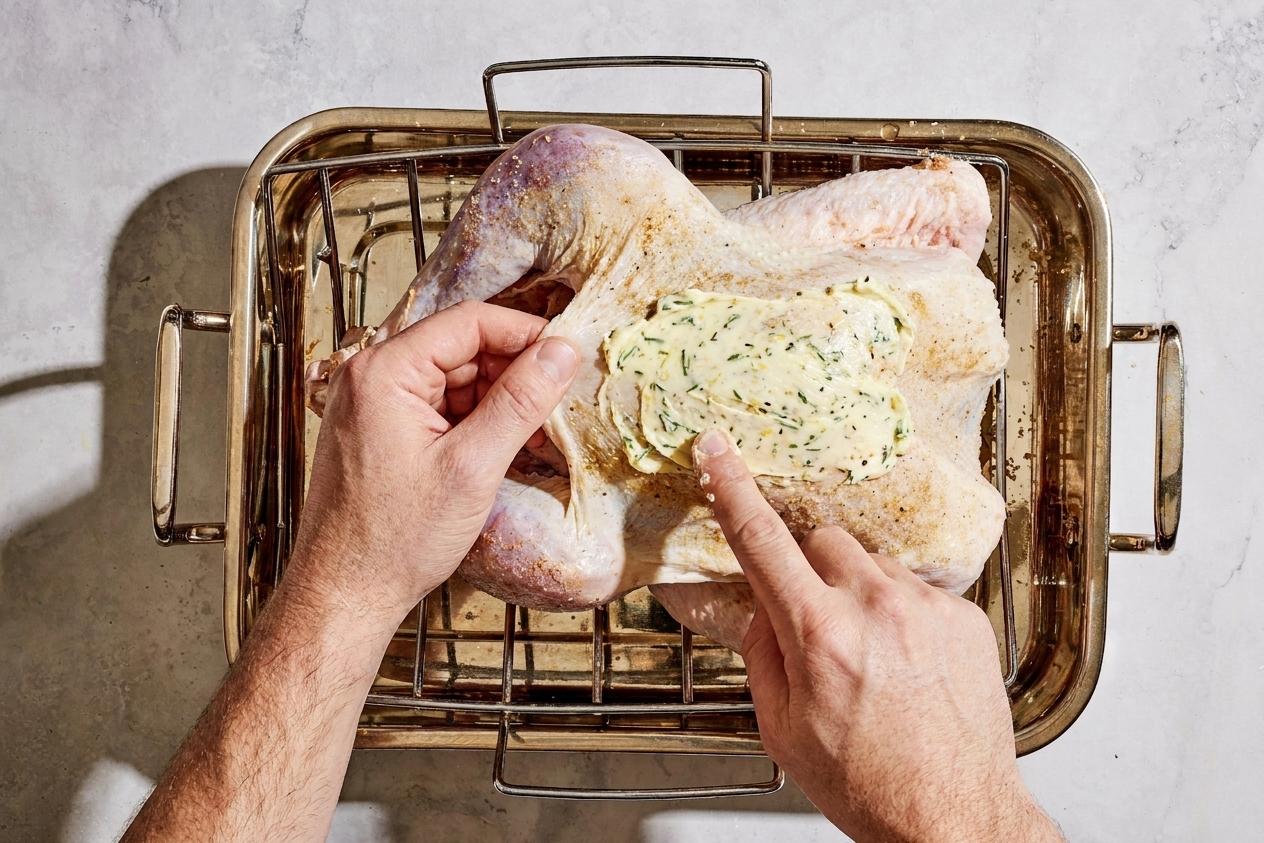
4) Butter under the skin
Pat the turkey dry again. Carefully slide your fingers under the skin of the breast (starting near the neck opening) to loosen it without tearing. Spread about 2/3 of the herb butter under the skin over both breasts. Rub the remaining butter all over the outside of the turkey.
If you like, add a lemon half or a few herb sprigs to the cavity, but keep it light so heat can circulate. Tie the legs together with twine if you want. Tuck wing tips under the bird so they do not burn.
5) Set up the roasting pan
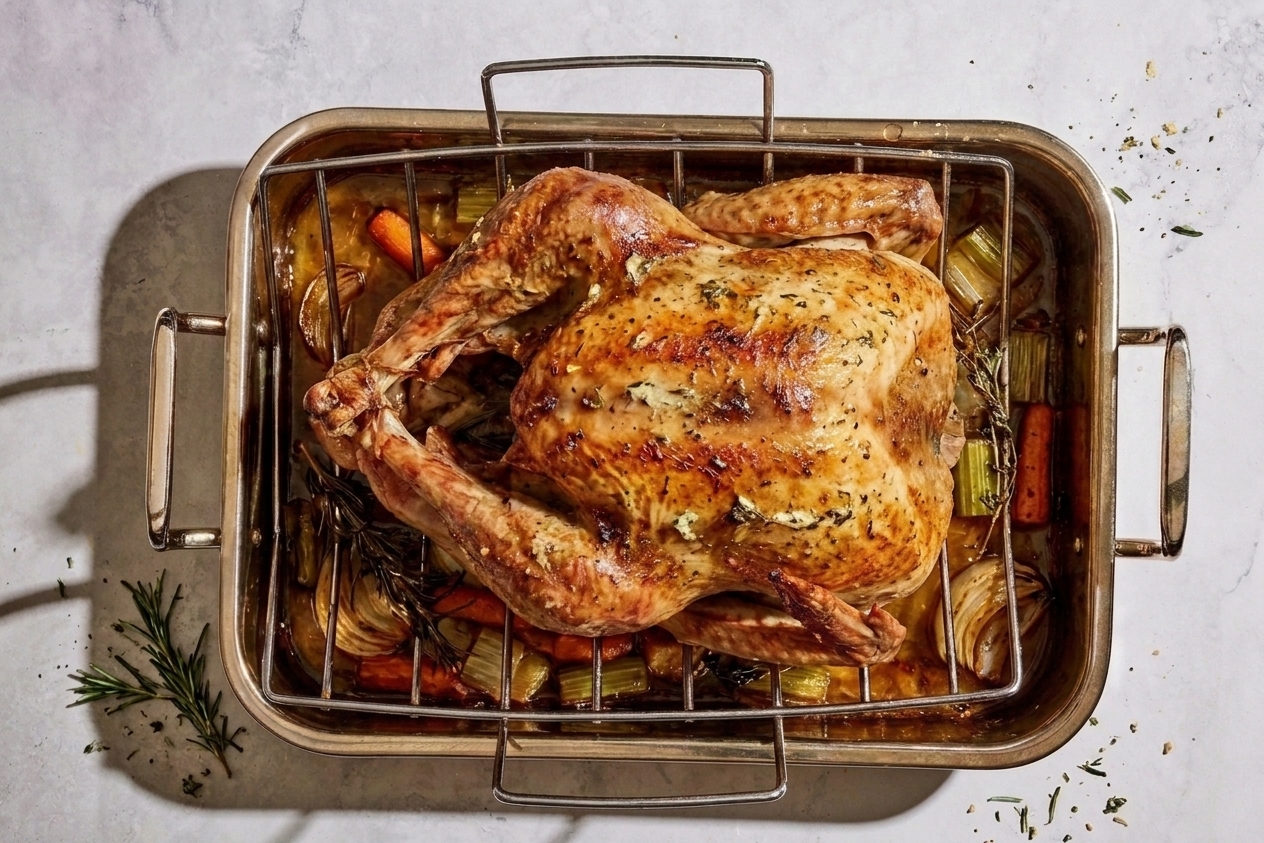
Add onion, carrots, celery, lemon halves, and halved garlic to the roasting pan. Place the rack over the vegetables, then set the turkey breast-side up on the rack. Pour 2 cups broth into the bottom of the pan.
Pan size note: For birds over 16 pounds, use an extra-large roasting pan and plan on the longer end of the cook time. If it feels crowded, it probably is.
6) Roast
Roast at 450°F for 30 minutes to get color going. Then reduce heat to 325°F and continue roasting until done.
Start checking temperature early so you do not overshoot it. As a rough guide, begin checking at 1 hour 30 minutes for a 12-pound turkey and 2 hours for a 16-pound turkey, then check every 15 to 20 minutes as it gets close.
Where to temp: Insert the thermometer into the thickest part of the breast without touching bone. For the thigh, aim for the thickest part near the joint.
If the pan looks dry at any point, add a splash of broth. If the breast is browning too fast, loosely tent foil over the top.
Target temps: Cook until the breast reaches 165°F and the thigh reaches 175°F to 180°F. If you prefer, you can pull at 160°F in the breast only if you rest 30 to 45 minutes and confirm it climbs to 165°F.
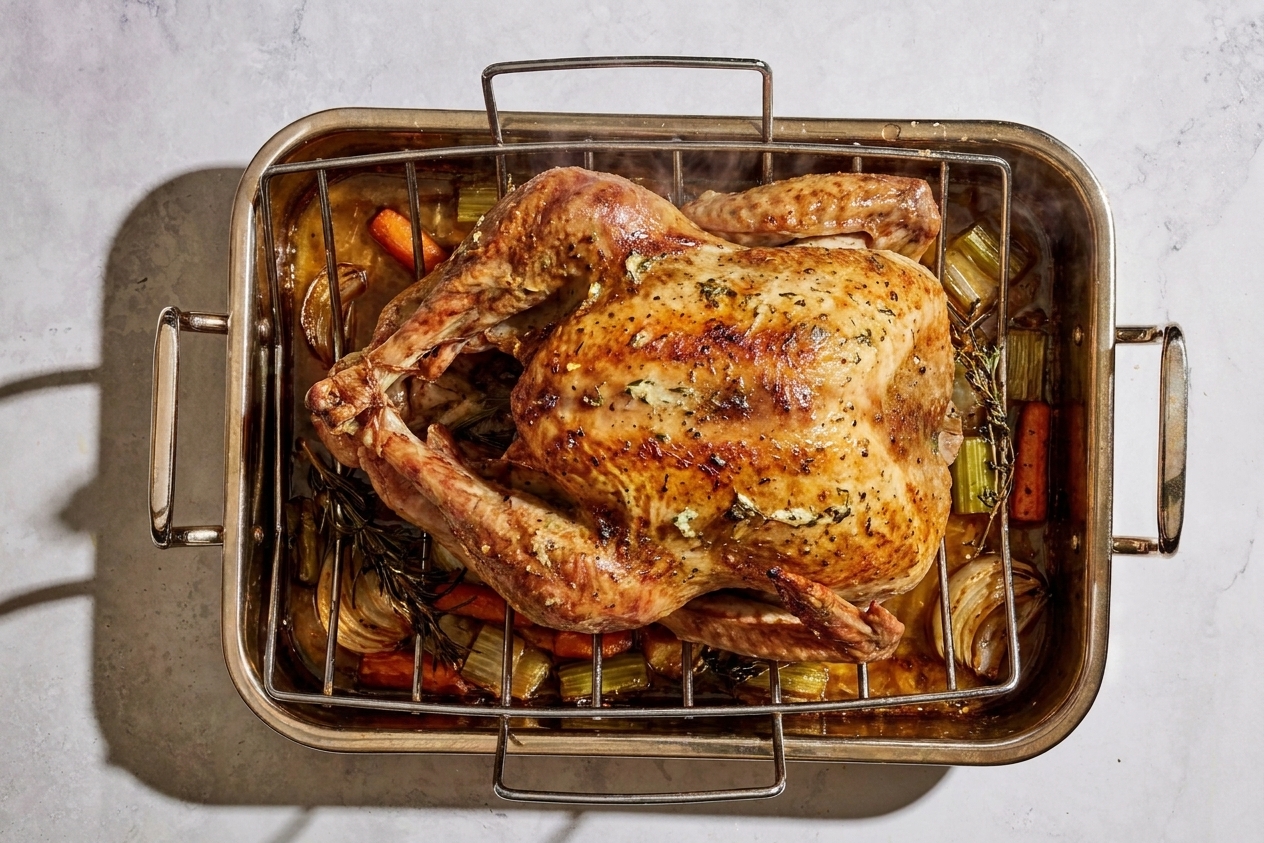
7) Rest
Transfer turkey to a cutting board and loosely tent with foil. Rest for 30 to 45 minutes. This is when the juices redistribute and the turkey becomes the turkey you want to serve.
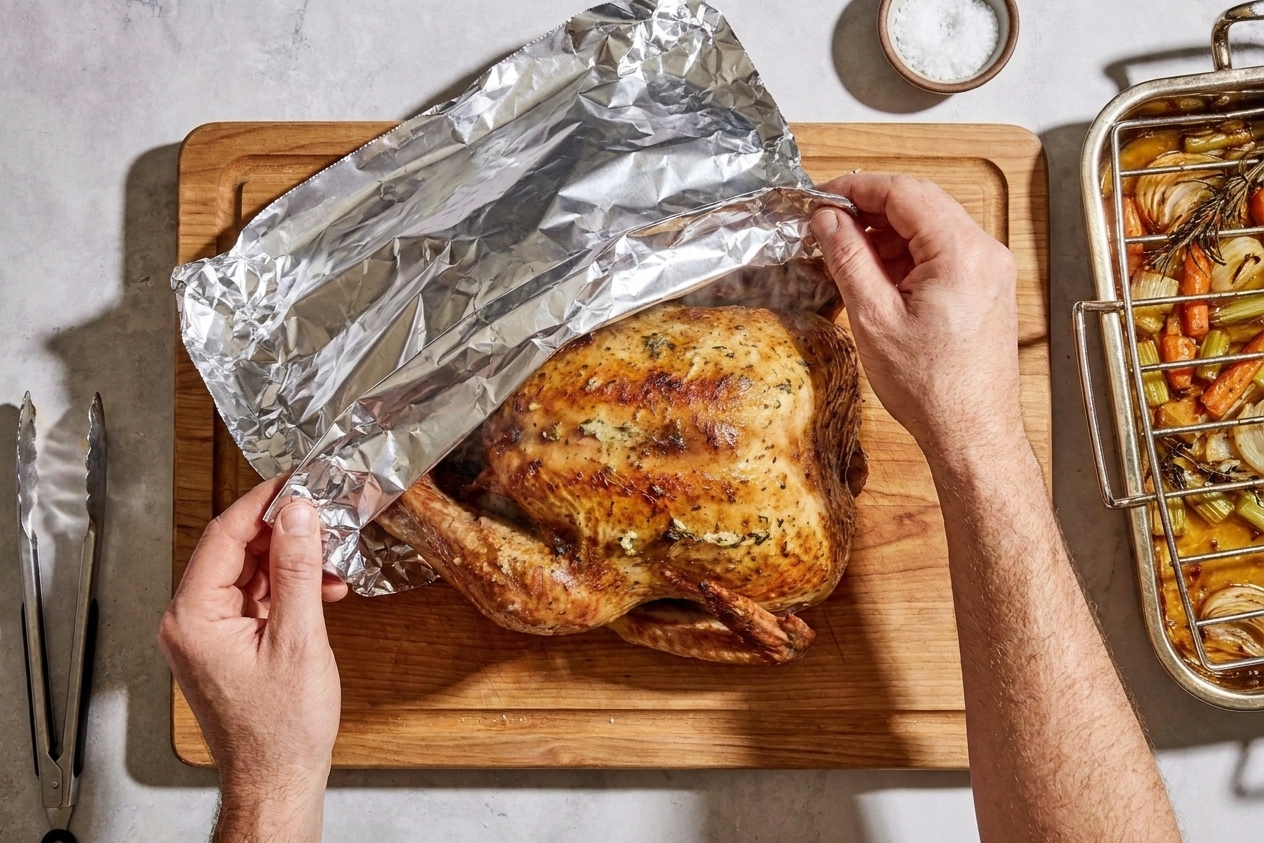
8) Make quick pan gravy (optional)
While the turkey rests, pour the pan drippings into a fat separator or a bowl. Spoon off excess fat, keeping about 3 tablespoons in a saucepan (or return 3 tablespoons to the roasting pan set over two burners).
Whisk in flour and cook 1 to 2 minutes until it smells nutty. Measure your drippings. You may not have 2 full cups, and that is normal. Add broth to make 2 to 3 cups total liquid, then slowly whisk it into the flour mixture.
Simmer, whisking, until thickened, 3 to 8 minutes. Season to taste with salt and pepper. Strain if you want it extra smooth.
9) Carve and serve
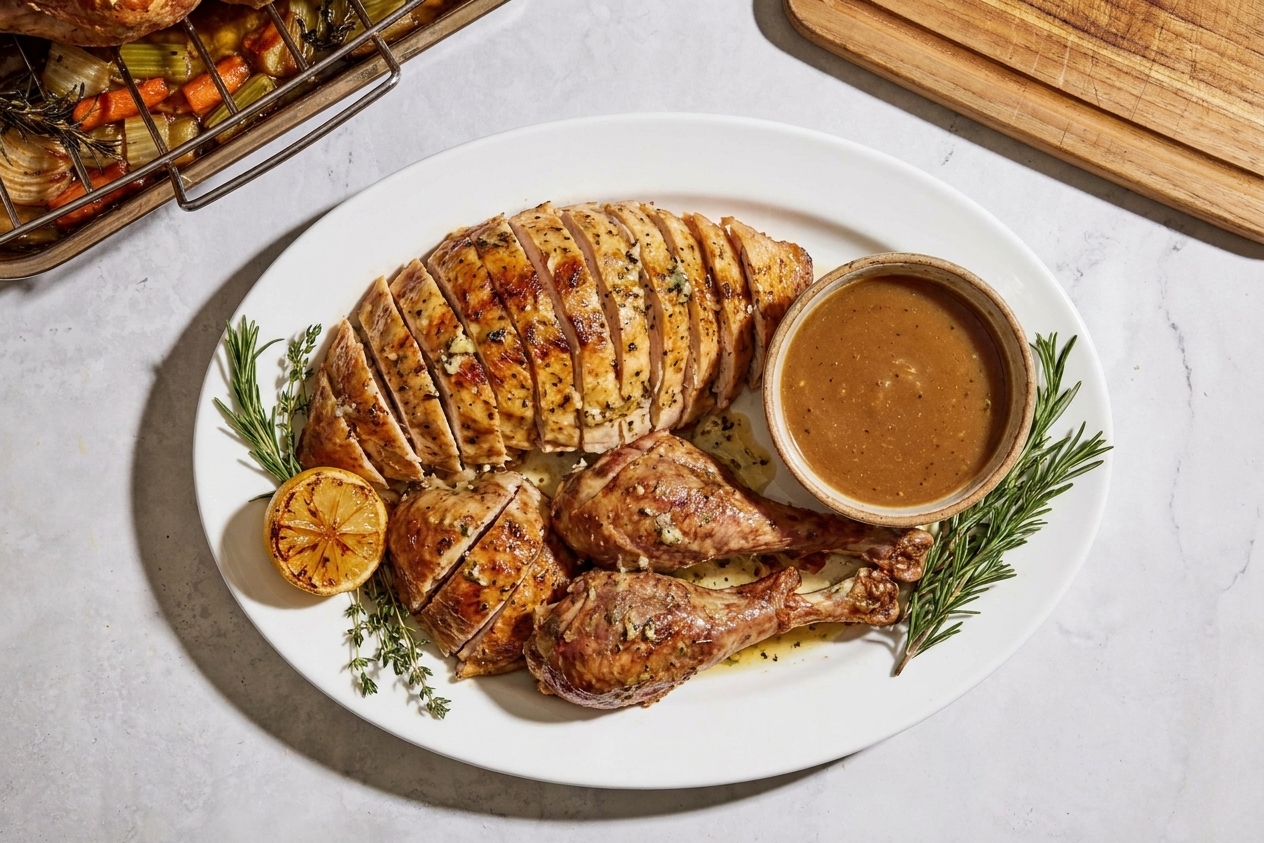
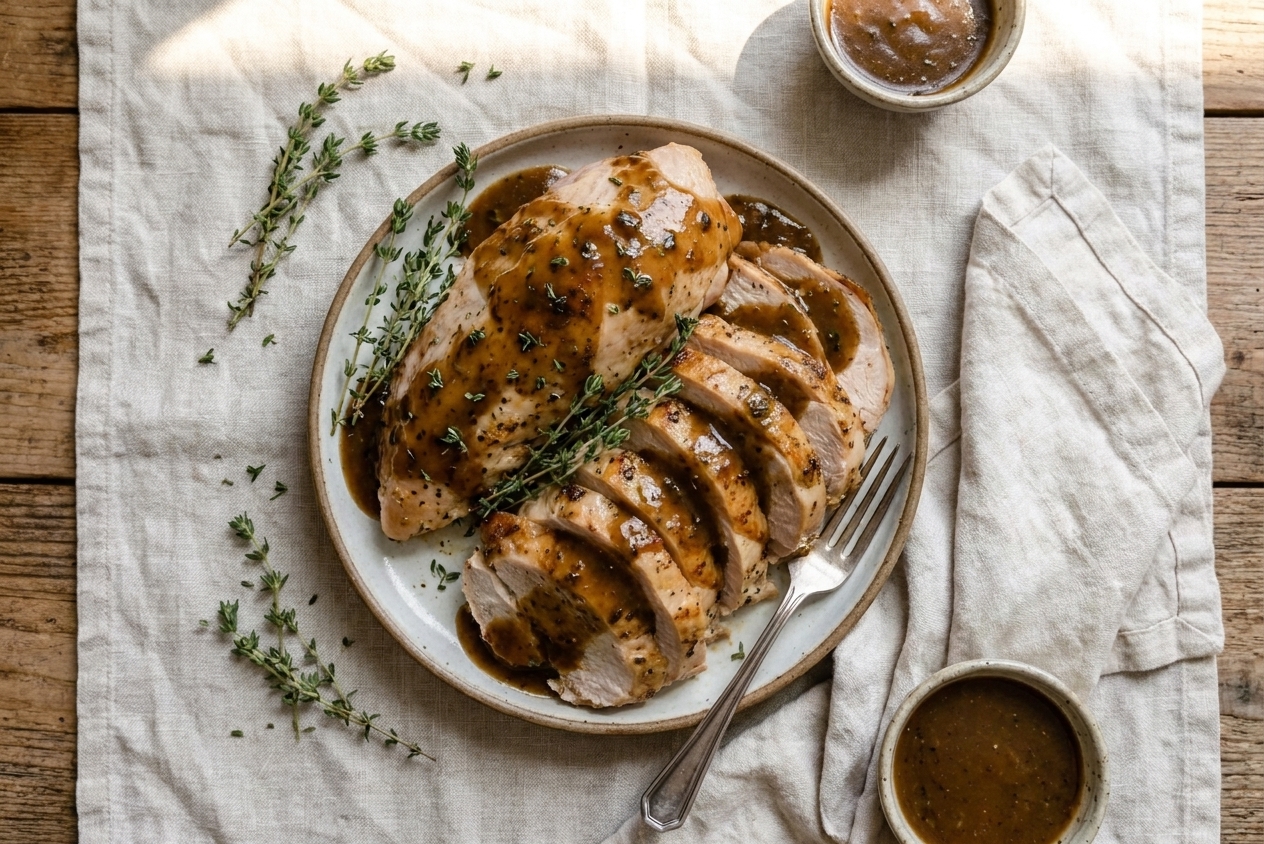
Slice the breast against the grain. Separate thighs and drumsticks. Pour gravy over everything like you mean it.