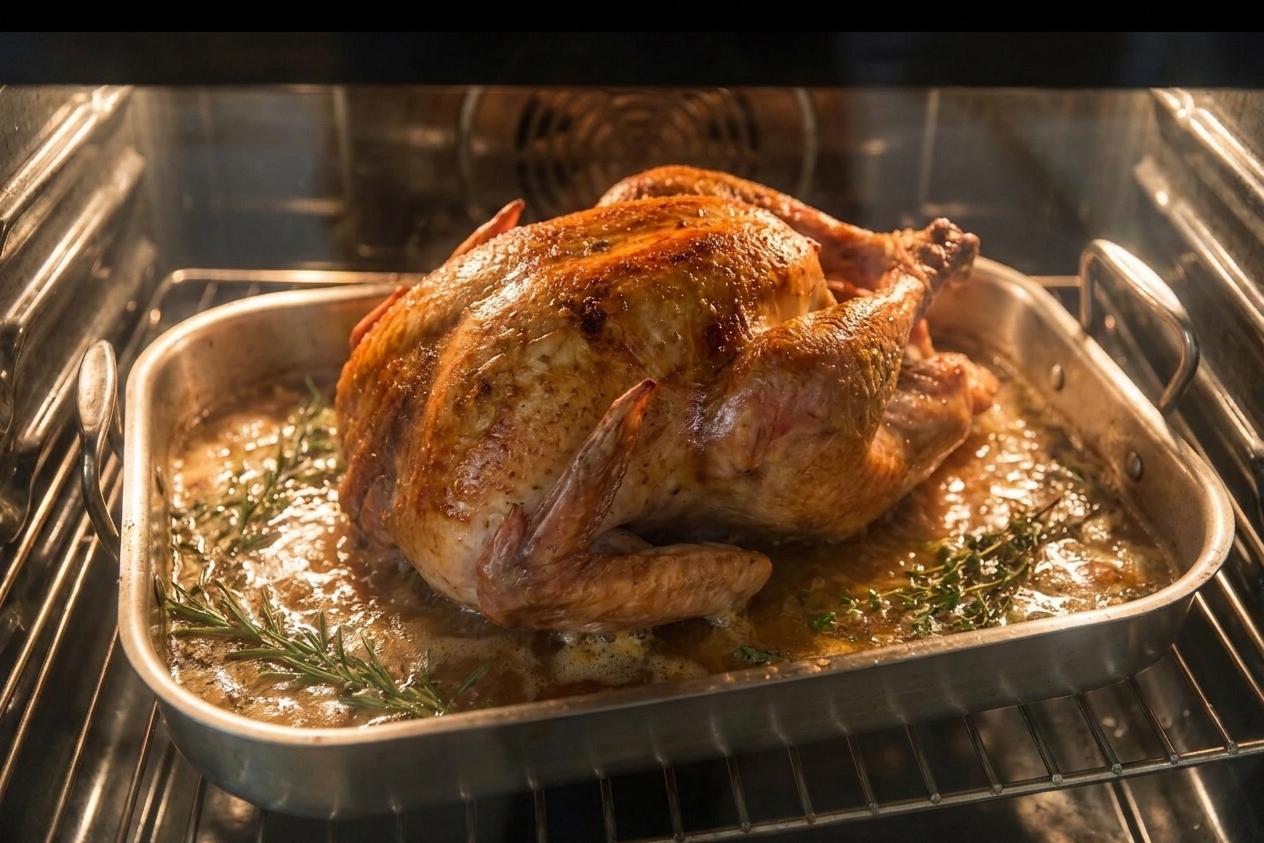
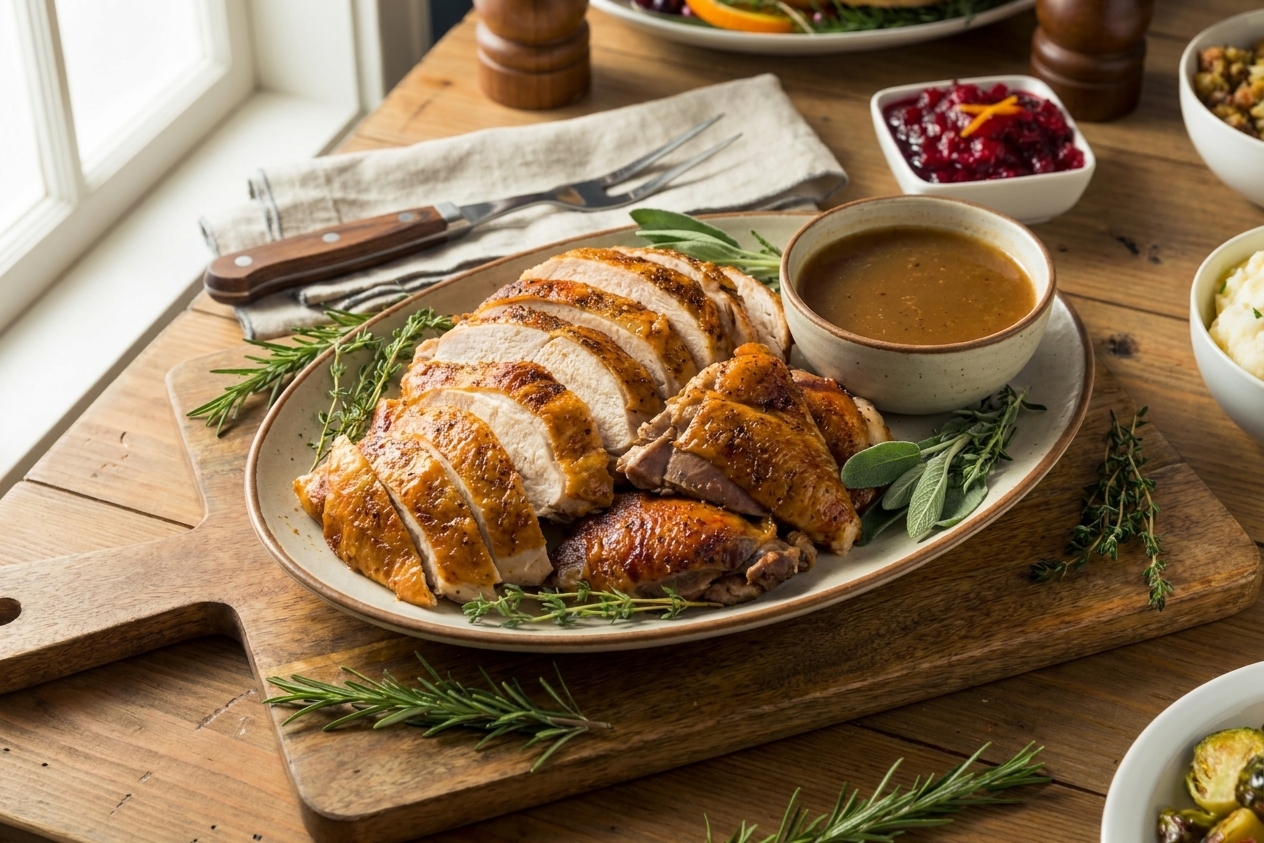
Mom's Best Recipes
Recipe

Juicy Roast Thanksgiving Turkey

Herb butter under the skin, crisp edges, juicy slices, and a calm, clear game plan from thaw to carve.

Author By Matt Campbell
4.8
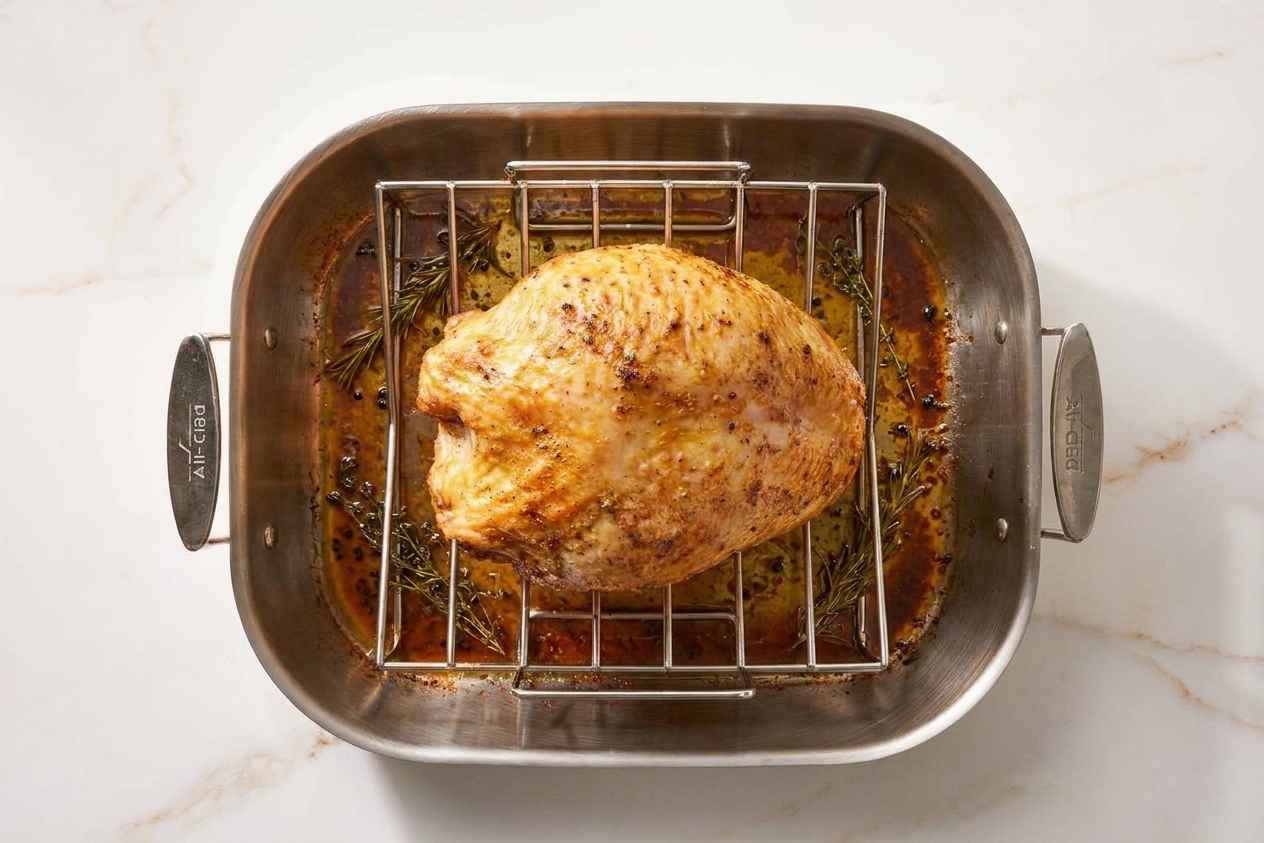
A whole golden-brown roast Thanksgiving turkey resting on a white platter with fresh herbs and roasted citrus on a wooden dining table in warm natural kitchen lighting

Thanksgiving turkey has a reputation for being the most stressful thing on the menu. The good news is that turkey is not complicated, it is just big, and big food punishes vague plans.

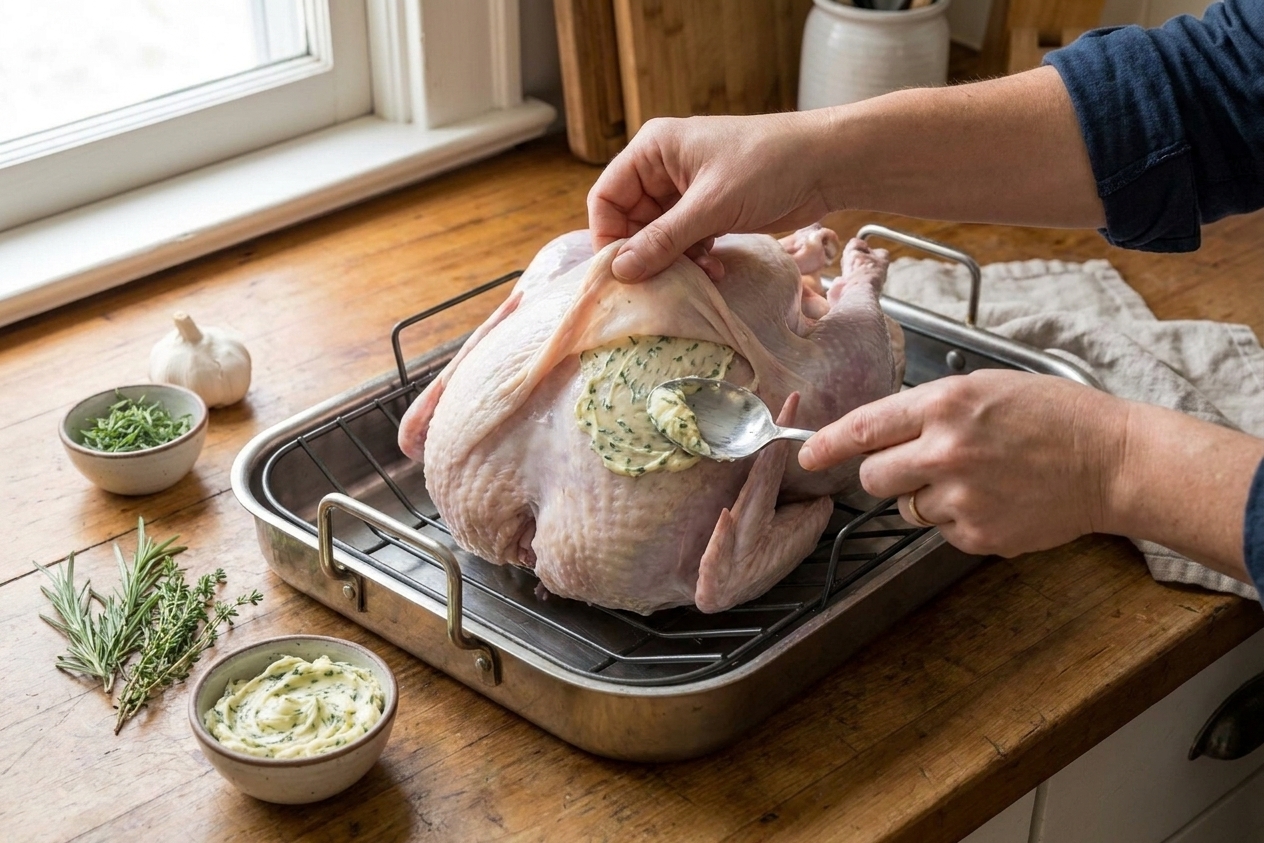
This is my no-drama roast turkey: herb butter for flavor, steady heat for juicy meat, and a simple system so you are not panic-googling internal temps while your relatives hover near the oven like hungry seagulls.

You will get crisp skin, tender breast meat, and thighs that actually taste like they want to be there. Also, we are making the drippings work for us, because gravy is half the reason we showed up.

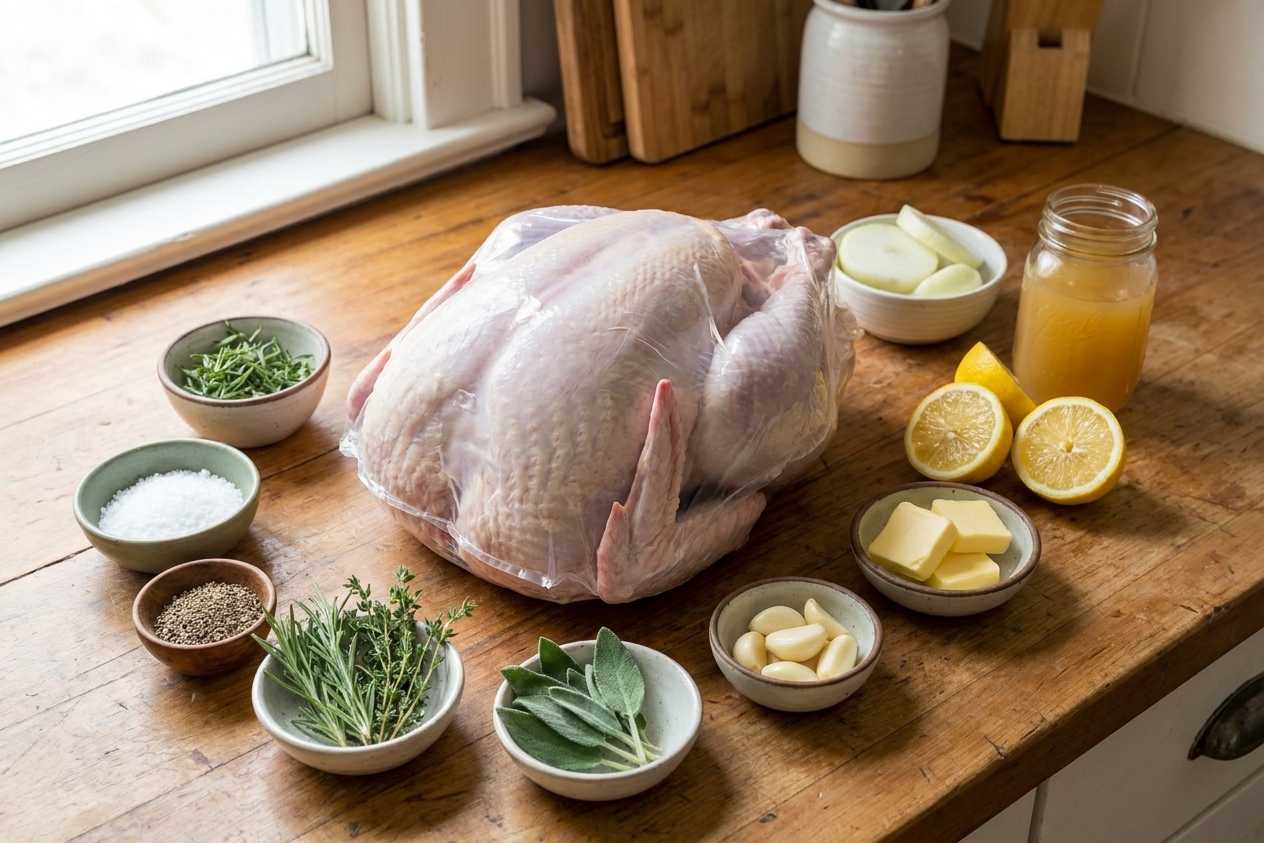
Raw turkey in packaging on a clean kitchen counter surrounded by bowls of salt, pepper, herbs, butter, garlic, lemons, onions, and chicken broth in bright home kitchen lighting

Why It Works

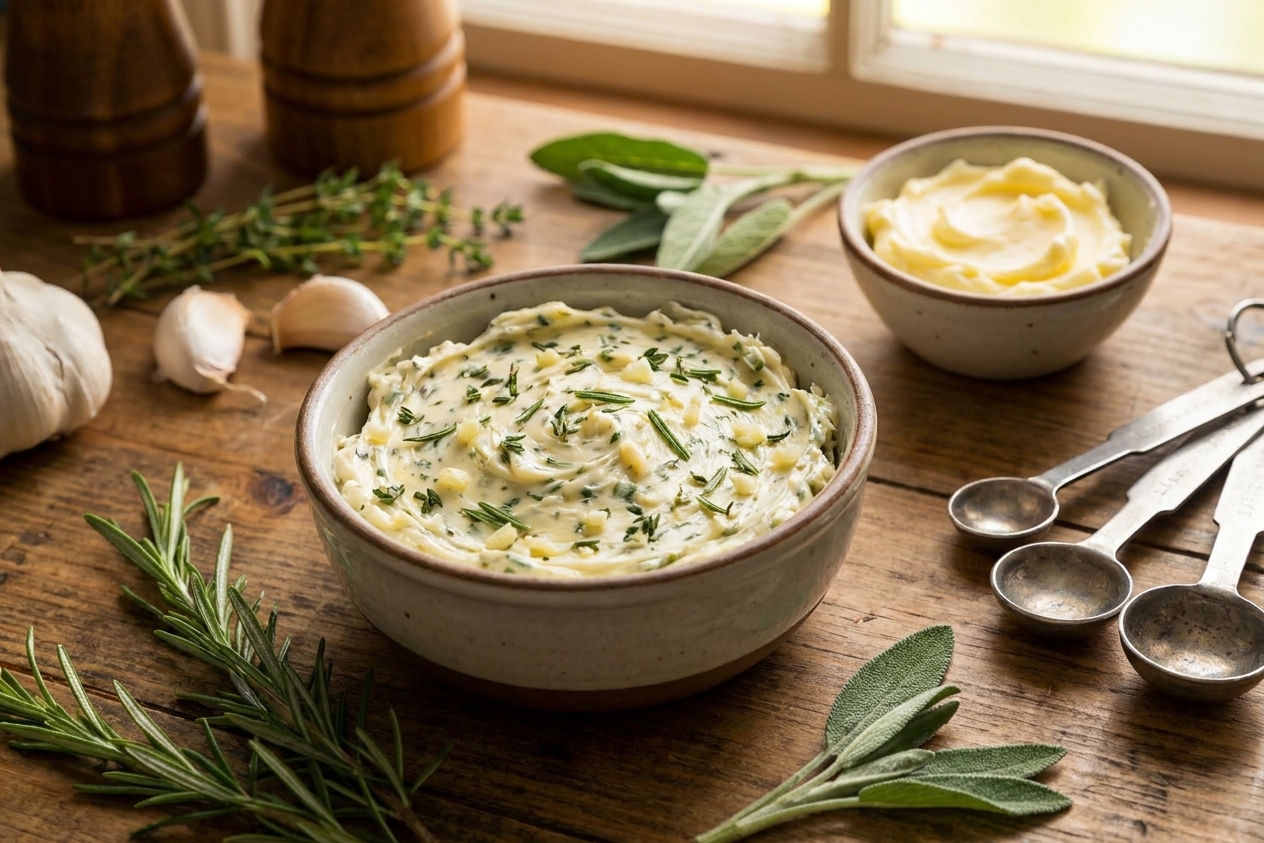
  • Juicier breast meat from herb butter tucked under the skin and a rest before carving.
  • Better flavor thanks to a simple aromatic cavity fill and a little broth in the pan to prevent scorching drippings.
  • Crisp, golden skin with a dry surface and a higher-heat finish if needed.
  • Clear timing using temperature targets instead of guessing by pound alone.
  • Gravy-friendly drippings that taste like Thanksgiving, not burnt pan sadness.

Pairs Well With

Storage Tips

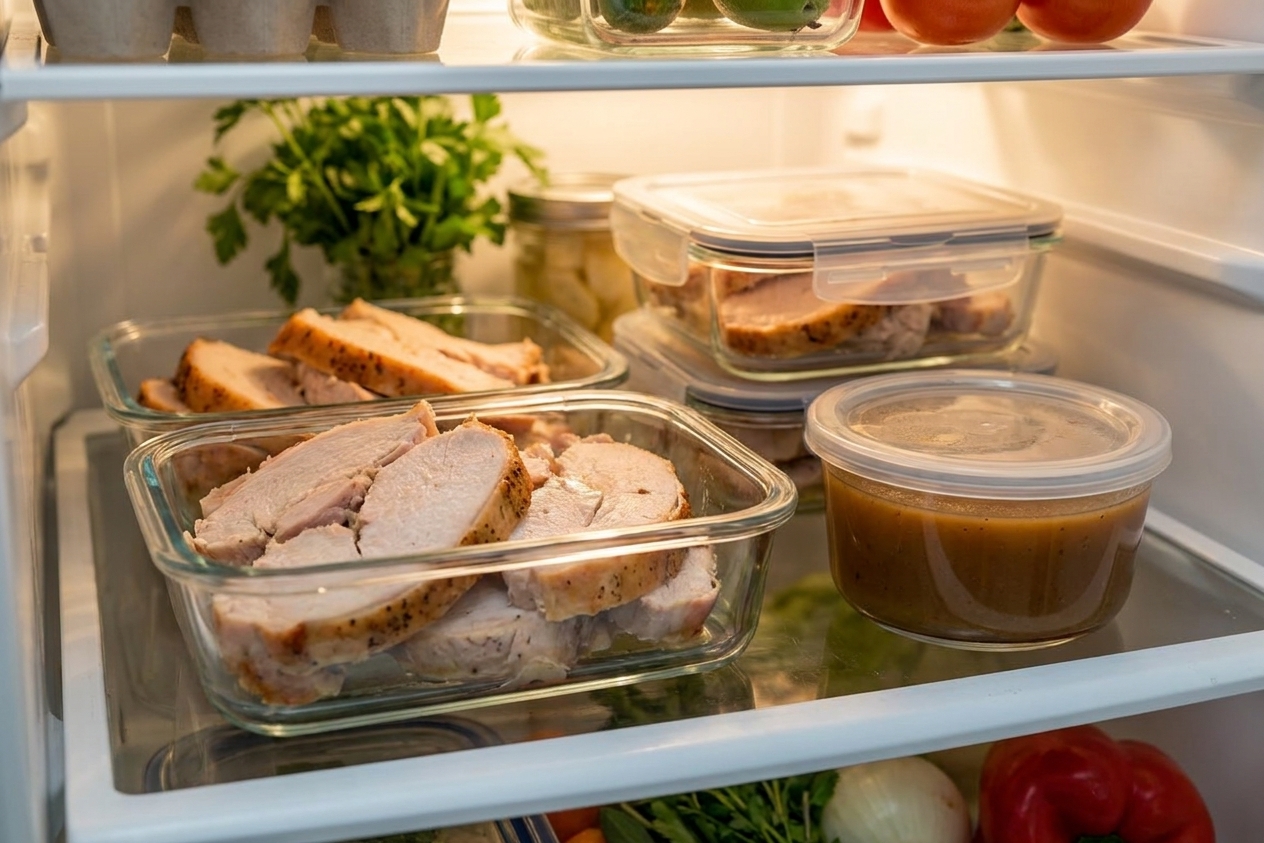
Cool it fast: Get carved turkey off the carcass within 2 hours of coming out of the oven. Spread slices in a shallow container so they chill quickly.

Fridge: Store in airtight containers for 3 to 4 days. I like separating white meat and dark meat so you can reheat gently and not overcook the breast.

Freezer: Freeze turkey in freezer bags for up to 3 months. Add a splash of cooled gravy or broth before freezing for extra insurance against dryness.

Reheat without drying out: Put slices in a baking dish with a few spoonfuls of broth or gravy, cover tightly with foil, and warm at 300°F until just hot (usually 20 to 30 minutes). Microwave works too, just do 50% power with a little broth and cover.

Sliced leftover turkey in glass meal prep containers with a small container of gravy beside them on a refrigerator shelf in realistic home kitchen lighting

Common Questions

How long does it take to thaw a frozen turkey?

In the fridge, plan on 24 hours per 4 to 5 pounds. A 16 pound turkey usually needs about 4 days. This assumes your fridge stays at 40°F or colder. Keep it on a rimmed tray to catch any leaks.

Do I need to brine the turkey?

Not required for a great turkey. This recipe uses a generous salt and herb butter approach. If your turkey is labeled "enhanced" or "contains up to X% solution", skip any heavy brining and consider reducing the added salt a bit so it does not get overly salty.

What temperature is turkey done?

USDA safe temp is 165°F for all parts. For better texture, I often pull the turkey when the breast hits about 160°F and the thigh is 170 to 175°F, then rest it 30 to 45 minutes. Carryover heat should bring the breast up to 165°F. If it does not, pop it back in the oven and keep roasting until it does.

Should I stuff the turkey?

I do not recommend cooking stuffing inside the bird. It slows down cooking and can lead to dry breast meat before the center is safe. Bake stuffing separately and use the turkey cavity for aromatics instead.

Why is my turkey skin not crispy?

Usually moisture. Pat it dry really well, and let it sit uncovered in the fridge (even 8 to 24 hours helps). If needed, you can finish with 10 to 15 minutes at 425°F at the end, watching closely.

How much turkey per person?

If you want leftovers, plan 1 to 1 1/2 pounds per person (bone-in). If your crowd is lighter eaters and you have lots of sides, 1 pound per person can work.

What if the turkey finishes early?

Resting longer is fine. After the initial 30 to 45 minute rest, you can loosely tent with foil and keep it warm. If you need more time, hold it in a 200°F oven for a short stretch, and carve right before serving.

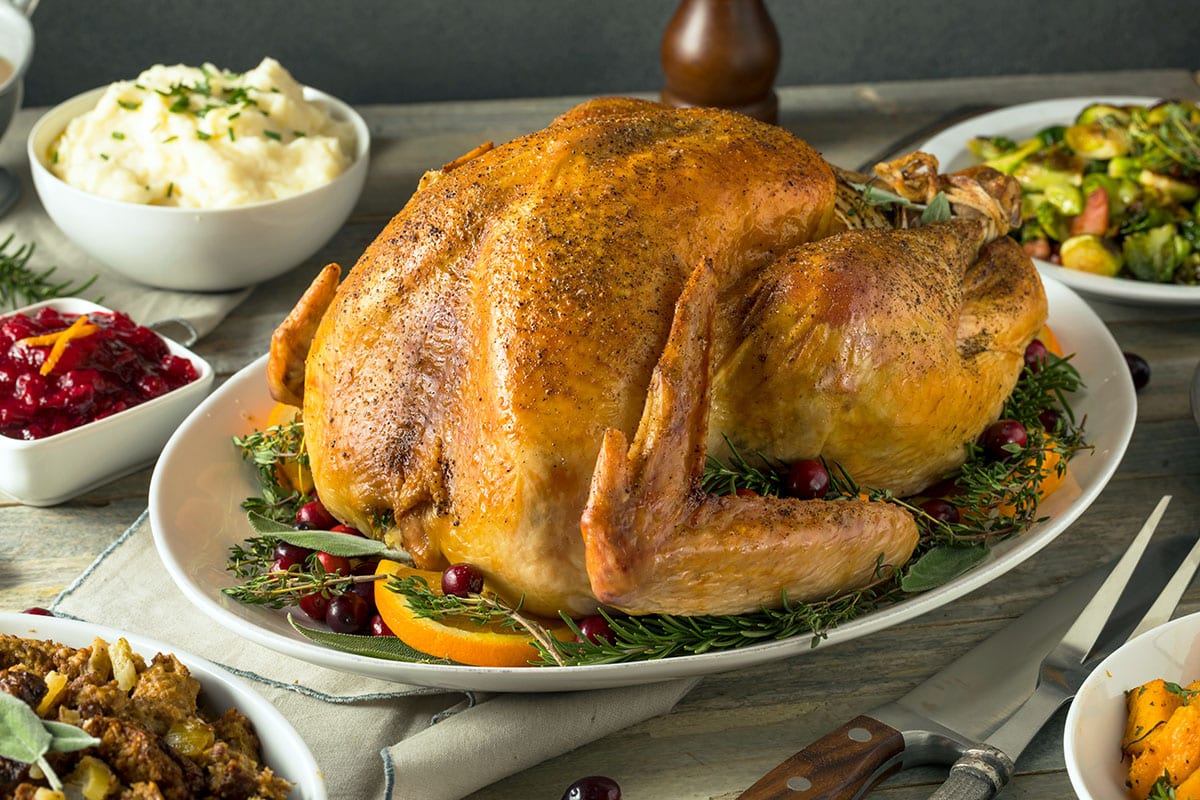
The first turkey I ever helped make was a full-contact sport. Timers everywhere, someone basting every ten minutes like it was a sacred ritual, and a lot of anxious door opening that absolutely did not help. I learned two things that day: turkey deserves a plan, and cooks deserve a calmer vibe.

Now I roast turkey like I cook most things. I season it well, I use heat and time like a grown-up, and I stop messing with it once it is in the oven. The payoff is a bird that tastes like effort, not stress.