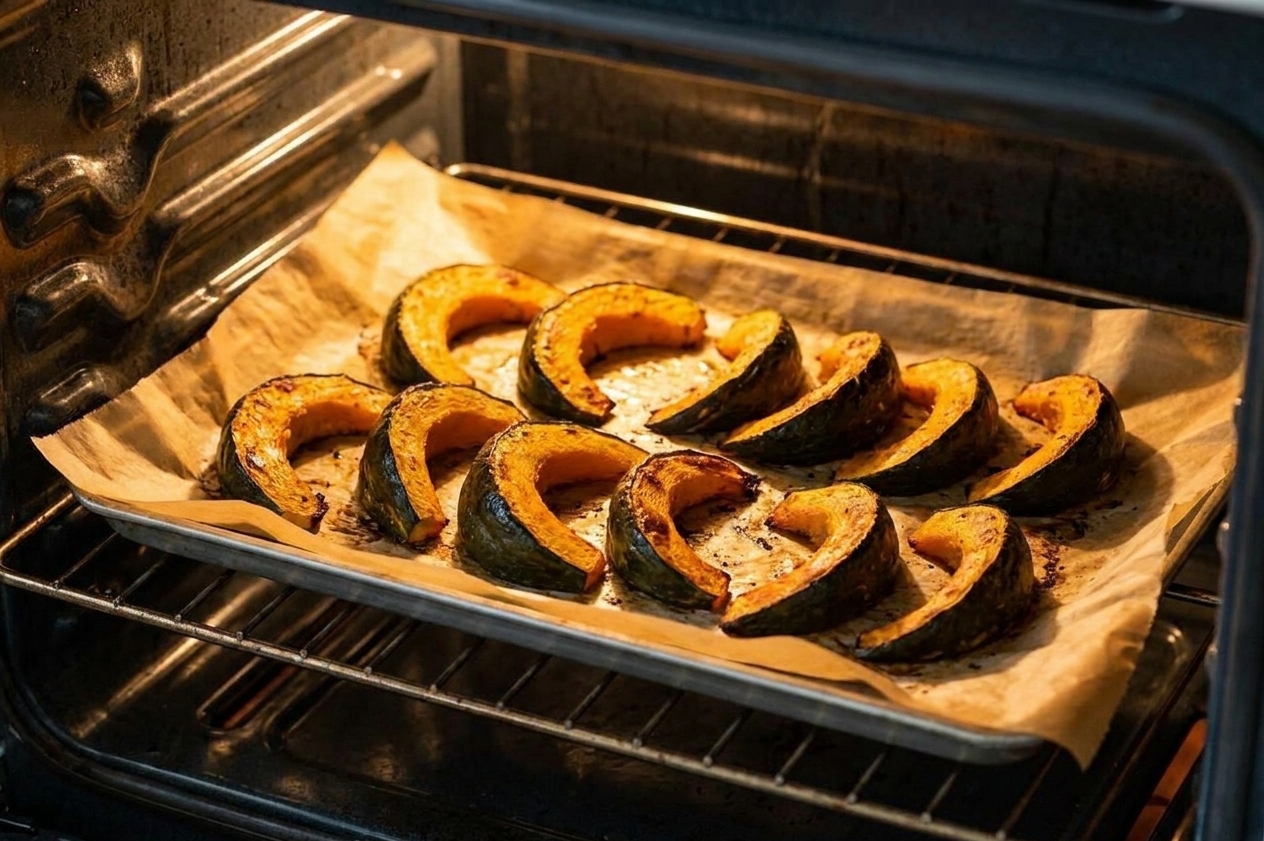
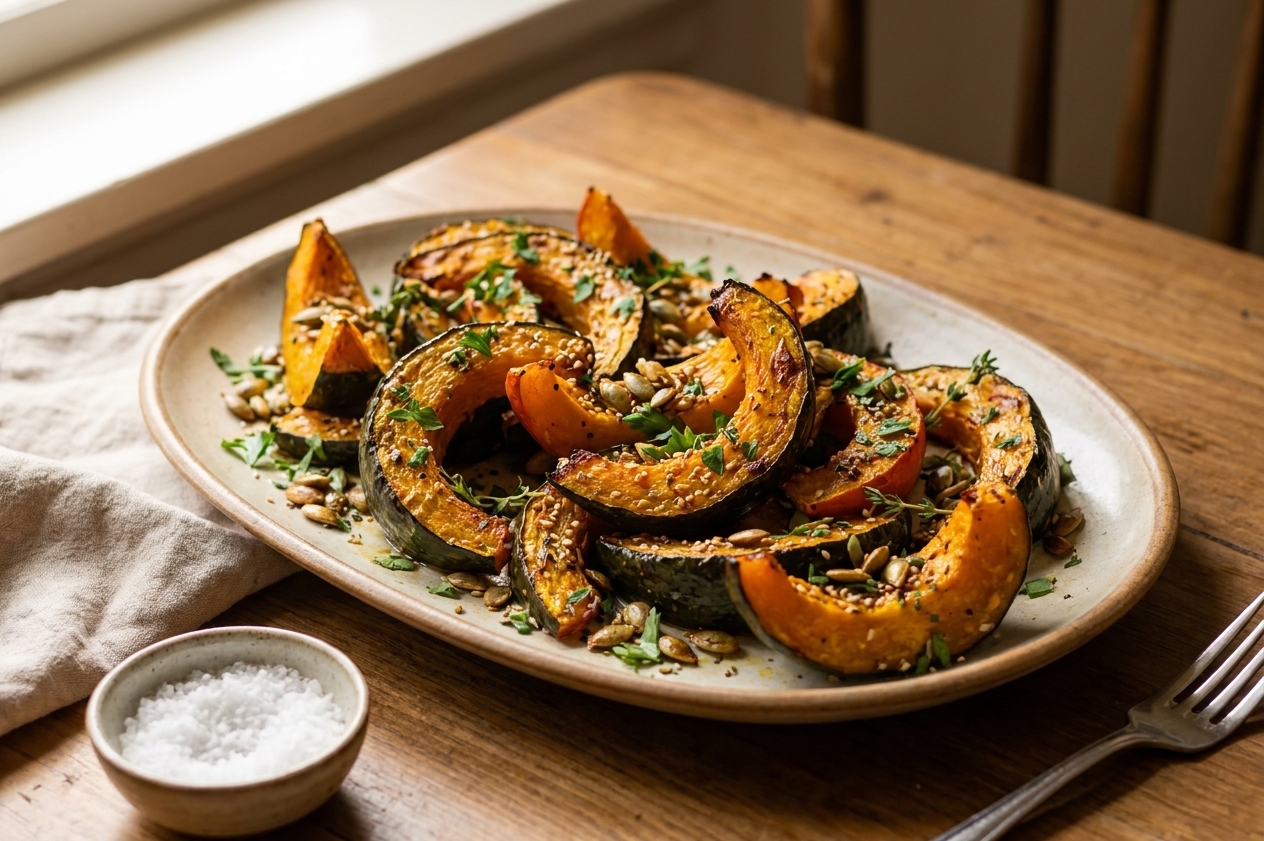
Common Questions
Do I need to peel kabocha squash?
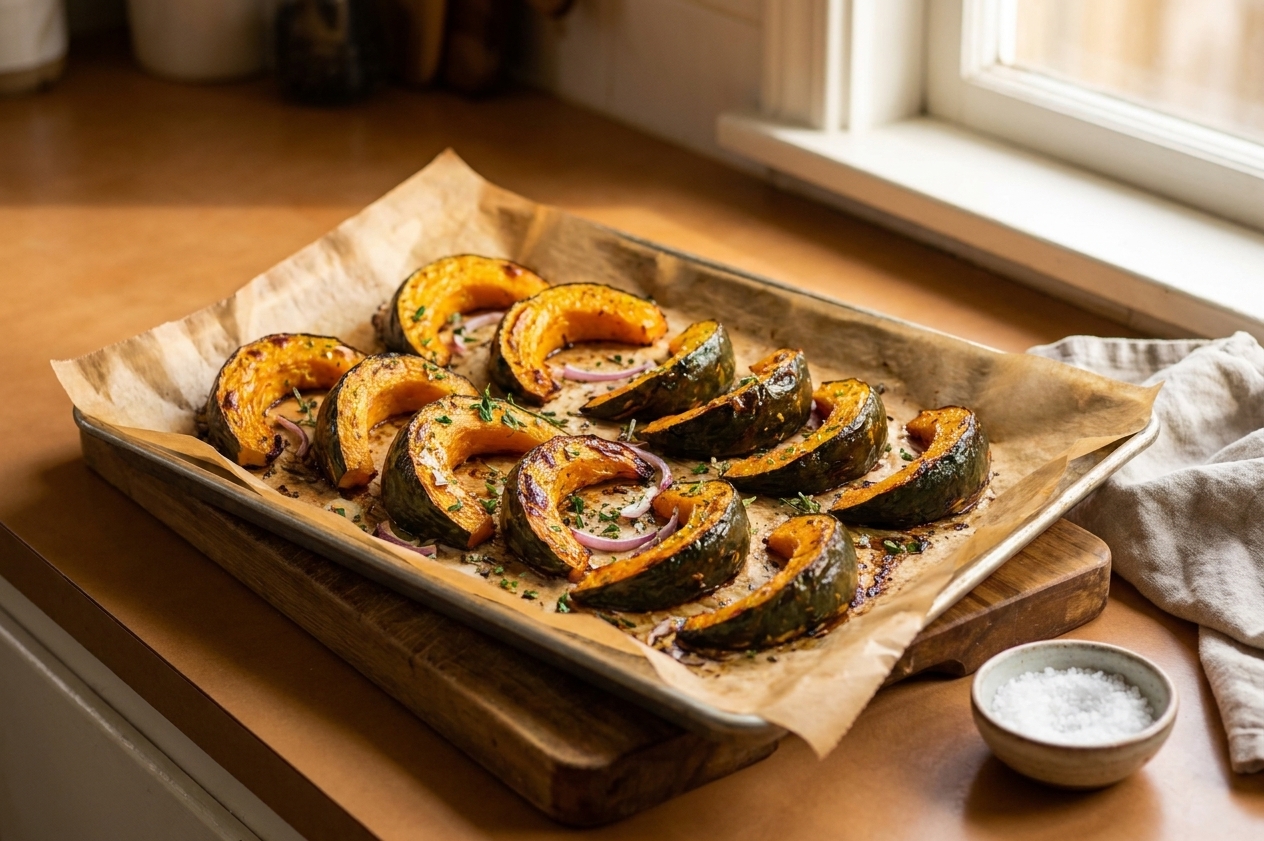
Usually, no. Most kabocha skin becomes tender and totally edible when roasted. That said, some squash stay a bit tough, so if yours does, just scoop the flesh from the skin when you eat, or peel it after roasting (much easier than peeling it raw).
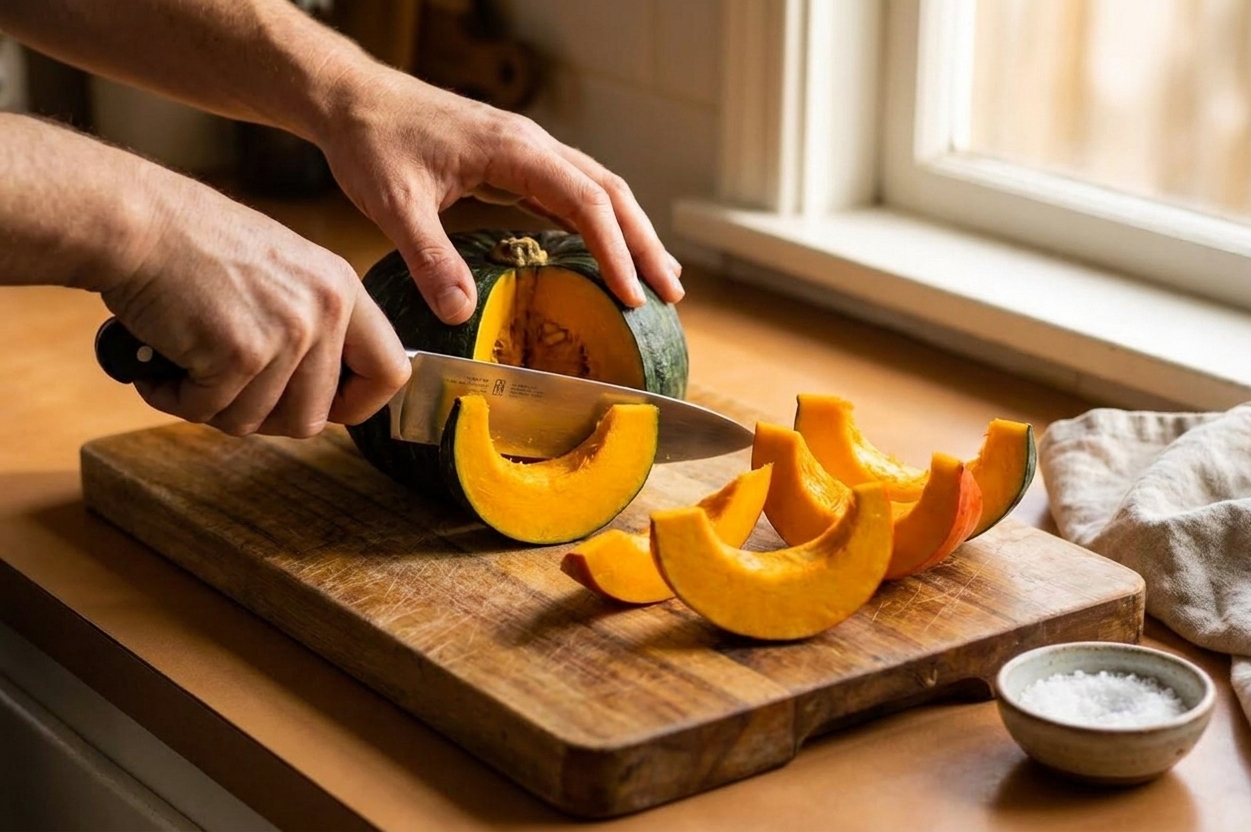
How do I cut kabocha squash safely?
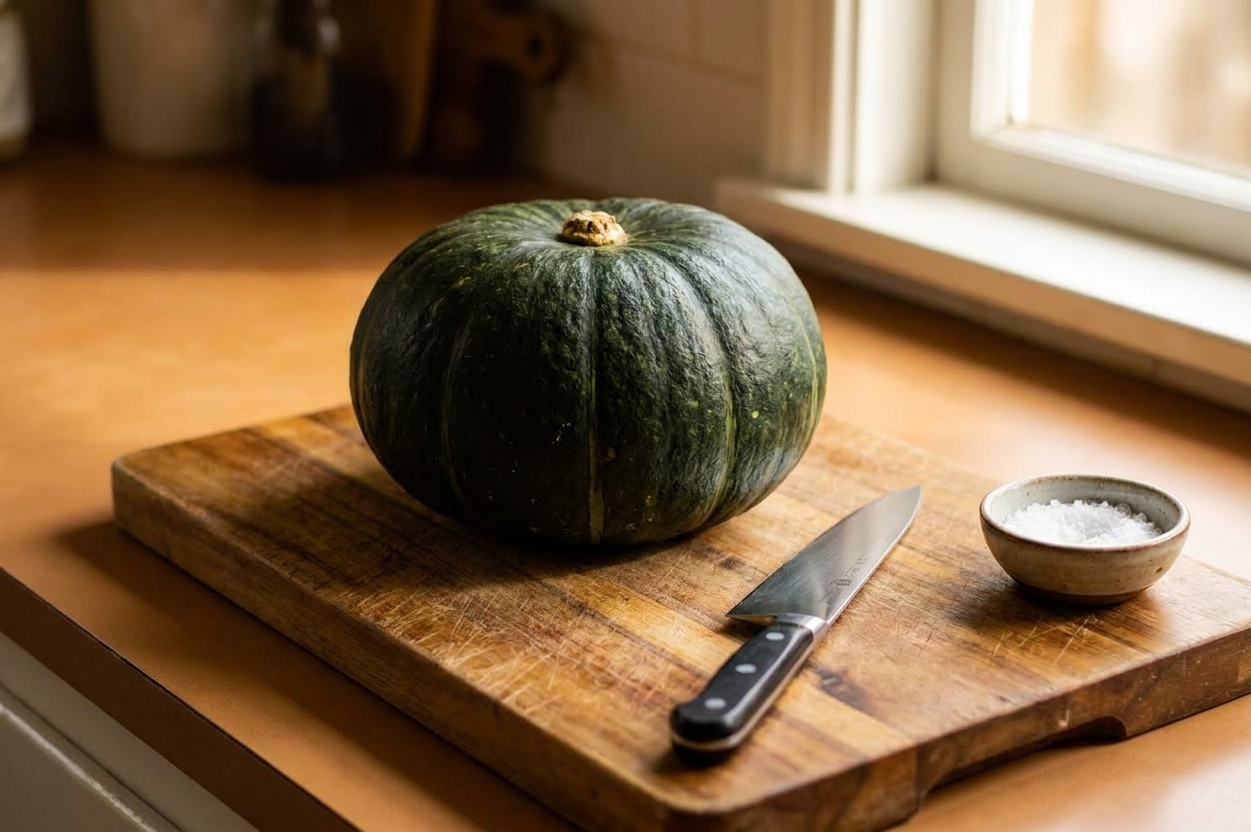
First, pierce the squash a few times with the tip of a knife or a fork to let steam escape. Microwave the whole squash for 1 to 2 minutes to soften the exterior slightly, then let it rest for 2 minutes so hot spots and steam settle. Slice off a thin slice from the stem end (just enough to make a flat, stable base), cut in half, and scoop the seeds. Use a sturdy chef's knife and take your time.
What does kabocha squash taste like?
It is sweet, nutty, and a little chestnut-like, with a dense, creamy texture. Think pumpkin meets sweet potato, but less watery.
Can I make this without miso?
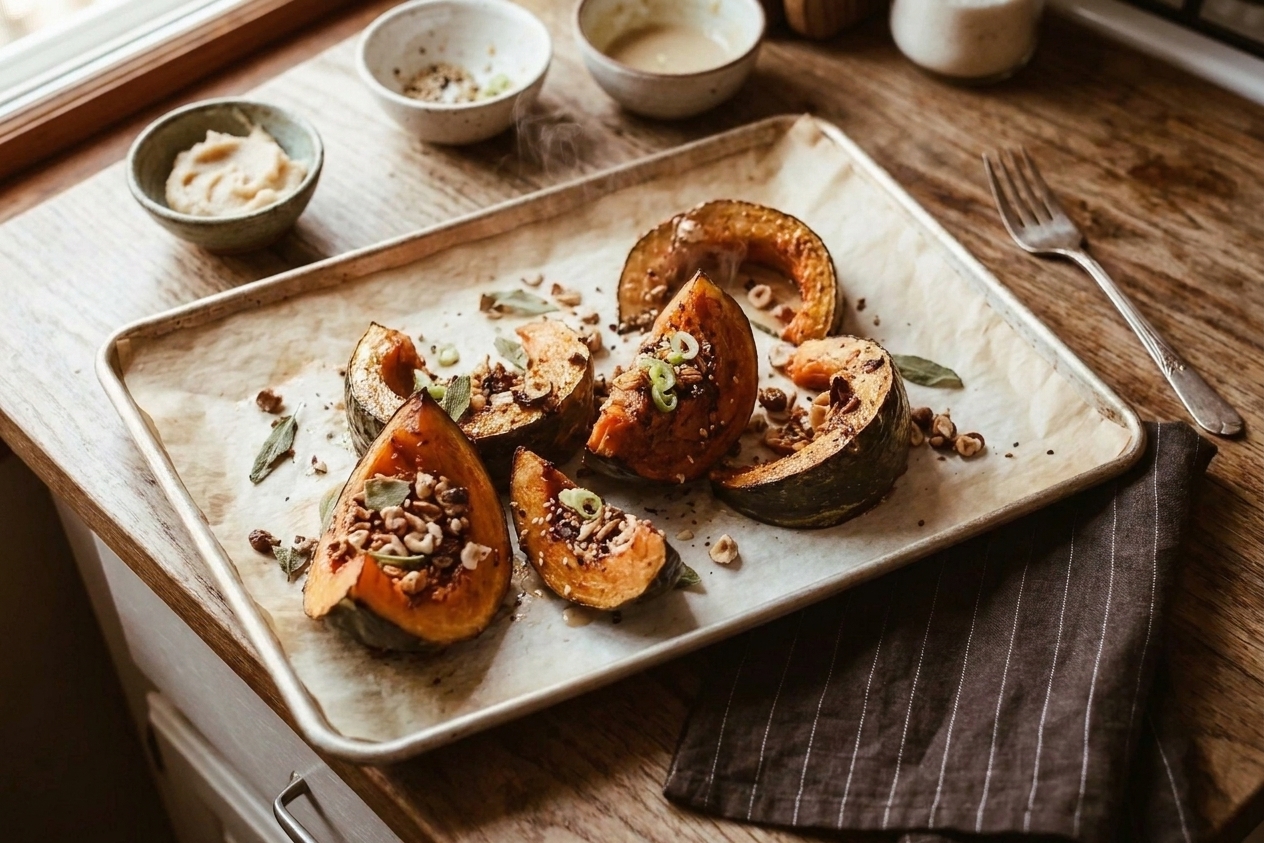
Yes. My favorite swap is 1 tablespoon tahini plus 1 to 2 teaspoons soy sauce (or tamari), and a pinch of garlic powder. It keeps the glaze creamy and savory. In a pinch, use 1 teaspoon soy sauce plus 1 extra tablespoon olive oil and a tiny pinch of brown sugar, but the glaze will be a bit thinner.
Is this recipe sweet?
Balanced sweet. The maple adds shine and caramel notes, but miso and lemon keep it savory.
What should I do with the seeds?
Either discard them, or rinse off the strings, pat dry, toss with a little oil and salt, and toast at 350°F until crisp (about 10 to 15 minutes). Snack tax encouraged.
Is this vegan or gluten free?
It is vegan as written. For gluten free, use certified gluten free miso and swap soy sauce for tamari if needed.