Why is my kimchi pancake soggy?
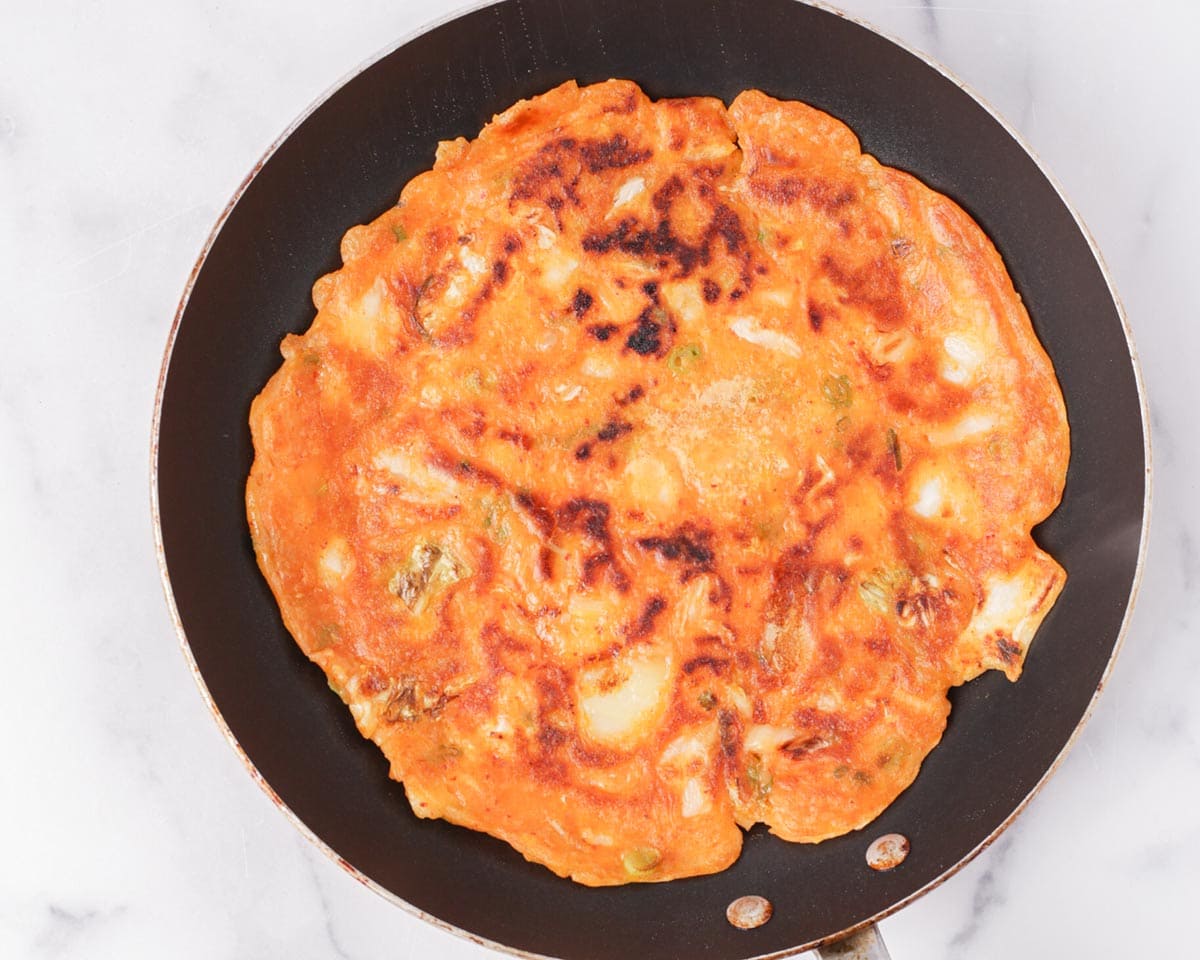
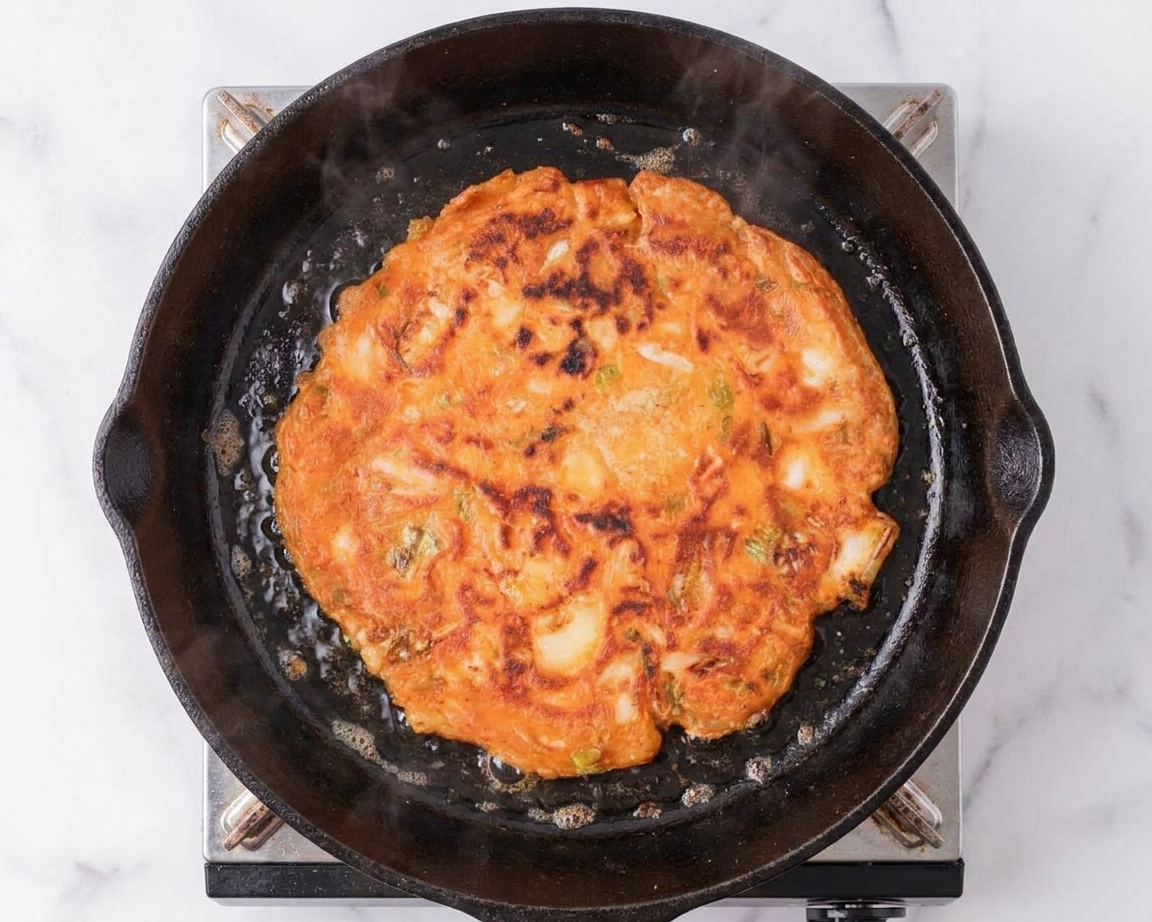
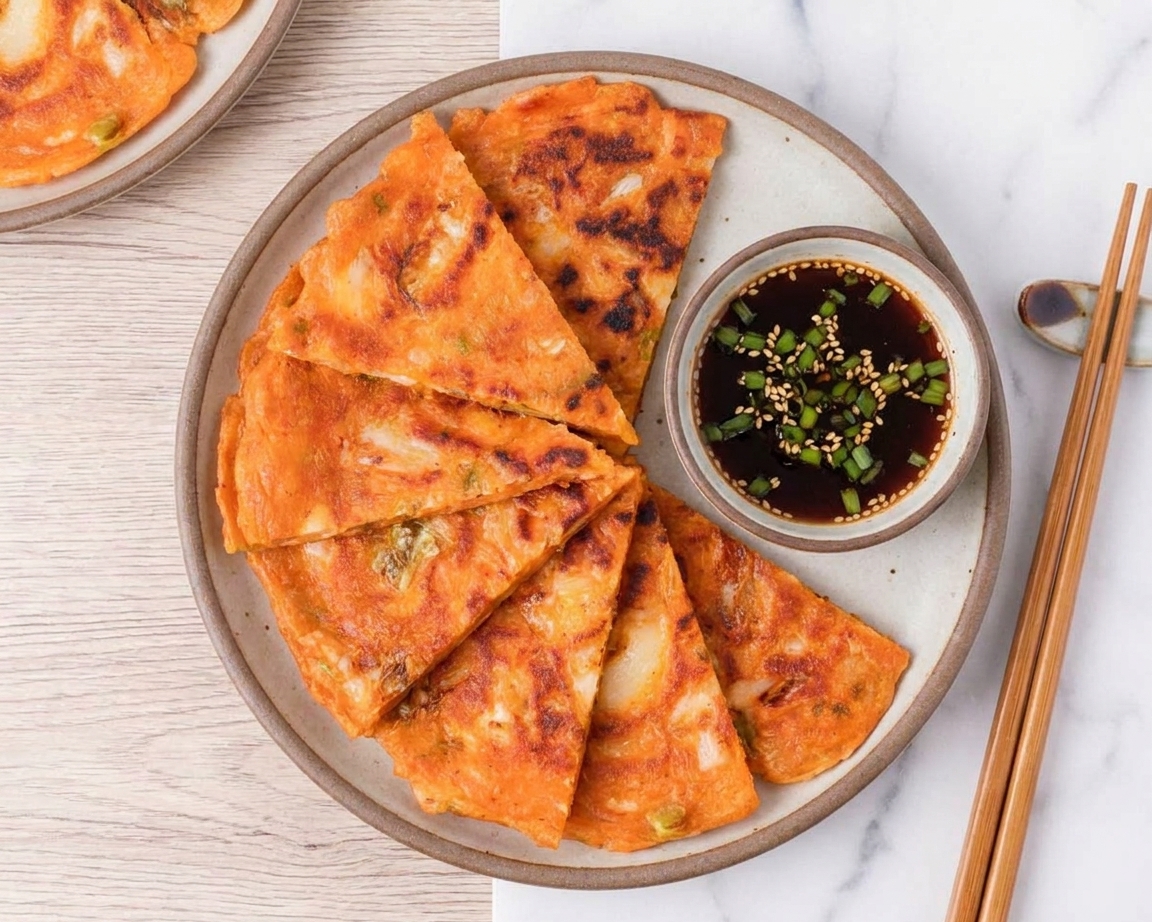
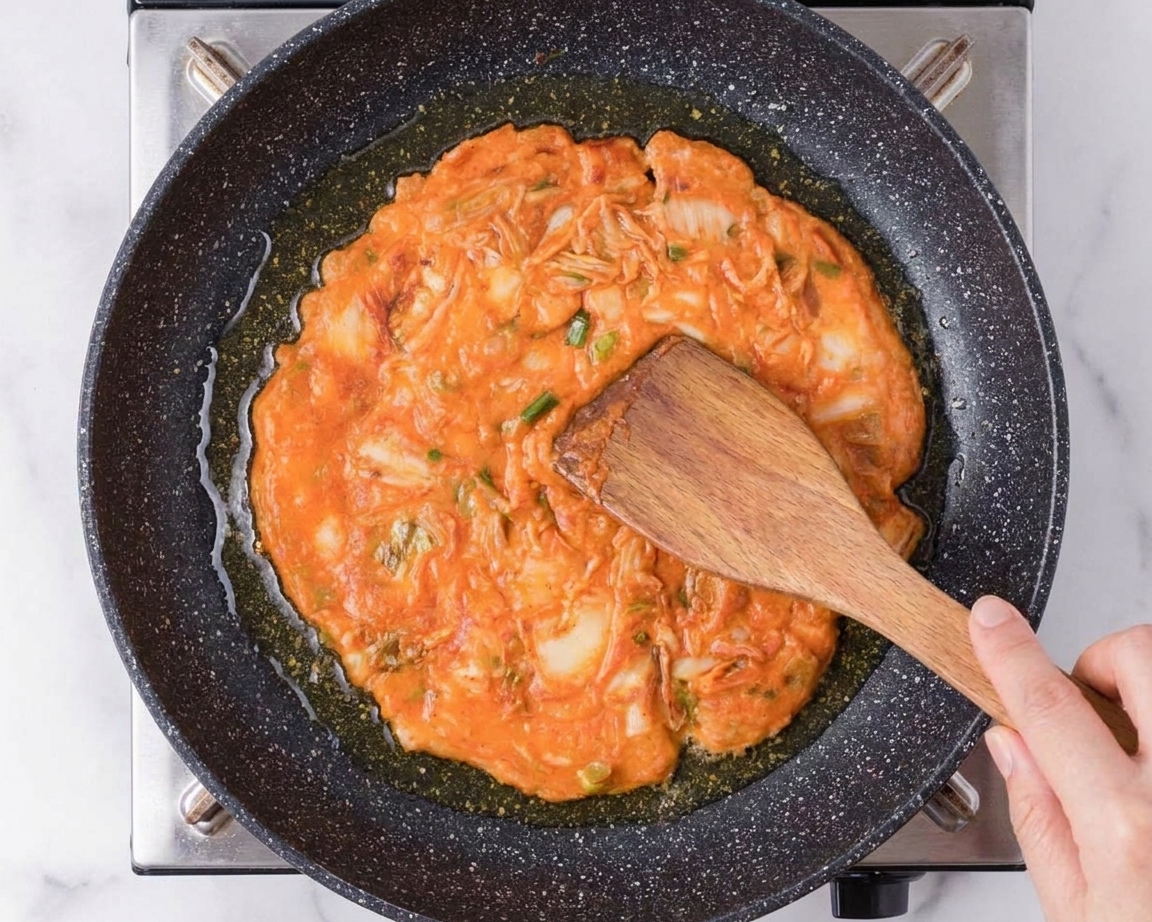
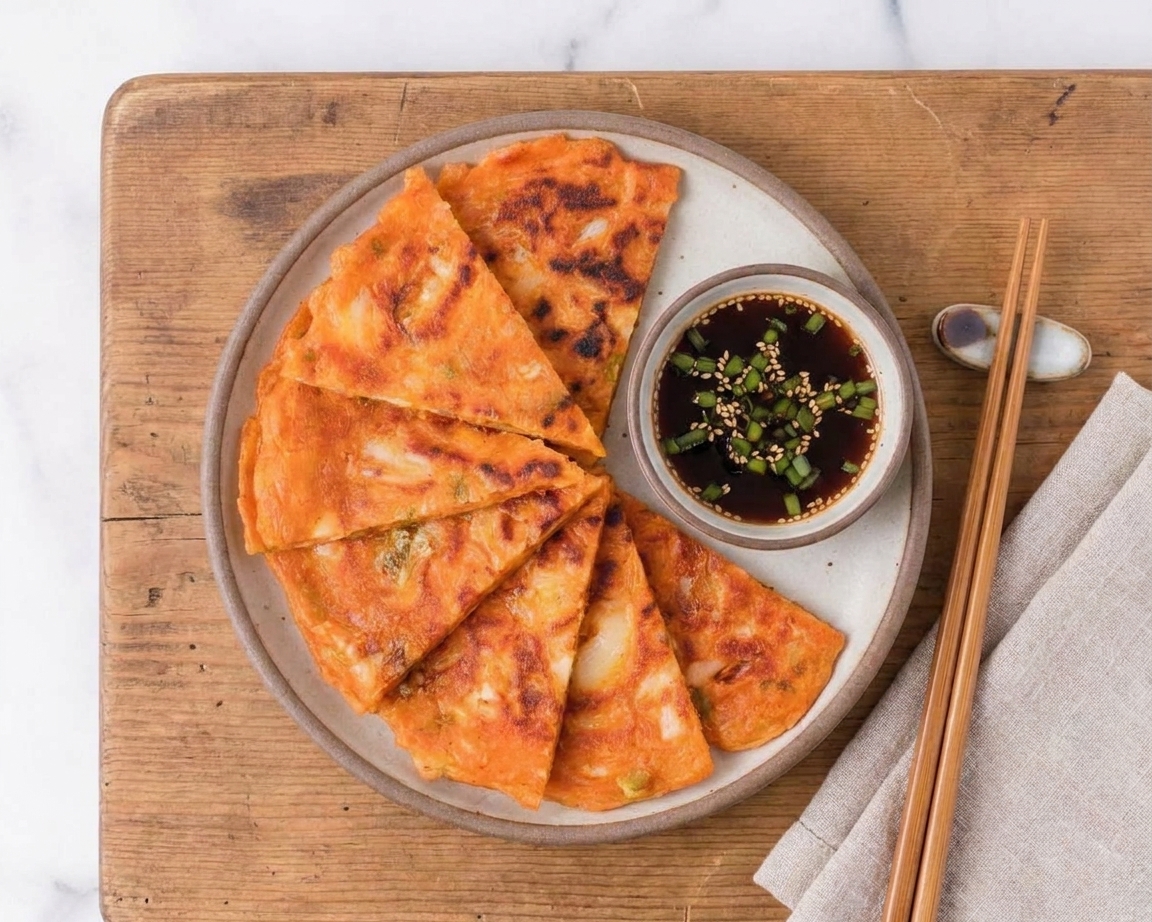
Usually it is one of three things: the pan was not hot enough, you did not use enough oil, or you flipped too early. Let the first side go deep golden and release easily before flipping. Also chop kimchi and squeeze it lightly if it is extremely wet, then add brine back gradually.
What kind of kimchi should I use?
Napa cabbage kimchi is classic. Ripe, well-fermented kimchi gives you the boldest flavor. Fresh, barely fermented kimchi works too, but the pancake will taste milder, so try adding a little more kimchi brine first. If it still tastes flat, add a tiny splash of vinegar to the sauce.
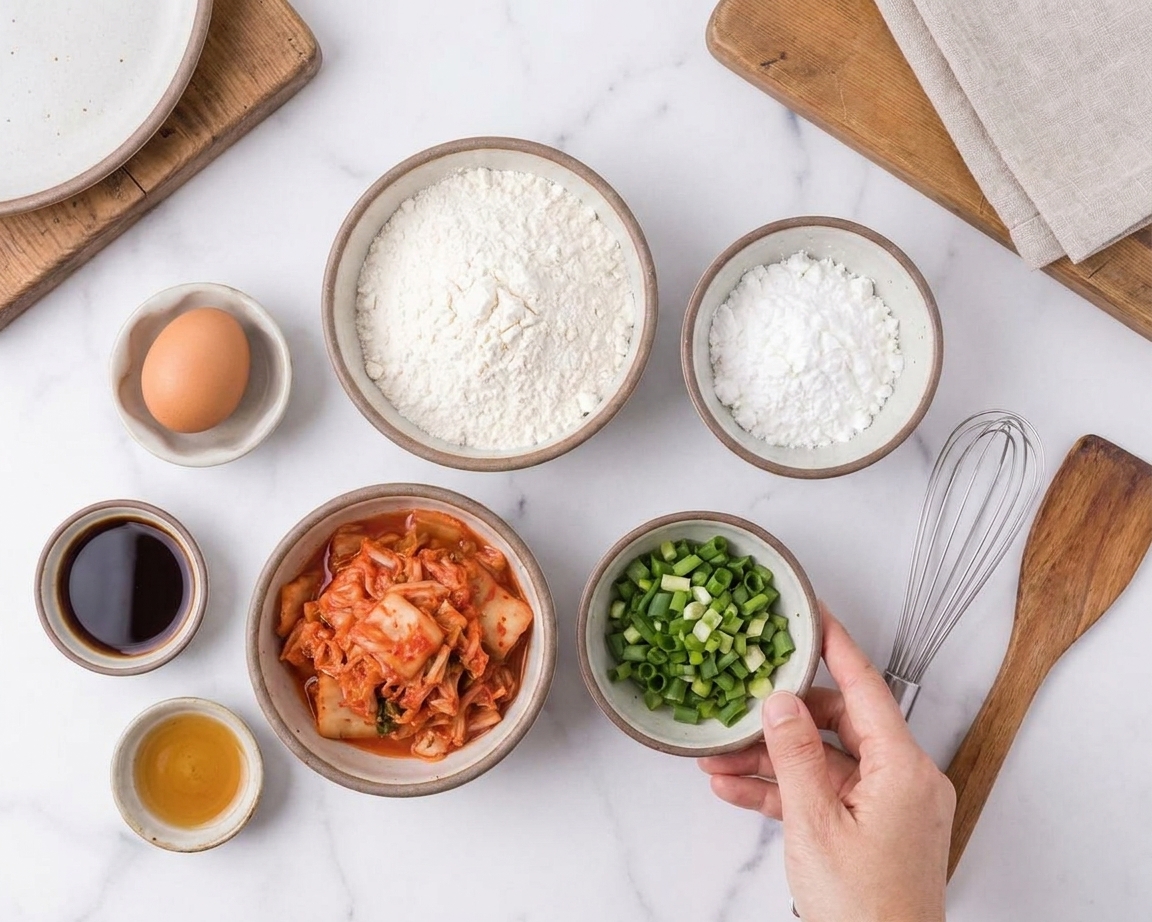
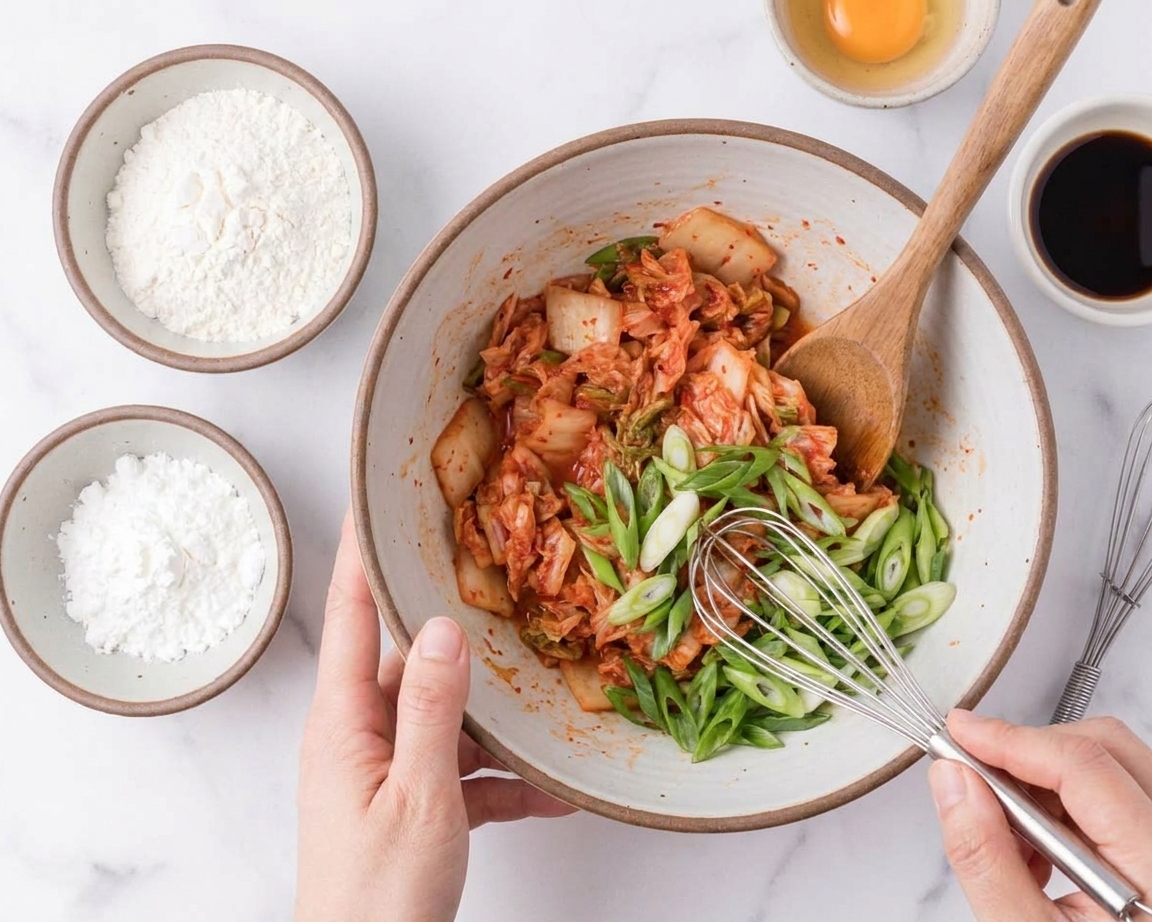
Kimchi varies a lot in salt and heat, so give yours a quick taste before you add the full 1/2 teaspoon salt to the batter. If your kimchi is very salty, hold back a pinch. If it is mild, you can add an extra tablespoon of brine.
Can I make it gluten-free?
Yes. Swap the all-purpose flour for a 1:1 gluten-free flour blend. Also double-check your kimchi and soy sauce. Many are gluten-free, but not all. Use certified gluten-free tamari if you are avoiding gluten.
Do I need an egg?
No. The egg adds a little richness and helps with structure, but you can skip it. If you do, add 1 extra tablespoon cornstarch for a slightly sturdier pancake.
Can I add mix-ins?
Absolutely. Thinly sliced onions, shredded zucchini (squeeze it dry), shrimp, canned tuna, or chopped cooked bacon all play well. Keep add-ins to about 1 to 1 1/2 cups total so the pancake still holds together.
Any tips for flipping?
A wide spatula is the easiest. If the pancake feels fragile, cut it into 2 halves and flip each half separately. You can also slide it onto a plate, invert the skillet over the plate, then flip it back into the pan.