Mom's Best Recipes
Recipe

Koshari

Egypt’s beloved street food: layered rice, lentils, and pasta topped with crispy onions, a bright tomato sauce, and a garlicky vinegar kick.

Author By Matt Campbell
4.8
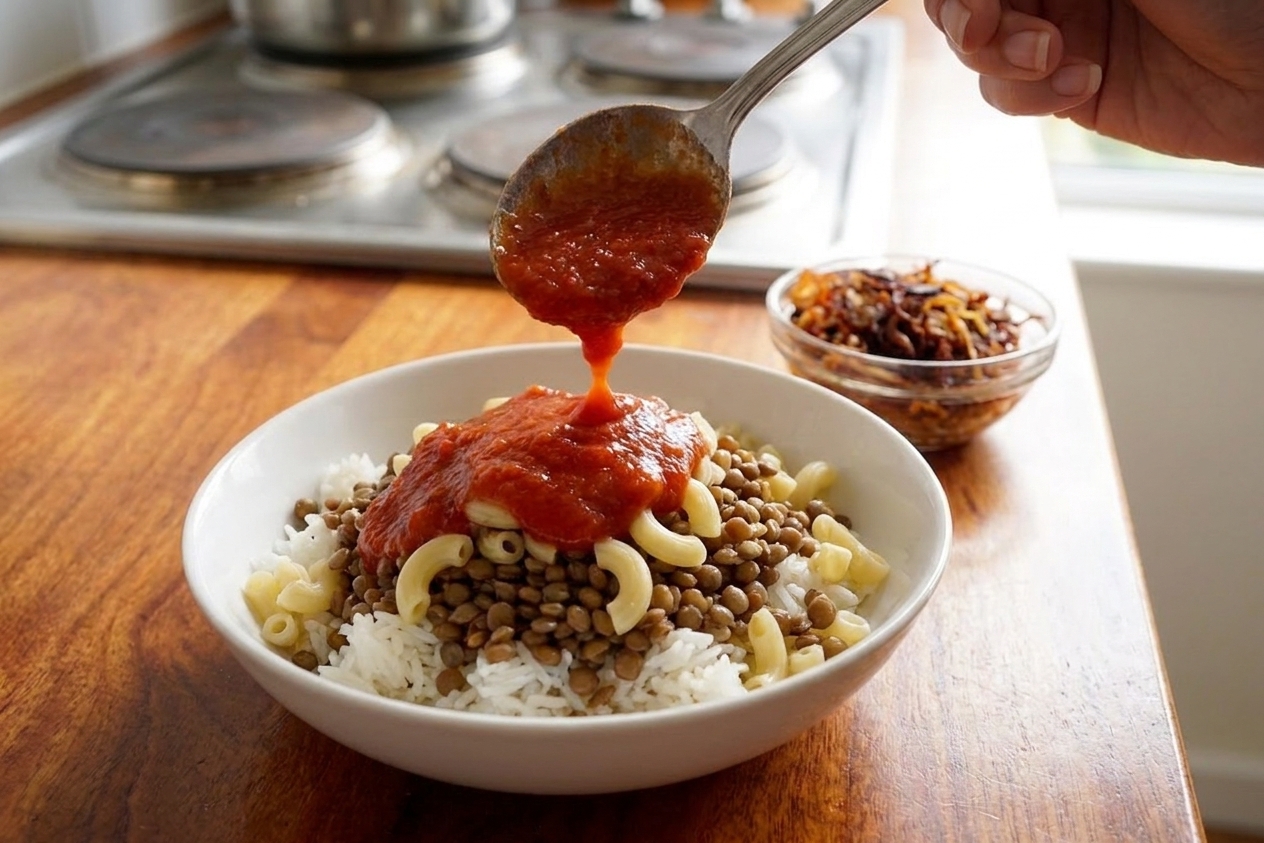
A large bowl of Egyptian koshari with layers of rice, lentils, and pasta topped with crispy fried onions and spooned-over tomato sauce on a warm-toned kitchen table

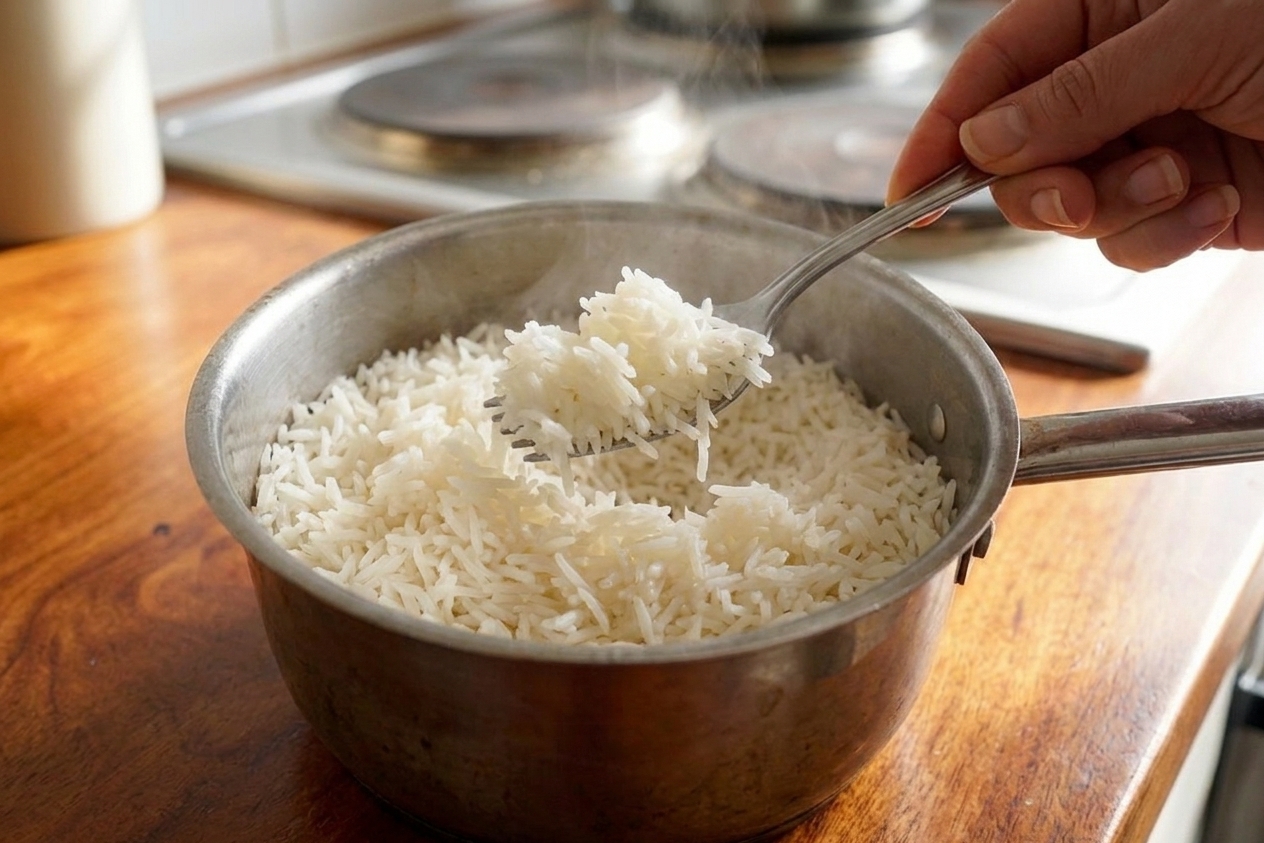
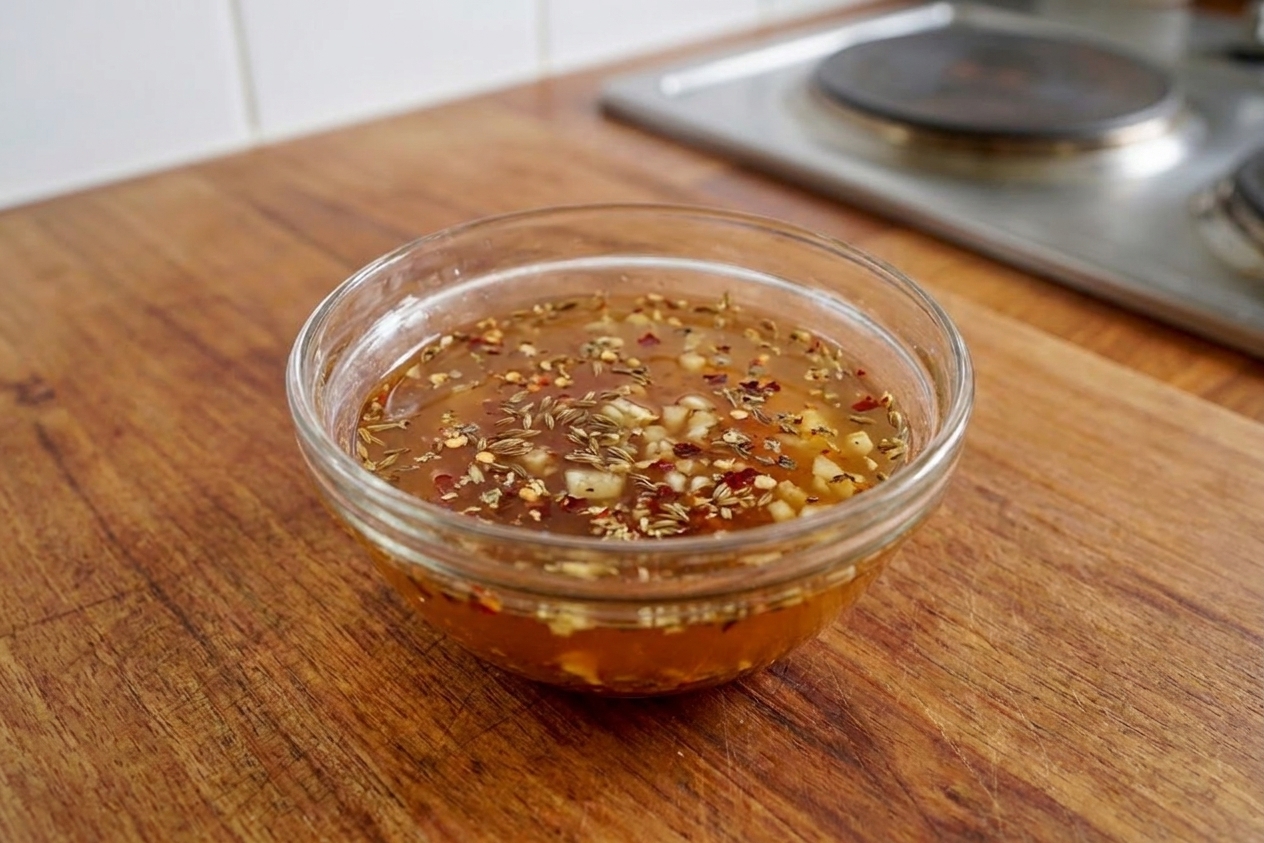
Koshari is what happens when your pantry decides to throw a block party. Rice, lentils, and pasta all show up at the same time, then you invite in crispy onions and two sauces that absolutely refuse to be ignored: a tangy tomato sauce and a sharp garlic vinegar splash that wakes the whole bowl up.

This is Egyptian comfort food at its most lovable. It is filling, budget friendly, and genuinely fun to assemble. Also, if you have ever stared at half a bag of lentils and some leftover pasta and thought, “I wish this could become dinner,” koshari is your new best friend.
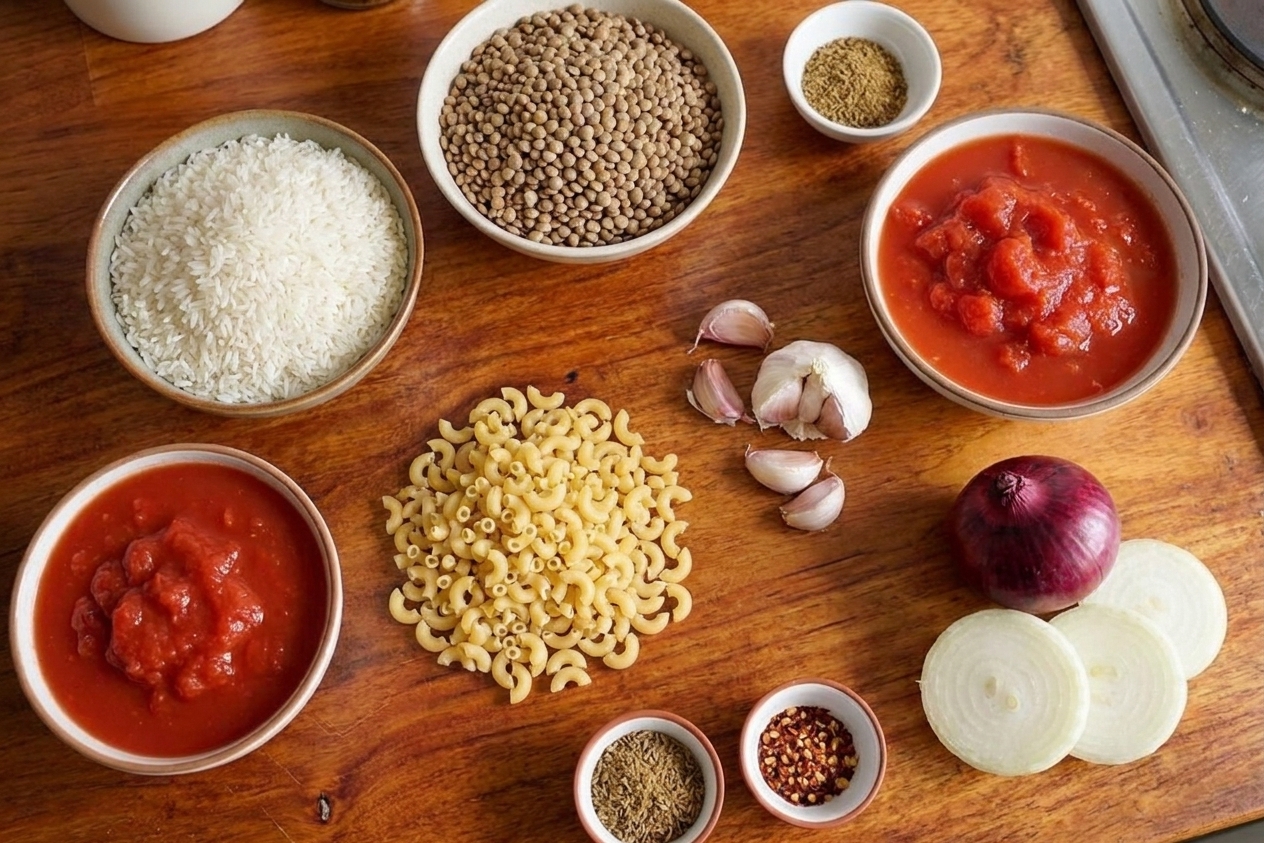
Uncooked rice, brown lentils, small pasta, canned tomatoes, garlic, onions, and spices arranged on a bright kitchen counter in a single overhead scene

Why It Works

  • Big flavor from simple staples: earthy lentils, fluffy rice, tender pasta, and sweet-savory onions.
  • Contrast in every bite: soft grains plus crunchy onions, mellow base plus bright sauces.
  • Make-ahead friendly: cook components in batches and assemble fast when you need dinner, fast.
  • Customizable heat: keep it kid friendly, or add chile for a proper street-food kick.

Pairs Well With

Storage Tips

Best move: store components separately if you can. You get better texture and easier reheating.

  • Rice + lentils: cool completely, then refrigerate in an airtight container for up to 4 days.
  • Pasta: refrigerate up to 4 days with a tiny splash of oil to prevent sticking.
  • Tomato sauce and garlic vinegar: refrigerate up to 5 days. The vinegar sauce mellows over time in a good way.
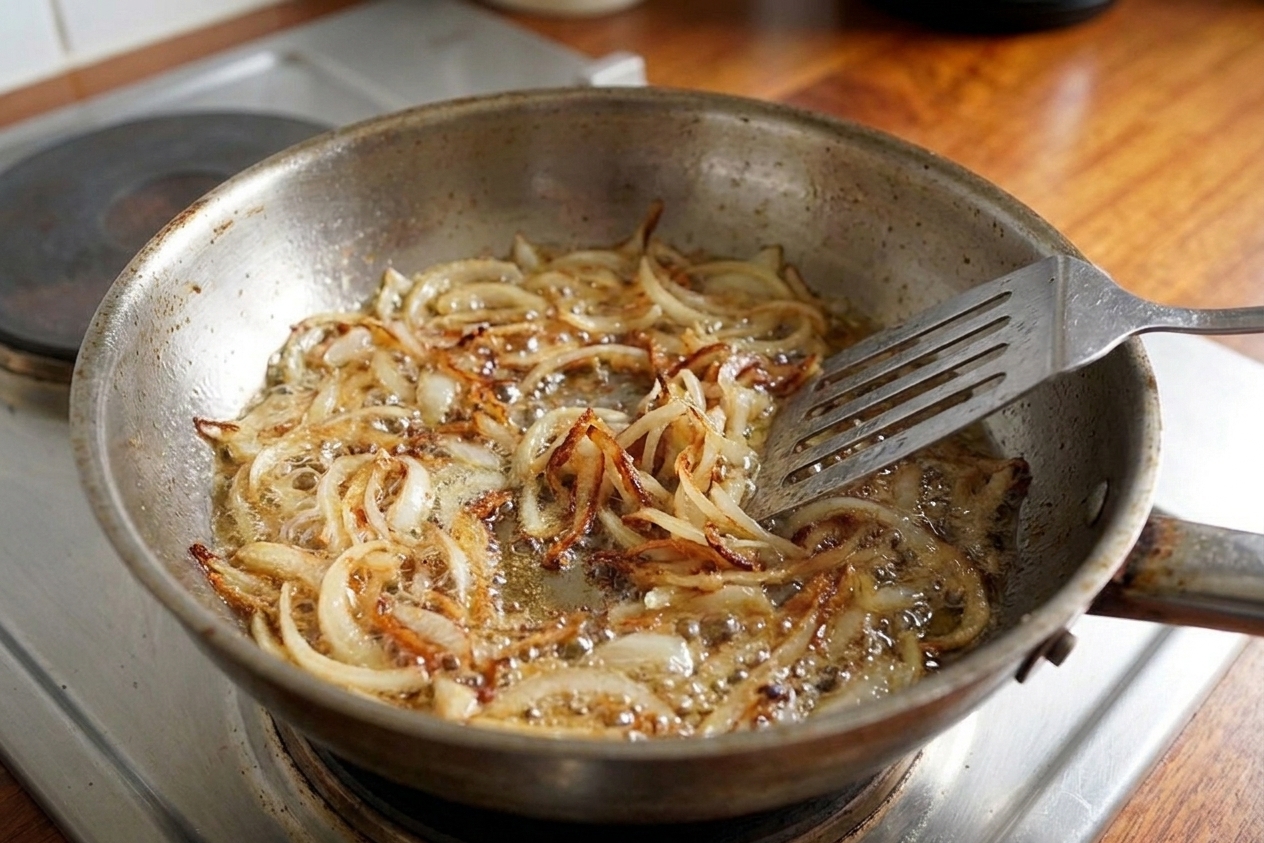
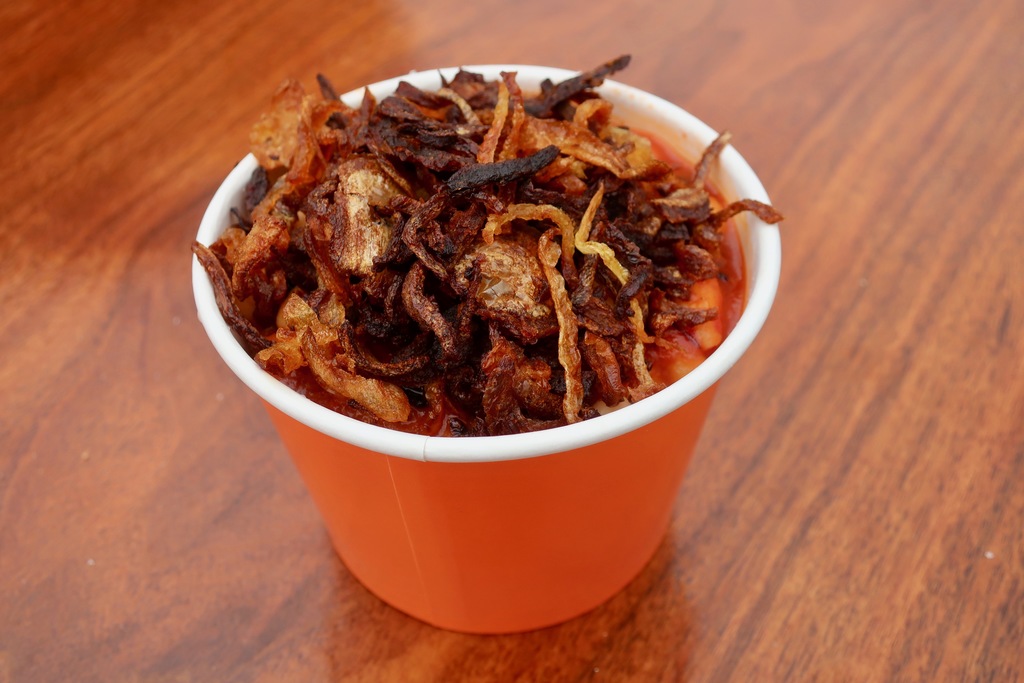
  • Crispy onions: let them cool completely first. For same-day crunch, store in an airtight container at room temp. For longer storage, freeze in a zip-top bag, then re-crisp in a dry skillet or a 350°F oven until crunchy again.

Reheat: warm rice and lentils with a splash of water in the microwave or a covered saucepan. Warm pasta separately. Assemble, then sauce, then onions. Always onions last, like a crown.

Common Questions

What is koshari made of?

Koshari is typically layers of lentils, rice, and pasta, topped with crispy fried onions. It is served with a spiced tomato sauce and a garlic vinegar sauce (and often chile sauce if you want heat).

Do I have to use chickpeas?

Nope. Many classic versions often include chickpeas, but you can absolutely skip them. I love them for extra creaminess and protein, and the dish still rules without them.

Can I make koshari gluten free?

Yes. Use gluten-free pasta and verify your broth or bouillon (if using) is gluten-free. Also check any processed add-ins for cross-contamination if you are sensitive. The rest of the core ingredients are naturally gluten free.

What kind of lentils should I use?

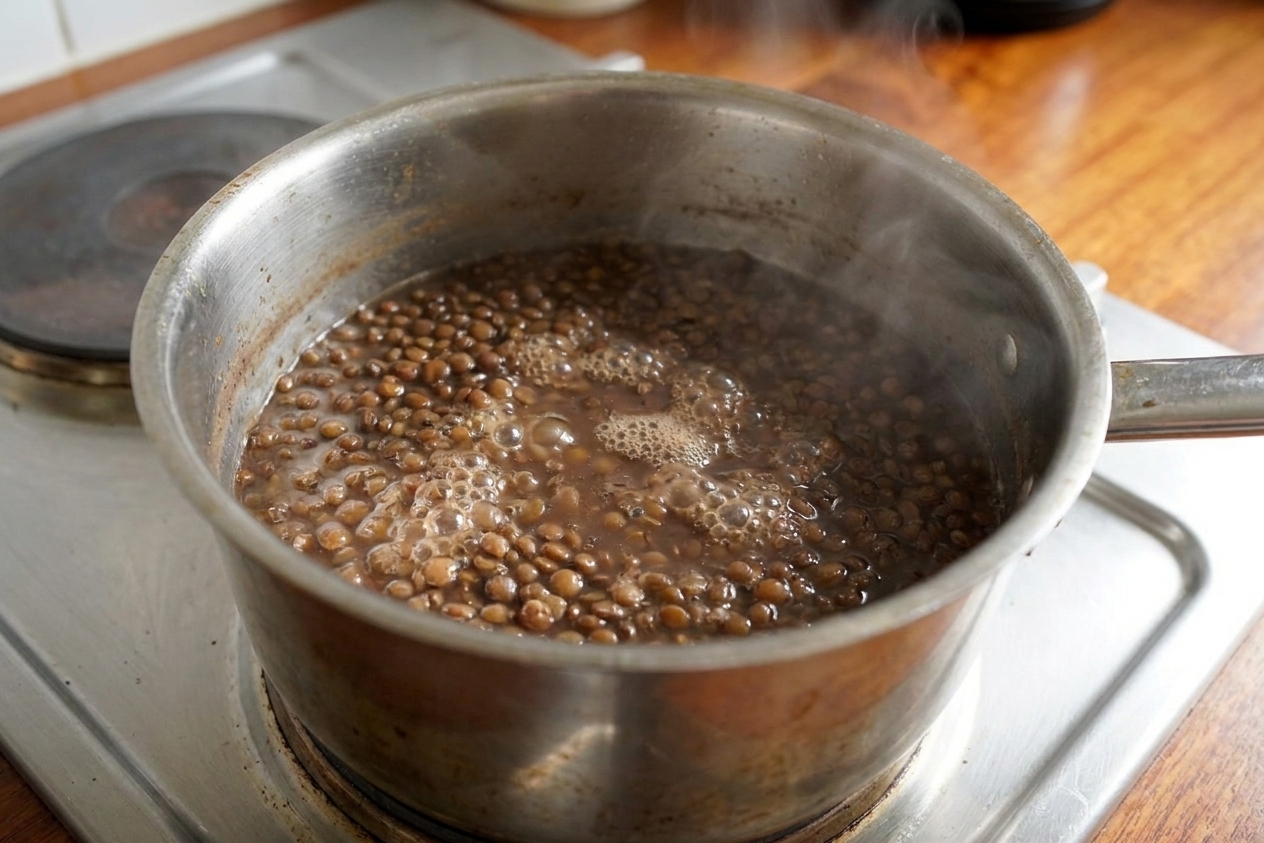
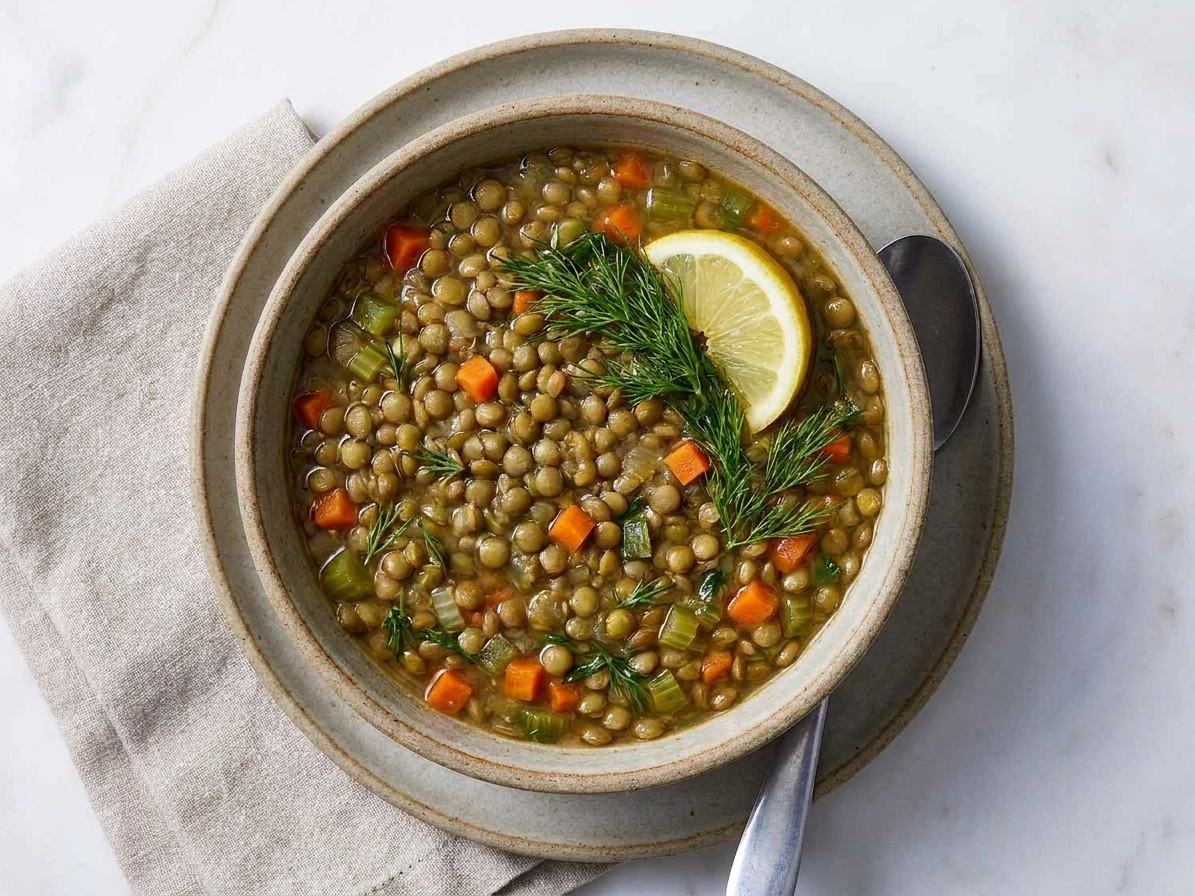
Brown or green lentils hold their shape best here. Red lentils get too soft and will blur into the rice, which is tasty but a different vibe.

Is there a shortcut for the onions?

You can use store-bought crispy onions in a pinch. The flavor is slightly different, but still delicious and very weeknight friendly.

The first time I made koshari, I did it because my pantry was giving “end of the week” energy and I wanted something that felt like a real meal, not a compromise. The onions were the turning point. I tasted the bowl before the onions and thought, okay, this is good. Then I piled on the crispy onions and hit it with the garlicky vinegar and suddenly it was loud in the best way. Now I make it whenever I want comfort that still has some sparkle to it.

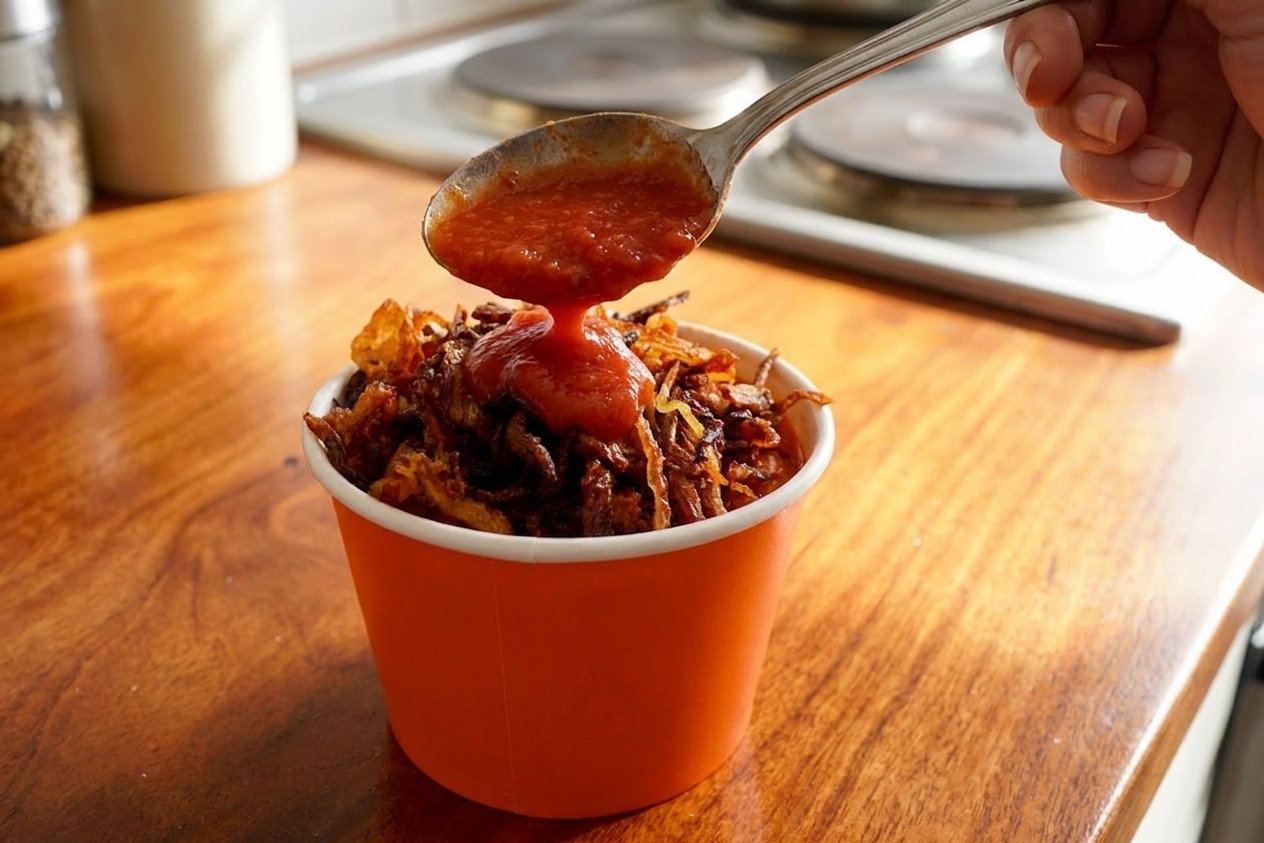
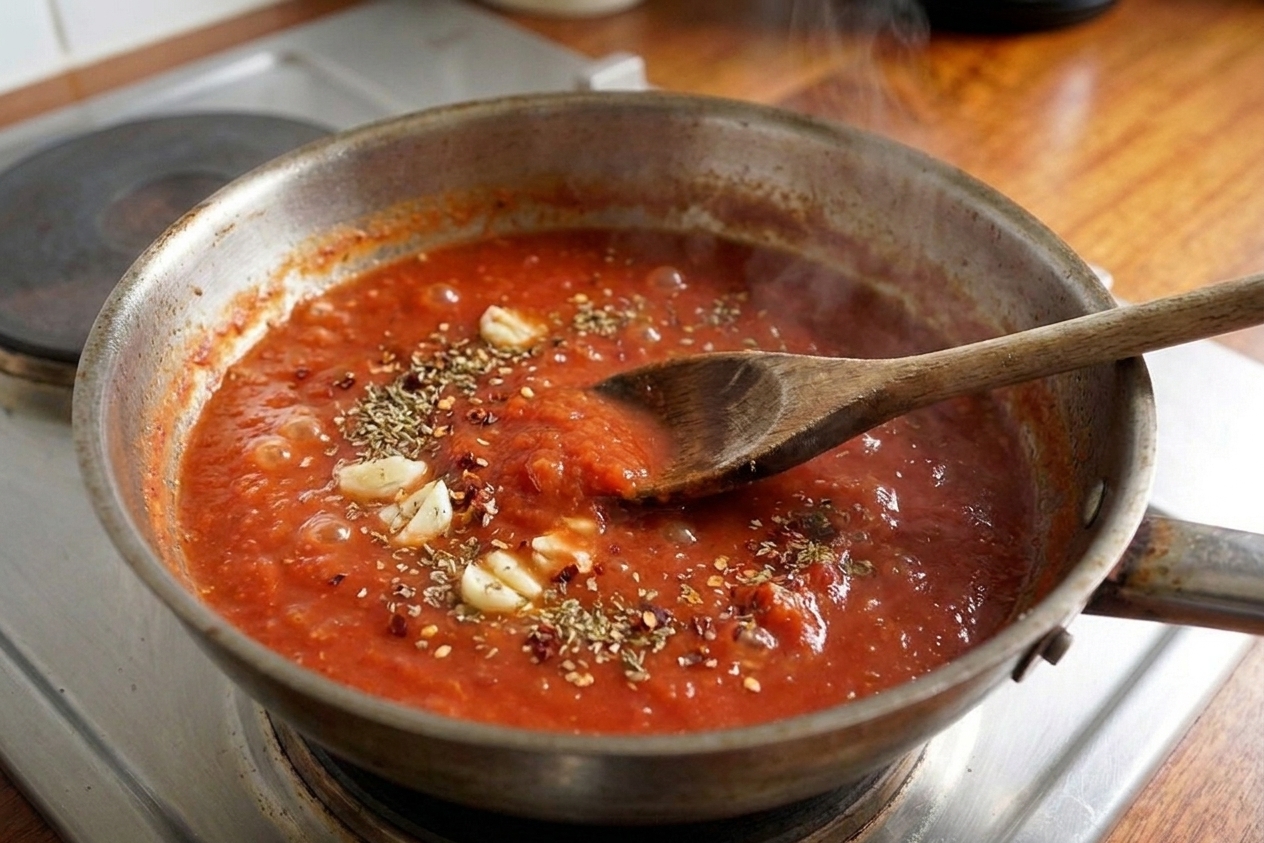
Tomato sauce being spooned over a bowl of koshari on a kitchen counter with warm natural light