Common Questions
Is this a traditional German Kürbissuppe?
It is inspired by the cozy idea of Kürbissuppe (German for pumpkin soup), but it is not trying to be the one true regional version. It is my weeknight-friendly take with roasted pumpkin, a little spice, and a bright finish.
What kind of pumpkin should I use for Kürbis soup?
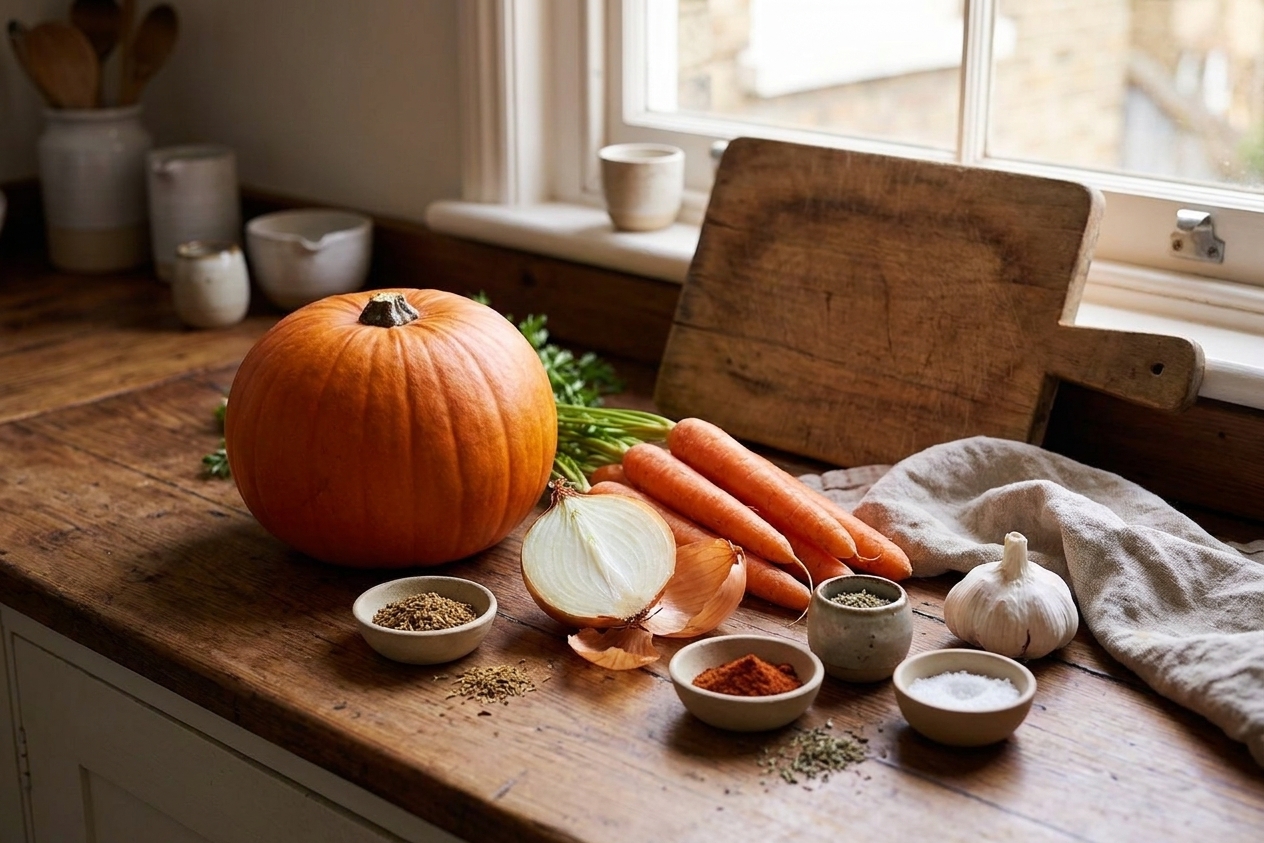
Use a cooking pumpkin or winter squash with firm, sweet flesh. Sugar pumpkin, kabocha, and butternut squash all work great. If your pumpkin looks like a big jack-o-lantern, it is usually watery and bland for soup.
Do I have to peel the pumpkin?
For the smoothest, bright orange soup, yes, peel it. Sugar pumpkin and butternut should be peeled. For kabocha, you can peel it too, or leave the skin on if your blender is powerful. Just know the soup will look more green-brown and the texture can be slightly more rustic.
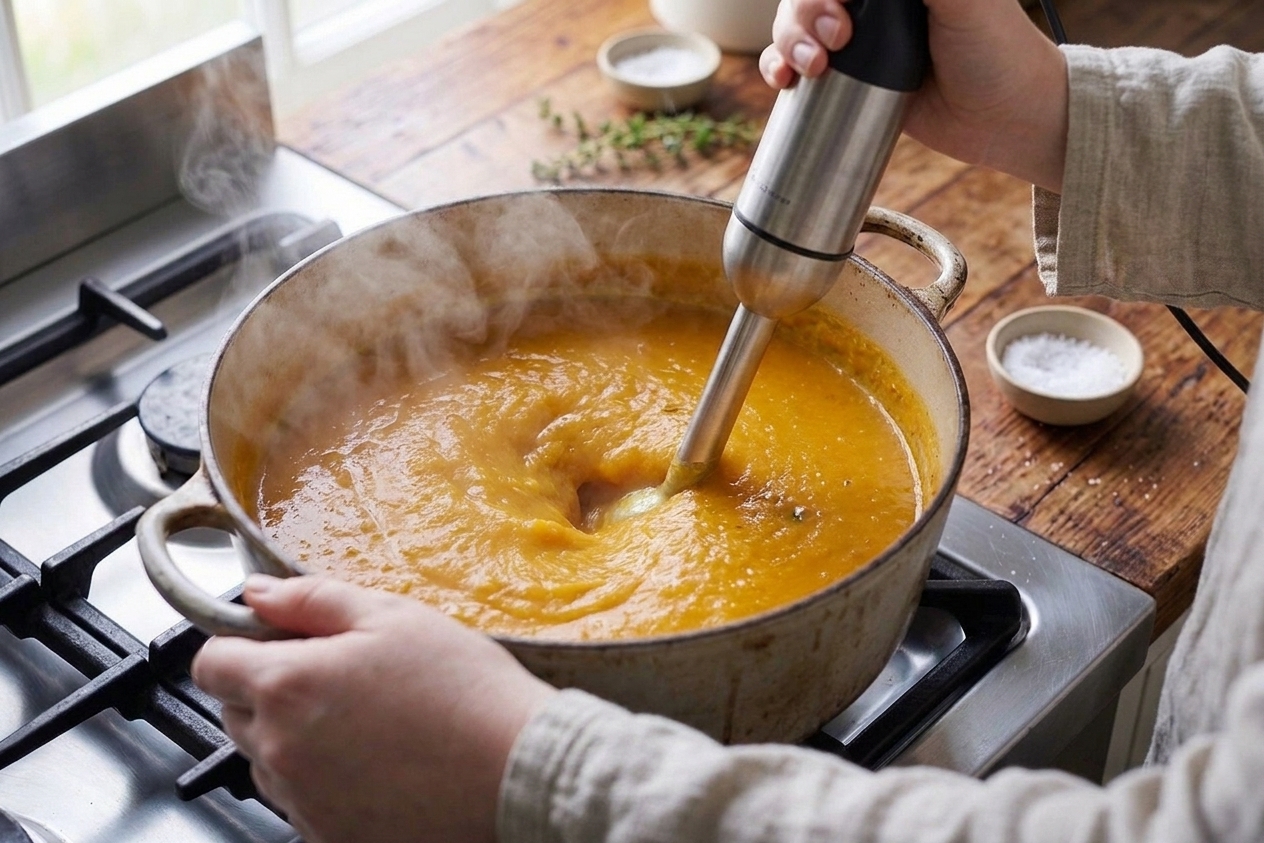
Can I make this without an immersion blender?
Yes. Use a countertop blender in batches. Let the soup cool for a few minutes first, do not fill the blender more than halfway, and vent the lid so steam can escape.
How do I make it creamier without heavy cream?
Full-fat coconut milk is the easiest swap. You can also blend in a peeled, diced potato while simmering, or stir in plain Greek yogurt off the heat.
My soup tastes flat. What should I do?
Add salt first, then add acid. A squeeze of lemon or 1 to 2 teaspoons apple cider vinegar makes pumpkin flavor pop. A pinch more smoked paprika or chili flakes can help too.
Can I use canned pumpkin?
You can, especially on a busy night. Skip the roasting step and start by sautéing the onion and garlic, then whisk in about 3 to 4 cups pumpkin purée (usually 2 (15-ounce) cans). If you are unsure, start with 1 can, simmer, then add the second for a thicker, more pumpkin-forward soup. Add broth, simmer 10 to 15 minutes, then blend and finish with cream and acid.