Mom's Best Recipes
Recipe

Mansaf

Jordan’s iconic lamb-and-yogurt feast with fluffy rice, toasted nuts, and that signature tangy jameed sauce.

Author By Matt Campbell
4.8
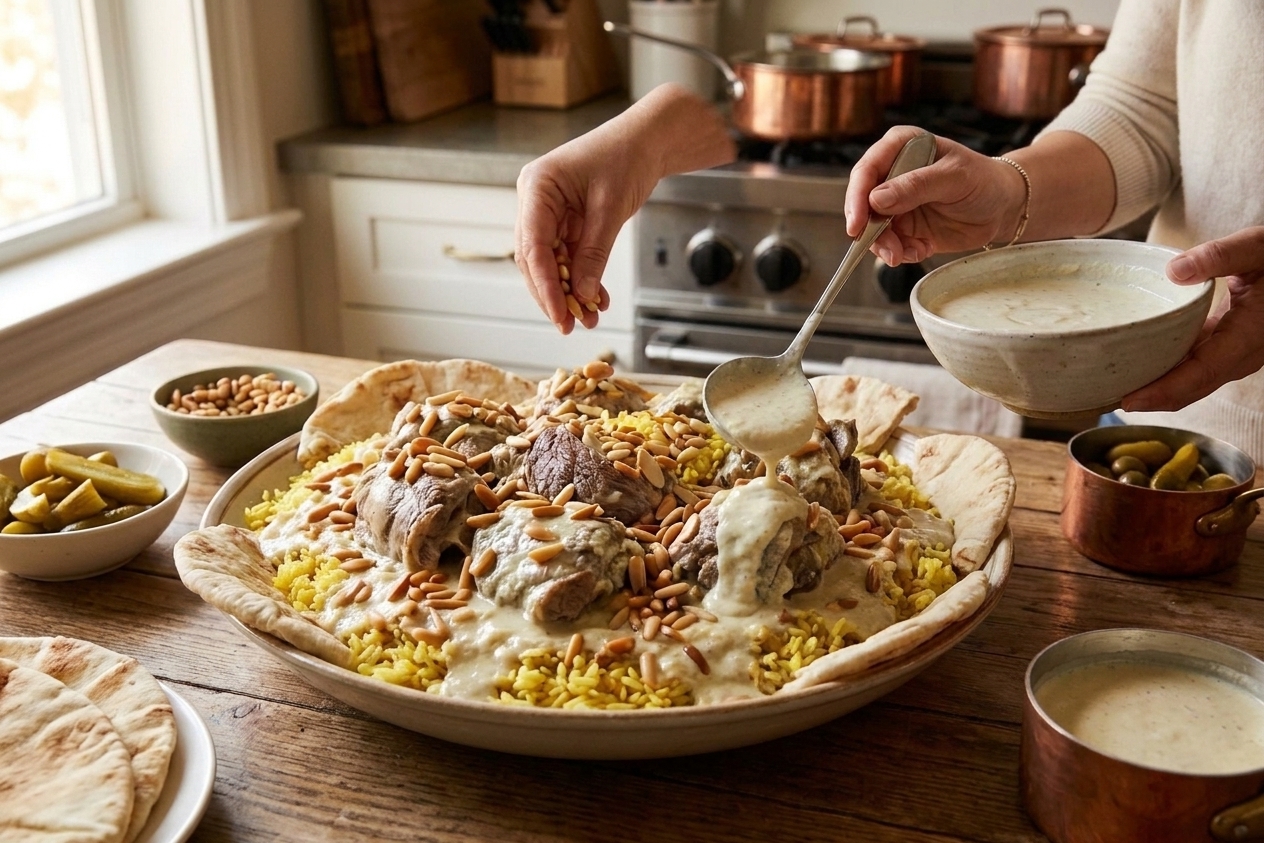
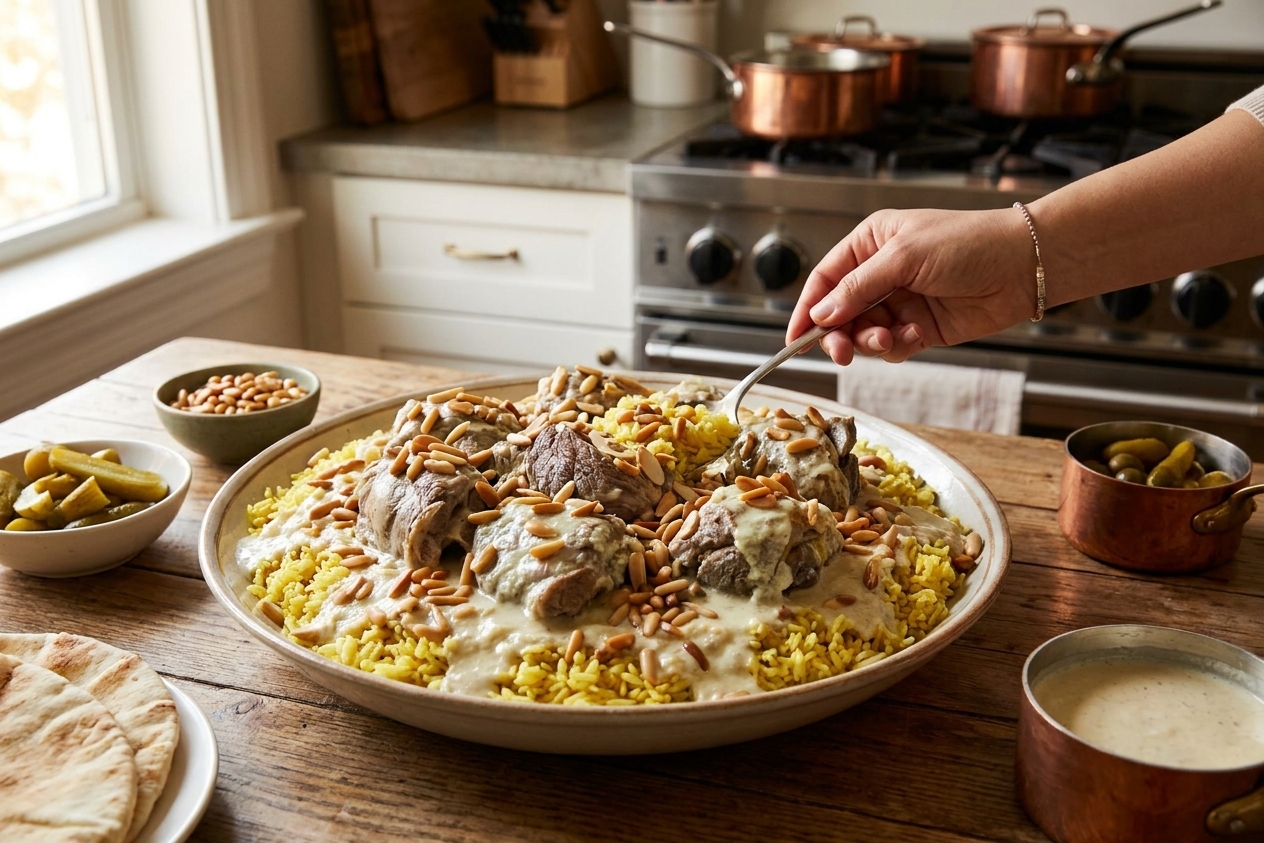
A large platter of Jordanian mansaf with lamb pieces in a pale yogurt sauce over rice, topped with toasted almonds and pine nuts, set on a warm kitchen table

Mansaf is one of those dishes that makes your kitchen feel like it’s hosting a holiday, even if it’s just a random Saturday and you are wearing sweatpants. At its core, it’s simple: tender lamb, rice, and a tangy, savory yogurt sauce made from jameed (a fermented, salted yogurt that’s strained and dried until rock-hard). But the vibe is big. Creamy sauce. Fluffy rice. Toasted nuts. A little bread underneath that drinks up all the good stuff. That first bite should make you pause and go, “Okay, wow.”

This version is written for real life home cooking. I’ll show you the classic method with jameed, plus a solid Plan B if jameed is hard to find. Either way, you’ll end up with a cozy platter that tastes deeply seasoned, bright, and surprisingly not fussy once you get moving.
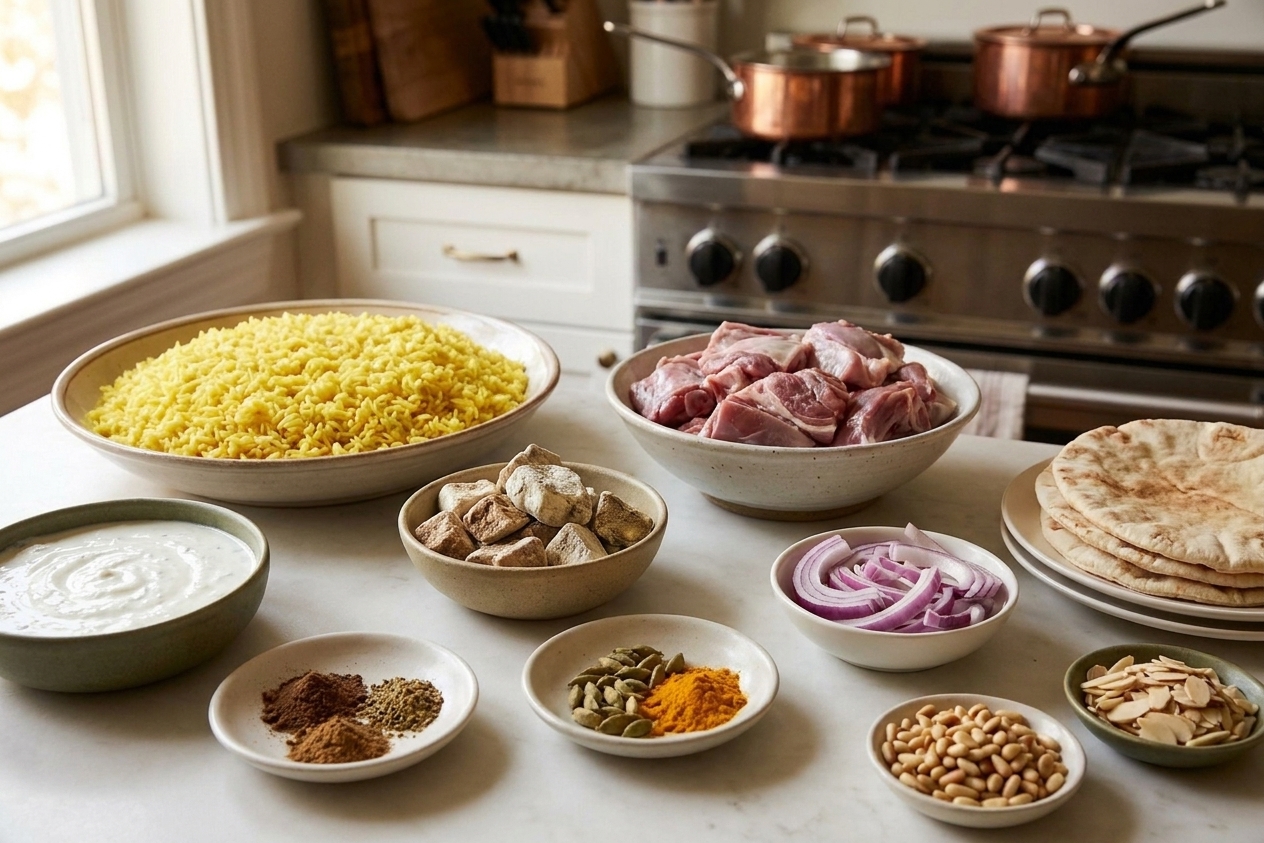
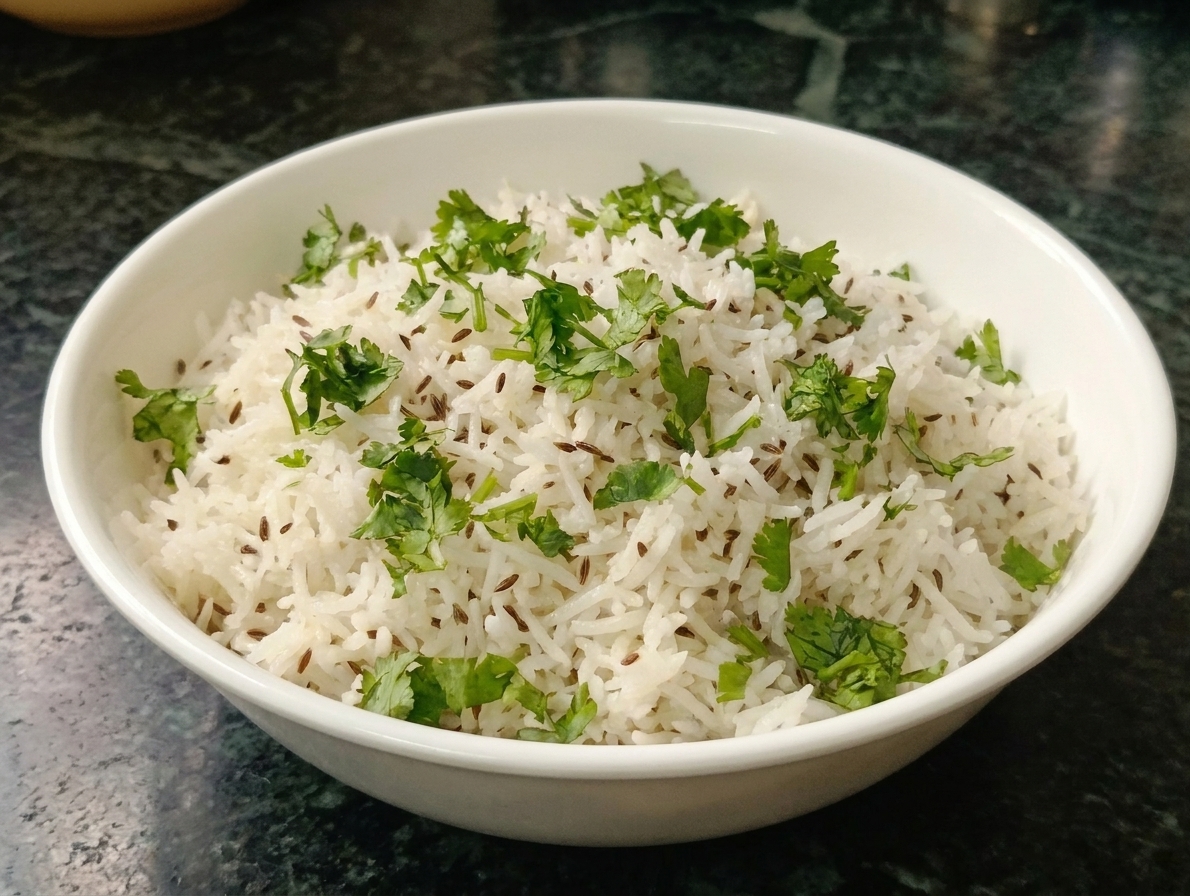
Bowls of rice, lamb pieces, jameed or yogurt, onions, spices, almonds, pine nuts, and flatbread arranged on a bright kitchen counter

Why It Works

  • Fall-apart lamb: A gentle simmer with aromatics gets you tender meat and a broth that powers the whole dish.
  • That signature tang: Jameed brings salty, fermented depth that makes mansaf taste unmistakably like mansaf.
  • Less curdling drama: You temper the sauce and keep the heat gentle, so the yogurt stays silky.
  • Big texture payoff: Fluffy rice plus crunchy toasted nuts plus bread that soaks it all up equals a perfect bite every time.
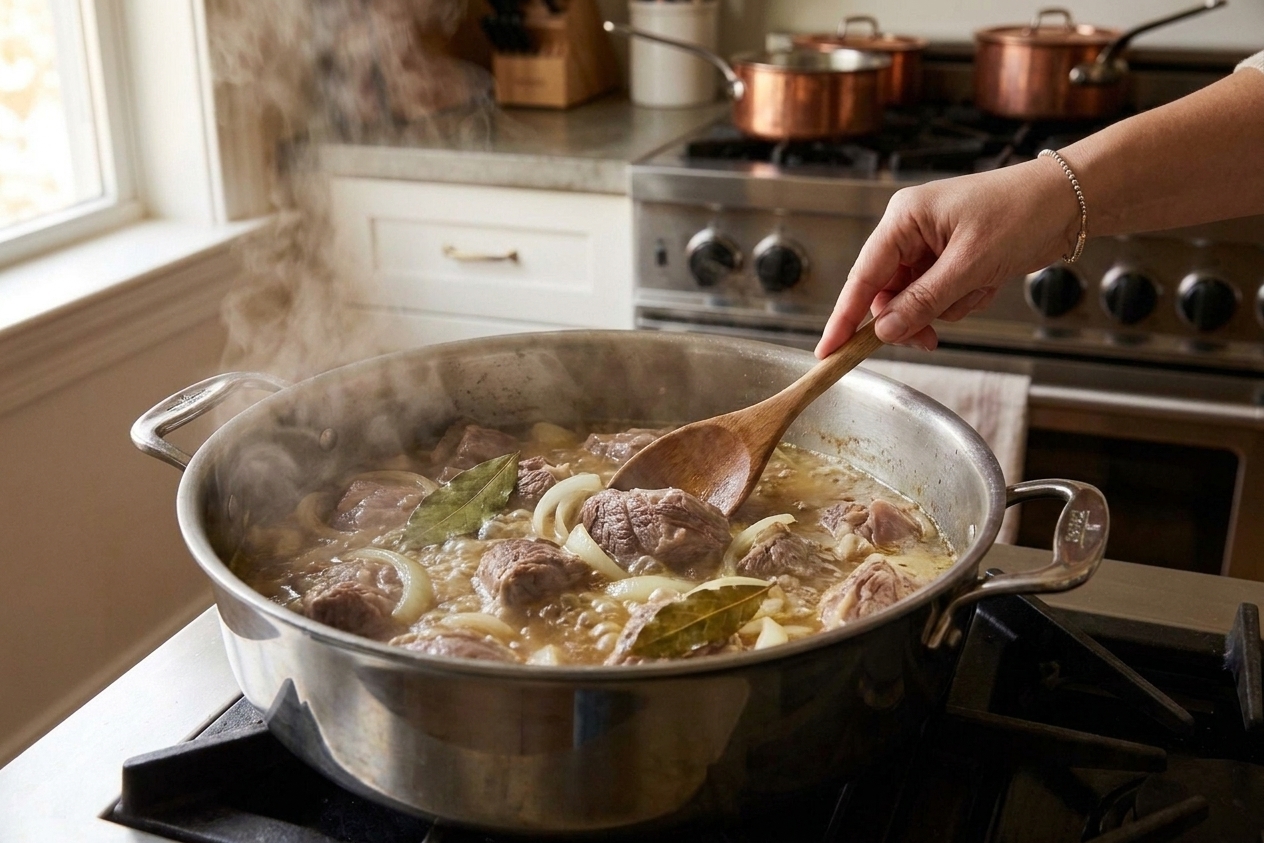
Lamb pieces simmering in a large pot with onions and bay leaves, steam rising on a home stove

Pairs Well With

Storage Tips

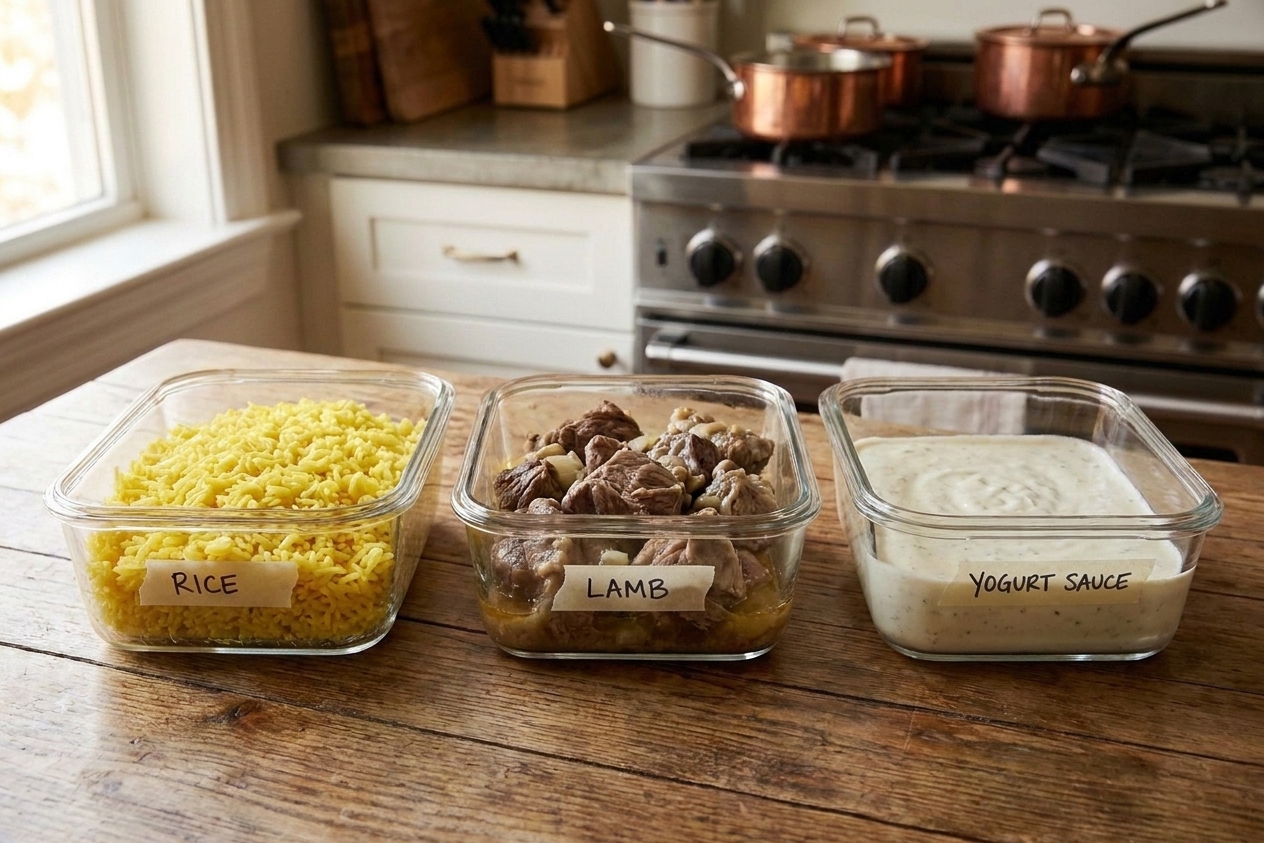
Store components separately if you can. Mansaf reheats best when the rice, lamb, and yogurt sauce are kept in separate containers.

  • Fridge: Store for up to 3 to 4 days in airtight containers.
  • Freezer: Freeze the lamb and sauce for up to 2 months. Rice can be frozen too, but it dries out faster. If you freeze rice, add a splash of water when reheating.
  • Reheat gently: Warm the sauce on low heat, stirring often. If it thickens too much, loosen with a splash of broth or water. Avoid a hard boil to prevent splitting.
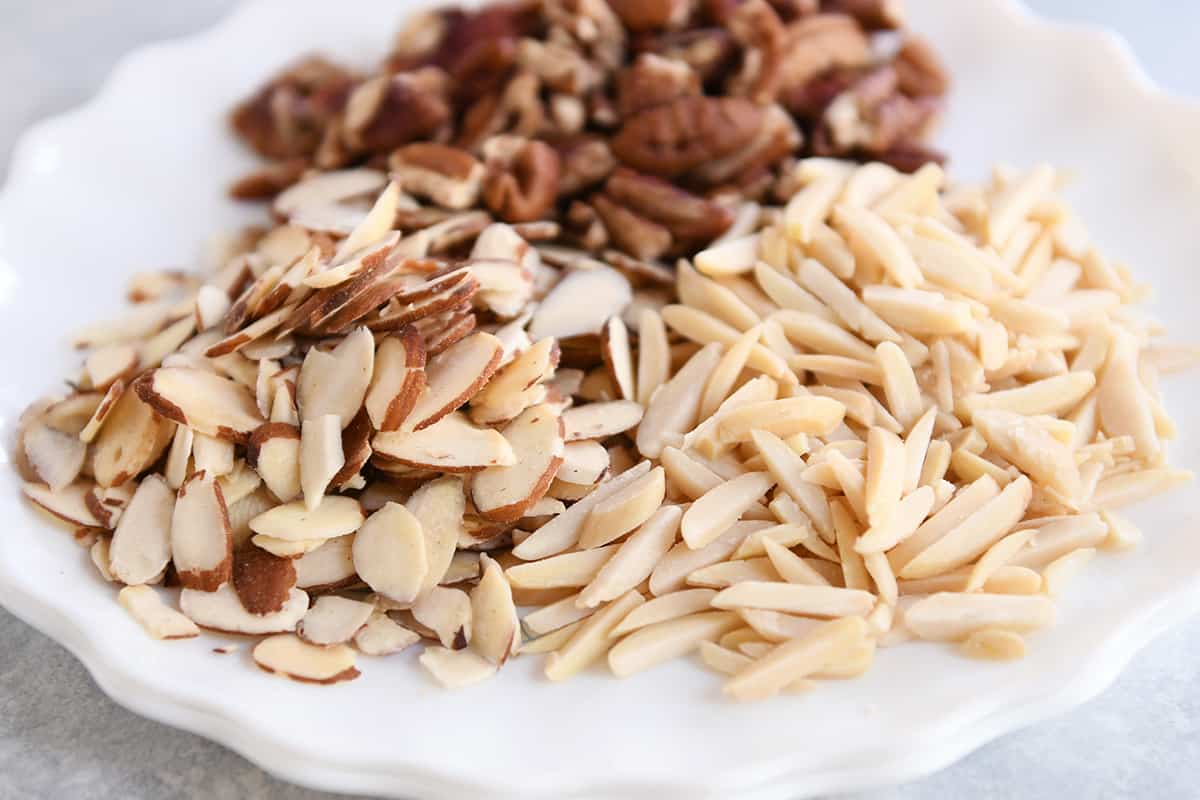
  • Nuts: Keep toasted nuts at room temp in a jar for 3 to 4 days, or in the freezer for longer. Add them at the last second so they stay crunchy.
Separate containers of rice, lamb, and yogurt sauce labeled by position on a kitchen counter, ready for refrigeration

Common Questions

What is jameed, and where do I find it?

Jameed is a traditional Jordanian staple made by fermenting yogurt (often sheep or goat milk), salting it, straining it, then drying it into very hard balls or blocks. You’ll often find it at Middle Eastern grocery stores, Jordanian or Levantine markets, or online. Some shops carry jameed powder, which is even easier for home cooking.

Can I make mansaf without jameed?

Yes. The flavor will be a little less funky and salty, but still delicious. Use the substitute in the ingredients list: full-fat plain yogurt plus labneh or sour cream, and salt to taste. Keep the heat low and stir often.

How do I keep the yogurt sauce from curdling?

Three things: full-fat dairy, temper with warm broth, and avoid a hard boil. Keep it steaming or at a bare, gentle simmer and stir often.

What kind of lamb cut works best?

Lamb shoulder is the cozy, low-effort special occasion move. It gets tender without drying out. Lamb shanks are also great but take longer. Bone-in cuts add flavor to the broth.

Do I have to serve it on bread?

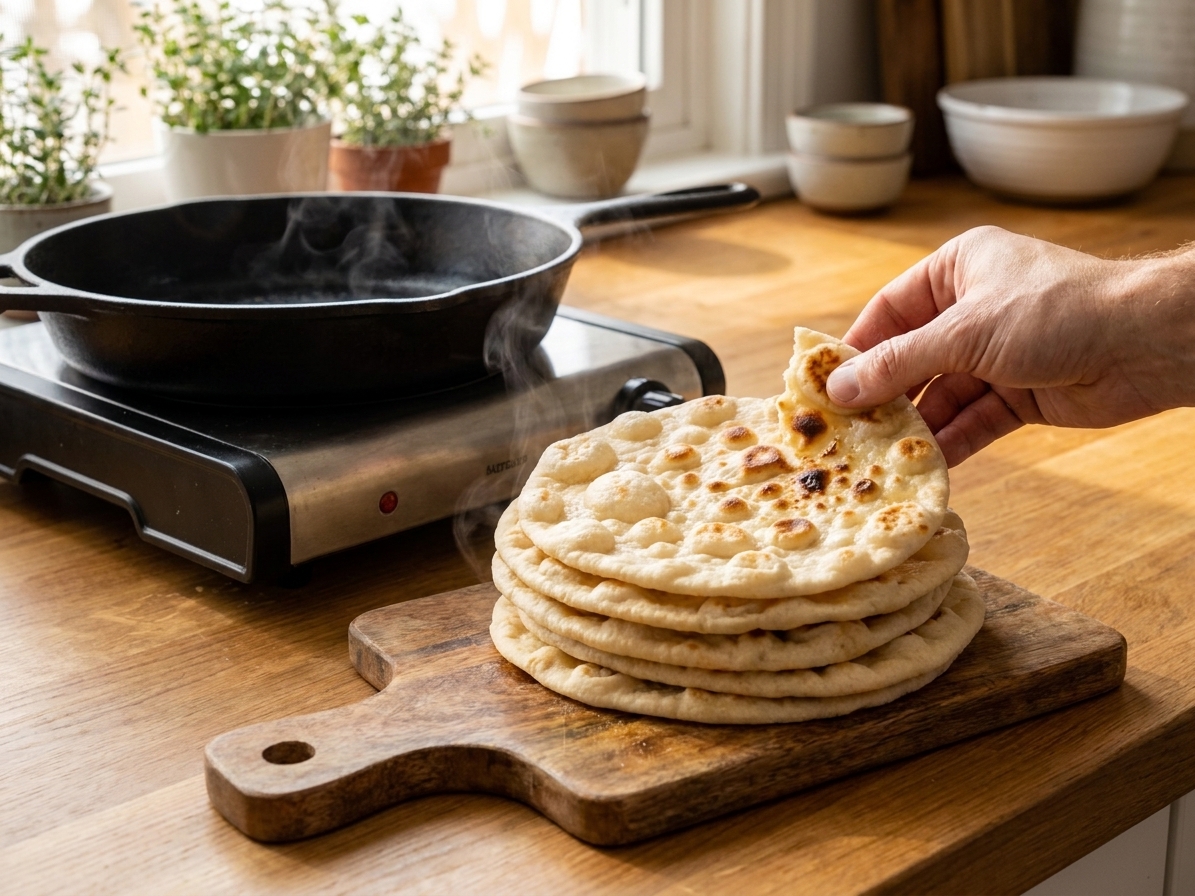
Traditionally, yes. Thin flatbread (shrack, markook, or even large pita) lines the platter and soaks up sauce. If you skip it, you still get an amazing bowl meal, but the bread layer is part of the magic.

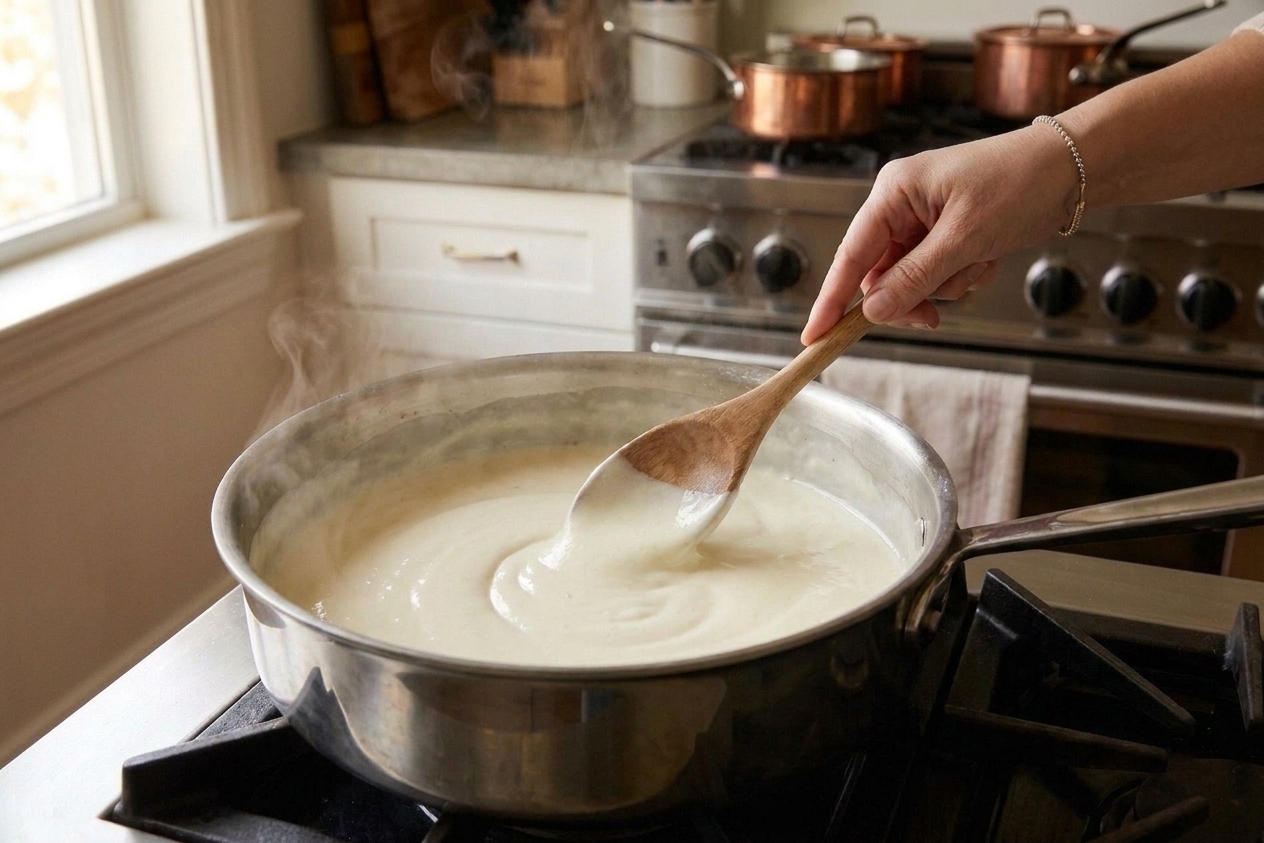
A creamy pale yogurt sauce being stirred in a saucepan with a wooden spoon, smooth and steaming gently

The first time I tried making mansaf, I treated the yogurt sauce like any other sauce and cranked the heat because I wanted it done. Predictably, it threw a little tantrum and split. Still tasty, still eaten, but not exactly the silky, creamy situation I was going for. Now I take the slow route: gentle heat, steady stirring, and a quick temper with warm broth. Mansaf is celebratory food, and it cooks best when you act like you have time, even if you do not.