Mom's Best Recipes
Recipe

One Pot Chicken and Rice

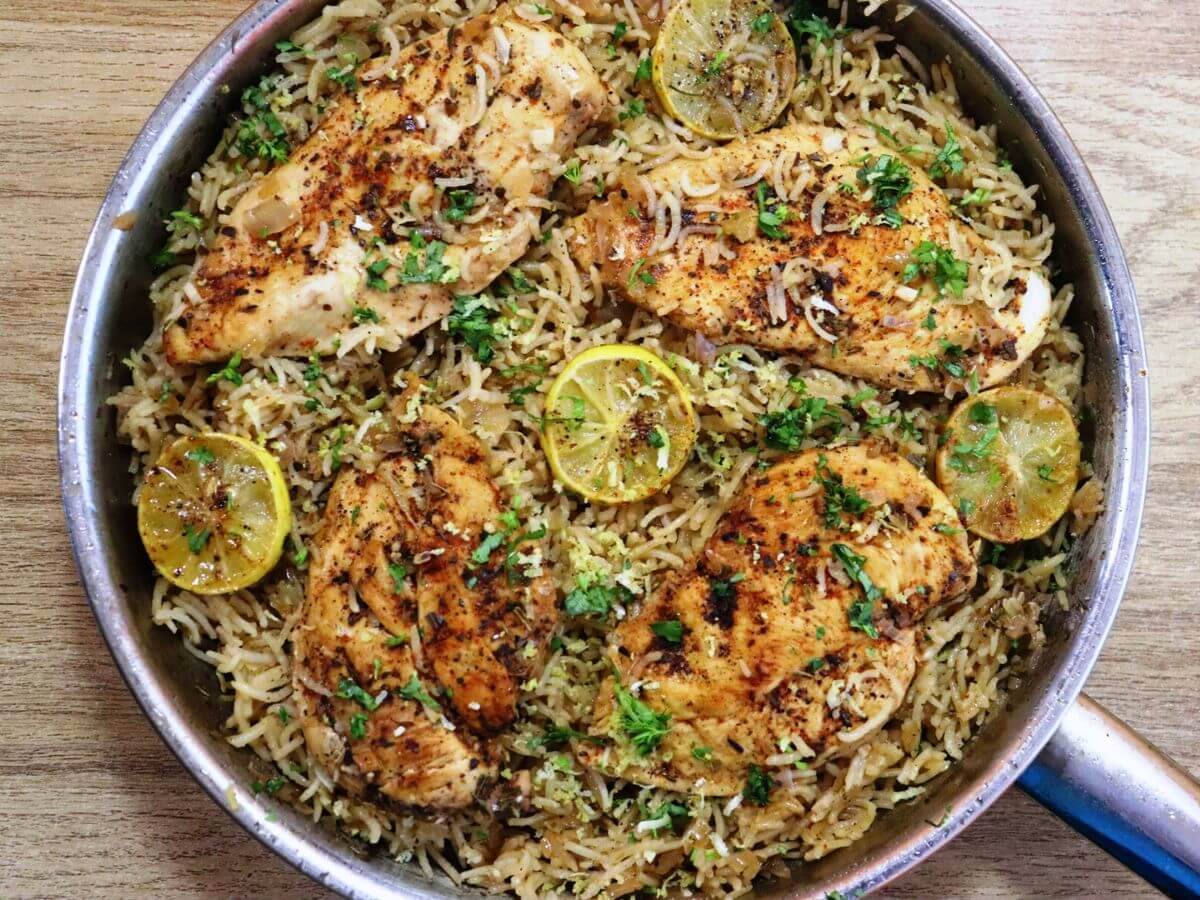
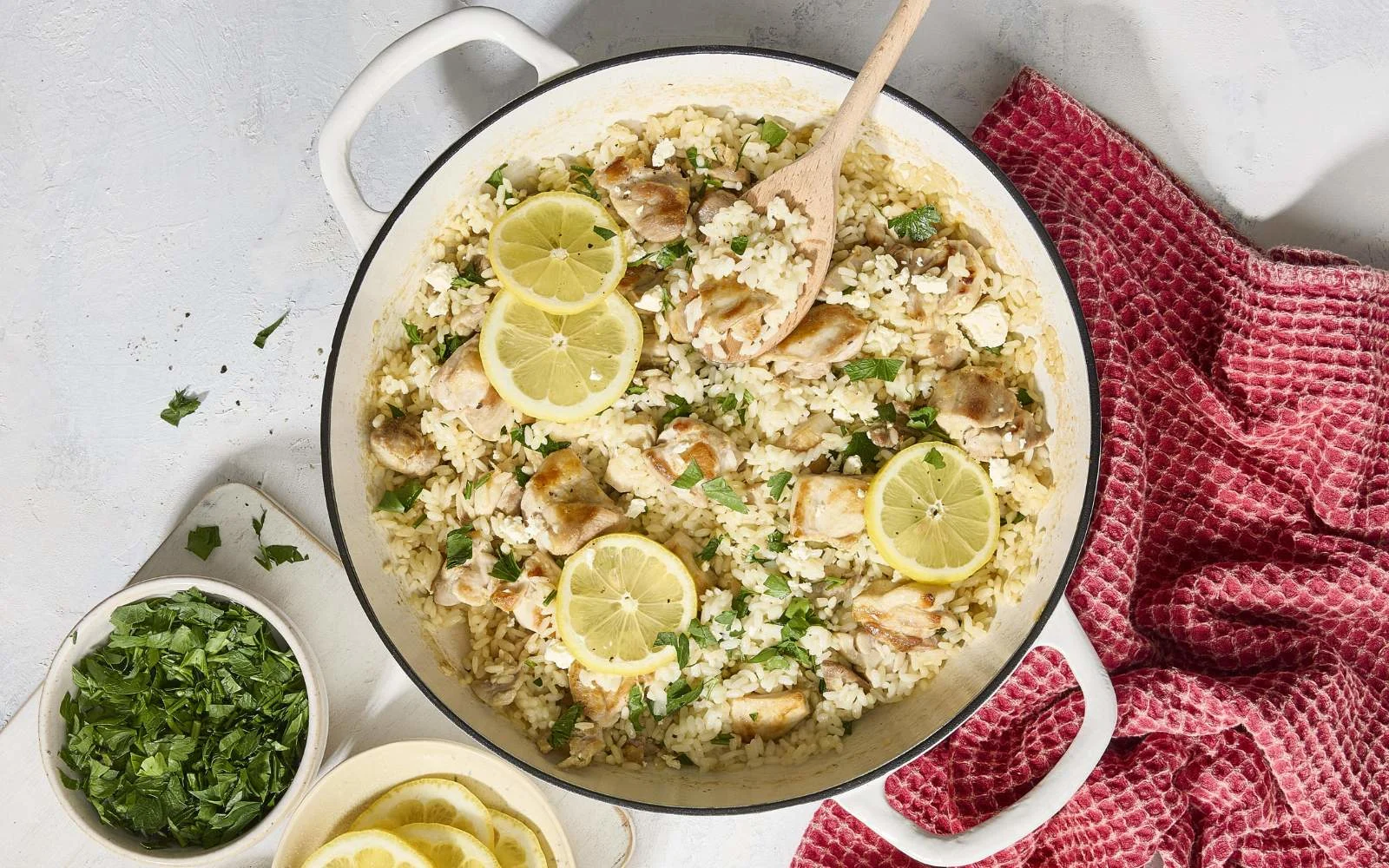
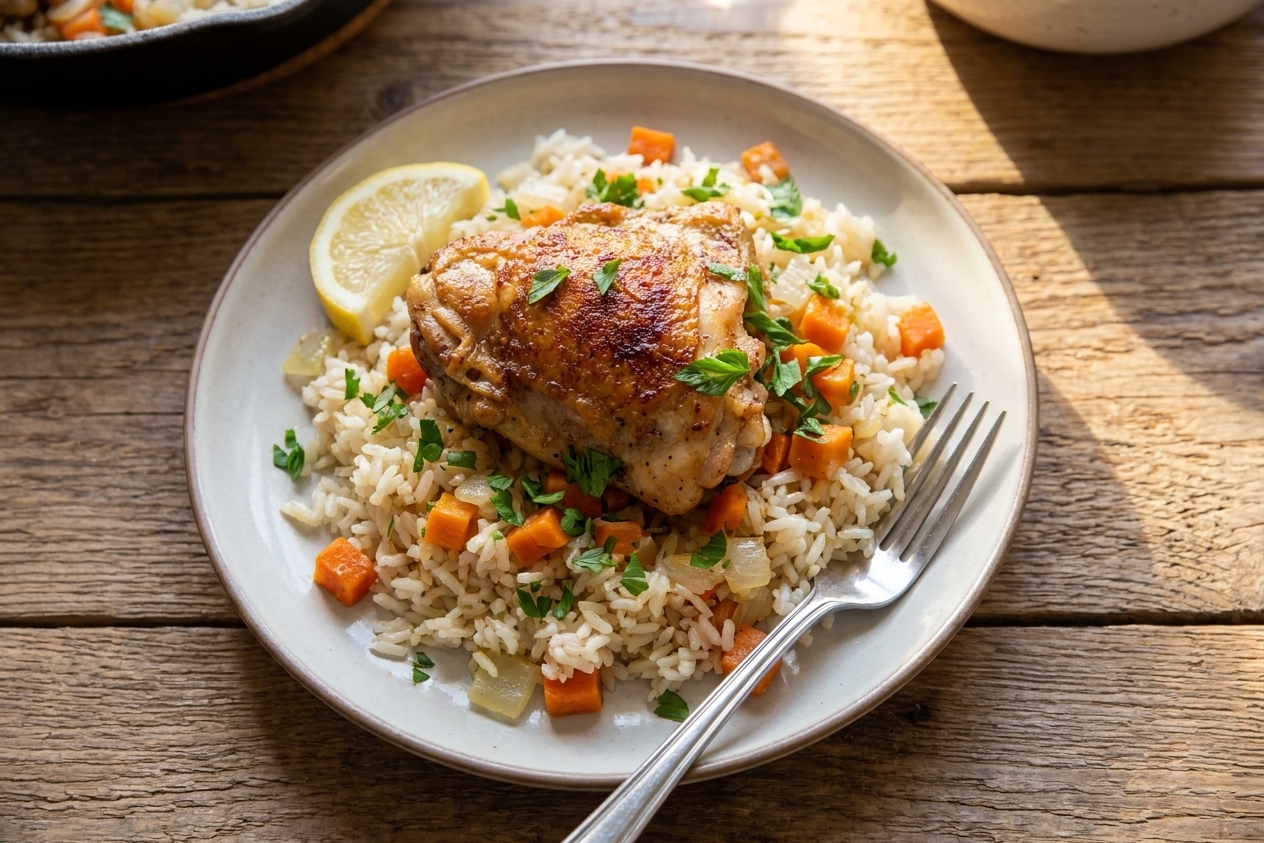
Golden, juicy chicken and tender rice cooked together in one pan with garlic, broth, and a bright lemon finish.

Author By Matt Campbell
4.8
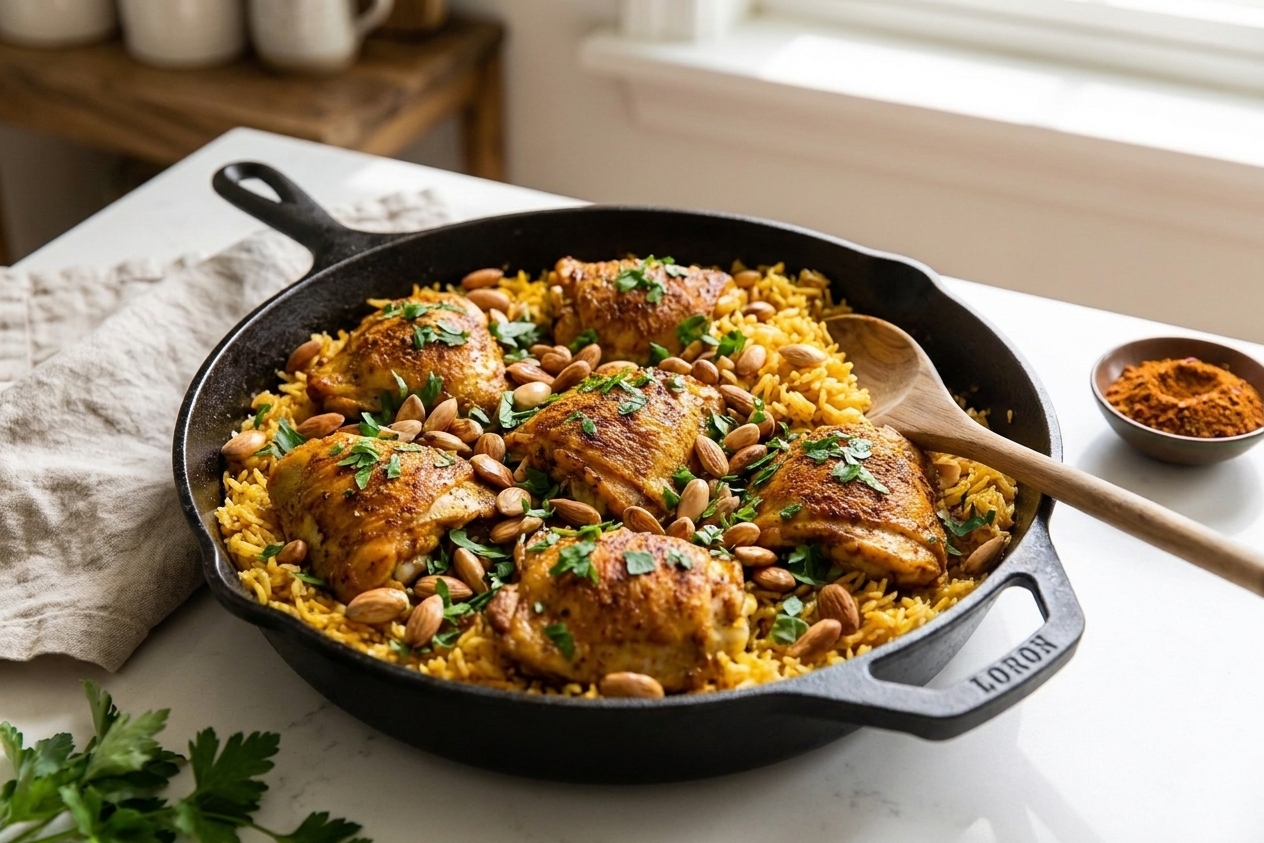
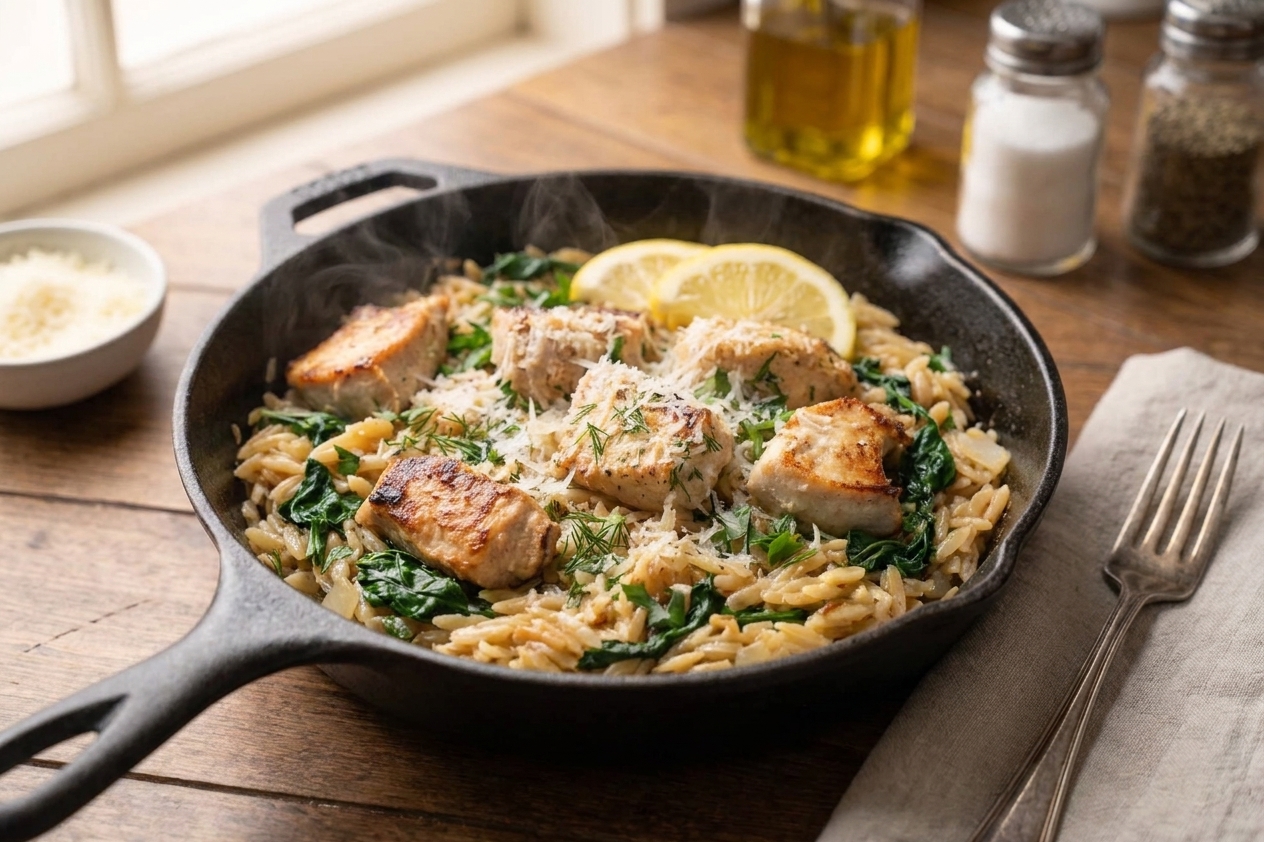
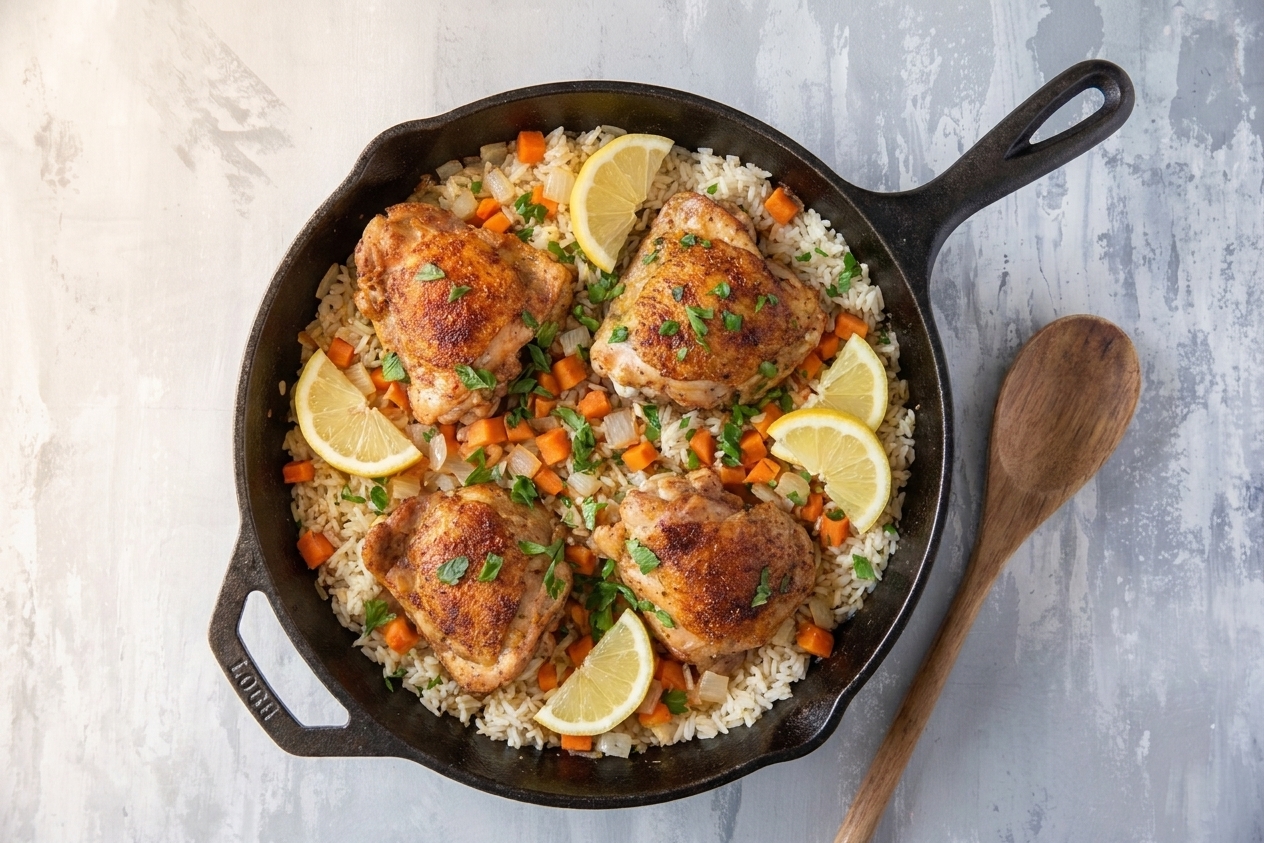
A cast iron skillet filled with golden-brown chicken thighs nestled into fluffy rice with parsley and lemon wedges on a warm kitchen counter, natural window light

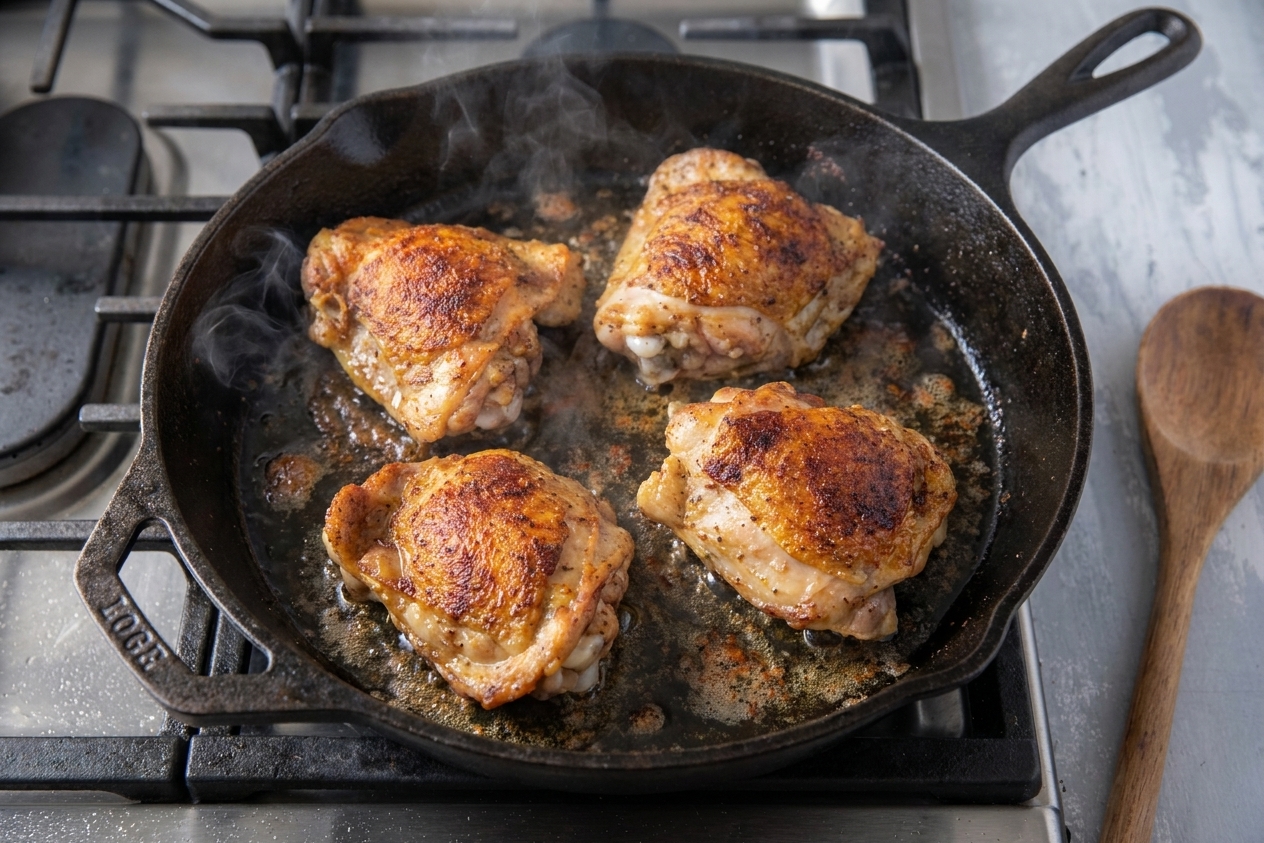
If your weeknight brain wants something cozy but your sink is already giving you side-eye, this one pot chicken and rice is the move. We sear chicken until it gets those crisp, golden edges, then cook the rice right in the same pan so it soaks up every savory bit left behind.

The whole thing finishes with lemon and herbs for that little “wait, this is actually kind of bright” moment. It tastes like you tried harder than you did, which is basically my favorite kind of dinner.

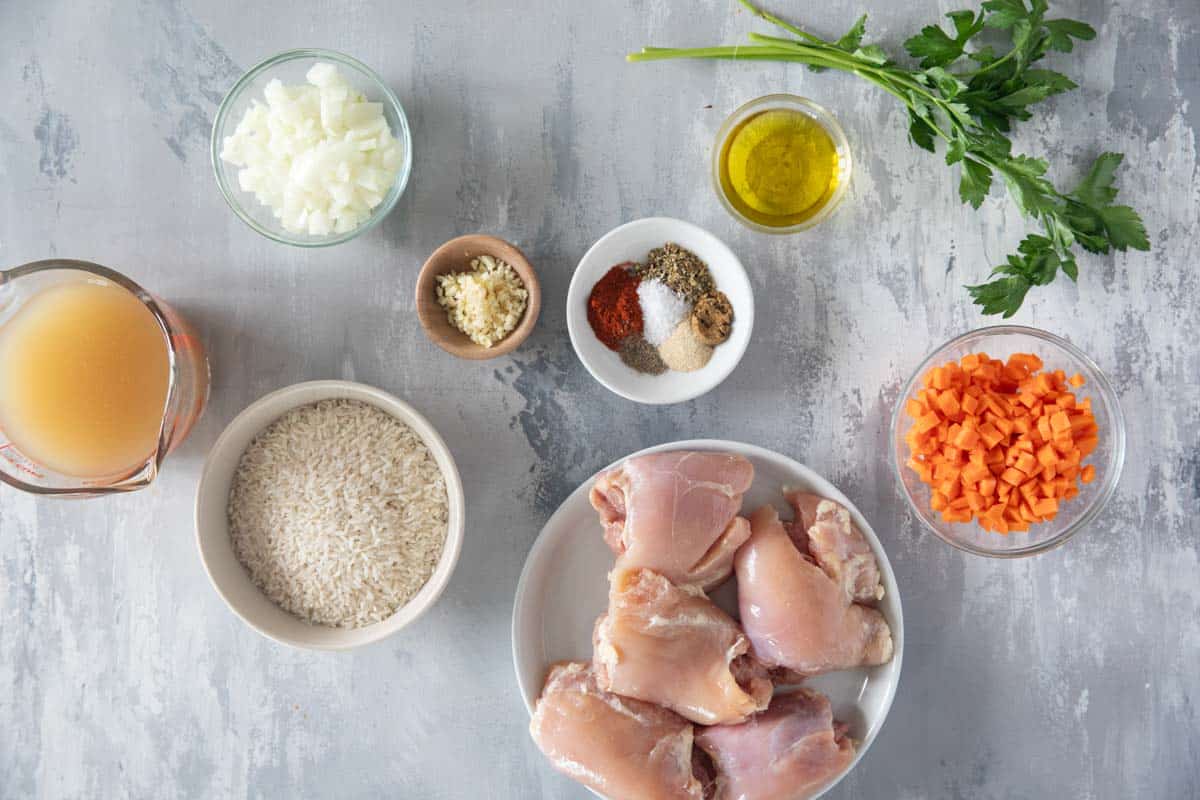
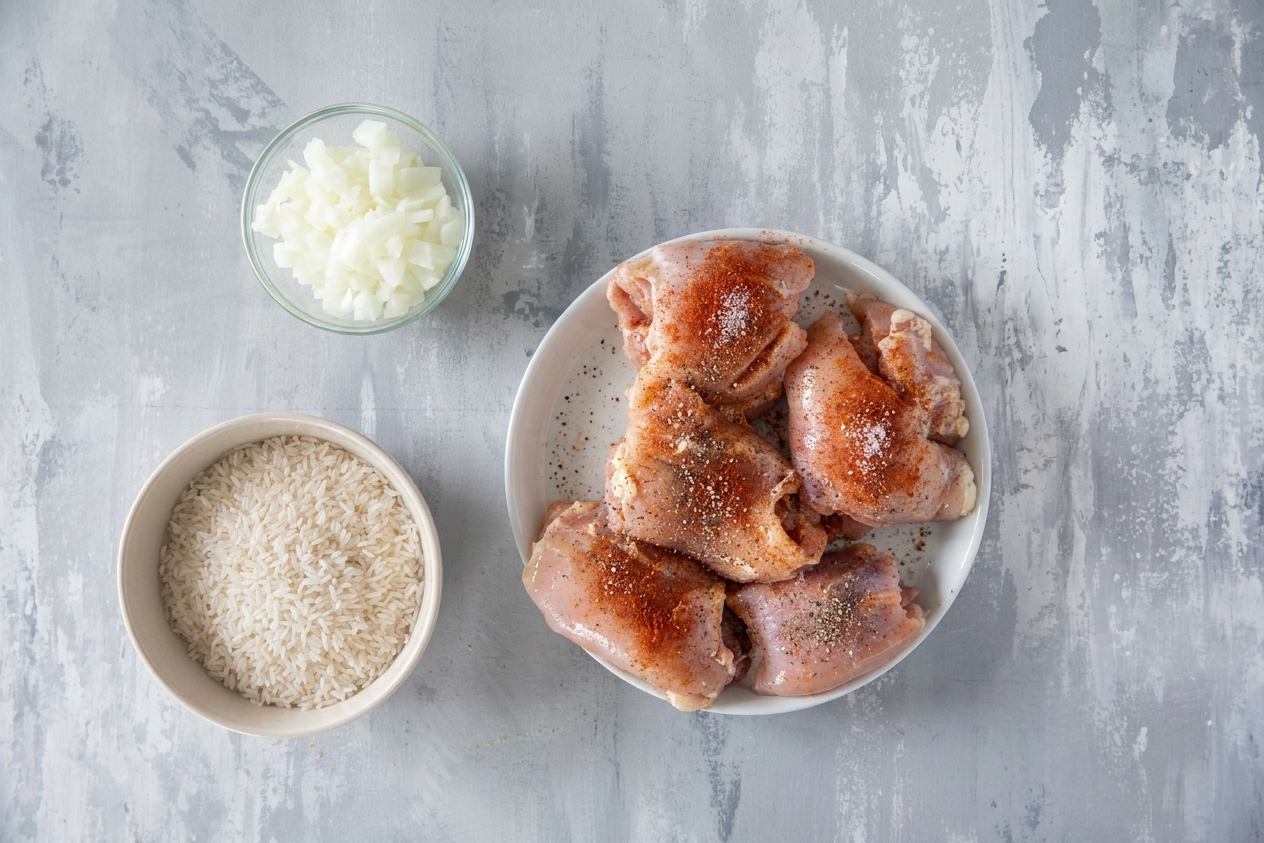
Raw chicken thighs, long grain rice, chicken broth, onions, garlic, lemon, and spices arranged on a tidy kitchen counter, overhead view in soft natural light

Why It Works

  • One pot, real flavor: Searing the chicken first builds a base that the rice absorbs while it cooks.
  • Tender rice, not mush: The liquid ratio is dialed in, plus we keep the lid on so the rice steams properly. If it runs a little wet, you can uncover for a minute or two to tighten it up.
  • Juicy chicken: Thighs stay forgiving and flavorful, even if you get distracted by a text or a kid asking for a snack mid-step.
  • Bright finish: Lemon zest and juice wake up the whole pan, so it tastes cozy but not heavy.

Pairs Well With

Storage Tips

Refrigerate: Cool leftovers, then store in an airtight container for up to 4 days.

Freeze: Freeze in portions for up to 2 months. Thaw overnight in the fridge for best texture.

Reheat (best method): Add a splash of broth or water (about 1 to 2 tablespoons per serving) and reheat covered in a skillet over medium-low until hot, 6 to 10 minutes. This keeps the rice from drying out.

Microwave method: Sprinkle with a little broth or water, cover loosely, and heat in 60-second bursts, stirring the rice between rounds.

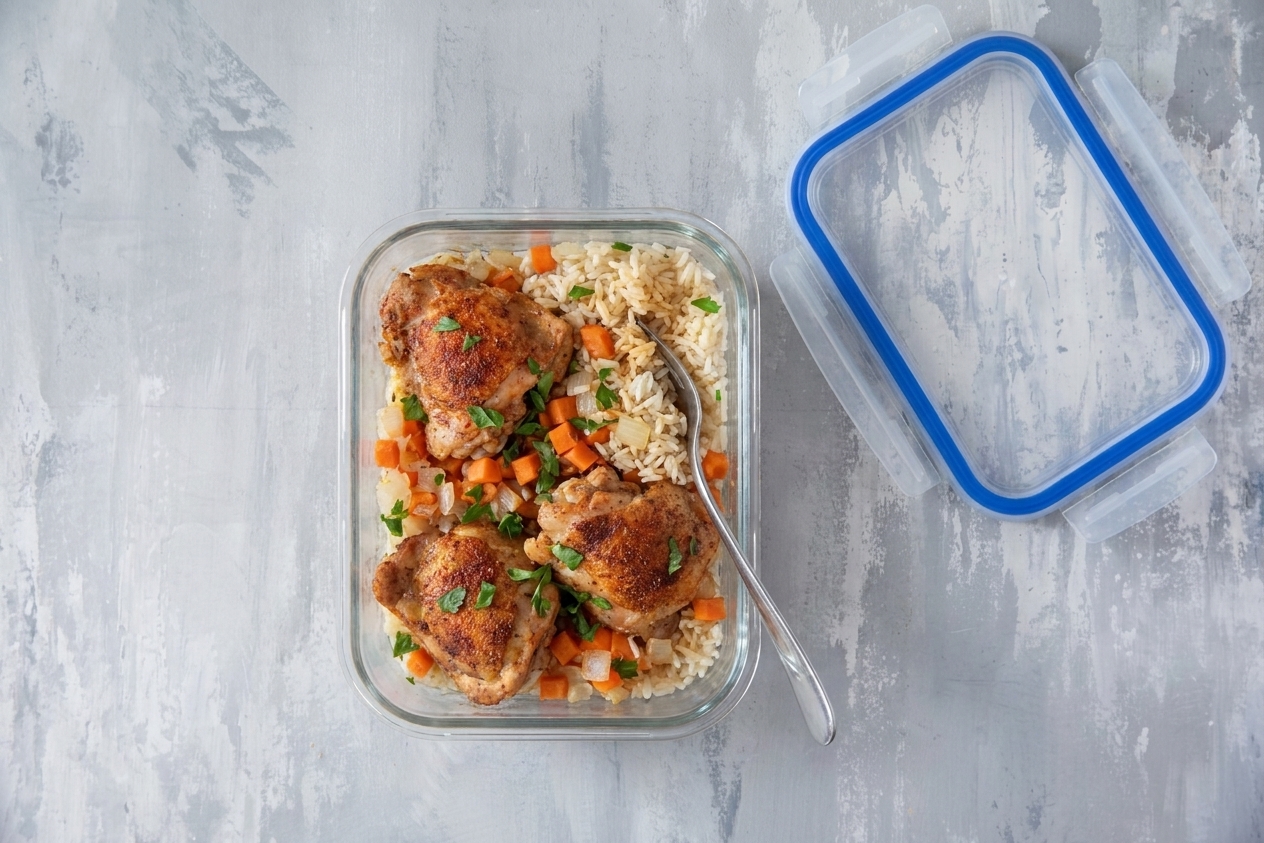
A glass meal prep container filled with leftover chicken and rice, lid set next to it on a kitchen counter, natural light

Common Questions

Can I use chicken breasts instead of thighs?

Yes. Use boneless, skinless breasts cut into large chunks, or keep them whole but watch the cook time. Breast meat can dry out, so I prefer adding it back on top after the rice starts simmering, then cooking just until it hits 165°F.

What kind of rice works best?

Long-grain white rice is the most reliable here (jasmine or basmati both work). Avoid quick-cooking rice. Brown rice needs more liquid and time, so it is not a 1:1 swap.

Why is my rice still crunchy?

Usually one of three things: the heat was too high (liquid evaporated), the lid was not snug, or the rice needed a little more time. Add 2 to 4 tablespoons more hot broth, cover, and cook 5 more minutes. Then let it rest off heat.

What if my rice is still wet at the end?

Totally happens. Pan size, lid fit, and how much chicken fat you rendered all change evaporation. If the rice is tender but looks a little soupy, uncover and cook on low for 2 to 3 minutes, stirring once or twice, until it tightens up. Then rest it 5 minutes off heat.

Can I add veggies?

Absolutely. Stir in frozen peas at the end, or sauté diced carrots and bell pepper with the onion. Baby spinach can be wilted in right before serving.

How do I keep the bottom from burning?

After you bring it to a simmer, keep the heat on low. If your stove runs hot, move the pot to a smaller burner. A heavy pot (Dutch oven) helps a lot, and a tight-fitting lid matters more than you think. Avoid vented lids if you can.

Do chicken thighs have to be 165°F?

165°F is the safe minimum. For the most tender, pull-apart thighs, you can let them go a bit longer to 175 to 185°F, as long as the rice stays happy.

I wanted a culinary degree once, but I learned pretty quickly that the home kitchen is its own kind of classroom. One pot meals taught me the real lesson: flavor is not about complexity, it is about sequence. Sear first. Bloom the spices. Toast the rice. Then let the lid do its thing while you clean exactly one cutting board and pretend you have your life together.