Mom's Best Recipes
Recipe

Oven Pork Roast

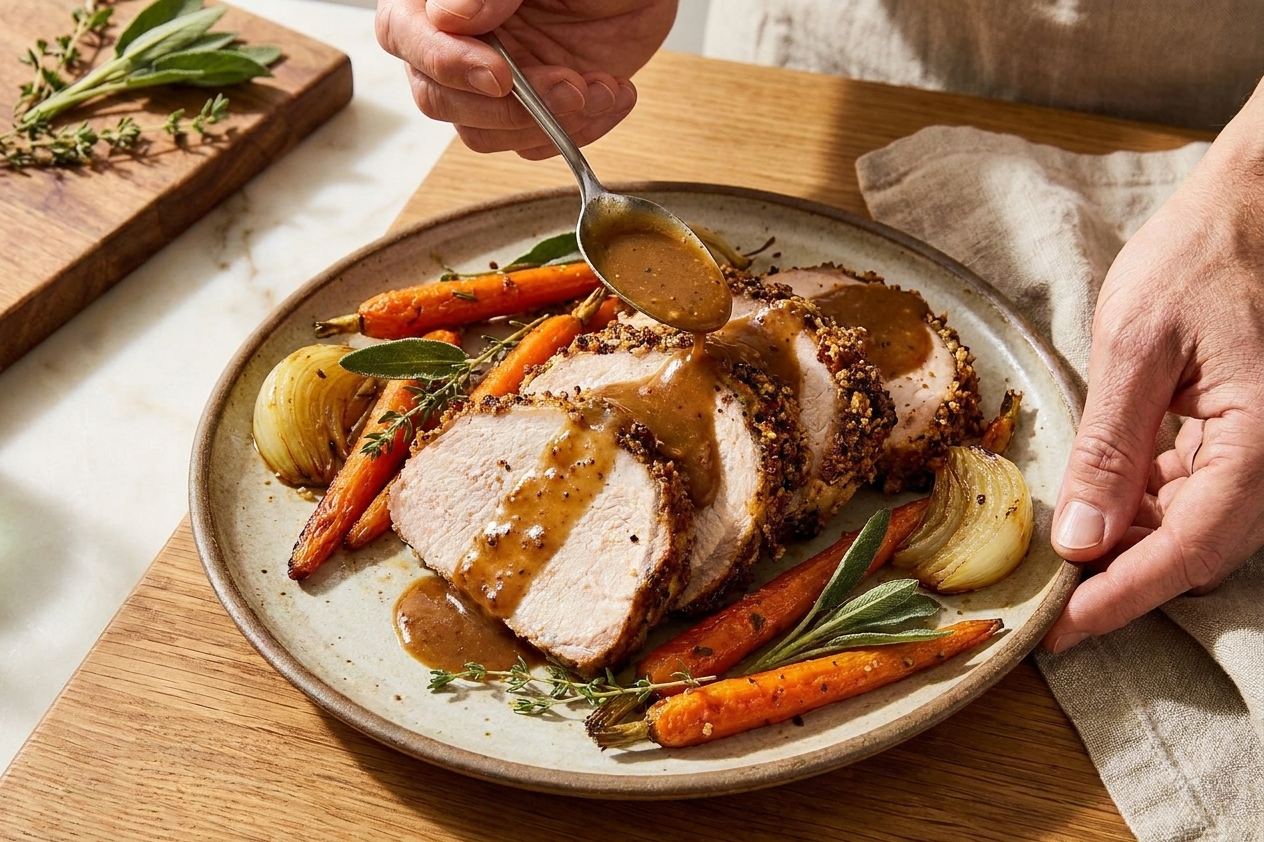
Juicy, tender pork roast with crisp edges and a quick pan gravy. Simple ingredients, clear temperatures, and big comfort-food energy.

Author By Matt Campbell
4.8
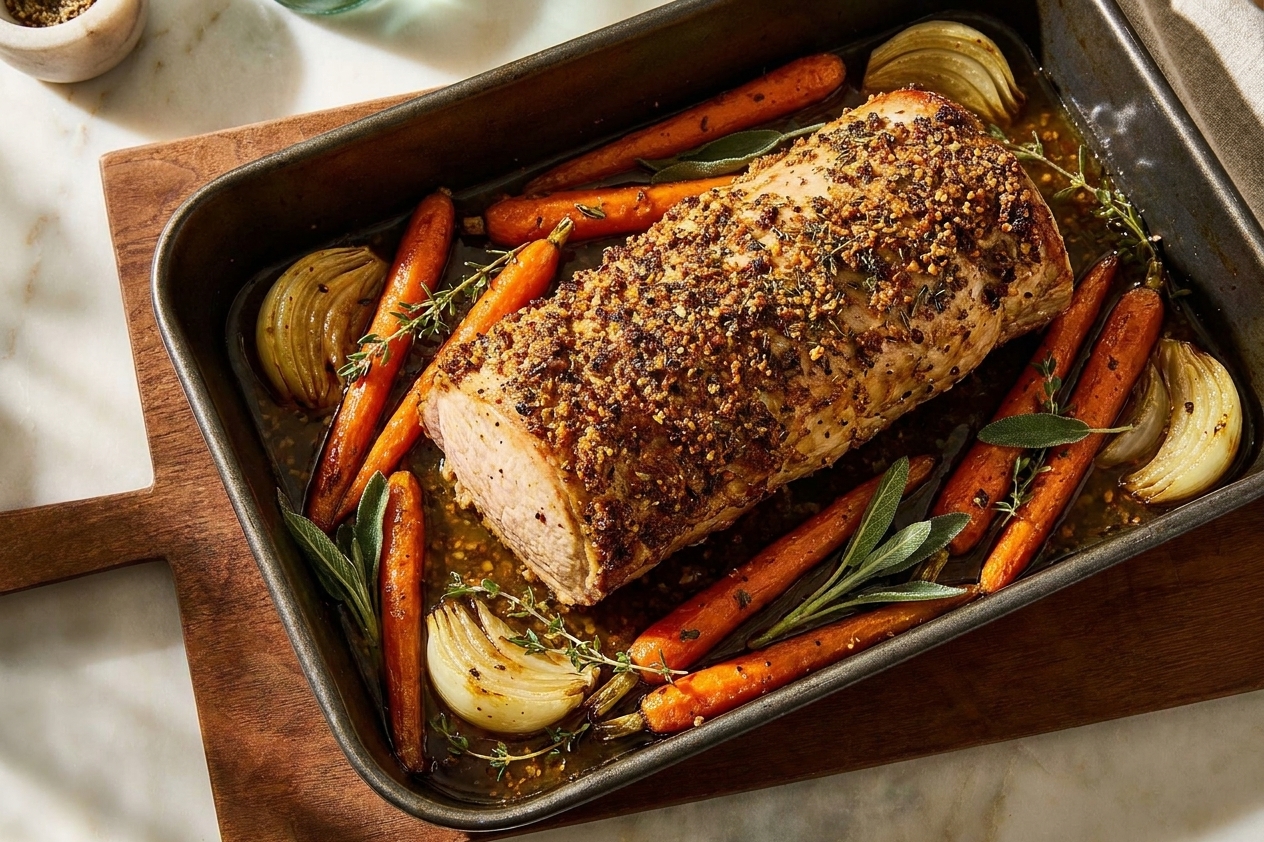
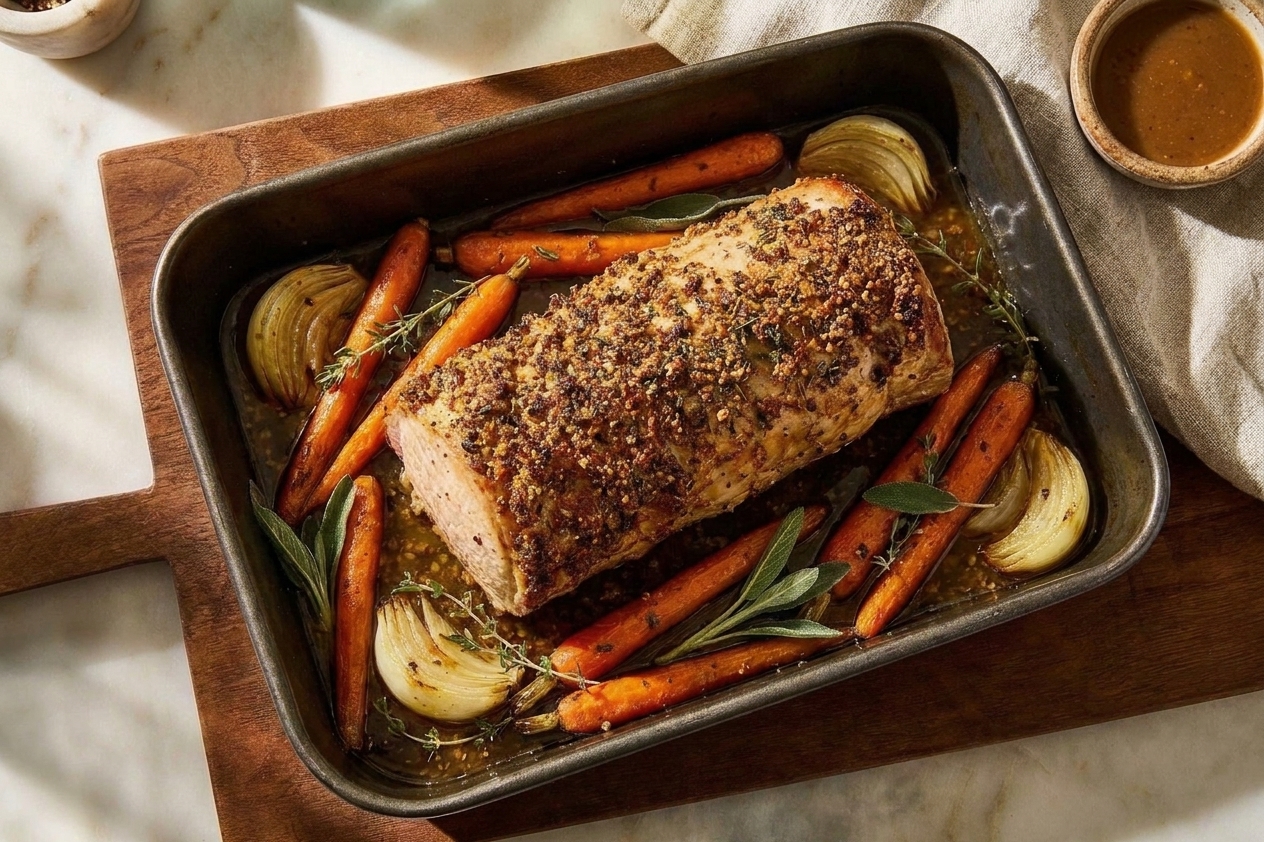
A golden-brown pork loin roast resting in a roasting pan with carrots and onions, with glossy pan juices and fresh herbs

There are two kinds of pork roast nights: the ones where you slice into it and it is juicy and perfect, and the ones where you quietly drown it in applesauce and pretend it was intentional. This recipe is for the first kind.

We are going for crisp edges, tender slices, and a bright, savory pan gravy you can spoon over everything on the plate. No fancy cuts required, no weird ingredients, and you do not need to babysit it. Just a good rub, smart heat, and a non-negotiable rest at the end.

Raw pork loin roast, garlic, rosemary, thyme, Dijon mustard, olive oil, salt, pepper, carrots, onion, and chicken broth arranged on a kitchen counter

Why It Works

  • High heat first gives you that browned, craveable crust fast, then we finish at a gentler temp so the inside stays juicy.
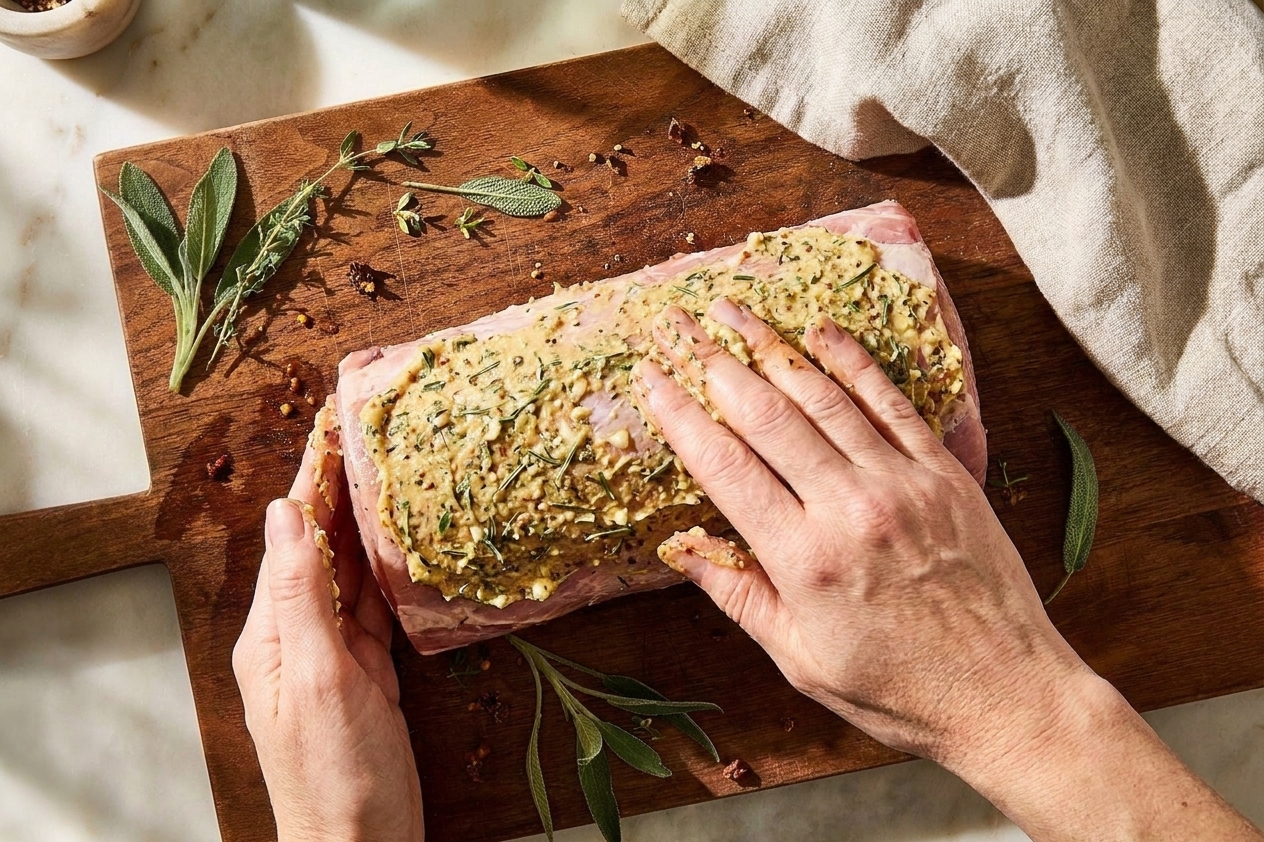
  • Dijon plus garlic acts like flavor glue, helping the rub cling while adding tang that keeps the roast from tasting flat.
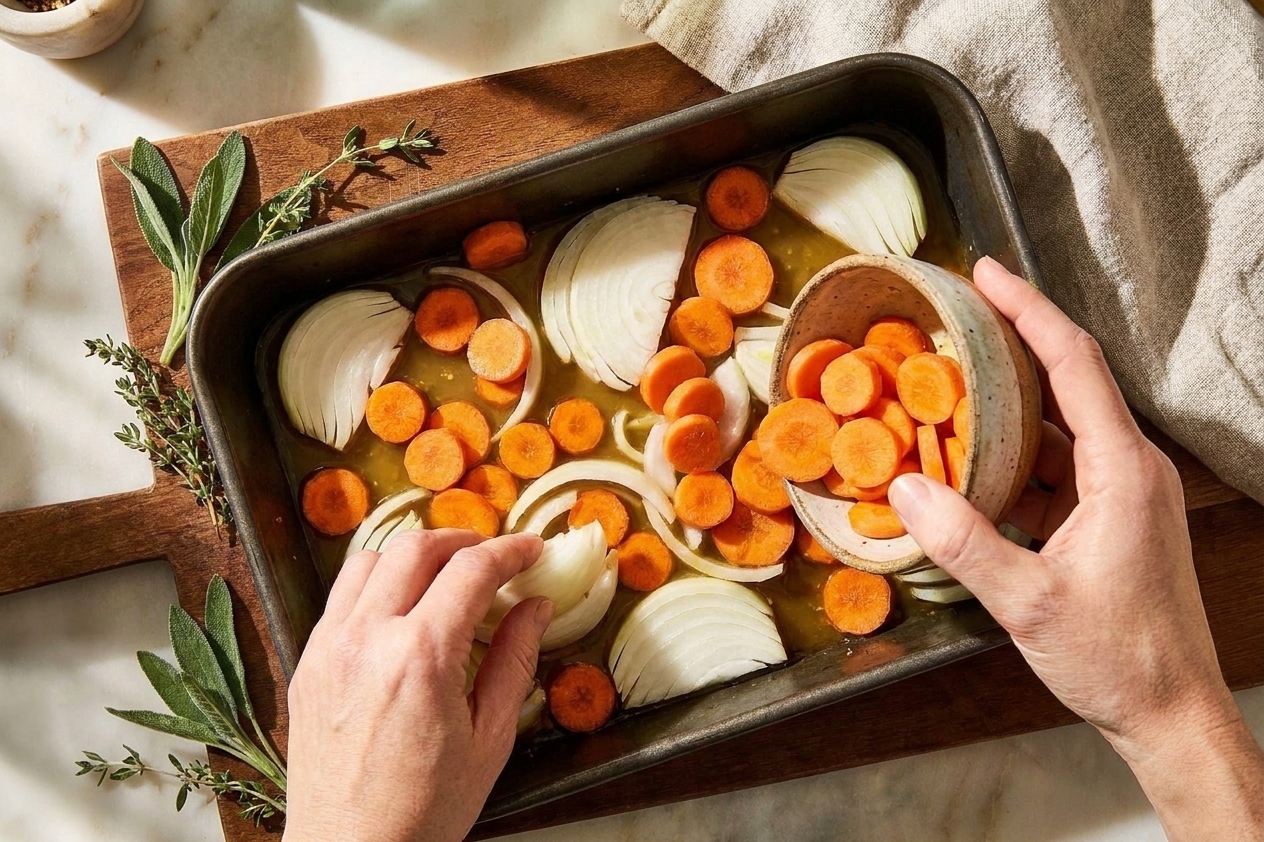
  • Veggies under the roast create a buffer and catch the drippings, which turns into gravy gold.
  • Temperature, not time is the secret. You pull it at the right internal temp, rest it, and suddenly pork is not dry.

Pairs Well With

Storage Tips

Refrigerate: Cool leftovers, then store in an airtight container for up to 4 days. Keep some gravy or pan juices with the slices if you can. It helps everything reheat like it was meant to.

Freeze: Freeze sliced pork in a freezer bag with as much air pressed out as possible for up to 2 months. Freeze gravy separately in a small container.

Reheat without drying it out: Put slices in a baking dish, add a splash of broth or leftover gravy, cover with foil, and warm at 325°F until hot. Microwave works too, just use medium power and a spoonful of liquid on top.

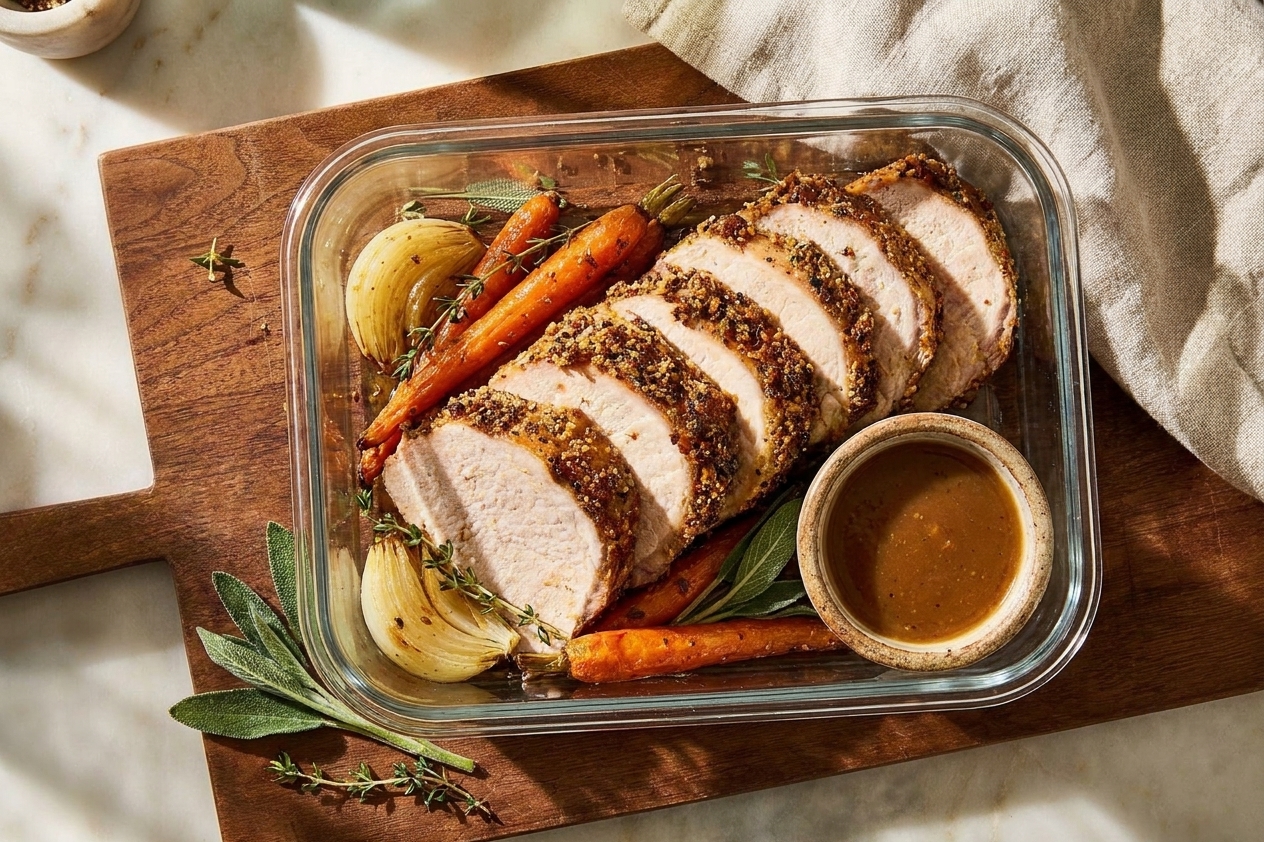
Sliced pork roast stored in a meal prep container with a small cup of gravy beside it

Common Questions

What cut of pork should I use for oven pork roast?

This recipe is built for a boneless pork loin roast (not tenderloin). Pork loin is larger and roasts beautifully in slices. Tenderloin is smaller and cooks much faster, so it would overcook with these timings.

What temperature should pork roast be cooked to?

For a pork loin roast, the safest, simplest target is 145°F with a rest (USDA guidance for whole cuts). I like to pull it from the oven at 140 to 145°F, then rest 15 minutes, aiming for a rested final temp around 145°F. Because carryover cooking varies, check the temperature again after resting. If you prefer it more done, pull at 150°F.

Why is my pork roast dry?

Usually one of three things: it cooked too long, it was a lean cut cooked without enough protection, or it was sliced too soon. Use a thermometer, roast it over the onions and carrots as a buffer, and rest before slicing.

Do I need to cover a pork roast in the oven?

Not at the beginning. Leaving it uncovered helps you get browning. If the top is getting too dark near the end, tent loosely with foil for the last 10 to 20 minutes.

Can I make gravy from the pan drippings?

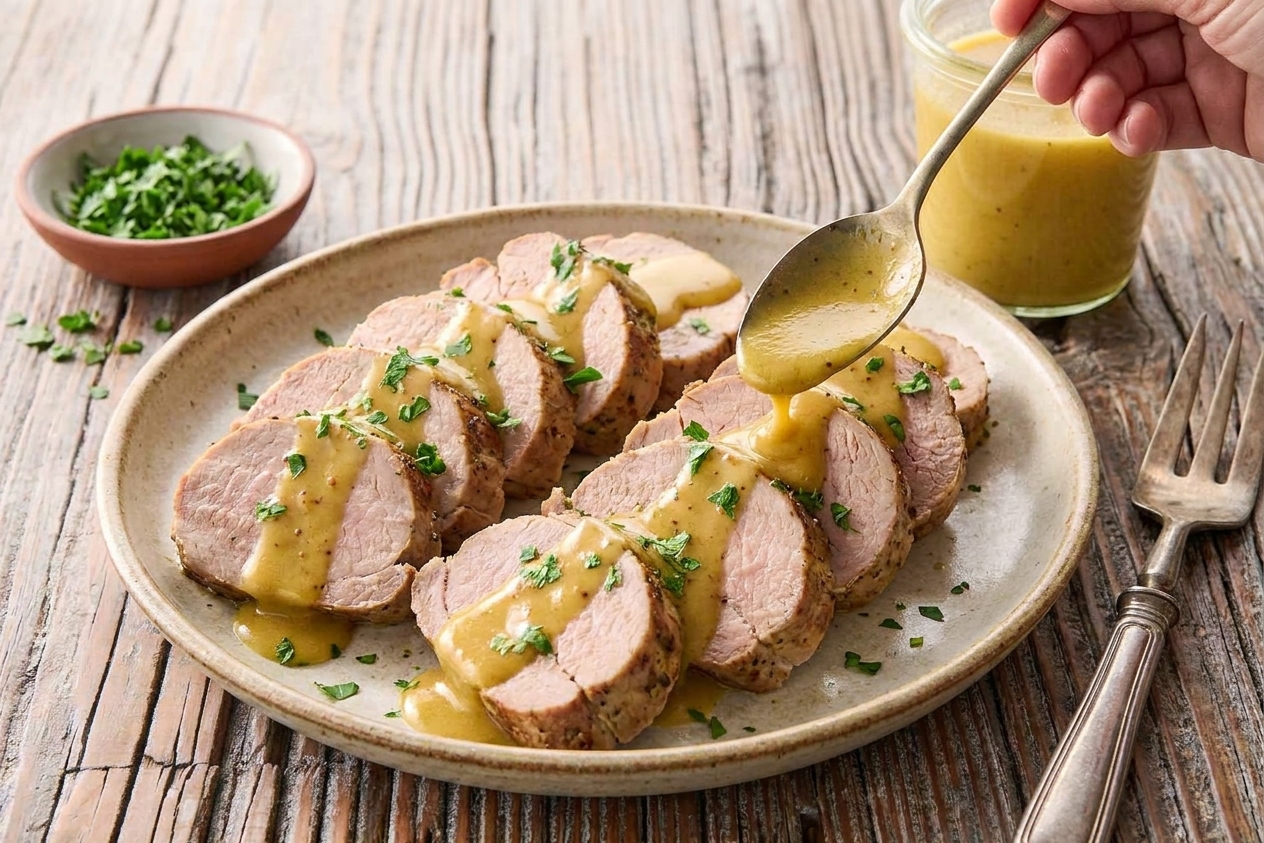
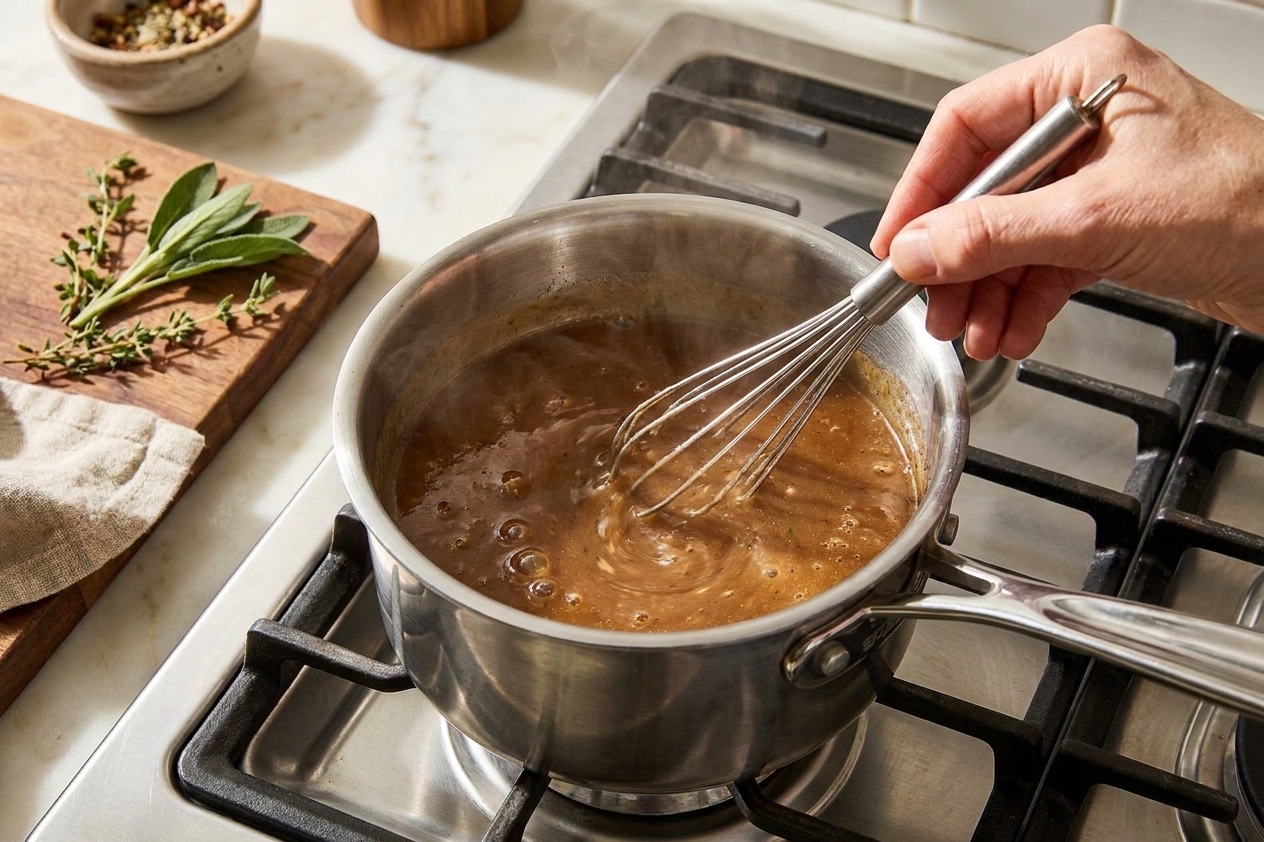
Yes, and you should. In this recipe, you deglaze the roasting pan with broth and a little apple cider vinegar for brightness, then thicken it with a quick cornstarch slurry.
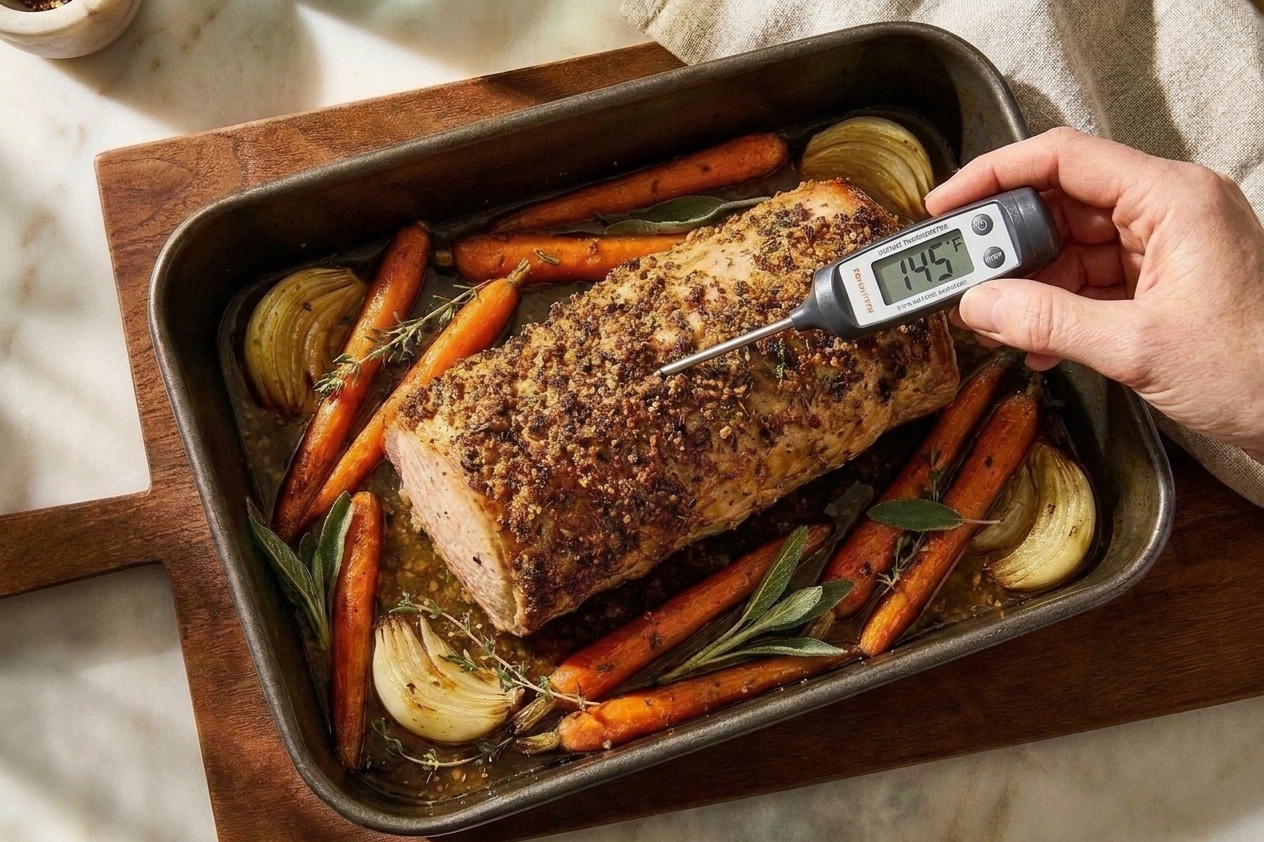

An instant-read thermometer inserted into a pork roast in a roasting pan, showing a temperature in the mid-140s

I used to think pork roast was a “special occasion” thing, mostly because I treated it like a fragile project. Then I started cooking it like I cook everything else: season it like you mean it, use the oven to do the heavy lifting, and trust a thermometer more than vibes. Now it is my go-to when I want dinner to feel like a hug, but I still want crisp edges and a sauce that makes you drag a piece of bread through the pan when nobody is looking.