Do I need a paella pan?
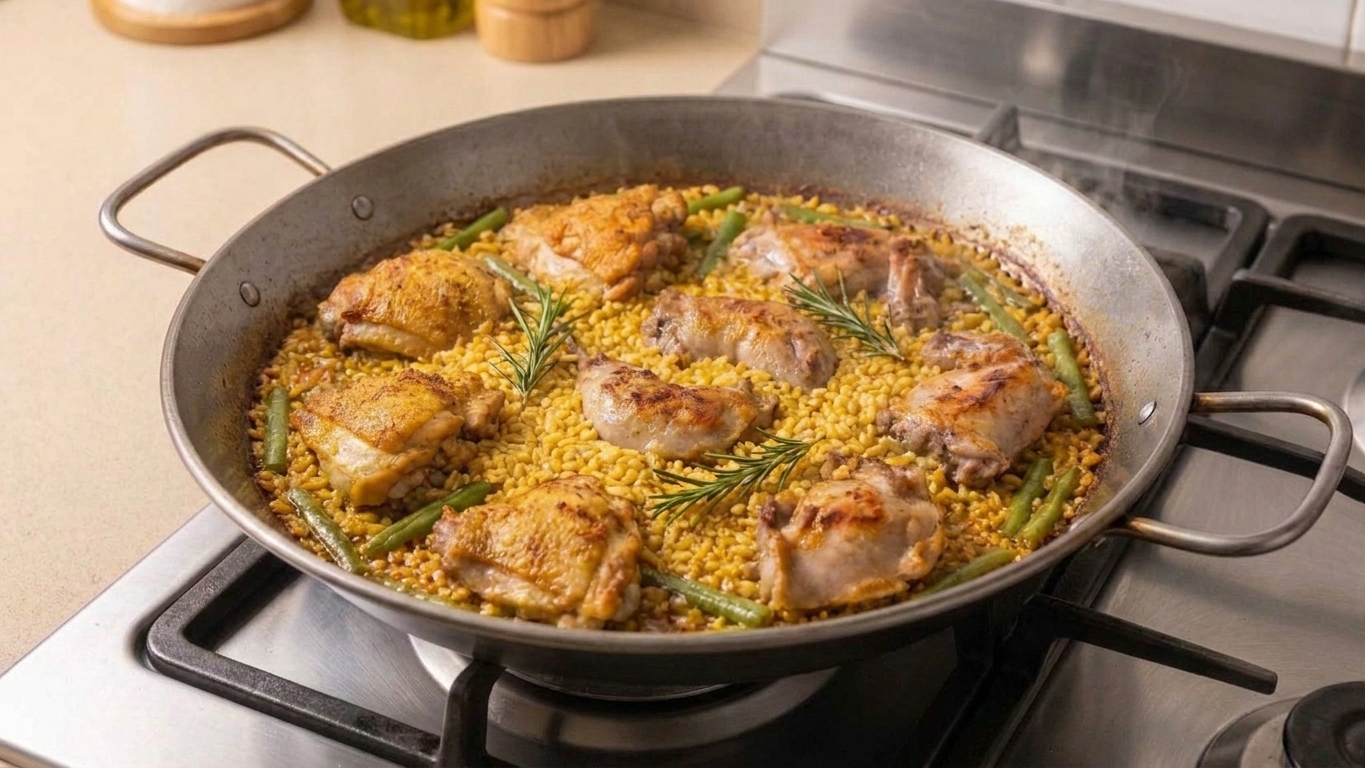
No, but a wide, shallow pan helps the rice cook evenly. Use a 14 to 15 inch paella pan if you have it. If not, a large, wide skillet works best. Avoid a deep pot.
What rice should I use for paella valenciana?
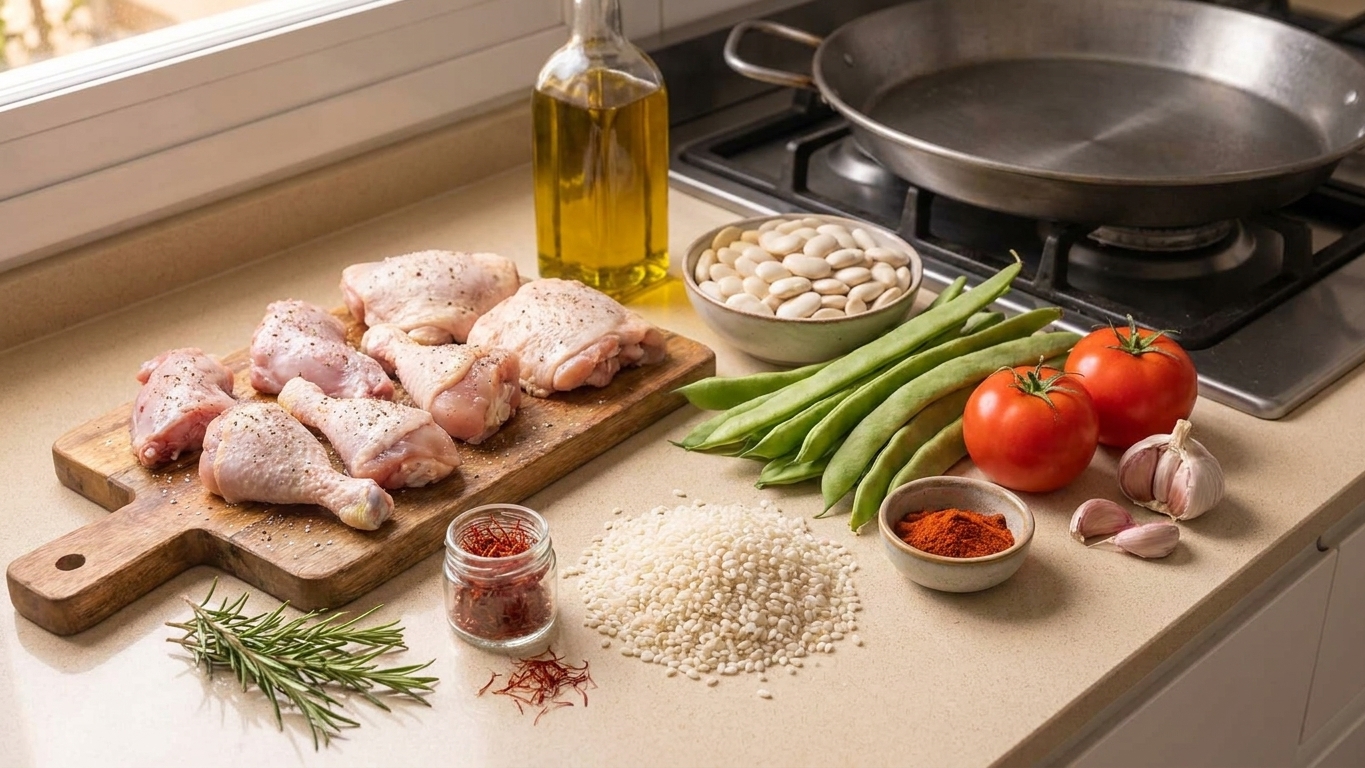
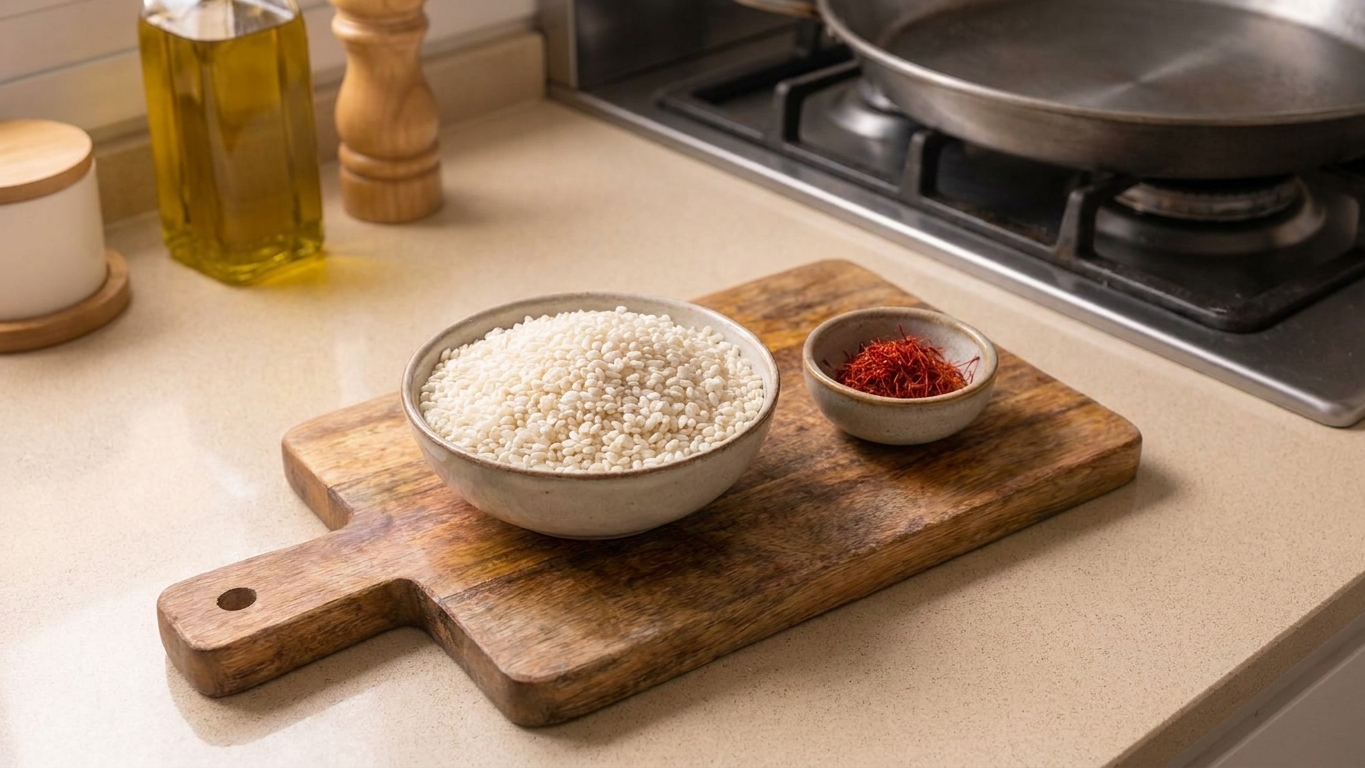
Use a short grain Spanish rice like bomba or calasparra. If you cannot find those, arborio is the best widely available substitute, but expect a slightly creamier texture and less distinct grains. Do not use jasmine or basmati.
Can I make it without rabbit?
Absolutely. Double the chicken or use a mix of chicken thighs and drumsticks. The method stays the same.
What beans are traditional in paella valenciana?
Classic versions often use garrofó (a large Valencian white bean) and flat green beans (often ferradura). Garrofó can be hard to find, so butter beans or lima beans are a very good stand-in. Some Valencian paellas also include snails, depending on the cook and the region.
Should I stir the rice?
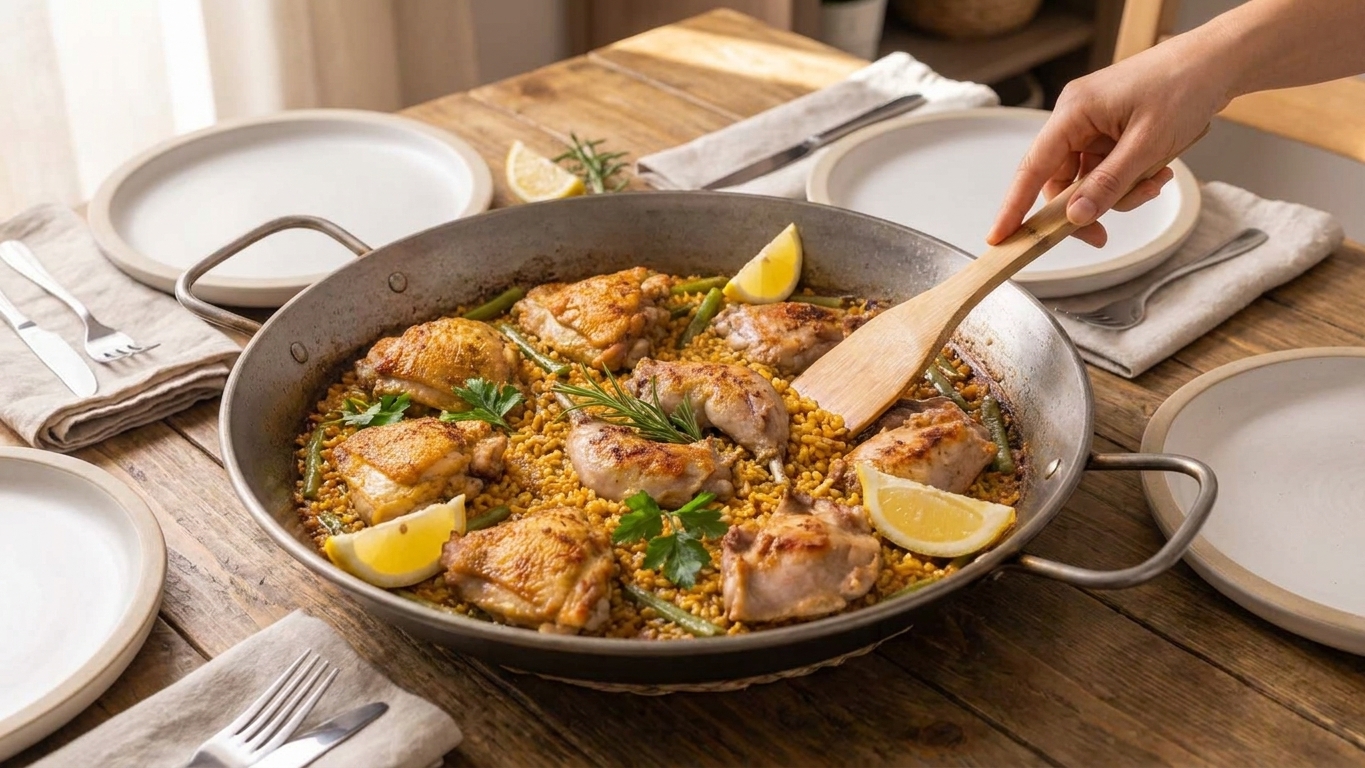
No. Once the rice is spread into an even layer, stirring breaks the surface pattern and can mess with even cooking and socarrat. You can gently shake the pan once or twice early on, but no spoon stirring.
How do I know when the socarrat is done?
You will smell a warm, toasty aroma like popcorn and roasted nuts. You may also hear a steady, gentle crackle. Once you hear that crackle hold for about 30 seconds, stop chasing darker color and pull it off the heat. If it smells sharp or burnt, stop immediately.
Can I cook paella valenciana on a regular indoor stove?
Yes. Rotate the pan a few times during cooking if your burner has hot spots. If the pan is wider than the burner, rotation is the cheat code.
My pan is smaller. Do I change anything?
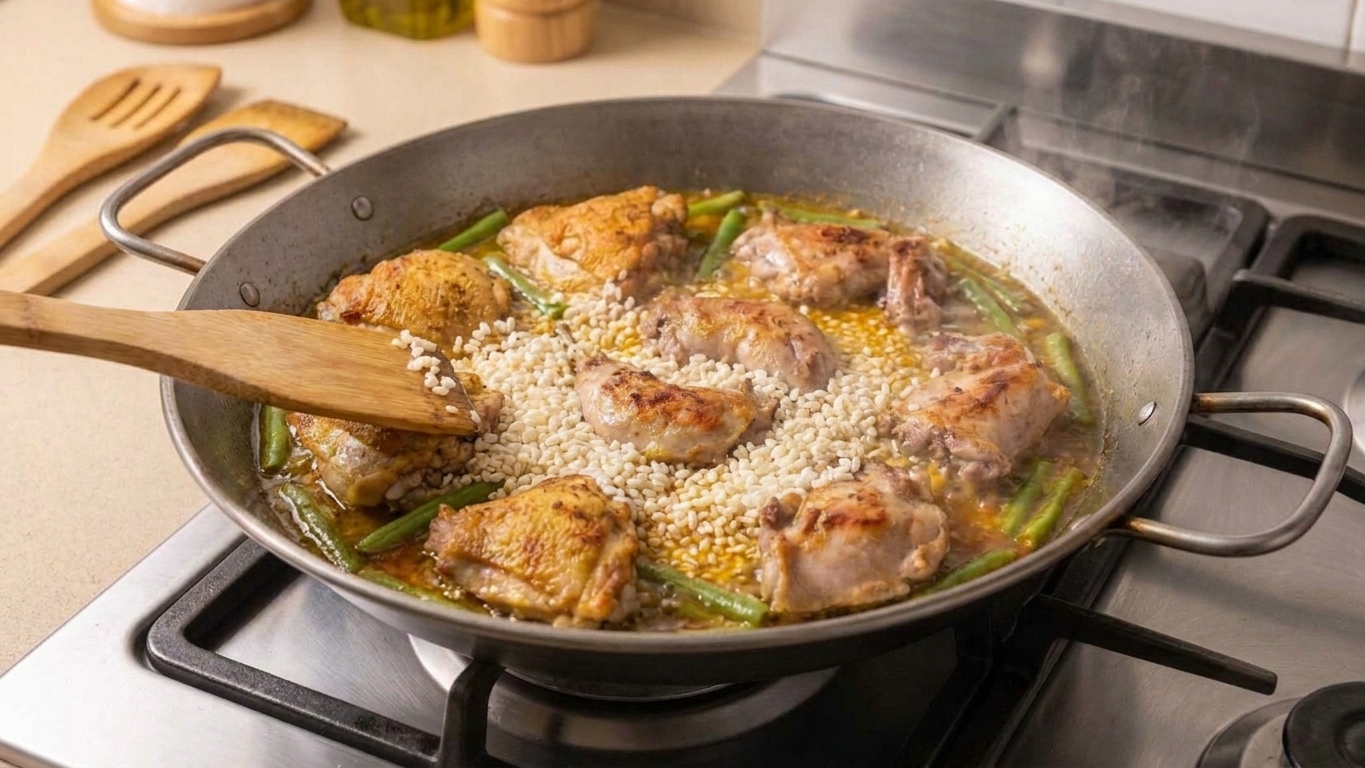
If you use a smaller pan (or one that is not very wide), the rice layer will be thicker and may need a little more time. Use the visuals: aim for broth just covering the rice by about 1/2 inch when you first add it, and add small splashes of hot broth if the pan dries out before the rice is tender.