Mom's Best Recipes
Recipe

Tortilla Española

A classic Spanish potato omelet with silky potatoes, sweet onions, and a tender center you can slice into wedges for breakfast, lunch, or tapas night.

Author By Matt Campbell
4.8
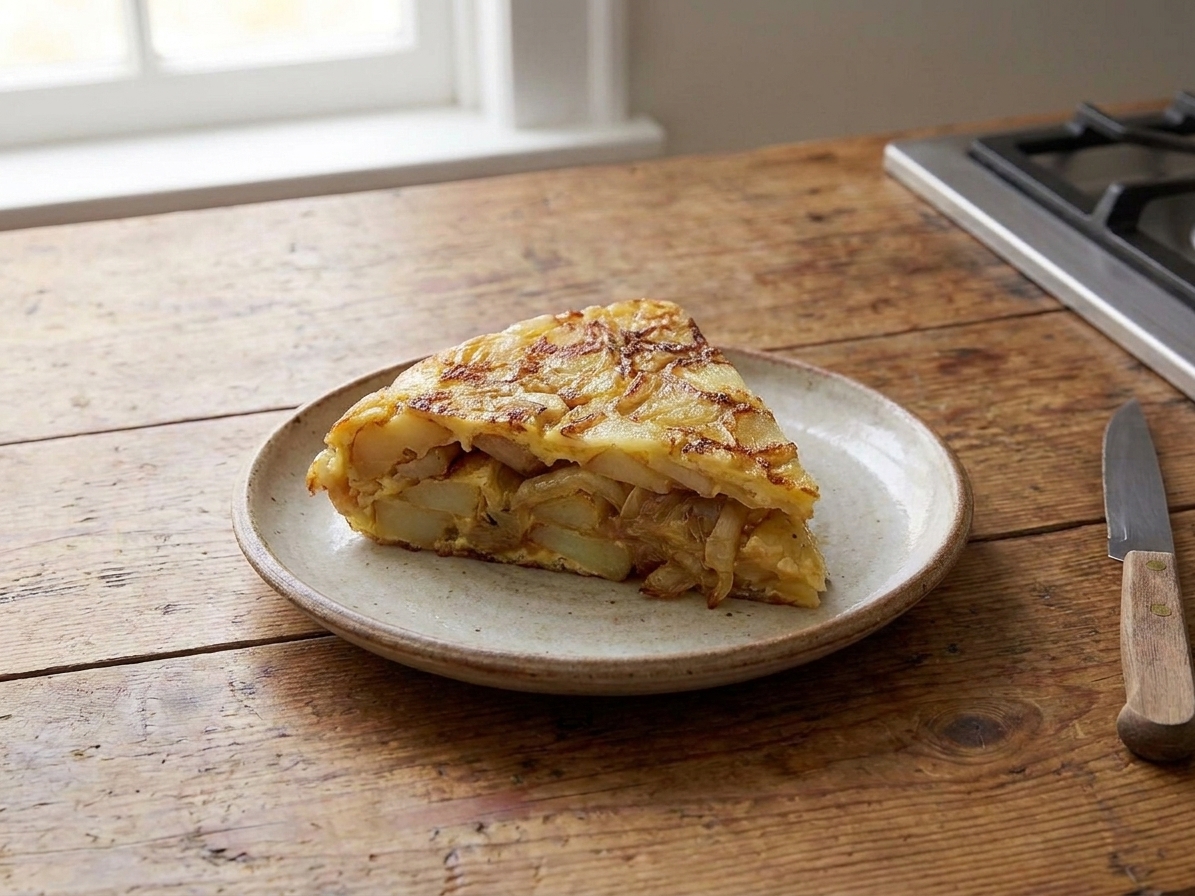
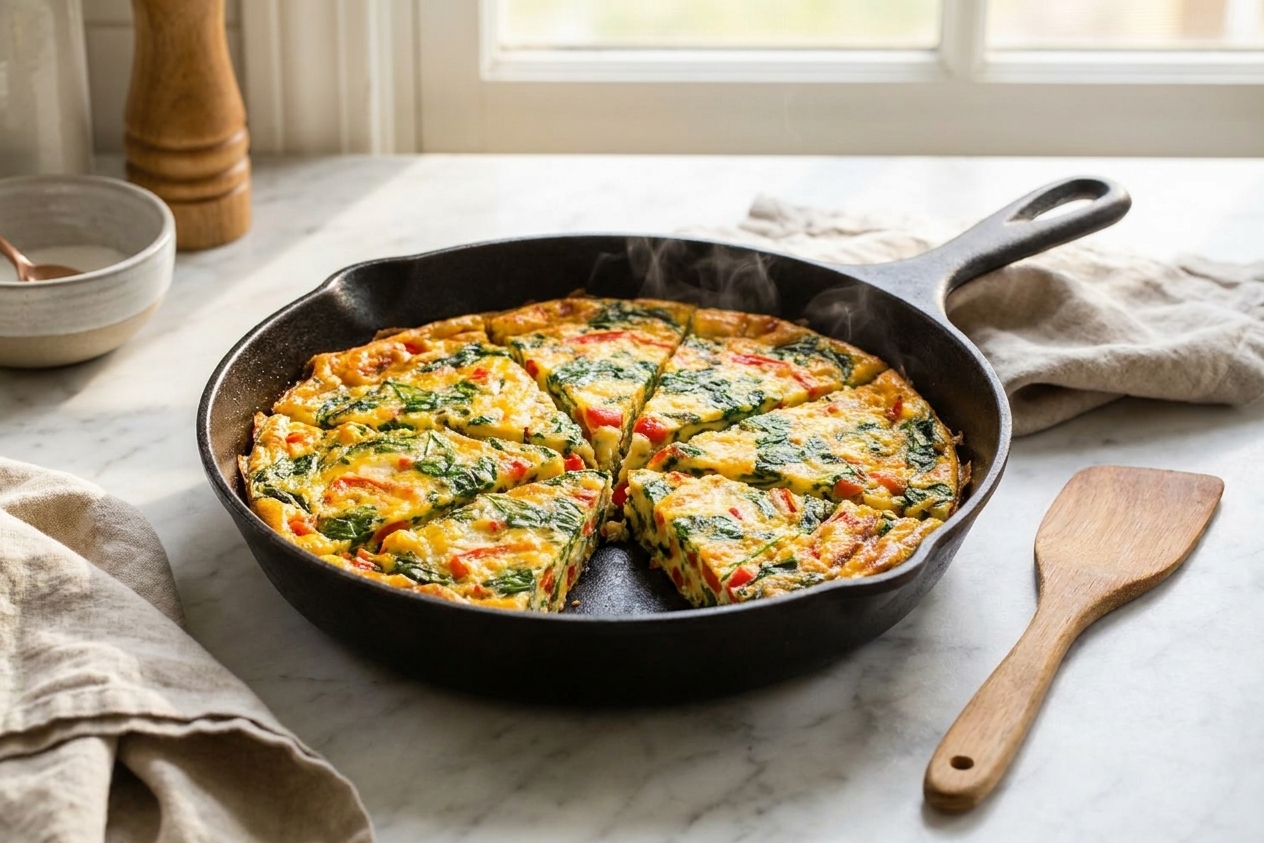
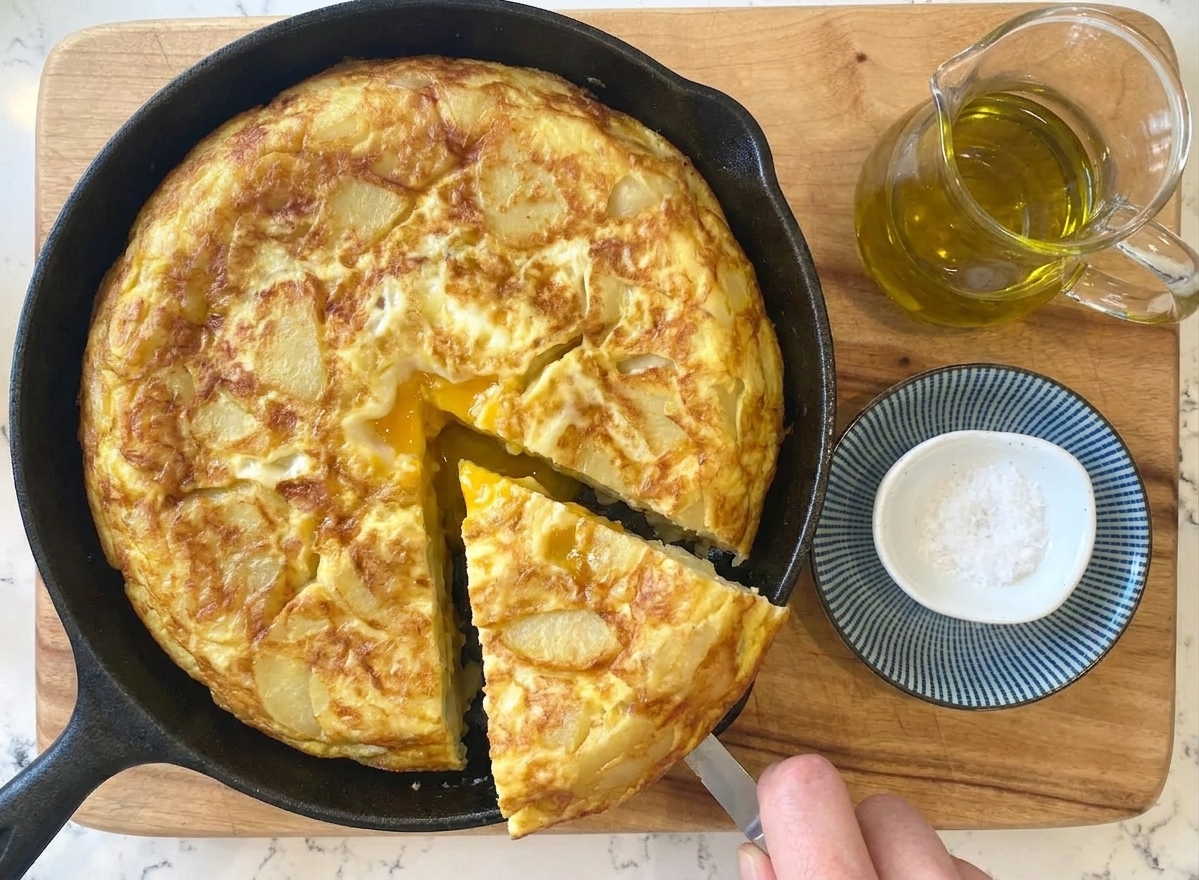
A thick, golden tortilla española in a skillet with a clean wedge cut out, showing tender potato layers and a softly set center on a warm kitchen counter

Tortilla española is one of those recipes that feels like magic the first time you pull it off. Potatoes, onions, eggs, salt, olive oil. That is basically it. And somehow you end up with a thick, golden round that slices like a pie and eats like the coziest breakfast and the easiest dinner had a very delicious baby.

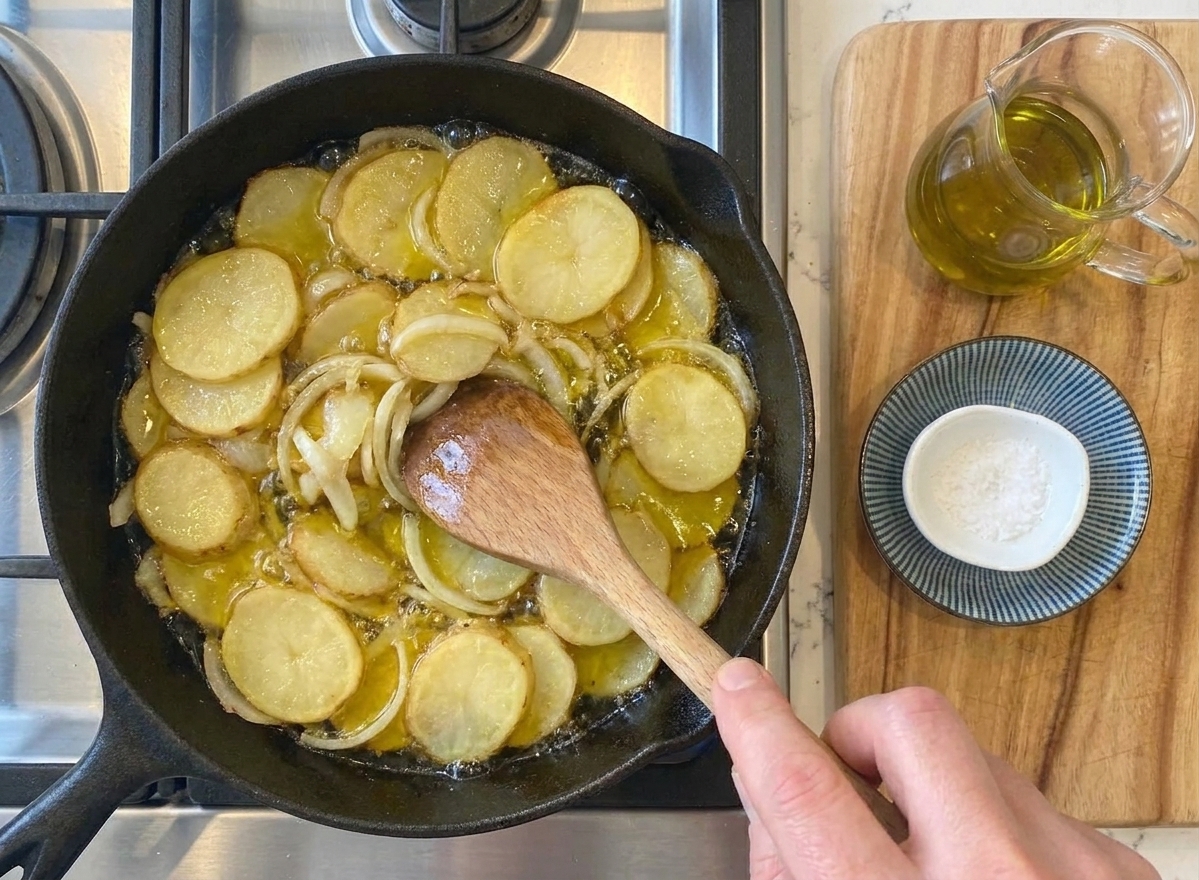
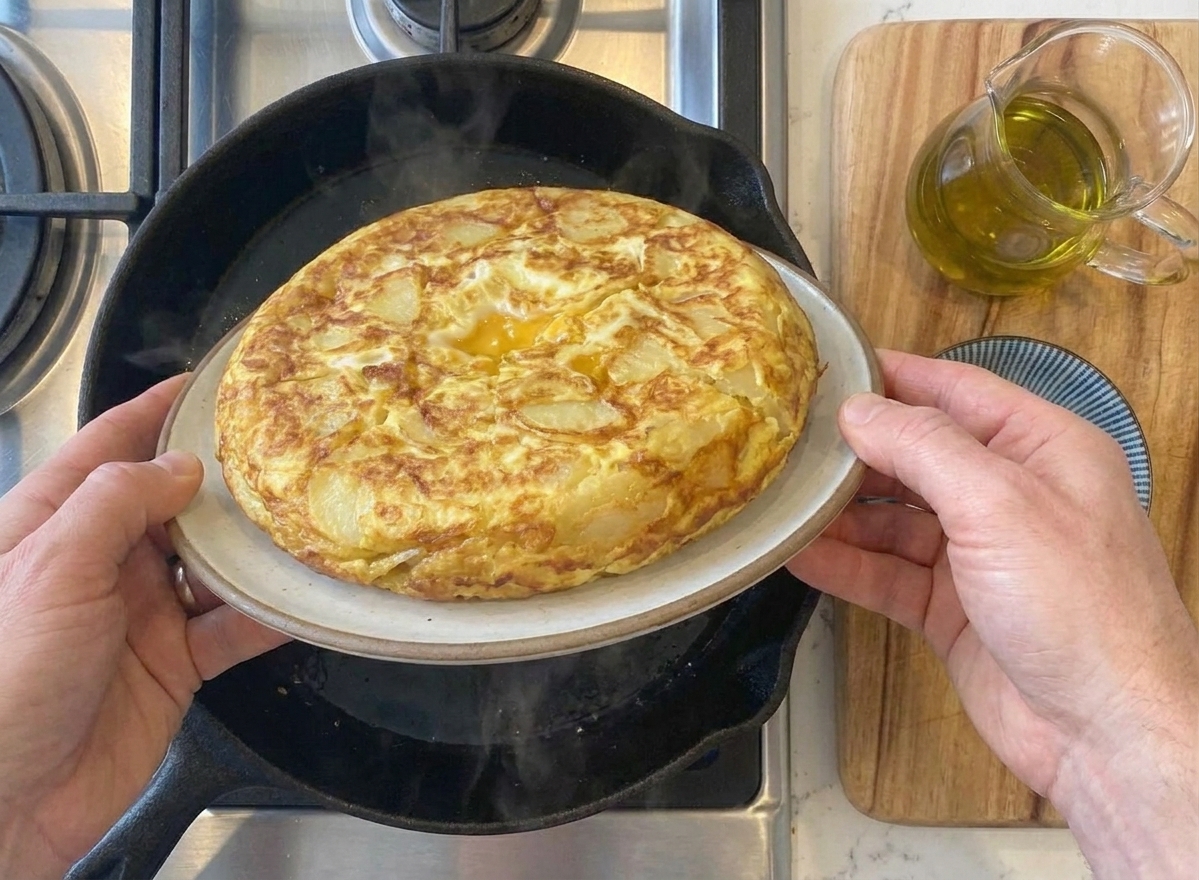
This version keeps it classic: potatoes and onions cooked low and slow in olive oil until they are soft, sweet, and almost jammy around the edges, then folded into eggs and cooked into a tender omelet you flip with a plate. Do not worry, I will talk you through the flip like a friend standing next to you, ready to catch a runaway tortilla with a spatula.

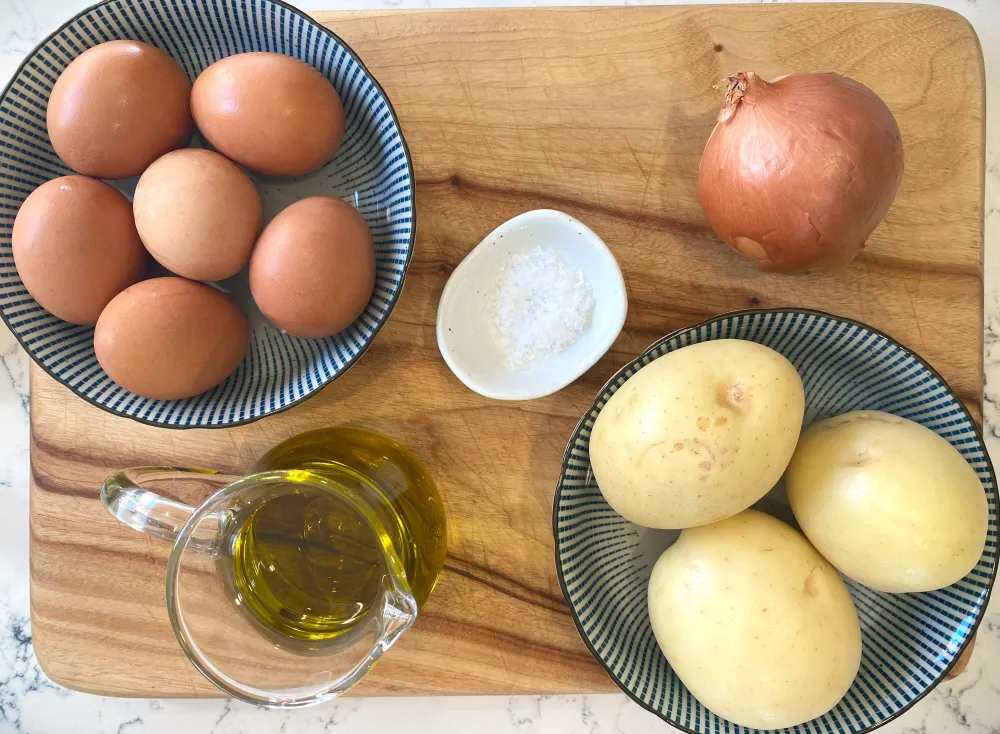
Whole Yukon Gold potatoes, a yellow onion, eggs, and a bottle of olive oil arranged on a clean kitchen counter with soft natural light

Why It Works

  • Tender potatoes, not crunchy hash browns: We gently oil-poach the potatoes and onions so the inside stays creamy and cohesive.
  • Custardy center with crisp edges: You control the doneness with heat and timing. I give cues for runny, medium, and fully set.
  • No fancy ingredients: This is a pantry classic. The only “splurge” is using decent olive oil, and you can reuse most of it after cooking.
  • Meal-prep friendly: It slices clean, travels well, and tastes great warm, room temp, or straight from the fridge at midnight.

Pairs Well With

Storage Tips

Refrigerate: Cool completely, then store wedges in an airtight container for up to 4 days.

Reheat: For best texture, warm slices in a nonstick skillet over medium-low heat with a tiny splash of olive oil, about 2 to 3 minutes per side. Microwave works in a pinch, but it softens the edges.

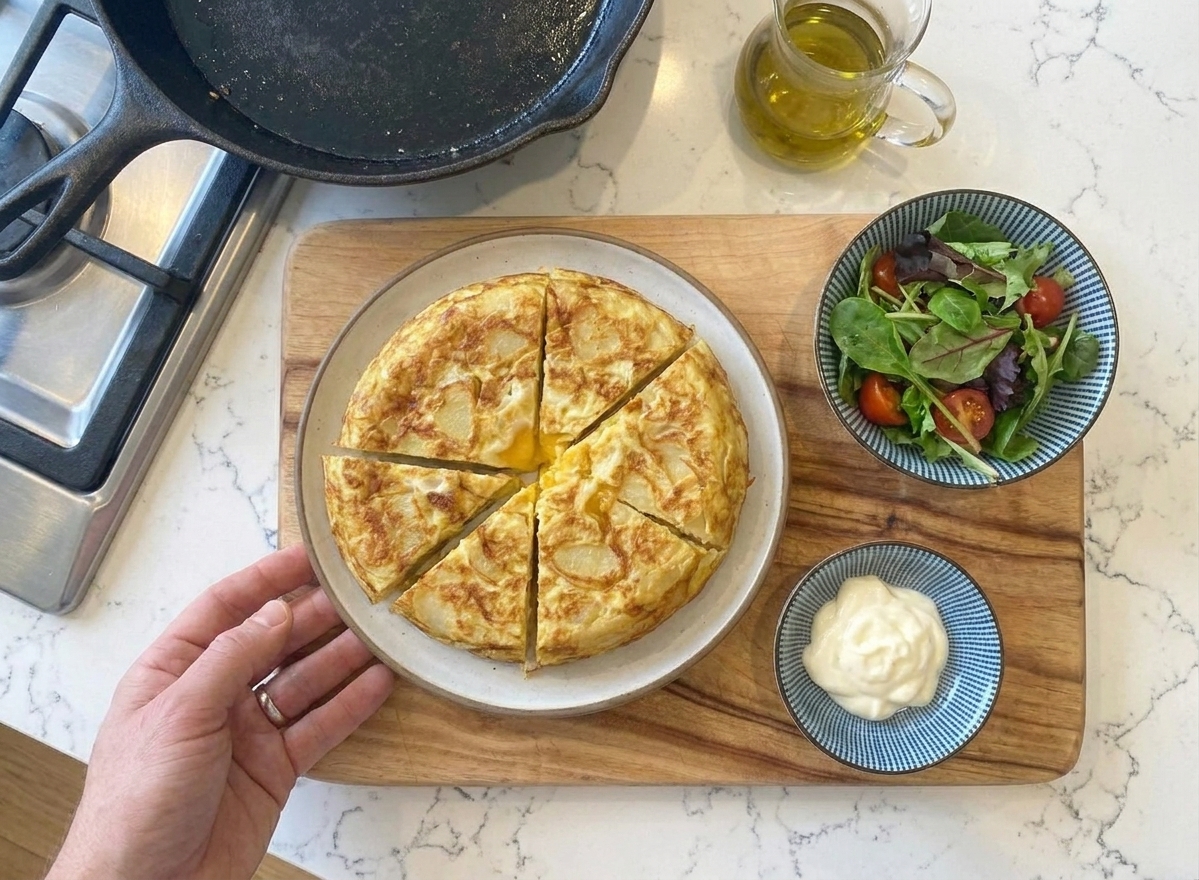
Eat it cold: Totally valid, very Spanish. Add a swipe of mayo or alioli, a pinch of flaky salt, and you are set.

Freeze: You can freeze wedges wrapped tightly for up to 2 months, but expect some texture changes. Thaw overnight in the fridge and reheat in a skillet. The eggs can turn slightly spongy and may weep a little moisture, but it is still tasty.

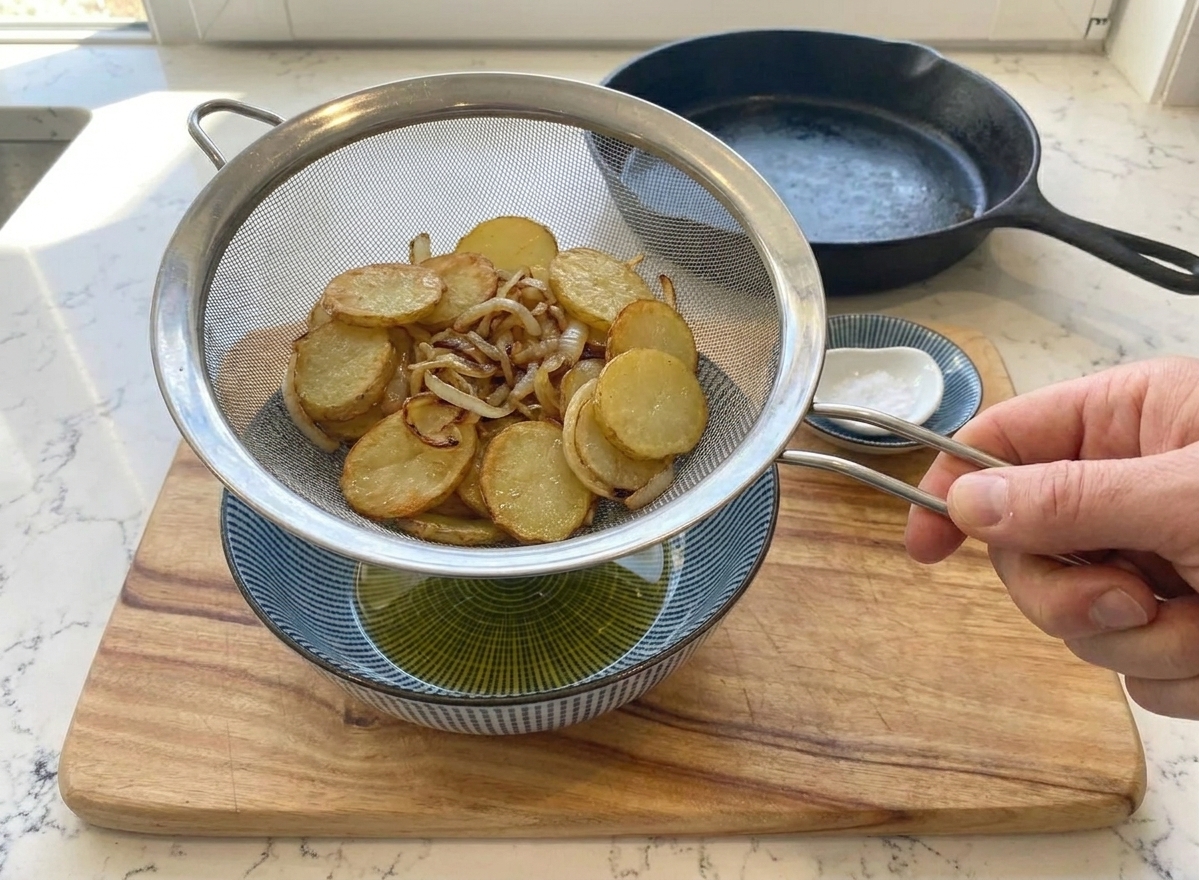
About the leftover oil: Strain the reserved oil, cool, and refrigerate in a jar. Use it for roasting vegetables or frying eggs. It will taste pleasantly oniony. Try to use it within 1 to 2 weeks.

Common Questions

Do I have to flip it? Can I finish it in the oven?

You can finish it in the oven if flipping stresses you out. Cook the tortilla on the stovetop until the edges set and the bottom is golden, then broil for 1 to 3 minutes, watching closely. Only do this if your skillet and handle are broiler-safe (many nonstick pans are not). If you are not sure, transfer the mixture to a lightly oiled oven-safe pan before broiling. You will lose the classic two-sided crust, but it is still delicious.

What potatoes are best for tortilla española?

Yukon Gold are my favorite because they go creamy without turning to mush. Russets work too, but they can break down faster, so be gentle when stirring.

How thin should I slice the potatoes?

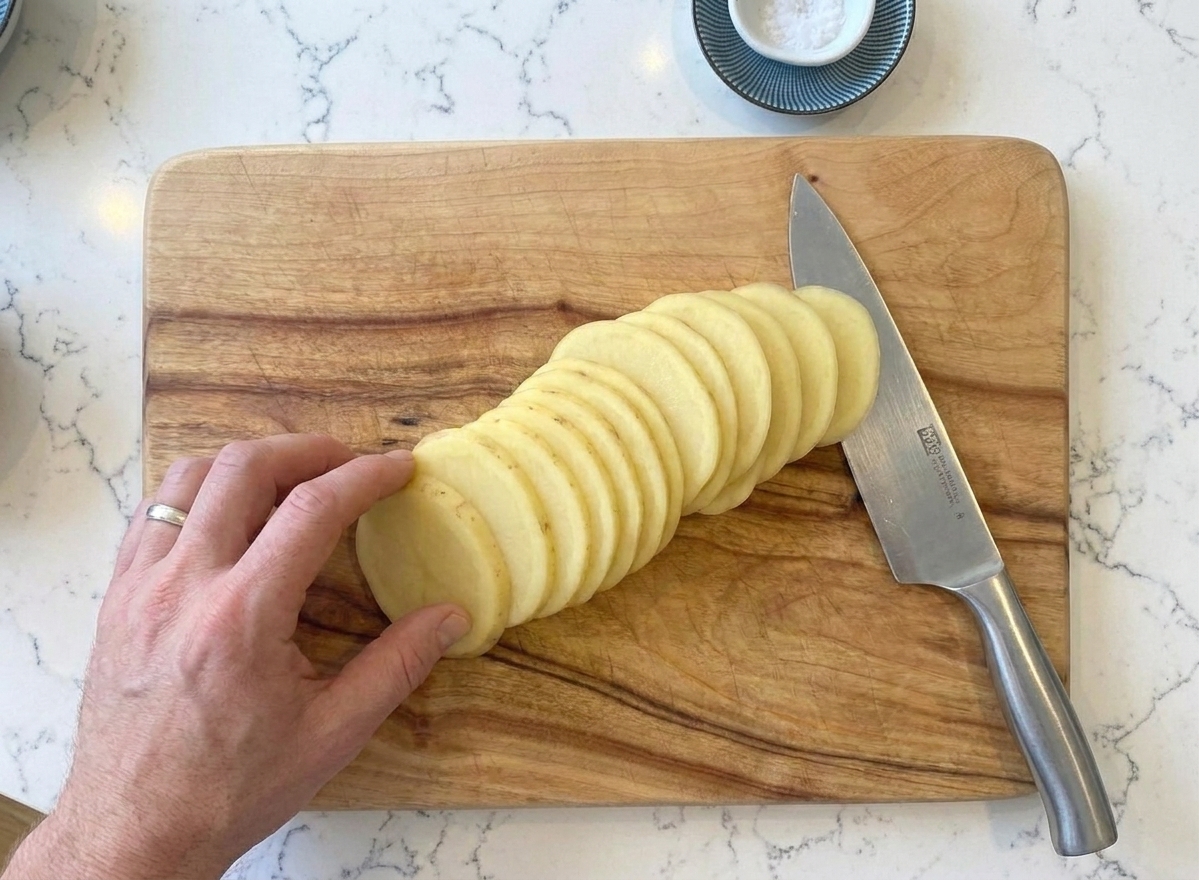
Aim for about 1/8 inch so the slices cook evenly and turn silky. A mandoline makes this fast, but a steady knife works just fine. The key is keeping the slices similar in thickness so some do not turn to paste while others stay firm.

How do I know the potatoes are done?

They should be very tender. A slice should crush easily between your fingers or break when pressed with a spoon. If they still feel snappy or resistant, keep cooking. This is where tortillas fall apart later.

Should the center be runny?

In Spain you will see everything from very soft to fully set. For a family-friendly middle ground, aim for a center that is just barely set, like a soft scramble. If you are serving anyone who is pregnant, immunocompromised, or prefers fully cooked eggs, keep it on the heat a few minutes longer. If you want a softer center with a little more peace of mind, consider using pasteurized eggs.

Why did my tortilla fall apart?

Common culprits: potatoes not cooked enough (they should be very tender), heat too high (eggs seize before they bind), or flipping too early (top still liquid). Let it set longer, and use a plate larger than the skillet.

Can I add chorizo, peppers, or cheese?

Yes, but then we are moving into “tortilla with stuff,” which I fully support. Keep add-ins modest so the egg can still hold everything together. Cook and drain add-ins first so you do not add extra moisture.

The first time I made tortilla española, I treated the flip like a stunt. Deep breath, plate in one hand, skillet in the other, and a tiny prayer to the kitchen gods. It landed slightly crooked, I pretended it was intentional, and we ate it anyway. That is kind of the point of this dish. It is humble food that forgives you. Make it once, get a little bolder the next time, and soon you will be the person casually flipping a whole potato omelet like it is no big deal.