Mom's Best Recipes
Recipe

Pan-Seared Scallops

Golden crust, tender centers, and a quick lemon butter pan sauce. Weeknight-fancy in 15 minutes.

Author By Matt Campbell
4.8
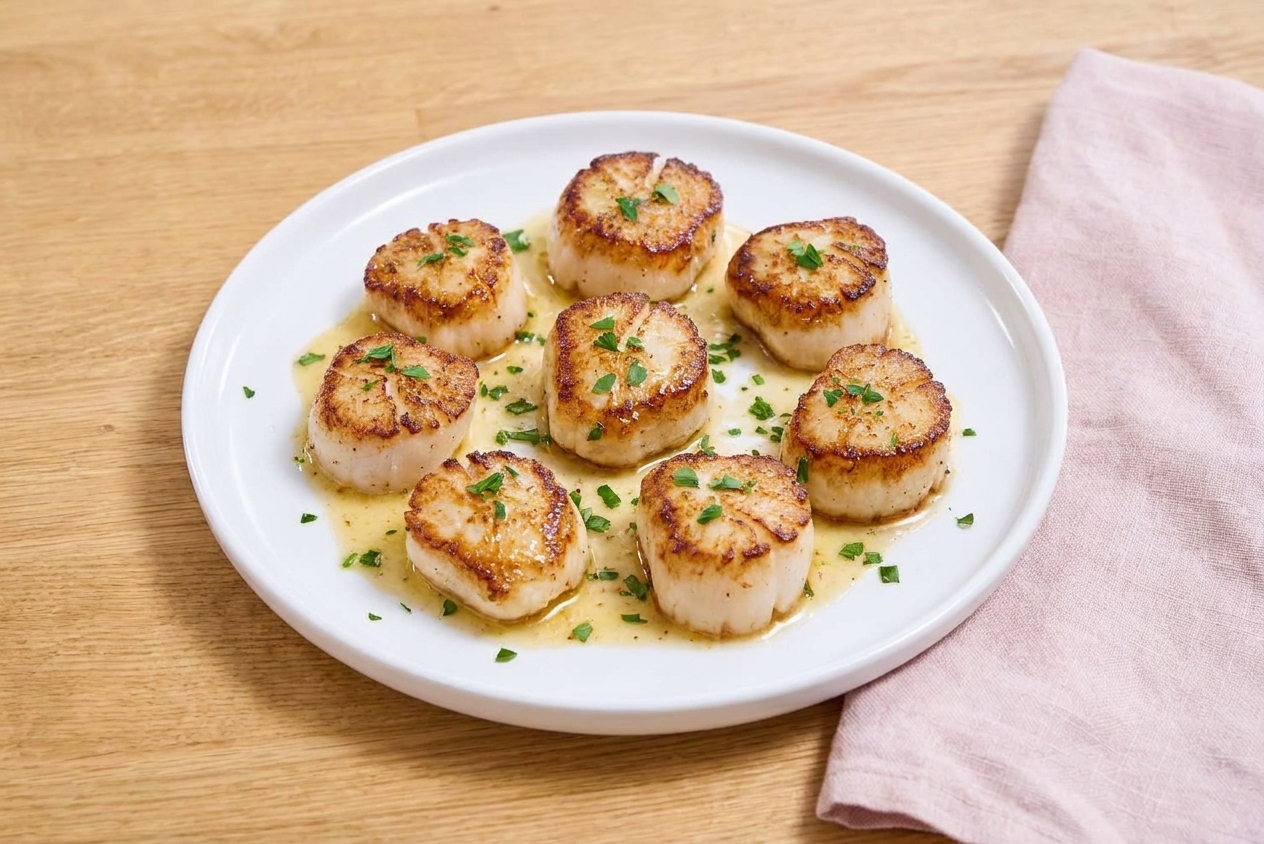
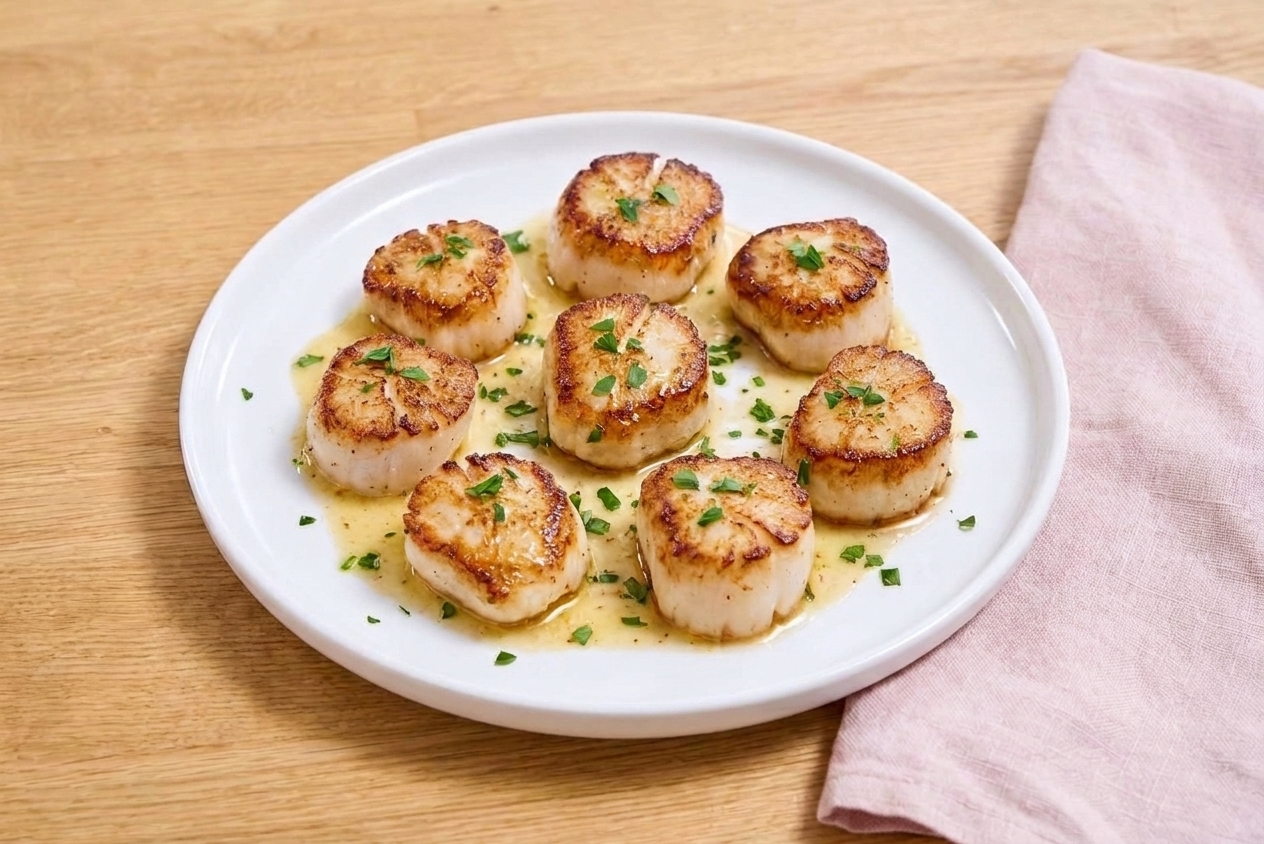
A white plate of pan-seared sea scallops with a deep golden crust, spooned with glossy lemon butter sauce and scattered parsley on a neutral linen table setting

If you want a dinner that feels like you made a very bold, very correct decision, make pan-seared scallops. They cook fast, they look fancy, and that first bite has the exact combo I’m always chasing: crisp edges, sweet-tender centers, and a bright, buttery sauce you will absolutely swipe with bread when nobody’s looking.

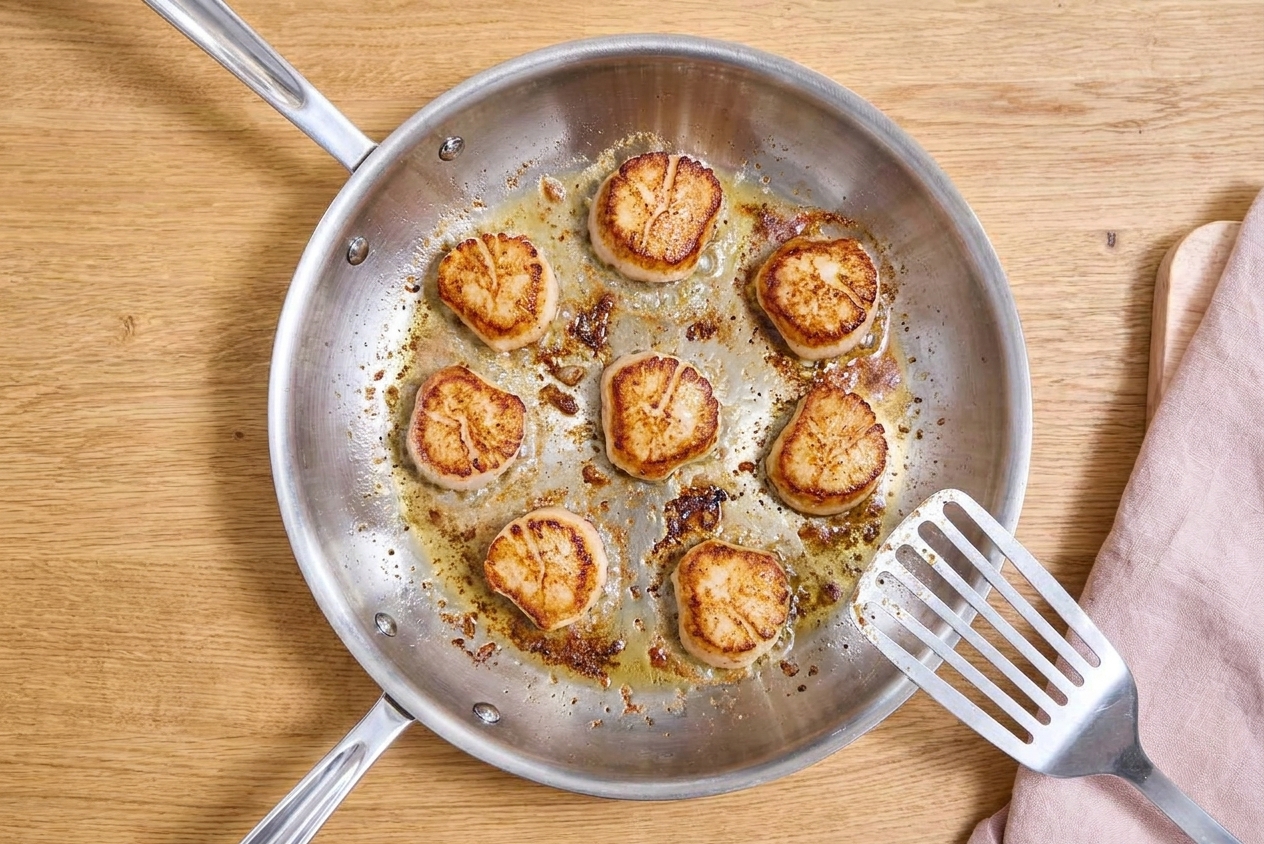
The only “hard” part is getting the sear. That is less about talent and more about a tiny checklist: dry scallops, hot pan, and leave them alone. Do those three things and you are basically running a little seafood steakhouse out of your kitchen.

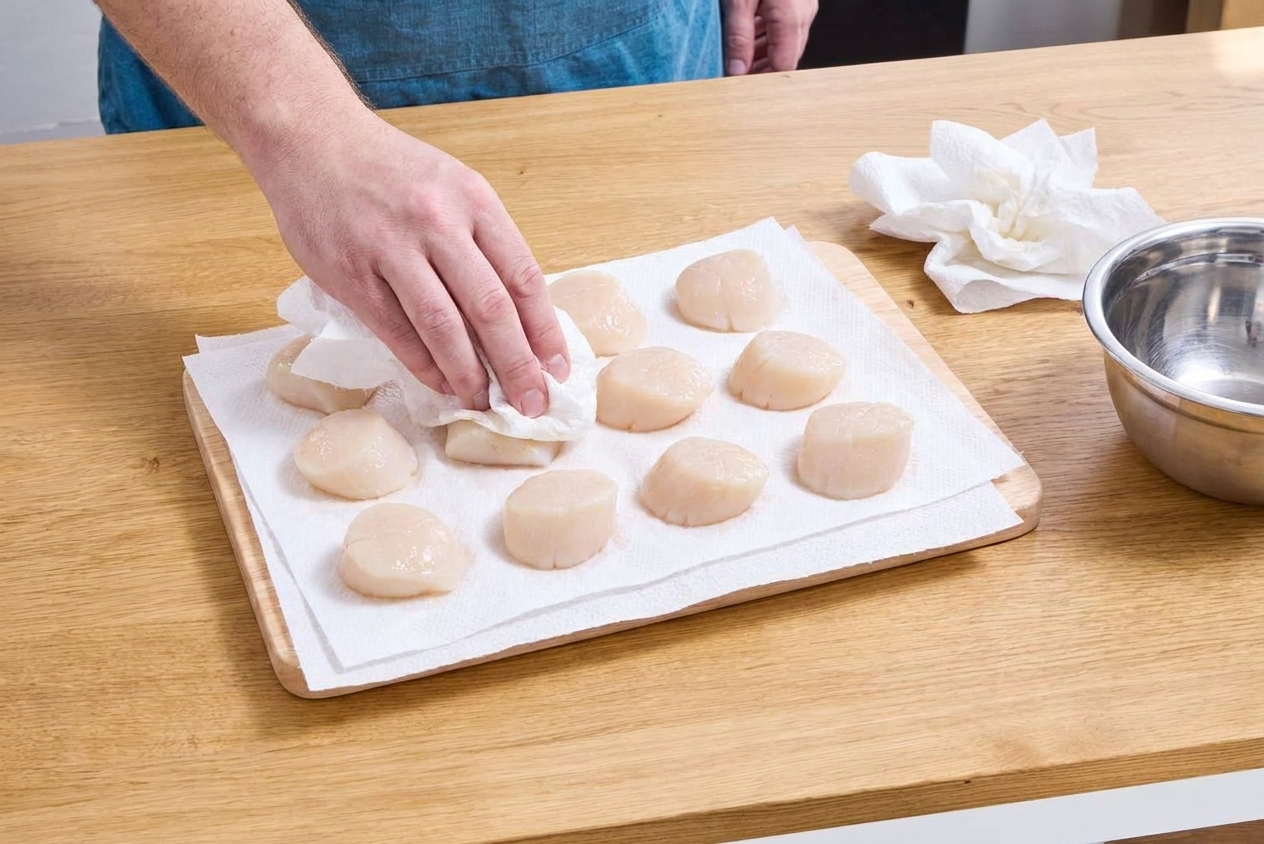
Raw sea scallops laid on paper towels on a cutting board, being patted very dry with another paper towel on a home kitchen counter

Why It Works

  • Restaurant-style crust: Drying the scallops and using a hot, heavy pan gives you that caramelized, golden-brown surface.
  • Tender, not rubbery: A quick sear keeps the centers sweet and juicy.
  • One pan sauce, no drama: A fast lemon butter pan sauce uses the browned bits for big flavor in about a minute.
  • Flexible for real life: Works with fresh or properly thawed frozen scallops, and the sauce plays well with pasta, rice, or veggies.

Pairs Well With

Storage Tips

Scallops are at their best right out of the pan, but leftovers can still be good if you treat them gently.

Refrigerate

Store cooled scallops in an airtight container for up to 2 days. Keep any extra sauce separate if you can.

Reheat (best methods)

  • Low skillet reheat: Warm a small splash of butter or oil over low heat. Add scallops and warm 30 to 60 seconds per side, just until heated through.
  • Cold and sliced: Honestly, scallops are great chilled on a salad. Slice them and use that lemony sauce as a dressing base.

Avoid

  • Microwave: It turns “tender” into “bouncy” fast.
  • Freezing cooked scallops: Texture takes a hit.

Common Questions

What kind of scallops should I buy?

Look for large sea scallops (not bay scallops). If the label says “dry” scallops, that’s ideal. “Wet” scallops are treated with a solution that can make searing harder because they release more water.

How do I tell if scallops are wet?

Wet scallops often look very bright white and may sit in milky liquid in the package. Dry scallops look a little more natural, beige to pale pink. Either way, you can still cook them. Just be extra serious about patting them dry.

Why didn’t my scallops brown?

  • They were not dry enough.
  • Your pan was not hot enough.
  • The pan was crowded, so they steamed instead of seared.
  • You moved them around too early. Give them time to form a crust.

How long do you cook scallops?

For large sea scallops, usually 2 to 3 minutes on the first side, then 1 to 2 minutes on the second side. If they are extra thick (like very large U10s), they may need a touch longer, but the goal is still a quick cook. The center should be just opaque and still tender.

How do I know scallops are done without a thermometer?

Look for scallops that are opaque around the edges with a center that’s just barely translucent. They should feel springy when pressed, not firm or rubbery. If you see a lot of liquid pooling, you’ve likely gone a little too long.

Can I use frozen scallops?

Yes. Thaw overnight in the fridge (best), then drain and pat very dry. If they are very wet after thawing, lay them on paper towels for 10 minutes, then pat again. Avoid thawing at room temperature.

What internal temperature should scallops be?

US food-safety guidance is often cited as 145°F for seafood. Many people prefer scallops pulled earlier for tenderness. If you use a thermometer, aim around 120 to 130°F in the center for a softer texture, and cook longer if you prefer firmer. Note that 120 to 130°F is a texture preference and is below conservative food-safety recommendations.

What sauce goes best with scallops?

Lemon butter is the classic for a reason. Garlic, capers, white wine, or a little Dijon also fit right in if you want to riff.

The first time I tried to cook scallops at home, I treated them like chicken. I poked them, flipped them early, and basically hovered like an anxious lifeguard. They steamed. They turned pale and kind of sad.

Then I learned the scallop truth: dry them like you mean it, get the pan hot, and stop touching them. Now scallops are my favorite “I want to impress someone but also I’m tired” meal. They take less time than deciding what to watch while you eat, and they make your kitchen smell like you know what you’re doing.