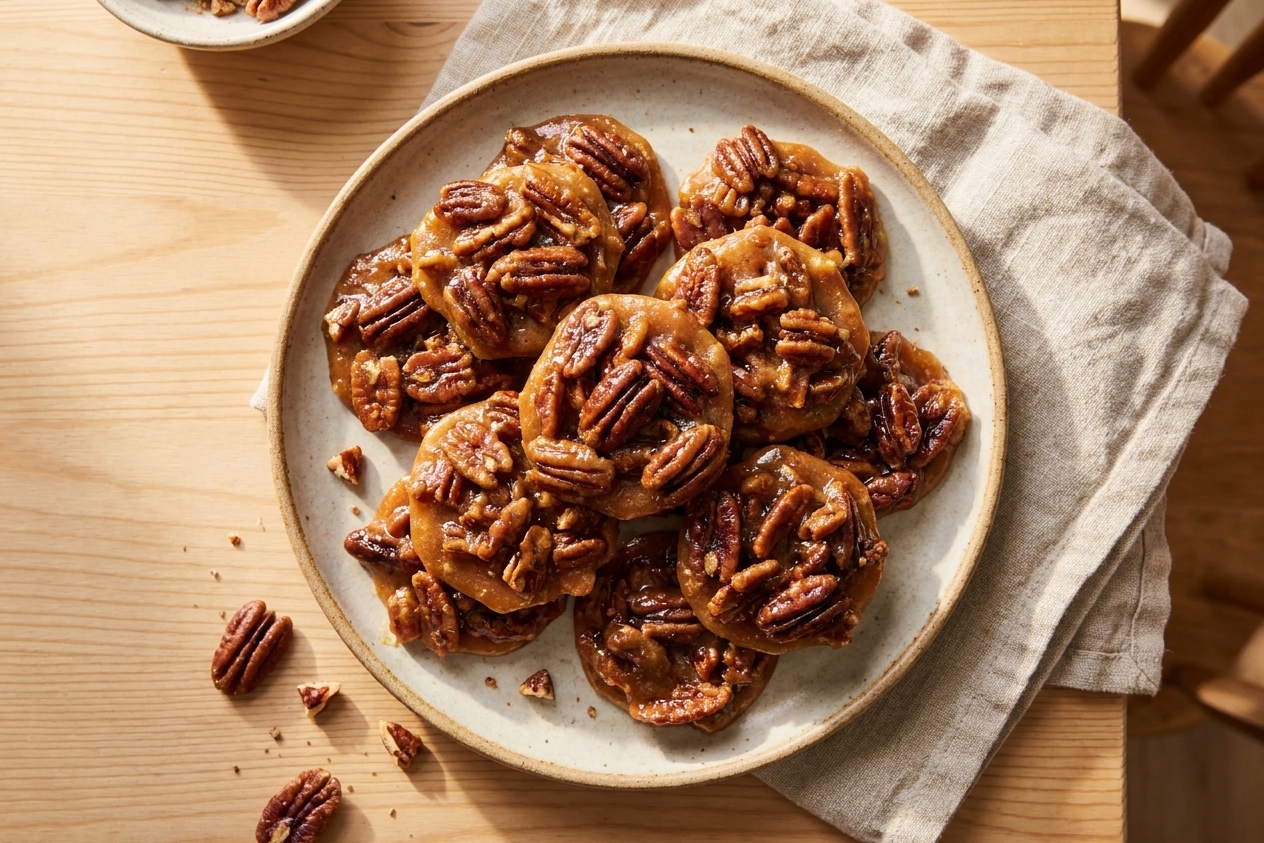
What is a pecan praline supposed to taste and feel like?
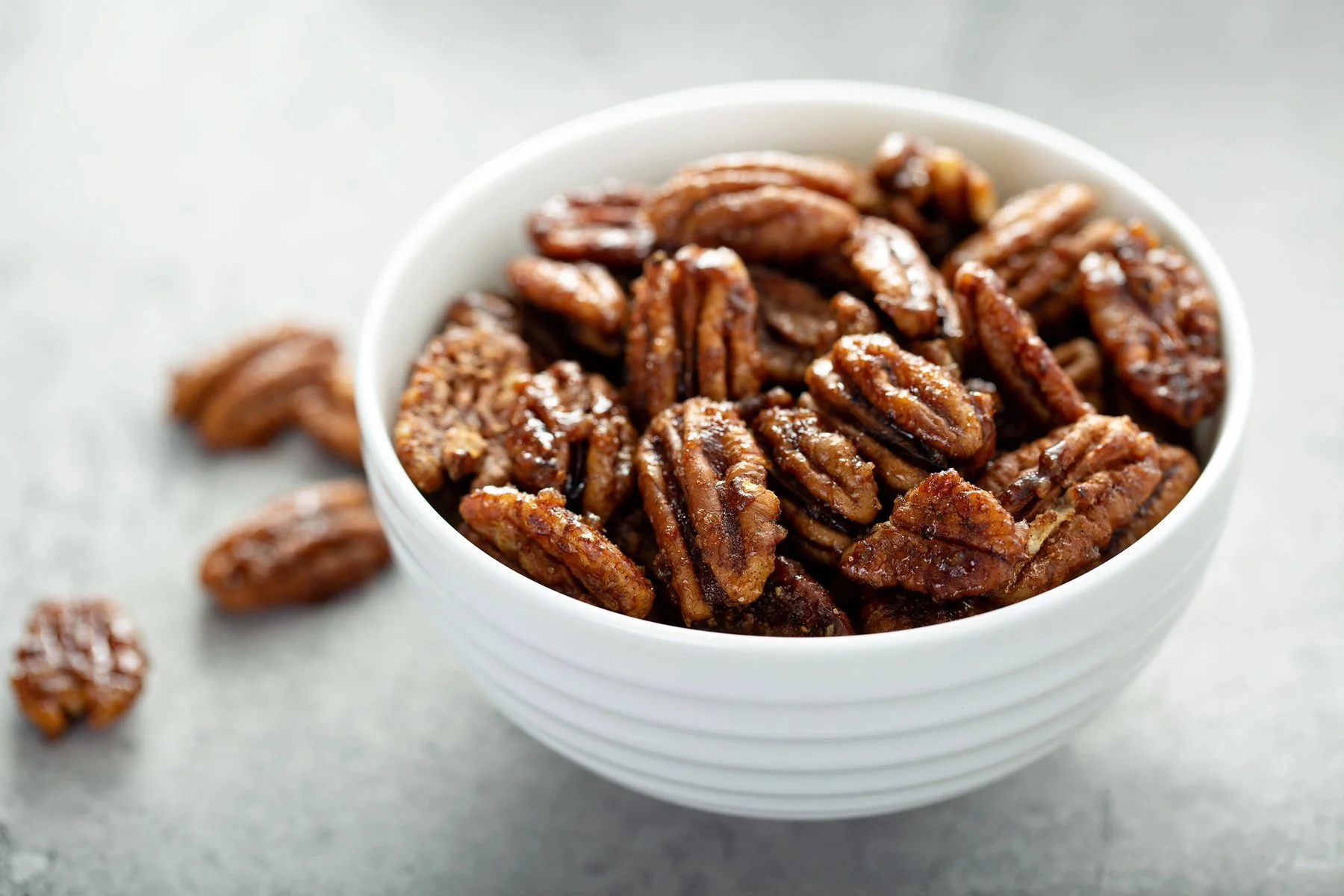
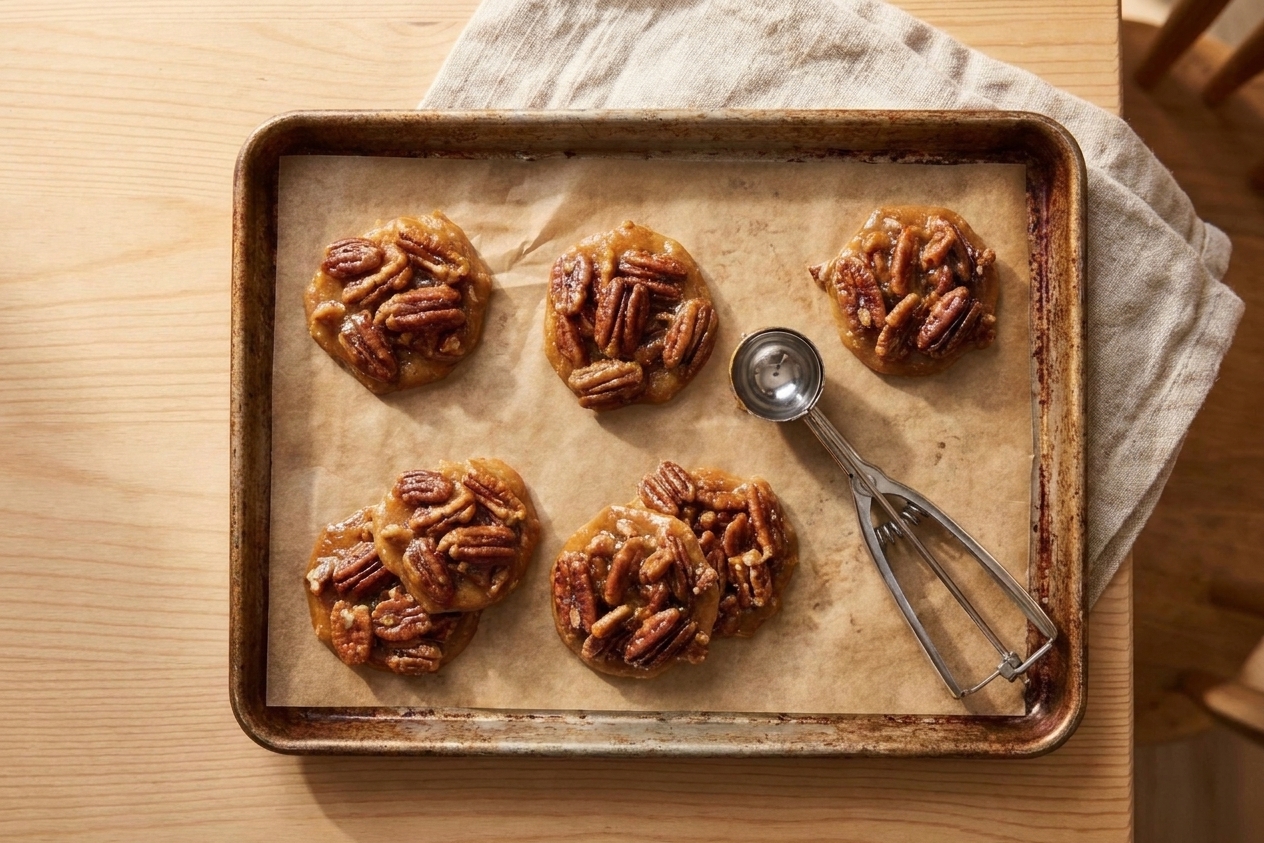
Sweet and buttery with a strong toasted-pecan vibe. Texture-wise, think set and firm but not rock hard, with a creamy, slightly grainy bite (that is the signature).
Why did my pralines not set?
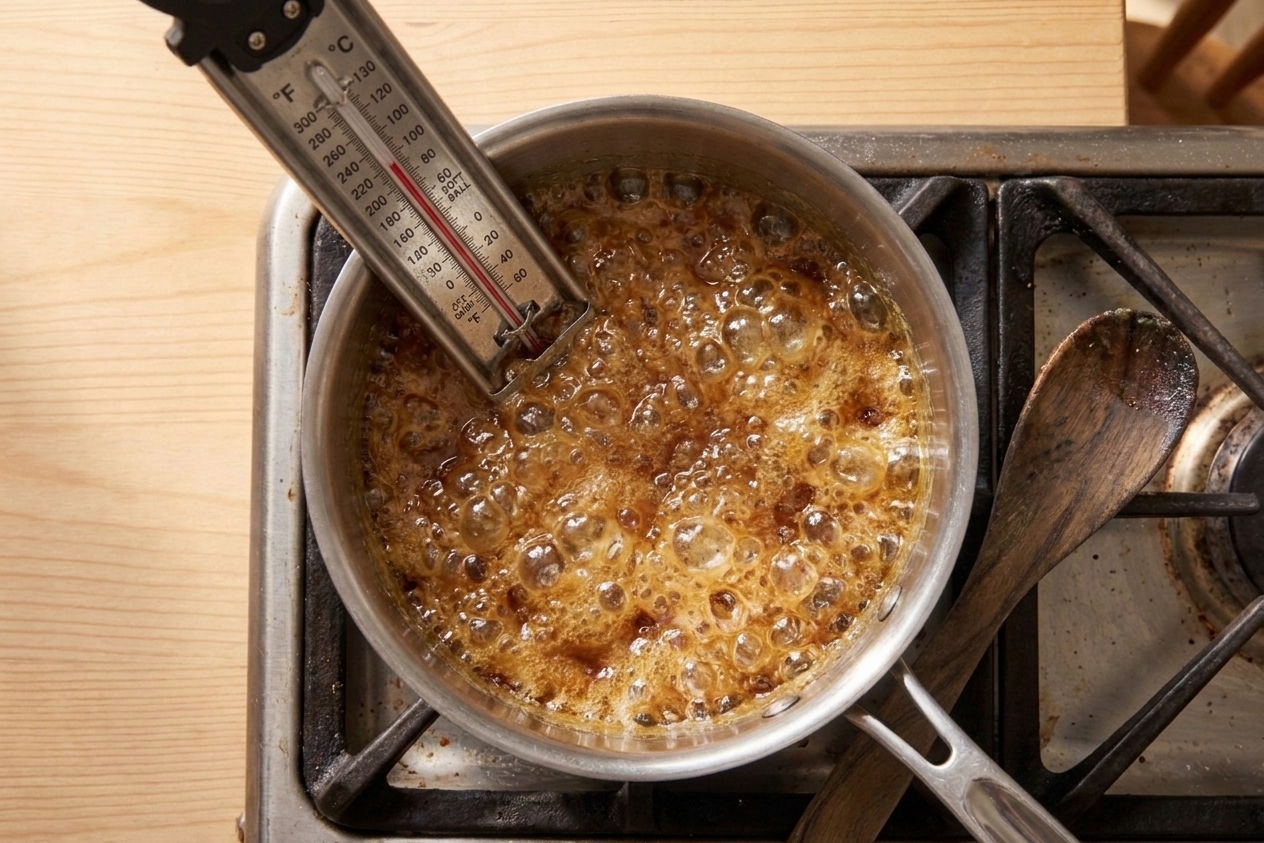
Most common reasons: you did not cook the syrup hot enough, your thermometer was off, or it was very humid. Next time, cook to 235°F to 240°F (soft-ball stage) and make sure you beat the mixture until it turns dull and thickens before scooping. In damp weather, you may need to aim a touch higher, closer to 238°F to 242°F.
Why did my pralines turn out too hard?
They likely cooked past soft-ball stage. Pull the pot off the heat closer to 235°F to 238°F if your stove runs hot, and avoid scraping crystallized sugar from the sides into the pot.
Do I need a candy thermometer?
It helps a lot, especially if you are new to candy. You can absolutely do this without one using the cold water test, but a thermometer makes the “set” moment much more predictable.
Can I use milk instead of heavy cream?
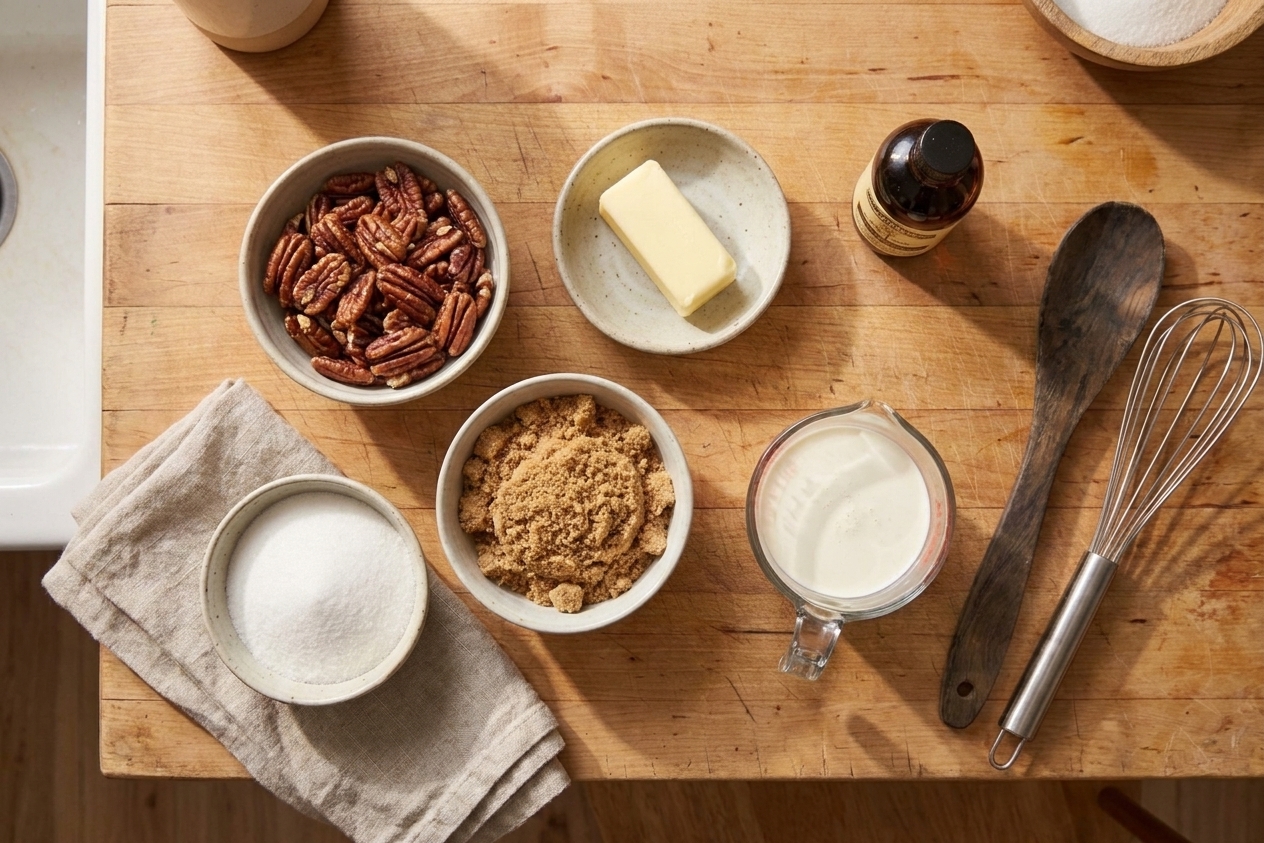
You can, but the pralines will be less rich and a bit less creamy. Milk also scorches more easily, so use whole milk, keep the heat a little gentler, and stir enough to prevent scorching while the sugars dissolve.
Can I make these without corn syrup?
Yes. This recipe skips it. Corn syrup can help prevent crystallization, but beating at the right time gives you the traditional praline texture anyway.
Why are my pralines grainy or crumbly?
A little grain is normal (and desirable), but if they are very sandy or crumbly, the syrup may have crystallized too much or cooked a bit too far. Try stirring less once the mixture is boiling, brushing down sugar crystals on the pot sides, and pulling the pot off heat right at soft-ball stage.
What if my mixture never turns matte and thick?
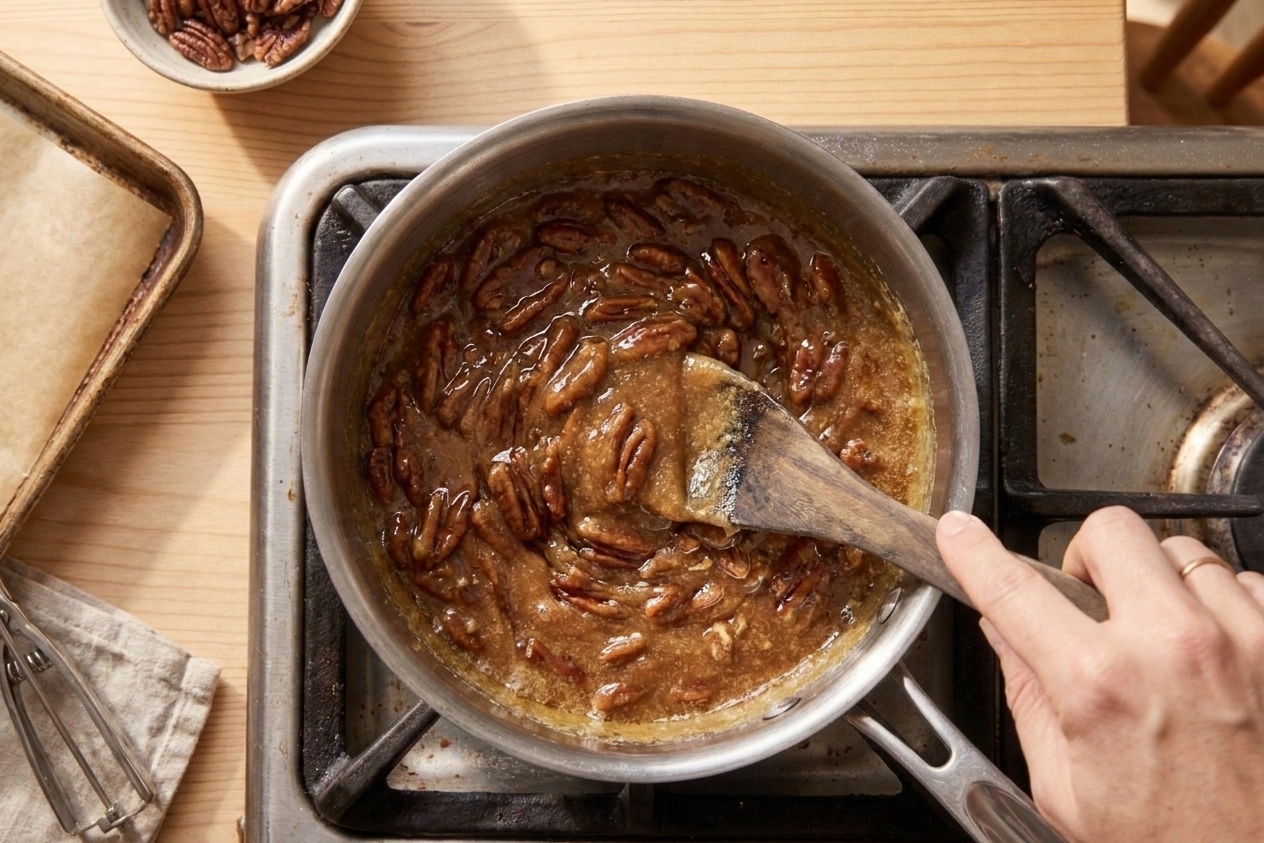
Usually it is slightly undercooked, or you stopped beating too soon. Make sure you hit soft-ball stage, then keep stirring off heat until you see that glossy-to-dull change and the mixture starts to mound when lifted.
Any high altitude tips?
Yes. At higher elevations, water boils at a lower temperature, so candy stages can shift. You may need to lower the target temperature slightly. If you know your local “boiling water” temp, you can adjust candy temps by a similar difference.