Mom's Best Recipes
Recipe

Pellet Smoker Pulled Pork

Big bark, juicy pull, and a tangy finishing sauce that wakes everything up.

Author By Matt Campbell
4.8
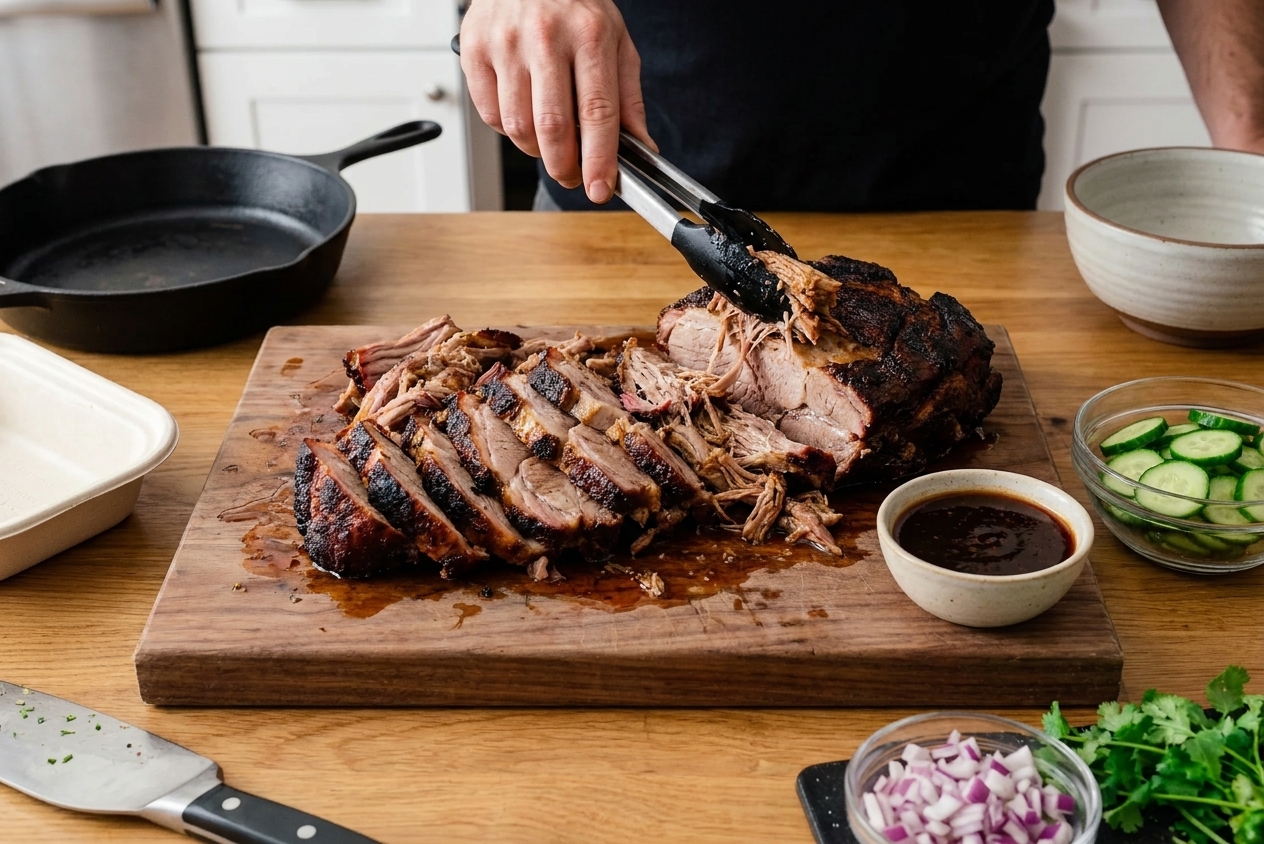
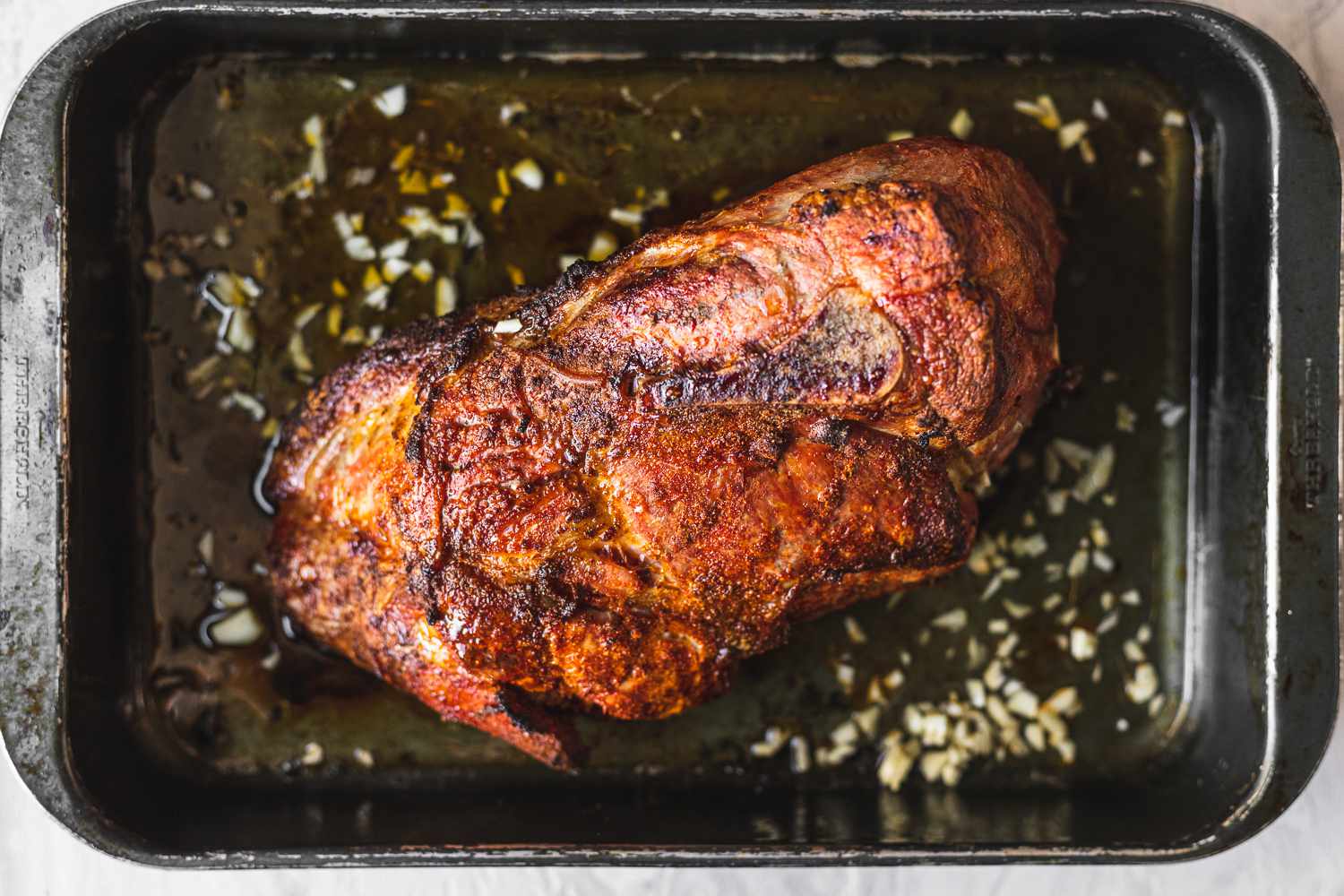
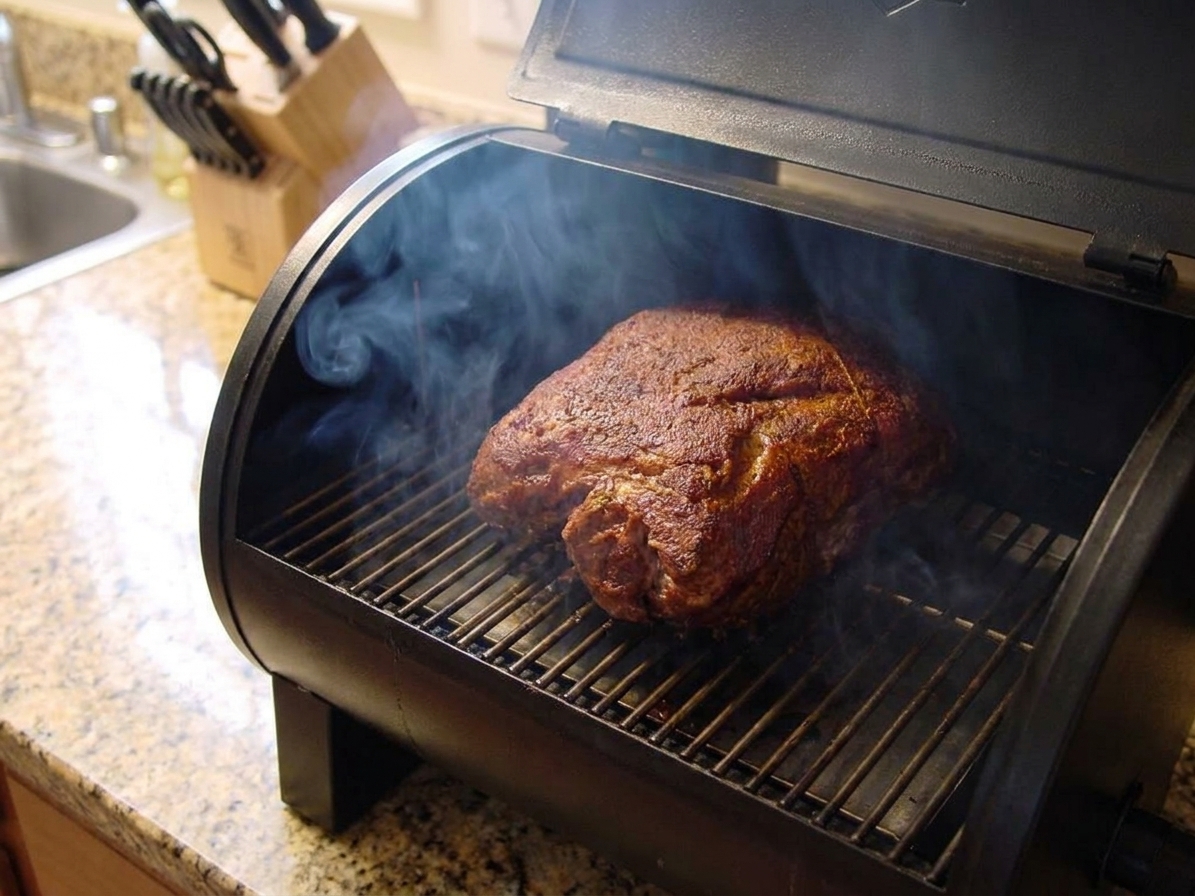
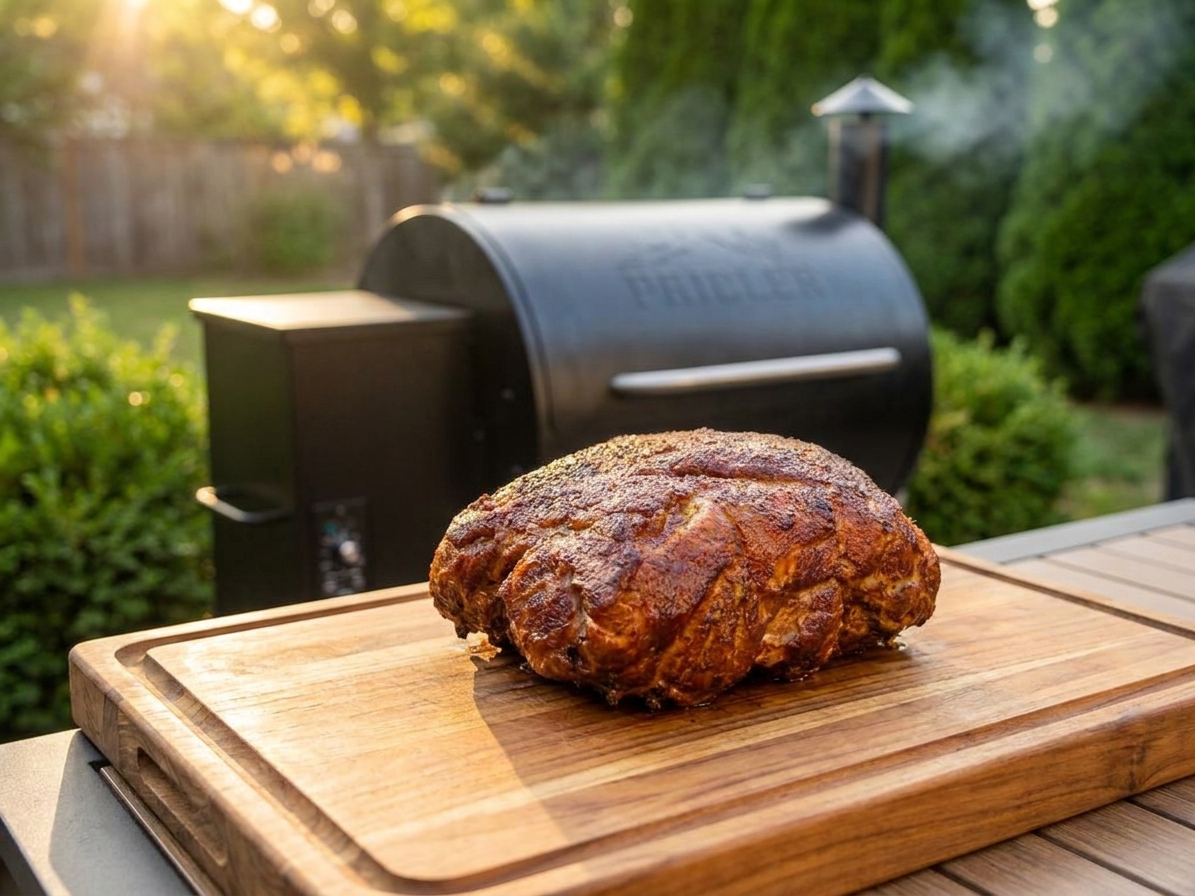
A golden-brown smoked pork shoulder with dark bark resting on a wooden cutting board beside a pellet smoker, warm backyard light

Pellet smokers are basically the friend who shows up on time, keeps the vibes steady, and somehow still brings great flavor. You get real wood smoke, consistent heat, and none of the babysitting that can turn “fun barbecue day” into “why am I awake at 3 a.m.”

This pulled pork leans into what pellet grills do best: low-drama temperature control and slow, even rendering. We build a simple rub, smoke until the bark is dark mahogany and dry to the touch, then wrap to power through the stall and keep things juicy. Finally, we hit it with a bright, vinegar-forward finishing sauce so every bite tastes alive, not just smoky.

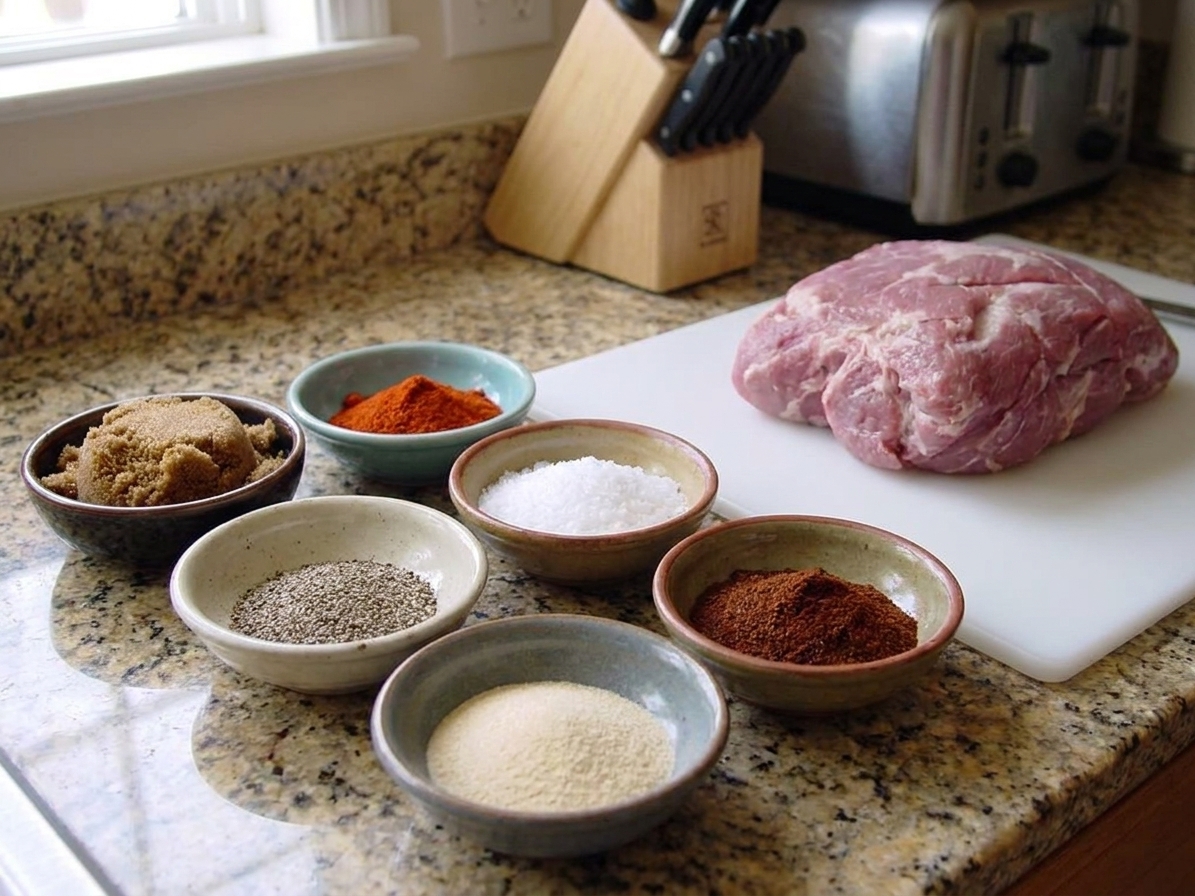
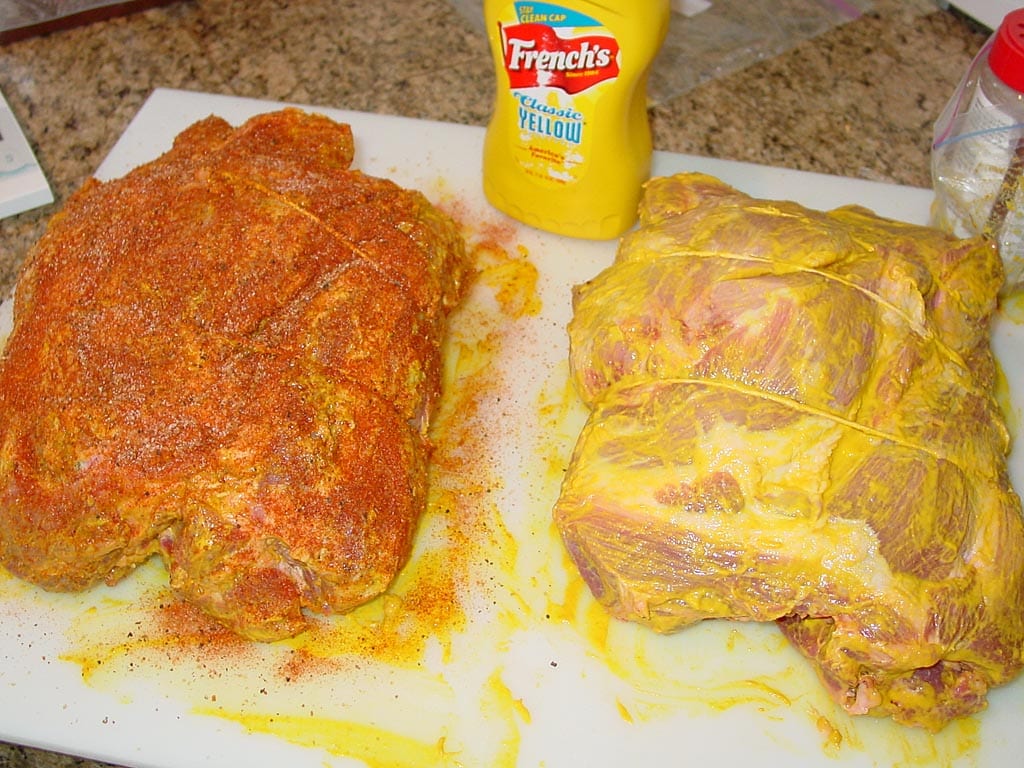
Bowls of brown sugar, paprika, kosher salt, black pepper, garlic powder, and chili powder arranged on a kitchen counter next to a raw pork shoulder

Why It Works

  • Consistent results on a pellet smoker: steady heat means the fat renders gently and the meat stays moist.
  • Bark that actually bites back: a balanced rub plus time unwrapped builds crisp edges before the wrap.
  • Juicy strands, not mush: pull when it probes like warm butter and rest properly so juices stay put.
  • Flavor that pops: a quick vinegar finishing sauce cuts richness and makes leftovers taste freshly smoked.
  • Solid yield: a 7 to 9 pound bone-in butt typically gives about 4 to 5 pounds of pulled pork, roughly 10 to 12 sandwiches, depending on how generous you are.

Pairs Well With

Storage Tips

Refrigerator: Cool pulled pork quickly (within 2 hours), then store in an airtight container for up to 4 days. Pour a few spoonfuls of the pan juices over it to keep it lush.

Freezer: Freeze in meal-size portions for up to 3 months. Freezer bags laid flat thaw faster and stack neatly.

Reheat (best method): Add a splash of apple juice, water, or reserved juices. Warm covered in a 300°F oven until hot, or gently in a skillet with a lid. Finish with a little more finishing sauce right before serving.

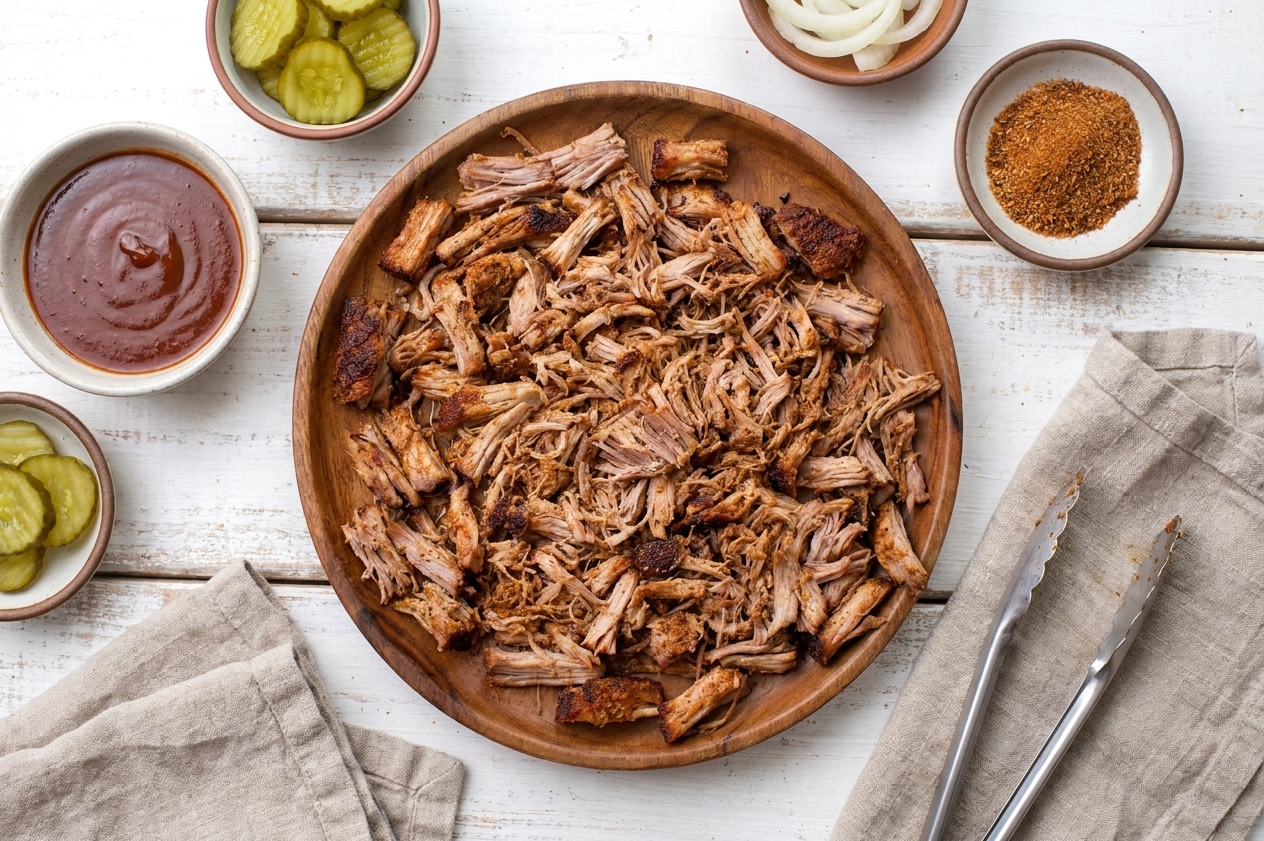
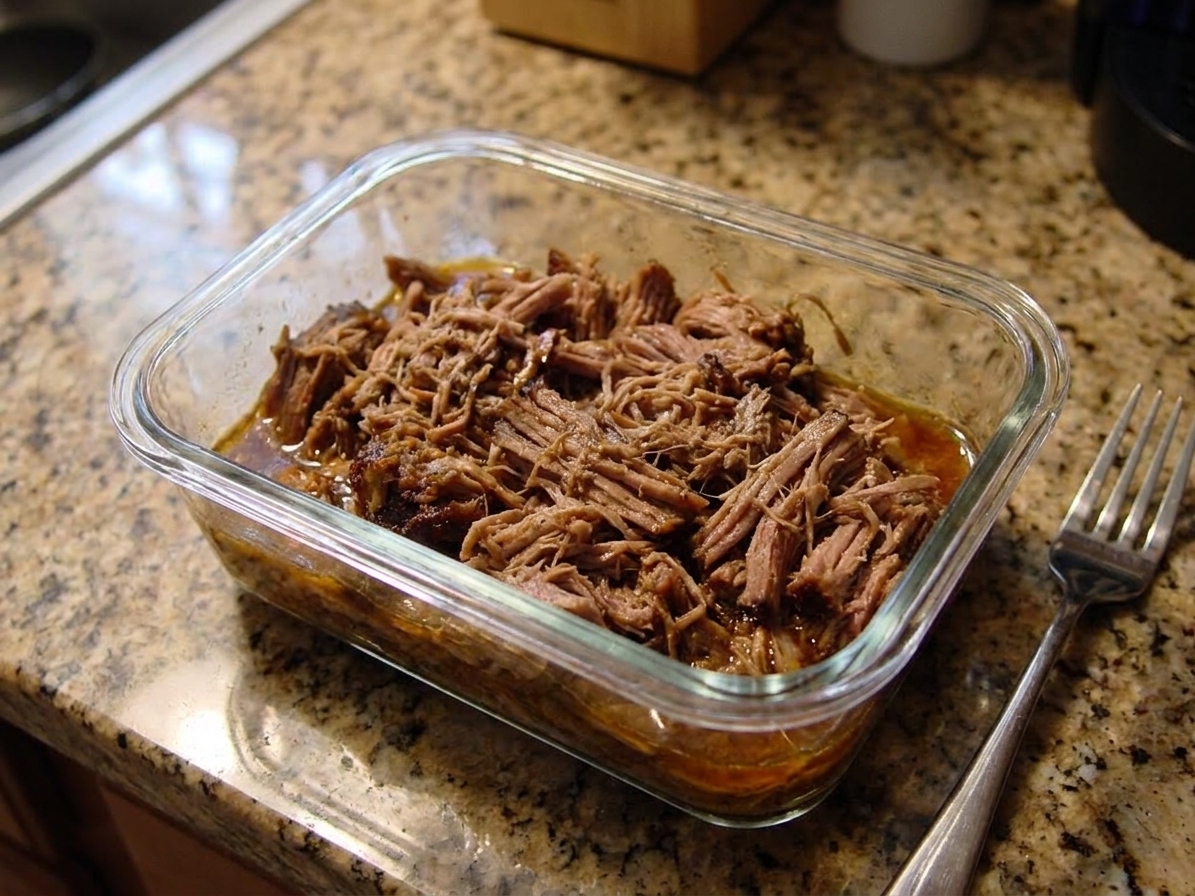
Shredded pulled pork packed into a glass meal prep container with a little cooking juice, sitting on a clean kitchen counter

Common Questions

What pellets are best for pulled pork?

Hickory is classic. Apple and cherry are a little sweeter and super forgiving. If you want a crowd-pleaser, try a hickory-apple blend.

Do I have to wrap pork shoulder on a pellet smoker?

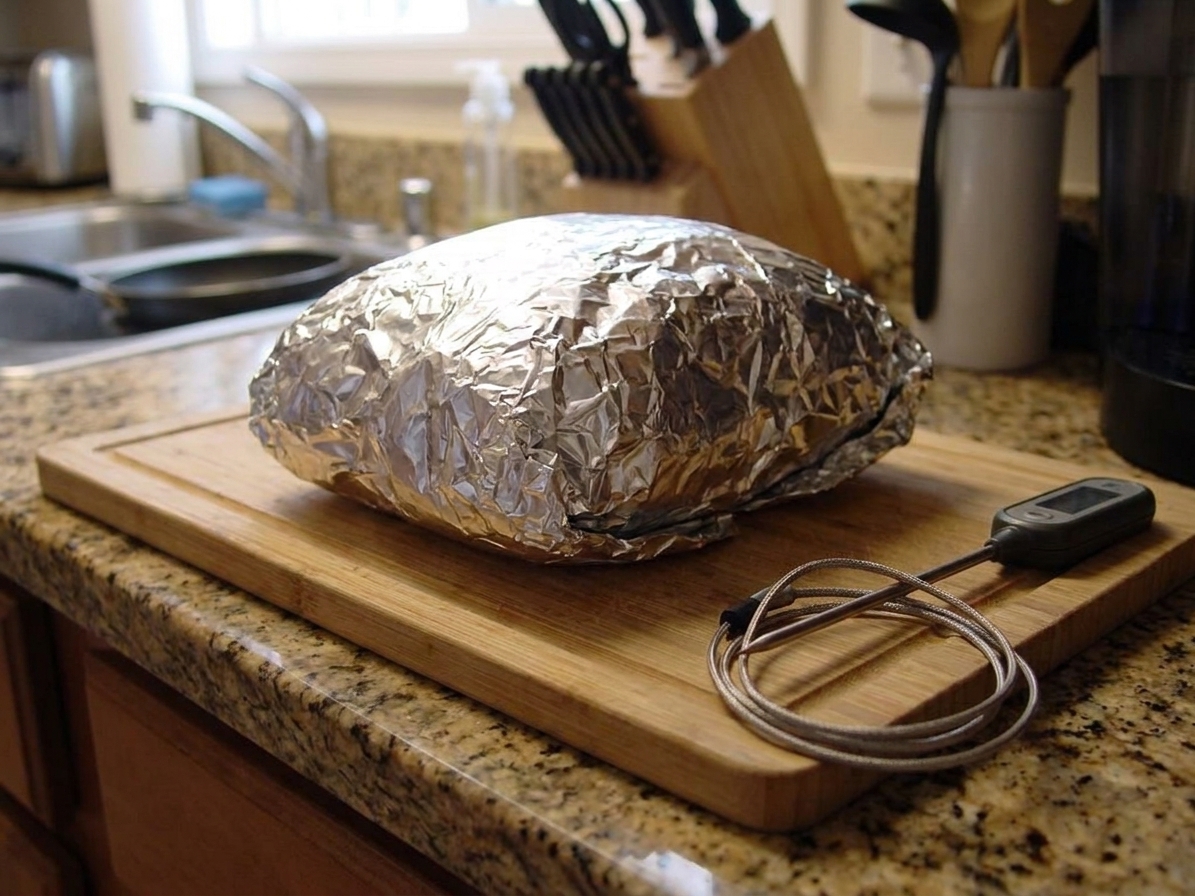
No, but wrapping helps you push through the stall and keeps the exterior from getting too dry. If you love extra bark, delay the wrap until the bark looks set and deep mahogany and feels dry to the touch, usually around 165°F internal.

Foil or butcher paper for pulled pork?

Foil finishes faster and keeps it extra juicy, but it softens the bark a bit. Butcher paper breathes more, so you keep better bark, but it can take a little longer. Both work.

What temperature do I cook pulled pork to?

Cook to tenderness, not a magic number. Most butts feel right around 195°F to 205°F internal, when a probe slides in with almost no resistance, like warm butter, especially in the thickest part.

Why is my pulled pork tough?

Tough usually means not done yet. Collagen needs time to break down. Keep cooking until it probes tender, then rest at least 45 minutes.

Should I use a water pan on a pellet smoker?

Optional, but it can help stabilize temps and reduce evaporative cooling during long cooks. Bark impact varies: more humidity can mean slightly softer bark, so use it if you like the steadier pit temps.

Can I smoke a smaller pork shoulder?

Yep. The timeline shortens, but the method stays the same. Still cook to tenderness and plan for a solid rest.

My pellet grill has Smoke or Super Smoke. Should I use it?

If your smoker has a stronger-smoke mode, use it early in the cook (first 2 to 4 hours) for more wood flavor, then run steady at your set temp.

I used to think “real barbecue” meant wrestling a fire all day and earning your smoke-stained badge of honor. Then I cooked my first pork butt on a pellet smoker and realized the best kind of flex is serving ridiculously juicy pulled pork while still having enough energy to actually enjoy your own cookout. Now my move is simple: build bark, wrap when it counts, rest like you mean it, and finish with a tangy sauce that makes you go back for “just one more” sandwich.