Mom's Best Recipes
Recipe

Perfect Sous Vide Steak

Edge-to-edge rosy, wildly juicy, and finished with a crackly, restaurant-level sear. This is the low-stress steak method that makes you look like you planned ahead on purpose.

Author By Matt Campbell
4.9
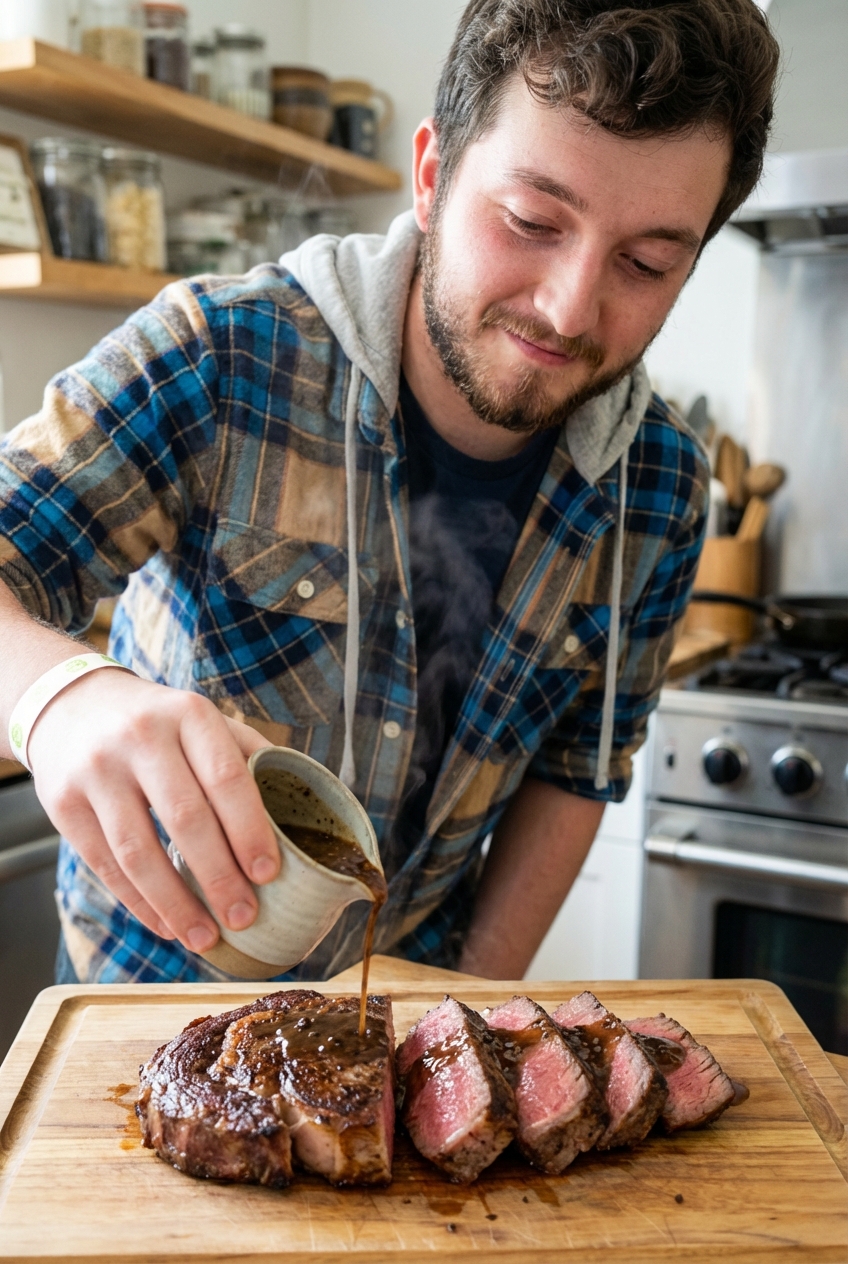
A thick ribeye steak sliced on a wooden cutting board with a browned crust and pink interior, a cast iron skillet in the background

Sous vide steak is basically a cheat code for perfect doneness. You set the water bath to the exact temperature you want your steak to be, let it lounge in a bag like it is at a spa, then you hit it with a fast, ferocious sear for the crust. The result is steak that is evenly cooked from edge to edge, not a bullseye situation where the outside is over it and the center is still negotiating.

This recipe is written for real life: accessible ingredients, clear steps, and a few tiny choices that make a huge difference. If you can operate a zipper bag and tolerate waiting for water to heat up, you can make the best steak of your home cooking career. Also, yes, you can absolutely do this on a Tuesday.

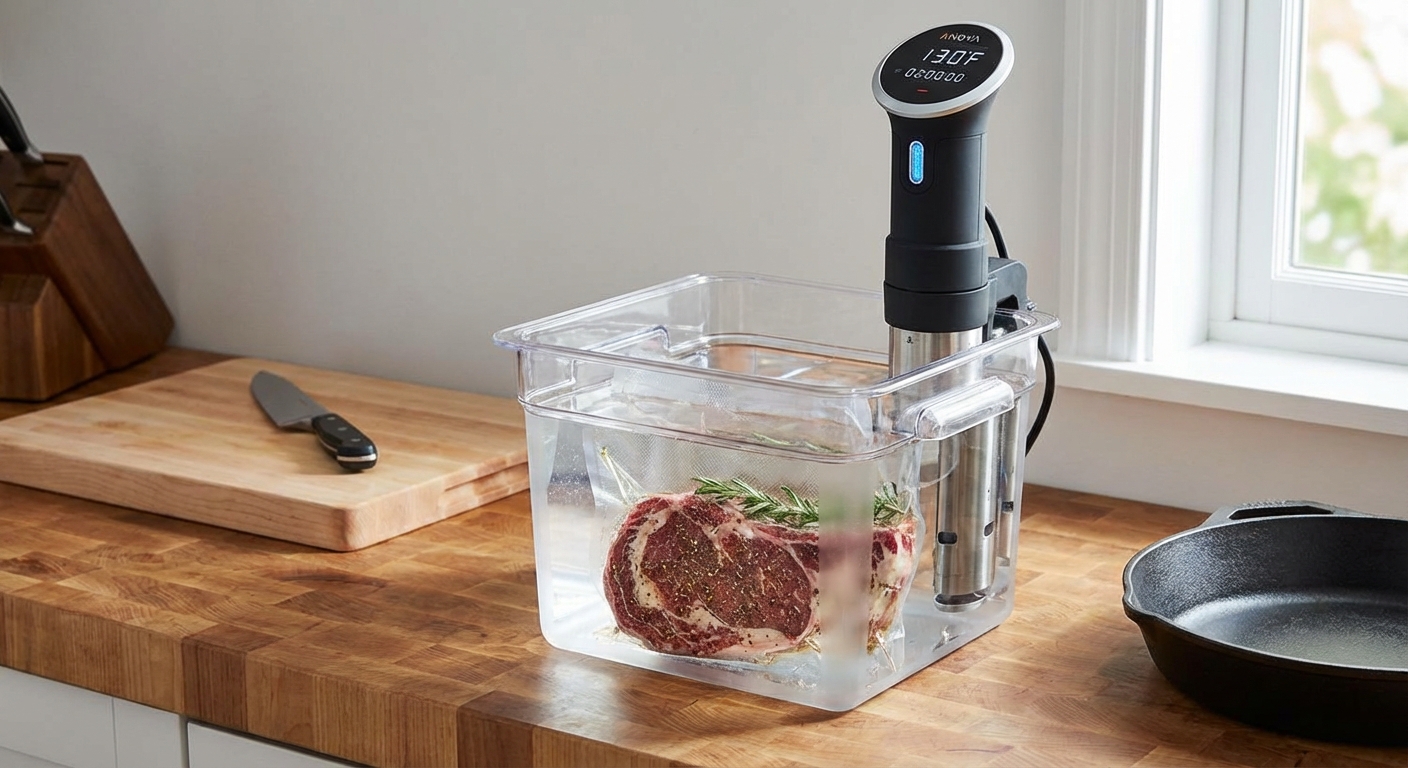
A sous vide container on a kitchen counter with a circulator clipped to the side and a steak sealed in a bag submerged in the water

Why It Works

  • Perfect doneness, end to end: Set the temperature and you get exactly that doneness throughout, not just in the middle.
  • Juicy by design: Cooking at a gentle temperature keeps moisture in the steak instead of squeezing it out.
  • Timing flexibility: An extra 30 to 60 minutes in the bath will usually not wreck dinner, which is my favorite kind of cooking math.
  • Big crust, no overcooking: The steak is already cooked, so the sear is fast and hot. You get crisp edges without pushing the interior past your target.

Best cuts for this method: ribeye, strip, sirloin, filet mignon, and thick-cut top sirloin. Aim for steaks at least 1 to 1.5 inches thick for maximum wow.

Storage Tips

How to Store Leftover Sous Vide Steak

  • Fridge: Cool steak completely, then store in an airtight container for up to 4 days.
  • Freeze: Slice or keep whole, wrap tightly, and freeze up to 2 months. For best texture, thaw overnight in the fridge.

Best reheating method

Reheat gently so you do not undo all your perfect-doneness hard work. If you have time, warm the steak in a 130°F sous vide bath (or 5°F to 10°F below your original cook temp) for about 20 to 30 minutes, then do a very quick sear if you want to refresh the crust.

Try not to hold steaks for a long time at low temperatures. Warm it, sear it if you want, then eat it.

No circulator free today? Slice and warm in a skillet with a tiny splash of broth or butter over low heat, just until heated through.

Leftover ideas that feel suspiciously impressive

  • Steak and egg breakfast with crispy potatoes
  • Steak salad with a punchy mustard vinaigrette
  • Garlic butter steak rice bowl with scallions and something crunchy

Common Questions

Sous Vide Steak FAQ

What temperature should I use for sous vide steak?

Pick your doneness and commit. These are good, real-world targets for tender steaks:

  • Rare: 125°F to 128°F
  • Medium-rare: 129°F to 134°F (my sweet spot is 131°F for strip and filet mignon, 133°F to 137°F for ribeye if you want better fat rendering)
  • Medium: 135°F to 144°F
  • Medium-well: 145°F to 155°F

Food safety note: Safety is time and temperature, plus good handling. For most healthy adults using fresh whole-muscle steak, 129°F and up is a common sous vide range, but pasteurization depends on how long the center is held at temperature. If you are pregnant, immunocompromised, cooking for someone high-risk, or you want pasteurized steak, use a reputable sous vide time and temperature table and hold long enough at your chosen temperature.

How long should I sous vide steak?

For 1 to 1.5 inch steaks: 1 to 2 hours. For 2 inch steaks: 2 to 3 hours.

You can often go a bit longer without disaster, but texture is cut-dependent. Filet mignon can start to feel extra-soft sooner; ribeye and strip usually tolerate more time. As a general rule for tender cuts, try to stay within about 4 hours total in the bath.

Do I season before or after sous vide?

Season before so the salt has time to work its way in. Then taste after searing. If it needs a pinch of flaky salt, that is not failure, that is finishing.

Dry brine option: If you want to look like you really planned ahead, salt the steaks and refrigerate uncovered for 1 to 24 hours. Then bag and cook. Better seasoning, better crust potential.

Should I put butter in the bag?

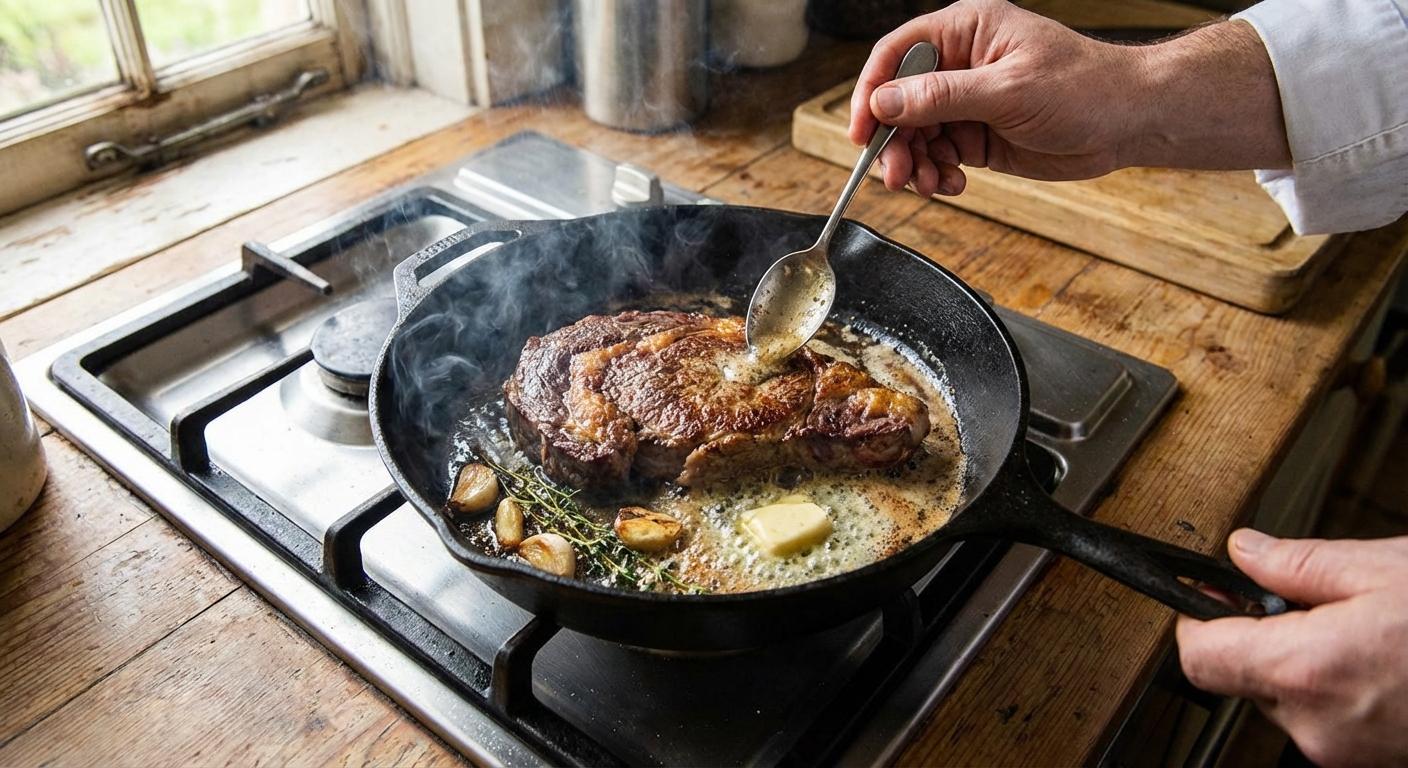
You can, but it is not necessary. Many cooks prefer no butter in the bag because butter can mute the beefy flavor. I use butter at the end, in the pan, where it can brown and do its dramatic little performance.

How do I get a better crust?

Dryness and heat. Pat the steak very dry, use a ripping hot pan, and keep the sear short.

If you want maximum crust insurance, chill the steak in the fridge for 10 minutes after the bath and before searing, uncovered. Drier surface, better browning.

How do I keep the bag from floating?

Air is the enemy. Seal well, then clip the bag to the side of the container, and add a sous vide weight (or a metal spoon) inside the bag if needed. If using a zip-top bag, keep the zipper above the waterline so it does not leak.

My pan sear sets off the smoke alarm. Help.

Use a high-smoke-point oil (avocado, grapeseed, canola), use just enough to lightly coat the pan, and turn on the vent fan before you start. A quick sear is your friend. If you have one, an outdoor burner is the ultimate smoke hack.

Is sous vide steak safe?

Yes, when you use proper time and temperature and keep the steak sealed and submerged. Use fresh steak, keep the bath at your target temperature, and do not leave it sitting out after cooking. If you want pasteurization-level certainty, follow a trusted sous vide time and temperature chart for your steak thickness.

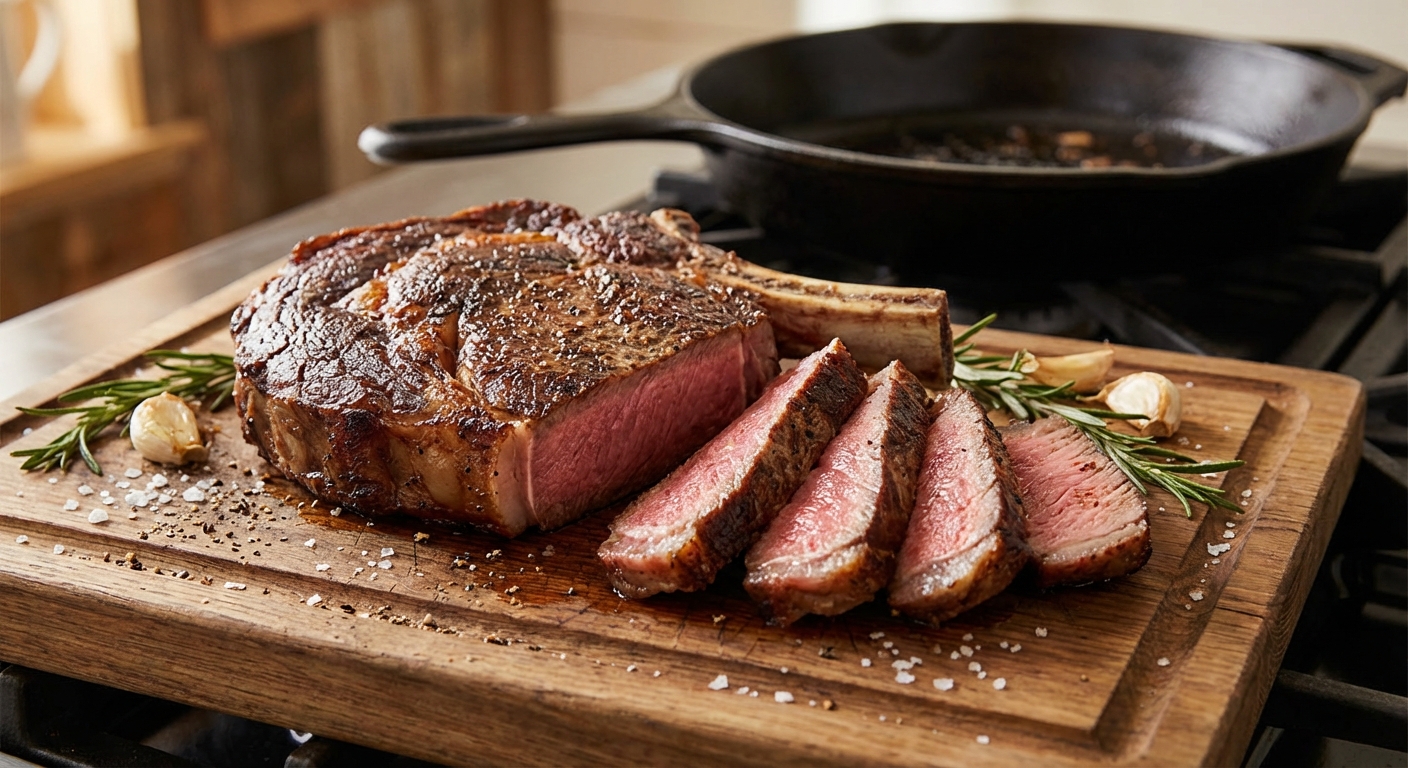
The first time I made sous vide steak, I felt like I had accidentally joined a secret society where everyone owns a tiny hot tub for meat. I was skeptical, mostly because I have the attention span of a golden retriever near a dropped crouton. But then I cut into that steak and it was pink all the way across with a crust that crackled like it had something to prove. Now it is my go-to when I want a dinner that looks like a flex, but actually gives me time to clean the kitchen, make a salad, and pretend I am effortlessly put together.