Mom's Best Recipes
Recipe

Perfectly Baked Potato With Crispy Skin

Fluffy inside, shatter-crisp outside, and seasoned like you mean it. This baked potato method is weeknight-easy and steakhouse-level satisfying.

Author By Matt Campbell
4.9
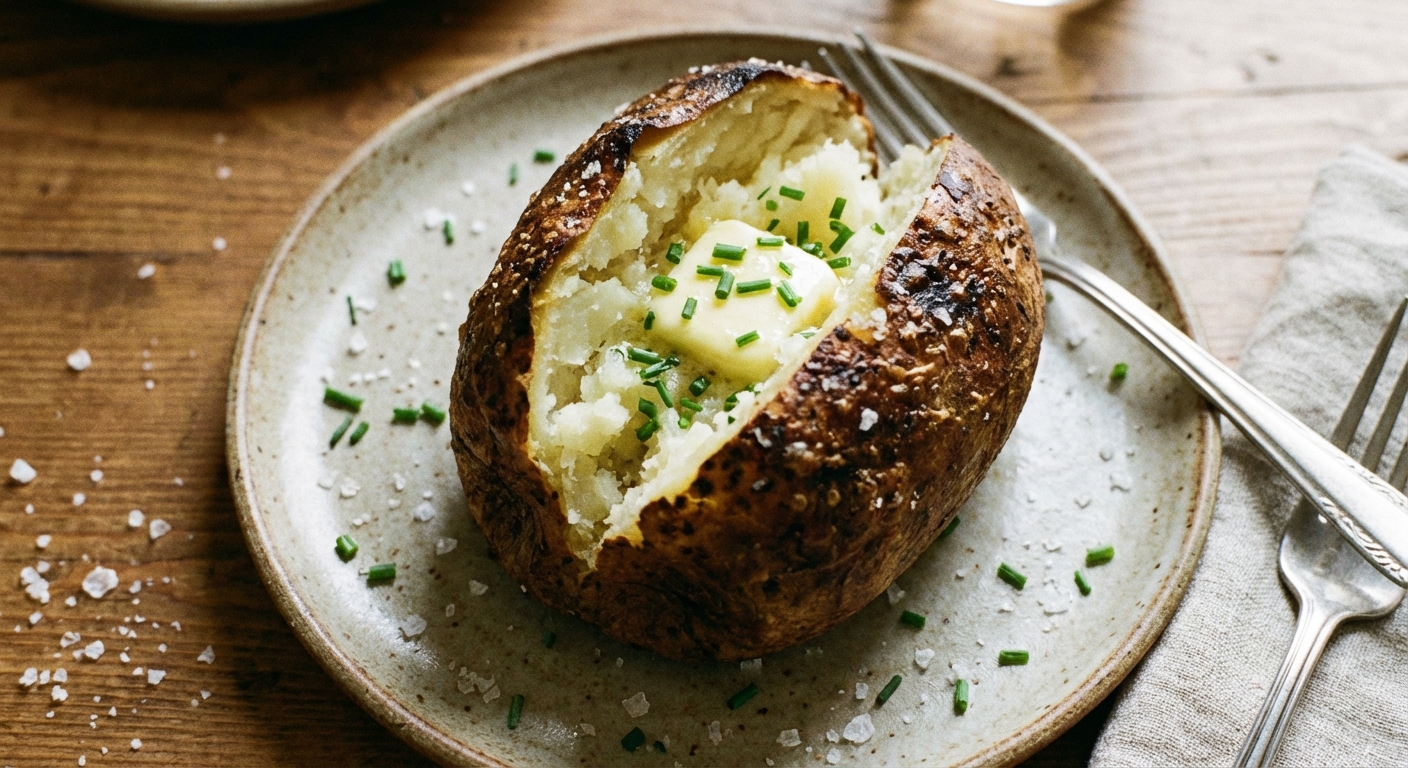
A real photograph of a split baked russet potato on a plate with crisp, blistered skin and fluffy interior, topped with a pat of butter and chives, with coarse salt scattered nearby

A baked potato should not be a sad, beige footnote on the plate. It should be the main character in a supporting role: crisp, salty skin that crackles when you squeeze it, and an interior so fluffy it looks like it wants to float away. This is the no-fuss method I use when I want maximum payoff for minimal effort.

The secret is not complicated, which is honestly rude considering how many disappointing potatoes are out there. We dry the potato well, oil it lightly, salt it generously, and bake it hot enough to get that crisp shell. Then we do one tiny finishing move that turns “pretty good” into “why is this so good.”
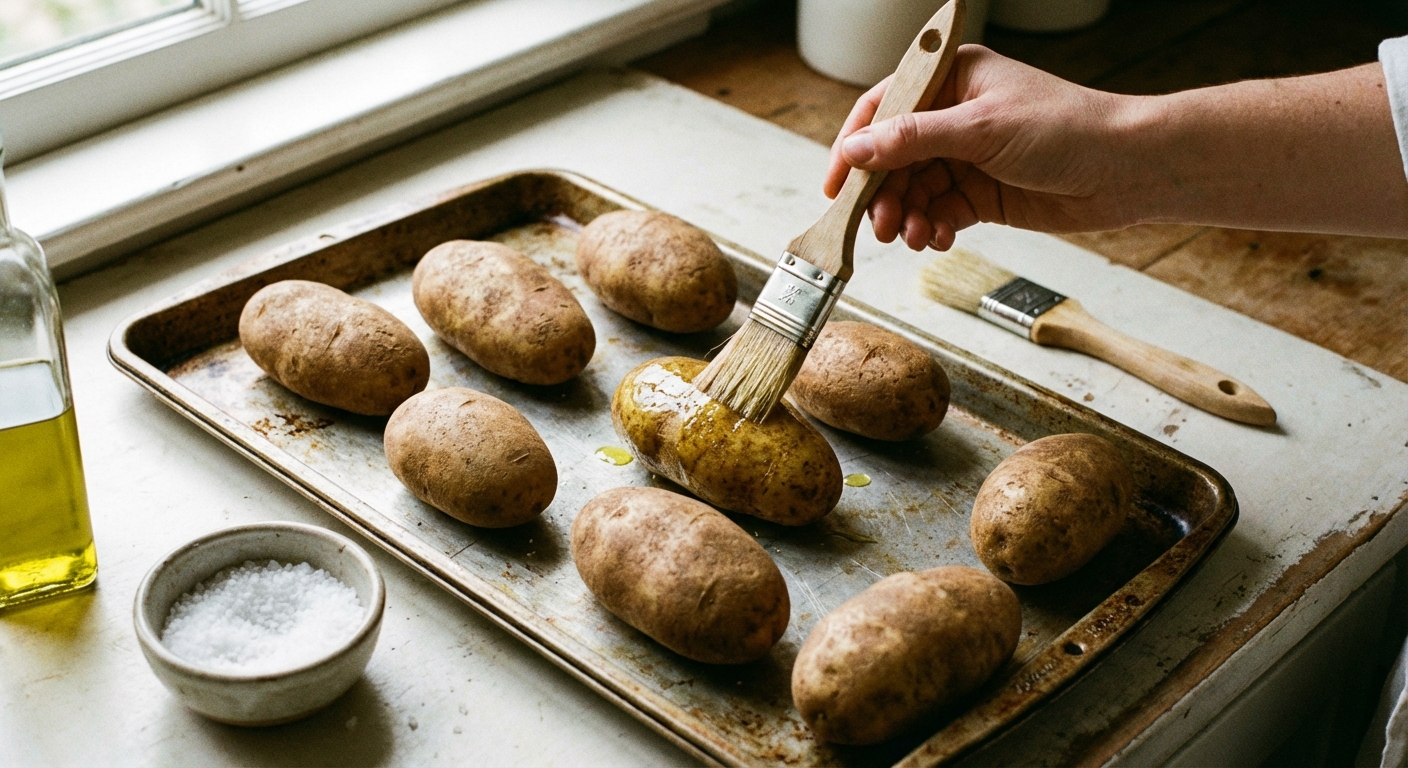
A real photograph of whole russet potatoes on a baking sheet being brushed with olive oil, with a small bowl of coarse salt and a pastry brush nearby

Why It Works

  • Crispy, seasoned skin: Oil plus coarse salt plus high heat gives you that steakhouse crunch without deep frying anything.
  • Fluffy interior every time: Russets plus proper doneness gets you that cloud-like center. Skipping foil keeps the outside crisp, and good airflow helps the skin stay that way.
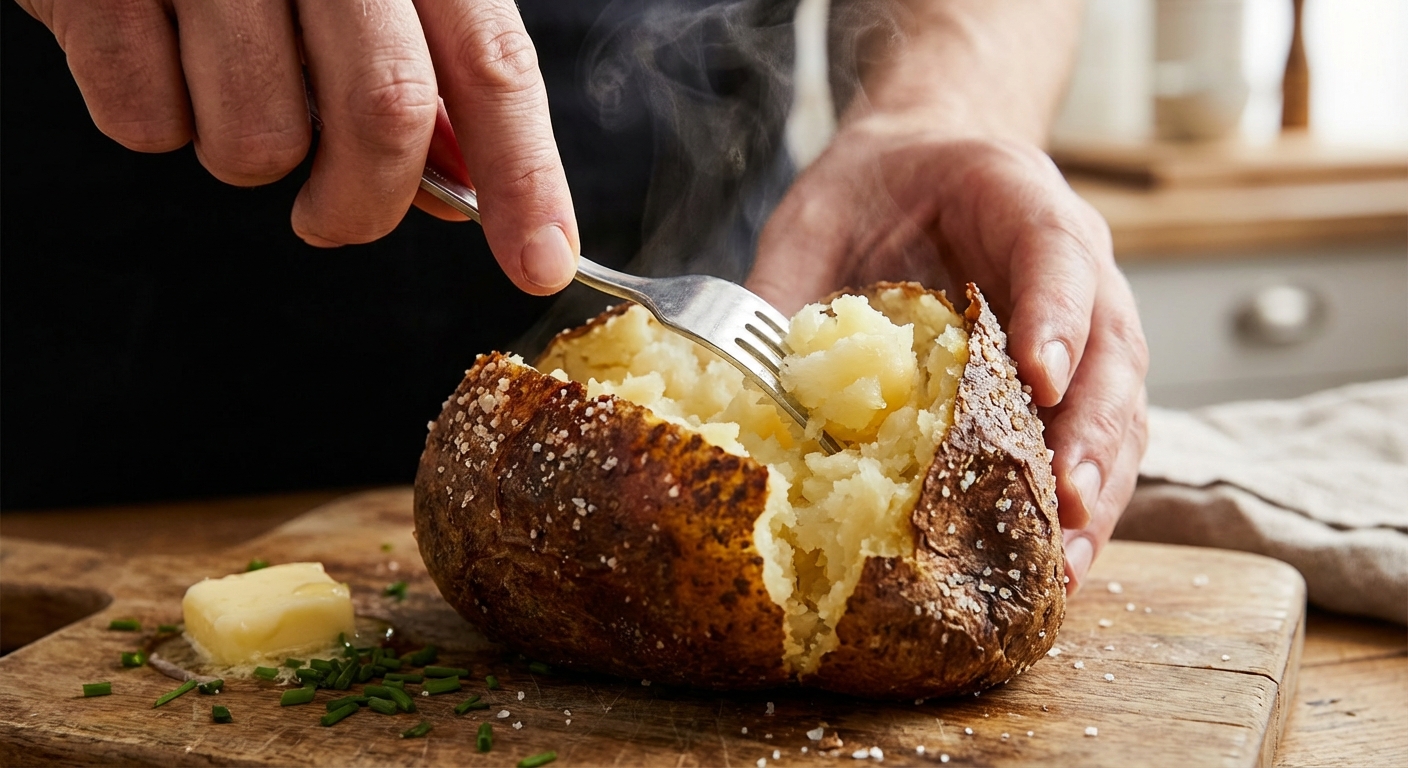
  • Fast flavor upgrades: A quick squeeze and a little butter while it is piping hot makes the inside steamy and perfectly seasoned.
  • Flexible timing: You can hold them warm for a bit, or re-crisp later without ruining the texture.

Storage Tips

Storing baked potatoes

  • Refrigerate: Let potatoes cool briefly, then refrigerate within 2 hours. Store whole or split in an airtight container for up to 4 days.
  • Best practice: Keep toppings separate so the skin does not go soggy.
  • Quick safety note: Do not keep potatoes wrapped in foil at room temperature. If you used foil for any reason, unwrap before storing.

Reheating for crisp skin

  • Oven method (best): Heat to 400°F. Reheat potatoes whole for the best chance at re-crisping the skin, 15 to 20 minutes until hot. (If you need speed, split them, but you will sacrifice some crisp.)
  • Air fryer: 380°F for 6 to 10 minutes, depending on size. Great for bringing the crunch back.
  • Microwave (fast, less crisp): 1 to 3 minutes until hot, then finish in a hot skillet or toaster oven if you want the skin to behave.

Freezing

You can freeze baked potatoes, but the texture changes a bit. If you do it, scoop the flesh and freeze it for mash, twice-baked potatoes, or soup. The skin is not thrilled about the freezer.

Common Questions

Do I need to wrap baked potatoes in foil?

No. Foil traps steam, which makes the skin soft. If you want crispy skin, bake them unwrapped.

Should I poke holes in the potato?

Yes. A few fork pricks let steam escape and help prevent pressure build-up. Think of it as basic potato safety.

Why bake at 425°F?

High heat dries and crisps the skin while the inside turns tender and fluffy. Lower temps work, but the skin stays more leathery than crisp.

How do I know when a baked potato is done?

A knife should slide in easily with no resistance, and the potato should give when you squeeze it (use an oven mitt). Optional but precise: aim for about 205°F to 210°F in the center.

Can I use Yukon Gold or sweet potatoes?

You can, but russets are the crisp-skin, fluffy-inside champions. Yukon Golds turn creamier and a little denser. Sweet potatoes crisp less and need slightly different timing, but the same oil and salt idea still helps.

Why is my skin not crispy?

  • The potato was wet when it went in the oven.
  • Not enough oil or salt.
  • Foil was used.
  • Oven temp was too low, or the potato was crowded on a pan and steaming.

Any tips for choosing potatoes?

Pick russets that are similar in size so they finish at the same time, and skip any with green spots or lots of sprouts. (They are not bringing good vibes.)

Does convection change the timing?

Yes, usually. Convection can shave off about 5 to 10 minutes. Start checking early, and let the potato be the boss.

I used to treat baked potatoes like an afterthought, the edible equivalent of “we have food at home.” Then one night I pulled a batch out of the oven, bit into the skin, and realized I had accidentally made the best part crispy. Suddenly I was sprinkling salt like I was seasoning a sidewalk in winter and “testing” one potato that somehow turned into dinner.

Now this is my reliable comfort move: cheap, forgiving, and weirdly impressive when you slice it open and it starts steaming like it has secrets.