Mom's Best Recipes
Recipe

Perfectly Cooked Steakhouse Steak

A foolproof cast iron method for a crackly sear, a rosy center, and a buttery pan sauce that tastes like you paid $58 for it.

Author By Matt Campbell
4.9
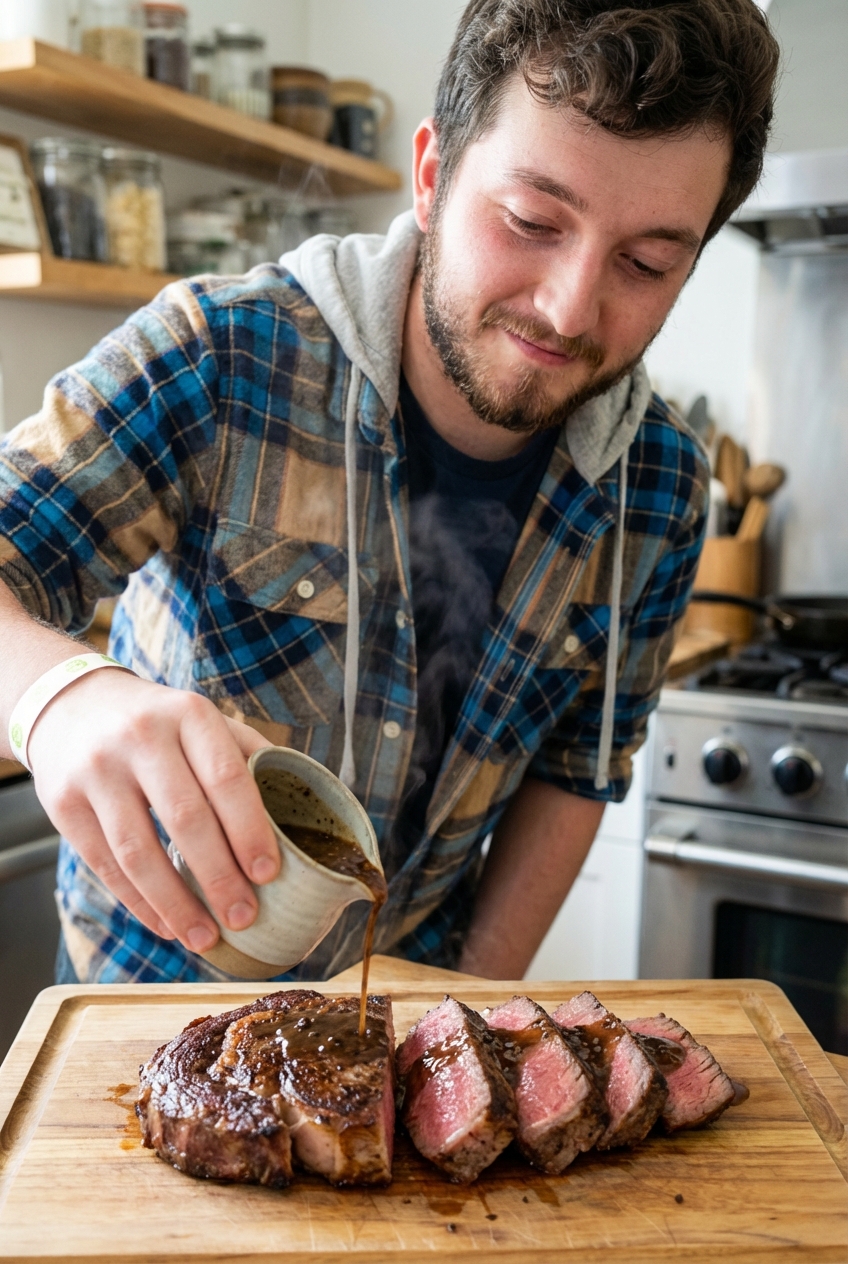
A thick ribeye steak sliced on a wooden cutting board with a browned crust, melted herb butter on top, and a cast iron skillet in the background

Steakhouse steak at home is not about secret ingredients. It is about temperature, salt, and the kind of high heat that makes your smoke alarm feel personally attacked. The good news: once you know the timing and what to look for, you can nail a steakhouse-level crust and a juicy, tender center on a random Tuesday.

This recipe is built for real life. It uses accessible cuts (ribeye, strip, or filet), one pan, and a simple butter baste that turns “pretty good” into “why is this so good.” If you can flip a steak and hold a spoon, you can do this.

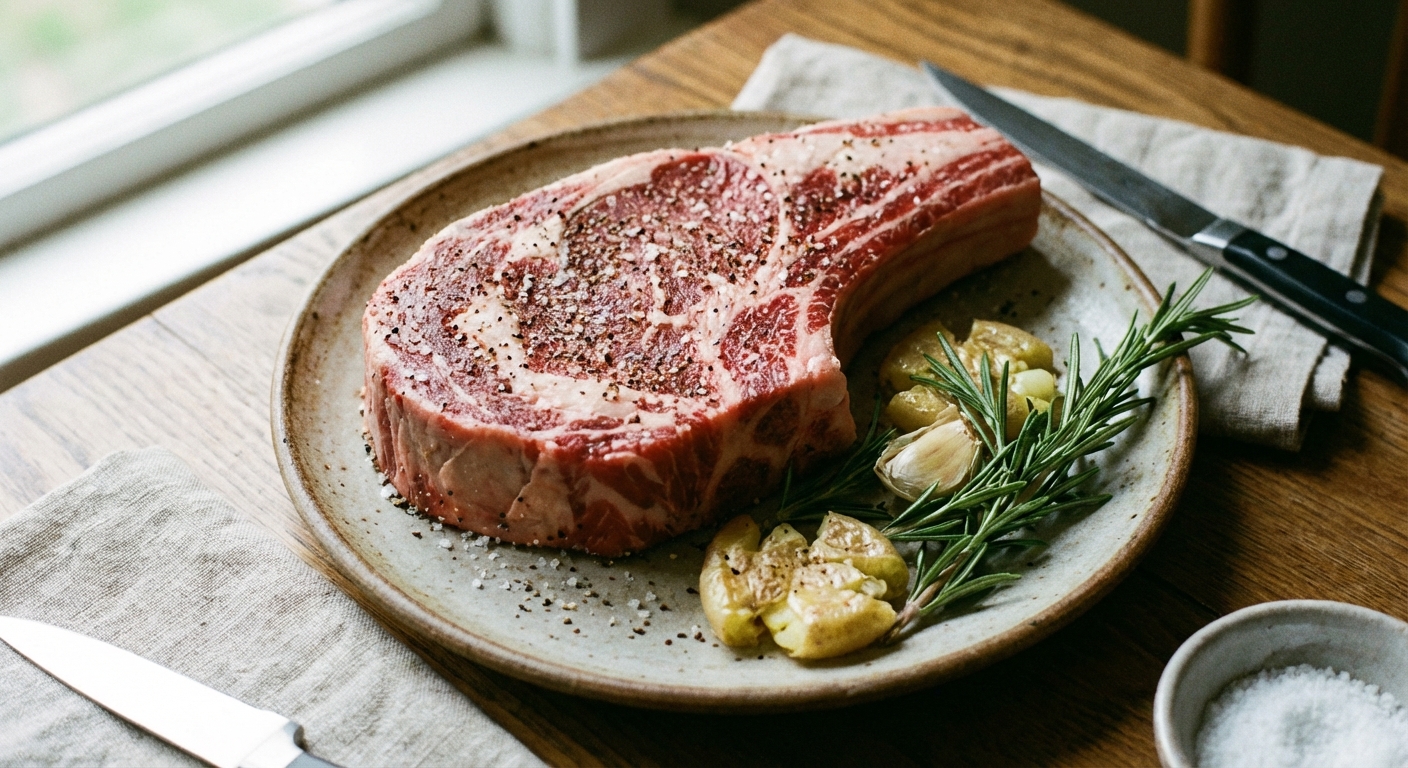
A raw ribeye steak on a plate seasoned generously with kosher salt and black pepper next to garlic cloves and rosemary

Why It Works

  • Dry surface + hot pan = crust. Patting the steak dry and preheating the skillet until it is very hot helps the Maillard reaction do its crispy, browned magic.
  • Salt early or right before cooking. Salting at least 40 minutes ahead (dry brine) is the easiest path to great results. If you salt shortly before cooking, that is also fine. The in-between window can pull moisture to the surface without enough time to reabsorb, which sometimes makes searing harder.
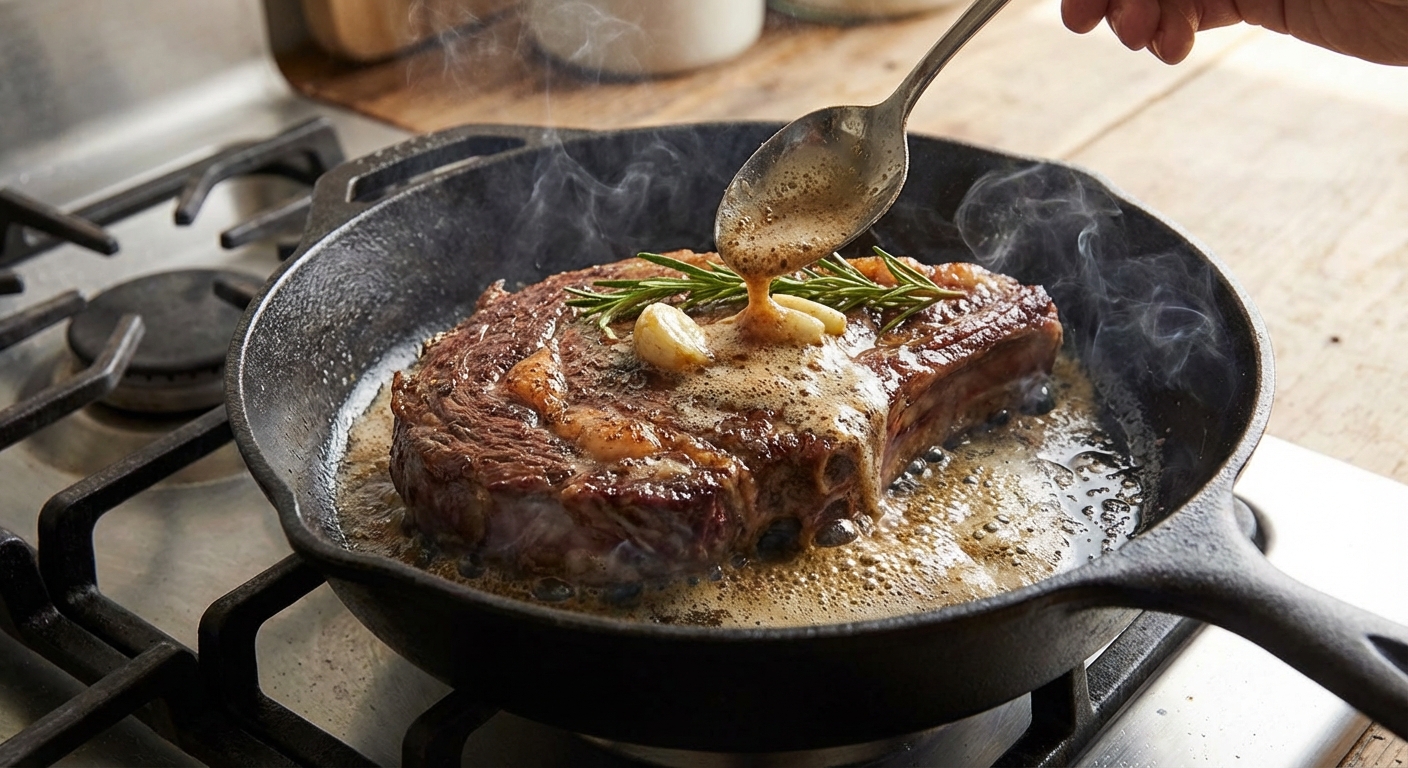
  • Butter baste builds steakhouse flavor fast. Basting with butter, garlic, and herbs adds richness and perfumes the surface without needing a marinade.
  • Thermometer = confidence. Pulling the steak at the right internal temp, then resting it, gives you that rosy center without guesswork.

Storage Tips

If you have leftover steak, congratulations on your self control. Here is how to keep it tender.

Fridge

  • Cool leftovers quickly, then store in an airtight container.
  • Best within 3 to 4 days.

Freezer

  • Wrap tightly (plastic wrap or parchment, then a freezer bag) to prevent freezer burn.
  • For best quality, use within 2 months (it can be frozen longer, but texture slowly declines).

Reheating

  • Best method: Slice cold steak thin. Warm briefly in a skillet with a splash of beef broth or water, just until heated.
  • Oven method: Put steak on a rack over a sheet pan, cover loosely with foil, warm at 250°F until just heated through.
  • Microwave (if you must): Low power in short bursts, covered, with a tiny splash of water to create steam.

Leftover steak is elite in salads, fried rice, quesadillas, and “I swear this is intentional” steak-and-eggs.

Common Questions

What cut should I use for steakhouse-style results?

Ribeye is the most forgiving because of its marbling. New York strip is beefy and reliably tender with a great fat cap. Filet mignon is very tender but lean, so it benefits from butter basting, slightly gentler heat, and careful temp control (it can go from perfect to overdone fast).

How thick should the steak be?

Aim for 1.25 to 1.75 inches. Thin steaks cook too fast to build a deep crust without overcooking. If your steaks are thinner, use higher heat and shorter time, and skip the oven finish.

Do I need to bring steak to room temperature first?

Not for hours, no. Taking the chill off for 20 to 30 minutes can help slightly, but the bigger win is drying the surface and using a very hot pan.

Why is my steak not getting a good sear?

  • Pan not hot enough.
  • Steak surface not dry.
  • Overcrowding the pan.
  • Using too much oil or using butter too early (butter can burn before you get the crust).

When do I add pepper?

You can add pepper before cooking for convenience. For the cleanest pepper flavor, add it right after searing or after slicing. Either way, the steak will be delicious.

What internal temperature should I aim for?

Doneness labels vary a bit depending on who you ask, but these targets are reliable. Remember: carryover cooking increases with thicker steaks and hotter cooking, so pulling a little early is smart.

  • Rare: pull at 120°F, rest to about 125°F
  • Medium-rare: pull at 125°F, rest to about 130°F
  • Medium: pull at 130 to 135°F, rest to about 135 to 140°F
  • Medium-well: pull at 140 to 145°F, rest to about 145 to 150°F
  • Well-done: pull at 150 to 155°F, rest to about 155 to 160°F

Food safety note: USDA recommends 145°F plus a rest time for whole cuts. Many people prefer lower temps for medium-rare, but you should cook to what you feel comfortable serving.

Where should I put the thermometer?

Insert it into the thickest part of the steak, ideally from the side toward the center. Avoid fat pockets and stay away from the bone if there is one.

Can I do this without an oven?

Yes. If your steak is closer to 1 inch thick, you can usually finish entirely on the stovetop. For thicker steaks, a quick oven finish gives more even doneness.

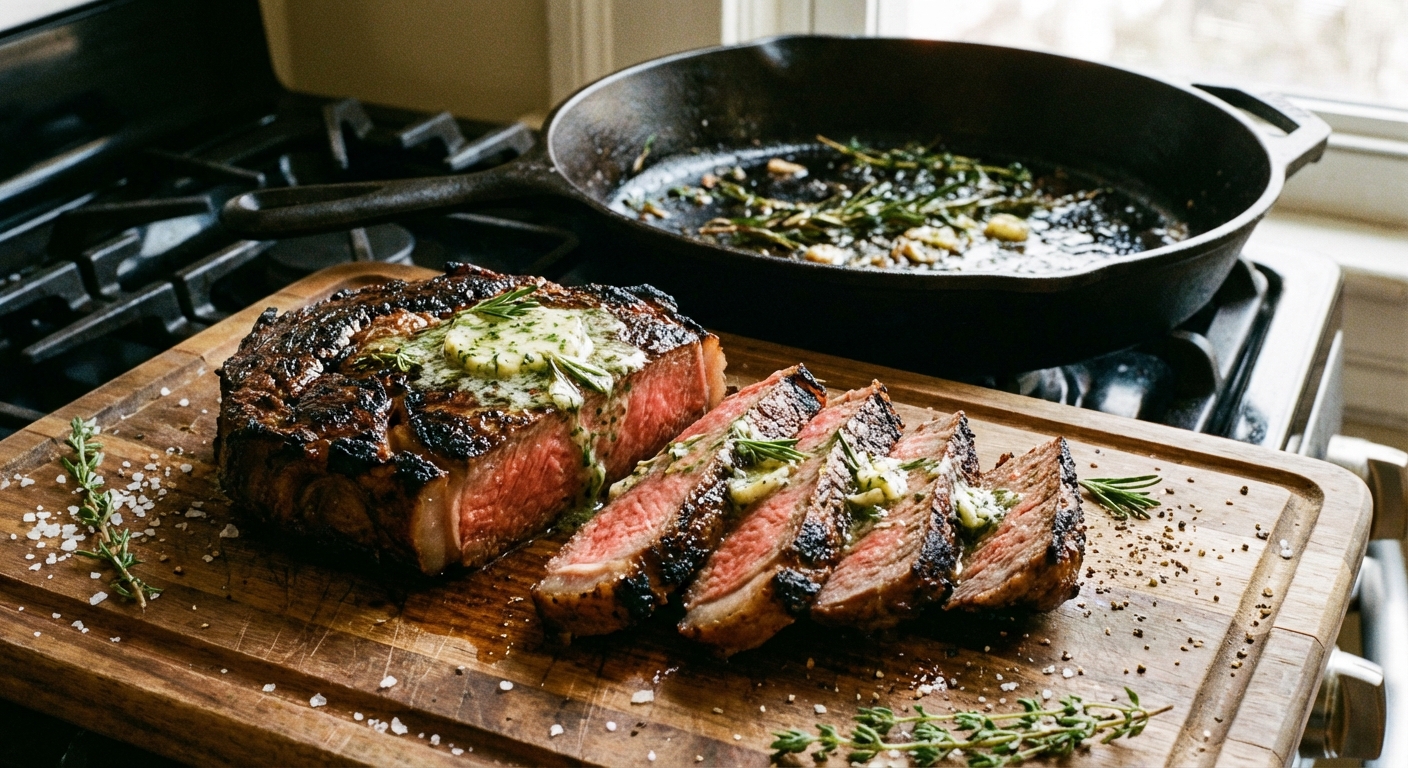
The first time I tried to make “steakhouse steak,” I treated my skillet like a gentle suggestion instead of a raging hot plan. The result was a gray, damp situation that tasted like regret with a side of chew. Then I learned the two rules that fixed everything: dry the steak, and let the pan get scary hot. Now this is my favorite kind of kitchen flex, because it looks fancy, feels slightly dramatic, and it is still basically just meat, salt, and confidence.