Mom's Best Recipes
Recipe

Pickled Garlic

A bright, tangy jar of garlicky goodness made with a quick, no stress brine. Crisp enough to snack on, bold enough to punch up anything.

Author By Matt Campbell
4.8
A clear glass jar filled with pickled garlic cloves in a pale vinegar brine with black peppercorns and a bay leaf on a bright kitchen counter

Pickled garlic is one of those little kitchen upgrades that makes you feel like you have your life together, even if you are currently eating crackers for dinner. It is sharp and tangy at first bite, then mellow and savory as you chew, with that addictive, can't-stop vibe that regular raw garlic does not always pull off.

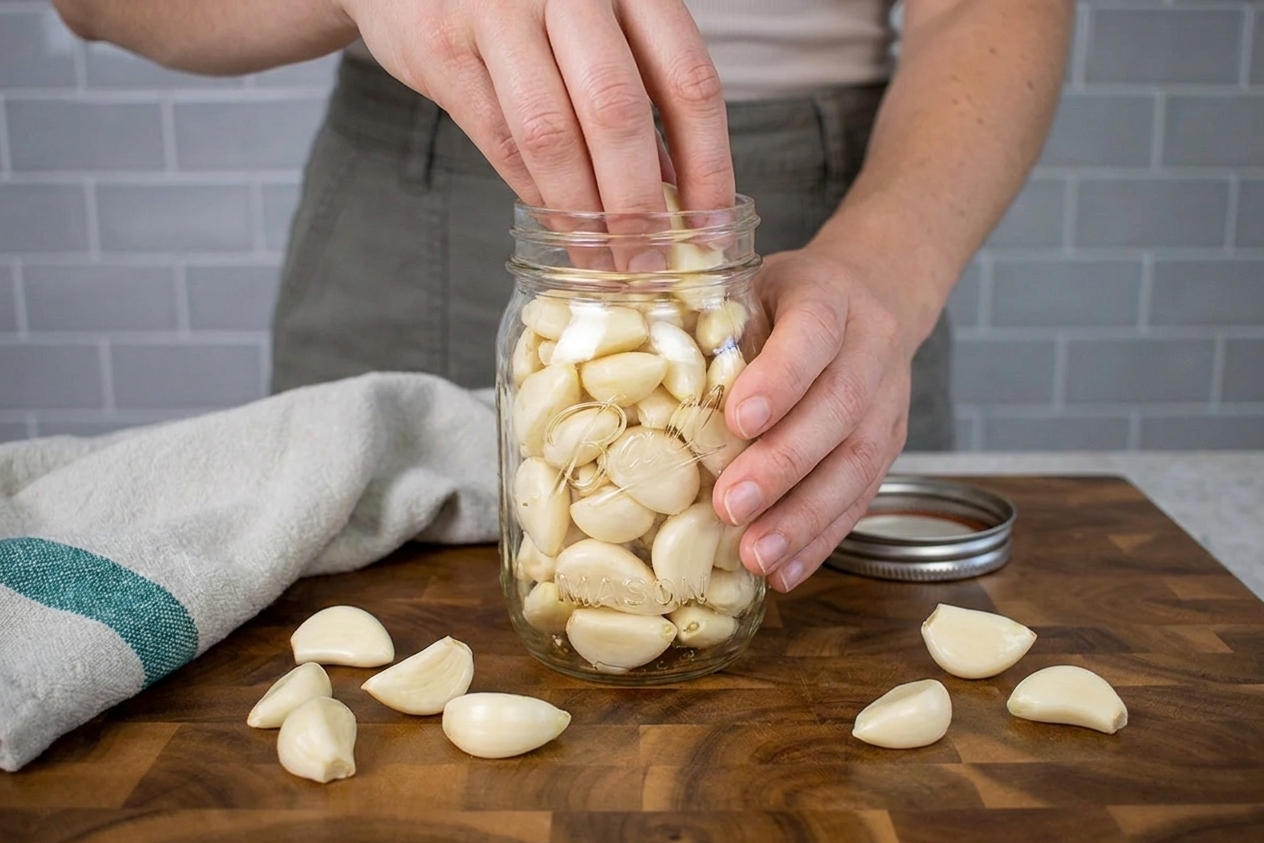
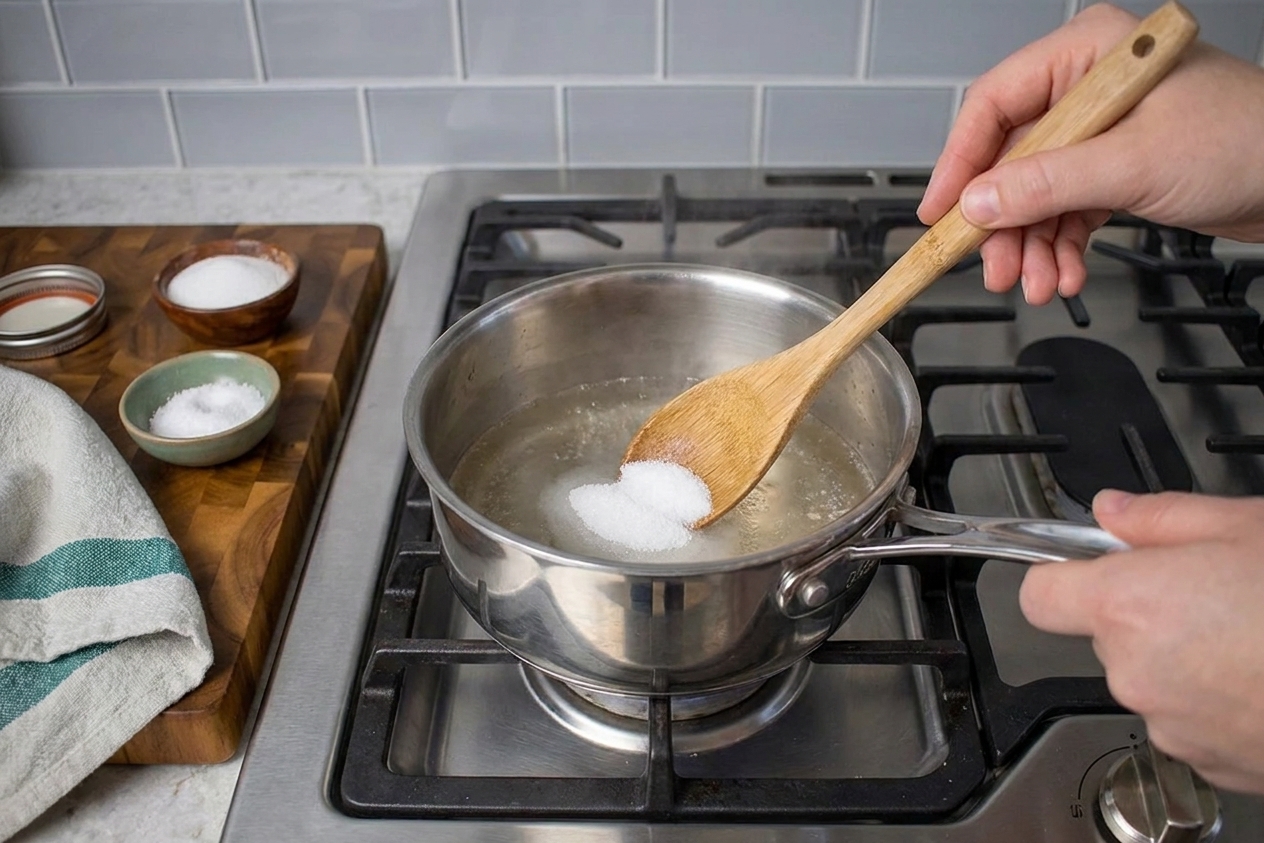
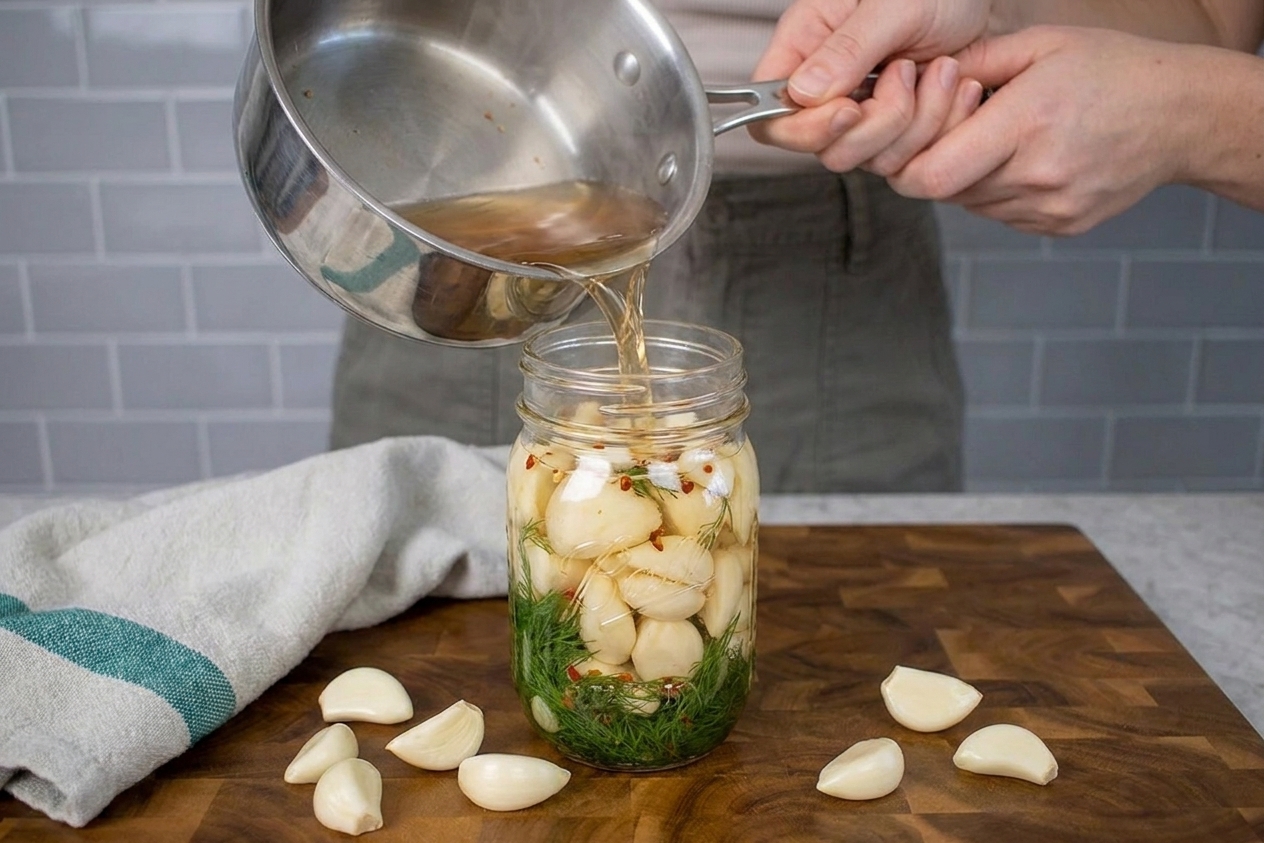
This is a refrigerator pickled garlic recipe, which means no canning equipment, no boiling jars, and no stressing about shelf stability. You make a quick brine, pour it over peeled cloves, and let the fridge do the rest. Give it a few days and suddenly you have a jar that improves sandwiches, salads, pasta, roasted veggies, cheese boards, and basically any moment that feels like it needs a little zing.
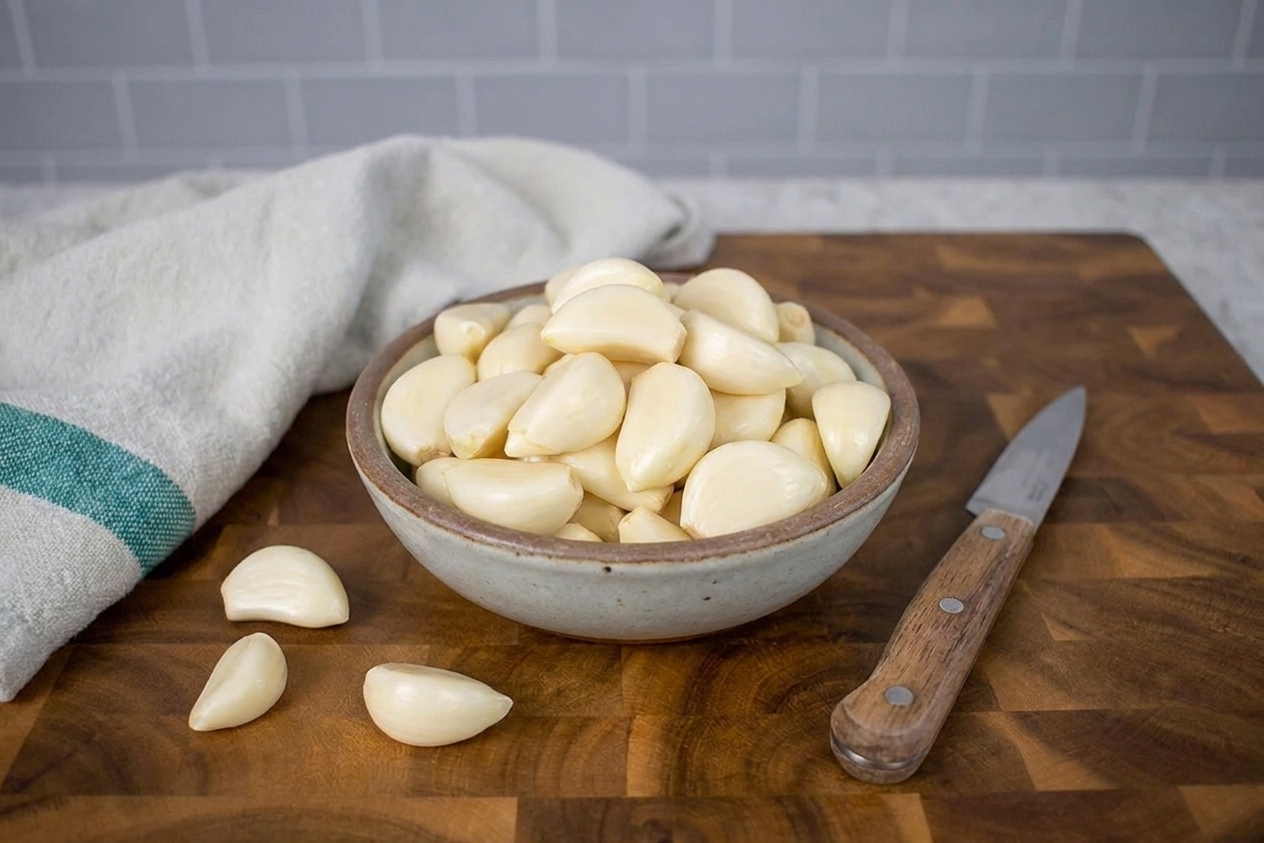
A ceramic bowl piled high with peeled garlic cloves on a wooden cutting board beside a small paring knife

Why It Works

Bright flavor, mellow bite

  • Quick brine, big payoff: Warm brine dissolves salt and sugar fast and starts infusing the cloves right away.
  • Less harsh than raw garlic: The vinegar tames the burn while keeping the garlic flavor front and center.
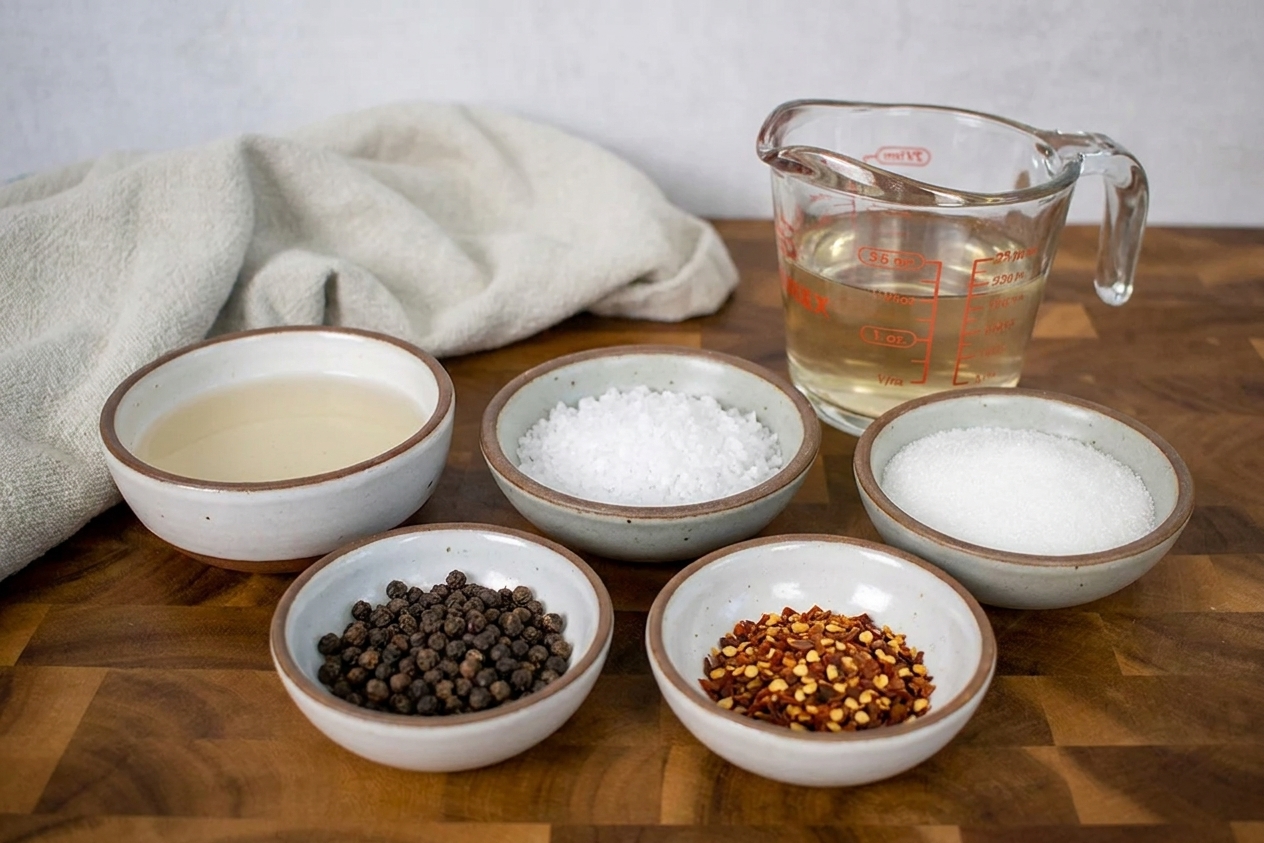
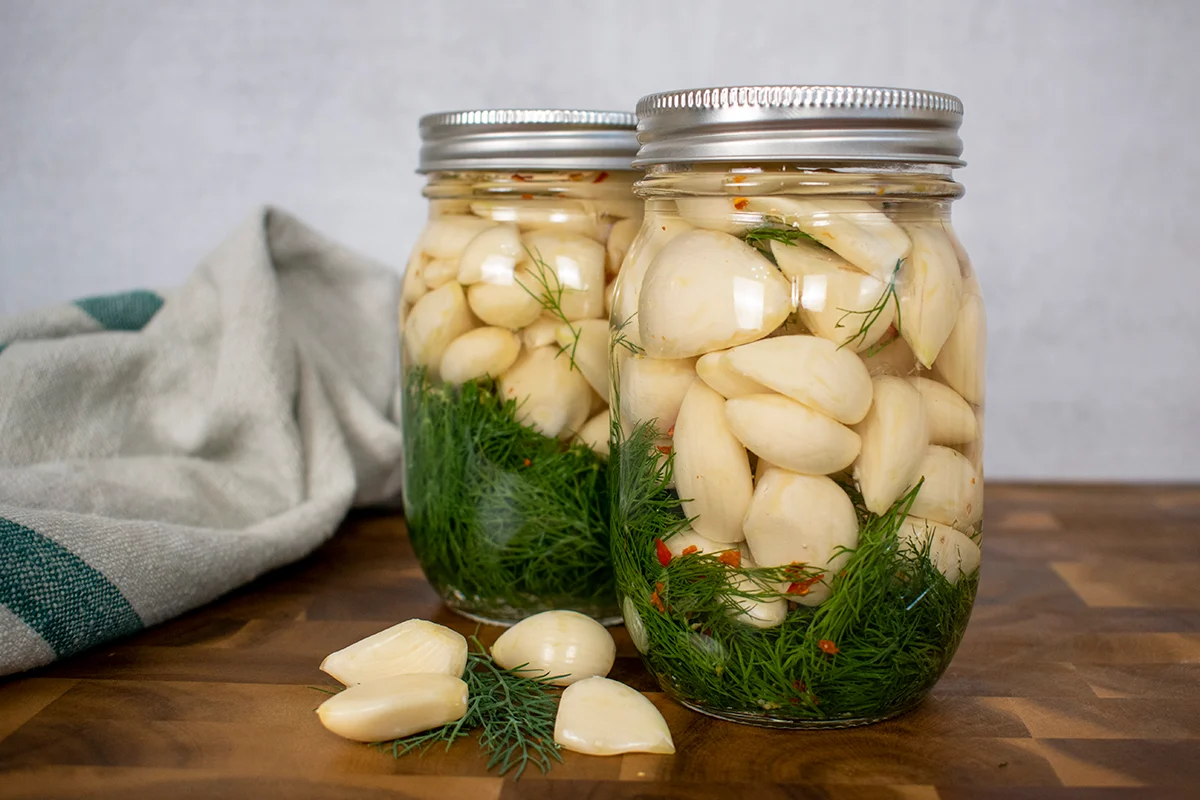
  • Customizable: Keep it simple or add peppercorns, bay, chili flakes, or dill depending on what you cook most.
  • Ridiculously useful: Chop it into salads, blend it into dressings, or serve it straight from the jar with rich foods.

Pairs Well With

Storage Tips

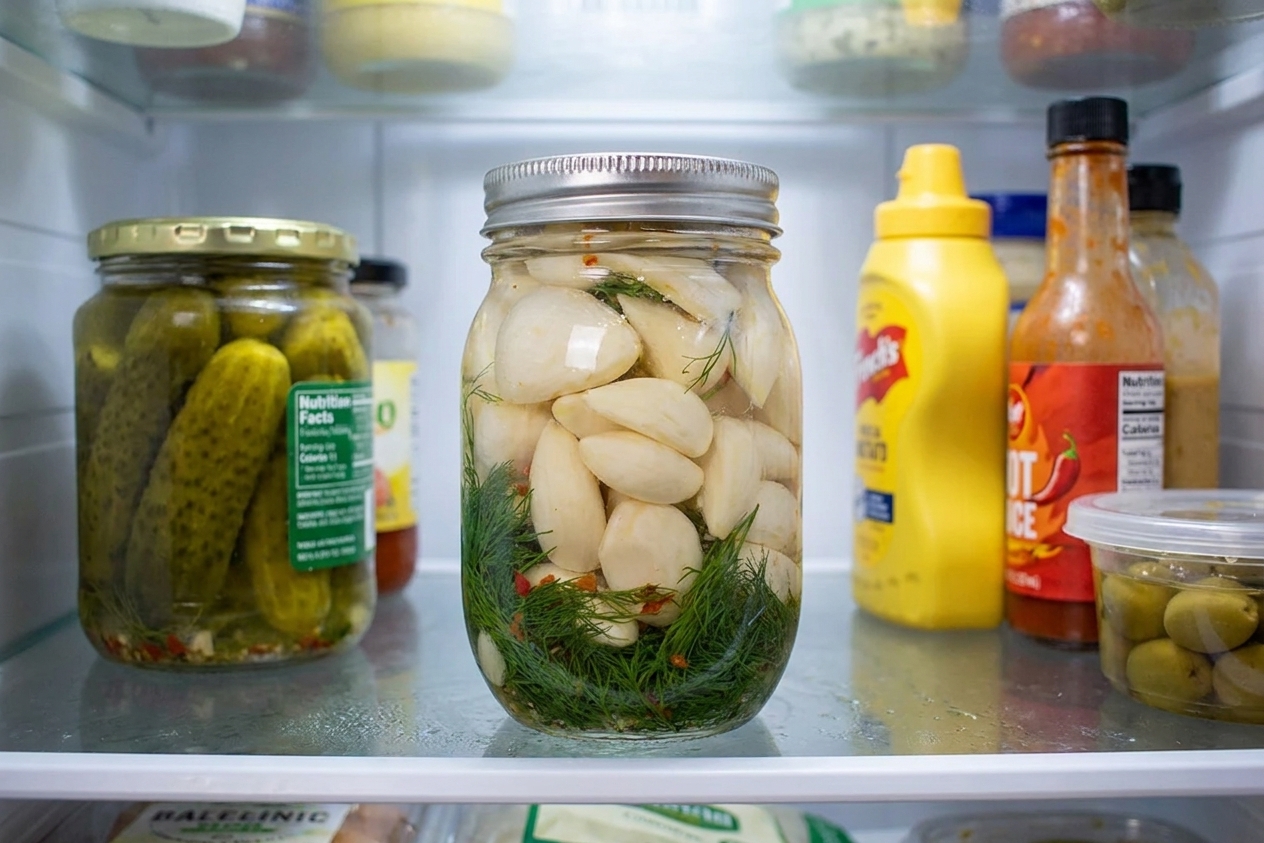
Refrigerate: Keep pickled garlic in a tightly sealed jar in the refrigerator, and keep it refrigerated at all times. It is best after 3 to 7 days and for best quality, use within 1 month.

Keep it covered: Make sure the cloves stay under the brine. If any float up, give the jar a gentle shake or tuck them down with a clean spoon.

Use clean utensils: No fingers, no used forks. This keeps the brine clear and the flavor fresh.

Know when to toss: Cloudiness or a little sediment can happen. Discard if you see mold, slime, fizzing that seems like fermentation, or you smell anything funky or off.

Brine is gold: Do not toss it. Splash it into salad dressing, stir it into mayo, or use a spoonful to brighten soups and sauces.

Common Questions

How long does pickled garlic take to be ready?

You can taste it after 24 hours, but it really hits its stride around 3 to 5 days. If you want a softer, more mellow clove, let it go a full week.

Does pickled garlic stay crunchy?

It can stay fairly crisp at first, then it gradually softens as it sits, especially with a warm brine. If you want more bite, keep the brine warm (not boiling) and store the jar cold right away after it cools.

Why did my pickled garlic turn blue or green?

Totally normal and generally considered safe. Garlic can react with acids (and trace minerals) and shift color, which is more common with very fresh garlic and certain varieties. It is a natural pigment reaction, not spoilage. That said, if you see mold, slime, or notice an off smell, do not eat it.

Can I make this without sugar?

Yes. Sugar is optional, but I recommend a small amount because it rounds out the vinegar and makes the garlic taste more balanced. If you skip it, the pickles will be sharper.

Can I water-bath can this recipe?

This page is written for a refrigerator method. Garlic is a low-acid food, so shelf-stable pickled garlic requires a tested canning recipe with verified acidification and processing times. Use a reputable source and follow proper canning steps exactly.

What vinegar is best?

Distilled white vinegar is clean and classic. Apple cider vinegar adds a warmer, slightly sweet tang and a darker brine. If you use cider vinegar, I like pairing it with bay leaf and peppercorns.

I started keeping pickled garlic around for the same reason I keep hot sauce around. Some nights you just need a fast flavor fix. The first time I made it, I was aiming for a cute little charcuterie moment, then I caught myself eating cloves straight out of the jar like they were olives. Now I treat it like a pantry staple for the fridge. Chop a clove into tuna salad, toss a few into a grain bowl, blitz one into a quick lemony dressing. Suddenly the meal tastes like you planned it.