What kind of plums should I use?
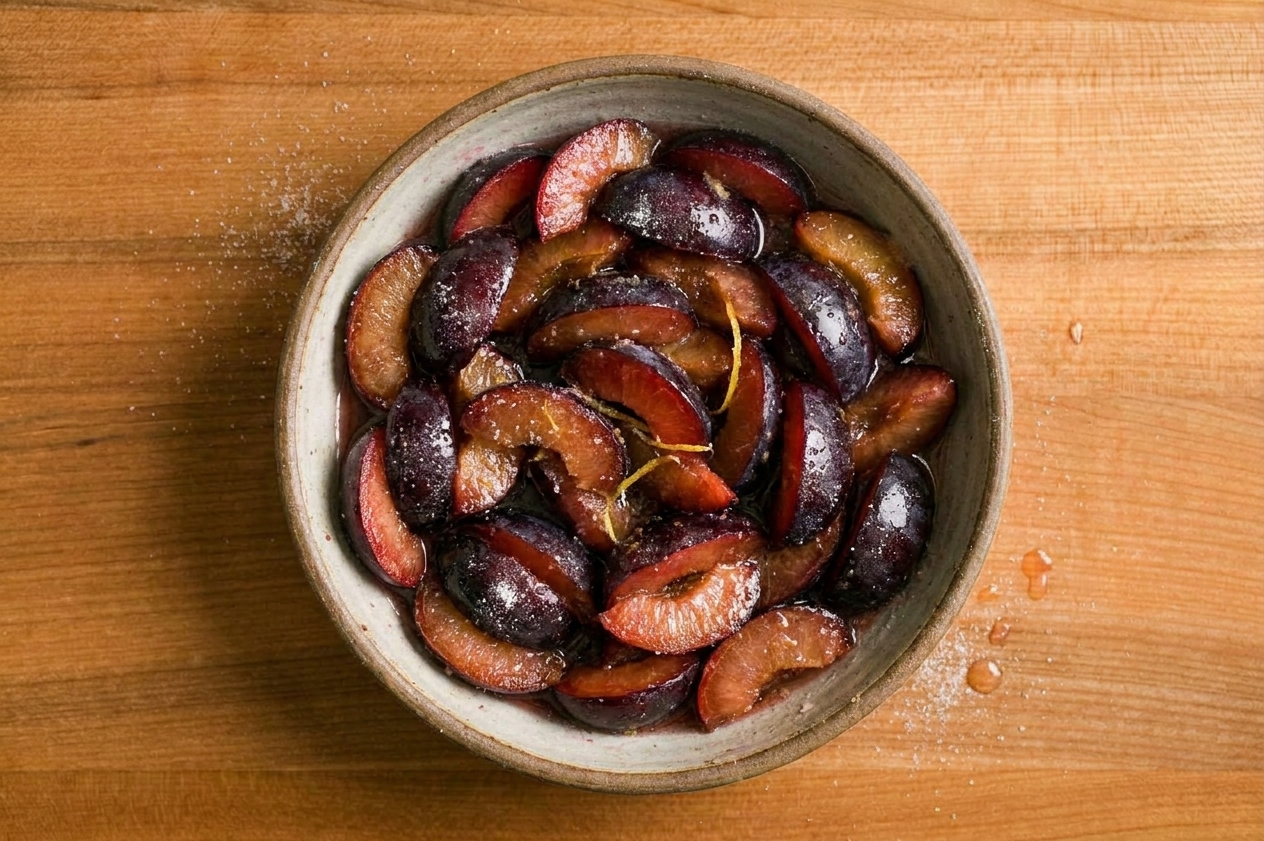
Most ripe plums work beautifully. I love black plums for deeper flavor and color, and red plums for a brighter tartness. The one wildcard is juiciness: some varieties bake looser than others. If your plums are extremely juicy or very soft, bump the cornstarch up by 1 to 2 teaspoons.
Bonus tip: freestone plums are easier to pit than clingstone, but either is totally fine.
Do I need to peel plums for crisp?
Nope. Plum skins soften as they bake and add gorgeous color. Just slice and go.
How ripe is “ripe enough”?
You want plums that give slightly when you press them, but are not leaking or mushy. Very underripe plums can taste flat after baking, so let them sit on the counter a day or two if needed.
Can I reduce the sugar?
Yes. If your plums are very sweet, you can drop the filling sugar to 2 tablespoons. Keep a little sugar though. It helps draw out the fruit juices (which is good for that jammy vibe), and the cornstarch is what thickens those juices into a spoonable filling.
Why is my crisp watery?
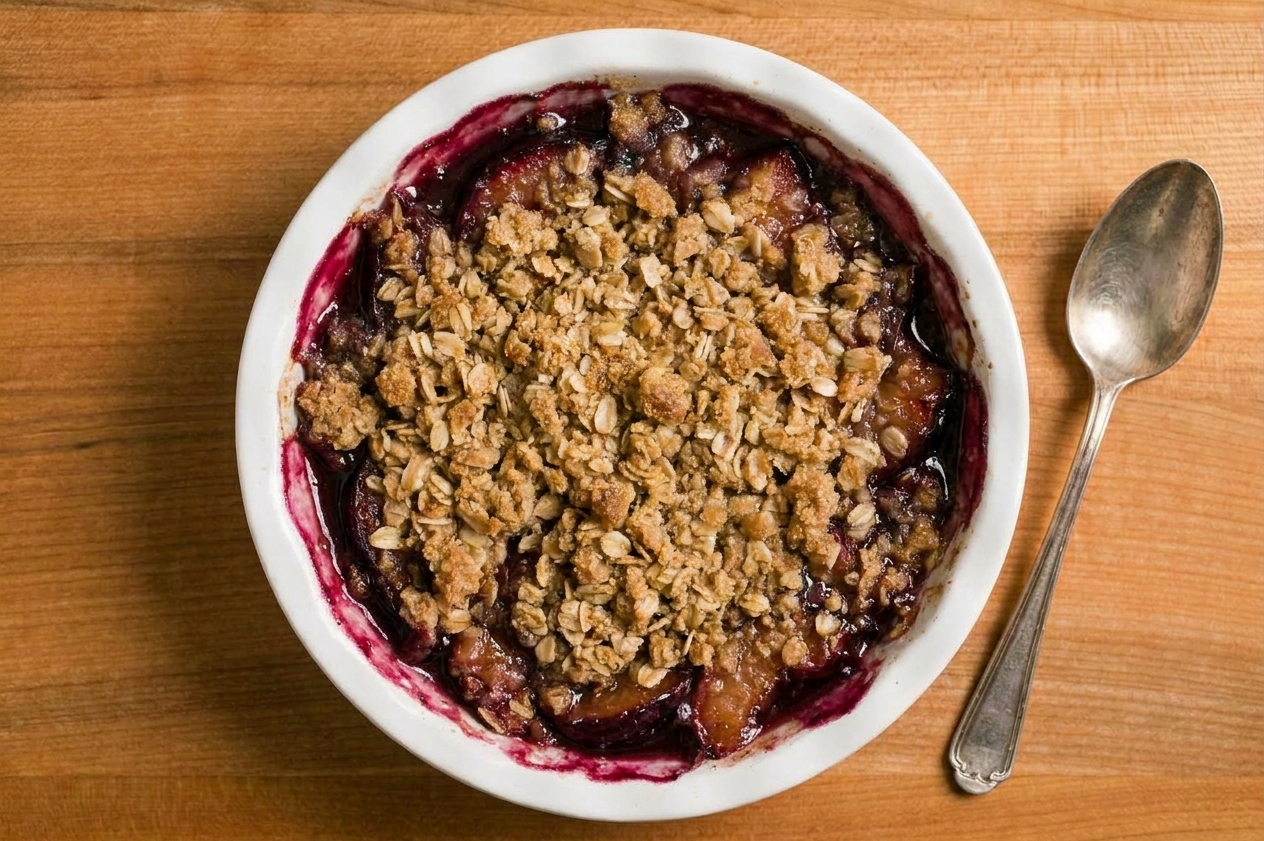
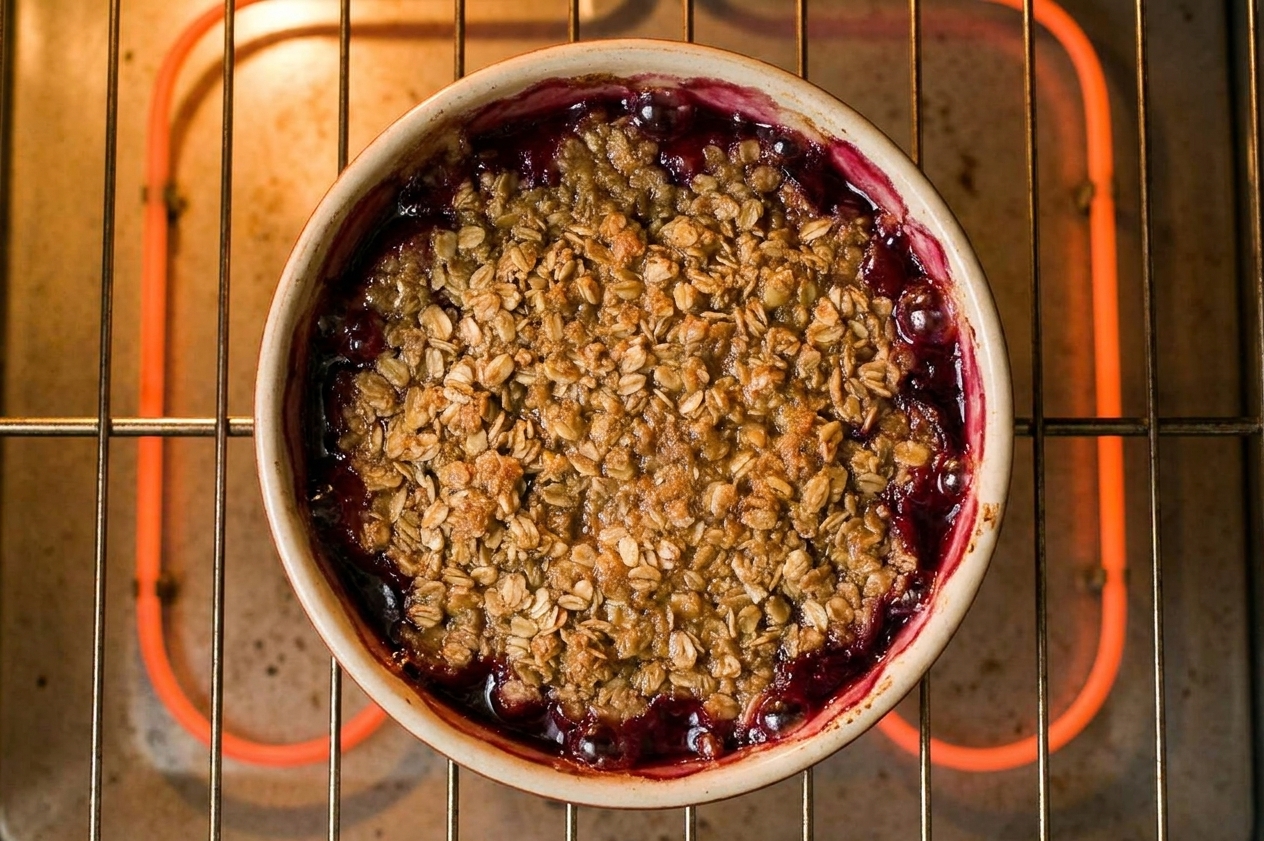
Usually it is one of three things: you skipped thickener, your fruit was extra juicy, or you cut into it while it was piping hot. Let the crisp cool for 15 to 20 minutes so the juices set up. Also make sure you are seeing bubbling in the center, not just the edges, before pulling it from the oven.
Can I make it gluten-free?
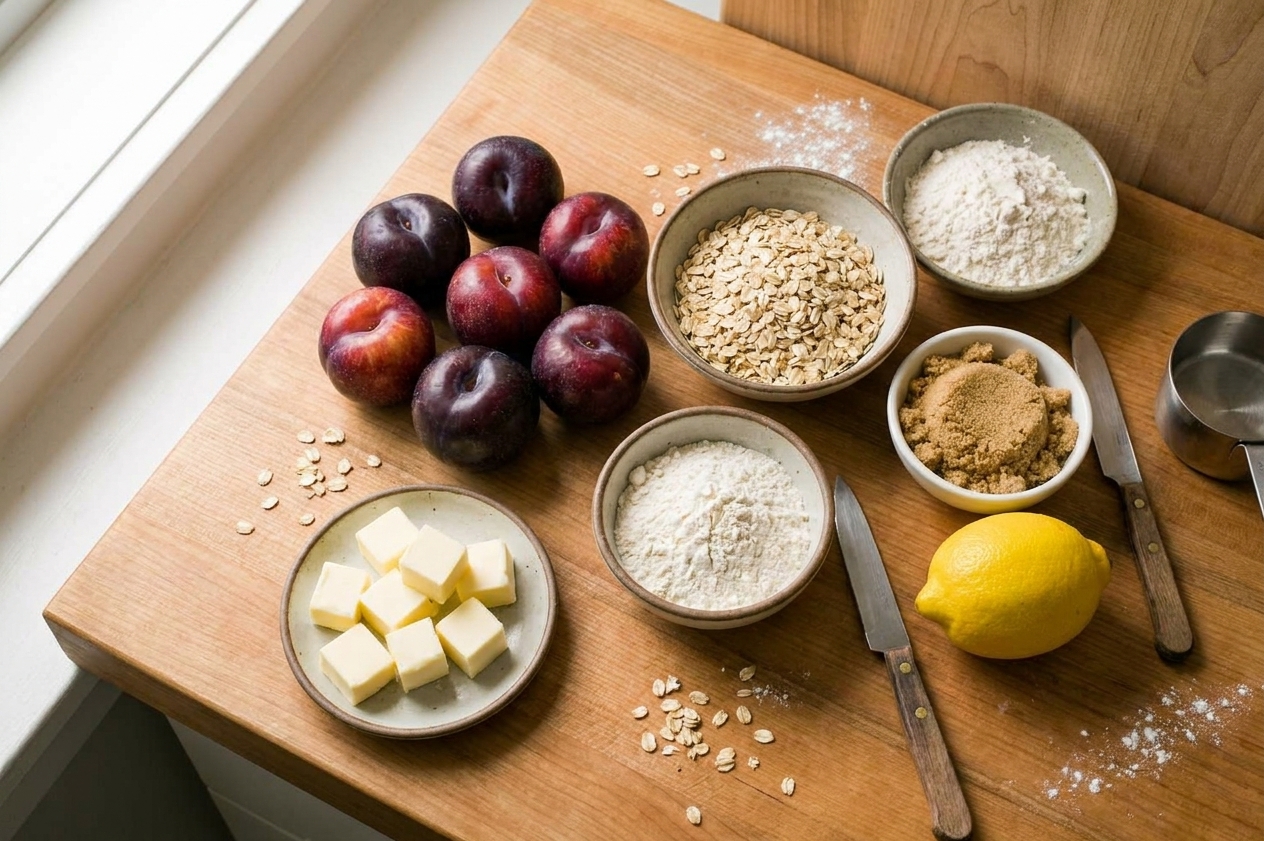
Yes. Use a 1:1 gluten-free flour blend in the topping and make sure your oats are certified gluten-free.
What if I do not have an 8x8 pan?
A 9x9 works great and may bake a few minutes faster since the filling is a bit thinner. A 7x11 is also fine. No matter the pan, bake until the topping is deeply golden and the filling is bubbling in the center.
Can I make it ahead?
Yes. For best texture, mix the topping and refrigerate it (covered) up to 2 days. Slice and toss the plums, then bake right away when you can. If you assemble the whole dish and let it sit, the fruit will release more juice and the topping can soften, still delicious, just a little less crisp.