Mom's Best Recipes
Recipe

Red Wine Poached Pears

Tender, jewel-toned pears in a spiced red wine syrup that tastes like winter in the best way.

Author By Matt Campbell
4.8
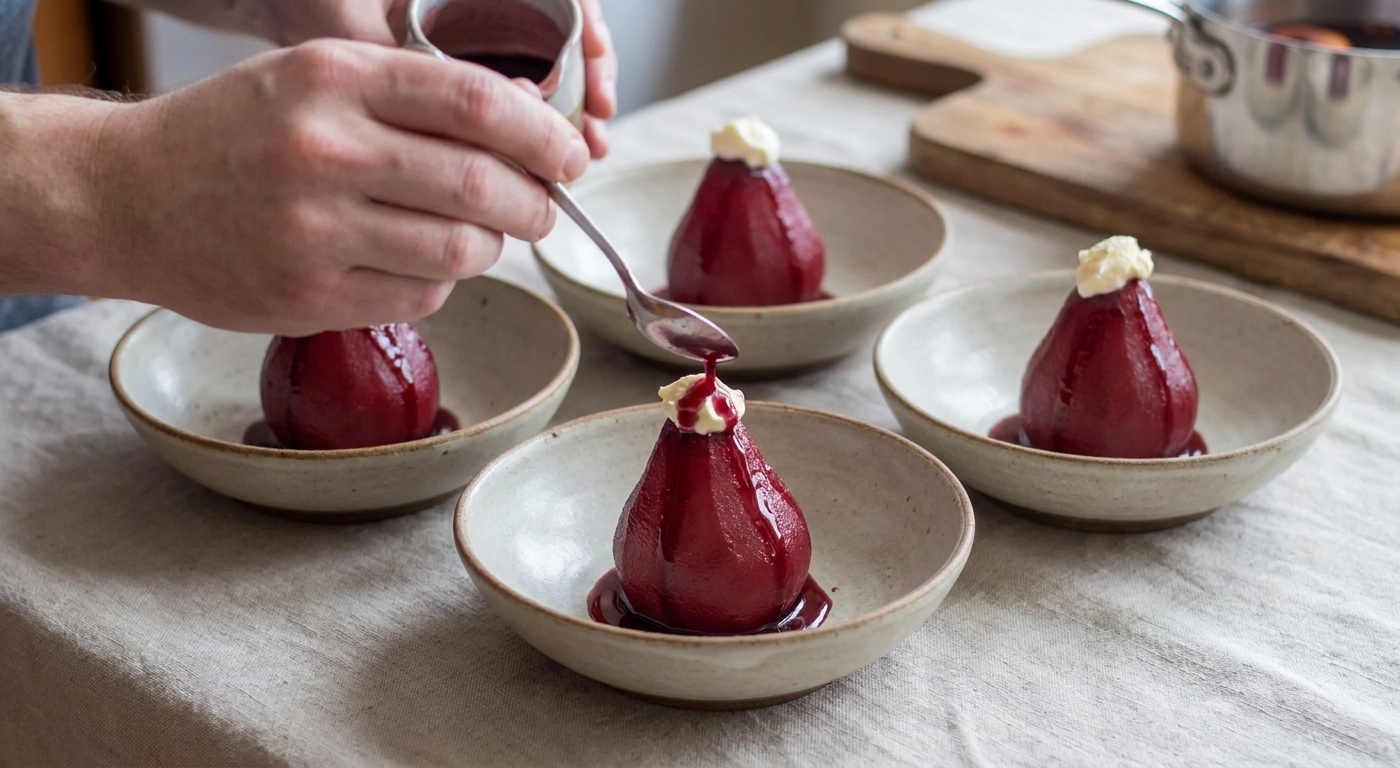
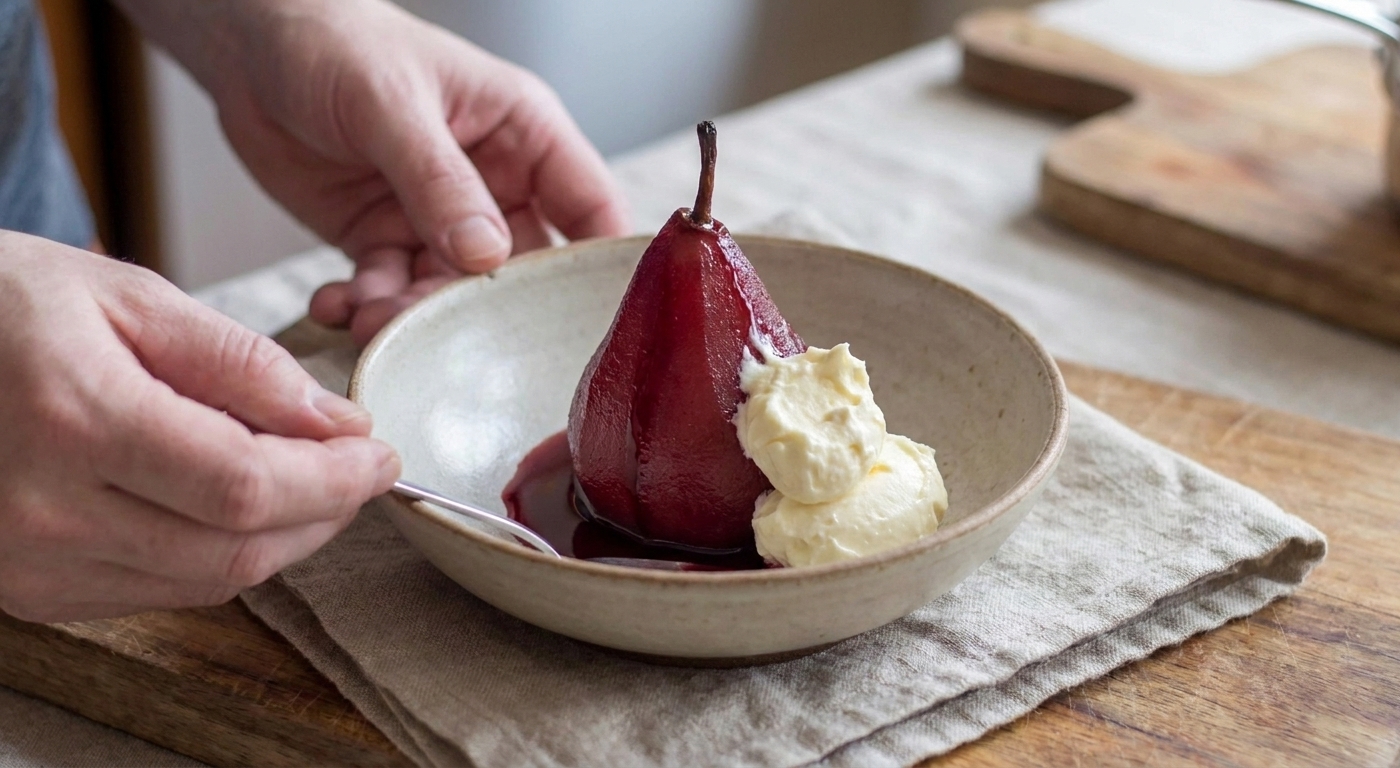
Four deep ruby red wine poached pears standing upright in shallow bowls, each drizzled with glossy syrup and topped with a small dollop of mascarpone on a neutral linen table setting

Poached pears are the kind of dessert that looks like you tried really hard while secretly being a one-pot situation. You simmer fruit in a cozy bath of wine, citrus, and warm spices, then reduce that liquid into a glossy syrup that makes everything taste expensive.

I like these for holidays, dinner parties, and random Tuesdays when I need a win. You can make them ahead, they hold beautifully in the fridge, and they turn basic pantry ingredients into something you would absolutely order at a restaurant.

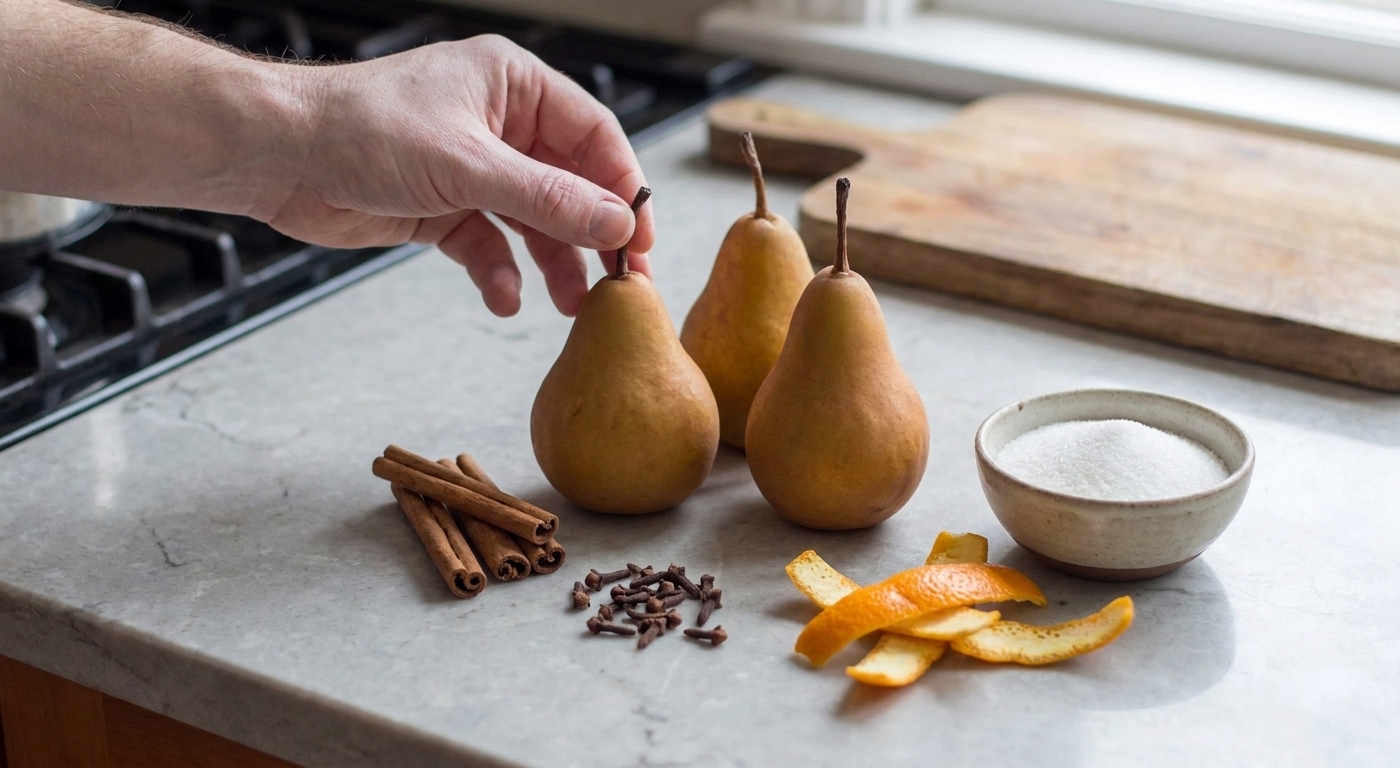
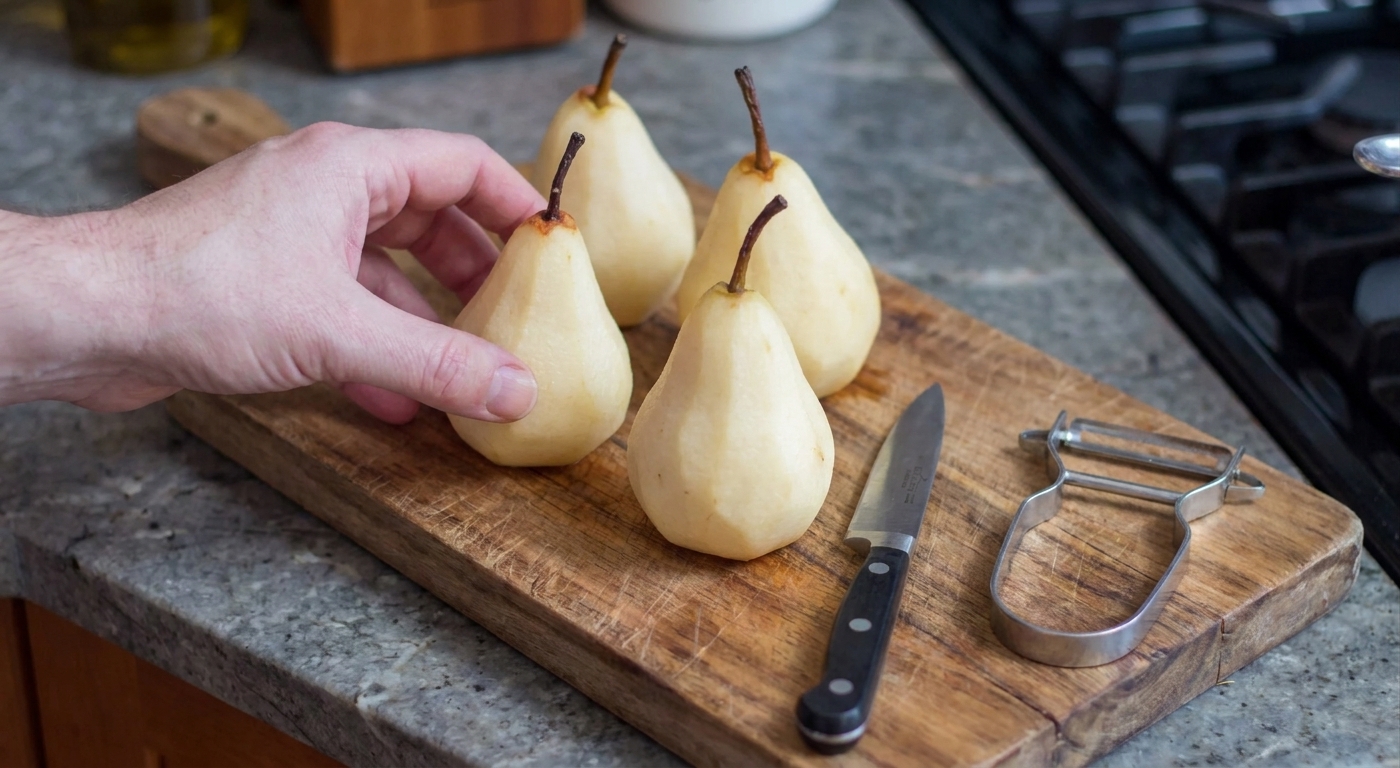
Fresh Bosc pears, cinnamon sticks, whole cloves, strips of orange peel, and a bowl of sugar arranged on a light stone kitchen counter in soft natural light

Why It Works

  • Gentle heat does the work: A low simmer keeps pears silky instead of turning them mushy.
  • Big flavor, accessible ingredients: Red wine, sugar, citrus, and spices build a syrup that tastes layered without needing anything fancy.
  • Make-ahead friendly: The pears get even better after a night in the poaching liquid.
  • Restaurant vibes at home: Red wine turns the pears jewel-toned, and the reduced syrup makes a glossy, dramatic finish.

Pairs Well With

Storage Tips

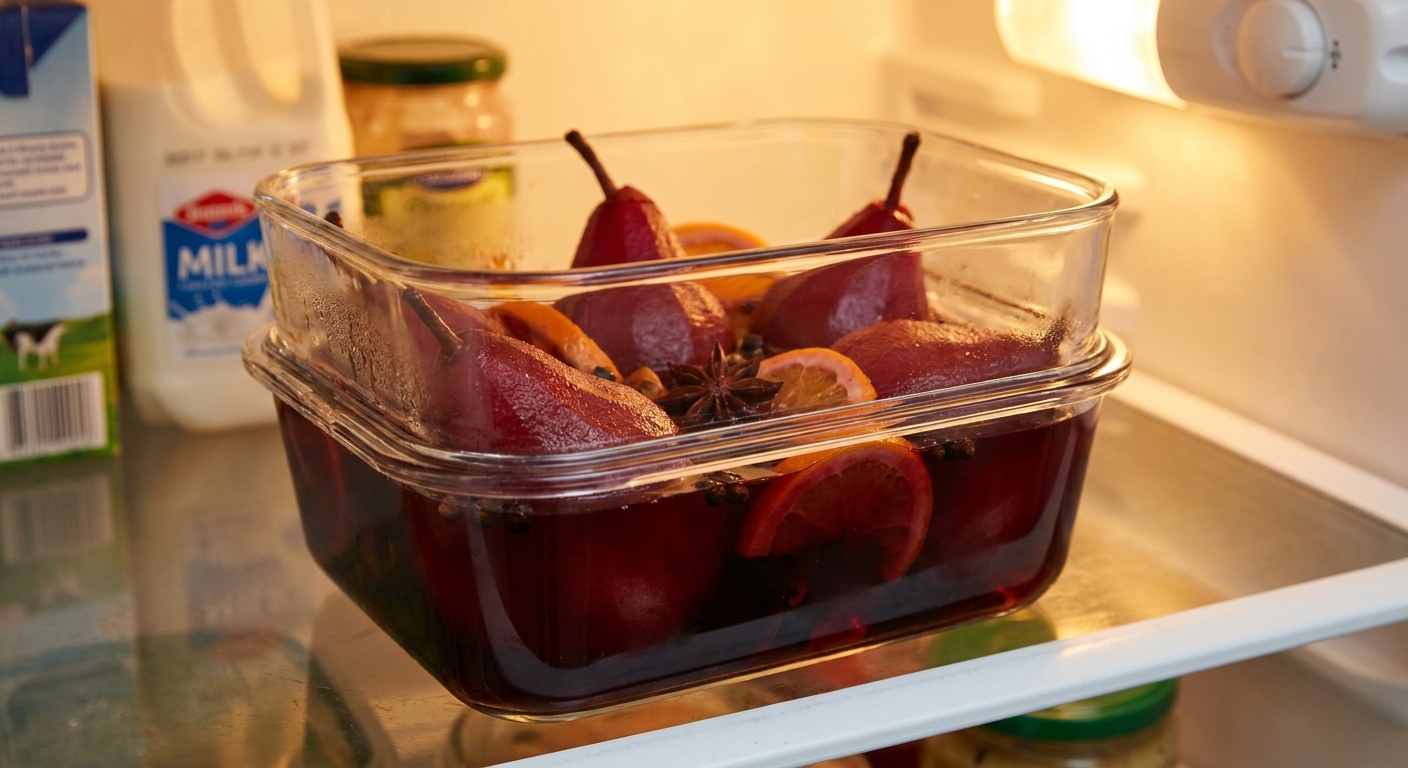
Refrigerate: Store pears fully submerged in the poaching liquid in an airtight container for up to 4 days. Keeping them covered prevents drying. For the richest color, let them sit overnight.

Reduce later: If you are making ahead, you can refrigerate the pears in the liquid and reduce the syrup right before serving.

Freeze: I do not love freezing these. The pears can turn a little grainy once thawed. If you must, freeze pears and liquid together for up to 1 month, then thaw overnight in the fridge.

Poached pears in a glass storage container covered with red wine poaching liquid, sitting on a refrigerator shelf under warm interior light

Common Questions

What kind of pears are best for poaching?

Bosc are my favorite because they hold their shape and stay pleasantly firm. Anjou also works. Aim for firm-ripe pears that yield just slightly at the neck. I avoid super-ripe Bartletts here unless you want very soft pears.

Do I have to use wine?

No. Swap the wine for 100% pomegranate juice, grape juice, or 100% cranberry juice. If you use cranberry juice cocktail (it is usually sweetened), reduce the sugar to 1/4 to 1/2 cup and sweeten to taste at the end. To bring back some grown-up tang, add 1 to 2 teaspoons balsamic vinegar or use 1 to 2 tablespoons lemon juice as a safer option.

How do I keep the pears evenly colored?

Two tricks: keep them mostly submerged and rotate them every 10 minutes. If your pot is wider and the liquid does not cover as well, lay the pears on their sides for the first half of cooking, then stand them up once they soften a bit.

Why are my pears still hard after poaching?

They were likely underripe or your simmer was too low. Keep poaching and check every 5 minutes. Pears can go from firm to perfect fast, so do not wander too far.

Why did my syrup turn bitter?

The most common culprit is too much citrus pith (the white part). Peel wide strips and avoid the white layer, or swap to a few thin zest strips. Also, if your wine is very oaky, that can taste harsh once reduced, so choose a red you would happily drink.

Should I serve these warm or cold?

Both work. I love them chilled or room temp with mascarpone. If you want them warm, rewarm gently in the poaching liquid over low heat just until warmed through so they do not turn mushy.
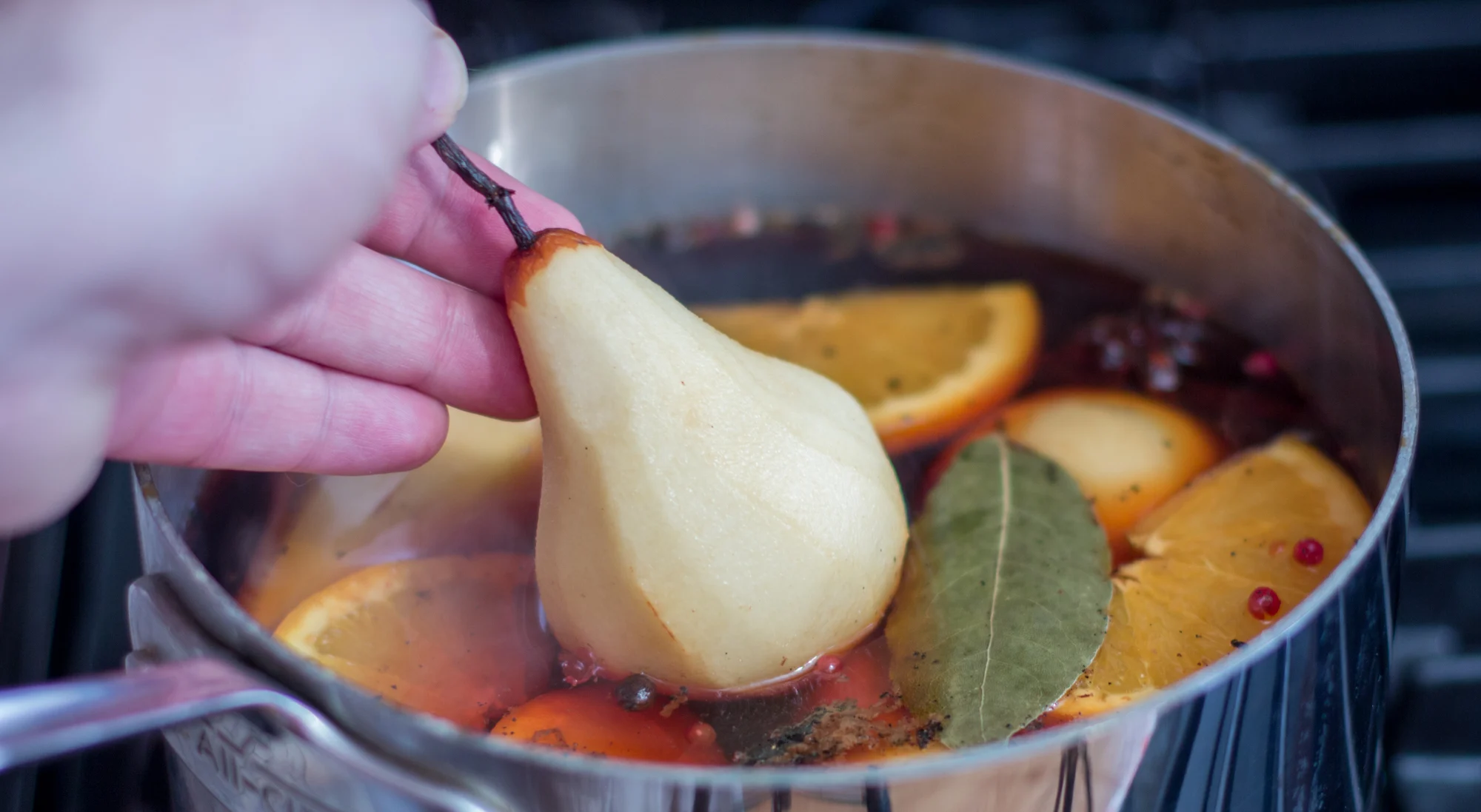

A medium pot on a stovetop with pears gently simmering in red wine, cinnamon sticks floating on the surface, and light steam rising in a cozy kitchen

I love desserts that let me cook like a calm person, even when I am not. Poached pears are that for me. You get to gently simmer something, taste the liquid as it turns into syrup, and pretend you are the kind of adult who always has whole spices on hand. I first made them during a stretch where I was teaching myself more practical kitchen fundamentals, and it clicked: controlling heat and building flavor can be simple and still feel magical.

Also, there is something satisfying about rotating pears like they are tanning in a spa. Low chaos, high reward.