Mom's Best Recipes
Recipe

Refrigerator Dill Pickles

Crisp, tangy, garlicky dill pickles made in the fridge with a quick brine and zero canning drama.

Author By Matt Campbell
4.8
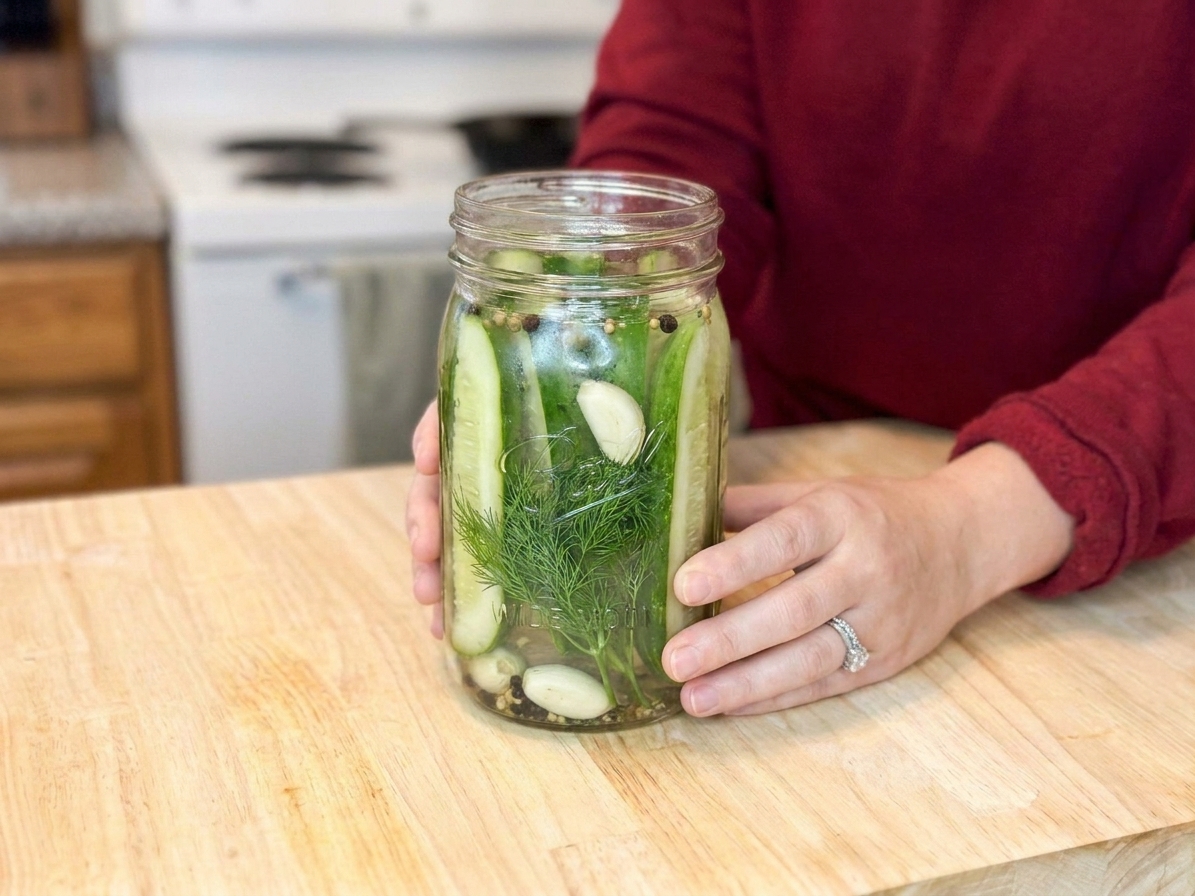
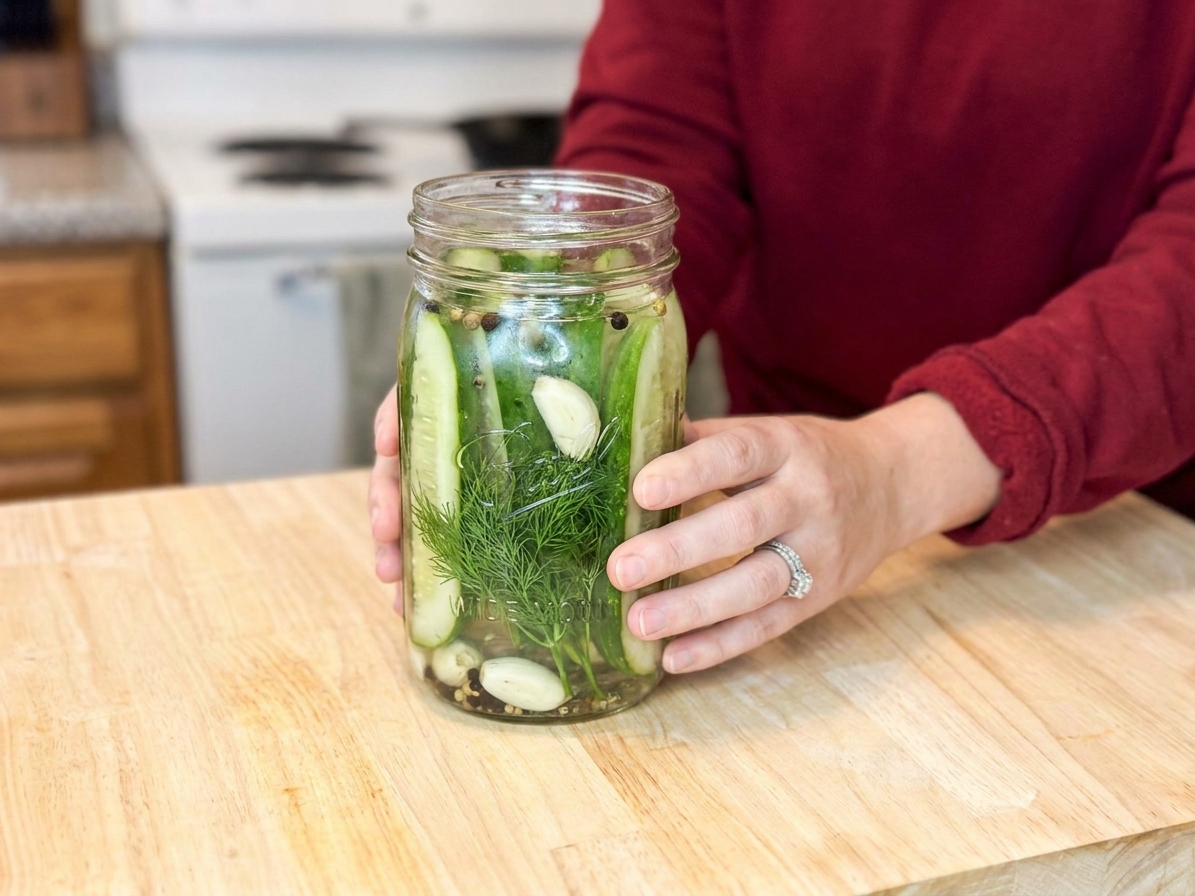
A glass jar of refrigerator dill pickles with fresh dill and garlic cloves, ready for the fridge

These refrigerator dill pickles are my kind of kitchen win: minimal effort, maximum crunch, and that bright, garlicky dill punch that makes you keep opening the fridge just to “check on them.” No canning setup, no boiling water bath, no sweating over seals. Just a simple brine, a jar, and a little patience while the cucumbers turn into the snappy sidekick every sandwich deserves.

The secret here is keeping the brine salt-forward and cold-friendly, plus using a couple small tricks for texture so you get pickles that taste alive, not limp. If you can slice cucumbers and pour liquid into a jar, you can make these.

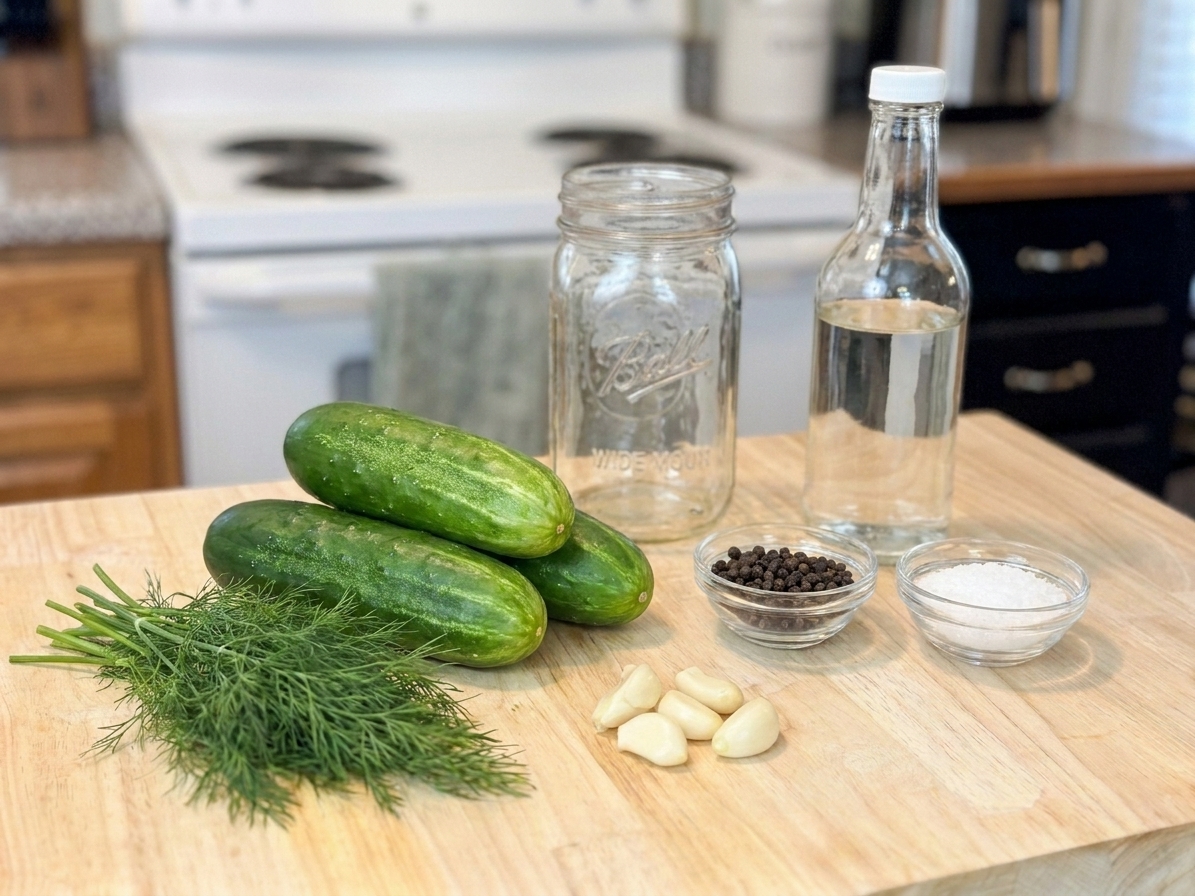
Pickling cucumbers, fresh dill, garlic, peppercorns, salt, and vinegar arranged and ready for making refrigerator pickles

Why It Works

  • Big dill flavor fast: Fresh dill and garlic infuse quickly in a hot-poured brine, so you are not waiting a week for taste.
  • Crunch you can count on: Using the right cucumbers plus an optional tannin booster (like a grape leaf or tea bag) may help keep that crisp bite.
  • No canning required: This is a true refrigerator pickle. Keep refrigerated, use clean utensils, and treat it like a fresh food, not a pantry item.
  • Easy to customize: Keep it classic, make it spicy, add extra garlic, or lean into peppery, herby vibes.

Pairs Well With

Storage Tips

Storage Tips

Refrigerate always: These are not shelf-stable. Keep the jar in the fridge. This is not a canning recipe.

How long they last: Best crunch and flavor in the first 7 to 10 days. They can keep up to 3 to 4 weeks in the fridge for best quality if kept cold and the pickles stay submerged, but it varies based on cucumber freshness and how cleanly you handle the jar. When in doubt, toss sooner.

Keep them submerged: Exposure to air is what makes pickles go dull and can invite spoilage. Press cucumbers under the brine with a small clean weight, a folded piece of cabbage, or just pack them snug.

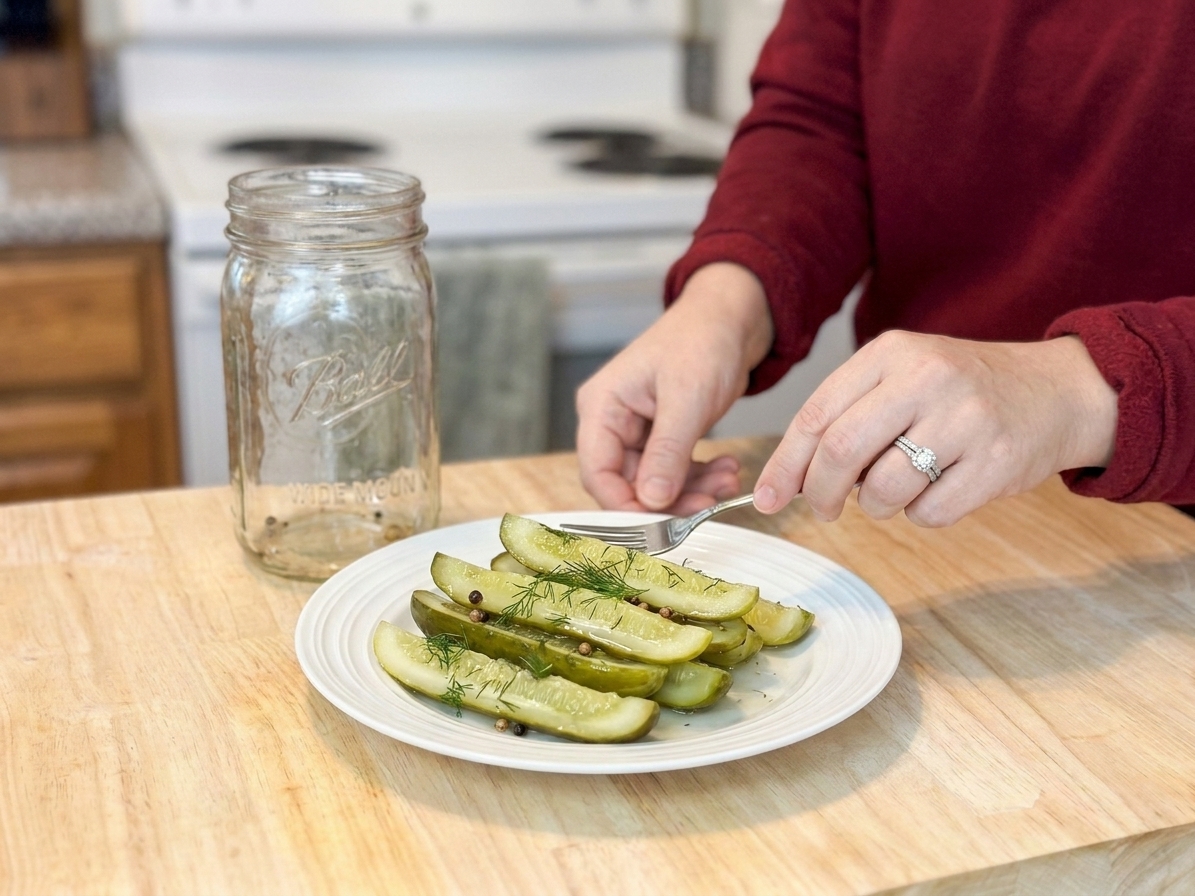
Clean fork rule: Use a clean utensil every time. Fingers are fun, but they are also chaos.

Signs to toss: Fuzzy mold, a rotten smell, or brine that turns slimy. (Some cloudiness is normal, especially with lots of garlic or certain salts.)

Common Questions

Common Questions

How soon can I eat refrigerator dill pickles?

You can start snacking after 24 hours for a light pickle vibe. They hit the best balance of flavor and crunch around 48 to 72 hours.

Why are my refrigerator pickles not crunchy?

Usually one of these: you used standard waxy slicing cucumbers (they soften easier), the cucumbers were old, you sliced them too thin, or the jar sat warm too long before chilling. For extra crunch, use pickling cucumbers, keep them cold, and consider the optional grape leaf or tea bag trick in the recipe (it may help, results vary).

Do I have to boil the brine?

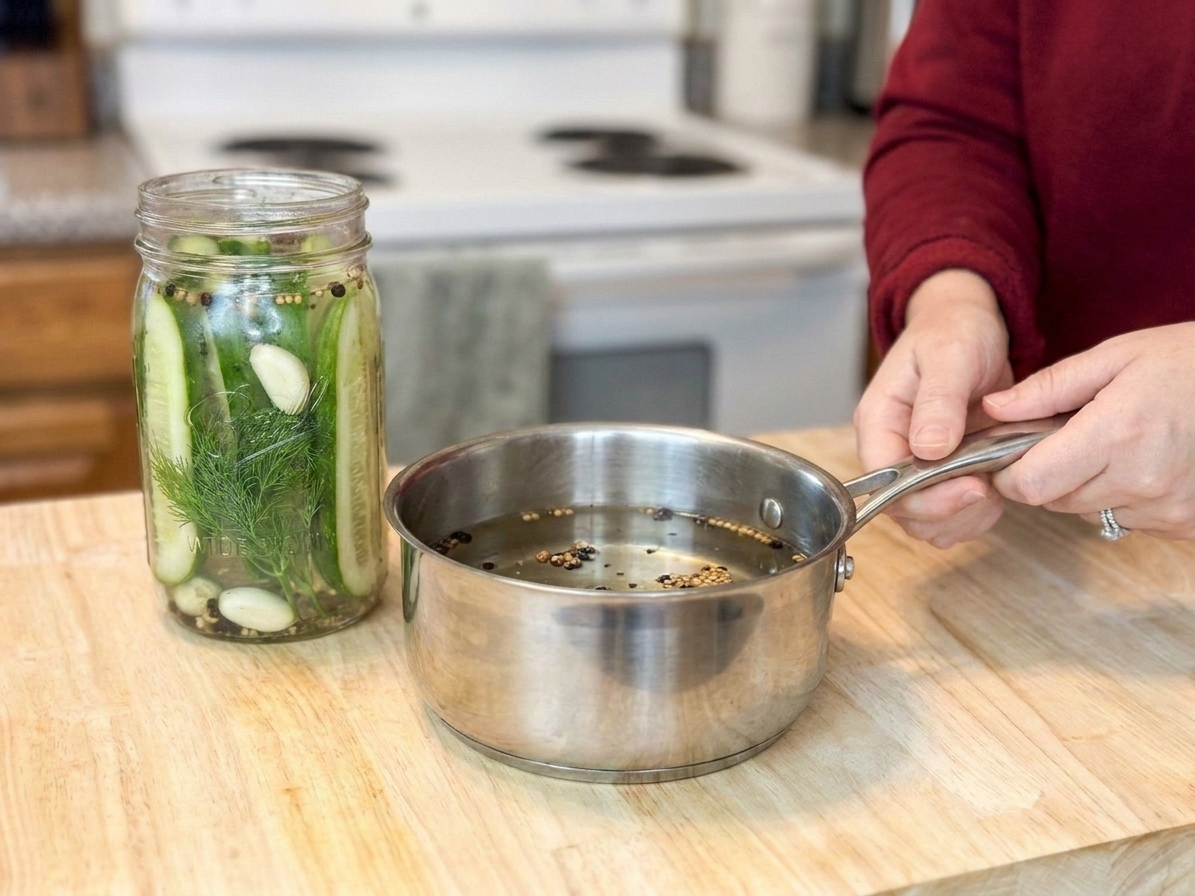
Not strictly, but I recommend heating it until the salt dissolves and it is very hot. Hot brine kick-starts infusion so the pickles taste “done” sooner, but it can soften cucumbers slightly compared to a fully cold brine. You will still chill everything before storing.

Can I use apple cider vinegar instead of white vinegar?

Yes. Apple cider vinegar gives a slightly rounder, fruitier tang. White vinegar tastes cleaner and more classic deli-style. Either works.

Is it safe to reduce the salt or vinegar?

I would not reduce the vinegar. For salt, you can nudge it slightly, but salt helps both flavor and texture. If you are watching sodium, make a smaller batch and eat them sooner rather than trying to heavily reduce salt.

Can I reuse the brine?

You can reuse it once for a quick second round (think: thin cucumber slices or onions), but the flavor will be weaker and the brine gets diluted. When in doubt, mix a fresh batch.

Why is the brine cloudy?

Cloudiness can happen from spices, garlic, hard water, or using salt with additives (like iodized salt or anti-caking agents). It is usually harmless. What you do not want is a bad smell, fuzzy mold, or a slimy brine. If it smells clean and tangy, you are generally good.

I started making refrigerator pickles when I realized two things: one, I put pickles on basically everything. Two, I do not always have the patience for a full canning day. These are my weeknight pickles. I can throw them together while something else cooks, and by the next day I have crunchy little flavor grenades ready for burgers, tuna melts, fried chicken, or straight-from-the-jar snacking. Also, the first time you make them, you will feel irrationally proud every time you open the fridge. Fair warning.