Doneness Temperatures
Use an instant-read thermometer and pull the steak from the oven 10 to 15°F below your final target, since the hot sear finishes the job.
- Rare: pull at 110°F, finish to 120 to 125°F
- Medium-rare: pull at 115°F, finish to 130 to 135°F
- Medium: pull at 125°F, finish to 140 to 145°F
- Medium-well: pull at 135°F, finish to 150 to 155°F
- Well: pull at 145°F, finish to 160°F+
Do I have to rest the steak?
Yes, but here is the twist: reverse sear gives you two mini rests. First, a short rest after the oven (about 5 to 10 minutes) so the surface steam chills out before searing. Then a quick rest after searing (about 5 minutes) so juices settle before slicing.
What is the best steak for reverse searing?
Thick cuts do best: ribeye, strip, porterhouse, T-bone, filet. Aim for 1.5 to 2 inches thick. Thin steaks cook too fast to benefit.
What oven temperature should I use?
250°F is the sweet spot. You can go as low as 225°F if you have time, or up to 275°F if you are in a hurry. Lower temps give you more forgiveness.
Why is my steak not getting a crust?
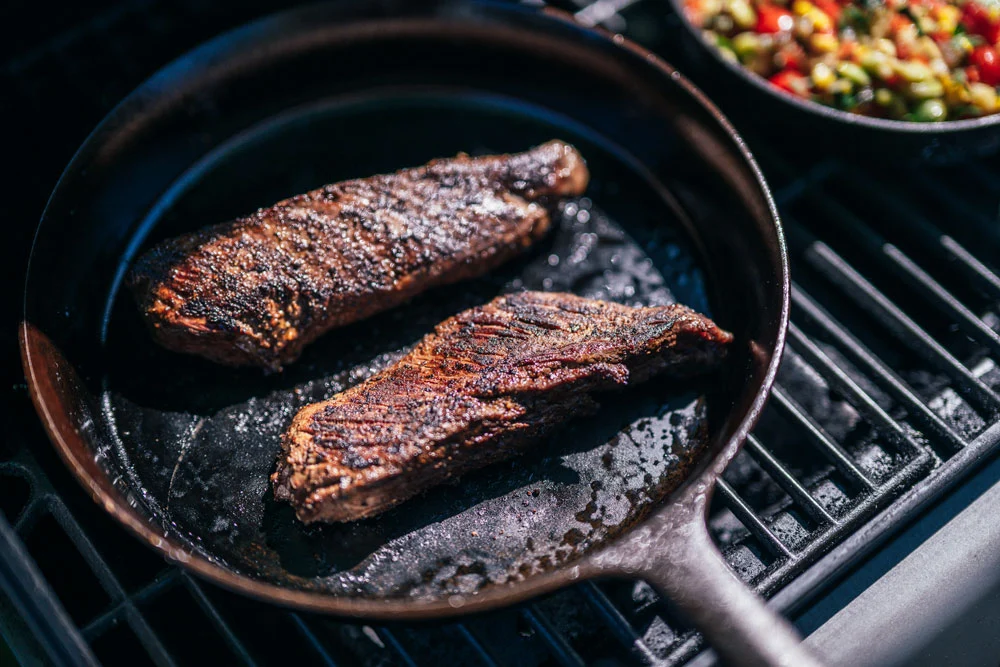
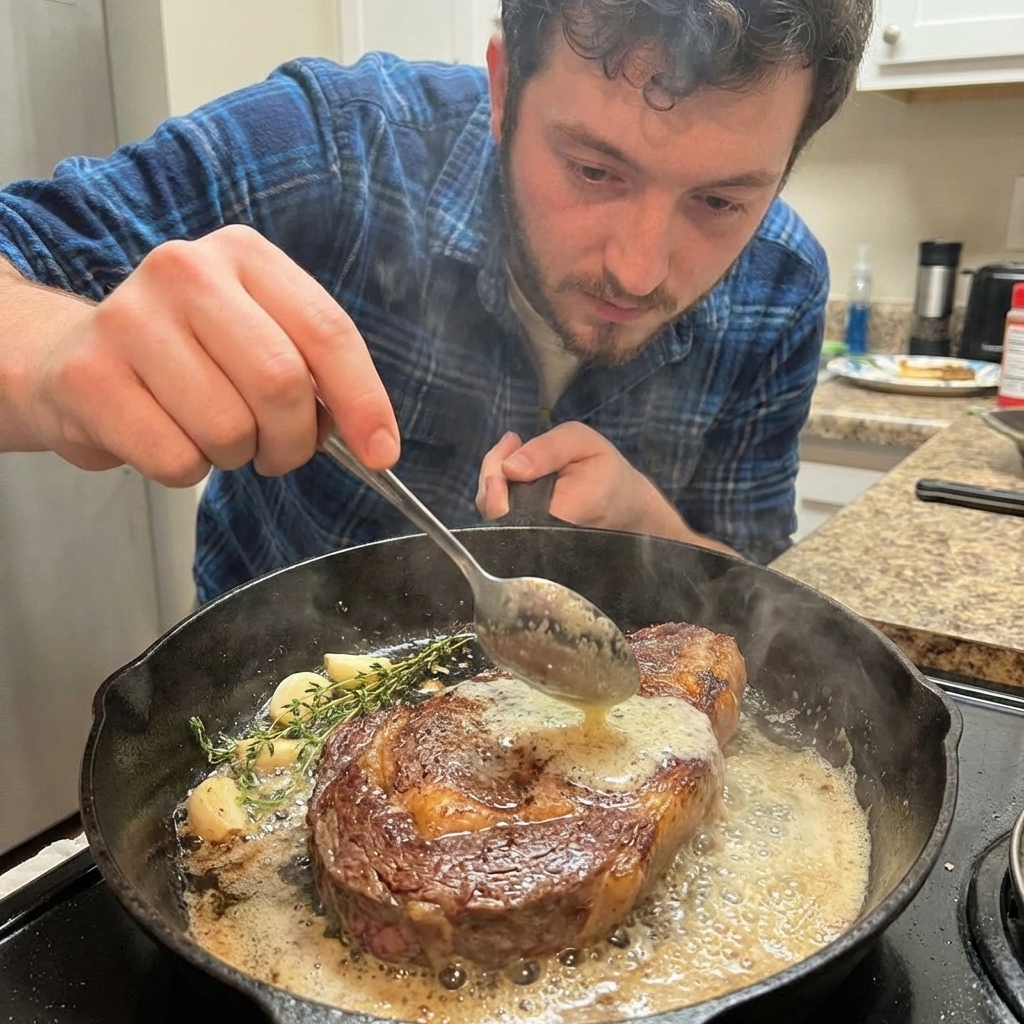
- Your pan is not hot enough. Preheat cast iron until it is very hot, usually 3 to 5 minutes.
- The surface is wet. Pat the steak dry before searing.
- Too crowded. Sear one or two steaks max, depending on skillet size.
- Not enough fat. Use a high smoke point oil (avocado, canola, grapeseed).
Why did my steak overcook during the sear?
- You pulled it from the oven too close to the final temp. Next time, pull 10 to 15°F early.
- Your sear took too long. Make sure the pan is ripping hot and keep the sear short.
- Your steak is thinner than 1.5 inches. For thin steaks, use a traditional sear-then-finish method.
Can I reverse sear on a grill?
Absolutely. Cook the steak over indirect heat first, then finish over the hottest part of the grill for the sear.