Mom's Best Recipes
Recipe

Roasted Beetroot

Caramelized roasted beets with a bright, simple dressing and plenty of ways to serve them.

Author By Matt Campbell
4.8
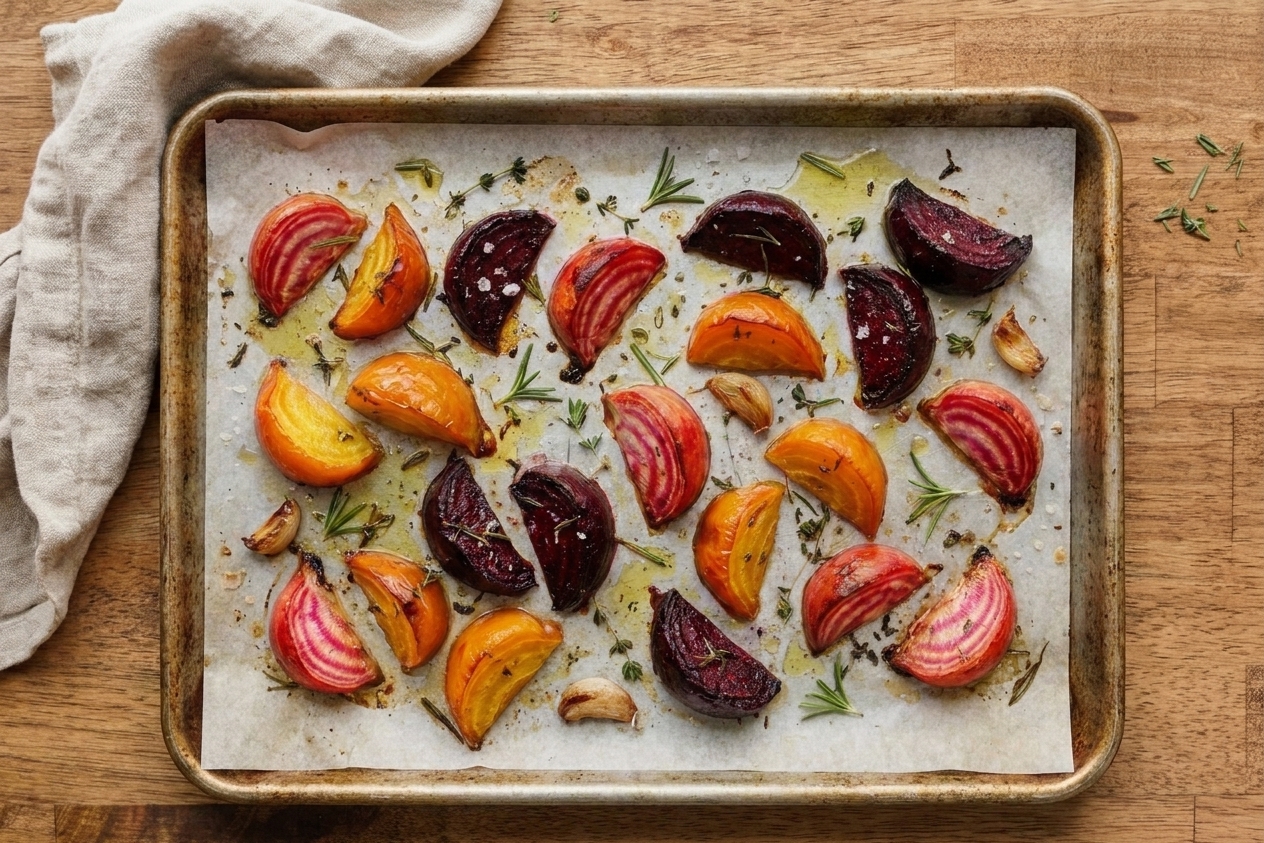
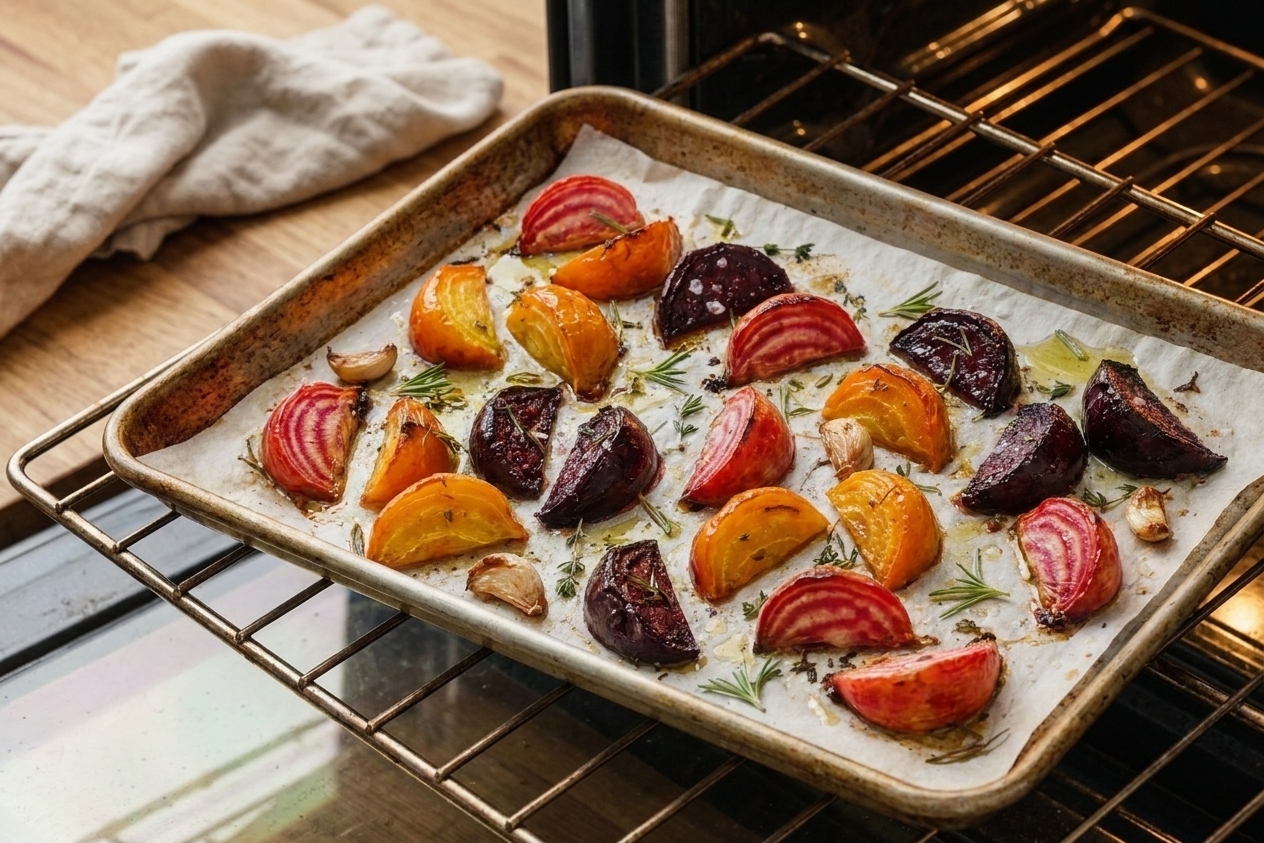
A rimmed sheet pan of roasted beetroot wedges with caramelized edges, glistening with olive oil and herbs on a warm kitchen counter

Roasted beetroot is one of those dishes that feels a little fancy, but it is basically just: cut, toss, roast, and try not to eat half of them straight off the pan. The oven does the heavy lifting, turning beets sweet and jammy with crisp edges, and then we wake everything up with a quick citrusy dressing so it tastes bright instead of just earthy.

This is my go-to when I want a colorful side that makes the rest of dinner look like I planned ahead. It is also shockingly good cold from the fridge, which is a very important feature in my kitchen.

Why It Works

  • Sweet, caramelized flavor: Roasting concentrates the beet’s natural sugars so you get that deep, almost candy-like sweetness without adding anything.
  • Better texture: Cutting into wedges or chunks means more surface area for browning and crisp edges.
  • Bright finish: A quick citrus and vinegar dressing balances the earthy beet flavor so it tastes lively, not heavy.
  • Make-ahead friendly: Roast once, then use all week in salads, bowls, wraps, and snacks.
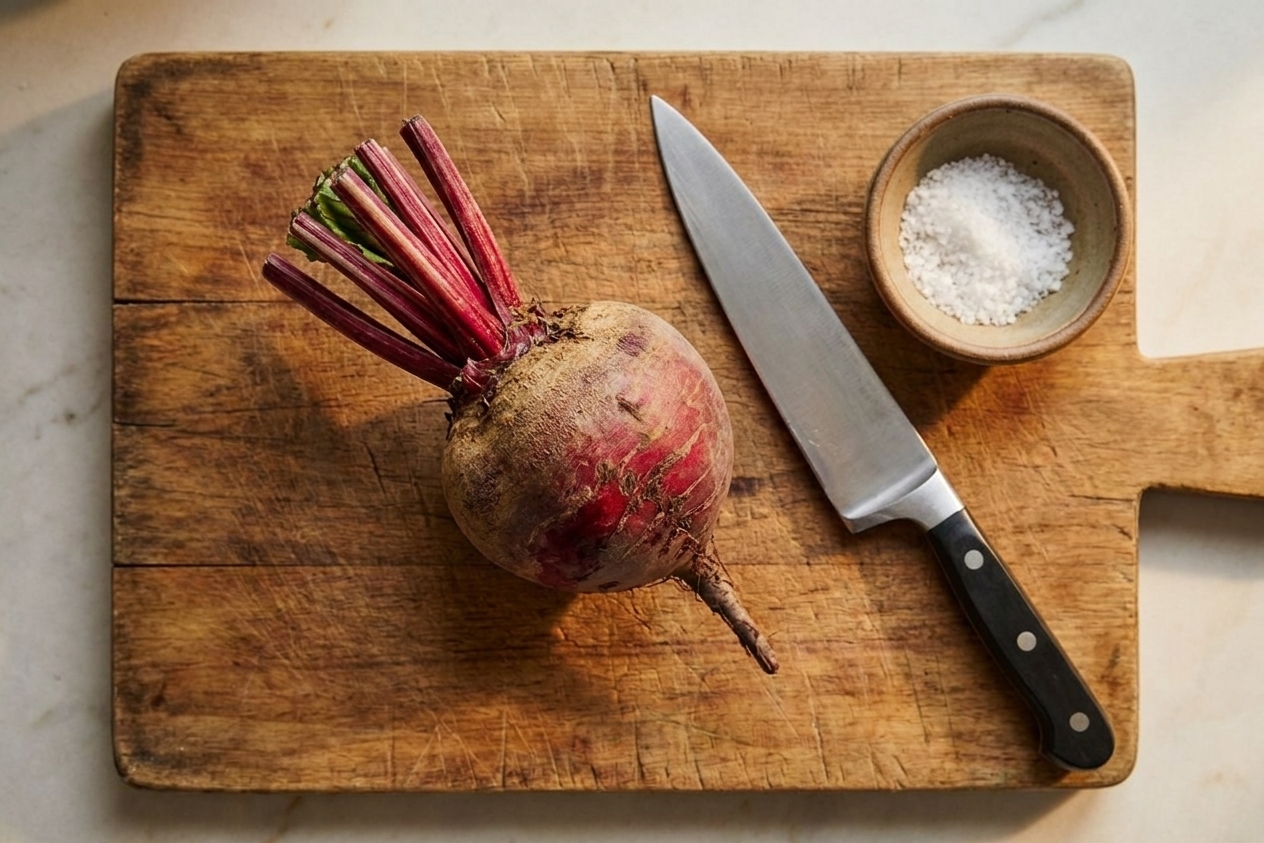
Whole raw beetroot with greens trimmed, sitting on a wooden cutting board with a chef's knife and a small bowl of salt

Pairs Well With

Storage Tips

Refrigerate: Store cooled roasted beetroot in an airtight container for 3 to 5 days, as long as it is promptly cooled and refrigerated. Keep the dressing separate if you want the cleanest flavor and color.

Reheat: Warm on a sheet pan at 375°F for about 8 to 12 minutes, or in a skillet with a small splash of water and a lid for 3 to 5 minutes. Microwaving works too, but you will lose some of the crisp edges.

Freeze: You can freeze roasted beets up to 3 months. Texture softens after thawing, so they are best for purees, soups, or blending into hummus and dips.

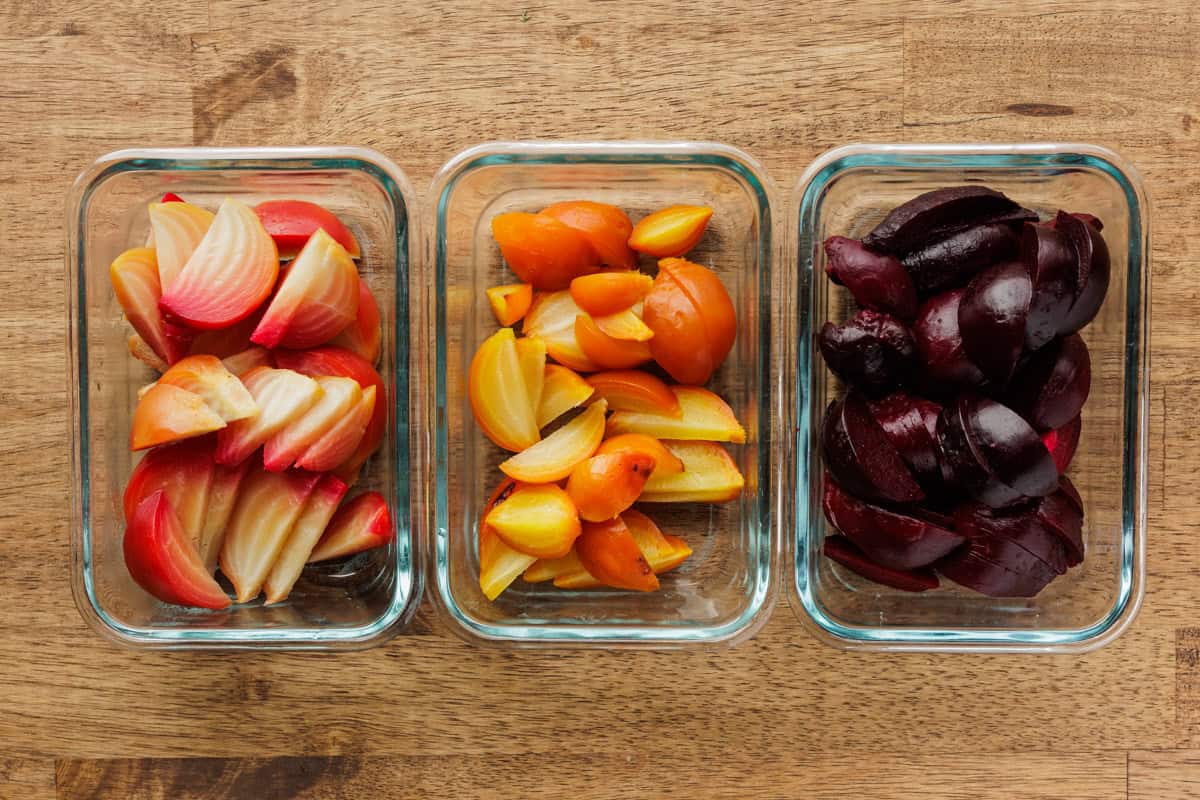
A glass meal prep container filled with roasted beetroot wedges, lid set nearby on a clean kitchen counter

Common Questions

Do I need to peel beets before roasting?

You do not have to. The skins slip off more easily after roasting. That said, I usually peel first for less mess and more even seasoning. If you roast skin-on, rub off the skins with a paper towel once they cool slightly.

Why did my roasted beetroot turn out dry?

Two common culprits: pieces cut too small, or not enough oil and salt. Beets like a good toss in oil and a single layer on the pan. If they are too spread out they can dry a bit, and if they are piled up they will steam and won’t brown. Aim for a single layer with a little breathing room, and rotate the pan halfway through if your oven has hot spots. If your oven runs hot, cover with foil for the first half of roasting, then uncover to caramelize.

How do I keep beets from staining everything?

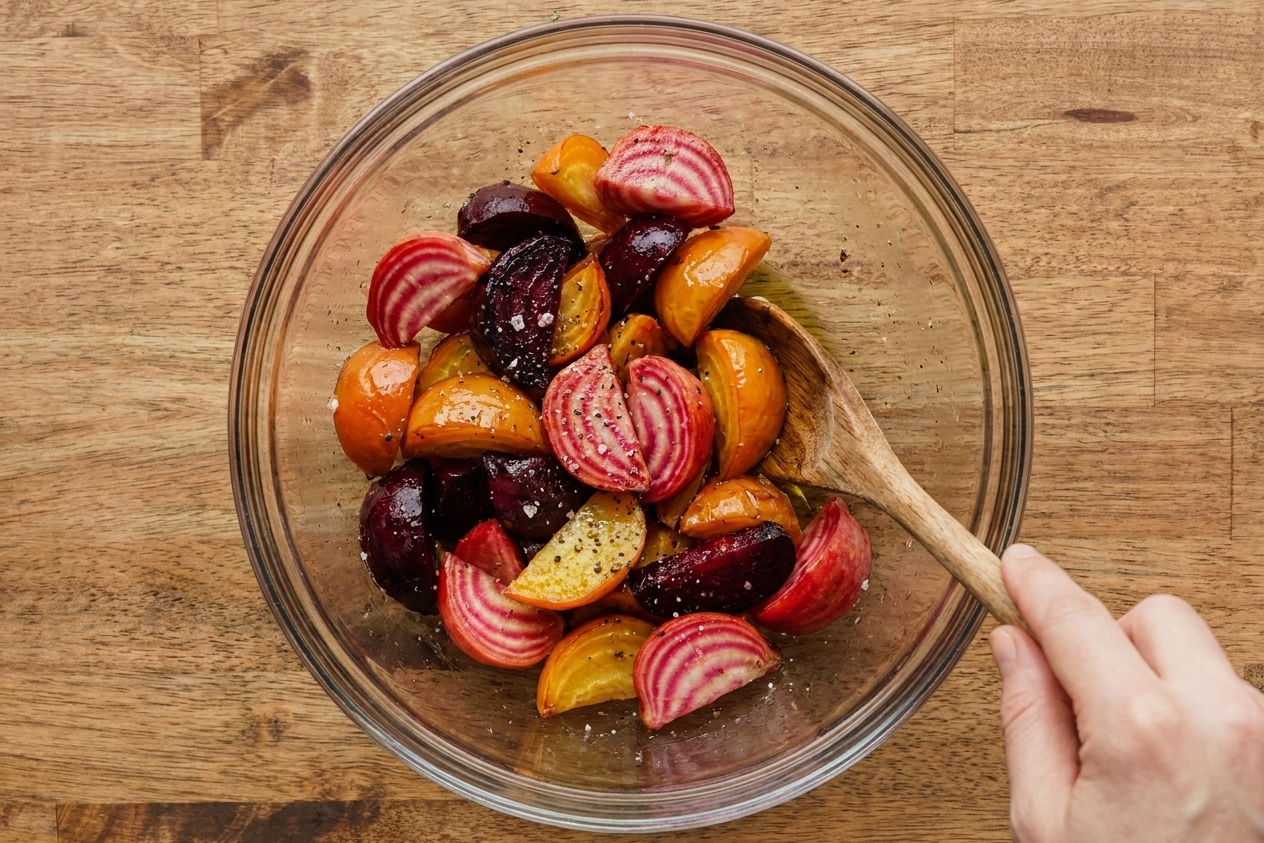
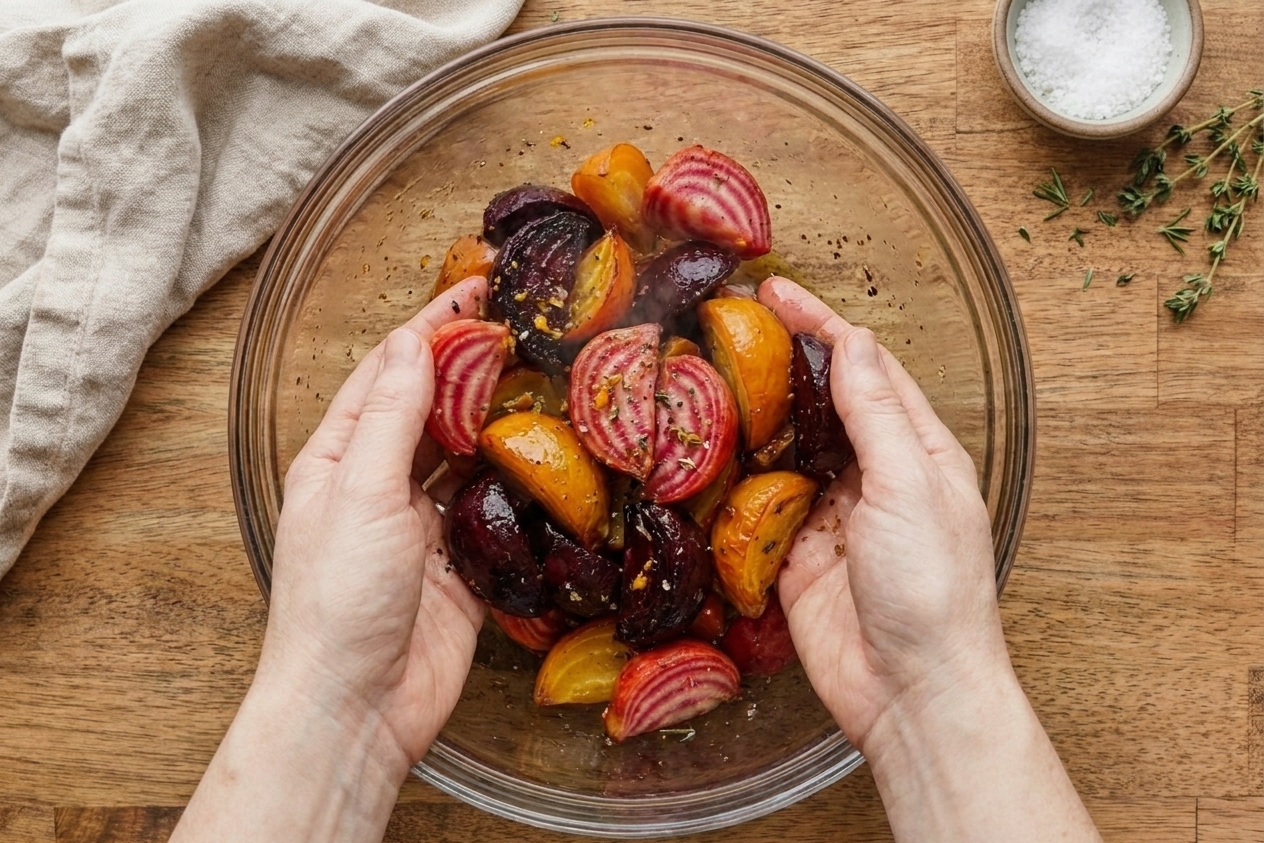
Use gloves if you have them, or rub hands with a little oil first and wash with soap. Line the pan with parchment. And if you are mixing into a salad, toss beets with dressing first, then add greens last.

Stain cleanup tip: For boards and counters, a paste of baking soda plus lemon juice helps a lot. For plastic boards, a quick diluted bleach rinse (then a thorough wash) will usually take care of stubborn pink ghosts.

Can I roast different colored beets together?

You can, but red beets will tint everything. If you want the colors to stay separate, roast them on different sides of the pan or on two pans.

What should the texture be when they are done?

A fork should slide in easily with a little resistance, like a roasted potato. If they are still firm in the center, keep roasting and check every 5 minutes.

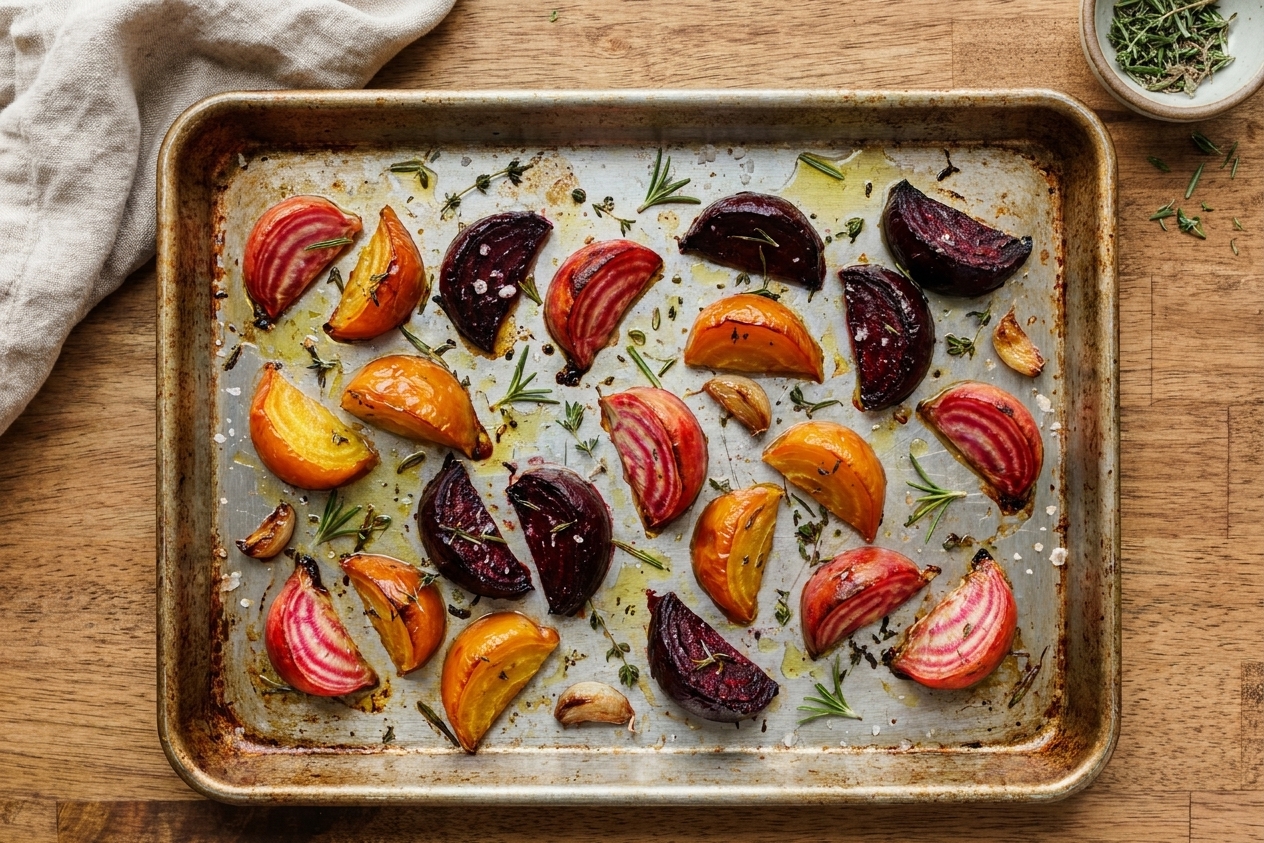
The first time I roasted beets on purpose, I treated them like a suspicious vegetable that needed constant supervision. Turns out, beets just want heat and time. Now I roast a big batch whenever I can, because they make everything feel more “restaurant” with basically zero extra effort. Also, I like the moment you pull the pan out and realize the beets went from earthy to glossy and caramelized, like they finally decided to show off.