Mom's Best Recipes
Recipe

Roasted Green Beans

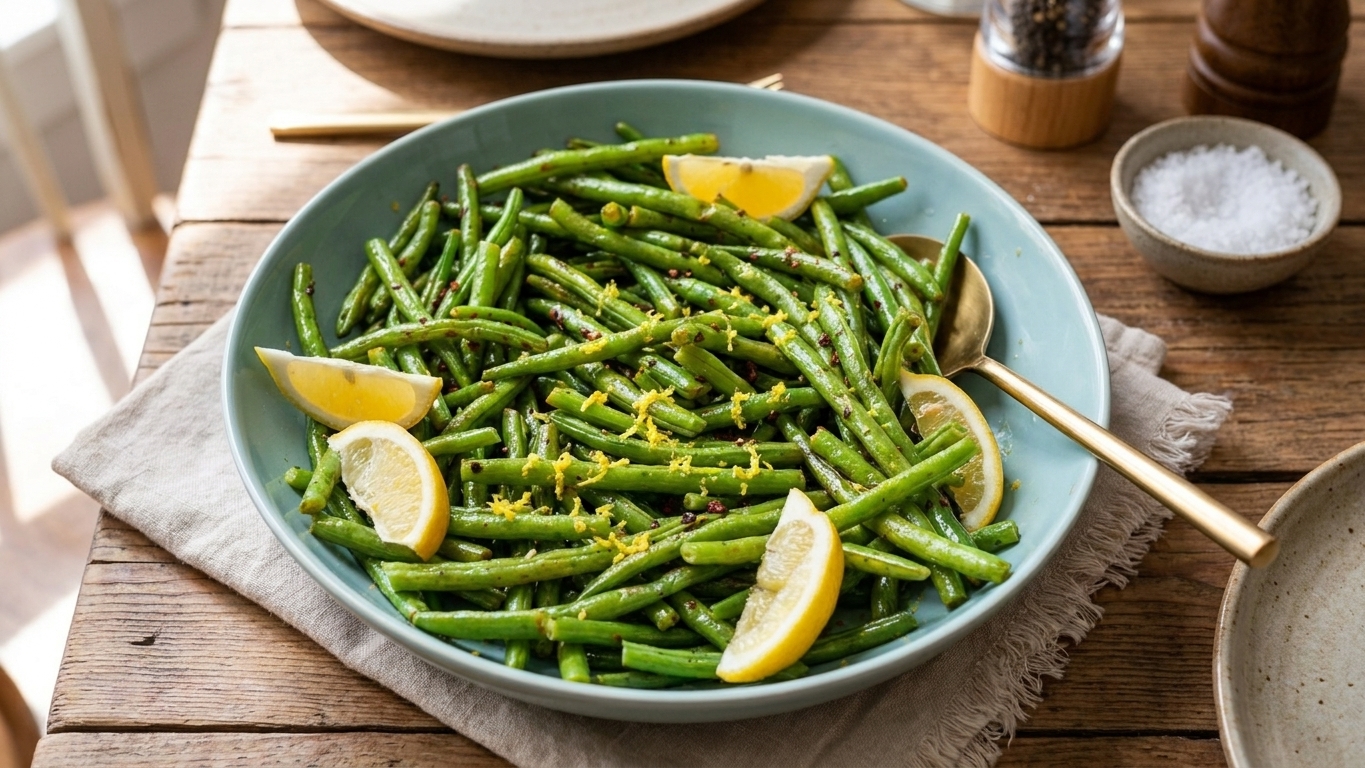
Crisp-tender, blistered green beans with garlic and a bright lemon finish.

Author By Matt Campbell
4.8
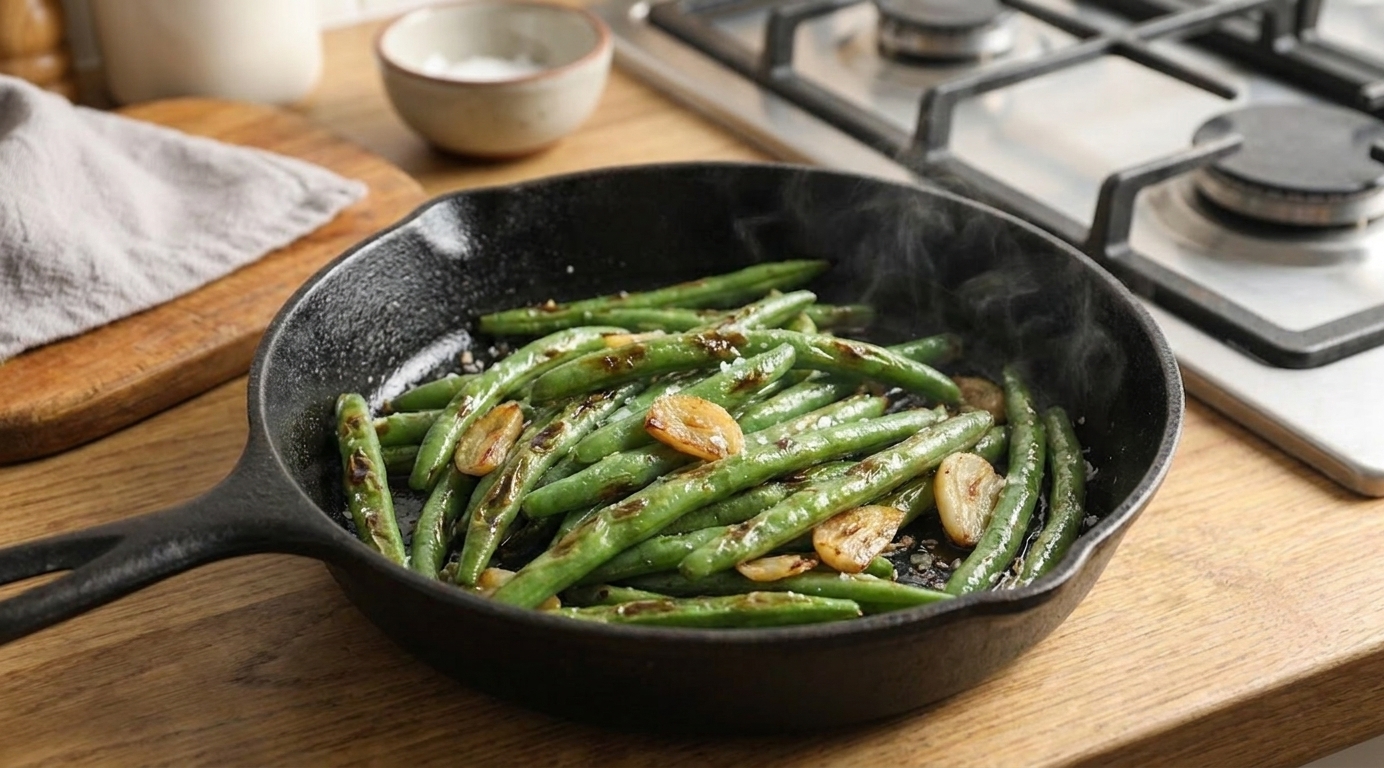
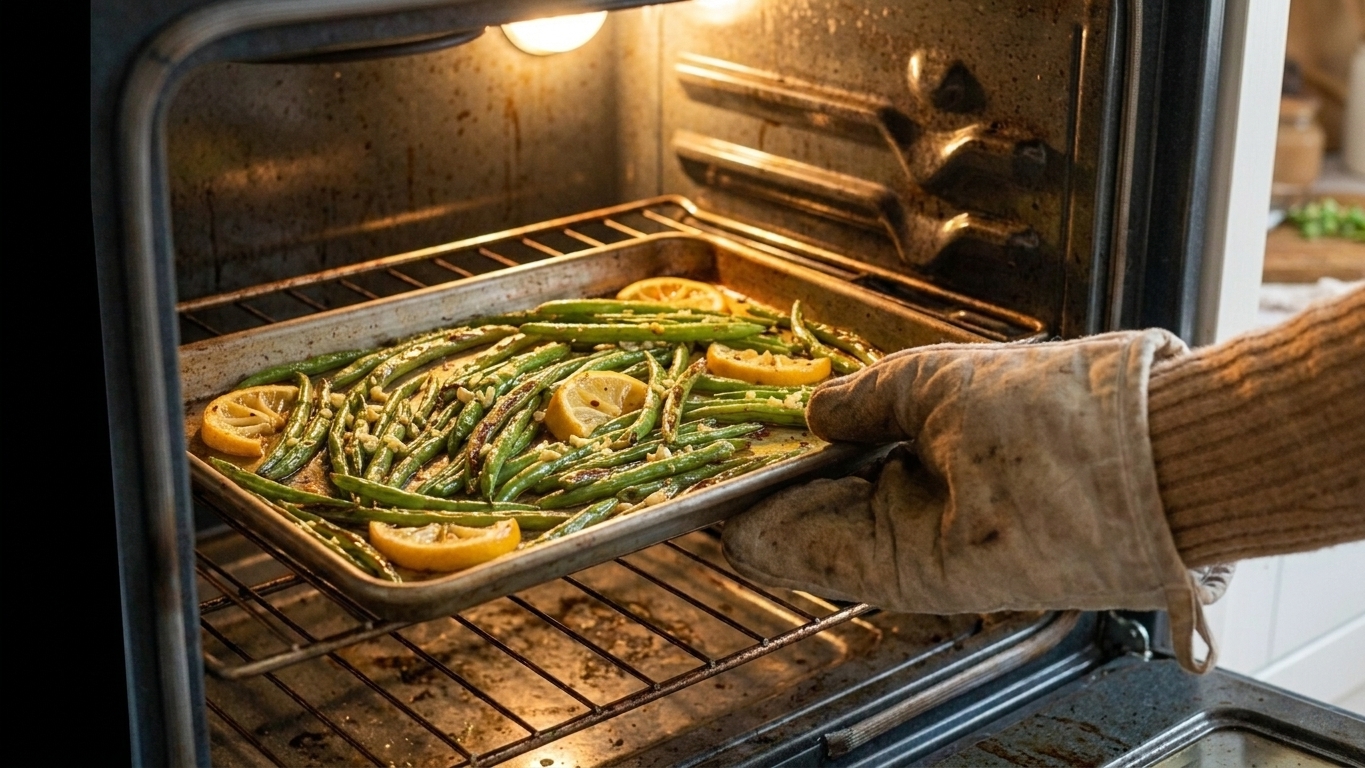
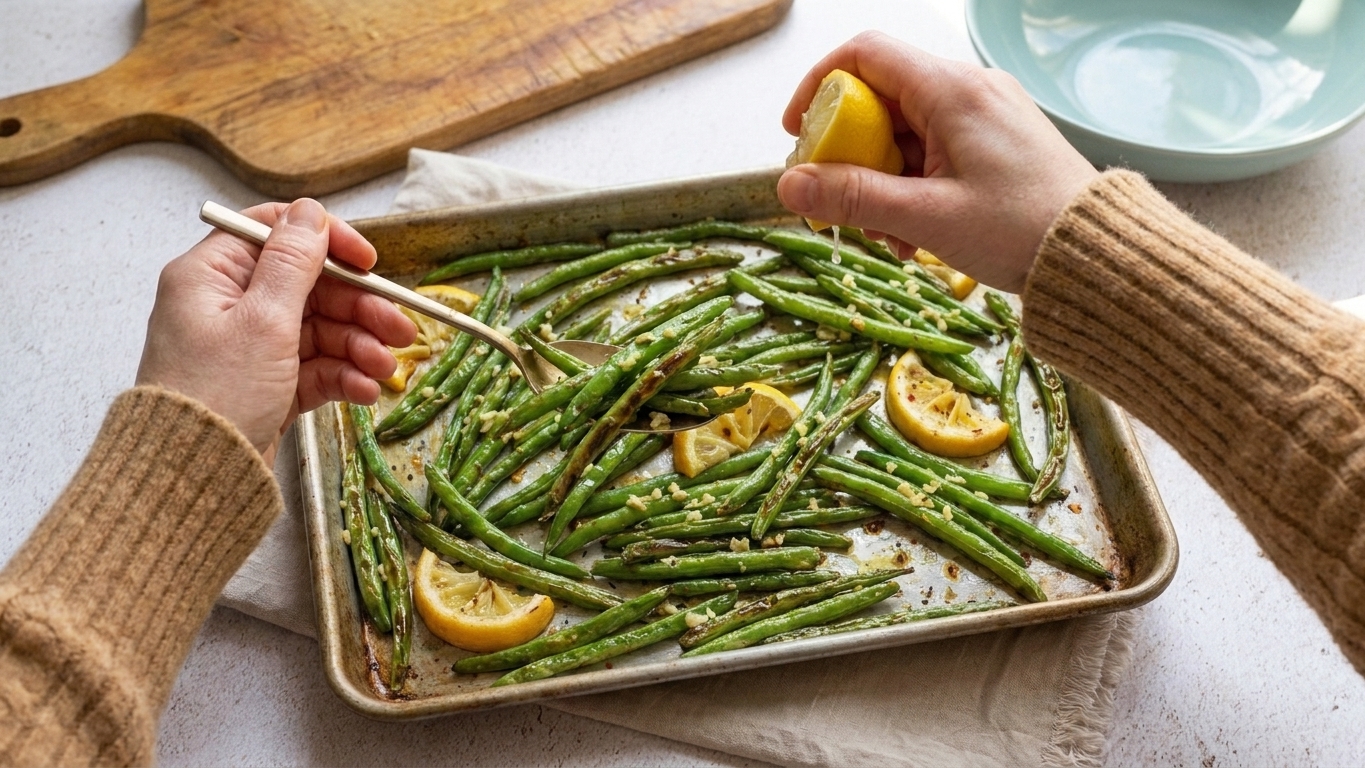
A sheet pan of roasted green beans with blistered edges, minced garlic, and lemon wedges on a kitchen counter

If green beans have ever felt a little too steamed-lunchroom, roasting is the reset. High heat gives you those toasty, blistered spots, keeps the beans snappy, and turns a simple bag of produce into a side dish people actually reach for first.

This version is my weeknight workhorse: olive oil, garlic, salt, pepper, and a squeeze of lemon at the end. It is low drama, big payoff, and it plays nice with everything from chicken to pasta to holiday ham.

Fresh green beans, a whole lemon, garlic cloves, olive oil, salt, and pepper arranged on a cutting board on a kitchen counter

Why It Works

  • High heat helps blister: Roasting at 425°F quickly evaporates surface moisture so the beans can brown and blister (as long as they are dry and not crowded).
  • Simple flavor building: Garlic goes on partway through so it gets fragrant, not bitter.
  • Finish with acid: Lemon at the end wakes everything up and makes the beans taste greener and fresher.
  • One pan, easy cleanup: Sheet pan cooking means you can focus on the main dish and still bring a great side.

Pairs Well With

Storage Tips

Refrigerate: Store leftover roasted green beans in an airtight container for 3 to 4 days.

Reheat (best): Warm on a sheet pan at 400°F for 5 to 8 minutes until hot and re-crisped. An air fryer also works great at 380°F for 3 to 5 minutes.

Microwave (fastest): It works, but the beans will soften. If you go this route, microwave in short bursts and stop as soon as they are hot.

Freezing: Not my favorite for this recipe since roasted beans can get a bit mushy after thawing. If you do freeze, use them later in soups, casseroles, or stir-fries.

Common Questions

Do I need to blanch green beans before roasting?

Nope. Roasting from raw gives you better texture and less mess. Just trim, dry well, oil, season, and roast.

Do I trim both ends of green beans?

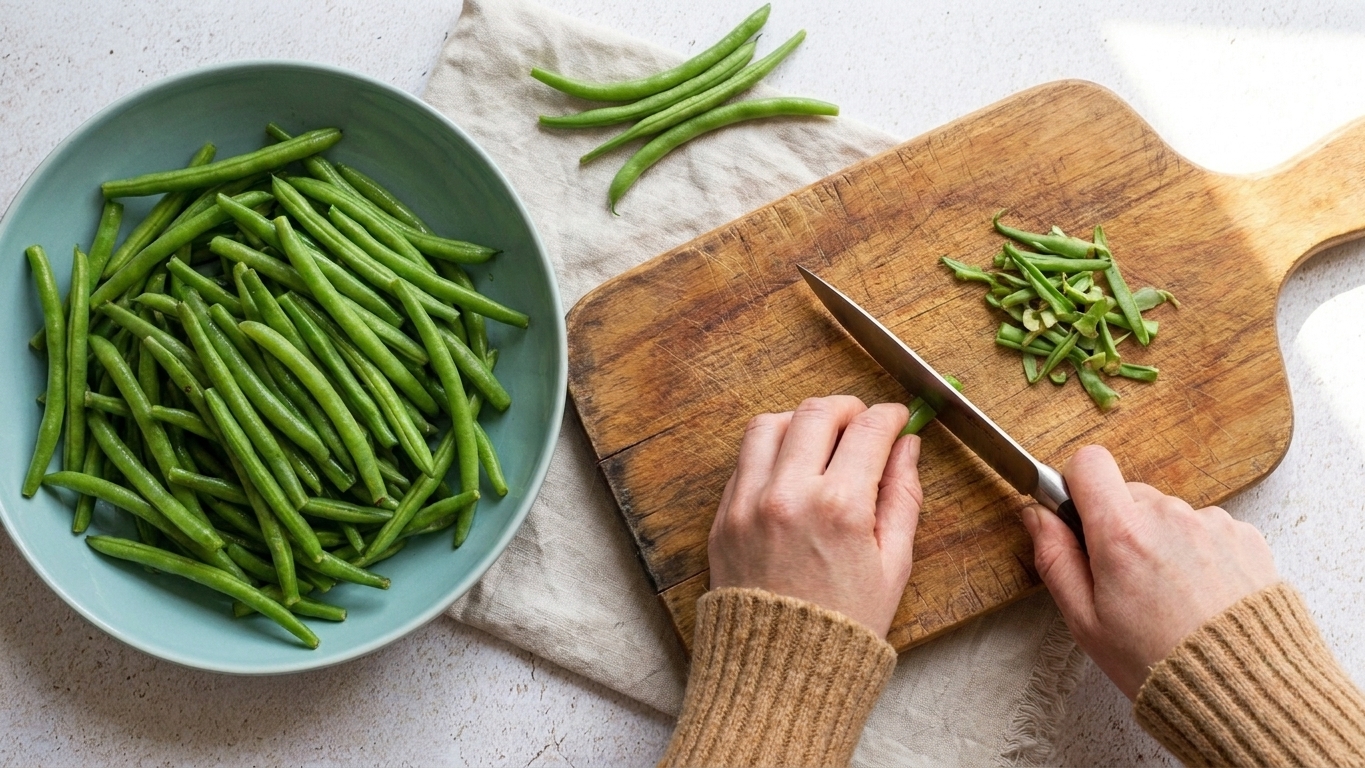
Totally up to you. I usually just trim the stem end (the tough side). If the tail end looks dry or stringy, go ahead and trim that too.

How do I keep roasted green beans from getting soggy?

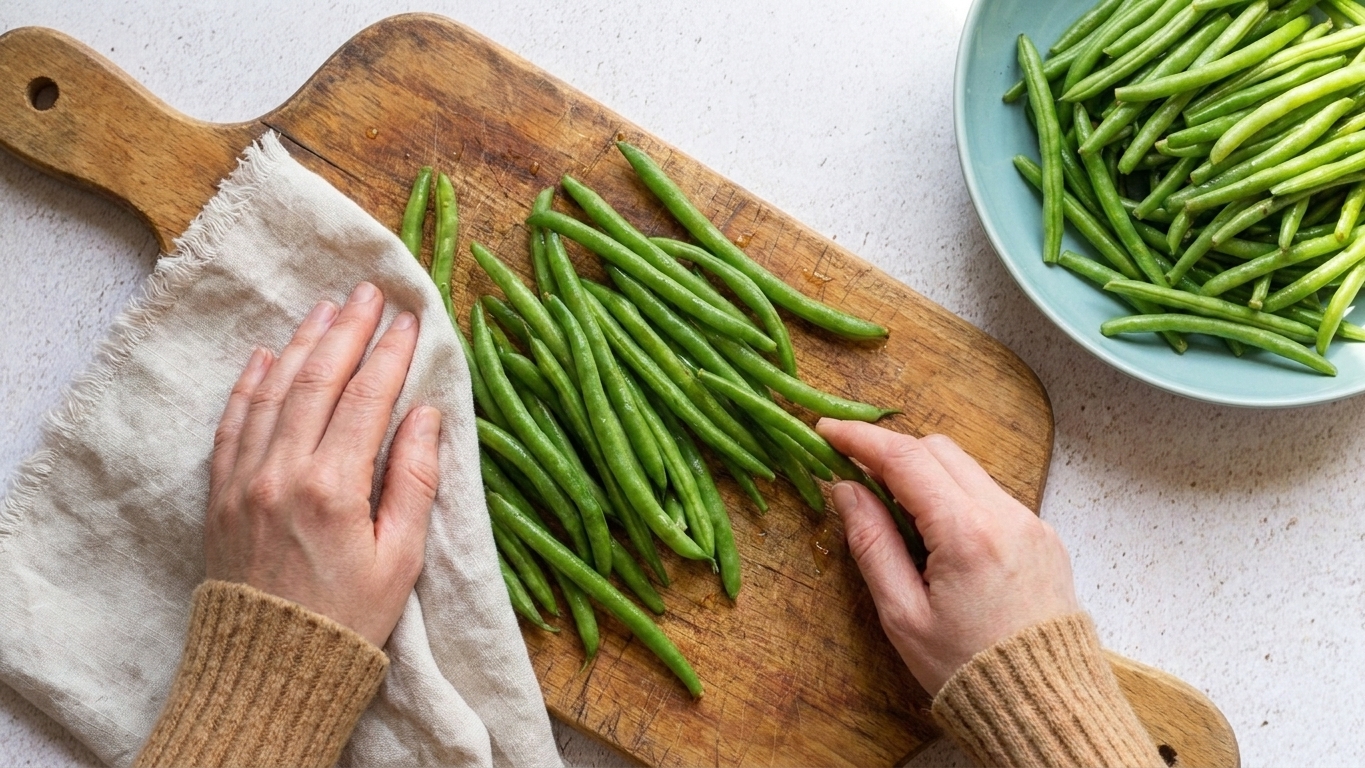
Three things: dry the beans really well, do not overcrowd the pan, and roast hot. If the beans are piled up, they steam instead of blister.

Can I use frozen green beans?

You can, but they will be softer and release more moisture. Roast straight from frozen on a very hot pan, do not overcrowd, and expect you may need a few extra minutes. You will get more tender beans with fewer crisp spots.

Why add garlic halfway through?

Garlic can burn fast at 425°F. Adding it after the beans have started roasting gives you that sweet, toasty garlic flavor without bitterness.

What if my beans are getting too dark before they are tender?

Your oven may run hot or the beans may be very thin. Drop the temp to 400°F and roast a few minutes longer, or pull the thinner beans early if you have a mixed batch.

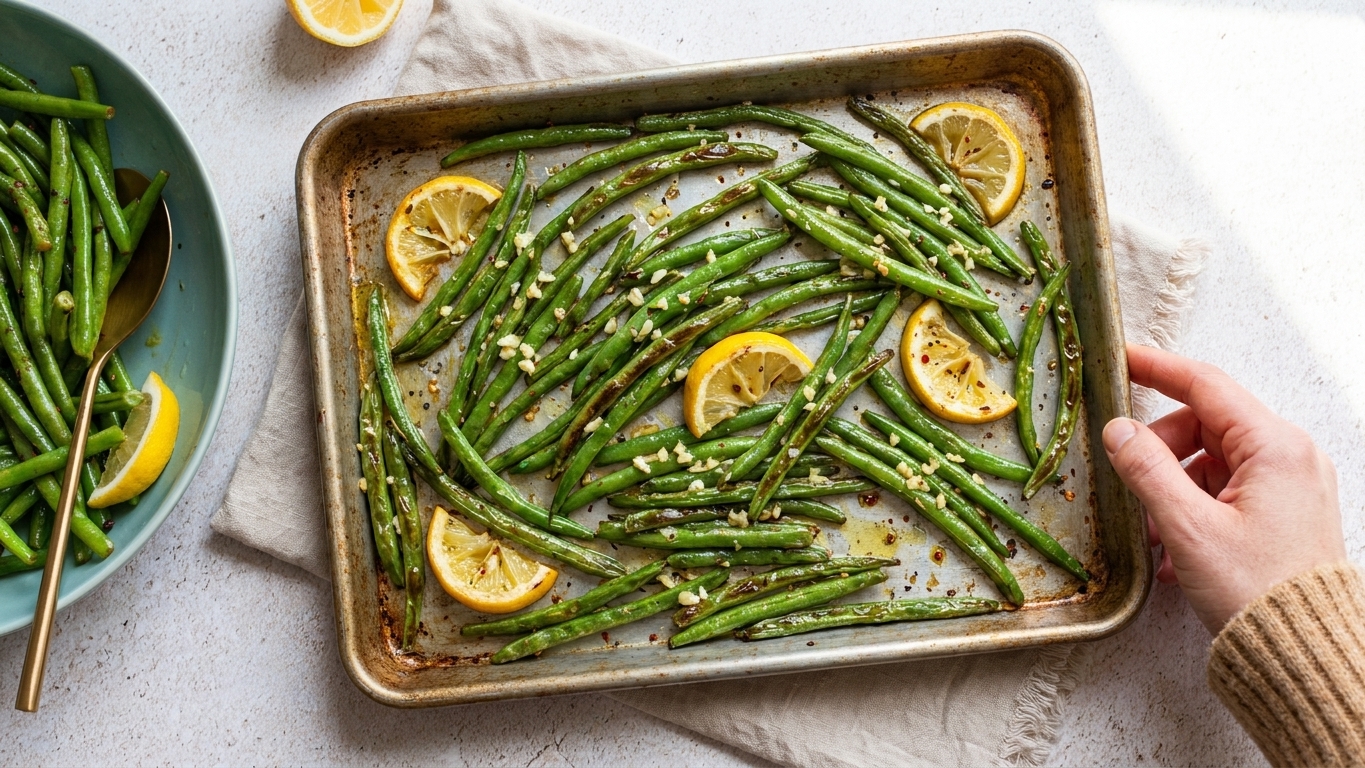
Roasted green beans are one of those sides I started making when I realized I did not actually hate green beans. I just hated what happened when they were cooked to sadness. The first time I pulled a pan out with blistered edges and that garlicky, lemony hit, I ate them straight off the sheet like fries. Now it is my default move when dinner needs a vegetable that feels like more than a checkbox.