Mom's Best Recipes
Recipe

Sheet Pan Salmon and Asparagus

Flaky roasted salmon, crisp-tender asparagus, and a lemony garlic butter that makes the whole pan smell like a win.

Author By Matt Campbell
4.8
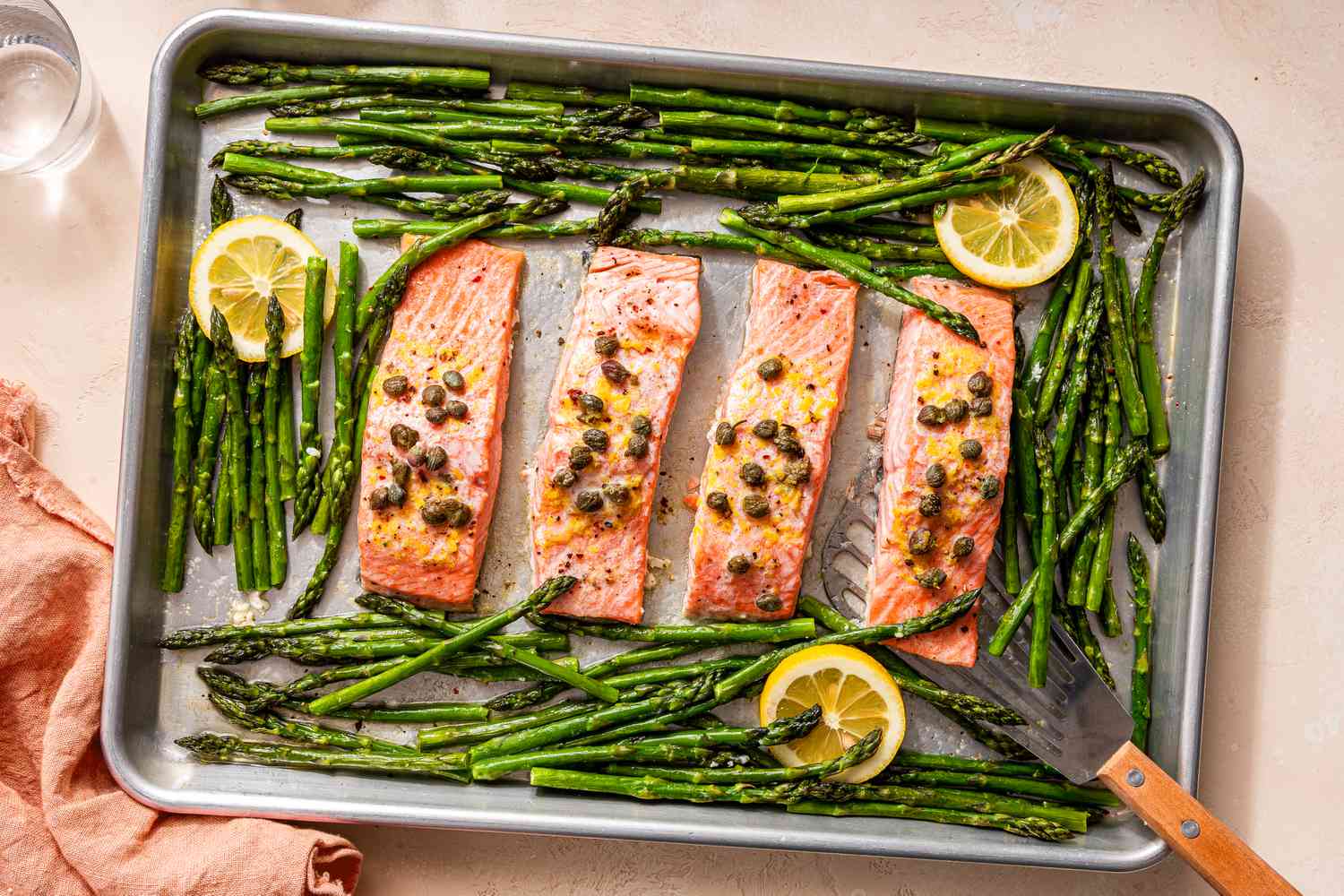
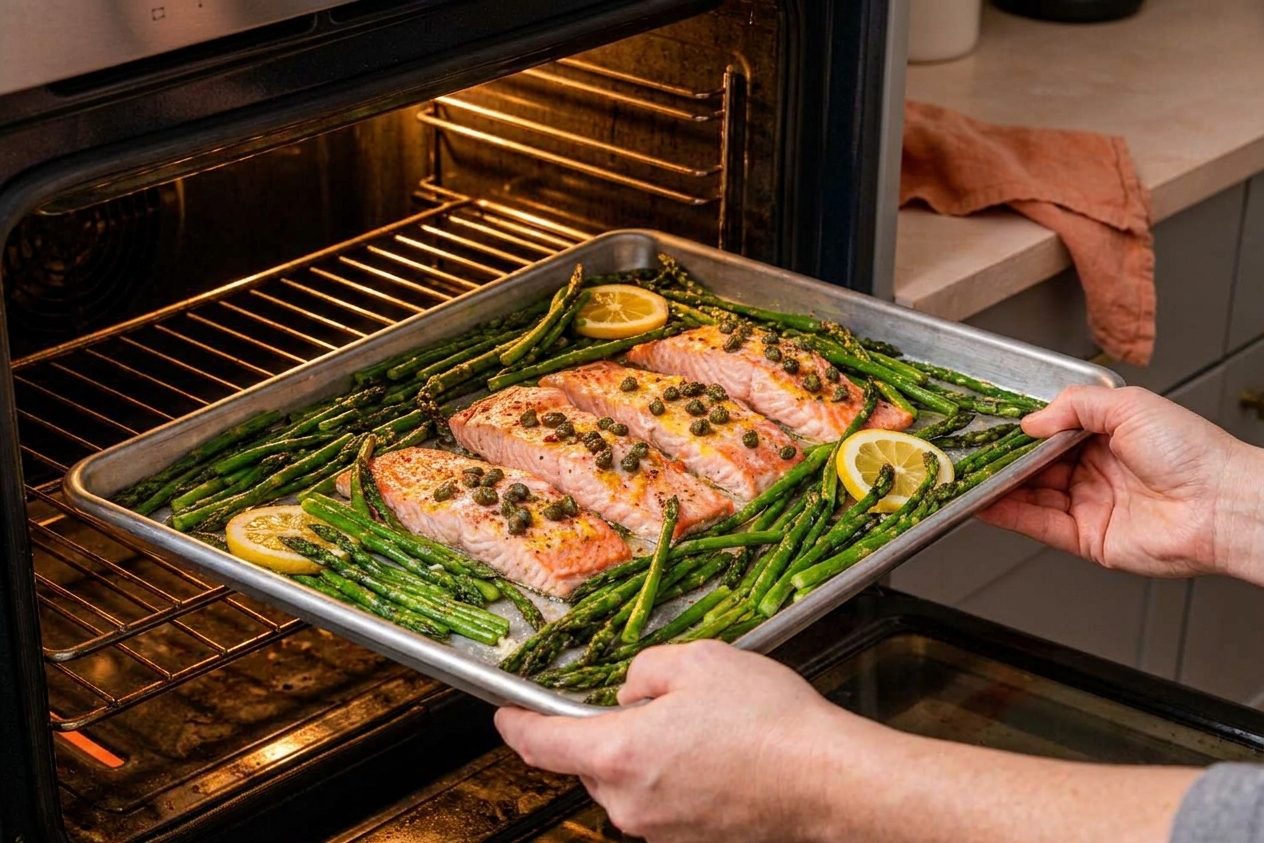
A rimmed sheet pan with roasted salmon fillets and crisp-tender asparagus, finished with lemon slices and glossy garlic butter, shot on a warm, natural-lit kitchen counter

Some nights you want a real dinner, not a sad desk salad and a handful of crackers you pretend is “grazing.” This is my answer: sheet pan salmon and asparagus with a lemon-garlic butter that gets into the cracks, browns at the edges, and basically does all the heavy lifting for you.

It is relaxed cooking at its best. One pan. Minimal dishes. Big reward. The salmon comes out tender and flaky, the asparagus stays crisp-tender, and the sauce is bright enough to wake up your whole plate. Bonus: you can scale it up for a family dinner or scale it down for a solo “I deserve this” moment.
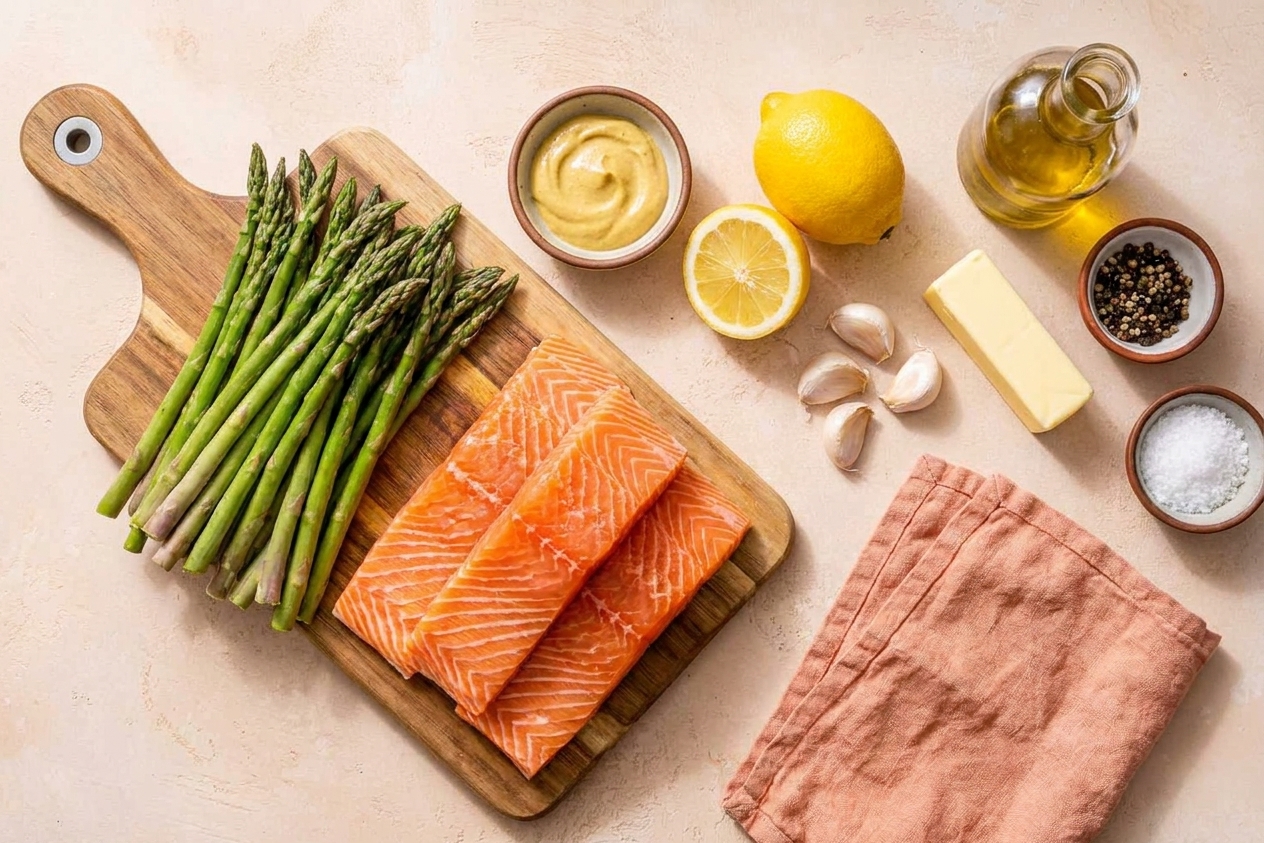
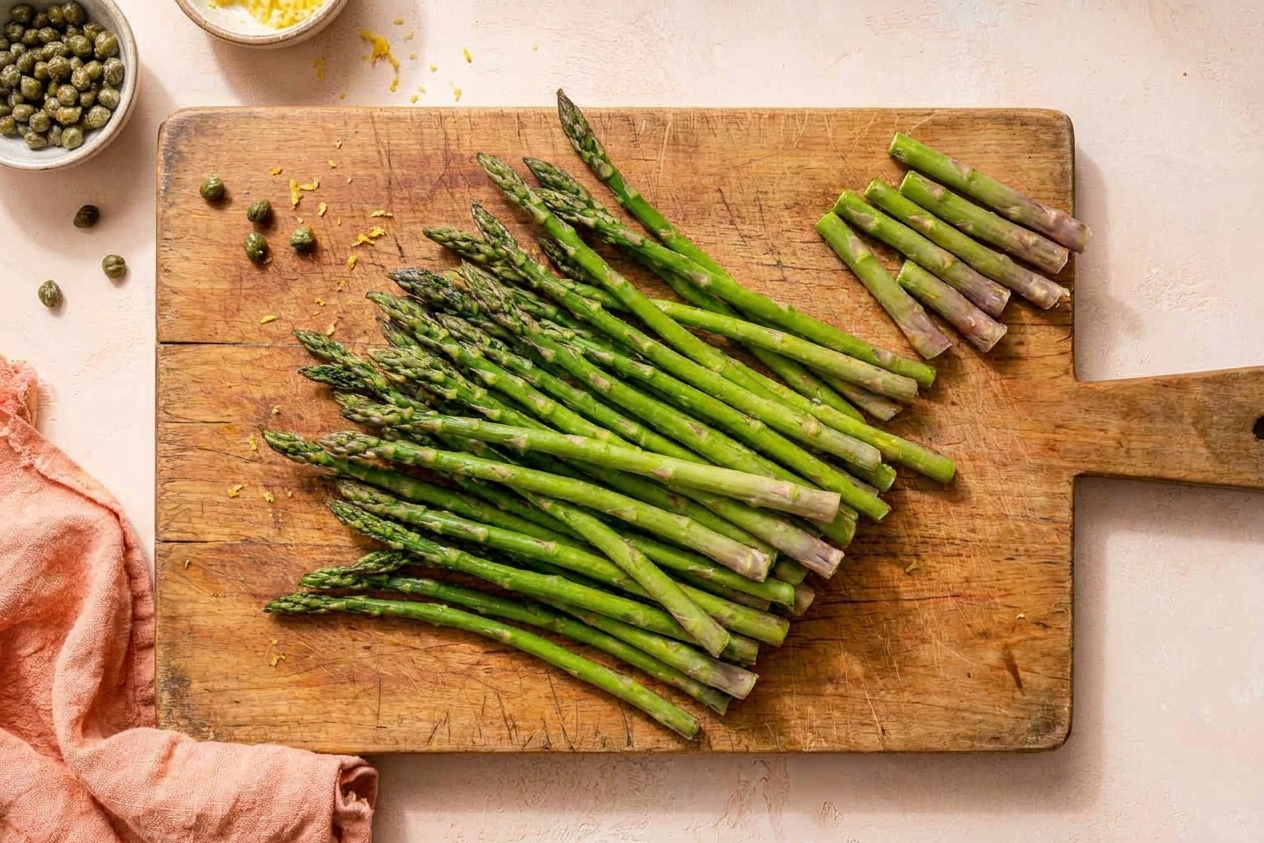
A tidy ingredient setup on a kitchen counter with salmon fillets, asparagus, lemon, garlic, butter, olive oil, salt, pepper, and a small bowl of Dijon mustard

Why It Works

  • Smart timing on one pan: Salmon cooks quickly, asparagus cooks quickly, and we keep them in their happy zone by trimming the spears and using a hot oven.
  • The sauce is the secret: Melted butter plus olive oil keeps things glossy, garlic builds savory depth, and lemon brings that clean, bright finish that makes fish taste expensive.
  • Reliable texture: A quick pat-dry on the salmon helps it roast instead of steam, which means better edges and a cleaner finish.
  • Easy to customize: Swap herbs, add spice, or toss in tomatoes or sliced red onion without changing the whole plan.

Pairs Well With

Storage Tips

Refrigerate: Store salmon and asparagus in an airtight container for up to 3 days. If you have extra sauce in the pan, spoon it over the salmon before storing to keep it moist.

Reheat (best method): Warm gently in a 300°F oven for 8 to 12 minutes until just heated through. This keeps salmon from drying out and saves the asparagus from turning mushy.

Microwave (still fine): Use 50% power in 30-second bursts. Stop when it is just warm. Salmon goes from perfect to dry in about 45 seconds, so do not wander off.

Eat it cold: Leftover salmon is fantastic flaked over a salad with any extra lemony pan juices as a dressing starter.

Freezing: You can freeze cooked salmon for up to 2 months, but the texture is best fresh. Asparagus does not love freezing after roasting.

Common Questions

How do I know when salmon is done?

The most reliable way is temperature. For maximum food safety, cook salmon to 145°F (the FDA recommendation). For a tender, slightly translucent center, many cooks prefer pulling it at 125°F to 130°F and letting it finish with carryover heat. If you are pregnant, immunocompromised, or cooking for someone who is, stick with 145°F.

Visually, it should look opaque on the outside and flake with gentle pressure, not fall apart like it is auditioning for fish salad.

Should I remove the salmon skin?

Totally optional. Skin-on helps protect the fish from overcooking and can get lightly crisp on the bottom. If you hate salmon skin, cook it on, then lift the fillet away from the skin after roasting.

My asparagus turned out stringy. What happened?

Usually it is older, thicker asparagus. Trim more aggressively and consider peeling the lower inch or two of thick stalks with a vegetable peeler. Also, do not overcook it.

Can I use frozen salmon?

Yes, but thaw it first for the most even cook. Thaw overnight in the fridge, then pat very dry before seasoning.

What if my salmon pieces are different thicknesses?

Place thicker pieces toward the hotter back corners of the oven, and pull thinner pieces a minute or two early if needed. You are allowed to treat each fillet like an individual with feelings.

Hands sprinkling salt, pepper, and lemon zest over raw salmon fillets on a sheet pan next to trimmed asparagus, photographed on a neutral kitchen counter

I started making sheet pan salmon during my “learn by doing” era, when I cared less about fancy techniques and more about repeatable wins. This one became a staple because it hits that sweet spot: it feels like a restaurant plate, but it cooks like a weeknight. The lemon-garlic butter is the part that makes me pause mid-bite. It is bright, rich, and just messy enough to demand a piece of bread, which is honestly the highest compliment I can give.