Mom's Best Recipes
Recipe

Saucy Pork Stir Fry

Tender pork, crisp vegetables, and a glossy sauce that hits salty, sweet, and gingery in all the right places.

Author By Matt Campbell
4.8
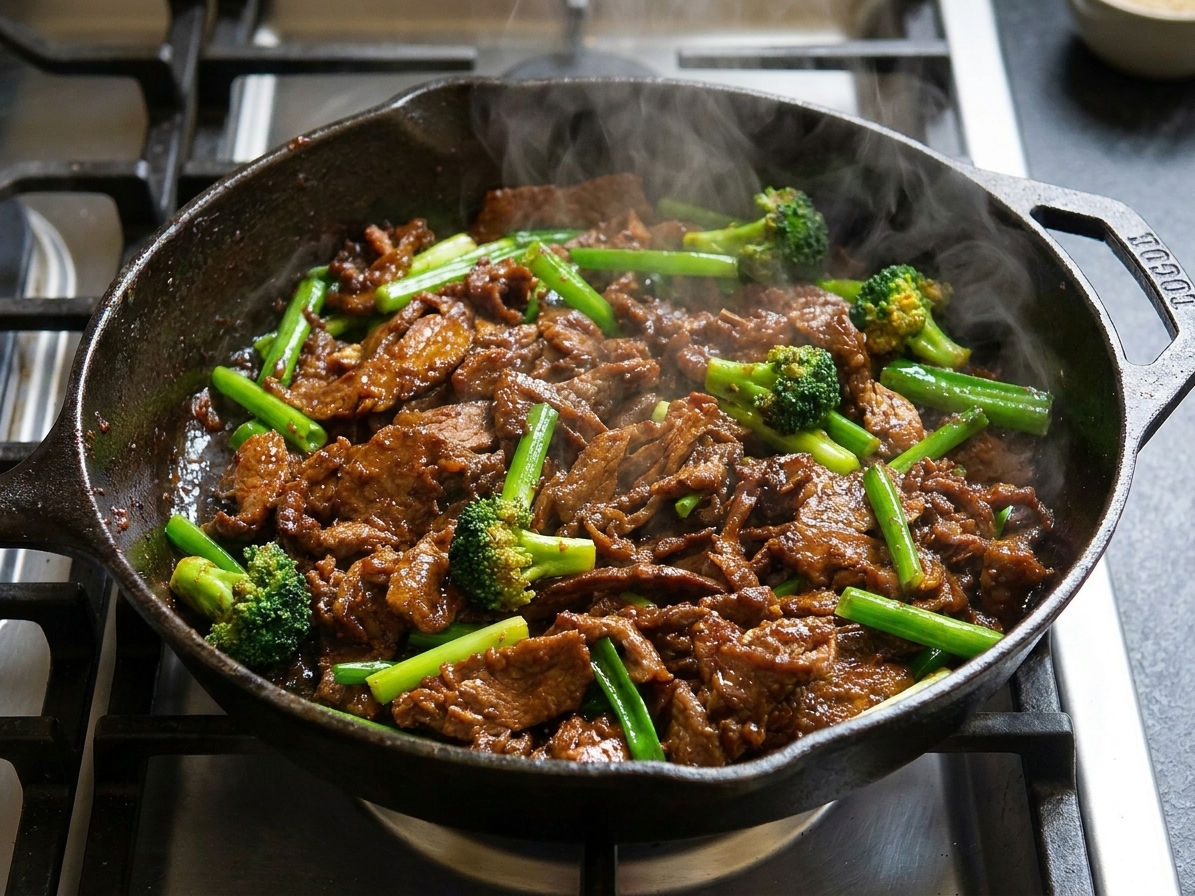
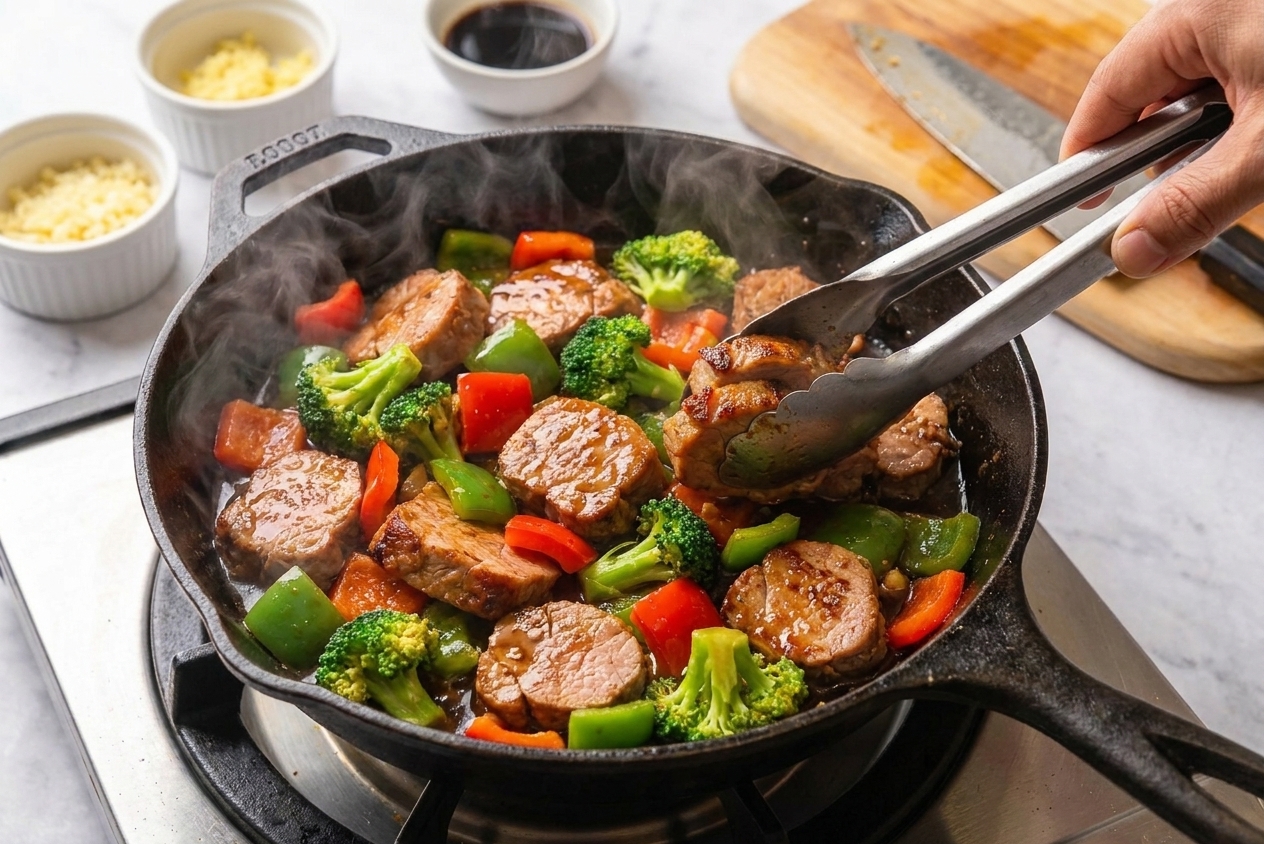
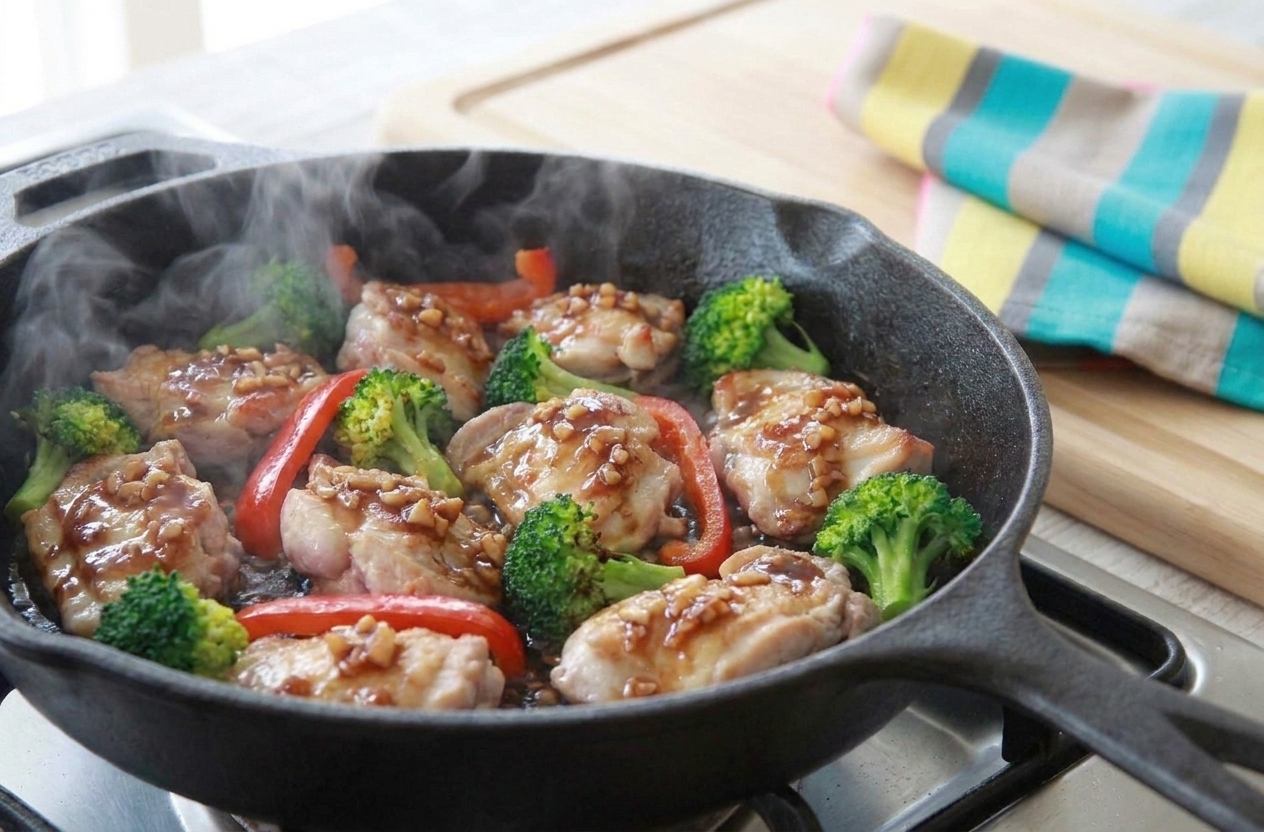
A cast iron skillet filled with glossy pork stir fry with bell peppers and broccoli, steam rising on a warm kitchen stove

Pork stir fry is my answer to the question, “What can we make that feels like takeout, but does not require a full wardrobe commitment?” It is fast, loud, and deeply satisfying. You get tender pork, vegetables that still have some snap, and a sauce that actually sticks instead of pooling sadly at the bottom of the bowl.

This version keeps the ingredient list friendly and the technique simple. The only “rule” is prep first. Stir fry is basically a sprint, and you do not want to be mincing garlic while your pork is turning into little brown erasers.
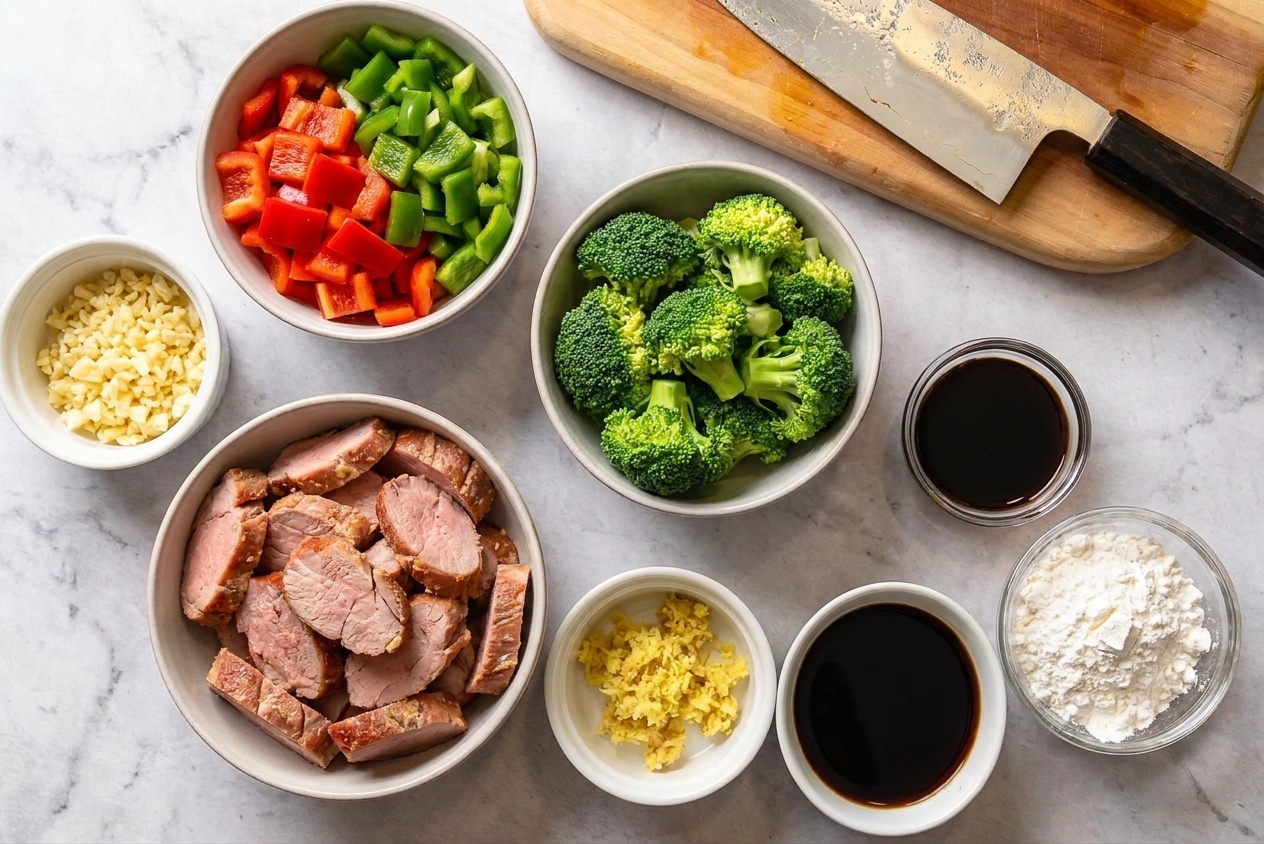
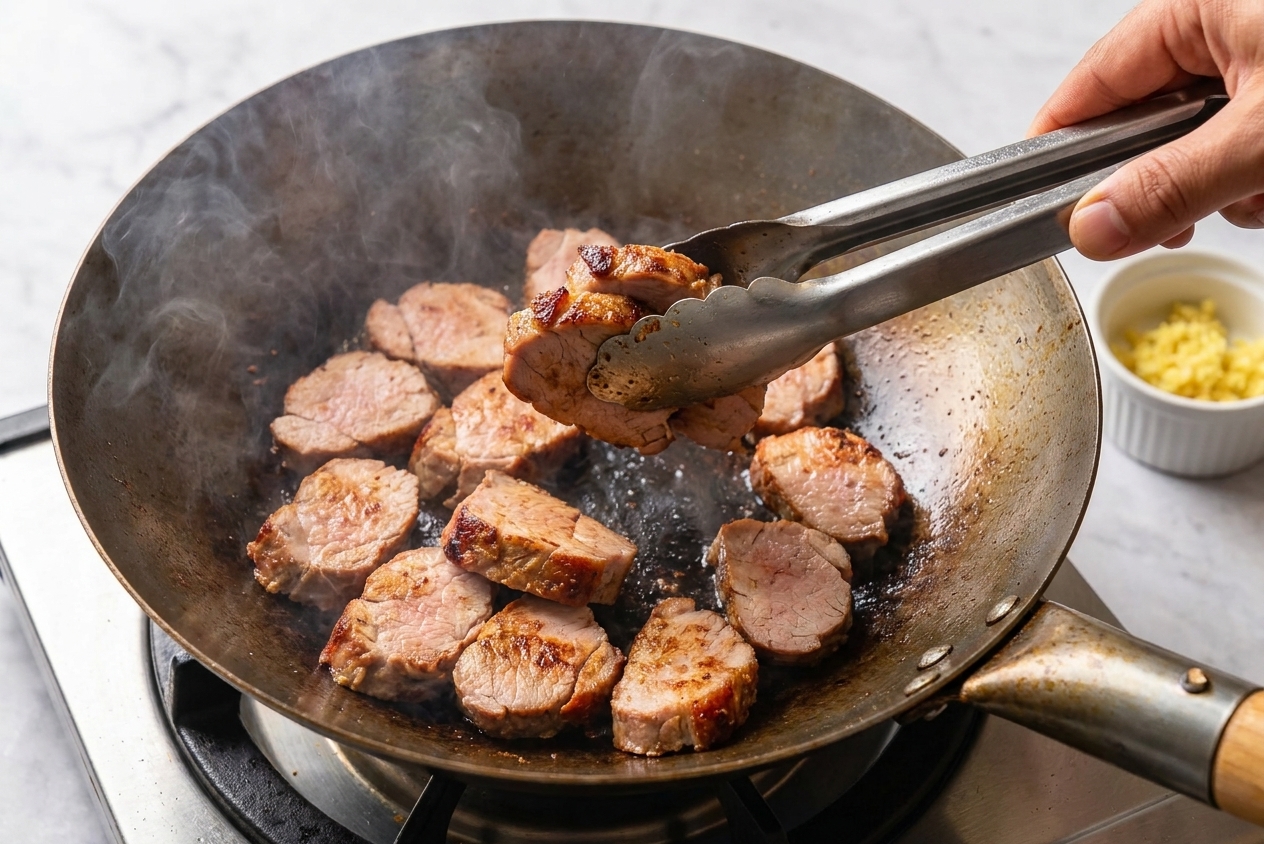
Small bowls of sliced pork, chopped bell peppers, broccoli florets, minced garlic, grated ginger, soy sauce, and cornstarch arranged on a kitchen counter

Why It Works

  • Fast, weeknight timing: once the pan is hot, everything moves quickly. A truly hot pan and thin slices keep the cook time tight.
  • Tender pork: a quick cornstarch marinade protects the meat and helps it brown without drying out.
  • Glossy sauce you can trust: balanced soy, ginger, garlic, and a touch of sweetness, thickened just enough to cling.
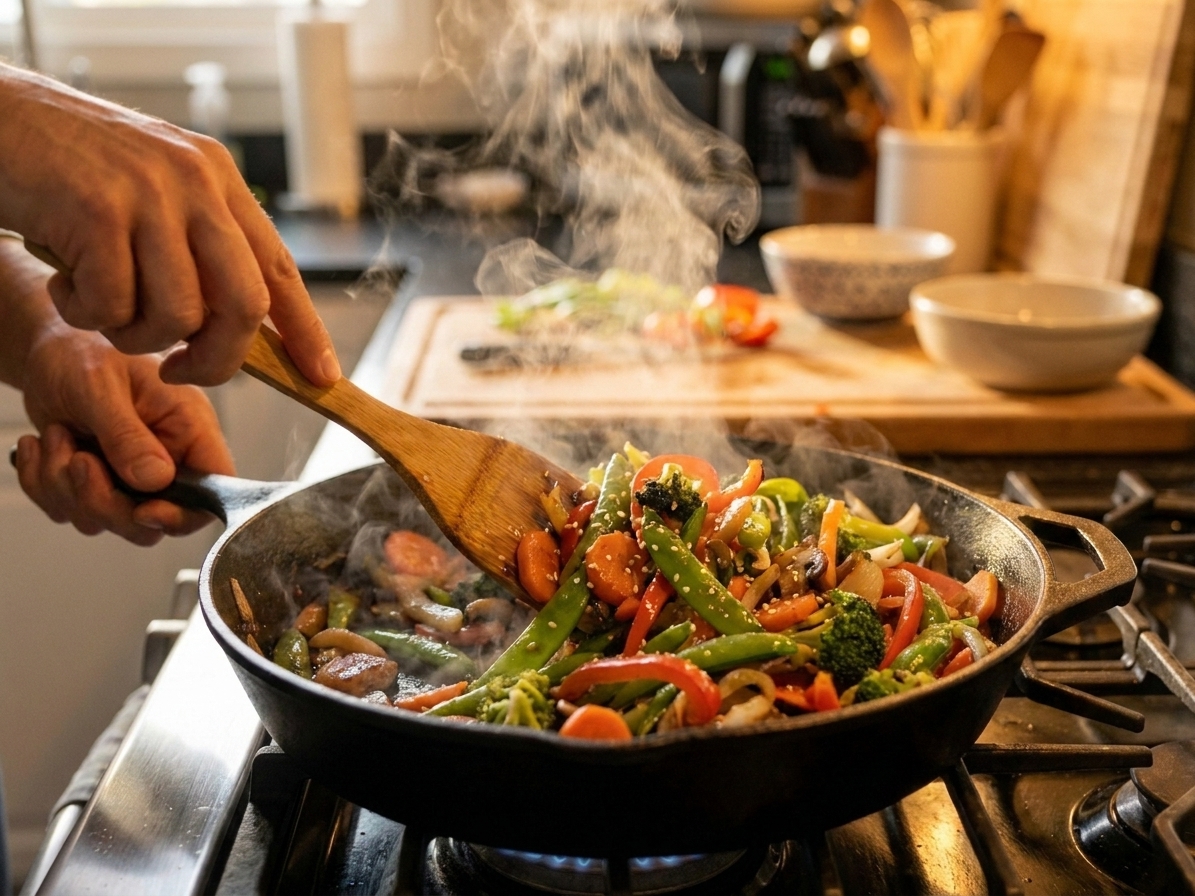
  • Crisp vegetables: high heat, short cook time, and a splash of water to steam the dense stuff without turning it mushy.

Pairs Well With

Storage Tips

Fridge: Store leftovers in an airtight container for 3 to 4 days. Keep rice or noodles separate if you can so they do not soak up all the sauce.

Reheat: Best in a skillet over medium heat with a tablespoon of water to loosen the sauce, 3 to 5 minutes. Microwave works too, but do it in short bursts and stir so the pork does not overcook.

Freezer: You can freeze the stir fry for best quality up to 2 to 3 months, but the vegetables will soften after thawing. If you are planning ahead for freezing, use sturdier veggies like broccoli, carrots, and snap peas.

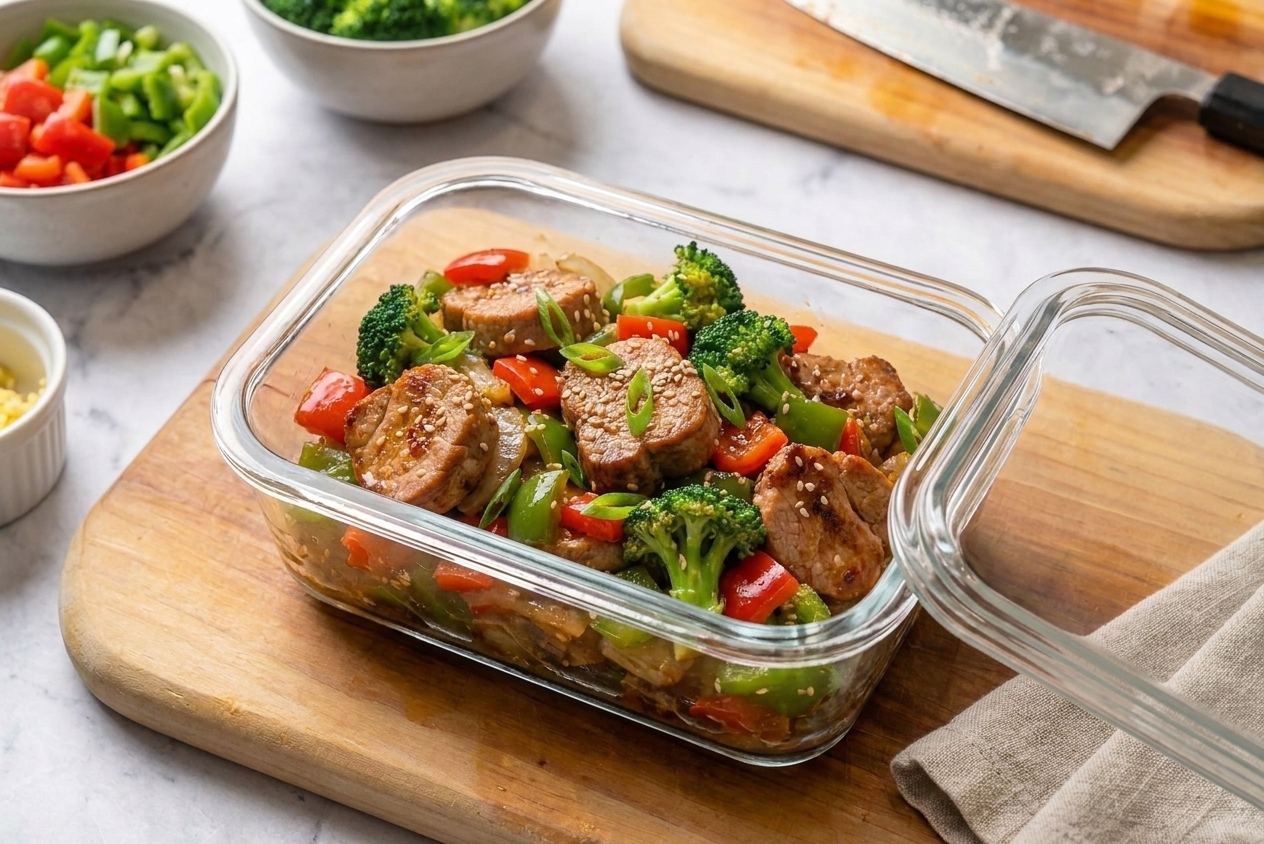
A glass meal prep container filled with pork stir fry and broccoli, lid set beside it on a kitchen counter

Common Questions

What cut of pork is best for stir fry?

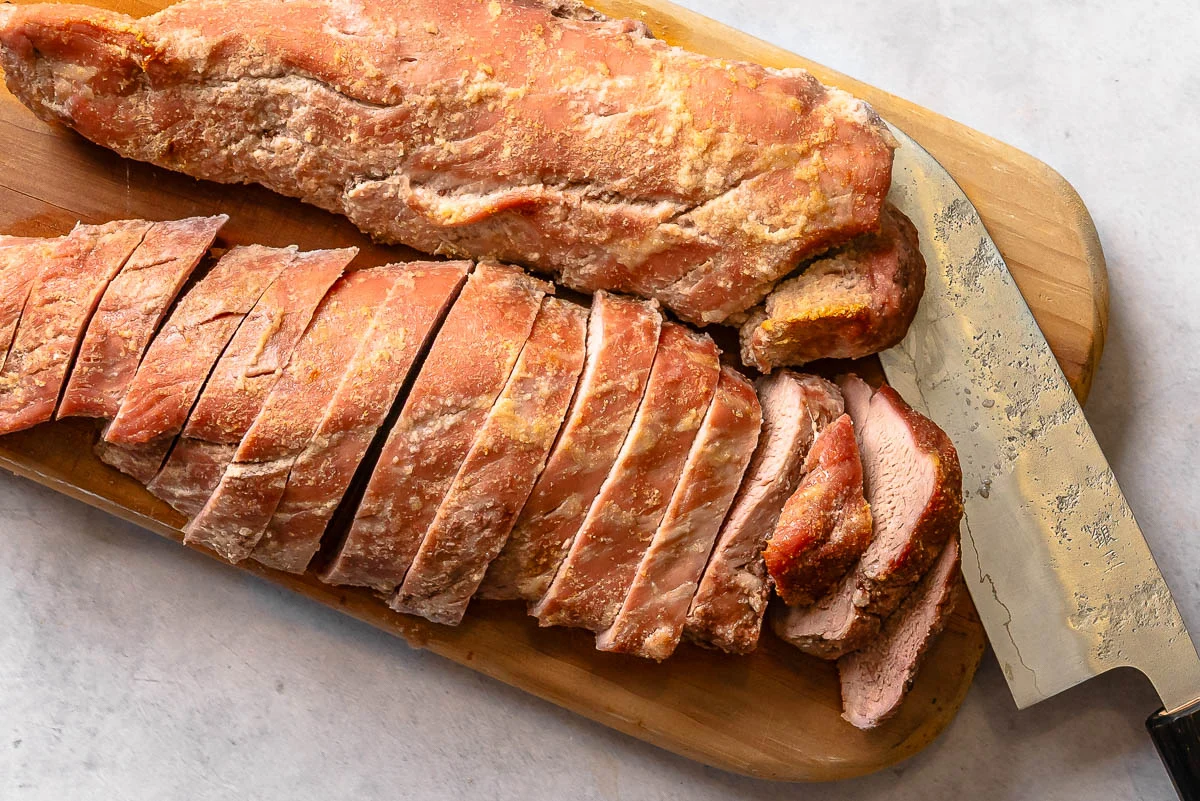
Pork tenderloin is the easiest win: lean, tender, and quick-cooking. Pork loin also works, but it is a little less forgiving, so slice it thin and do not overcook. Avoid shoulder here unless you plan to braise it first.

How do I keep pork from getting tough?

Slice thin across the grain, marinate briefly with cornstarch, and cook hot and fast. Also, do not crowd the pan. If the pork steams instead of searing, it can turn chewy.

What is a good substitute for oyster sauce?

Use mushroom (vegetarian) oyster sauce 1:1 if you have it. In a pinch, swap in hoisin sauce plus an extra splash of soy sauce or a pinch of salt to bring the savory back.

Can I use frozen vegetables?

Yes. Use a stir fry blend or frozen broccoli. Cook them a bit longer and expect a little extra moisture. If the pan gets watery, keep the heat high and let it boil off before adding the sauce.

Is this spicy?

Not unless you want it to be. Add red pepper flakes, chili crisp, or a squirt of sriracha at the end for heat.

What can I serve it with?

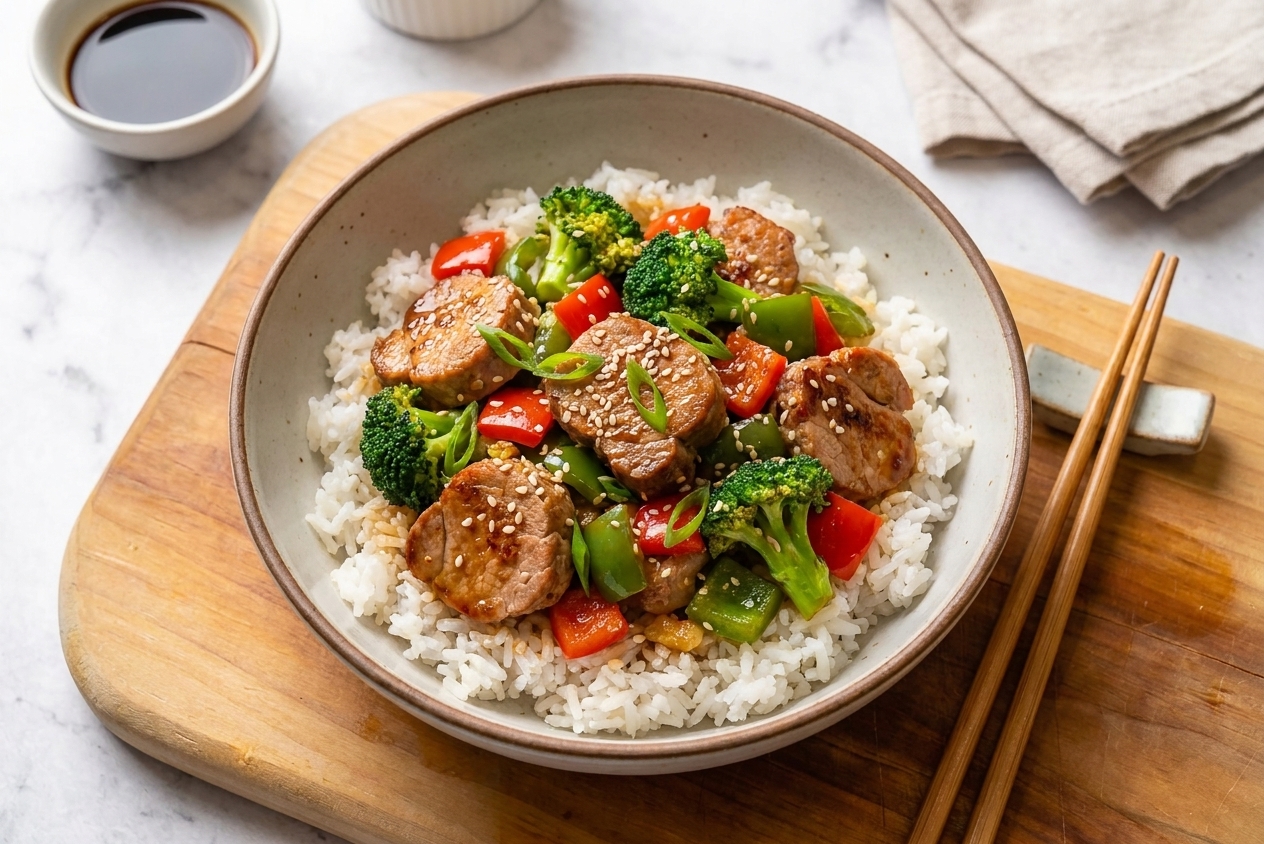
Jasmine rice, brown rice, rice noodles, or lo mein style noodles. Even shredded cabbage is great if you want something lighter and crunchy. This recipe comfortably serves 4 when paired with rice or noodles.

I started making stir fries when I realized I could get restaurant-level “wow” with very normal grocery store stuff, as long as I respected two things: heat and timing. The first time I nailed it, the sauce went glossy, the pork stayed tender, and I just stood there at the stove like, “So this is what competence feels like.” Now it is my go-to when I want a cozy bowl of carbs and something bright, savory, and a little gingery to wake everything up.