Common Questions
What cut of lamb is best for Scotch broth?
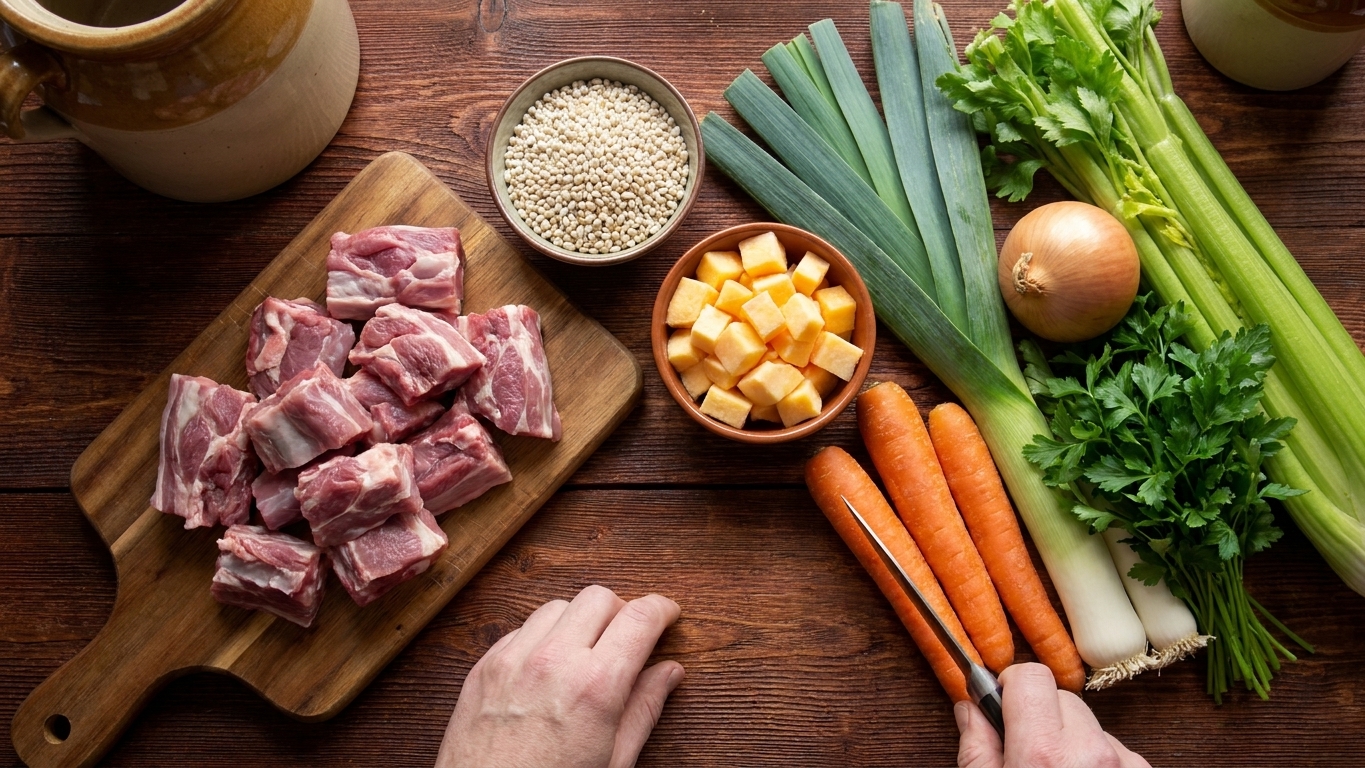
Go for a cut with some connective tissue so the broth gets rich: lamb shoulder is my go-to, but lamb neck or lamb shanks are also excellent. Lean leg meat can work, but the soup will taste less full and the meat can feel drier.
Do I need to brown the lamb first?
Many traditional versions of Scotch broth start with a gentle simmer rather than a hard sear. Browning adds a deeper roasted note, but it is not required. If you do brown, keep it light so the soup still tastes bright and brothy, not like a stew.
How do I skim the broth properly?
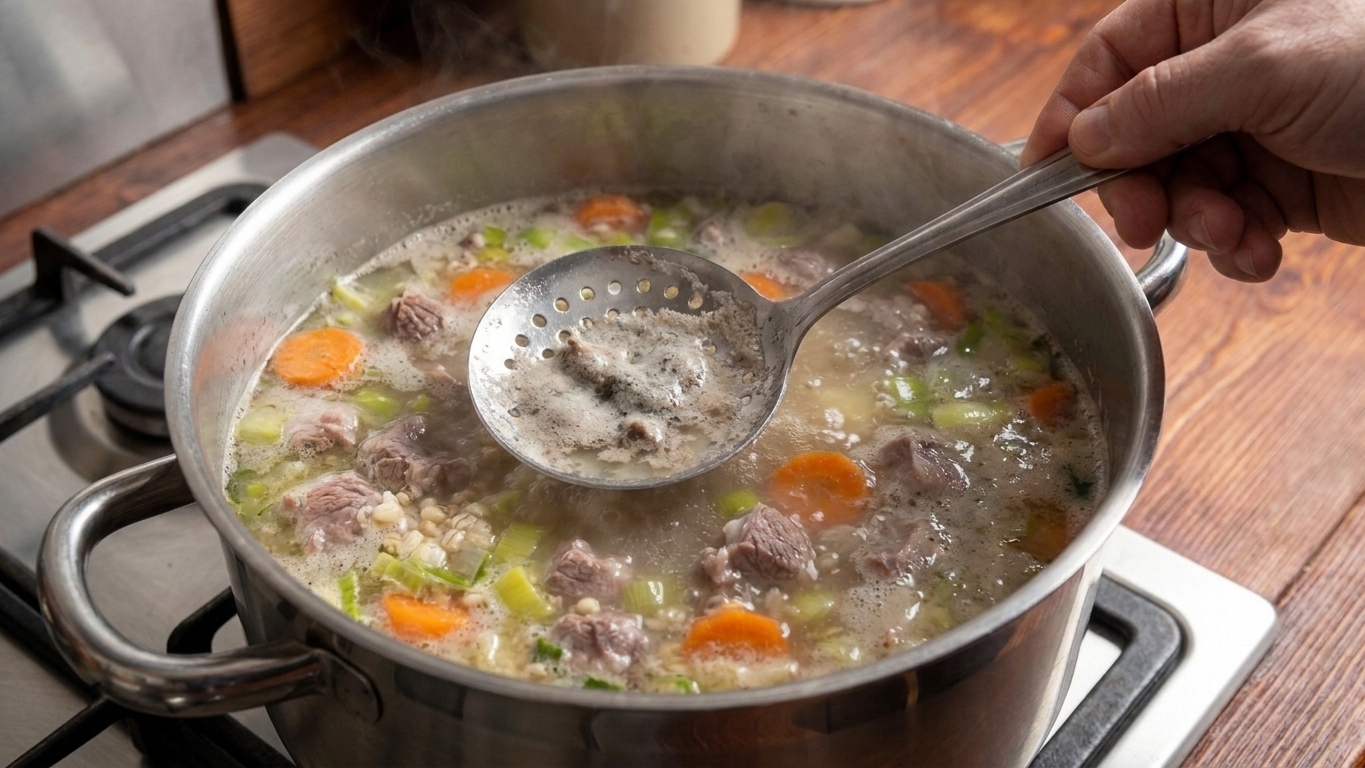
As the lamb starts to simmer, you will see gray foam and bits rise to the surface. Use a spoon or small ladle to skim that off during the first 20 to 30 minutes. Later, you can also skim excess fat. Skimming keeps the broth clearer and cleaner tasting.
When should I add the barley?
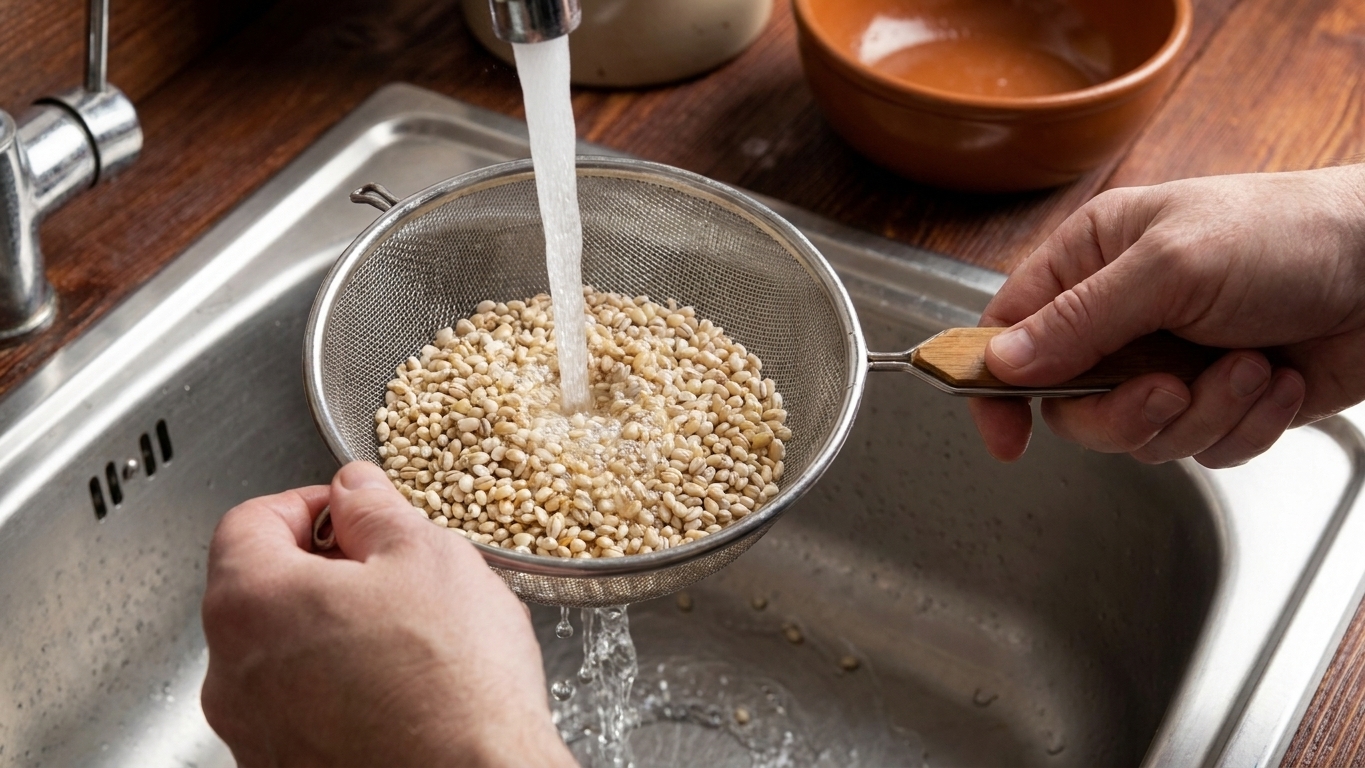
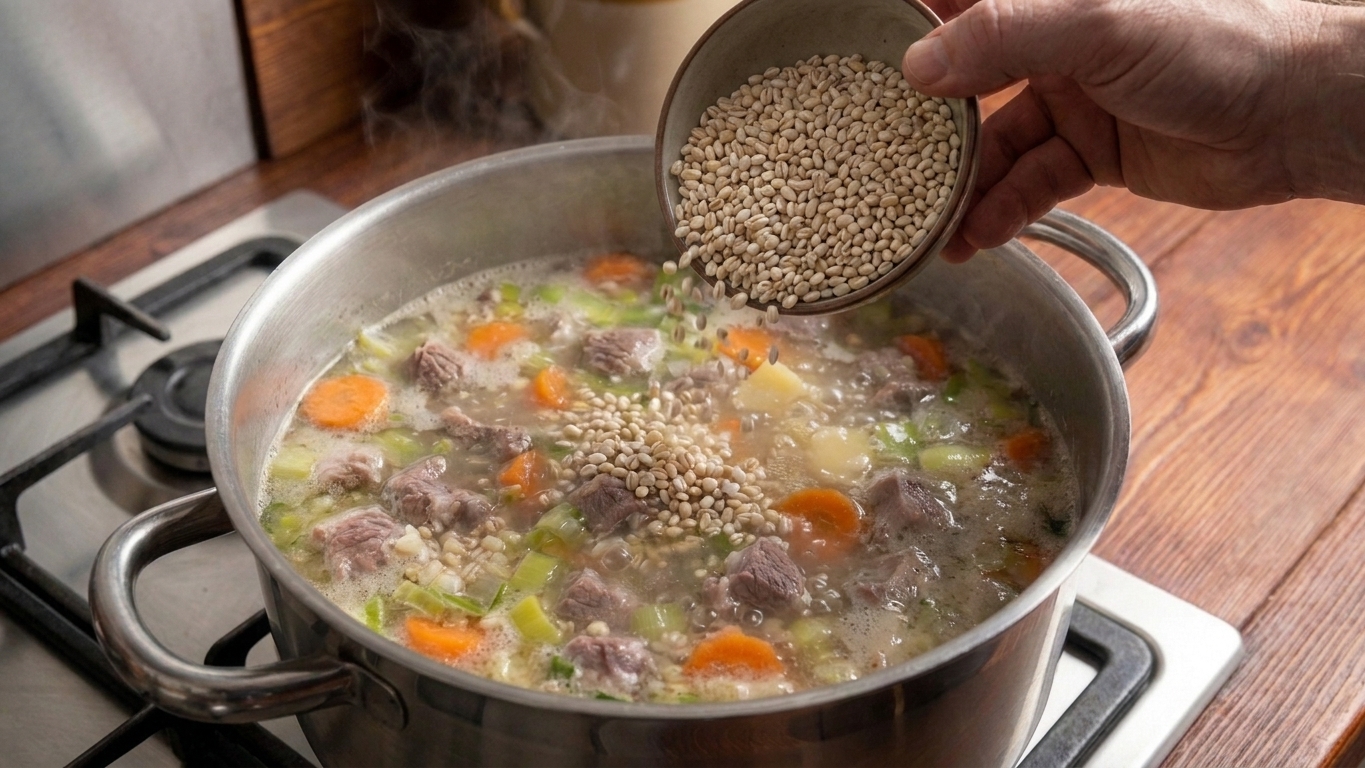
Add pearl barley after the lamb has simmered and started to turn tender, usually around 45 minutes into cooking. Then simmer the soup until the barley is tender, about 35 to 45 minutes more. This timing helps the barley cook perfectly without turning mushy.
Why did my soup get so thick?
Barley is a thirsty little grain. It keeps absorbing liquid as the soup sits, especially overnight. Just add more broth or water when reheating and season again to taste.
Is rutabaga necessary?
It is classic, and it gives Scotch broth its gentle sweetness and earthy backbone. In Scotland, you will often hear this kind of root called neeps (the exact vegetable can vary by region and household). If you cannot find rutabaga, turnips are the closest swap, though a bit sharper and less sweet.
Can I cook the barley separately?
Yes. If you prefer a more brothy soup (and less thickening over time), simmer the barley in a separate pot until tender, then stir it into each bowl or add it to the soup right before serving.